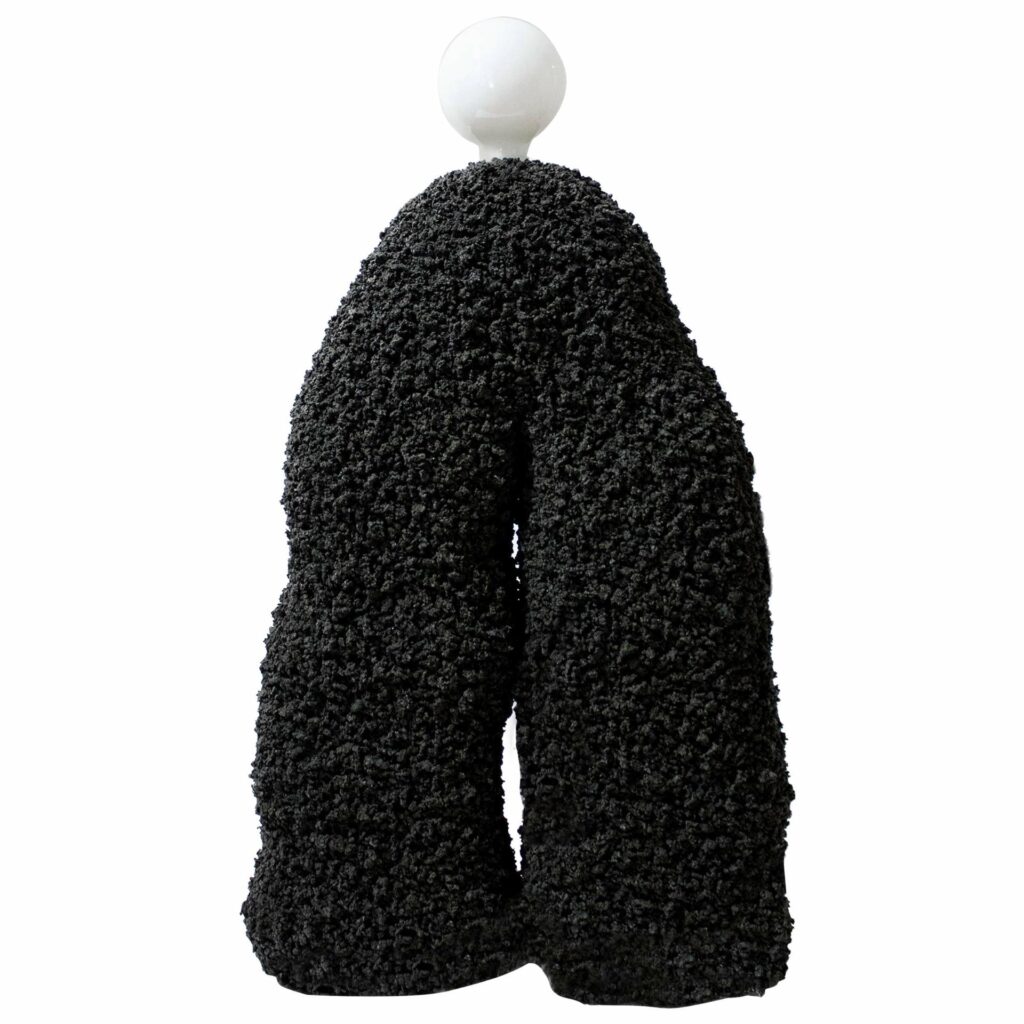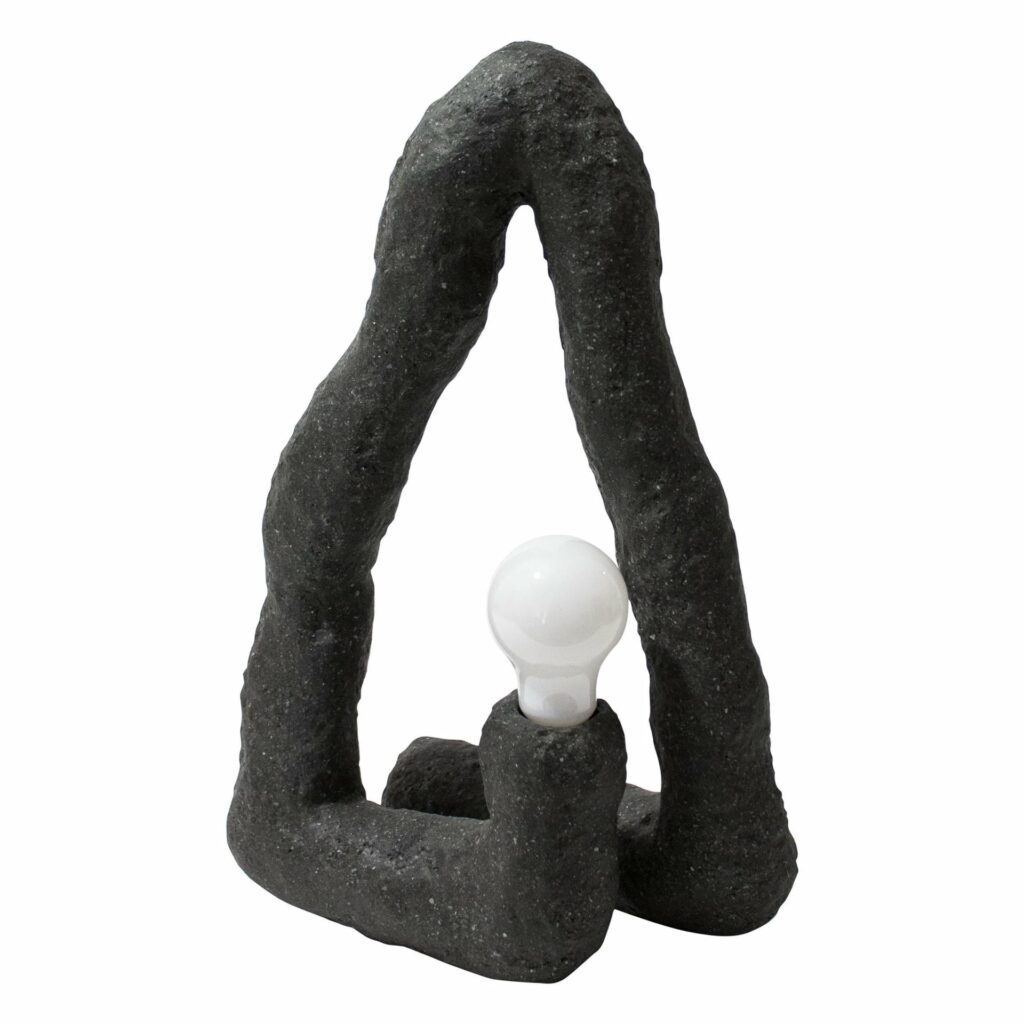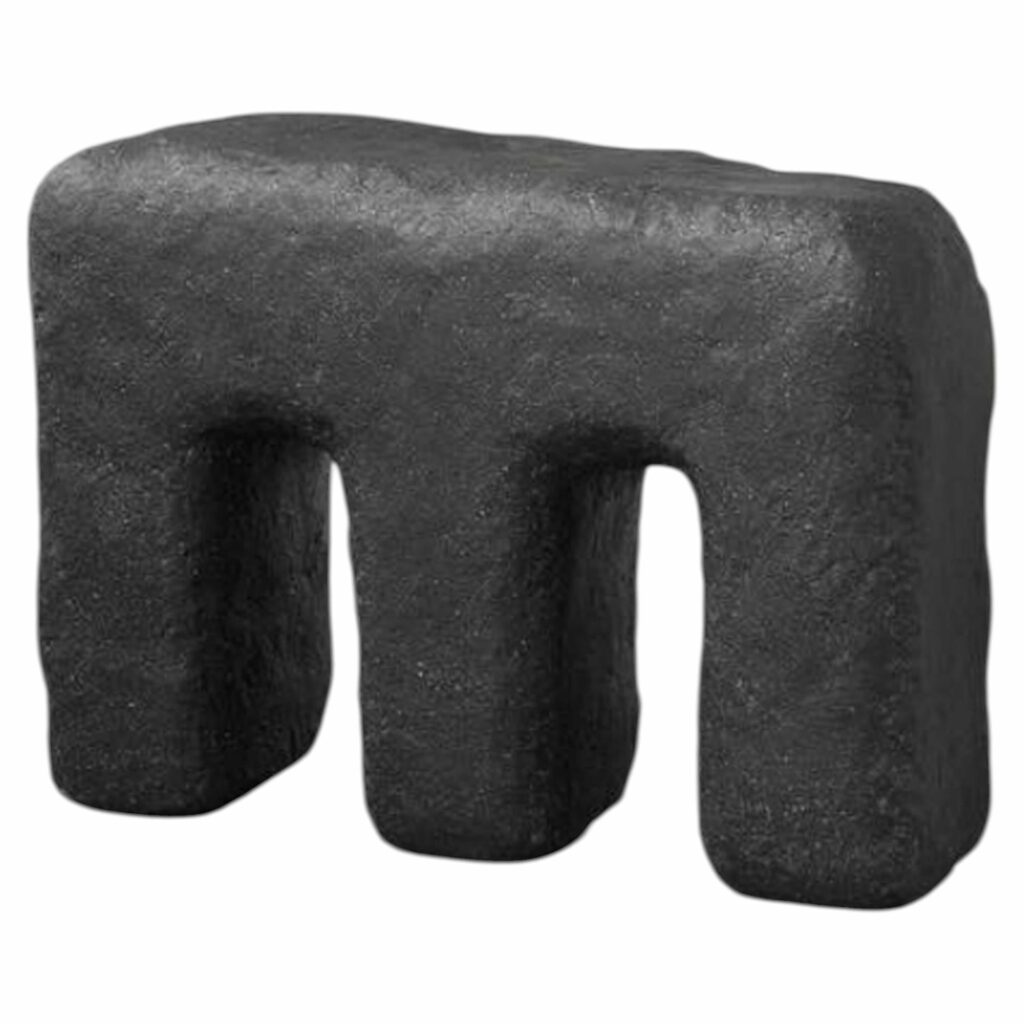
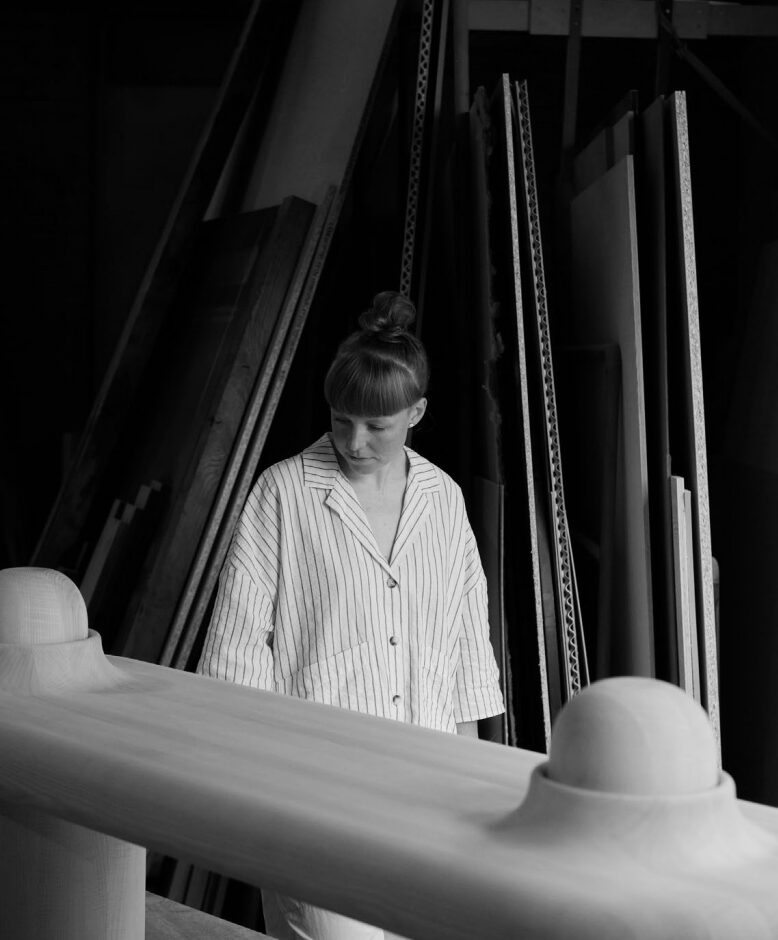
Danish designer Stine Mikkelsen works at the intersection of design and material research, transforming natural stone and textile remnants into innovative composite materials for furniture and objects. Her practice is driven by experimentation, where process and material development play a central role in shaping each outcome.
Texture and tactility are defining elements of Mikkelsen’s work. By embracing the inherent irregularities of her materials, she creates objects that feel both sculptural and raw, while remaining grounded in function. Surfaces invite touch and close observation, revealing layers of process and transformation.
Sustainability is embedded at the core of her approach. Mikkelsen frequently upcycles industrial waste streams, reimagining discarded resources as durable, high-quality artifacts. Rather than positioning sustainability as an added feature, her work integrates it seamlessly into contemporary design language. The resulting pieces demonstrate how responsible material innovation can coexist with expressive form, offering objects that are both environmentally conscious and aesthetically compelling.