Kieu Tran
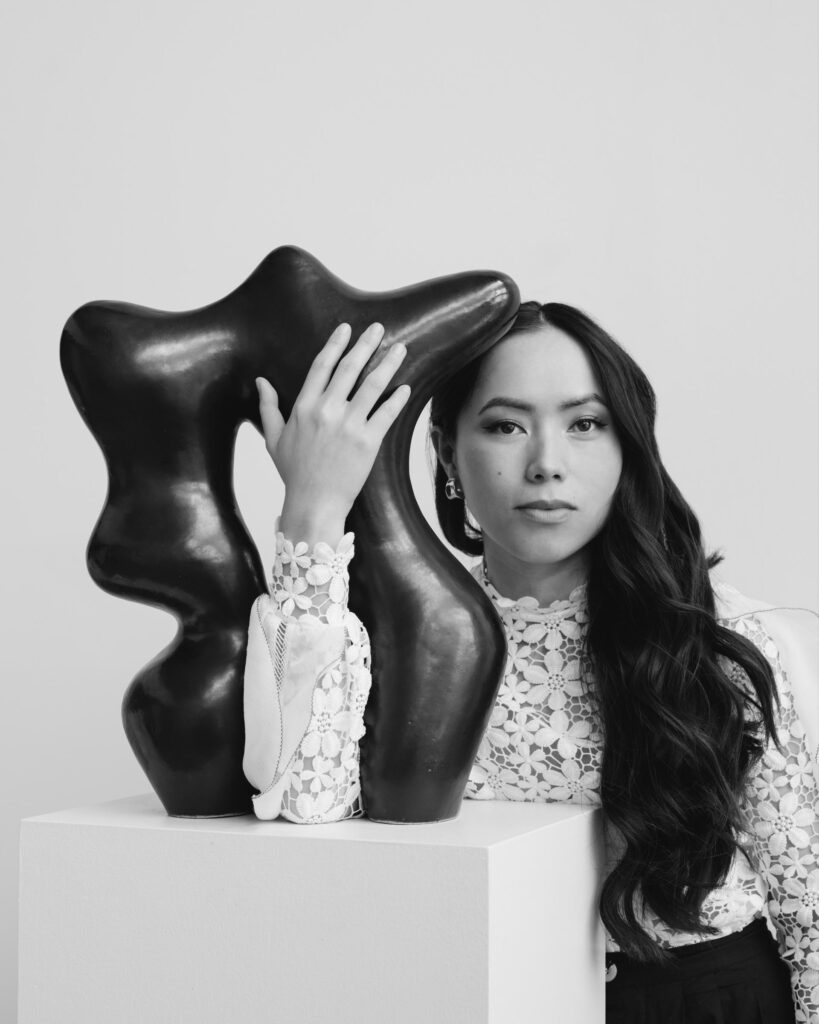
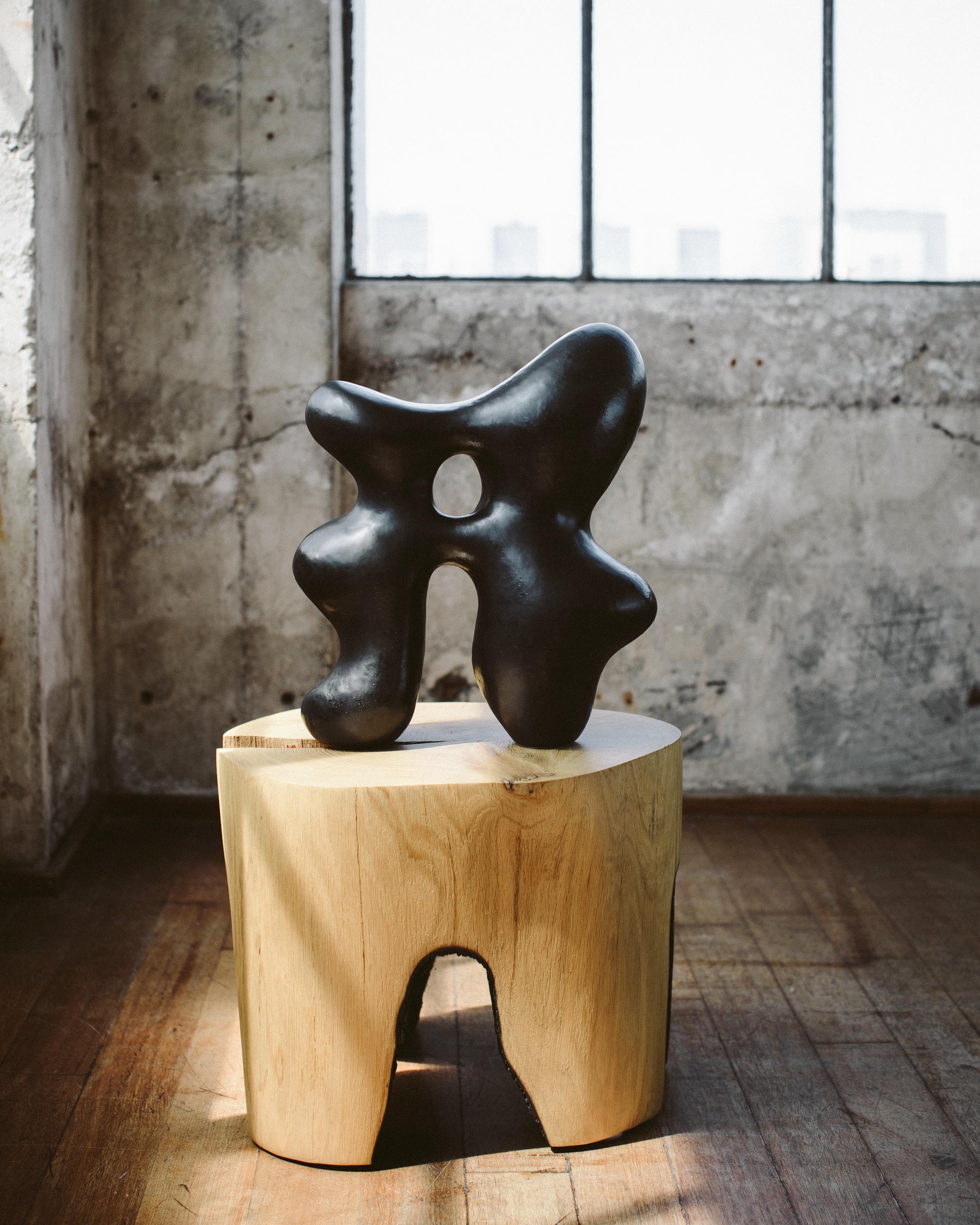
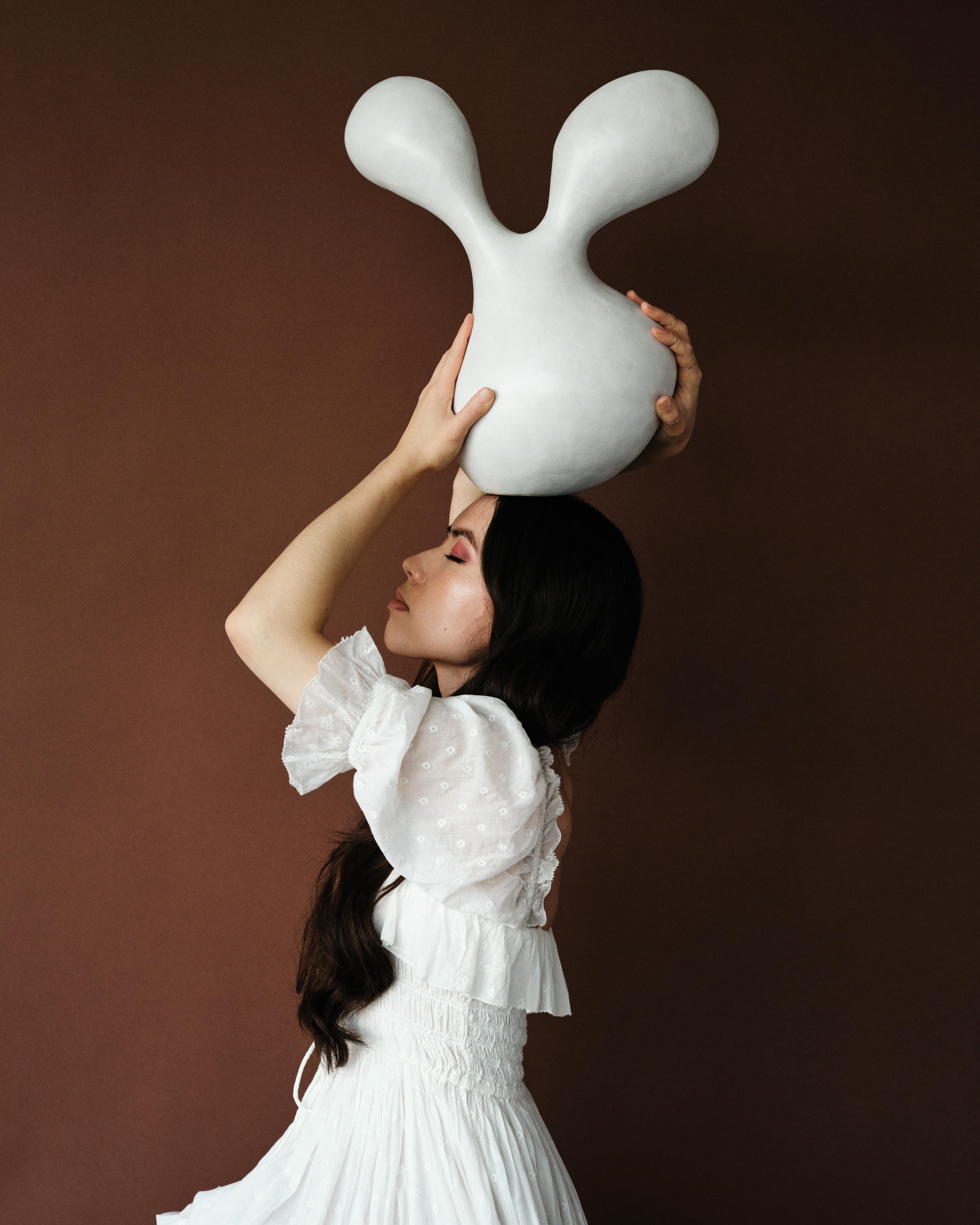
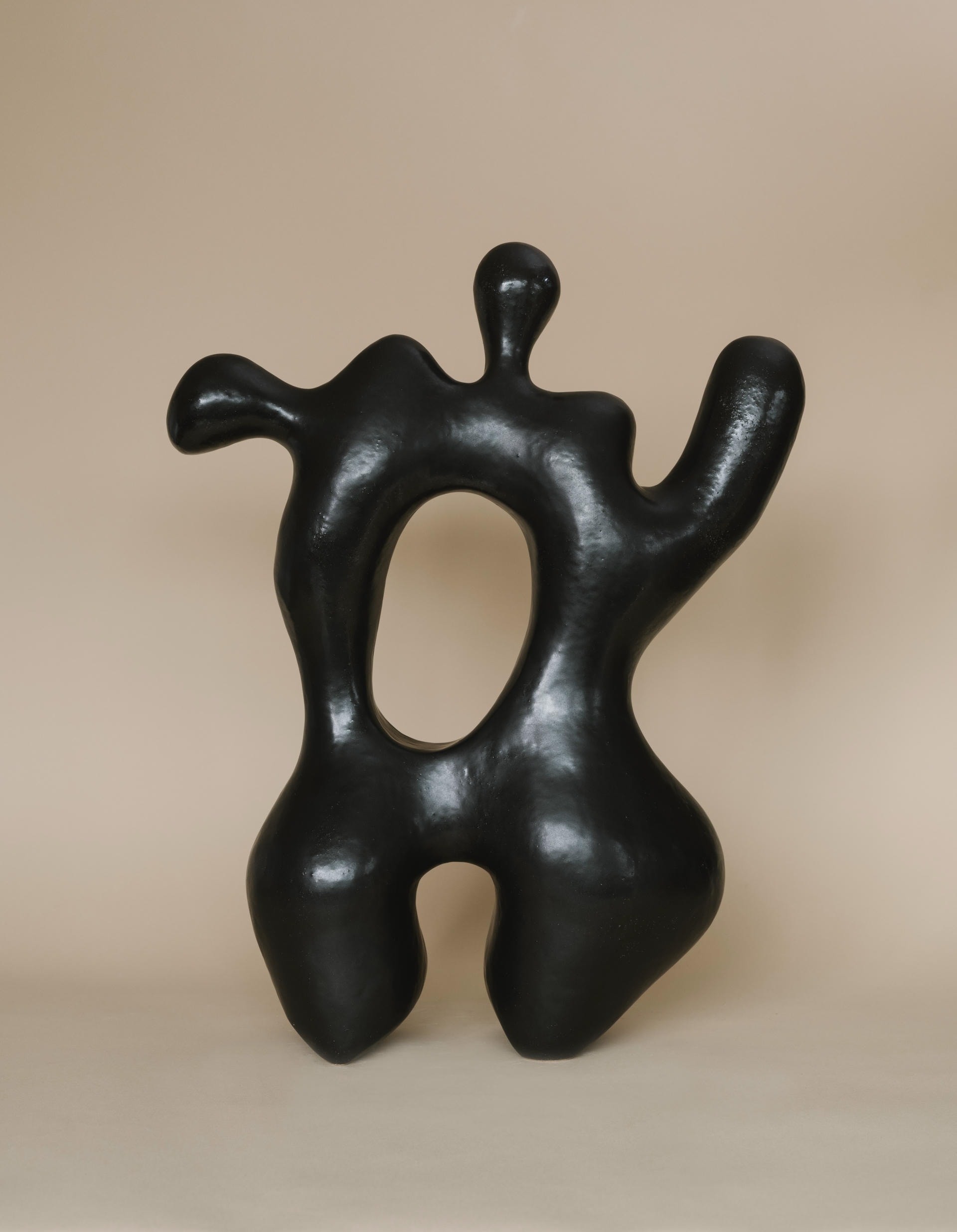
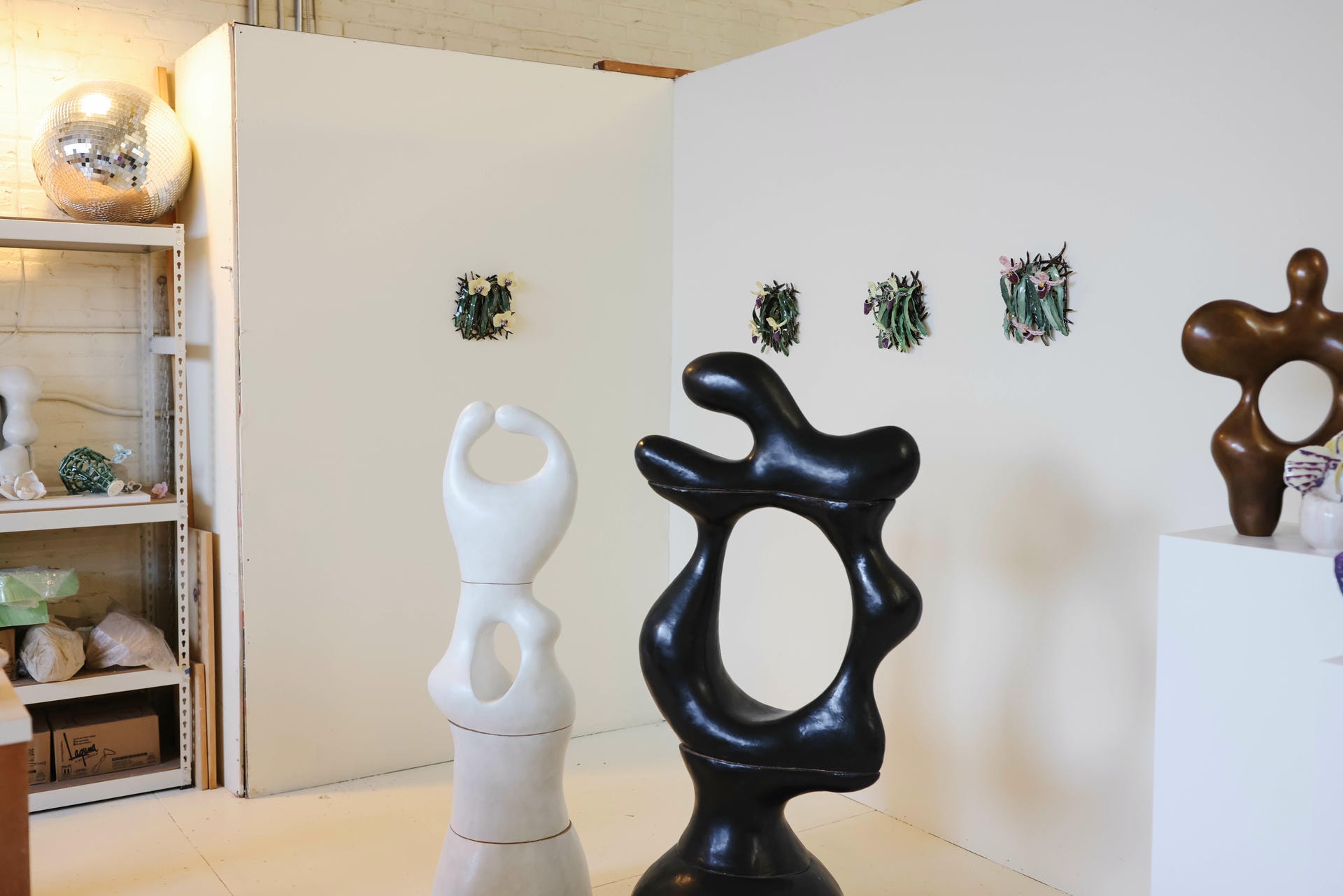
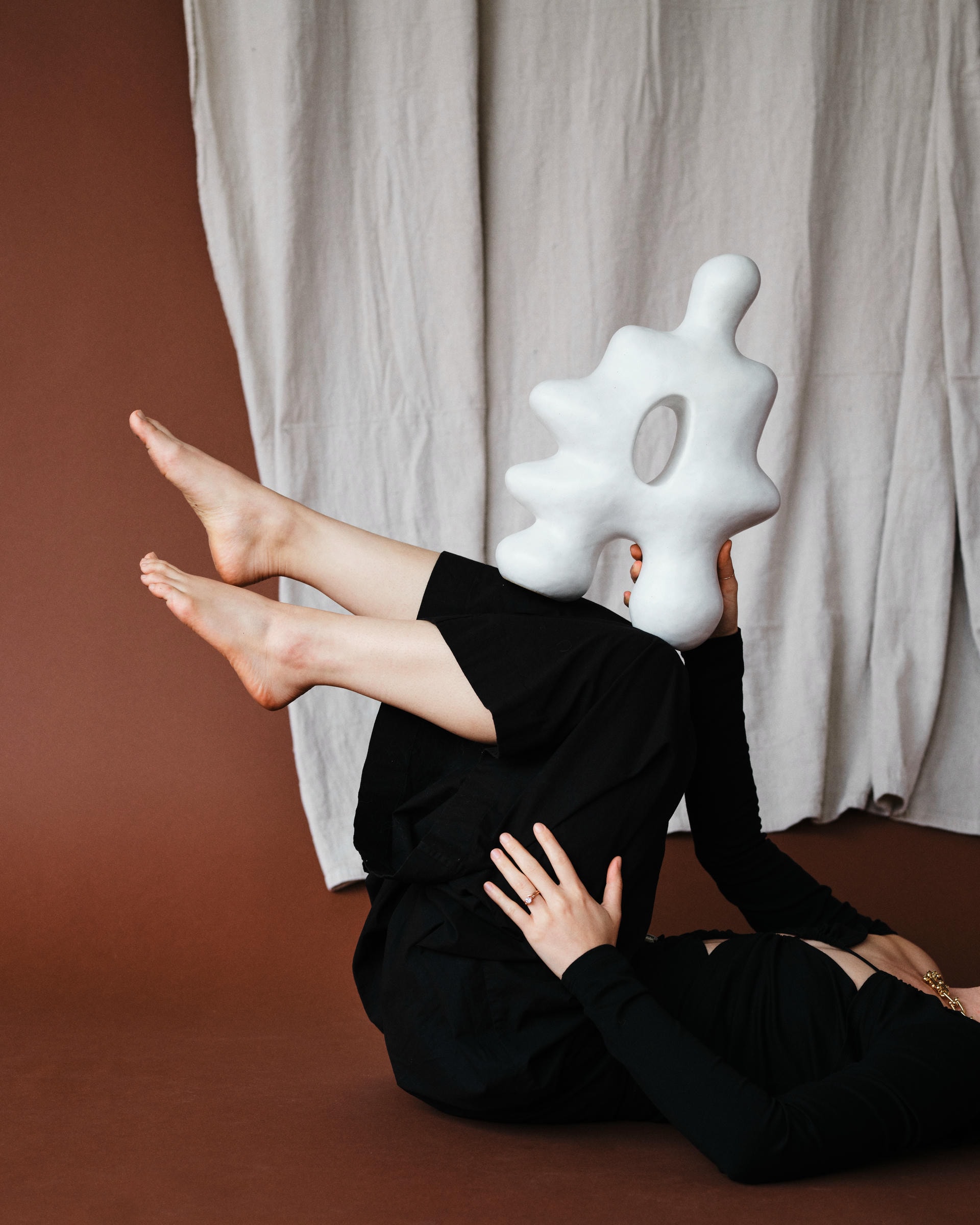
Kieu Tran is a Vietnamese American artist based in New York City whose sculptural practice explores the relationship between form, emotion, and material. Working primarily with ceramics, she creates biomorphic works that move between abstraction and figuration, translating internal and psychological experiences into physical form.
Tran studied art history at UCLA before building a career in software engineering in Silicon Valley, while developing her ceramics practice alongside it. A residency at La Meridiana in Tuscany in 2019 marked a turning point, and in 2021 she left the technology industry to dedicate herself fully to art.
Her work has been exhibited at the Bakersfield Museum of Art, Art Miami, and Art Market San Francisco, and featured in Interior Design, Surface, Sight Unseen, EST Living, and Design Anthology Asia. Her sculptures are held in private collections internationally.
Interview
I was born in Vietnam in 1988 and immigrated to the U.S in 1990. My family is based in San Jose, California, which has the greatest number of Vietnamese residents in any one city outside of Vietnam. That experience of existing between spaces has deeply shaped the emotional language of my work. A lot of my practice comes from trying to understand identity, memory, and the body as something both personal and inherited.
Some of my earliest memories are connected less to the art world itself and more to making things by hand. I was always drawn to tactile processes—drawing, building, arranging materials, repeating gestures. I think I understood very early that making could become a way of processing emotions and internal experiences that I didn’t yet have language for.
I took a scenic route into the art world, and for a long time I wasn’t working in it directly. I studied art history at University of California, Los Angeles, and also spent time studying in Italy and Germany, initially hoping to work in museums or galleries, but I struggled to find a path into the field after graduating in 2012. I eventually moved into tech, teaching myself to code and working as a software engineer between Budapest and Oakland, while quietly developing a ceramics practice alongside it as a form of escape and grounding.
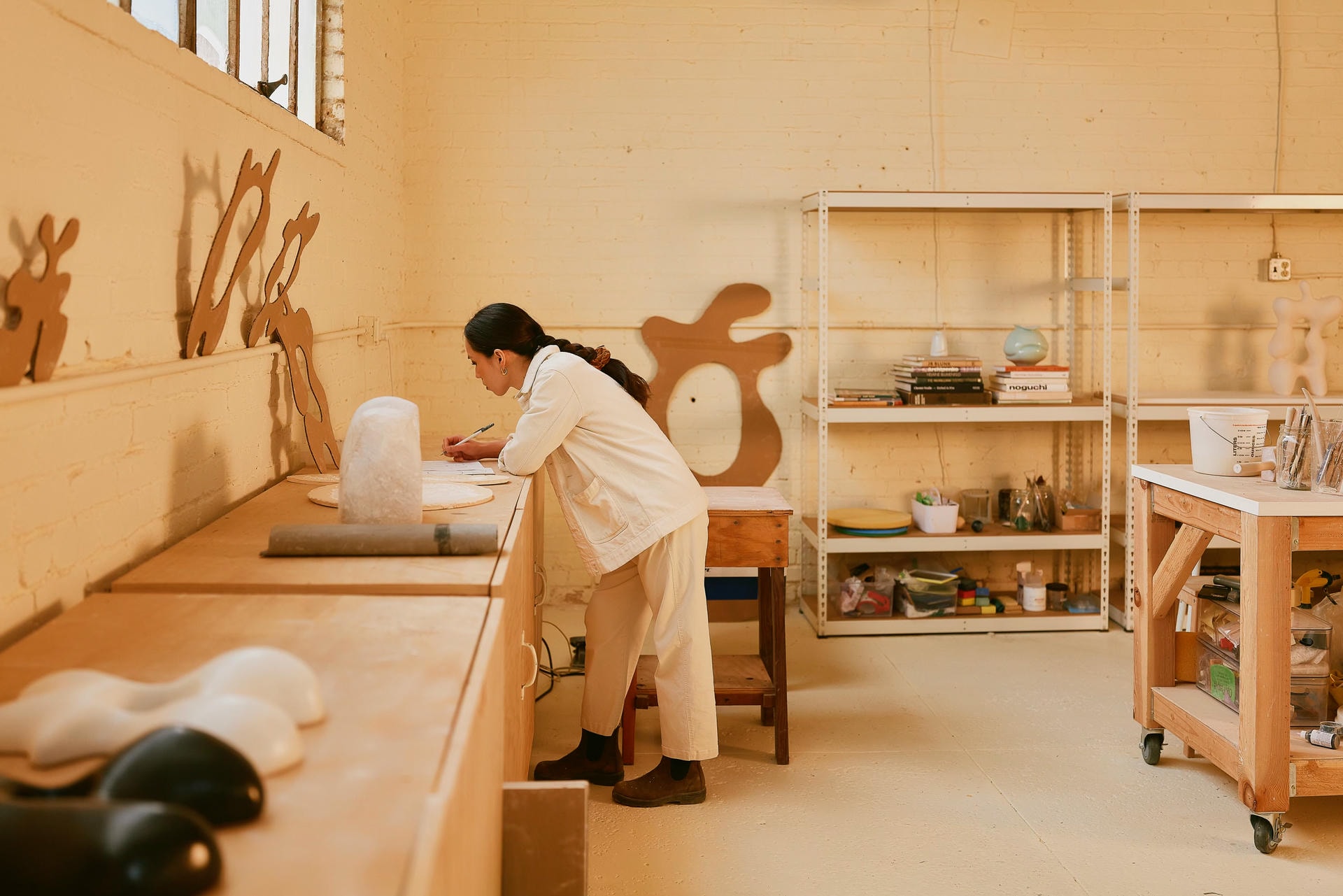
The real shift happened after a sabbatical in 2019, when I attended an intensive ceramics program at La Meridiana International School of Ceramics, which changed how I understood making entirely. After returning, I rented a studio, began focusing on sculpture, and gradually stepped fully into an art practice, leaving tech in 2021 to pursue it full time.
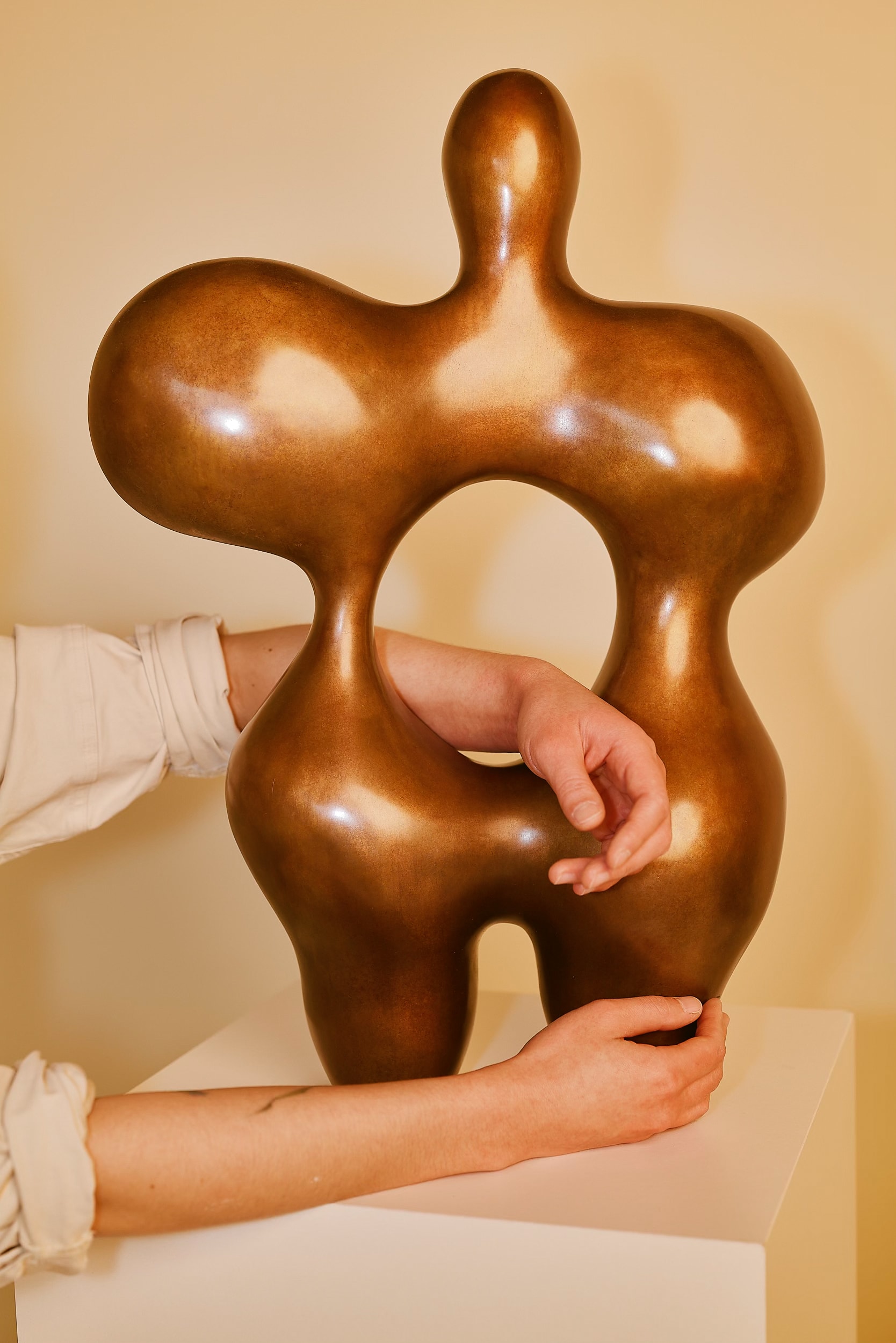
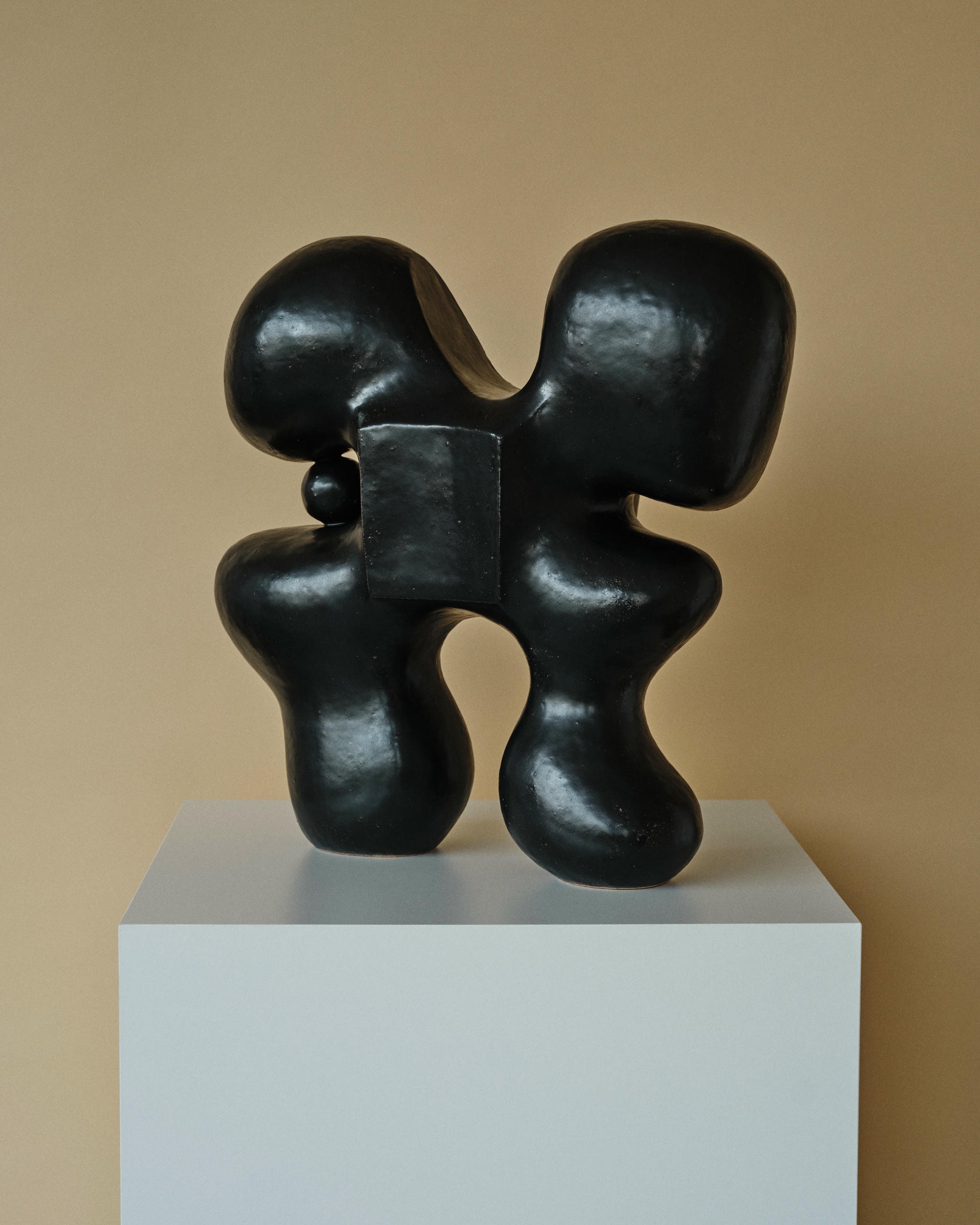
I became interested in design through a desire to create work that could exist more intimately within daily life. I was drawn to the idea that sculptural objects could shape emotional atmosphere and physical experience, not just be observed from a distance. That blurred boundary between art, object, and environment continues to guide my practice.
My process is rooted in meditation, repetition, and self-examination. Most works begin as an emotional or psychological condition that I can sense physically before I can fully articulate it intellectually. I’m influenced by the body, memory, architecture, textile traditions, and the tension between softness and restraint. The work develops slowly through touch and accumulation rather than through fixed plans.
Work is fluid and has its seasons, but I typically respond to emails, do administrative work, or prepare content for social media in the morning before I head to my studio to make things with my hands or simply sit sometimes. In some seasons, I take time to travel to gather more inspiration.
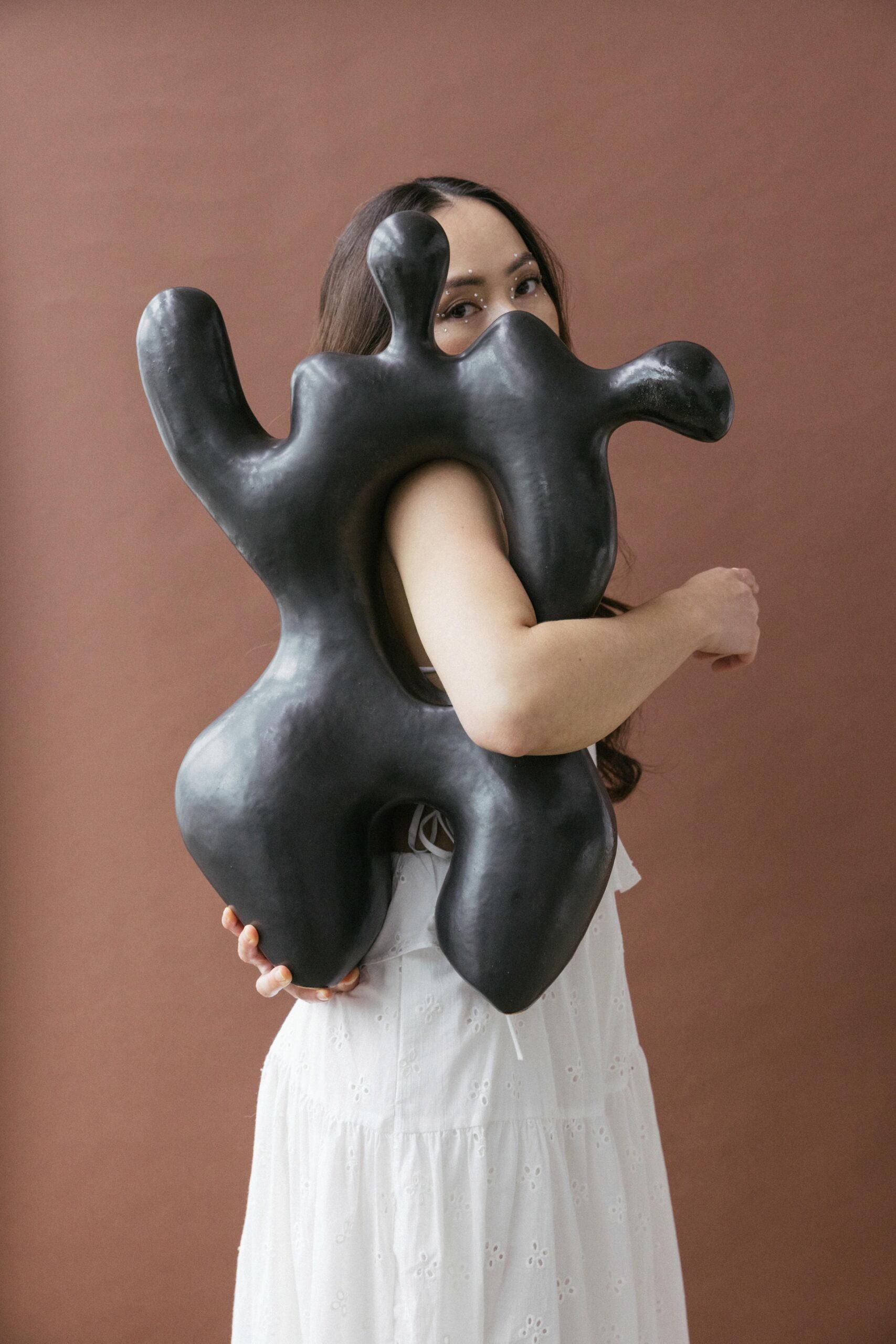
I choose materials that allow direct physical engagement and retain evidence of touch, pressure, and time. The material is never separate from the meaning of the work—it’s how the meaning is formed. I prefer to work with clay because it’s a material that follows the soul. It’s a highly conversational material without words. There’s an immediacy to it and a soothing, grounding aspect to touching Earth. Clay also captivates me because it needs to undergo a lot of transformation to arrive at its final form, which speaks to our human experience.
Recently I’ve also been exploring textiles and fiber because they hold a similar intimacy and rhythm of repetition while introducing a different softness and vulnerability.
Treat your practice seriously before you feel ready to. Invest in learning how to properly document and present your work, because that becomes part of how the work exists in the world. At the same time, stay close to what feels necessary for you to make rather than chasing trends or categories. Sculptural design becomes meaningful when it carries a genuine point of view and emotional presence.
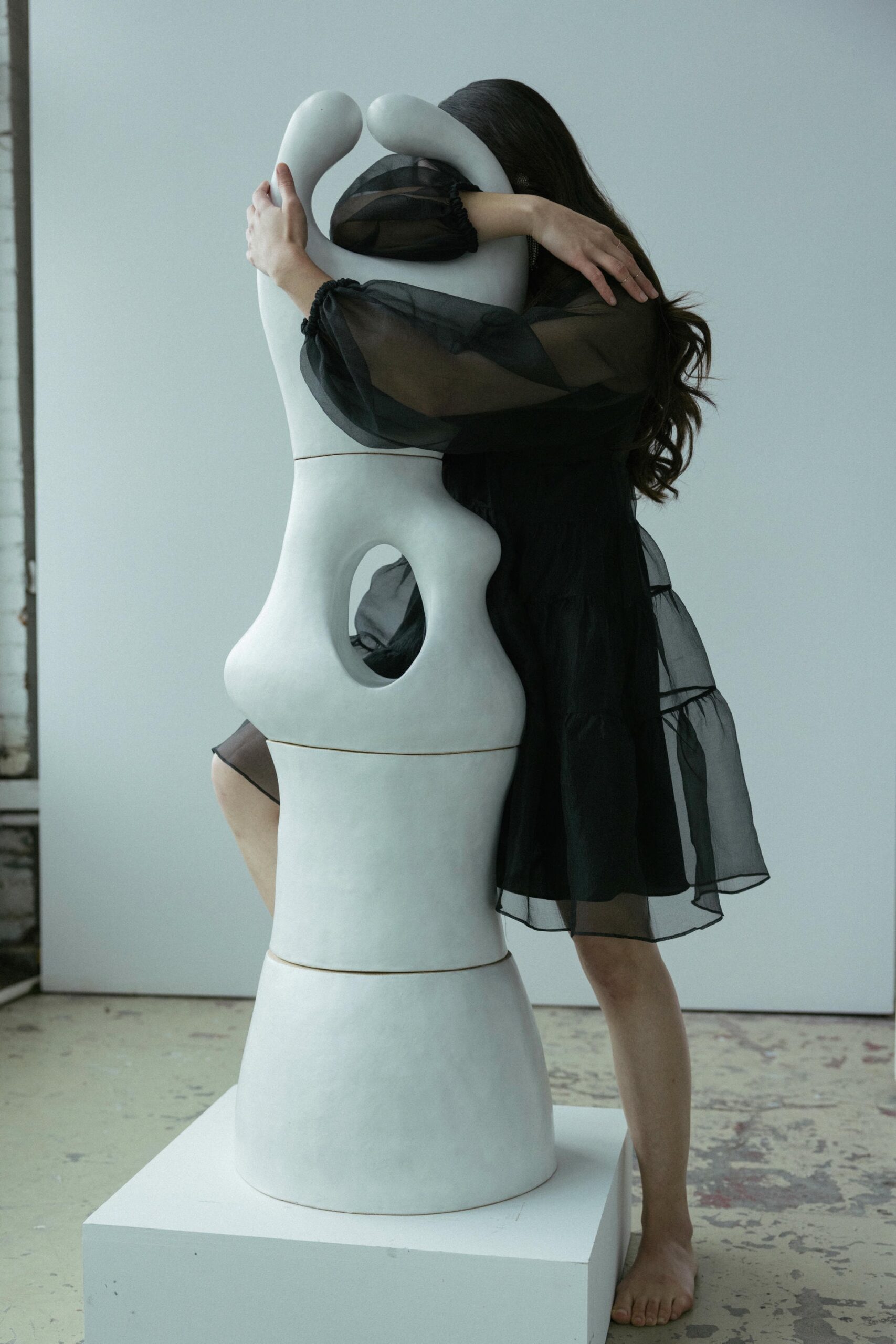
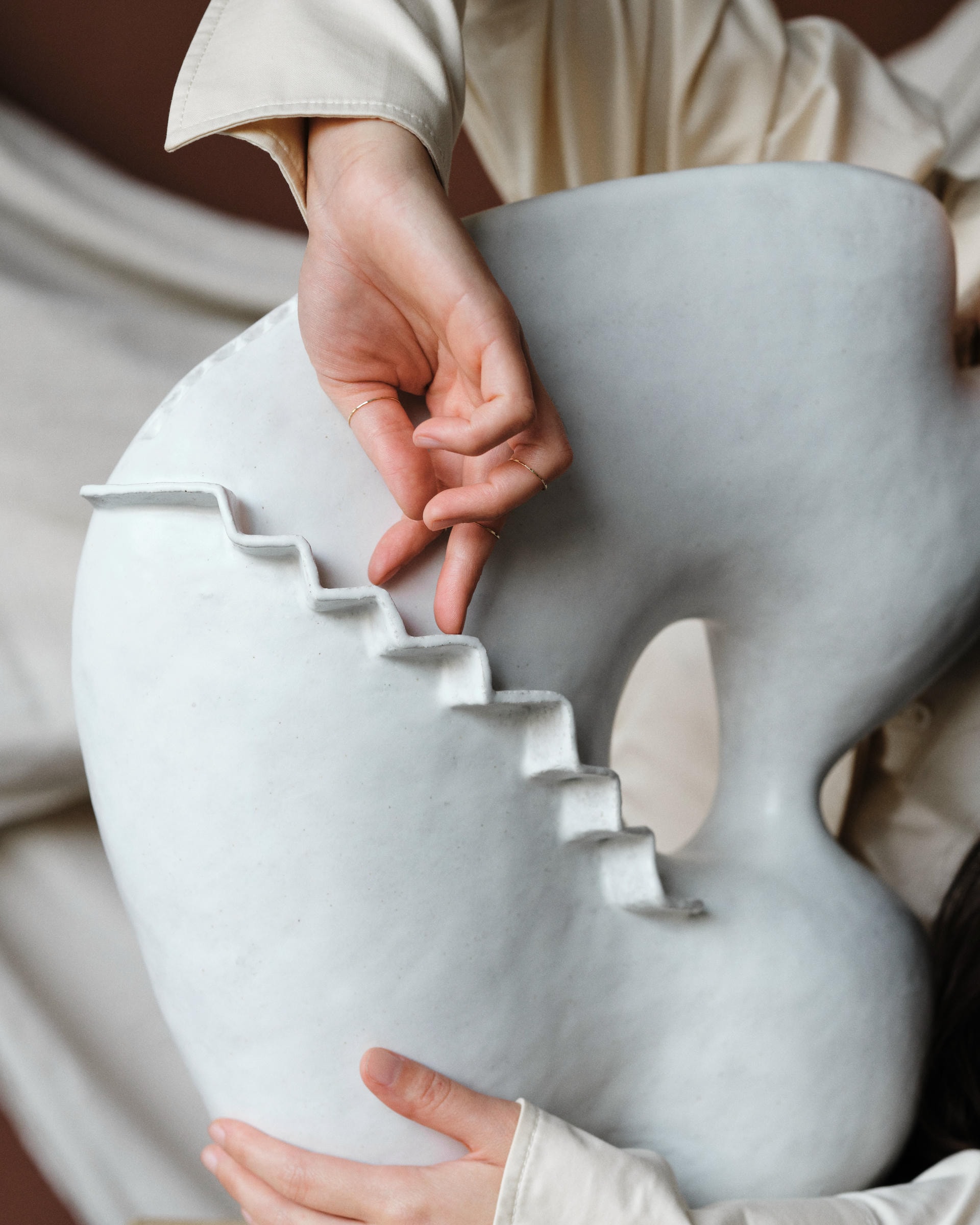
I don’t feel fully aligned with any single movement, but the work probably exists closest to contemporary collectible design and sculptural minimalism. At the same time, I’m less interested in aesthetic categories than in creating objects that hold psychological and emotional presence. The work is ultimately more connected with internal states than formal style.
I’m drawn to designers whose work carries emotional restraint and material sensitivity. The work of Isamu Noguchi, Alexander Calder, and has been influential in different ways, particularly in how they approached form as something experiential and bodily rather than purely functional.
I appreciate contemporary designers who maintain a strong sense of material intimacy and emotional clarity in their work. I’m especially interested in practices that blur the boundaries between sculpture, furniture, and installation, where objects begin to function almost psychologically rather than purely practically. I admire Rogan Gregory and Voukenas Petrides.
I’m inspired by artists whose work feels deeply embodied, emotionally precise, and has a deep respect for craftsmanship: Do Ho Suh, Tuan Andrew Nguyen, Kennedy Yanko, James Turrell, Kawabata Kentaro.
Psychological self-portraits expressed through form, touch, and material tension.
“Treat your practice seriously before you feel ready to.”
The Questions
(The Proust Questionnaire is a set of questions answered by the French writer Marcel Proust.
Other historical figures who have answered confession albums are Oscar Wilde,
Karl Marx, Arthur Conan Doyle, Stéphane Mallarmé, Paul Cézanne…)
Presence without urgency.
Dissociation.
Overthinking.
Lack of integrity.
My husband and father of my child.
Solitude.
Fragmented but hopeful.
Productivity.
Empathy.
Emotional honesty.
“I’m still figuring it out.”
To speak every language fluently.
My tendency toward self-doubt.
Pivoting my career and committing to being an artist. More recently, learning how to sustain my practice while becoming a parent, even as my time, focus, and rhythms have completely shifted. It feels less like a single achievement and more like an ongoing practice of returning to the work under changing conditions.
A very luxurious, pampered house cat.
In a villa in the Italian countryside.
My art collection.
Emotional numbness.
Making with my hands.
Sensitivity.
Consistency.
Brontë sisters, Orson Scott Card, Chimamanda Ngozi Adichie.
Jane Eyre.
I don’t think I do.
Artists who continue despite becoming mothers.
Names of loved ones.
Performative sincerity.
The times I let fear make decisions for me.
Peacefully, with my family nearby.
If it’s not a hell yes, it’s a no.
“I prefer to work with clay because it’s a material that follows the soul.”
SHARE :