Cinerimorphosis
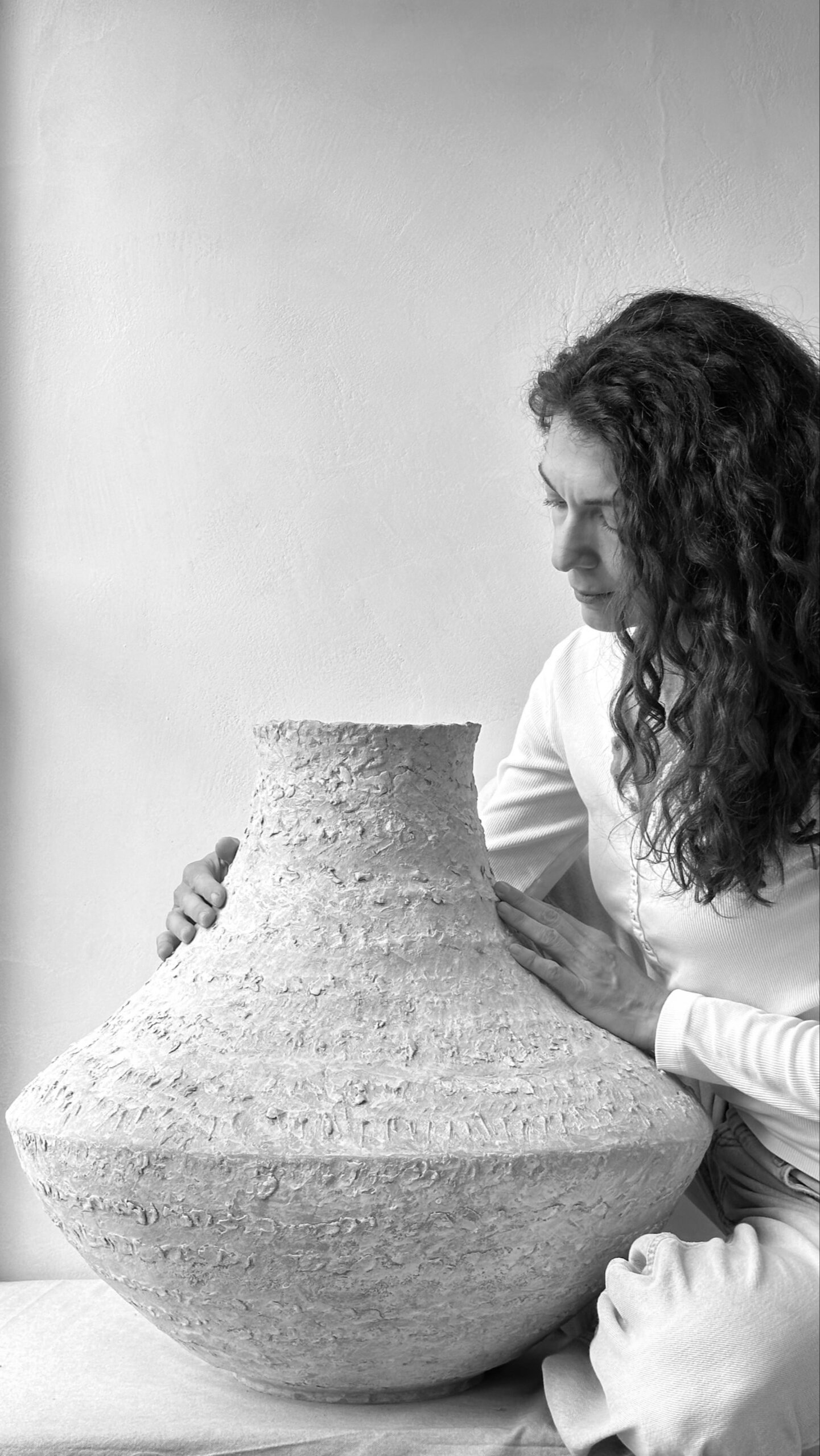
By Laury Guillien, a materials designer and PhD student currently based in Paris. EnsadLab – PSL, Soft-Matters group, SACRe program
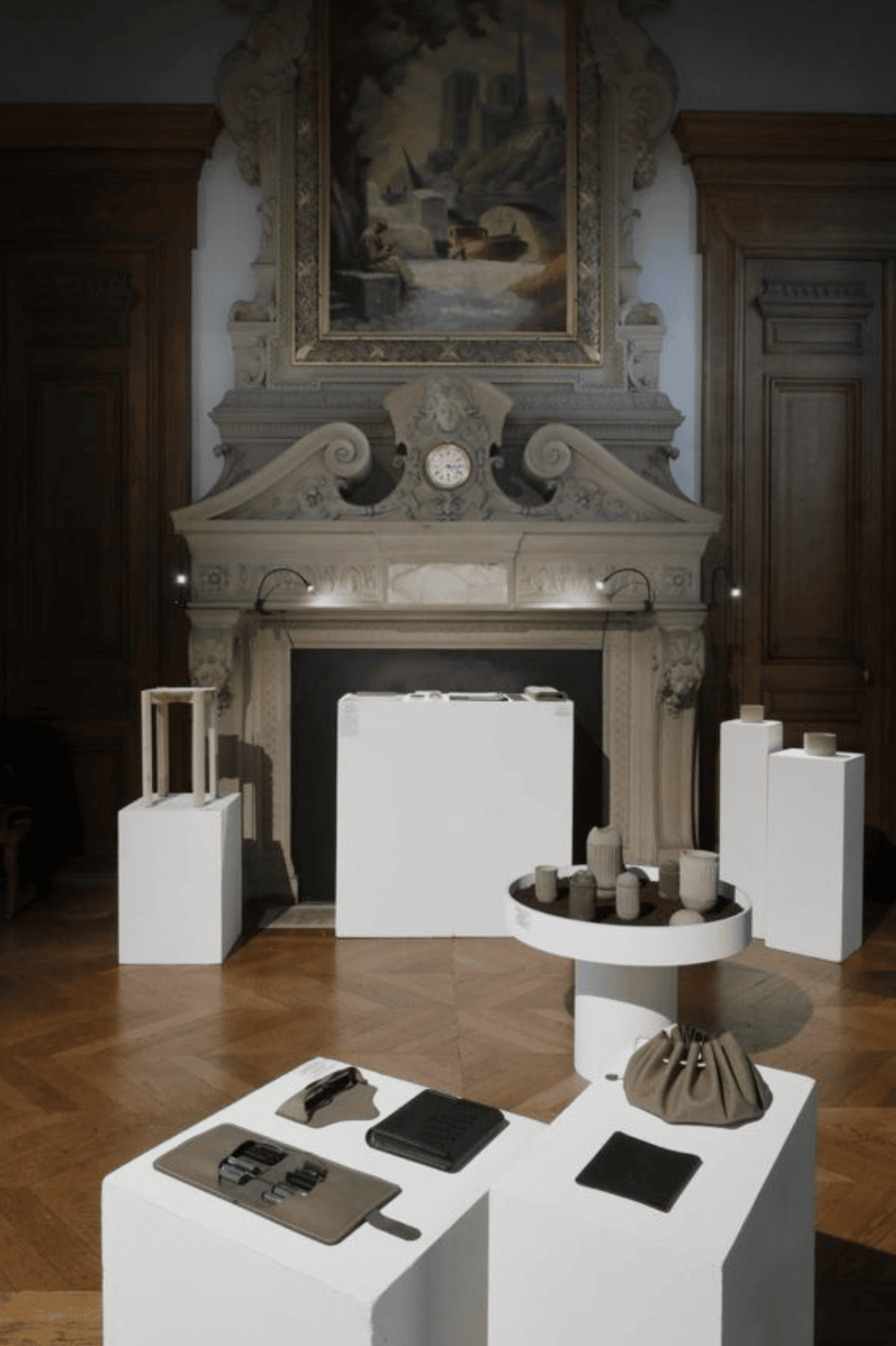
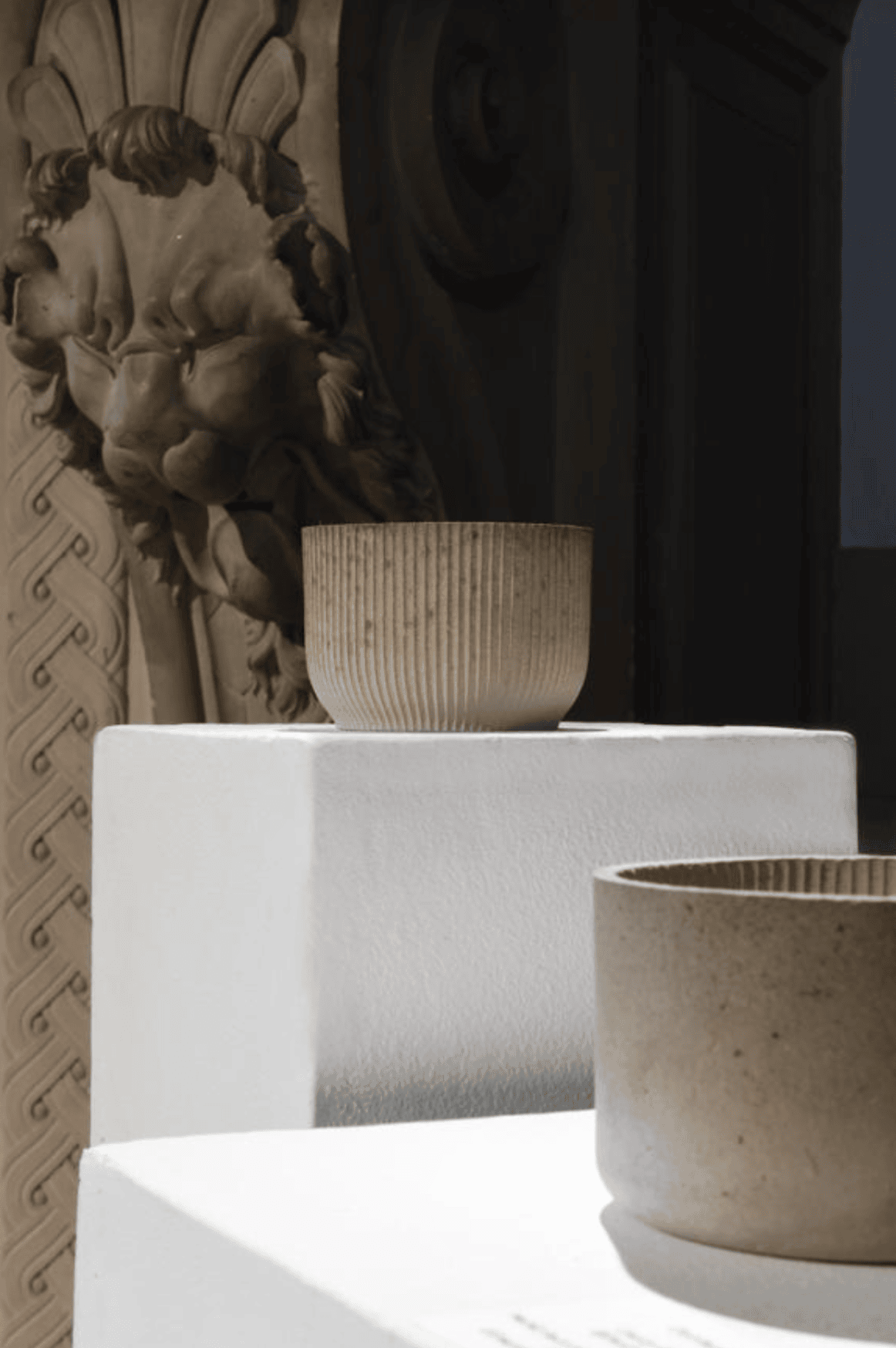
Design for a Wild World, a collective exhibition during the Paris Design Week 2022. Soft and rigid objects and materials made from wood ash. © Béryl Libault
“Nothing is created, either in the operations of art or in those of nature, and it may be taken as a principle that in every operation there is an equal quantity of matter before and after the operation, and that there are only changes, only modifications.” – Antoine Lavoisier, Traité élémentaire de chimie, 1789
There is a gesture we perform without thinking. Opening the door of a wood stove first thing in the morning, shoveling out the ash while it is still warm, tipping it into a bucket, and closing the lid. The gesture takes a few seconds, and it brings something to a close: the wood was cut, dried, transported, and burned. It gave its heat, and all that remains is a mineral dust that will be thrown out with the household waste or scattered over the garden. Ash is what comes afterwards. It is, in the strict sense, an ultimate residue: what is left when there is nothing more to extract.
In France, seven million households heat their homes with wood and produce close to 400,000 tons of ash each year¹. Industrial and collective installations generate a further 300,000 tons² or so. These are considerable volumes for a matter that has, in regulatory terms, only two boxes to fall into: the product logic, which requires compliance with a fertilizer or compost standard, and the waste logic, which imposes a land-spreading plan, laboratory analyses and a demonstration of harmlessness, all at the producer’s expense. In most installations the various flows are mixed, domestic circuits escape any form of accounting, and the publicly available data remain patchy. This absence of traceability is not an administrative detail: it is the concrete form taken by the invisibility of a resource. A Matter that goes uncounted also goes unseen, and what remains unseen cannot become material.
I have been working with ash for six years. And the question that organizes my research is not: what can be made from ash? It is rather: what becomes of the designer’s work when matter is already doing something?
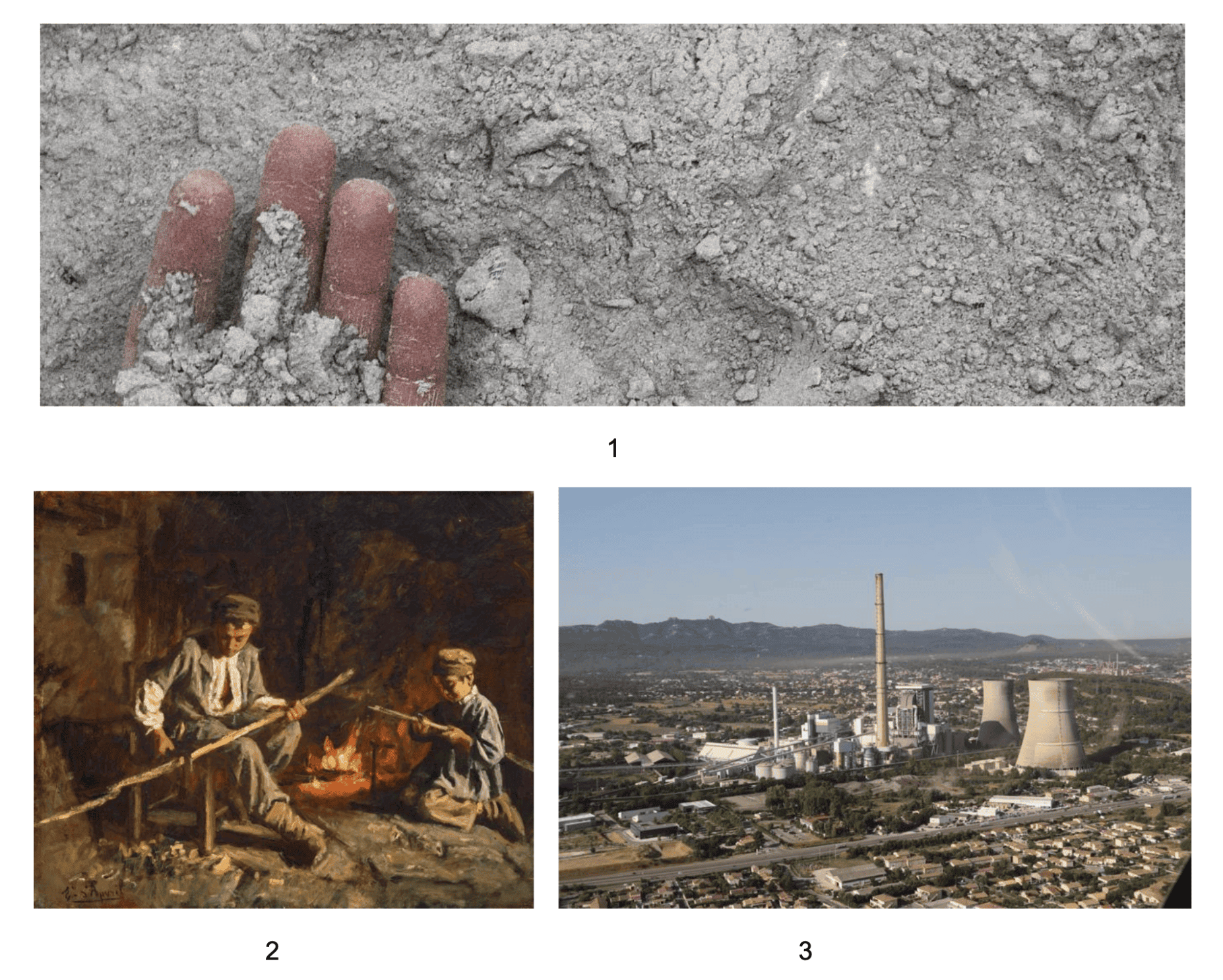
- Wood ash as raw material, 2025. © Laury Guillien
- Scène d’intérieur, paysans au coin du feu. Édouard d’Apvril, 19th century. © Musée de Grenoble
- Biomass power plant of Gardanne in the south of France, 2025. © FNEPACA
When does matter become waste?
The word waste rarely describes a matter. It describes a decision we take about it, at a given moment, in a given context. Ash offers the clearest demonstration of this, because it has a long history of use and because its status, over that span of time, has never stopped changing.
Before it was a residue, ash was an agent. Leaching yielded the potash and soda used to wash linen. It fertilized soils and regulated their acidity, to the point of underpinning entire agricultural systems. In Provence, it was used to draw the bitterness out of olives. In tropical countries, where salt was rare and costly, plant ash rich in sodium served as a salt substitute. In Mali, the Dogon people have for centuries stored their ears of grain, their seeds and their seedlings in ash from millet stalks. The earliest glass of the Bronze Age was made from plant ash, before sand took its place. It washes, it feeds, it preserves, it softens, it vitrifies and for thousands of years, ash was a matter that acts, an active entity.
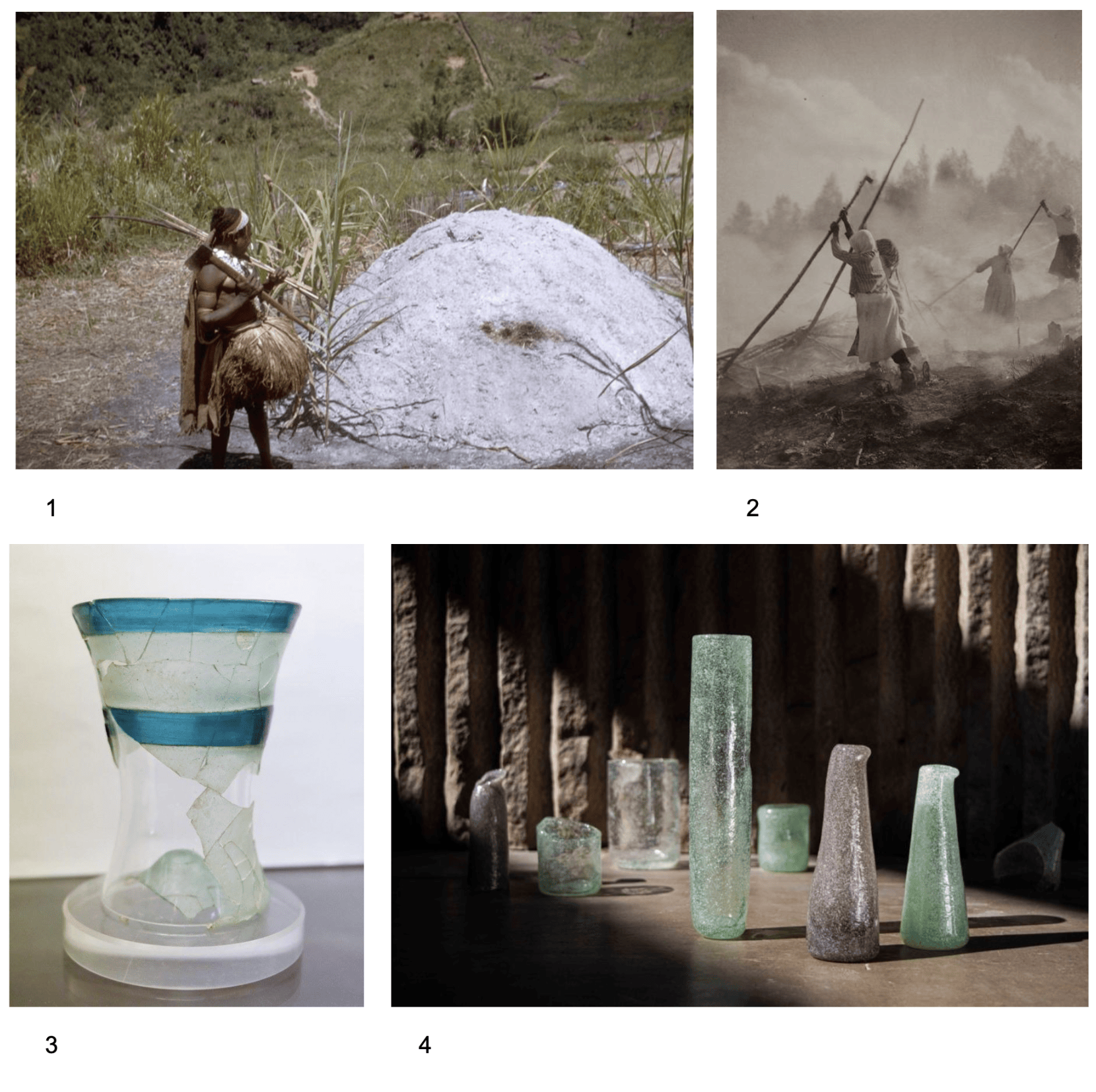
- Salt Production Among the Baruya in Wonenara, Papua New Guinea, 1965. © Pierre Lemonnier
- Slash-and-burn agriculture, Finland, 1892. © Into Konrad Inha
- Truncated conical glass with bands, Vacquiers, 10th–12th century. Housed at the Villariès Archaeological Museum. © Inès Pactat
- From the Ashes, Germany, 2021. © Studio PeiPei
It has also been, and remains, a matter that signifies. Fire destroys, but it also purifies; it marks and enables transitions. Ash is the result of a metamorphosis: the passage from the material to the immaterial, from form to the formless, from the living to the inert. Ash Wednesday reminds us that we are dust and that to dust we shall return. In the same movement, ash is fecundity and regeneration, what remains and what allows things to begin again. No other residual matter carries so contradictory a symbolic charge.

A woman wearing a cross drawn with ashes on her forehead on Ash Wednesday, Costa Rica, 2019. © Juan Carlos Ulatezzz
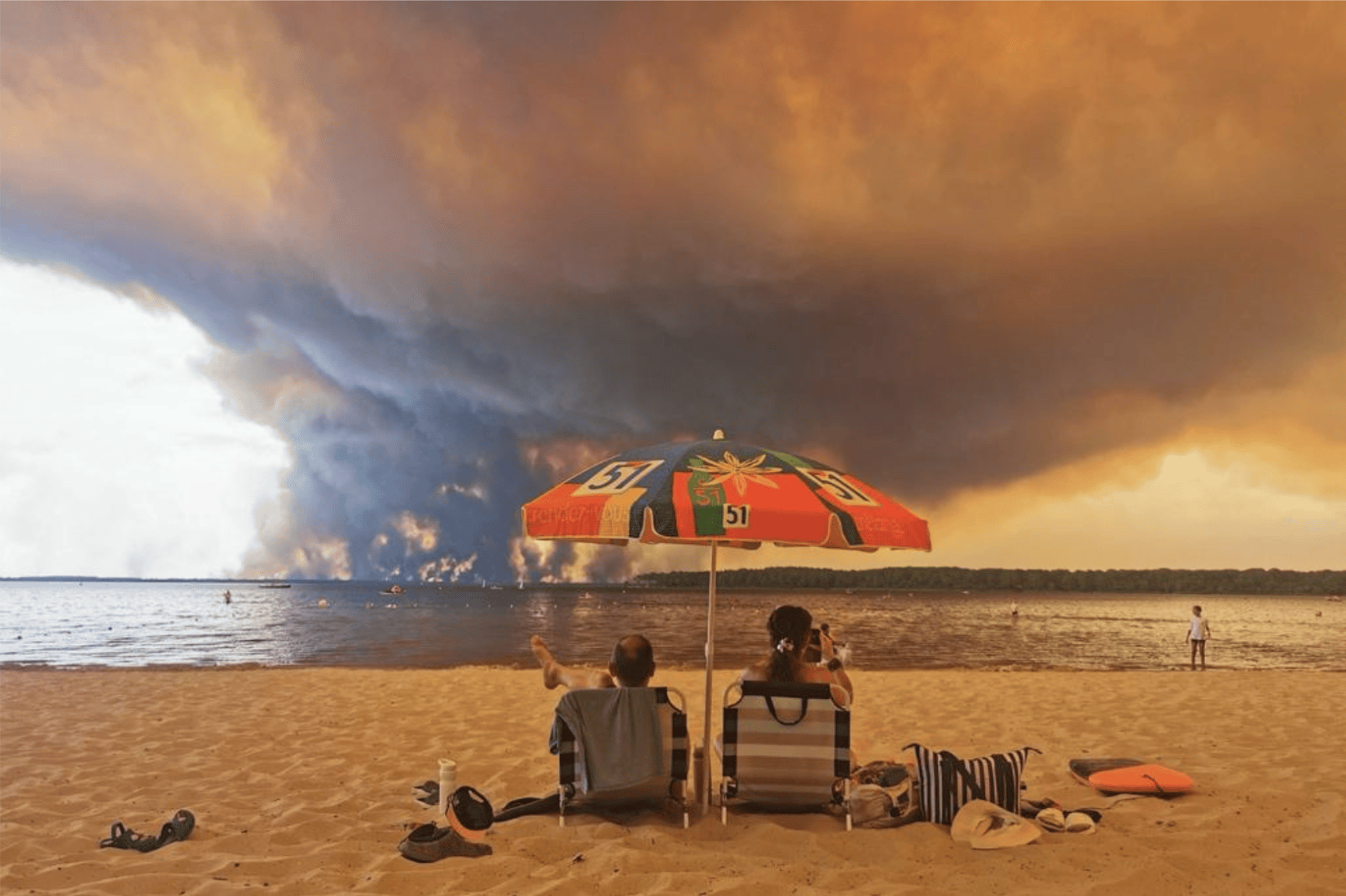
The fire that ravaged southwestern France in the summer 2026 © Maximilien Lamy
What I am trying to understand is how a matter laden with all of this could have become invisible. The hypothesis I am pursuing has to do with a shift in our relationship to materials. We have gradually moved from the “encountered material”³, chosen for its proximity and ease of access to the “made-to-measure material”, modelled and formulated to meet ever more demanding specifications. Ash is precisely what that shift left behind. Too variable to be standardized, too ordinary to be noticed, it fell outside the field of materials altogether.
It is to bring it back into that field that I coined the term cinerimorphosis: from the Latin cineris, ash, and metamorphōsis, the process of taking form. The point is not to recycle ash, nor to pass it off as something else, but to work from what it is: its properties, objective and instrumentally measurable; its qualities, as perceived through the senses; its values, contextual and cultural. It is by holding these three planes together that a residual material can become a matter for creation.
Matter does not wait to be given a form
We have inherited a way of conceiving making so self-evident that it passes for natural: the maker has an idea in mind, obtains a matter, applies that idea to it by means of tools and technique, and the object appears. Form comes from the mind, matter comes from the world, and the work consists in making the two coincide. Theorists call this model hylomorphism, from hyle, matter, and morphē, form.
The British anthropologist Tim Ingold has offered a critique that has profoundly reshaped my practice. The maker, he writes, does not stand at a distance from a passive world waiting to receive his projects; he inserts himself into processes already under way and joins his own forces to those already at play. Form is not imposed from outside: it emerges from a field of relations involving matter, gesture and tool, but also temperature, humidity, drying time, and so on. From this Ingold draws a formulation I keep in mind with every trial:
“The properties of materials are not attributes but histories.” – Tim Ingold, Lines: A Brief History, 2007
In the workshop, this idea ceases to be a theoretical position. It becomes a daily and sometimes vexing experience. A formulation cracks; a binder foams as it is incorporated and traps air bubbles; a sample shrinks and warps. Each time, we must understand why. With each iteration, the question itself changes: matter answers, and its answer displaces the initial intention. I do not work on ash, I work with it, and I must adapt.
Three projects came out of this way of working: self-watering vessels, supple materials for leatherwork, and a funerary urn. All three engage the properties, the qualities and the values of ash at once. But in each project, one of these planes asserted itself more strongly than the others.
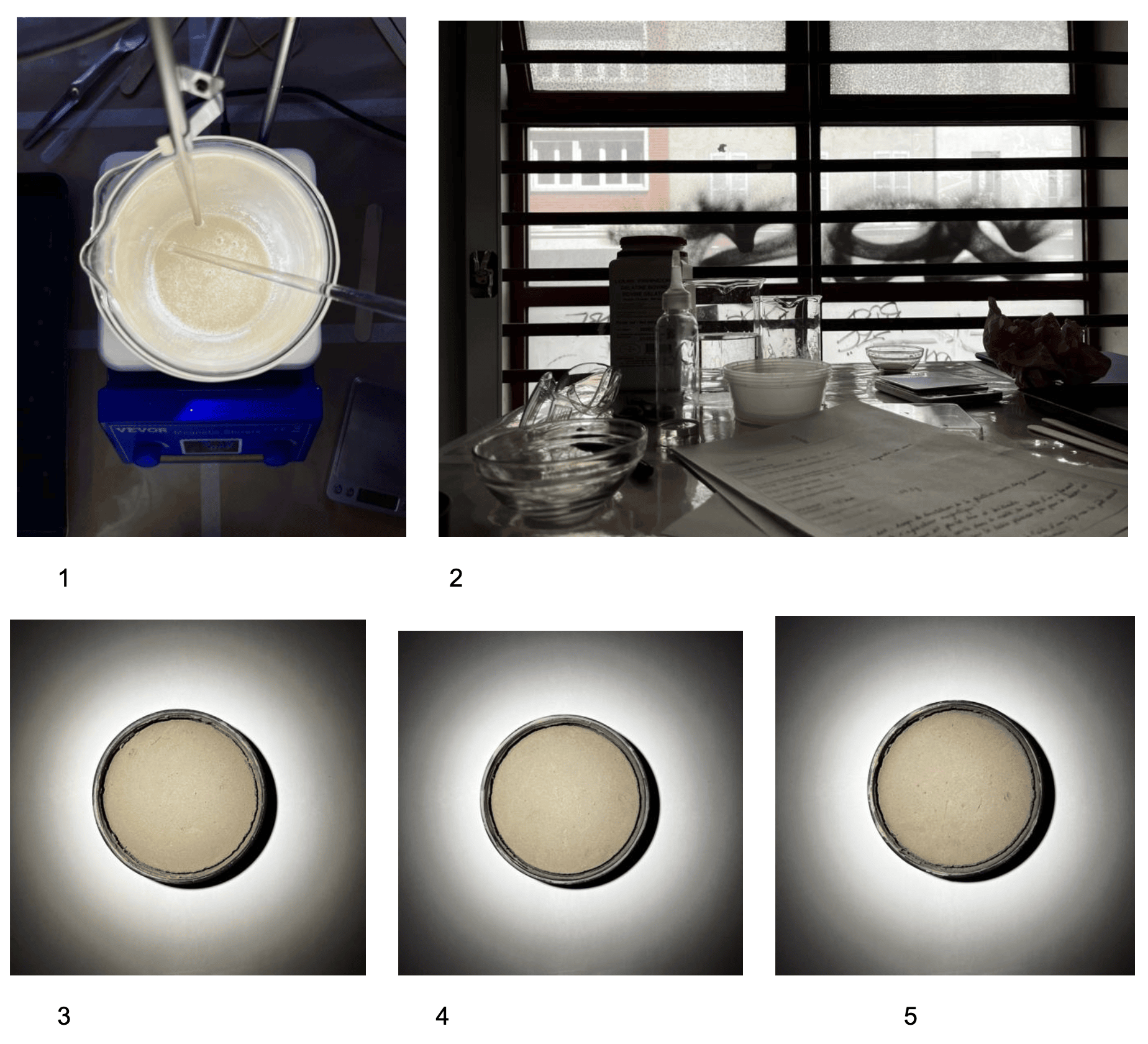
2. View of the workshop, Saint-Ouen-sur-Seine, 2026. © Laury Guillien
3, 4, 5. Biopolymer samples made from wood ash, 2026. © Laury Guillien
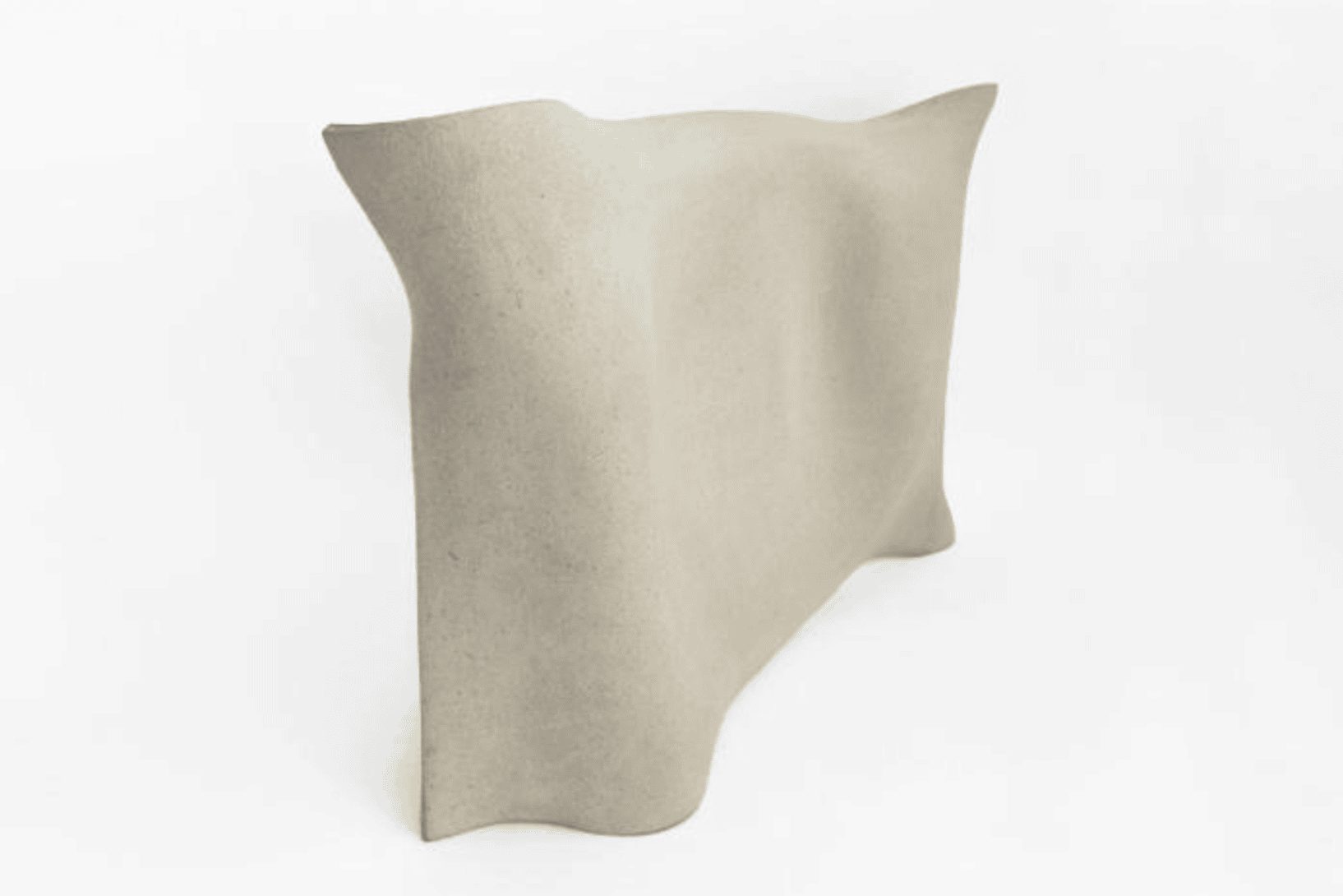
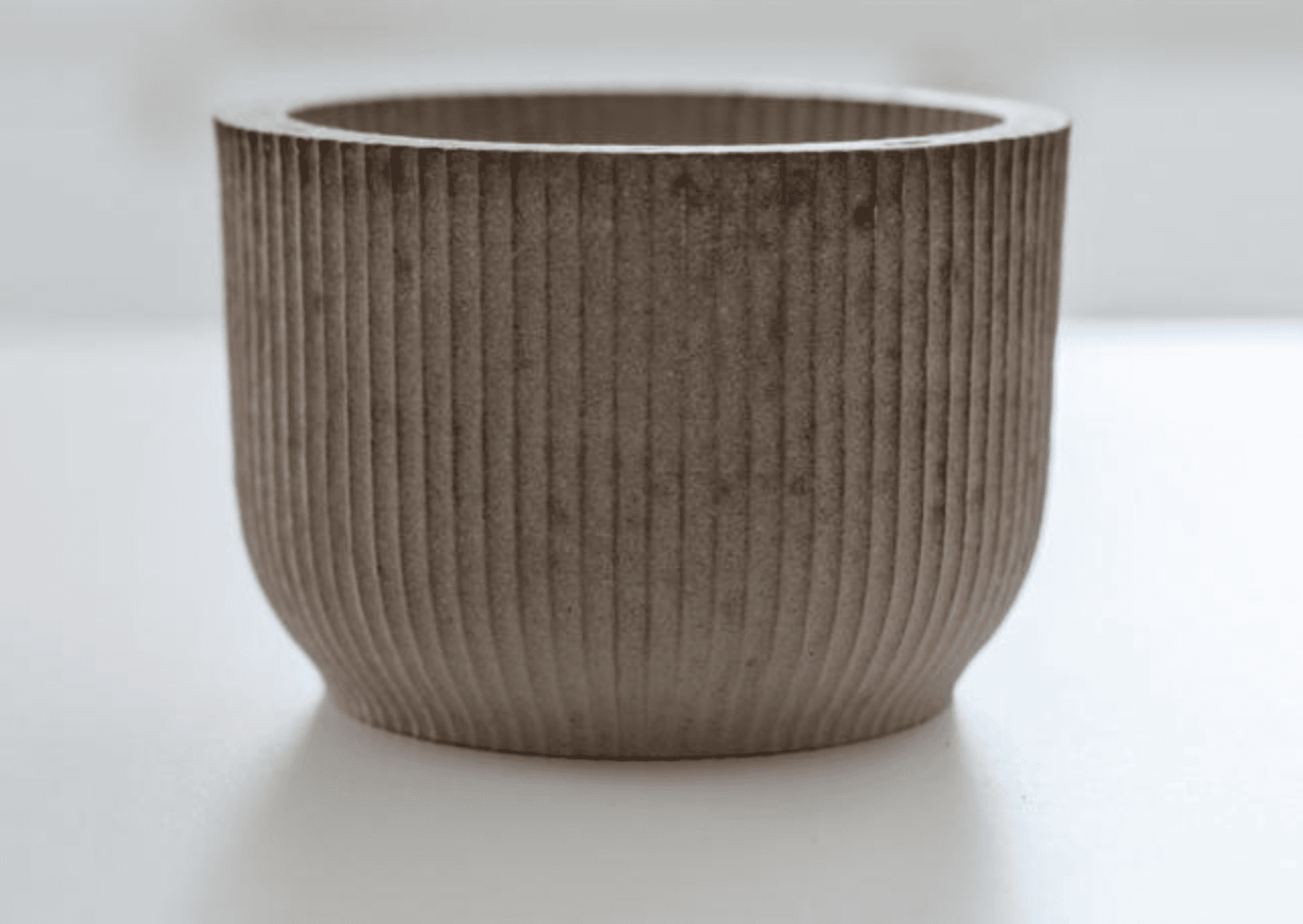
Detail of pieces made from wood ash, 2022. © Mathieu Faluomi & Laury Guillien
The properties of self-watering vessels
Properties are objective and instrumentally measurable. While they express the physico-chemical structures of a material (porosity, density, hardness, mechanical strength) they also depend on the environment in which that material evolves: how it behaves in humidity, in drought, under UV light. In this sense, properties are not merely a given state to be accommodated. They are exactly the opposite: they are the means by which matter acts.
Self-watering vessels, or ollas, are an irrigation technique several thousand years old. A pot, generally of terracotta, is buried at the foot of the plants. The roots take hold all around it and draw, by capillary action through the porous surfaces, the quantity of water they need. Unlike drip irrigation systems, which encourage evaporation, ollas can save up to 70% of the water used⁴.
In designing ollas made from wood ash, my starting assumption was this: since the elements contained in ash fertilize soils and regulate their acidity, an olla made from this matter would not merely diffuse water: it would nourish the soil in the same gesture, doing away with the need for synthetic fertilizer. This hypothesis, formulated from within design practice, was subsequently confirmed by chemical analysis: there is indeed an exchange of ions between the material and the moist substrate.
The point is worth pausing on, because it says something about what design research is. The knowledge was not produced elsewhere and then applied to an object; it emerged from the making, and verification came afterwards.
The vessels are fluted. These flutes have an aesthetic dimension, of course, but their function lies elsewhere: they multiply the exchange surfaces between the material and the earth, increasing the circulation of water and nutrients. In other words, the form is drawn to allow matter to act more fully. This is the hylomorphic model reversed: matter does not submit to form; it is form that places itself at matter’s service.
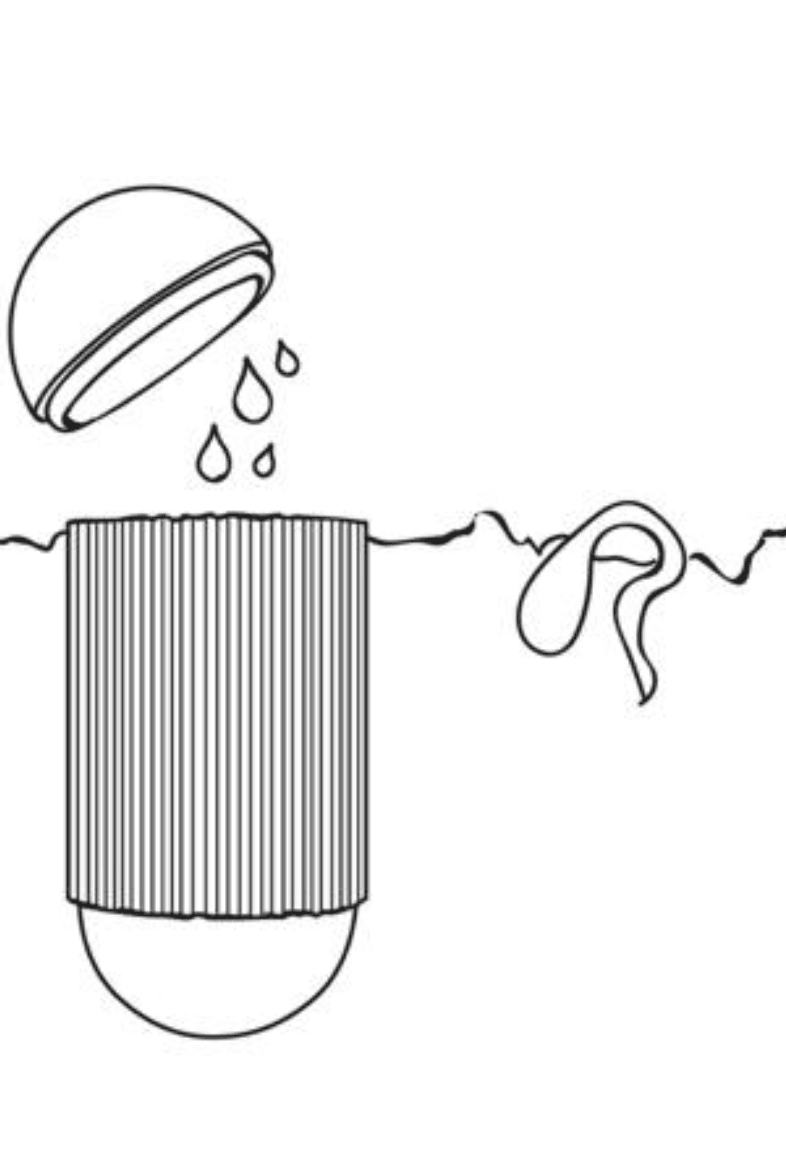
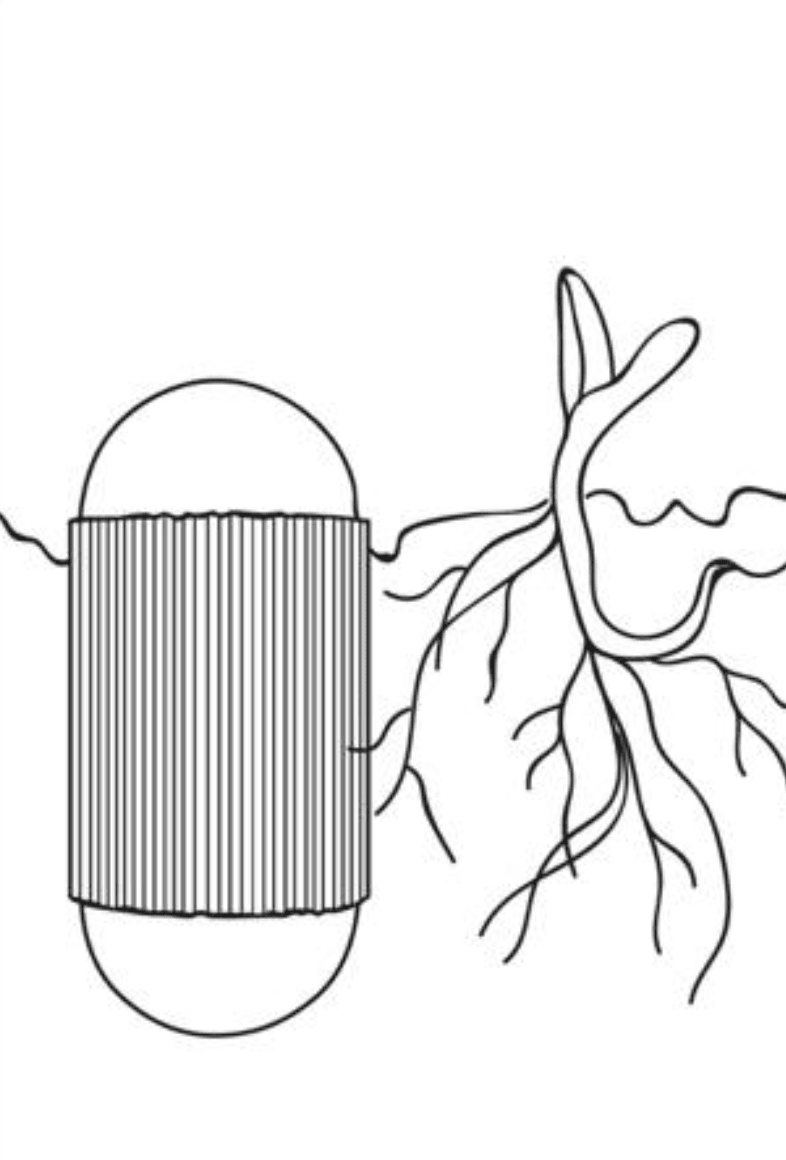
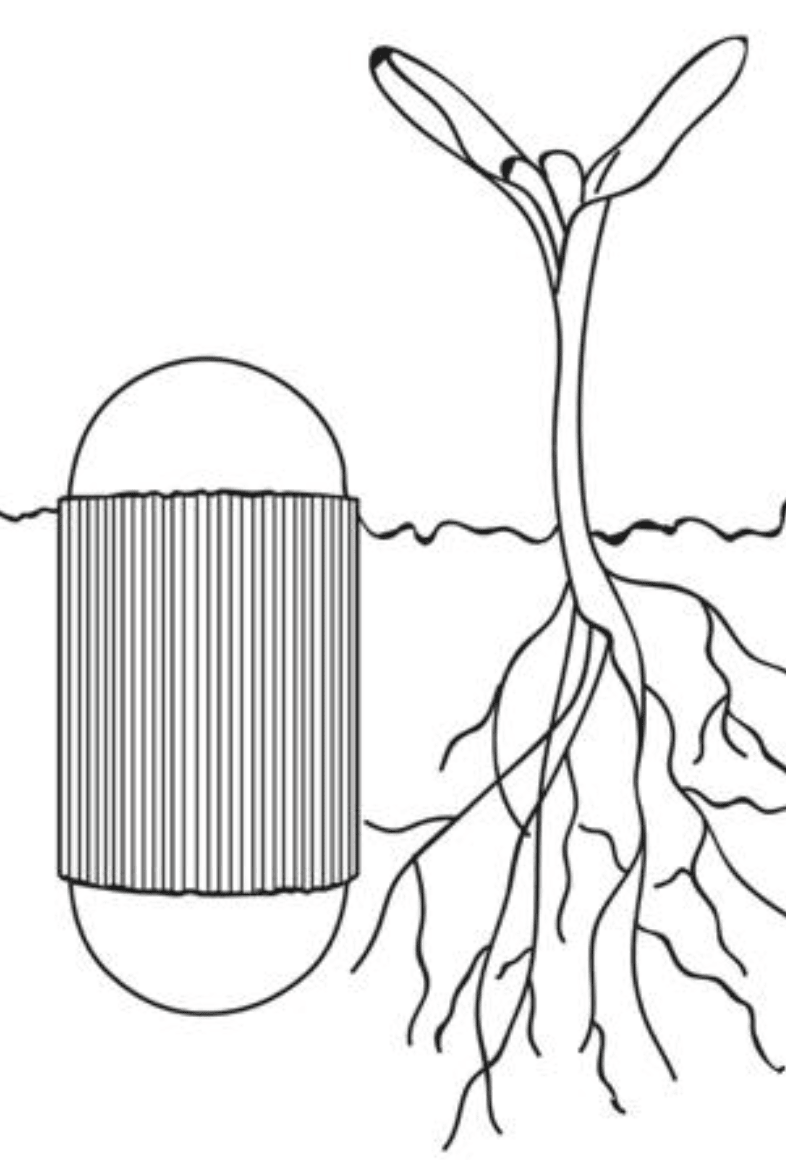
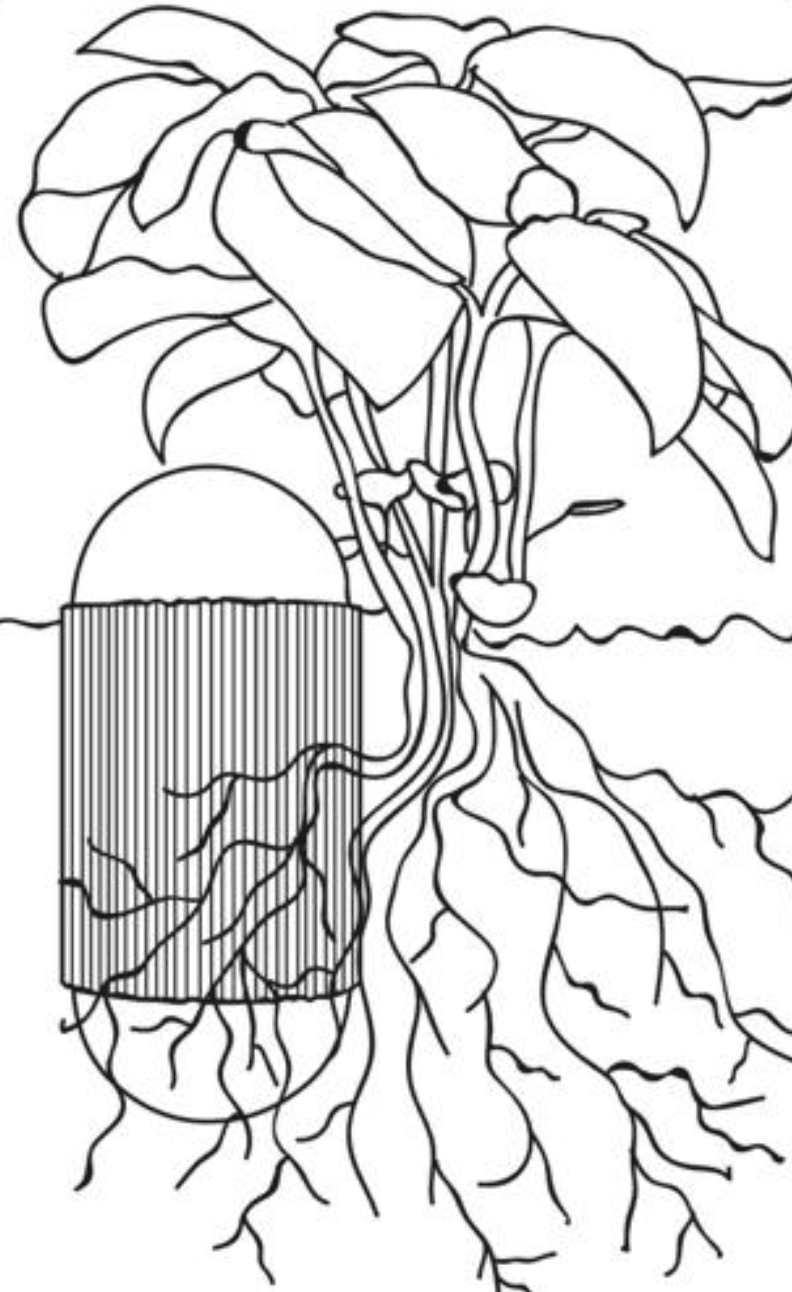
Illustration showing how works olla, 2022. © Laury Guillien
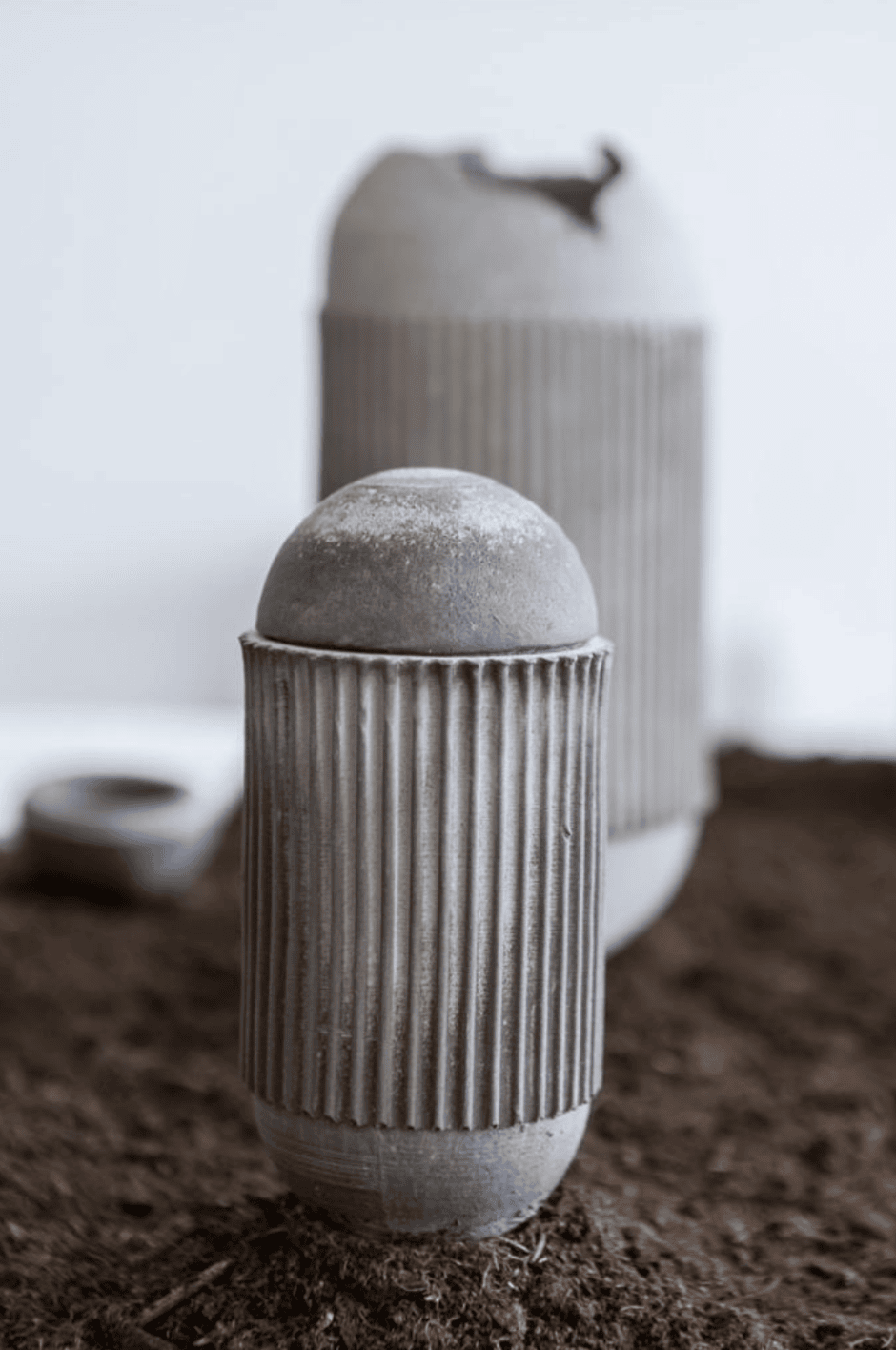
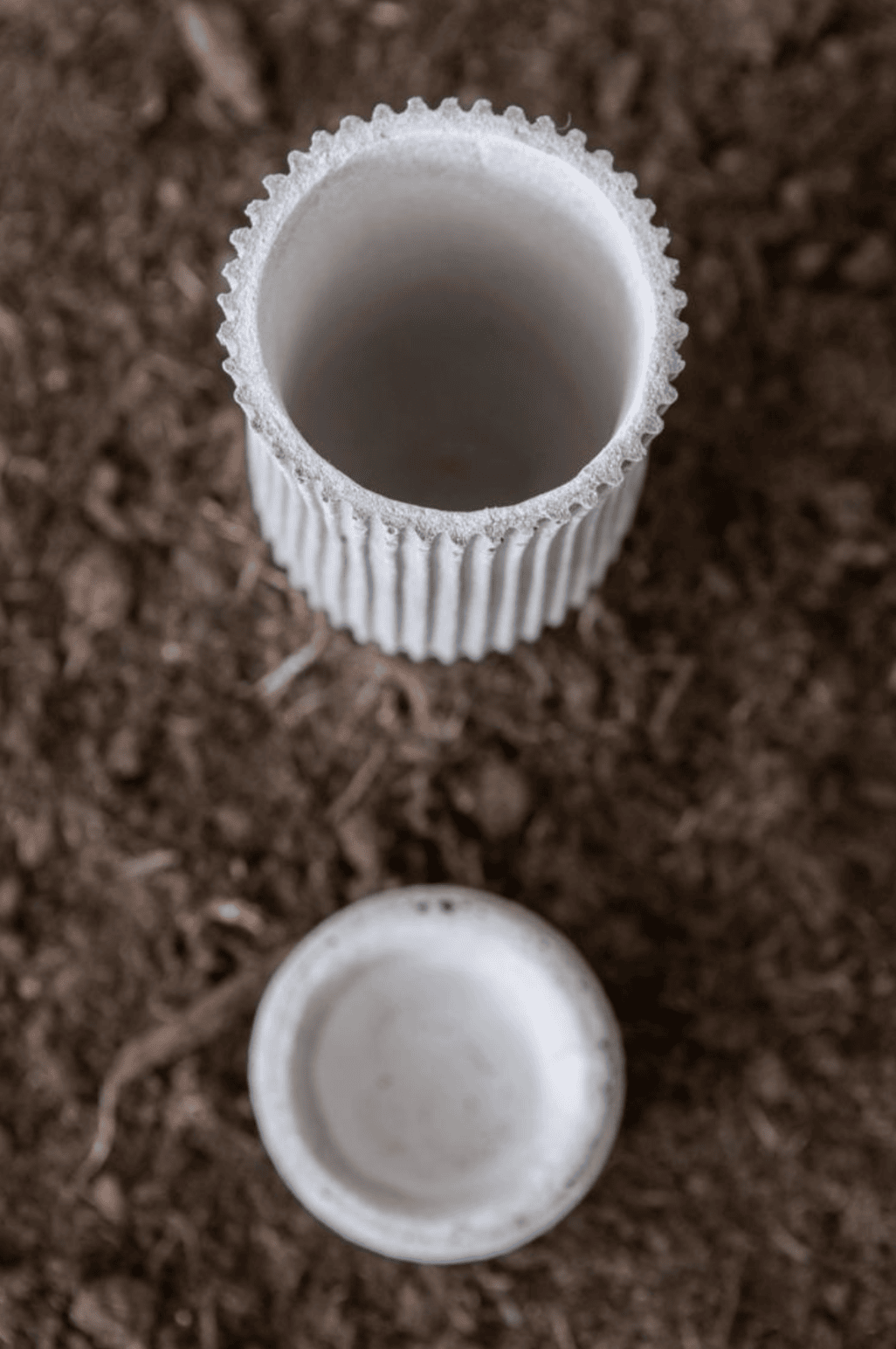
Self-watering vessel, or olla made from wood ash, 2022. © Mathieu Faluomi
The qualities of soft materials
Qualities, by contrast, do not refer to the physico-chemical structure of the material. They arise from the encounter between matter, the hand and the eye: they are experienced. This is a terrain onto which neither the chemist nor the engineer ventures, and it is, I would argue, the terrain of the materials designer.
The first materials I developed were soft, flexible sheets. They present a range of surface states and a color range that oscillates naturally between grey, brown and black, giving them an appearance close to leather. Their thickness and their elasticity vary. It seemed natural to explore their potential in leatherwork, in a context that is increasingly questioning the use of animal hides and the treatments they undergo.
What is striking, however, is how few of these decisions were mine. That range of greys and browns is not the result of any chromatic choice: it came with the matter and with the way the matter behaves as it is transformed. The grain, the way the surface catches the light, the way a piece folds or refuses to fold: none of this was specified beforehand. I composed with pre-existing qualities that escaped any intention of mine. This is a very real degree of activity on the part of matter, and here the work consists first in showing what that matter makes possible.
Let us remain clear-eyed about the limits, however: we are still far from the mechanical performance of animal leathers, and the formulations need to be improved. But the question these pieces raise is not one of substitution. A residual matter does not become desirable because it convincingly imitates an existing material; it becomes desirable when we stop asking it to conceal its origin and when it asserts its independence. The grey is not a defect of color, the irregularity is not a defect of surface: they bear witness to its history.
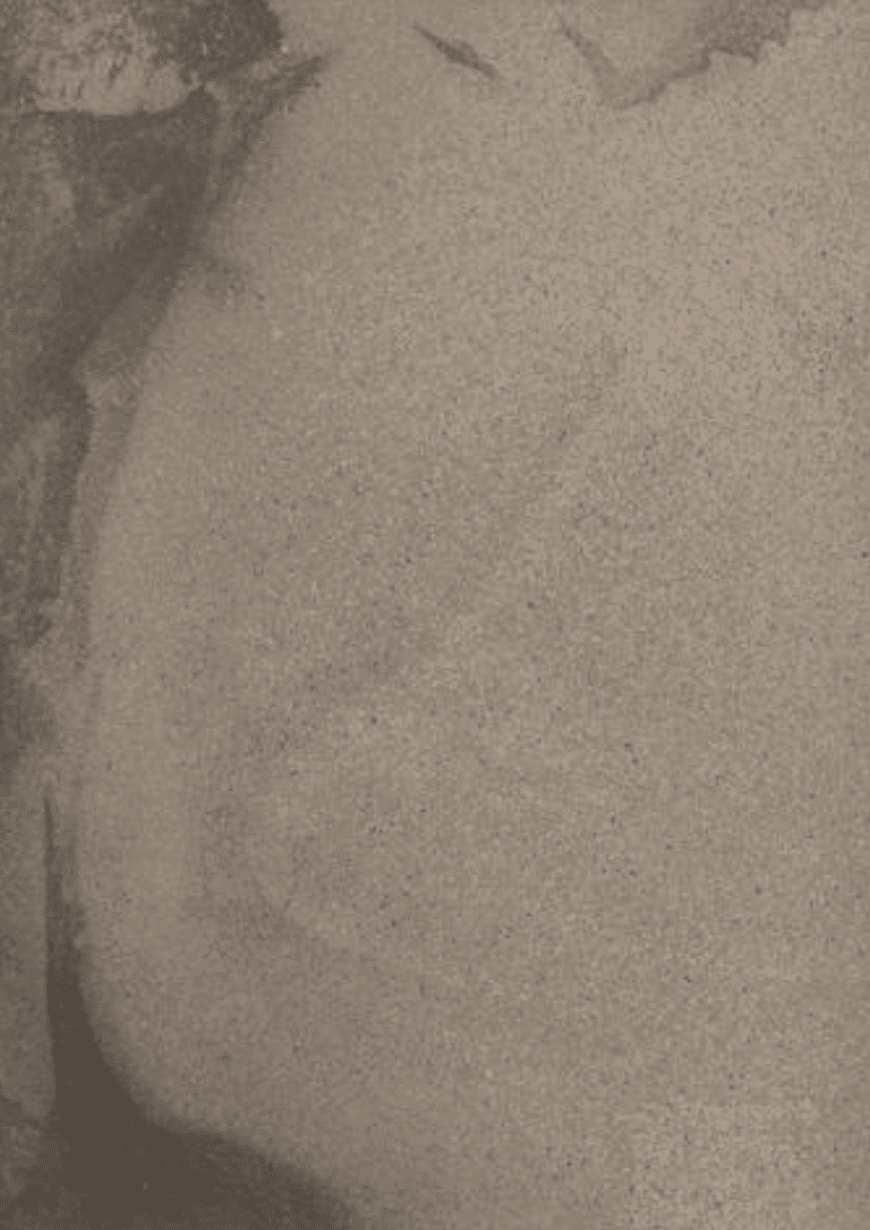
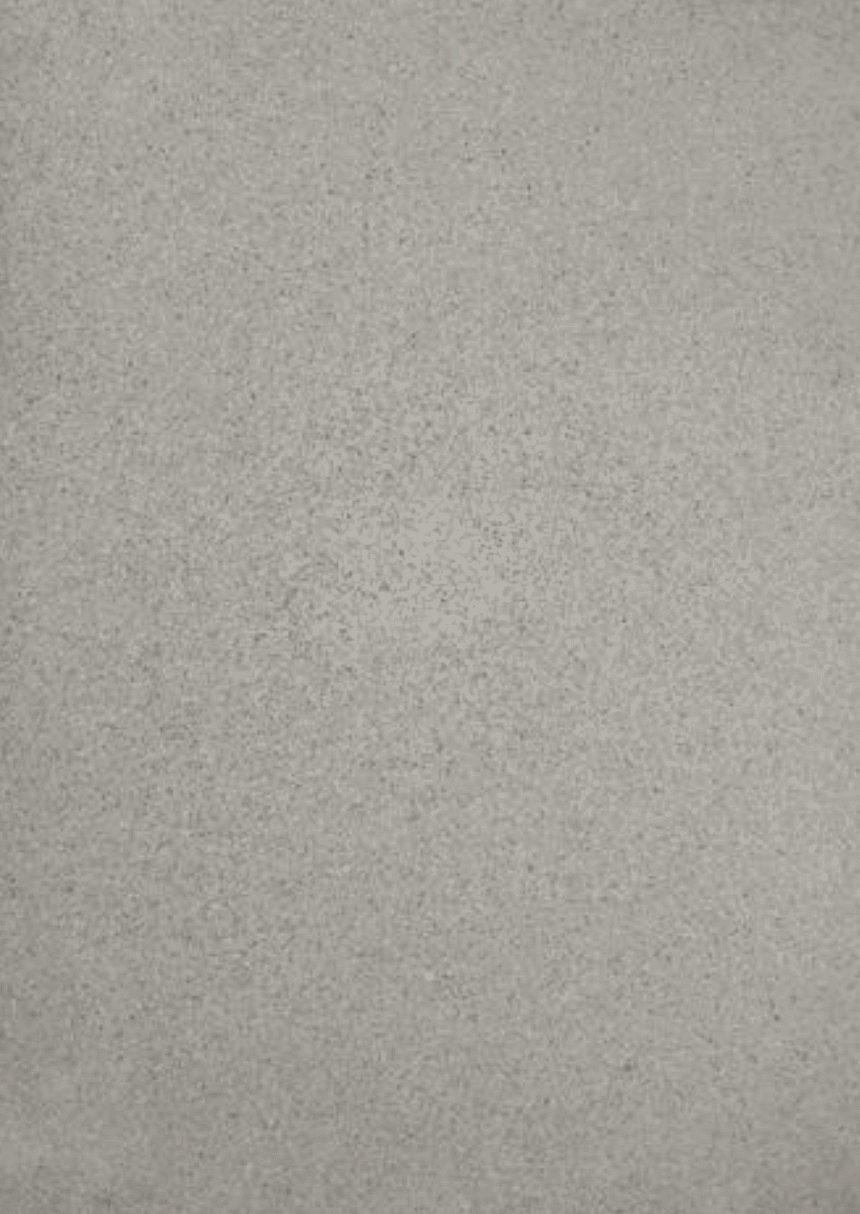
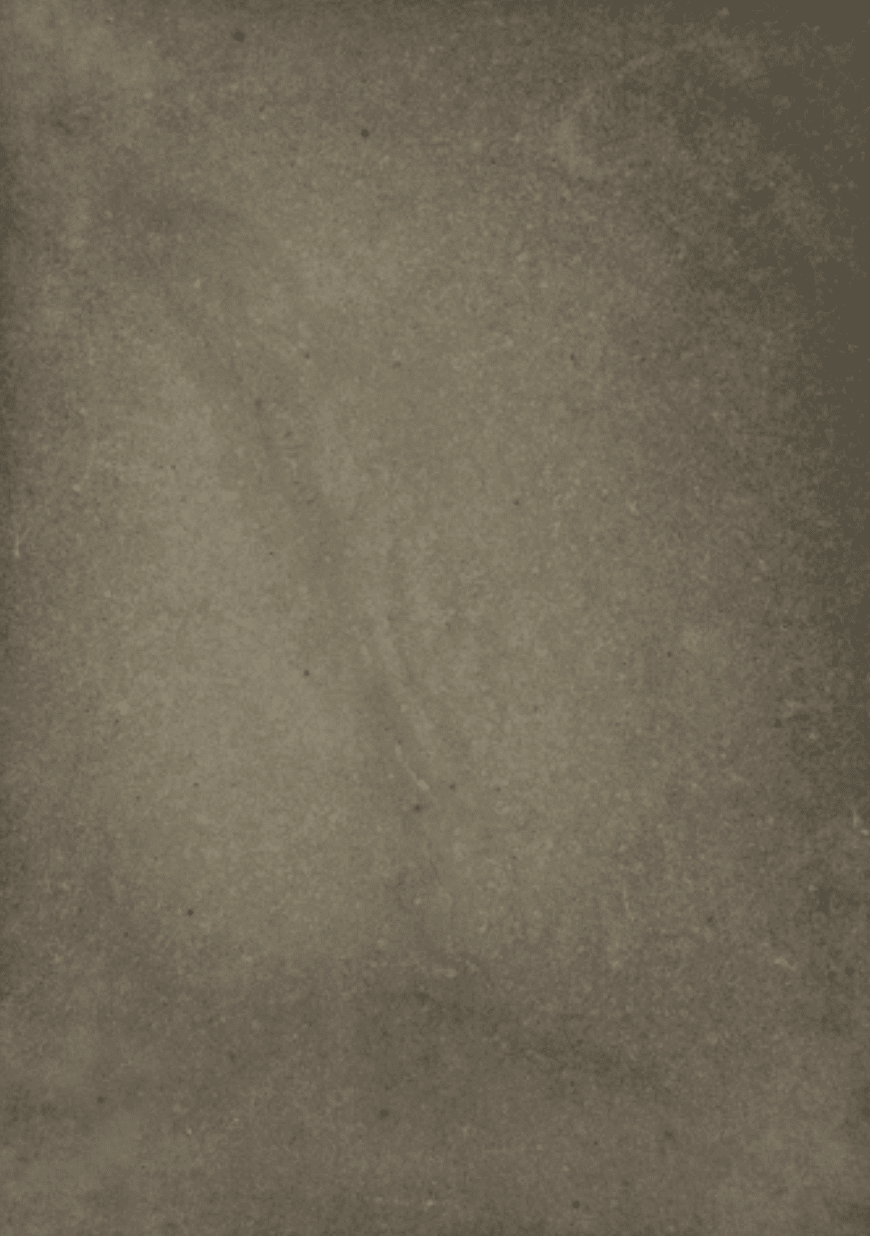
Color and surface finish of soft material made with wood ash, 2022-2024. © Laury Guillien
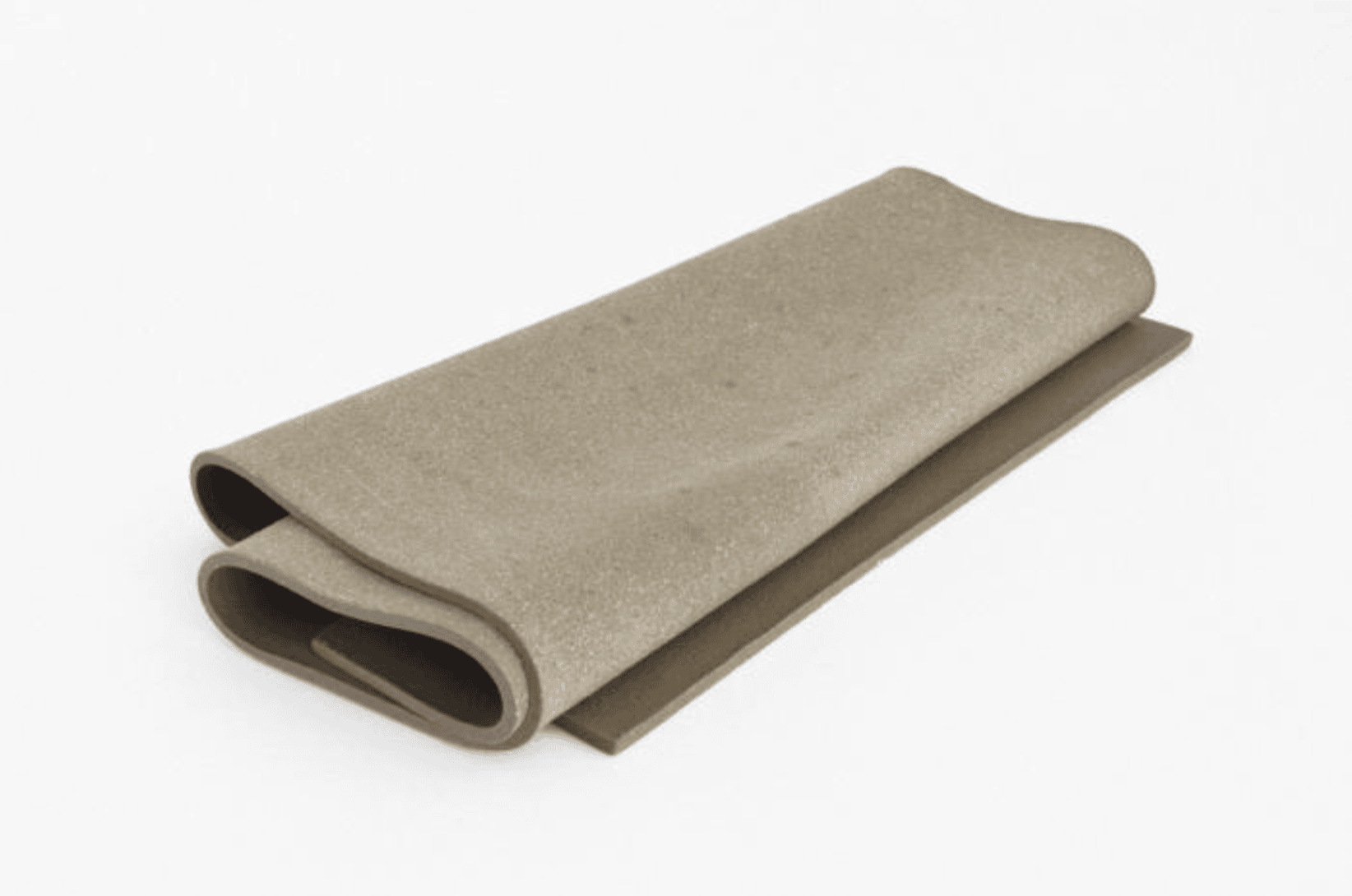
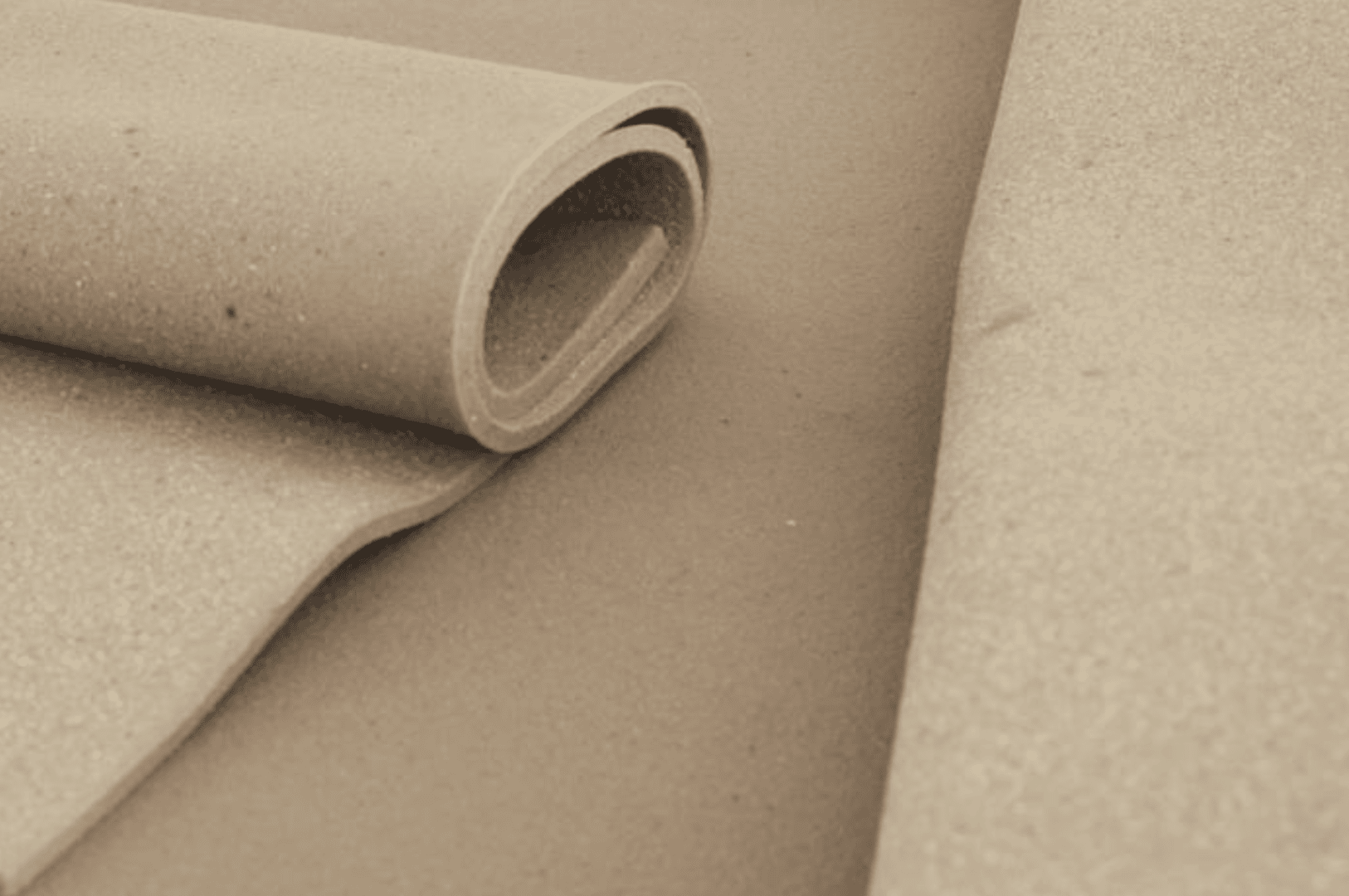
Soft material made with wood ash, 2023. © Laury Guillien
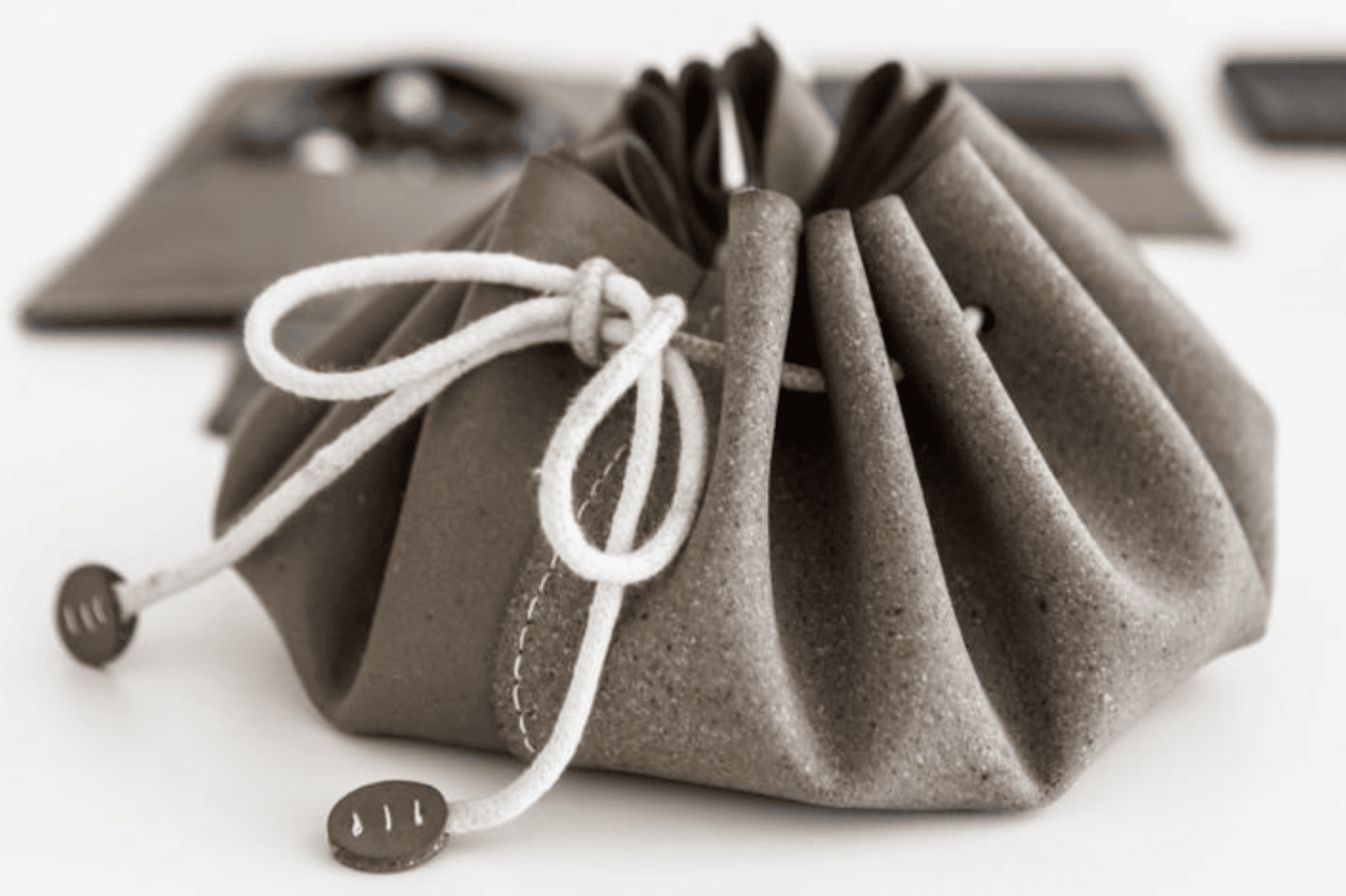
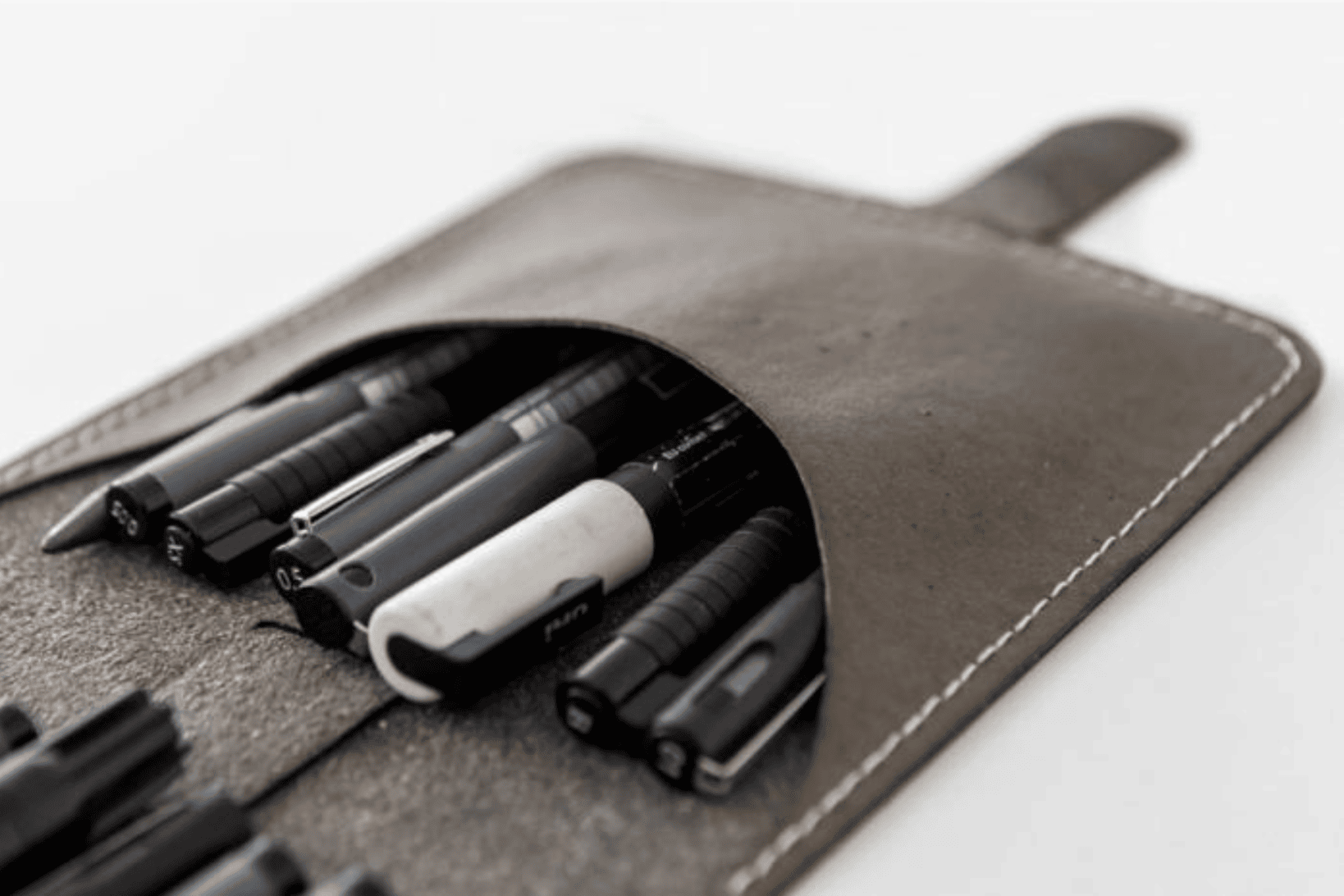
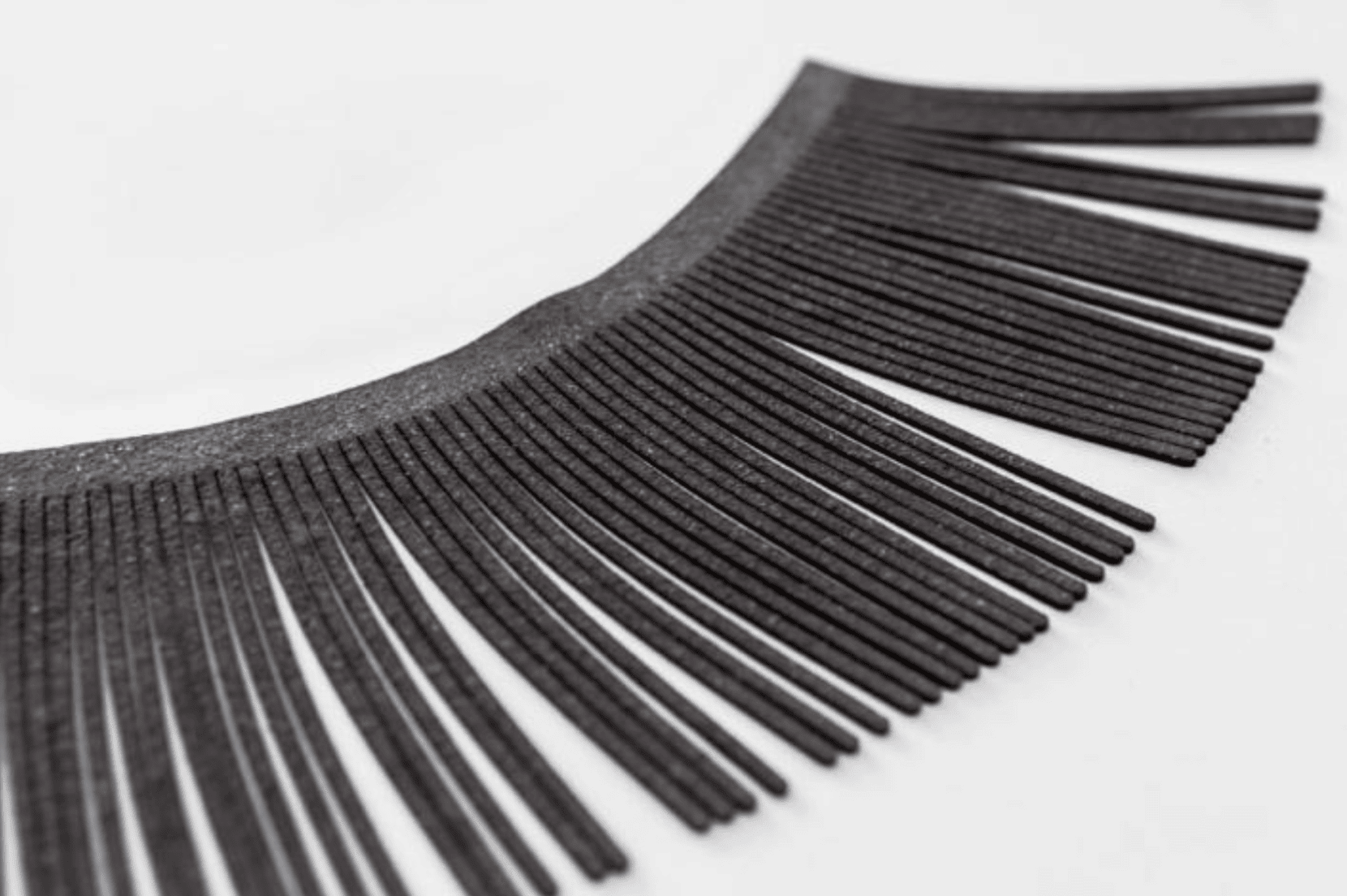
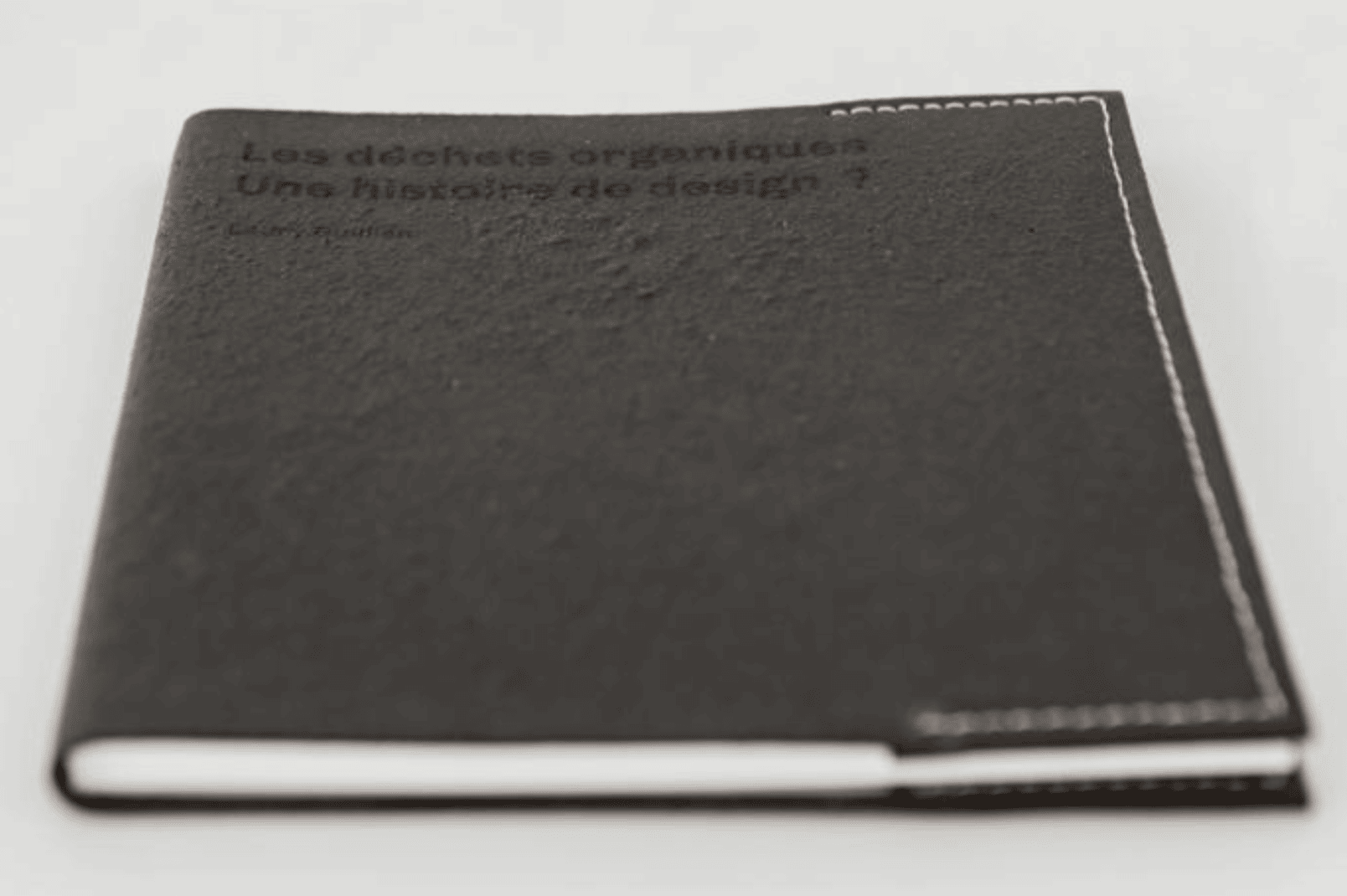
3. Soft material made with wood ash, laser cut, 2022. © Mathieu Faluomi
4. Book cover made with wood ash, 2022. © Mathieu Faluomi
The values of the funerary urn
Values are neither measured nor experienced: they are appraised, and always within a context. A matter carries a use value, an economic value, a value of authenticity, but also a symbolic value: the one given to it by cultures, rites and narratives.
The funerary urn is the last dwelling of the deceased. Impenetrable, sealed, buried or kept in a place that is sometimes secret, it is an intimate object, charged both affectively and symbolically. Made from wood ash, the urns I propose can hold the ashes of the deceased, some earth and a tree seed. The hypothesis, based on previous knowledge and drawn from my posture as a material designer, is as follows: once buried, the urn would decompose, and the ashes (those from the burned wood and those of the loved one) would nourish the tree’s growth and the health of its soil⁵. The tree would then become a place of reflection, a space to return to. Here again the flutes do their work: by increasing the exchange surfaces, they accelerate the biodegradation of the object.
Imagining an object whose principal function is to disappear means overturning almost everything one learns as a designer. Durability, which we ordinarily treat as a technical quality, here becomes a problem; the brief is inverted. My work as a designer intervenes briefly within a biological cycle that began before me and will continue without me, over timescales whose duration and outcome I cannot control. The tree grew, it was felled, it was burned, and it is from that combustion that my matter comes. Another seed will germinate, another growth will follow, over years I will not see, like the phoenix rising from its own ashes.
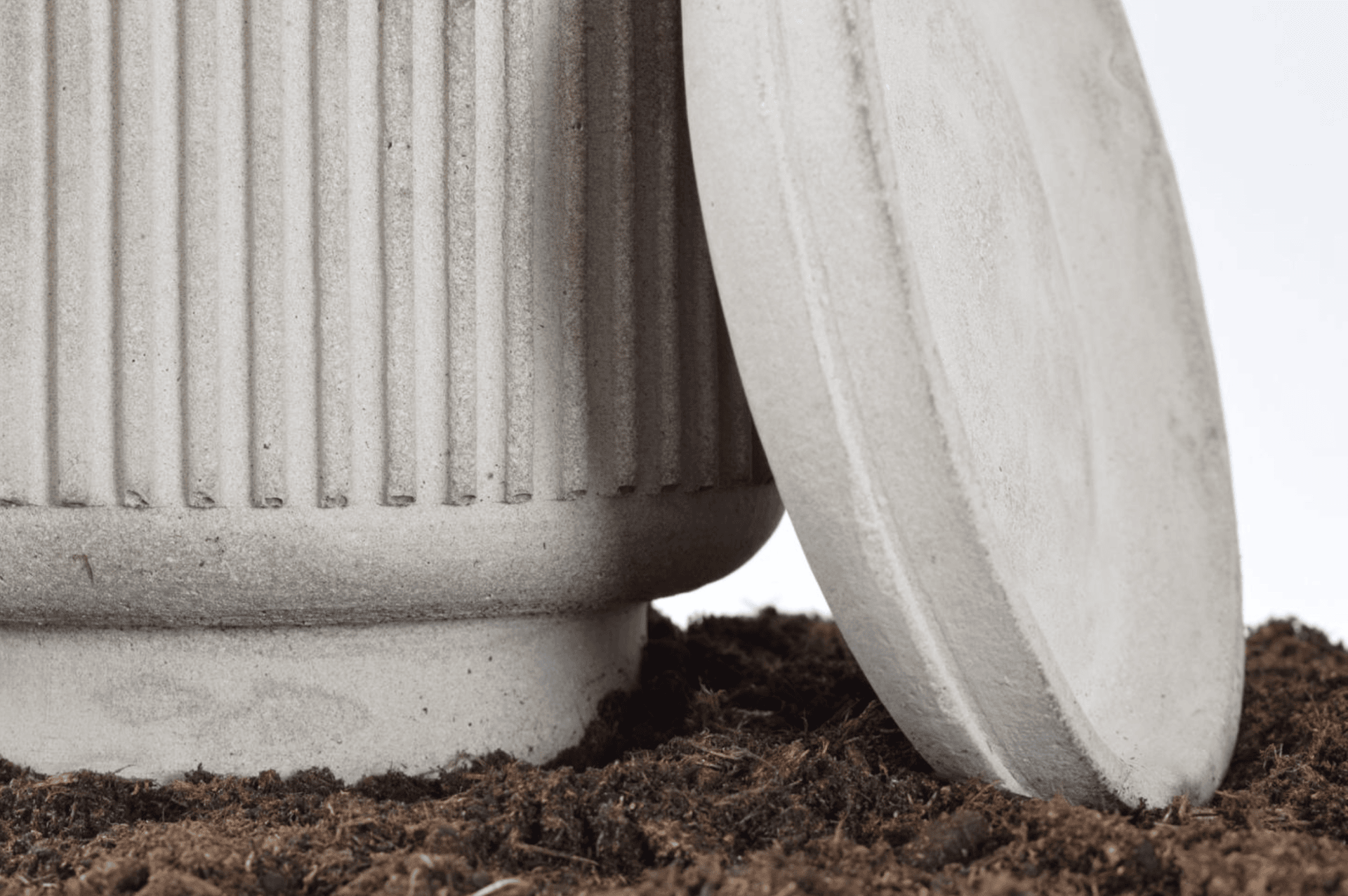
Funeral urn made with wood ash, 2022. © Laury Guillien
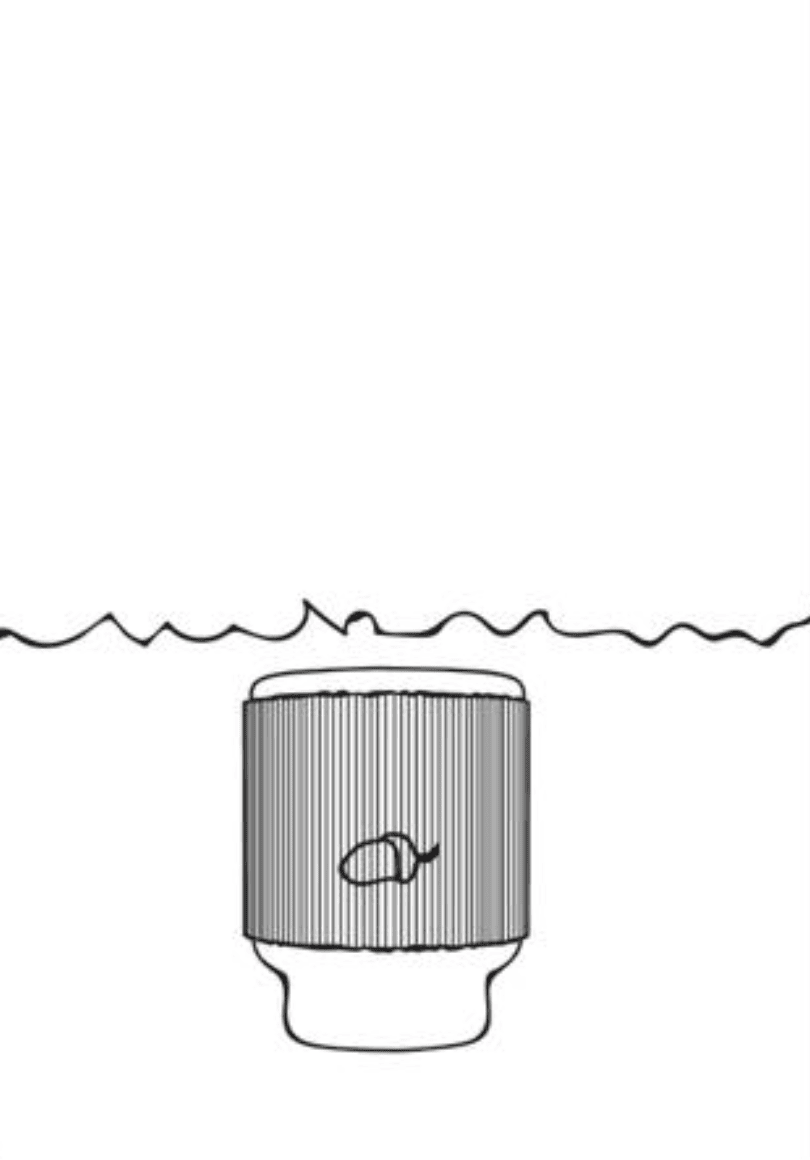
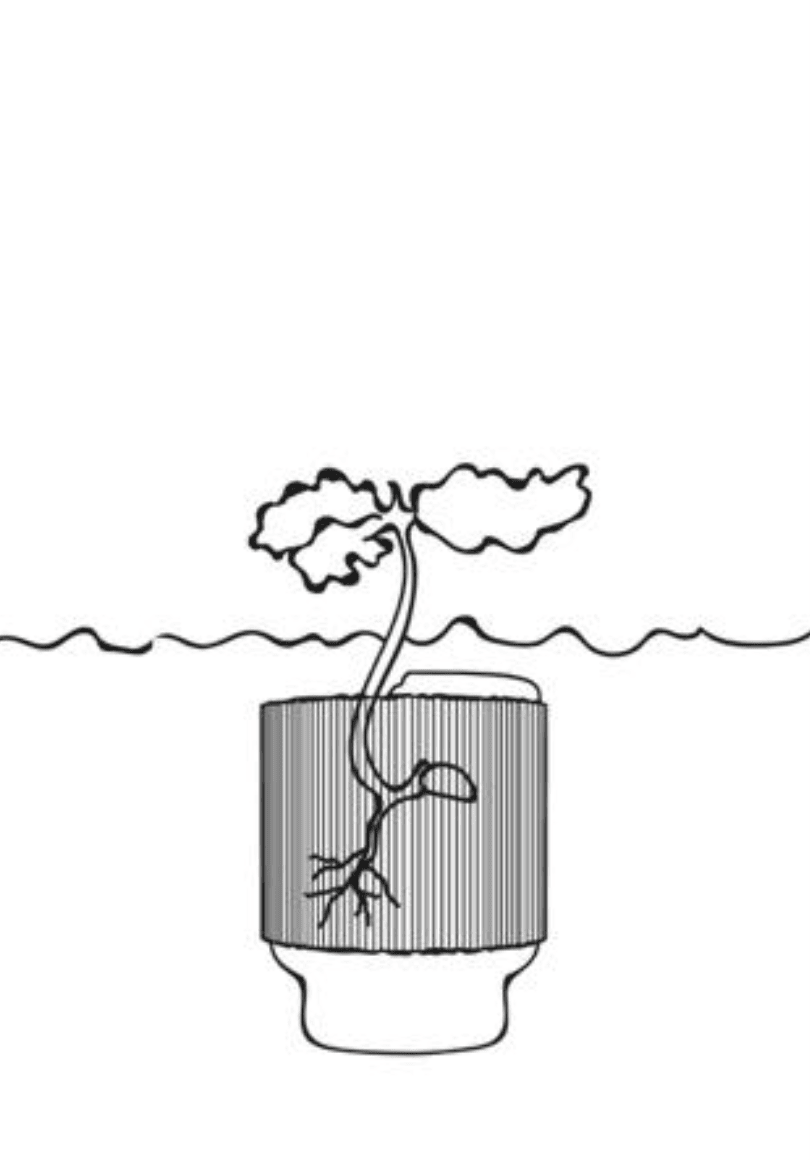
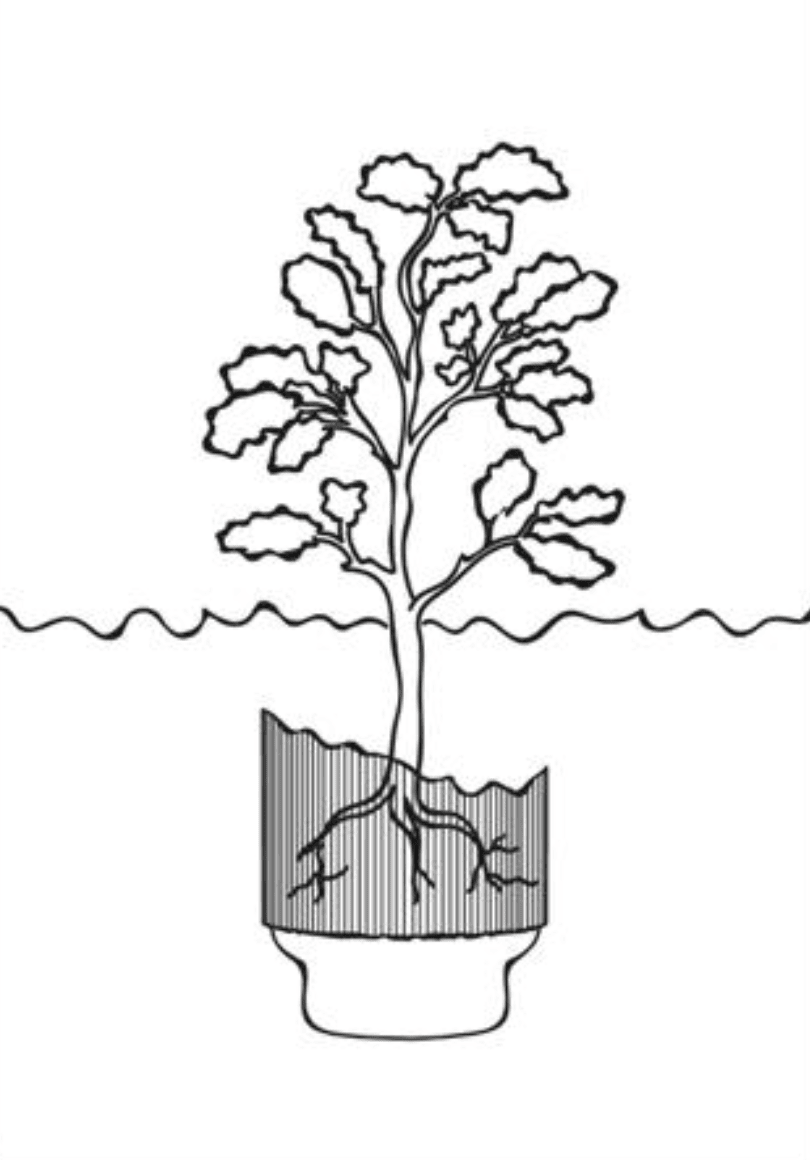
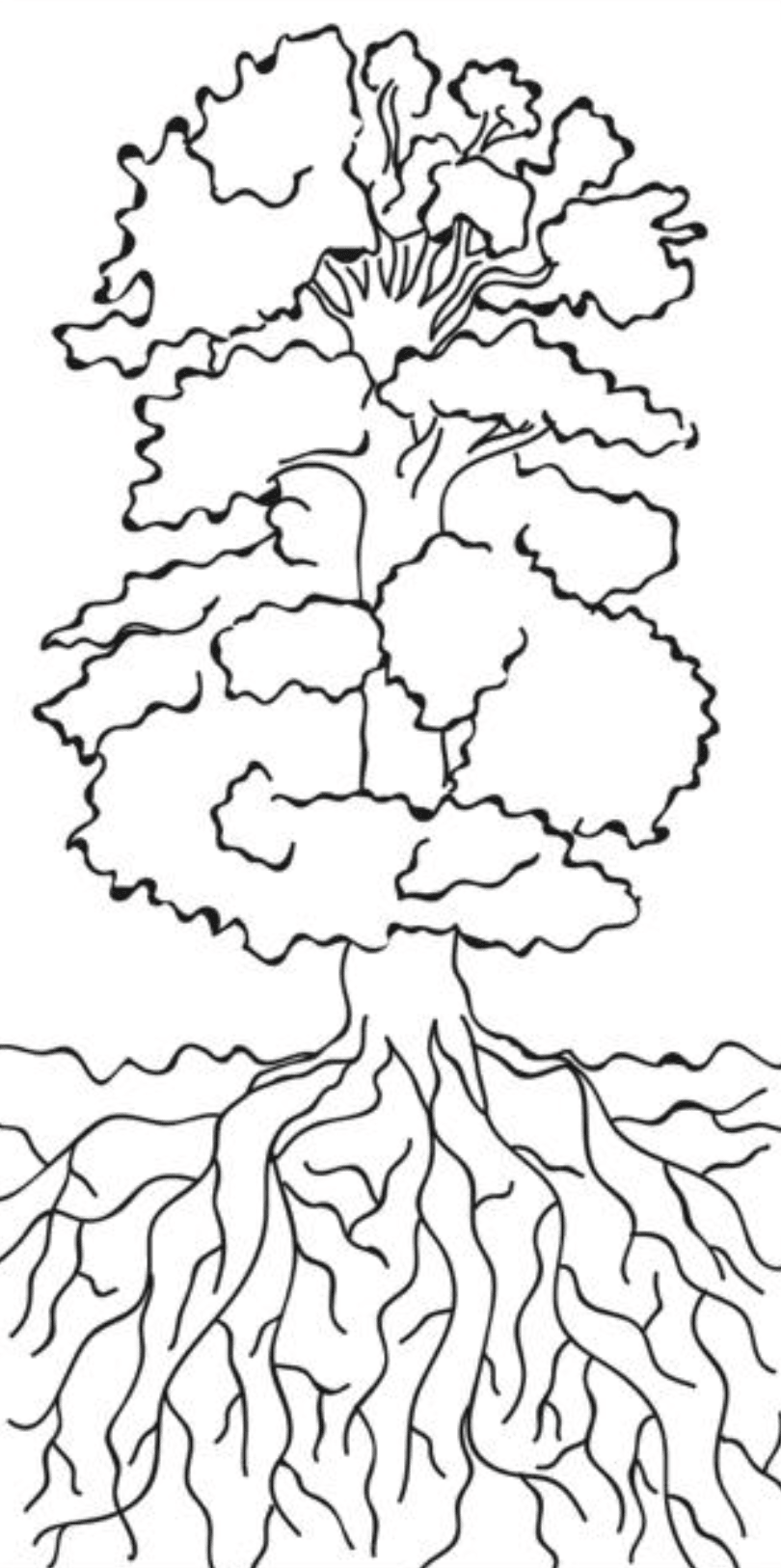
Illustration showing how works funeral urn, 2022. © Laury Guillien
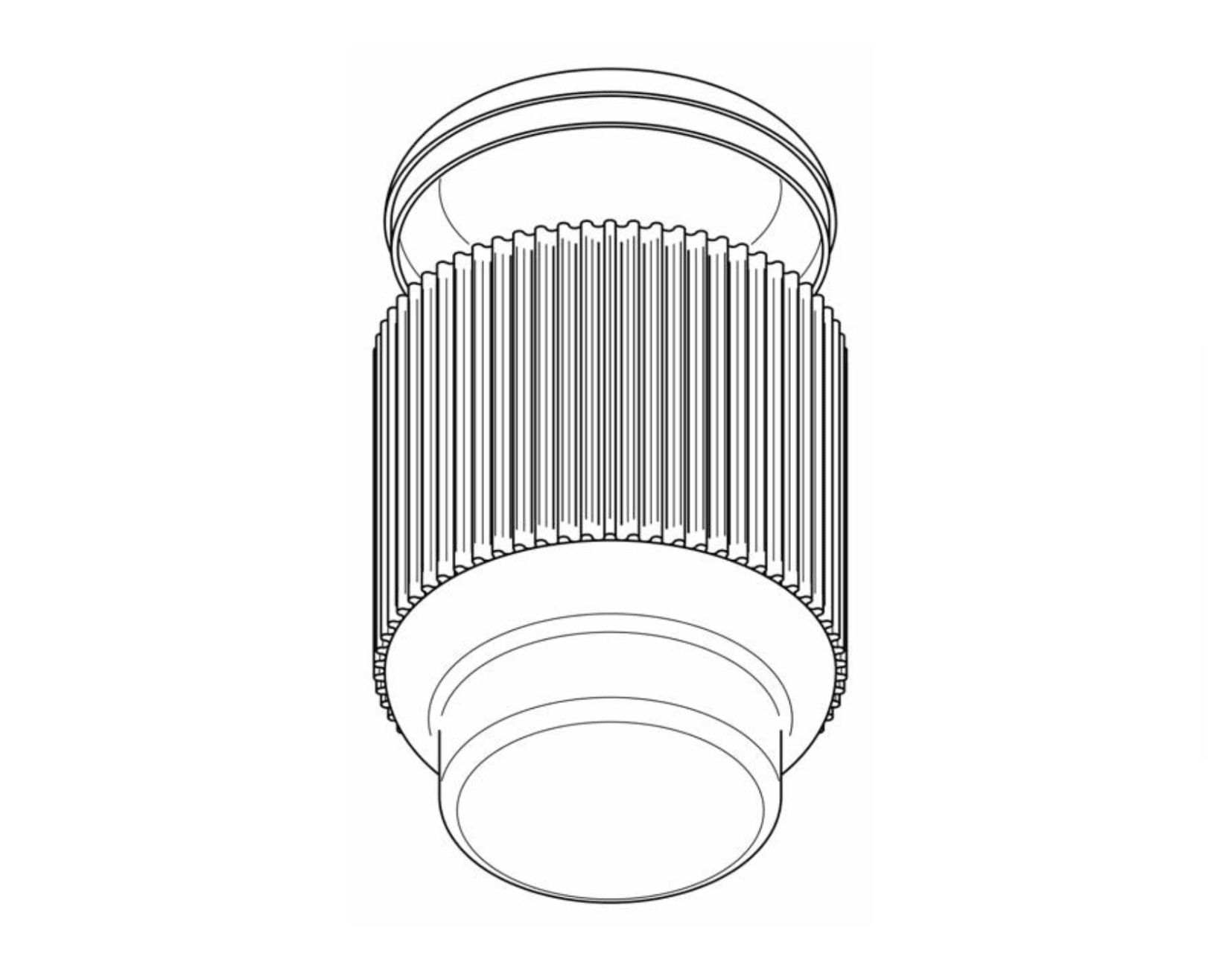
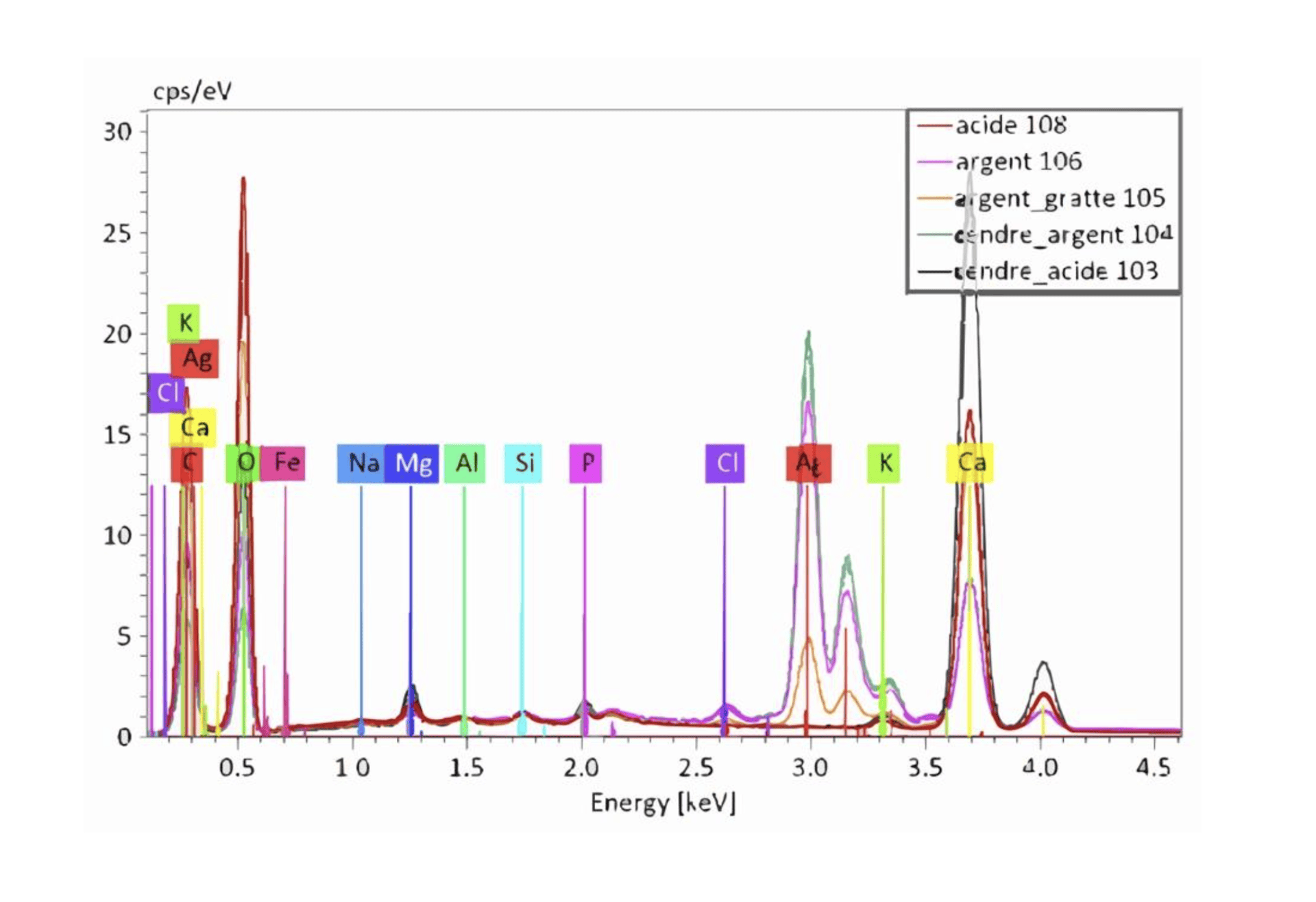
Drawing of a funeral urn and Energy-Dispersive X-ray Spectroscopy of materials made from wood ash showing the chemical elements of agronomic interest, 2024. © Laury Guillien & Chimie Paris Tech
Variability as a principle
Ash is not constant. Its composition varies according to several parameters, among them the wood species, the appliance used and its output, and the combustion temperature. Two buckets from the same stove a fortnight apart do not contain the same matter. The whole sector identifies this variability as the principal obstacle to any use of ash, and it is right to do so: you cannot standardize a process on the basis of a non-standard matter.
I believe, however, that the problem should be turned around. What we describe as a defect of the matter is a defect of fit between that matter and our instruments. Standards, specifications and production lines were built for constant materials, that is, for made-to-measure materials. A matter that varies does not fail to be a material: it fails to fit into a framework that was designed without it. This difference shifts the work: it is no longer a question of correcting matter until it has been standardized, but of designing processes, objects and uses that tolerate its variability, or even feed on it.
In practical terms, this reverses the order of operations within a project. One characterizes before drawing, and one looks for the uses that suit the matter available, rather than looking for the matter that will satisfy a use fixed in advance. What I am describing is a method built on written protocols, experimental records, and both instrumental and sensory measurements.
Towards a new regime of design
Materials design research lays the foundations for a new regime of design. It is no longer a matter of asking a residual matter to resemble an existing material to replace it (in the strict sense of the word) and thereby gain admittance, but of starting from what it does to imagine the uses that suit it. This displacement does not concern ash alone. It holds for all those forms of matter that do not yet have a recognized status: too heterogeneous for industry, too little documented for science, too ordinary to be noticed. They do not so much need to be transformed as understood, characterized, and recognized and that is work designers can do, because they are perhaps the only ones who look at the properties, the qualities and the values of matter together.
It is no longer enough to know what we make things from. We must also recognize what they have already been, what they continue to do while we are using them, and what they will become once we have stopped attending to them.
In the end, we are perhaps less designers of materials than bearers of their singular histories.
- Boulday, Dominique and Marcovecchio, Fabrice. Valorisation des cendres issues de la combustion de biomasse. Revue des gisements et des procédés associés. ADEME, 2016
- Ibid.
- Bréchet, Yves. The Science of Materials: From Materials of Encounter to Custom-Made Materials. Inaugural lecture at the Collège de France, January 17, 2013.
- www.oyas-environnement.com
- The effects of mixing wood ash and human ashes on soil and tree growth will need to be tested in a laboratory.
SHARE :