
Rooshad Shroff
Rooshad Shroff is an Indian architect based in Mumbai and the founder of his eponymous practice, established in 2011. He studied architecture at Cornell University and Harvard University’s Graduate School of Design, gaining experience at OMA/REX in New York and Zaha Hadid Architects in London. His studio works across architecture, interiors and bespoke furniture, with residential, commercial and cultural projects in India and internationally.
Shroff’s practice is guided by a process of questioning, research and experimentation, with each project responding to its context and the people who use it. Working closely with specialist craftspeople across India, he explores how traditional knowledge and techniques can inform contemporary spaces, from architectural details to custom furnishings. His work connects an interest in materials and making with a commitment to creating places that retain a distinct identity. Alongside his practice, he serves on the advisory board of the Kalhath Institute and founded The Gyaan Project to support girls’ education and Indian craftsmanship.
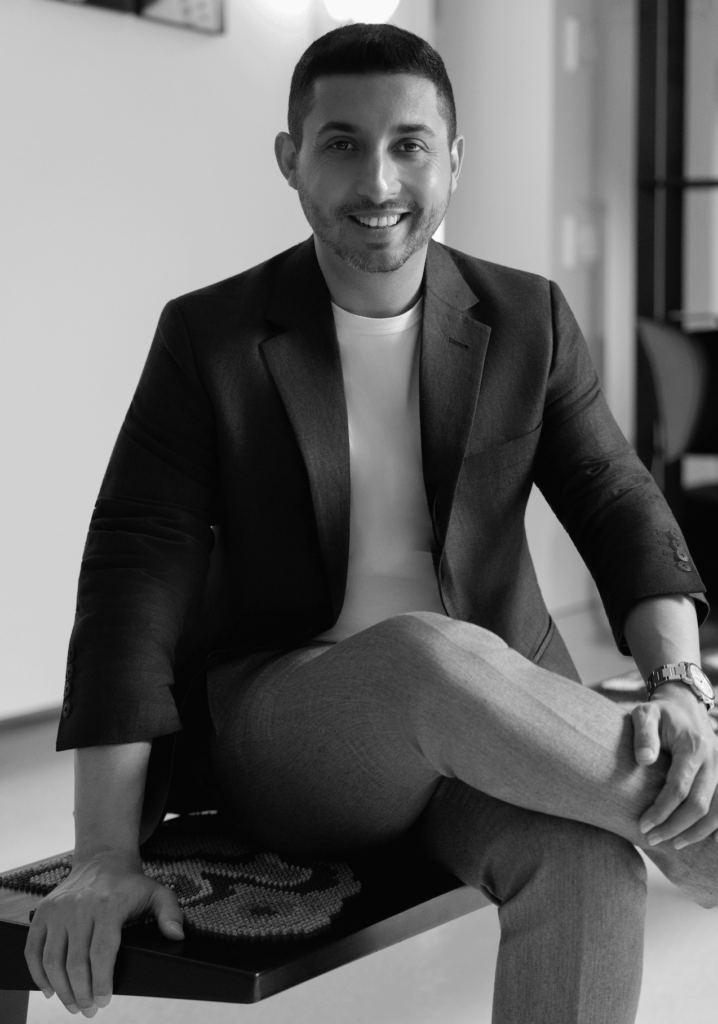
“You ask questions and don’t assume something just because it’s always been done in a particular way.”
INTERVIEW

© Sebastian Boettcher for Nilaya Anthology
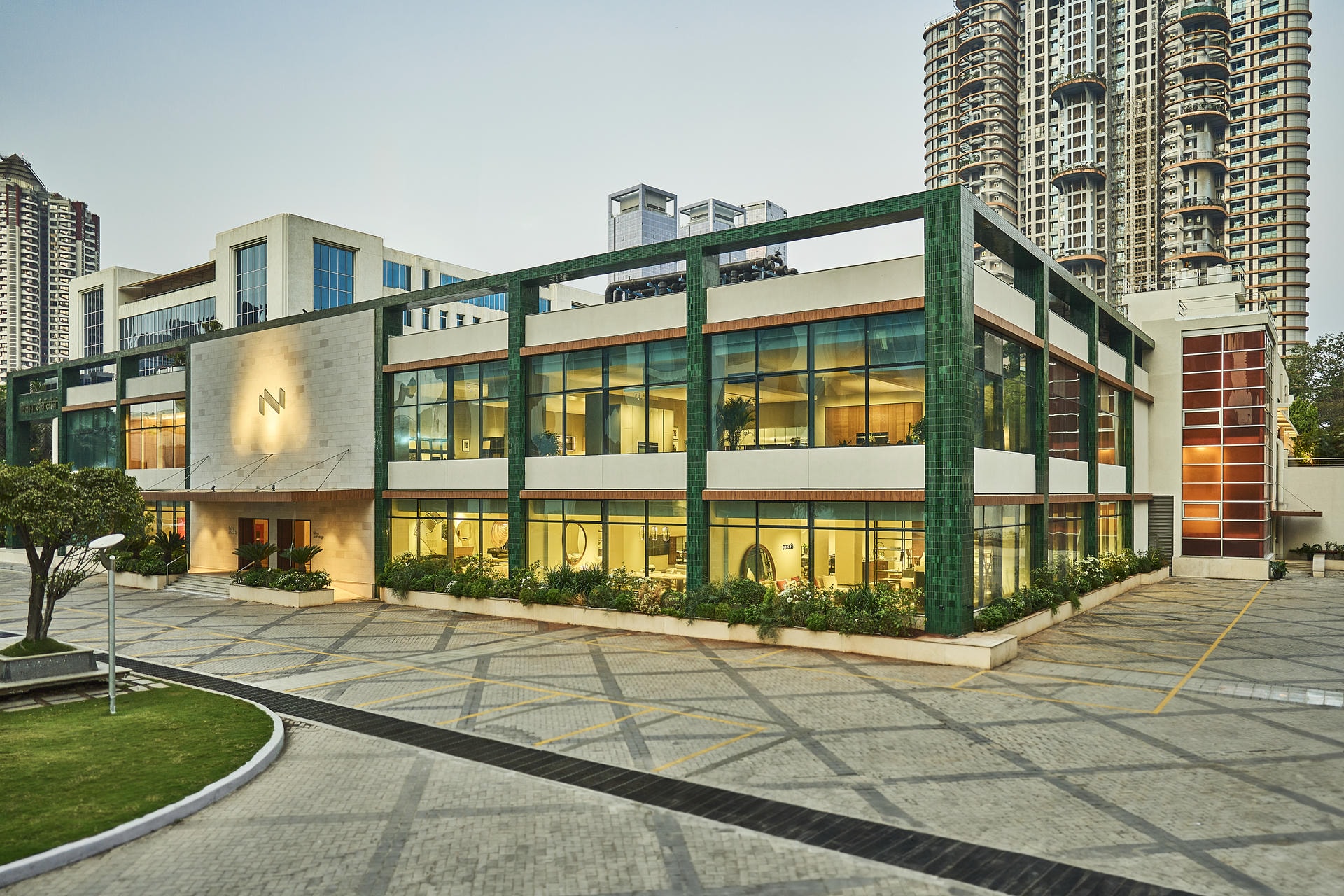
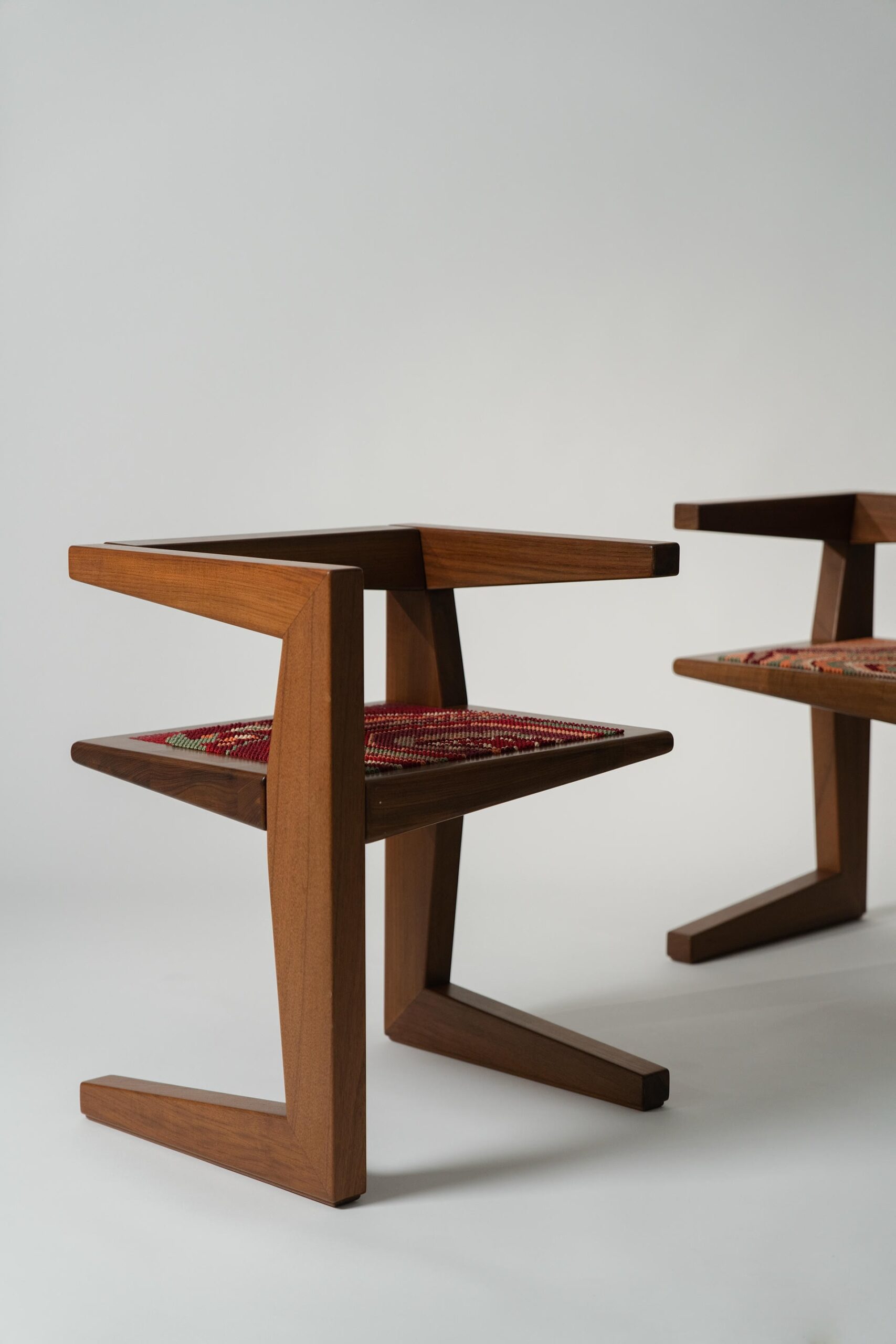
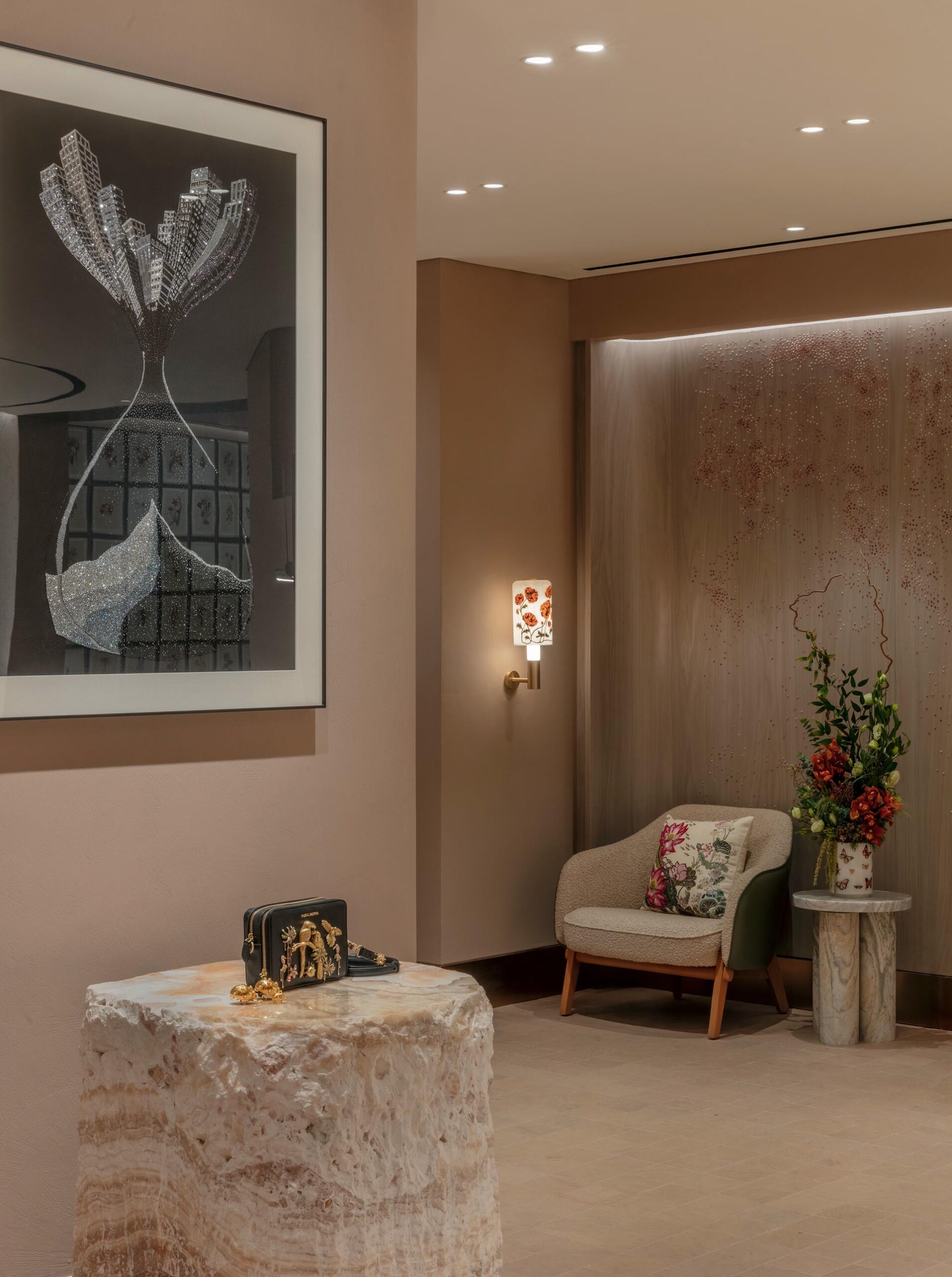
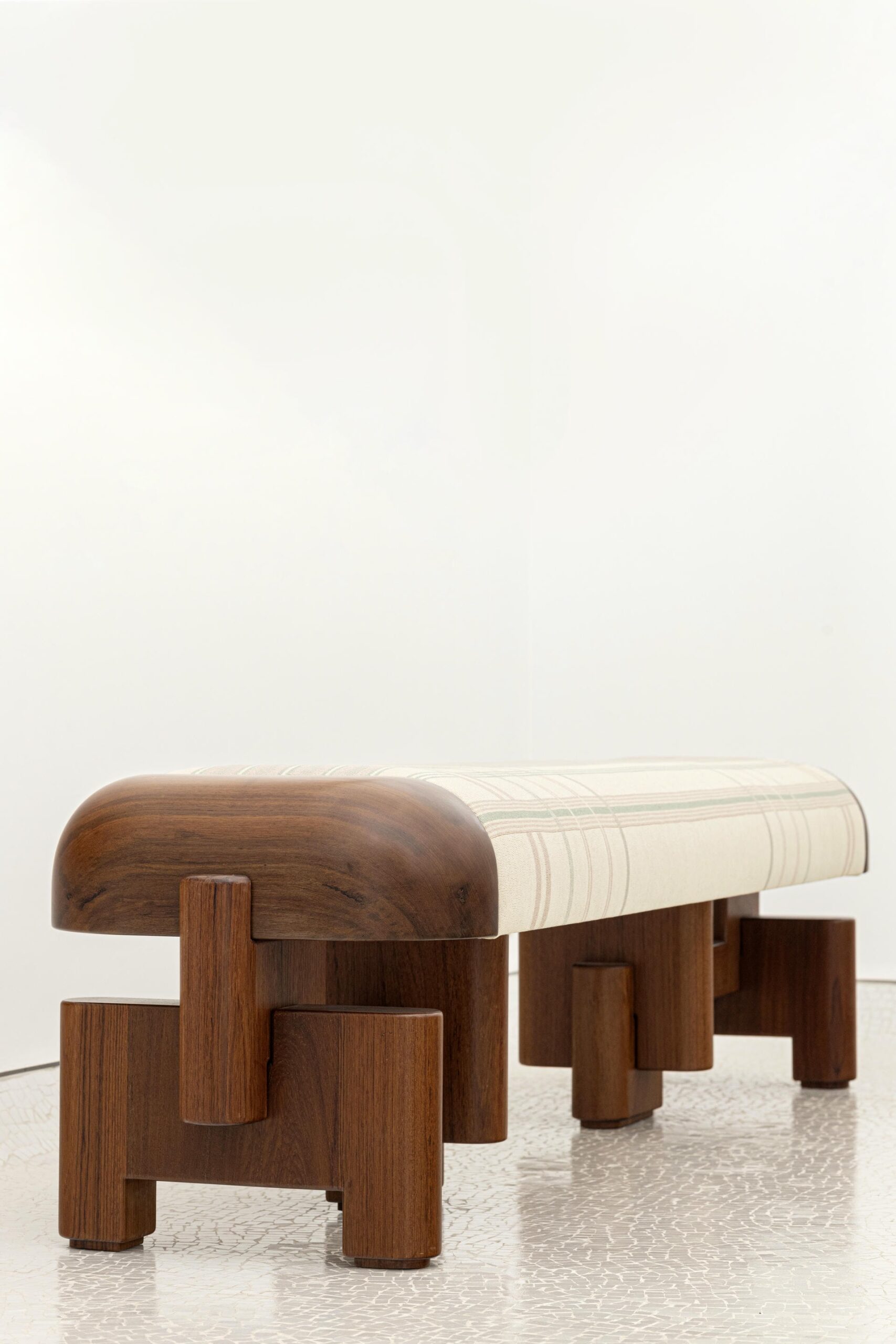
Sometimes I step back and look at my work from a distance and wonder if there’s a common thread. Even though materials, forms, and aesthetics change, there is a certain integrity that remains, though it is hard to articulate. But what I would say is that I’m very process-driven. Perhaps I can explain with an example. If you consider how embroidery is used at the studio to develop technique, it begins in a factory associated with fabric, after lots of research and prototyping, it moves into timber, then into marble and brass. In another iteration, it becomes glass-bead skin on upholstery. It becomes line drawing on rugs through zardozi. The technique survives because it does not remain fixed. The same is true of marble carving. It moves into geometric furniture, then a bulb, tube, pleated shade, and woven lattice. Inlay moves from architectural flooring to plates, curved lampshades, vases, wood, and artist collaborations. So my idea lies in the process. It is not to collect crafts but to build evolving technical lineages.
I was born and brought up in a house full of architects. My father is an architect, my mother used to be an interior designer, I believe my great-grandfather was an architect, and my brother and his wife are both architects. So we’re one too many in the family.
Growing up, I was naturally introduced to the arts because both my parents were in that field. We went to museums and galleries quite often. So my introduction to art and design happened early on, and each step towards architecture felt quite natural.
I often look back fondly at my time spent at the OMA/REX office in New York. It was a very pivotal year for me. So many things that I do today, consciously and subconsciously, reflect some of the ideas and ideology of that office. It was not about having a prescribed aesthetic but more about the ability to think.
Today, when I step back and look at my own practice, I see some of those influences. To me now, it’s important that instead of imposing your own style or aesthetic, you look at clever solutions to what are sometimes mundane problems.
While we don’t have too many architectural projects that have been realised yet, if I apply this question to our interior projects as well, it’s the same way of approaching a problem. You ask questions and don’t assume something just because it’s always been done in a particular way.
Questioning programs us a certain way, sometimes flipping things around uncovers approaches that you hadn’t considered before. Then, whether it’s architecture, interiors, furniture, product—it’s a similar process for each. From the first step to seeing a project through, I believe I’m much more process-driven than aesthetic-driven.
I think, increasingly, everything designed has started to look very similar. Even if things are from different parts of the world, with new fabrication techniques and technology, things start to look the same. I’ve felt the loss of authorship, one that comes from place; that previously you could tell where a particular thing is made or comes from, and second, of people; the craftsman who makes it.
In India particularly, there is still an abundance, access, and proximity to handcraft and room to intervene and create a layer of sophistication, which then allows you to make things that are not homogeneous. I think that’s what draws me to crafts primarily.
To add to that, there’s so much to learn from craft. Earlier, it was my naivete; I looked at craft very superficially, as ornamentation. But there’s a certain depth in craft that moves you to think in completely different ways. Many years ago, I travelled to Hyderabad to explore Ikat. Max Modesti of 2M Ateliers was going, and I accompanied him. Just the dyeing process of the thread is so mathematical and complex. I made the weaver there repeat the process to me so many times. He showed me the graphs in his books, it was all so fascinating. I think when you start looking at craft beyond aesthetics, and you see the techniques and the potential, there’s a whole new design language that could be cultivated through that.
It is also interesting to note that this appreciation of craft didn’t come naturally to me, just because I’m Indian. While we in India live with craft in our everyday lives, I wasn’t particularly exposed to it. A lot of designers here look at it as a source of culture or mythology or symbolism, and draw their design practice from that source.
But my family was not such a collector or appreciator of craft in the classical sense. My father is an absolute modernist, a purist, so to speak. He believes more in an Adolf Loos kind of philosophy where ornament is crime. So we almost grew up with a kind of aversion to the decorative. And now here I am, embroidering Japanese glass beads and zardozi over everything I can get my hands on!

© Studio Photo Couture
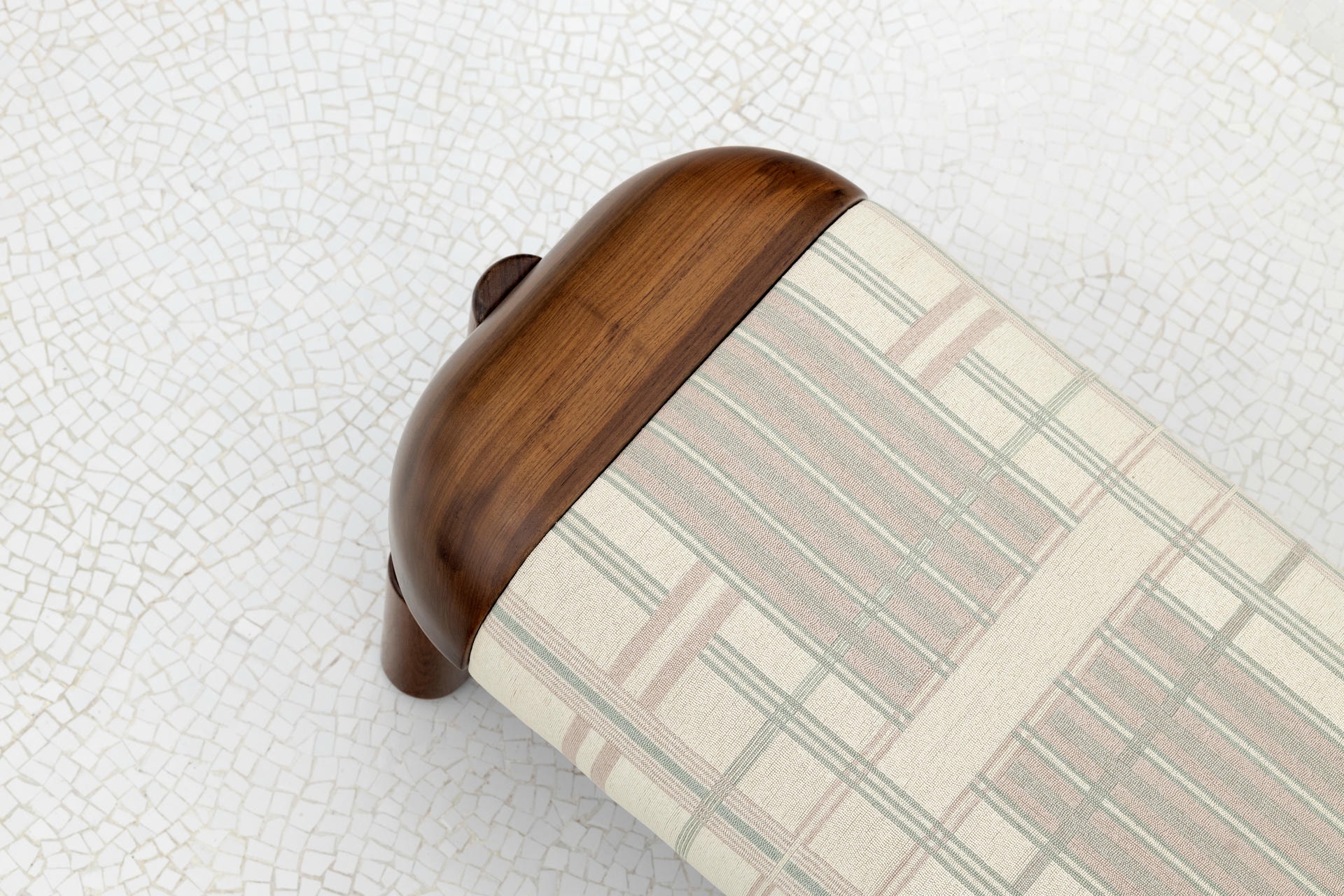
At its core, design is problem-solving, irrespective of scale. Sometimes the smallest of objects can be most complex. I think it’s more important to address that. The way we work at our studio is that often the furniture becomes the testing ground. It becomes our point of departure for research, to explore techniques and materials, and those explorations and aesthetic choices are appropriated for larger-scale interiors like surface cladding or bespoke elements, because rarely does a client give you the luxury of time to develop certain techniques that could become long-term language. So I would say one idea, thought process, research feeds into another and grows into multiple formats and scales.

© Vinay Panjwani
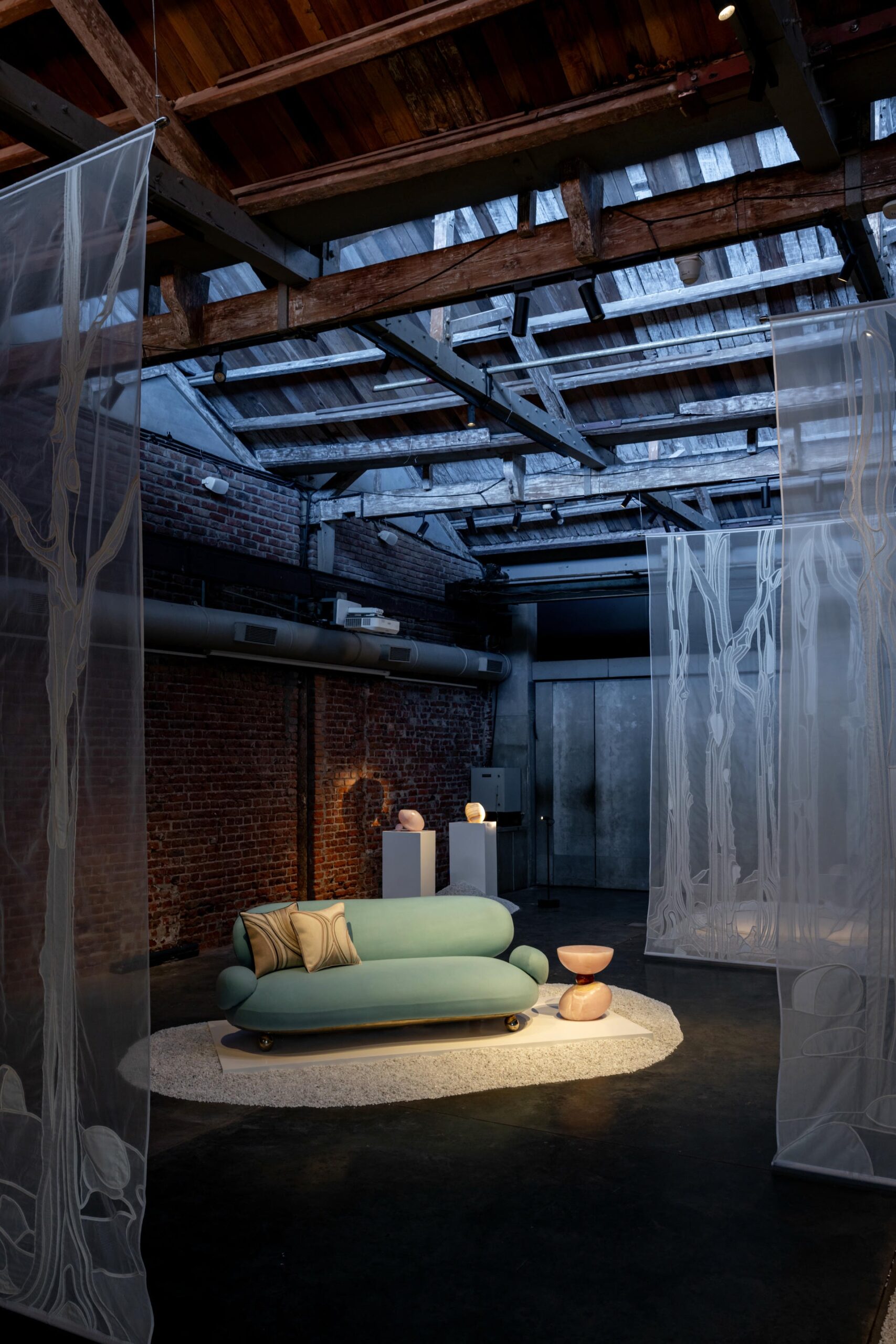
In 2019, we worked on the Gyaan Project, where we galvanised the creative community to raise funds for a girls’ school in rural Rajasthan; the Rajkumari Ratnavati Girls School in Jaisalmer, by CITTA Foundation. The project supported both education and craft.
We approached twelve renowned creative talents to give us sketches for a marble plate in their own signature aesthetic, which we then crafted with inlay and then auctioned the pieces. The project included couturiers like Christian Louboutin and Sabyasachi; architects B V Doshi and Bijoy Jain; artists Atul Dodiya and T. Venkanna, among others.
This was also during the difficult times of the Pandemic, so there was work created for artisans that kept their studios running. It was so successful and fulfilling that we’re now working on Edition Two.
For me, it’s one of my favourite projects because we engage with people in a different way.
It was not just philanthropic in terms of donating money, it was about the time everyone gave to it, having the rigour to translate someone’s signature style into, let’s say, a medium like inlay. It also became about elevating a craft form into something new.
I find the 1111 Lincoln Road, a parking garage in Miami designed by Herzog & de Meuron, absolutely fascinating on multiple levels. I first saw it in 2010. For me, it really represents the extraordinary outcome when a client and an architect’s vision come together truly with purpose. The client was a developer named Robert Wennett, who also conceived the Meatpacking District in New York. When he moved to Miami, he found this area on Lincoln Road, which was kind of a grungy neighbourhood at the time. He decided to build a parking garage there, a program which is so mundane when it comes to suburban America. But he commissioned one of the world’s best architects to do it and then plugged it in with fantastic programming. Today it’s a cultural centre, a public space, a shared, multi-use space; people have weddings there; Art Basel has had events there. It’s transformative.
I would say just mundane administrative work. Sometimes you have to spend so much of your time on things that are outside of design. Often it’s related to scale. If you want to grow bigger as a firm and take on more ambitious projects, you need to hire more people, which means you have to manage more people, so you get caught in that cycle. But I love what I do, and I’m fully hands-on. I want to be involved right down to every detail. I would take on fewer projects, but I want to be involved at every stage, every decision. I enjoy the process. That’s the reason why I became a designer.

© Vinay Panjwani
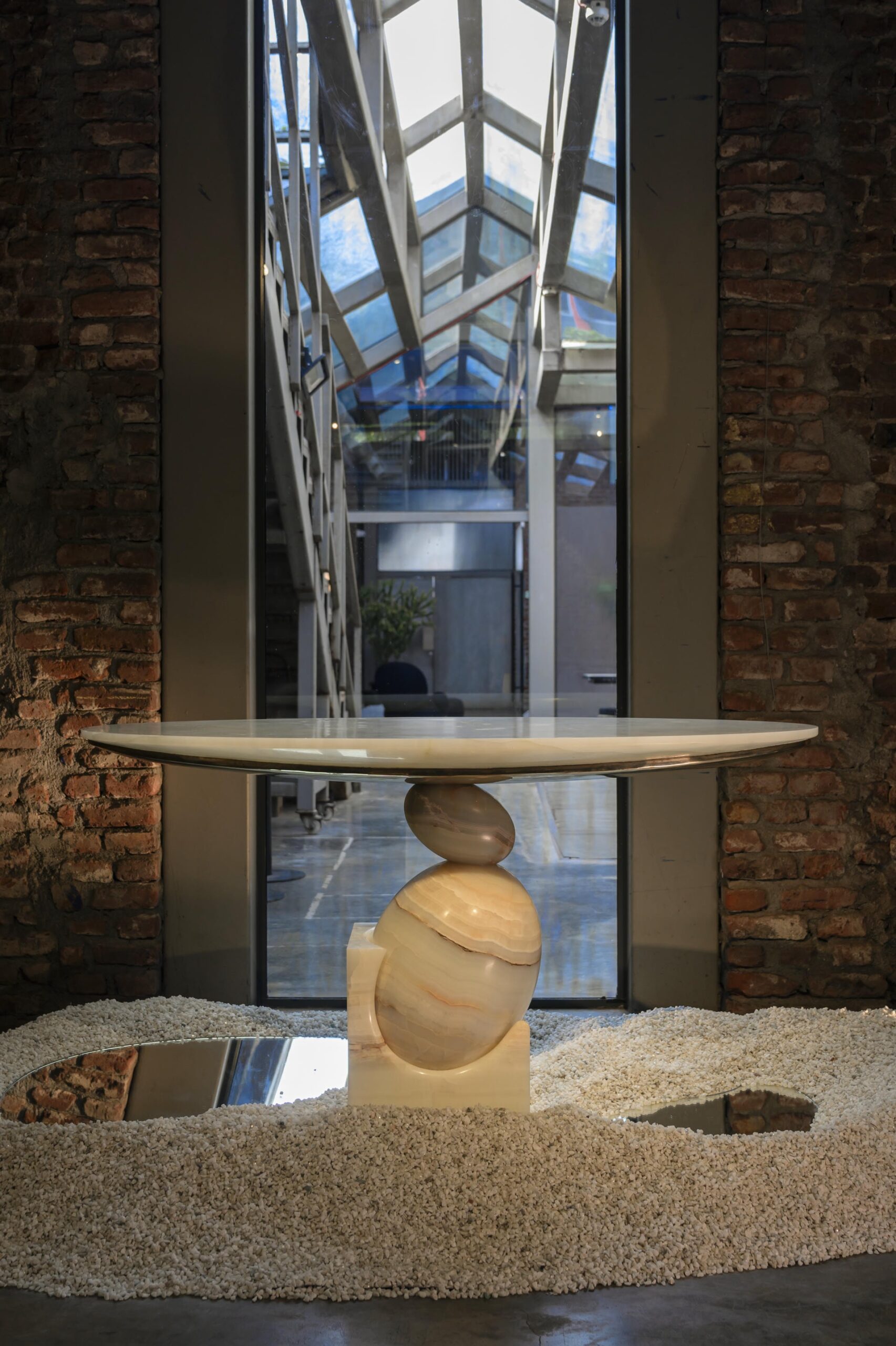
© Hashim Badani
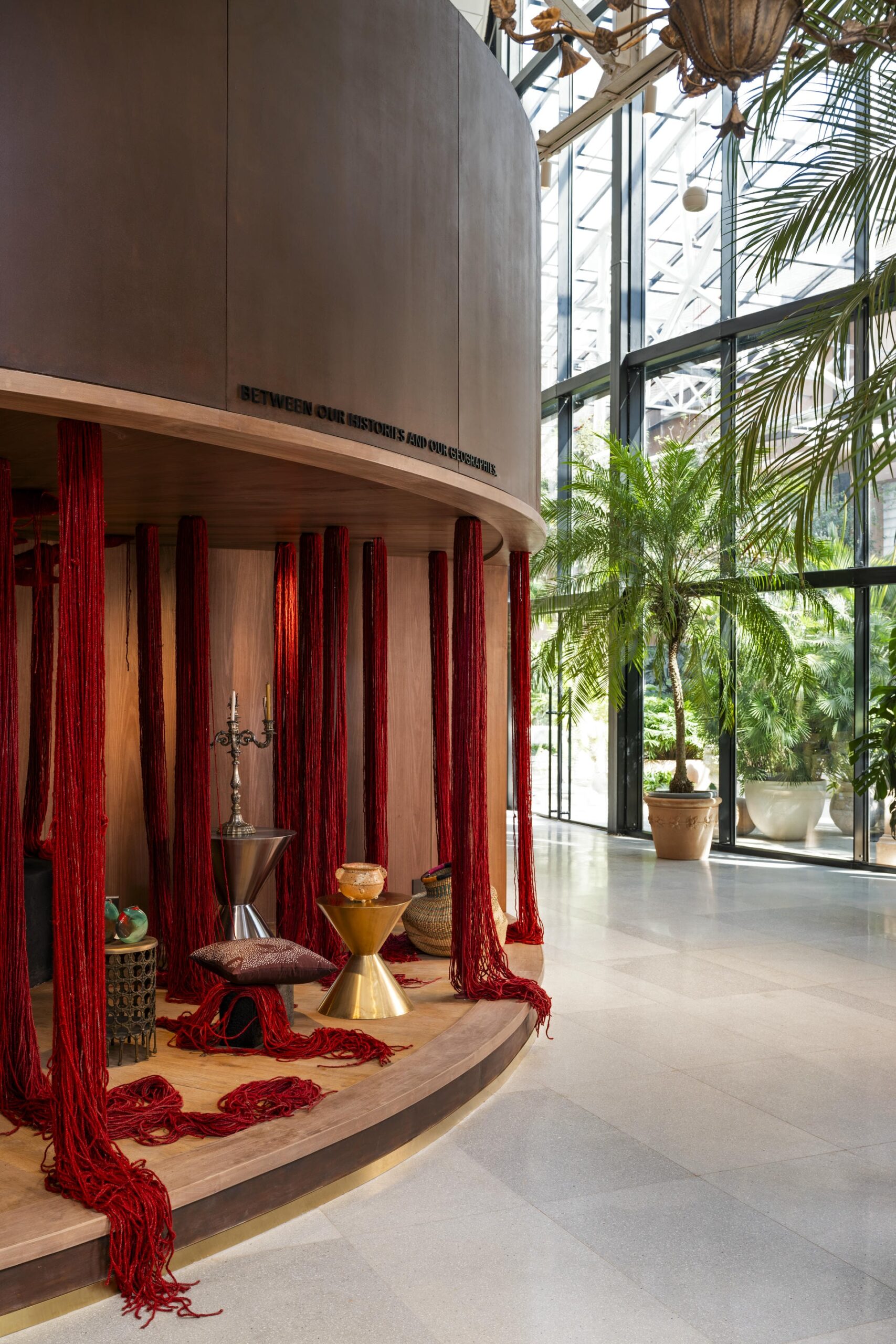
When it comes to projects, I think people become my inspiration. To get to the essence of a person and make spaces that are tailored for them. The ability to translate and put their lifestyle their aspirations into a physical form is quite an inspiring process. For instance, we’re designing a home for someone in a high-rise apartment building in Mumbai. The homeowners are such nature lovers, so we’ve changed the whole house into a garden! You walk into the living room, but it’s actually a conservatory. I can’t imagine doing that for another client. But for them, the idea of a kind of sanctuary in the middle of a city works.
This understanding of people also comes with time. Most of my clients are recurring, and that helps. We get to know each other over time, and I understand their interest and appetite to live in creative ways.
Other than that, I travel often because it helps me reset. Also, art, for me, is a huge source of inspiration.
I constantly tell my team: simpler, cleaner, bolder. I like one clear message in a space. To be bold about it and edit out distractions. In a sense, it’s like editing and cleansing. We can try a hundred options, but then you must filter out and distill. You can be more expressive and still have a singular strong point of view. Also, it is important to take a concept from start to finish, within the space. At every stage, we must question the initial idea and make sure we are still in alignment with it.
It’s what I was saying earlier: things are becoming too homogeneous everywhere. Everything’s looking the same. If you look at traditional Indian architecture, for instance, there was context, a site, the material language, it belonged to a time and place. We’ve kind of lost that, especially in larger buildings.
I’m not suggesting we make everything in a heritage aesthetic. But I mean the essence and context of a lot of architecture today feels lost. Whether it’s entire cities or skyscrapers or a piece of furniture, I think we’ve displaced a sense of place. And it’s because of several reasons, like technology, the idea of modernity or the perception of what it means to be modern, or a blanket economic policy. It’s complex, of course.
It has been my great fortune to have really good mentors. So in a way, I was lucky to get the advice I needed at every stage of my career. For instance, Max Modesti, the founder of 2M Ateliers and the Kalhath Institute. There’s nothing I do without asking him.
My father has been a great mentor to me. I’ve had great professors who guided me. I’ve always had rock-solid people who looked out for my best interests, and I’m ever so grateful.

© Sebastian Boettcher
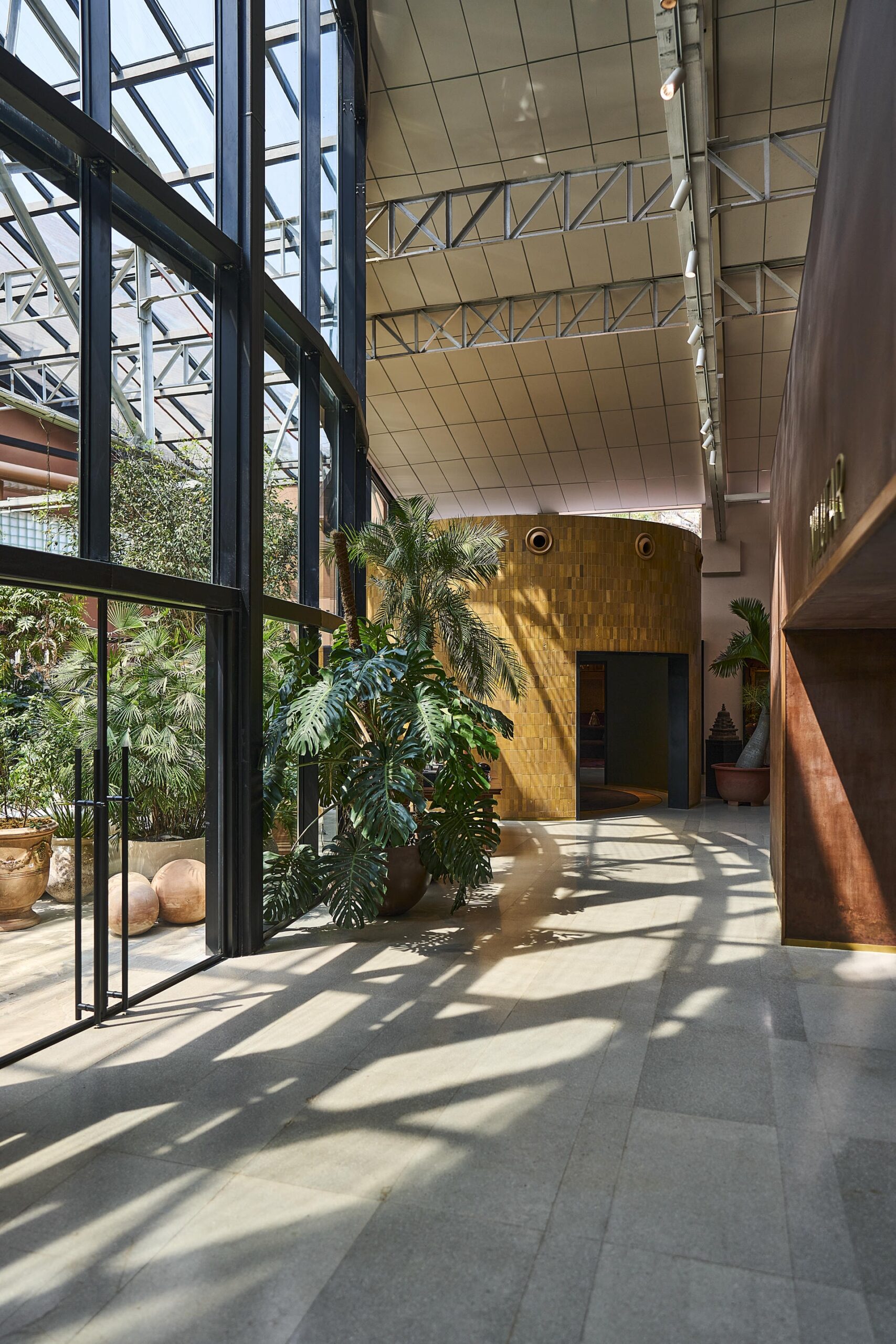
favorite pieces from the Philia Collection
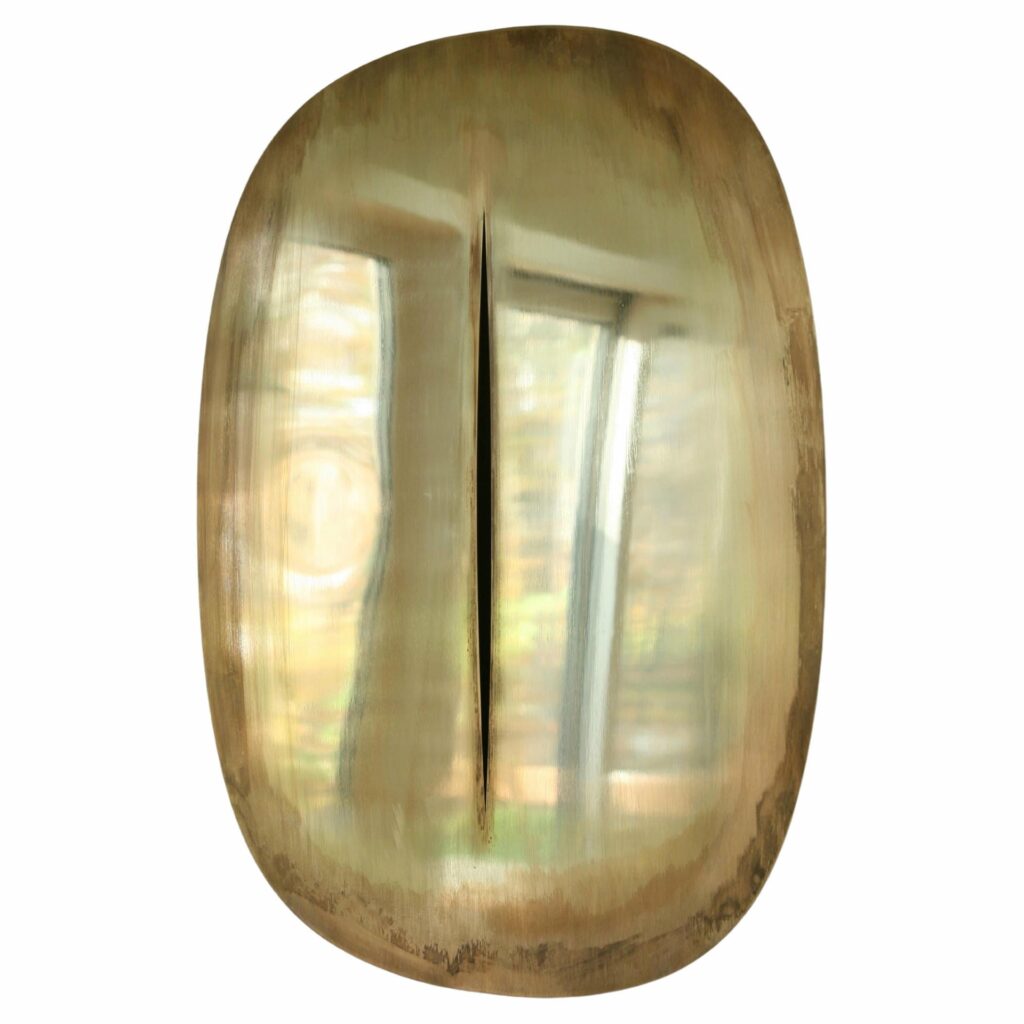
Slit Mirror by Phillip Jividen
I admire designs that make a subtle reference to art; in this case to Lucio Fontana’s slit.
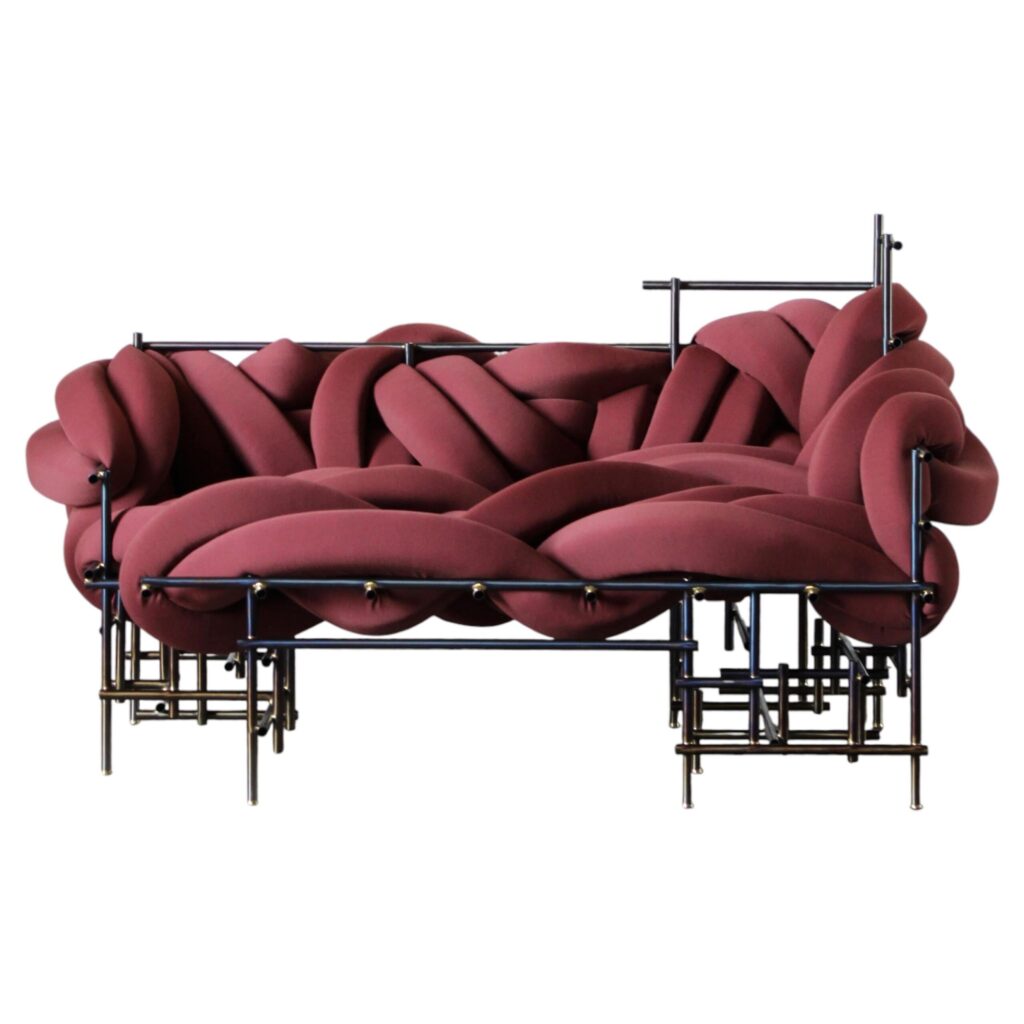
Lawless Sofa by Evan Fay
I like the way the upholstery and structure are integrated into each other, and you can’t separate out one from another.
Thank you so much Rooshad, for this lovely interview!
Share article :

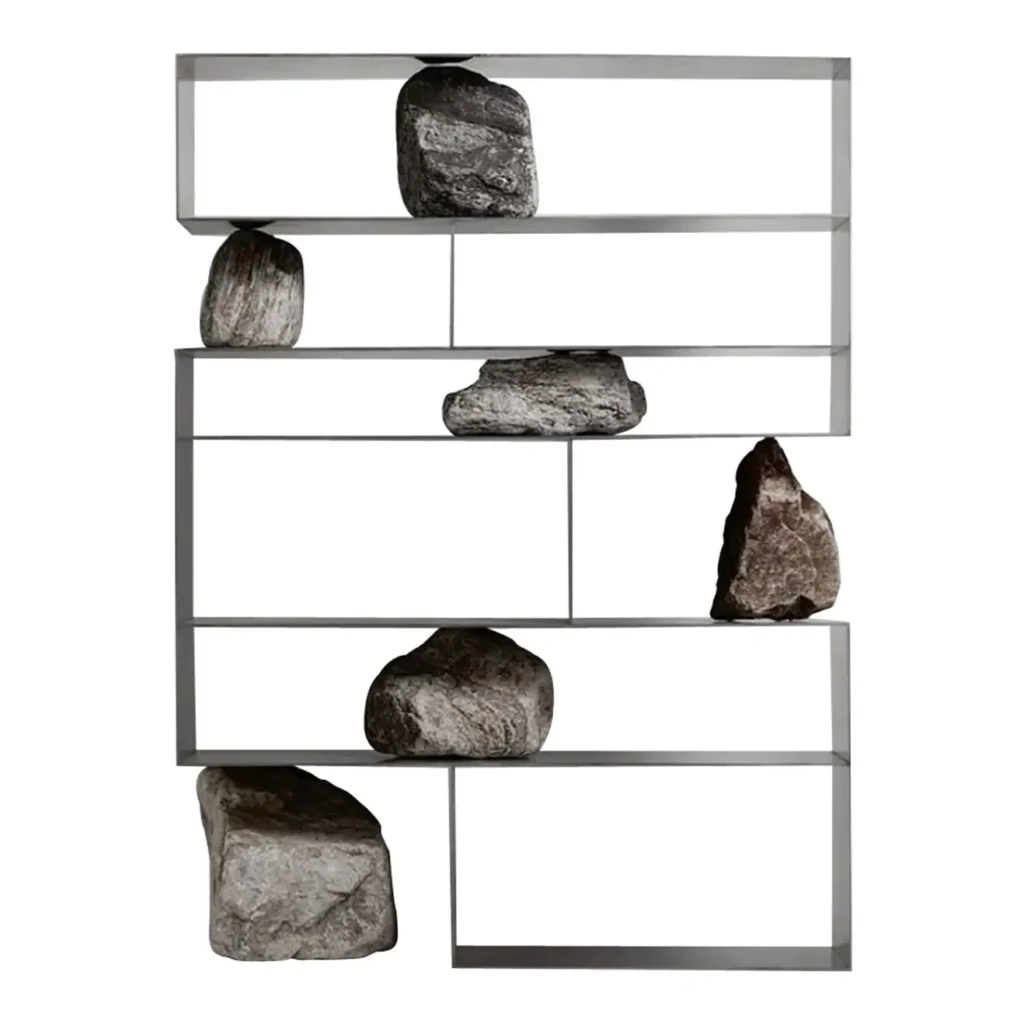
I like the idea of balance, a sense of equilibrium between the thinness of the shelf and the heavy weight of the stone.