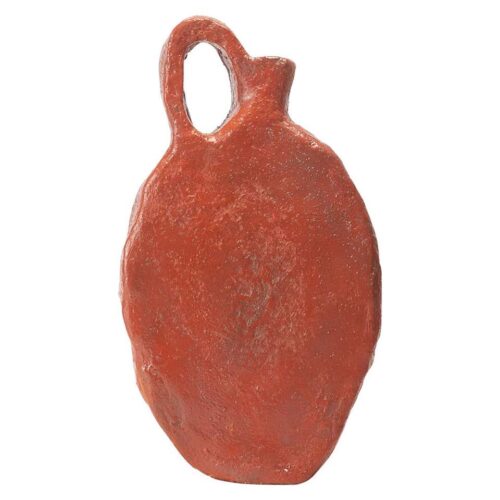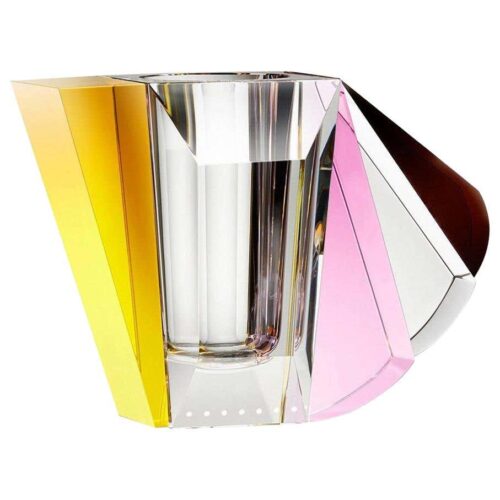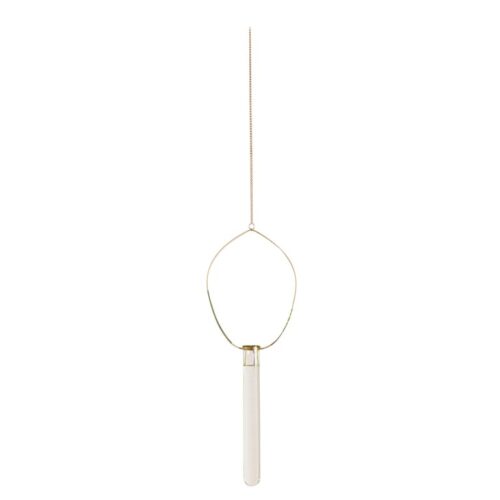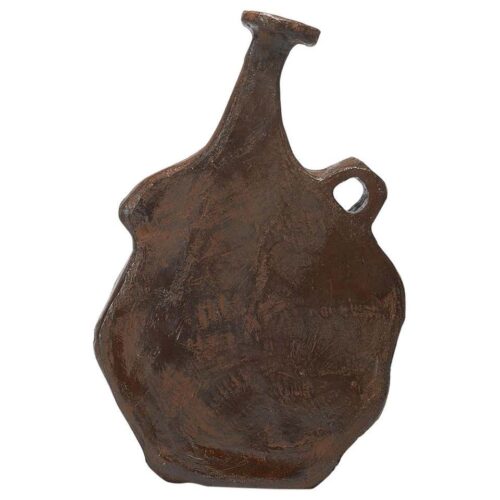
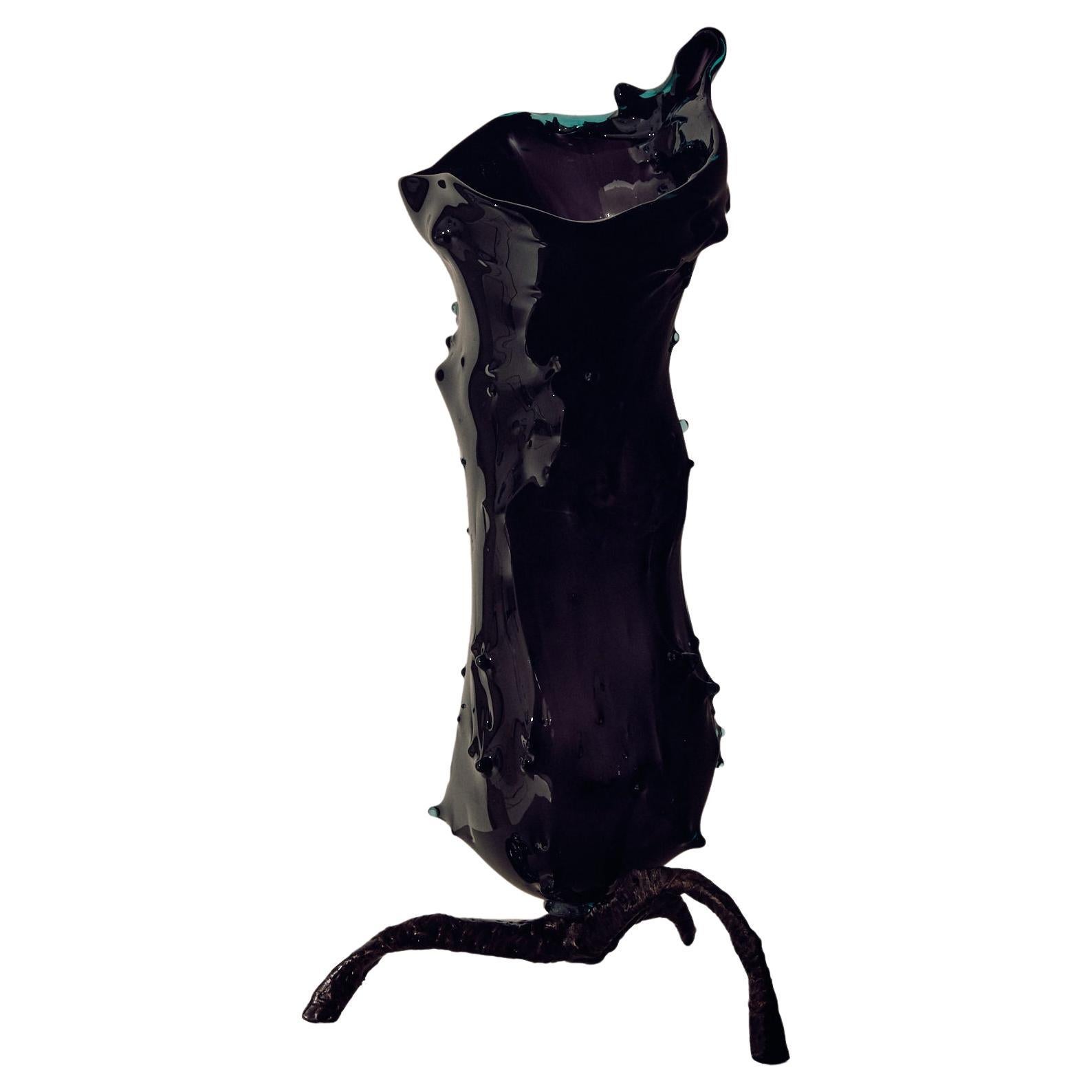
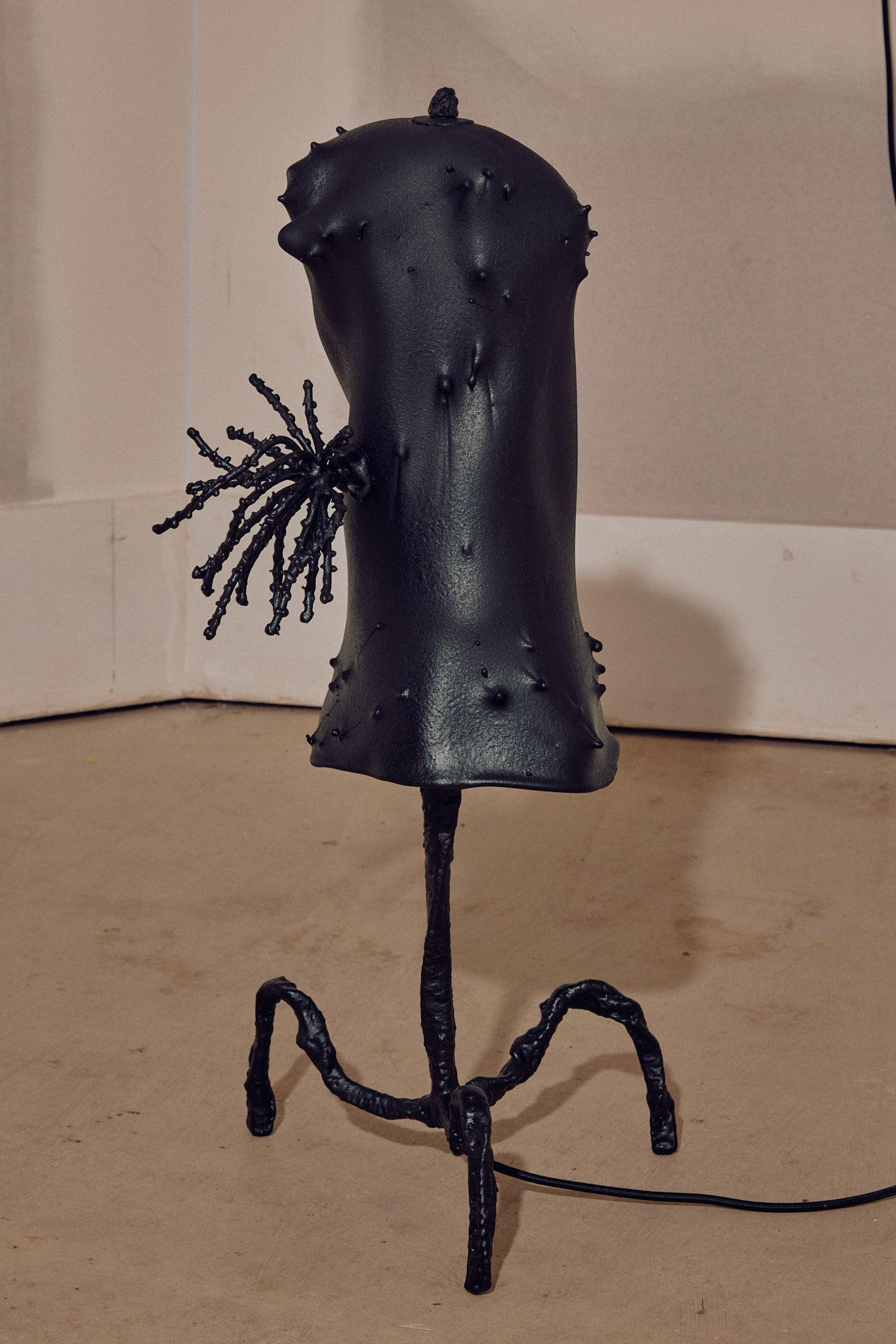
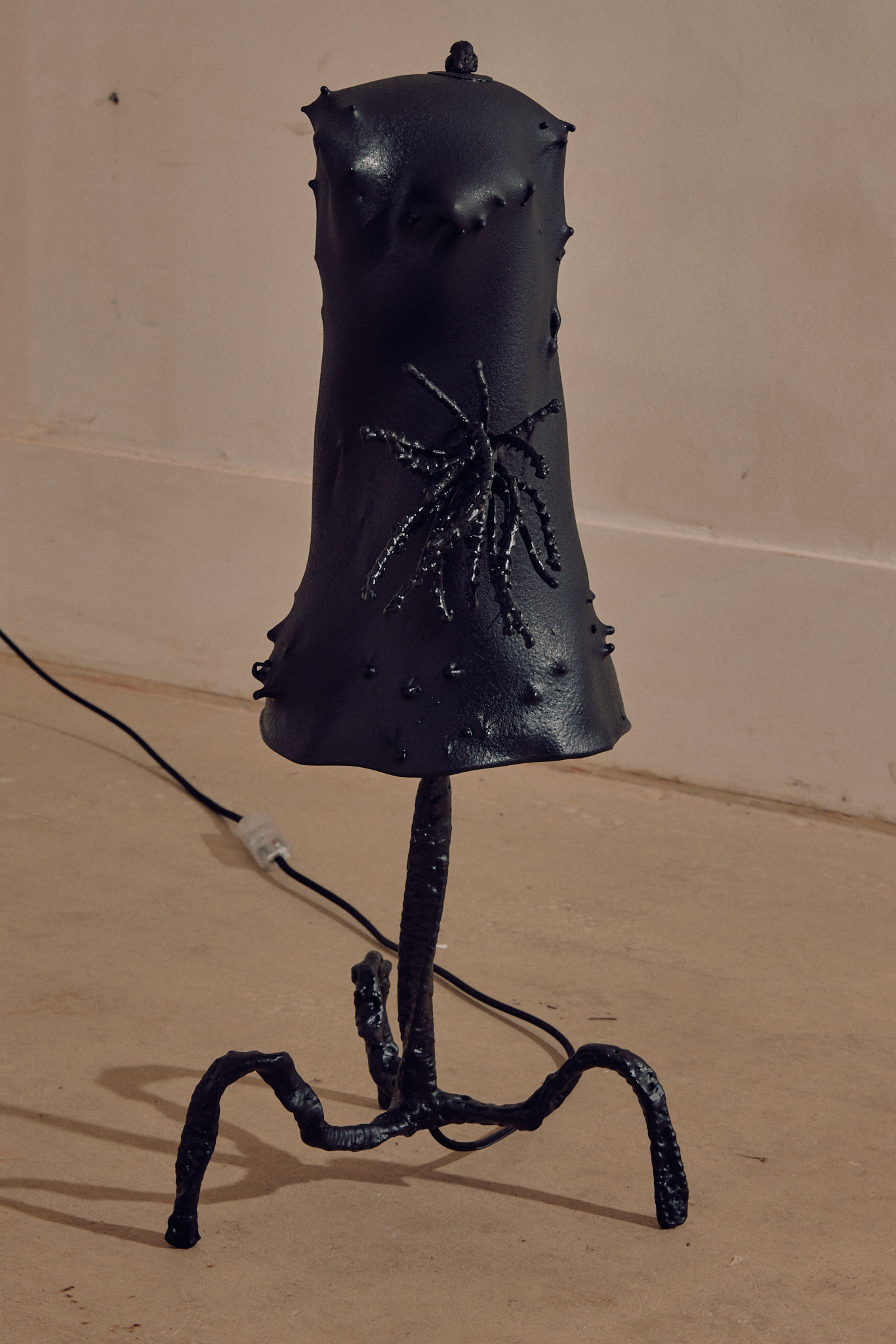
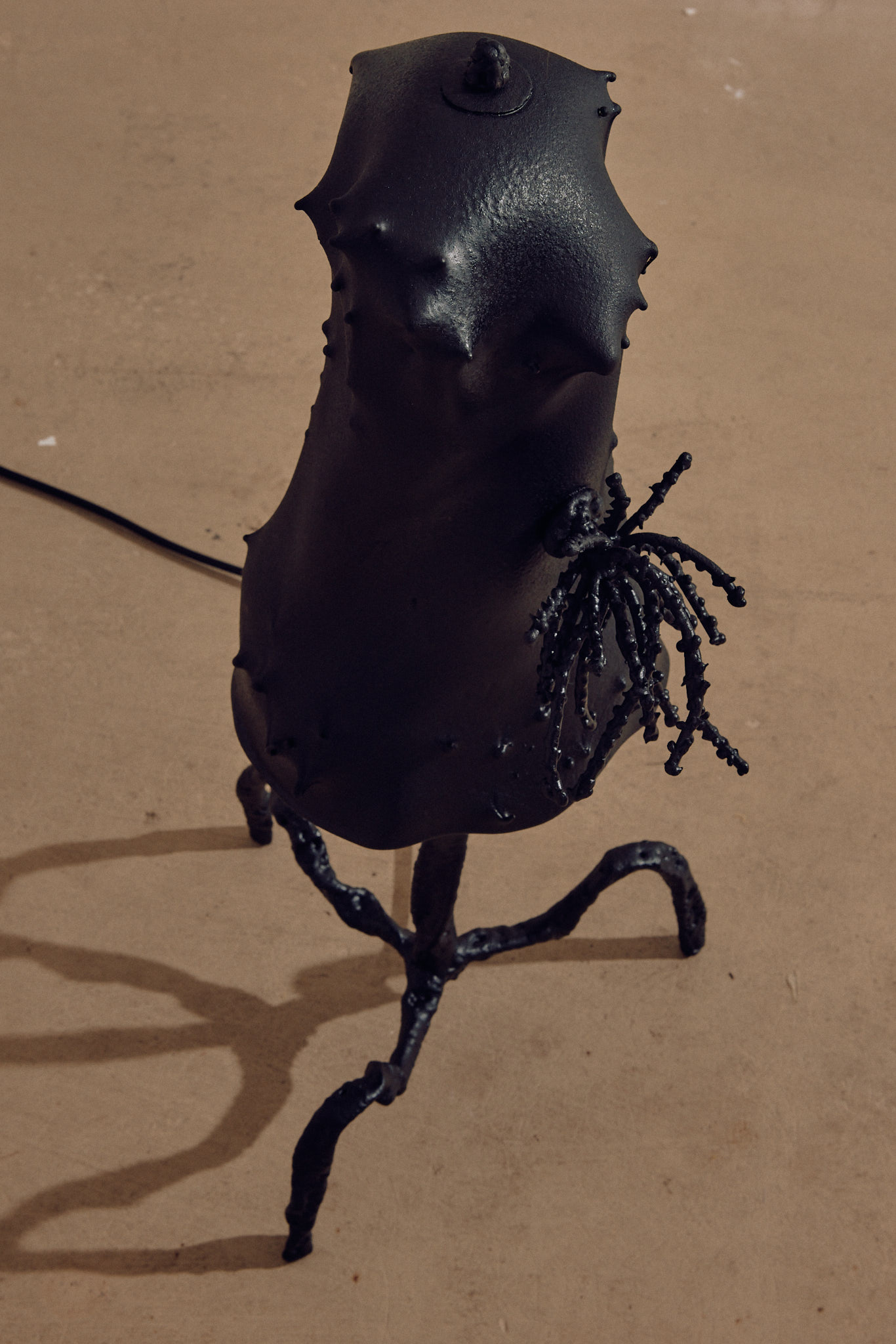
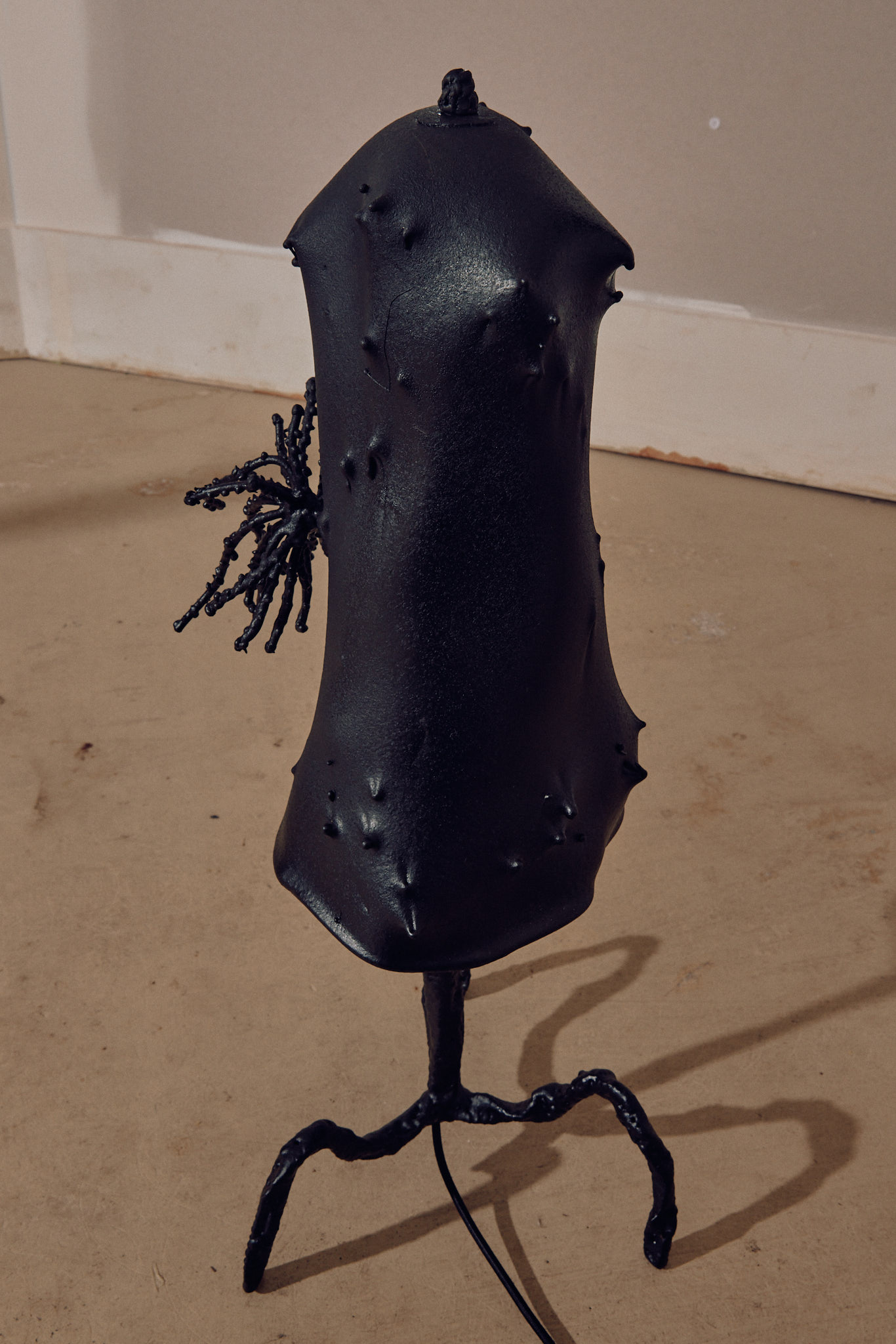
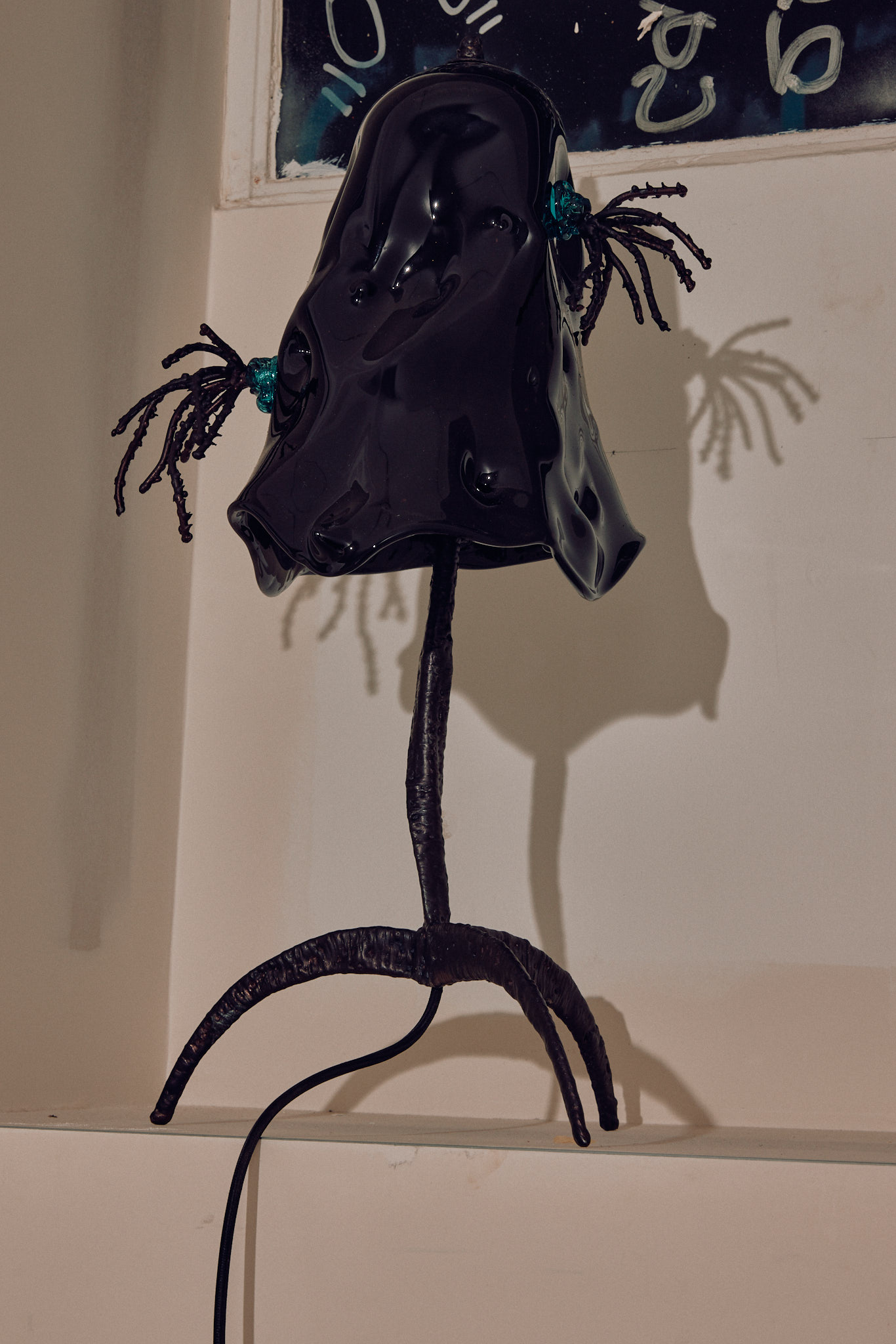
Vase by Michael Gittings
Dimensions: d 17 x w 17 x h 40 cm.
Materials: Stainless steel, Glass.
Michael Gittings
Michael Gittings imagines with his hands. Since establishing his studio in 2016, the Melbourne based designer and sculptor has built an impressive practice,
producing a vast array of curious and covetable objects. With work featured in Sydney Design Week 2022 and an upcoming solo exhibition at Oigåll Projects in Melbourne, Gittings is excitedly (and busily) preparing to share his talent and craft with new audiences. I recently sat down with Gittings to discuss his recent work and broader creative process. There was the sense of someone quietly buzzing with productivity and ideas, thrilled to be making and exploring new techniques. Whether it be envisioning a new collection of kink inspired polished metal objects, or tweaking a pair of heat-proof gloves to interact more intimately and gesturally with blown glass (a new material obsession). Playful, speculative and down-to-earth, Gittings conveyed the impression of a designer hitting their stride, propelled by curiosity and a wealth of gathered experience. After the last two years of restrictions, Gittings says “it kind of feels like the start”. Originally crafting more classic furniture shapes in his signature metalwork, Gittings’ creations have become increasingly marked by organic abstraction, subversion and evolution. This intertwines with Gittings’ process of making – one that is extremely intuitive and guided by experimentation. Aside from the deep technical traditions he engages with, there is an openness to the possibilities and whims of the materials themselves; as if they are living, feeling substances. According to Gittings, it wasn’t always destined to be furniture or sculpture. “I originally wanted to make guitars” he admits with a smile. “But then I quickly worked out I can’t do that, because there’s certain… limitations. Like a guitar or violin actually has to sound good [laughs]. Like you can’t just make a shit sounding guitar” he quips. “What I like about furniture, is that there’s a starting place to begin from. There’s still some constraints… but there just feels like all of these possibilities. You can make so many different shapes, textures, weird forms. I don’t necessarily think about it conceptually, I just find it more interesting to play with these things and ideas and see where the work wants to go.”
For his solo exhibition at Oigåll Projects, Gittings took a twisting journey down a nocturnal, overgrown path. He relished the opportunity to create something
unrestricted and unfettered. “When I came to [Andy Kelly and Mitchell Zurek] with the idea for what I wanted to make, they were like just go wild. Which was a relief. I get excited when I start putting a plan together. I wanted that energy and excitement shared, otherwise it’s quashed and crushed… It’s grown massively since it’s conception.” The show, titled ‘when the night ripped a hole through Eden’, is an exploration of organic plant-like shapes and rippling, almost reptilian textures, prompting dystopian narratives and conveying an elegant savageness. They appear almost like Jurassic artifacts, recovered from tar. “It’s heaps darker now than I originally imagined. When I first started thinking about the show, I liked the idea of it existing within a kind of fantasy realm. It was very colourful, there was lots of mirrored surfaces. But that idea just morphed when I discovered how to texture the metal in this specific way, instead of polishing. I also started thinking about panpsychism, the consciousness of plants and animals, a more psychological direction than the last collection I made. I started having weird dreams, which usually happens in the lead up to a show. I’m working constantly and so a symbiosis occurs. There’s a dark violence to them now.”
Gittings’ work for ‘Future Ruins’, which exhibited last year at Gallery Sally Dan-Cuthbert in Sydney, also renders scenes of nature taking over, reclaiming and
infiltrating domestic objects and architectural spaces. For the designer, this aesthetic is ultimately a result of the overall design process and discovering how to make new shapes and forms. “My thought processes are aligning with my abilities, so the organic elements are kind of appearing as I work”.