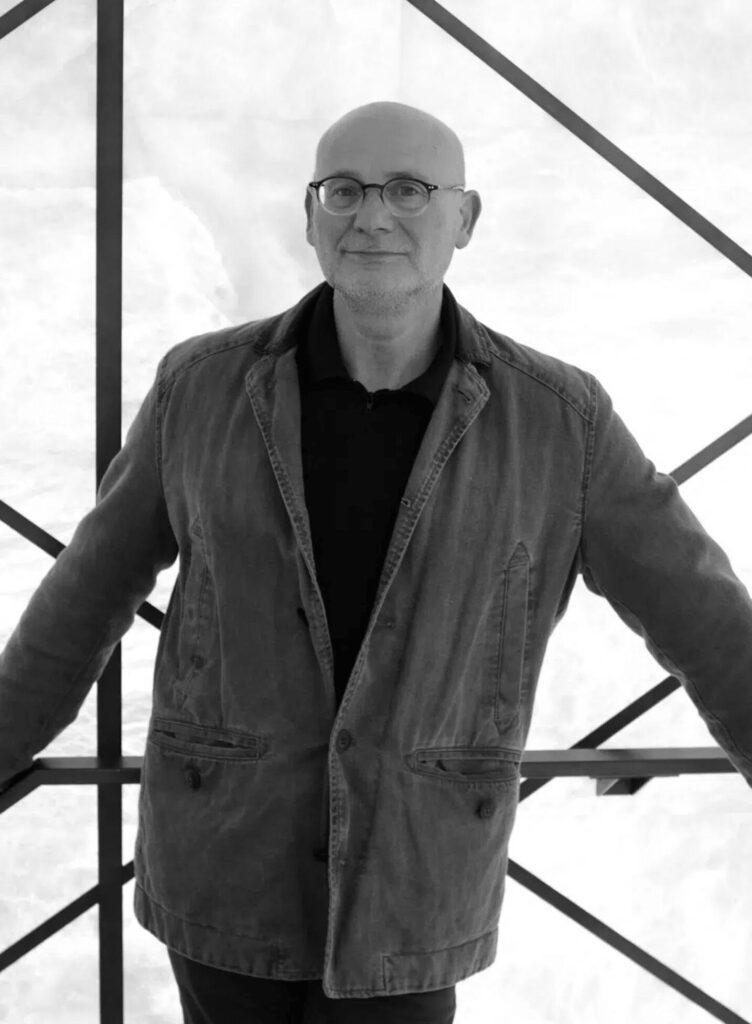
Alain Ellouz
Interview
I was born into a rather modest family of eight children. My parents were from Algeria and had lost everything when they arrived in Paris. They were not able to teach us about culture because it was not a part of their lives, but they instilled life’s more essential values. They taught me that life does not wait for you and that you must keep moving to thrive. At 17 years old, my father pushed me out of the house because I no longer had my place there. I am grateful for that because it forced me to reinvent myself daily. I traveled the world and dabbled in all trades. Though I was often unhappy, I continued searching for who I really was. I thank my parents for giving me the chance to become what I am today instead of just a formatted product of society.
In 1985, I was 30 years old and created my first IT company. At the start, I knew nothing about computers, but I quickly learned. Most importantly, I learned the rules of marketing, sales, and management, which were major assets when it came time to launch Atelier Alain Ellouz. After 15 years, I was no longer interested in IT and thus decided to sell my 100-employee company worth € 30 M in sales revenue. I was finally free again. I began sculpting stone in 1996, and it became my greatest passion. I drew a comparison between sculpting stone and how I would shape my own life.
I didn’t really make a conscious decision to work with alabaster; it was more of an encounter. One day, I was sculpting the stone, and an idea emerged: why not create a new professional adventure using alabaster? I was unaware of the possibilities at the time, but an unmitigated trust formed between alabaster and me. Since then, we have continued to evolve together.
Alabaster is unlike any other stone. It is rich in gypsum and silica, which gives it that uniquely transparent character. It is a remarkably young stone and still in the phase of expansion. In fact, the impressive patterns revealed through its translucency are actually molecules that are expanding. However, alabaster is so fragile that you can scratch it with your nail, and it is also porous. Aside from small objects, it cannot be used to create elements of design or furnishings. We dedicated years of technical work to make alabaster usable in architecture and elements of design. This specific know-how became Atelier Alain Ellouz’s signature, making us the only studio in the world capable of working with alabaster.
I was fortunate enough to meet Marion Biais Sauvetre. She was fresh out of design school as our workshop was just up and running. Marion is incredibly talented, and our workshop would not have reached the level it has without her. We brought our talents together to create a design style that resembles us. Marion leads the five designers in our design office, and they are free to unleash their creativity to continually move forward.
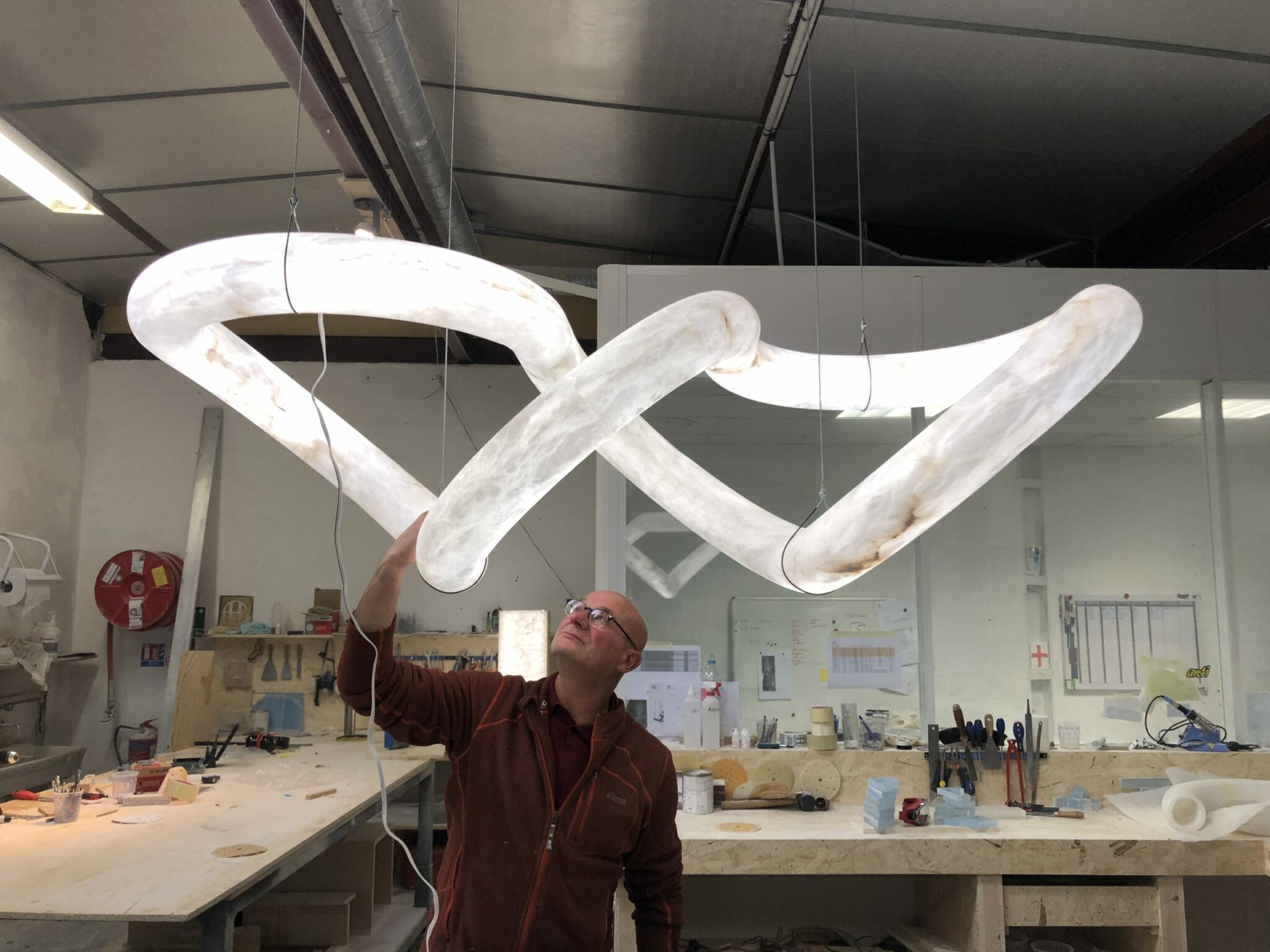
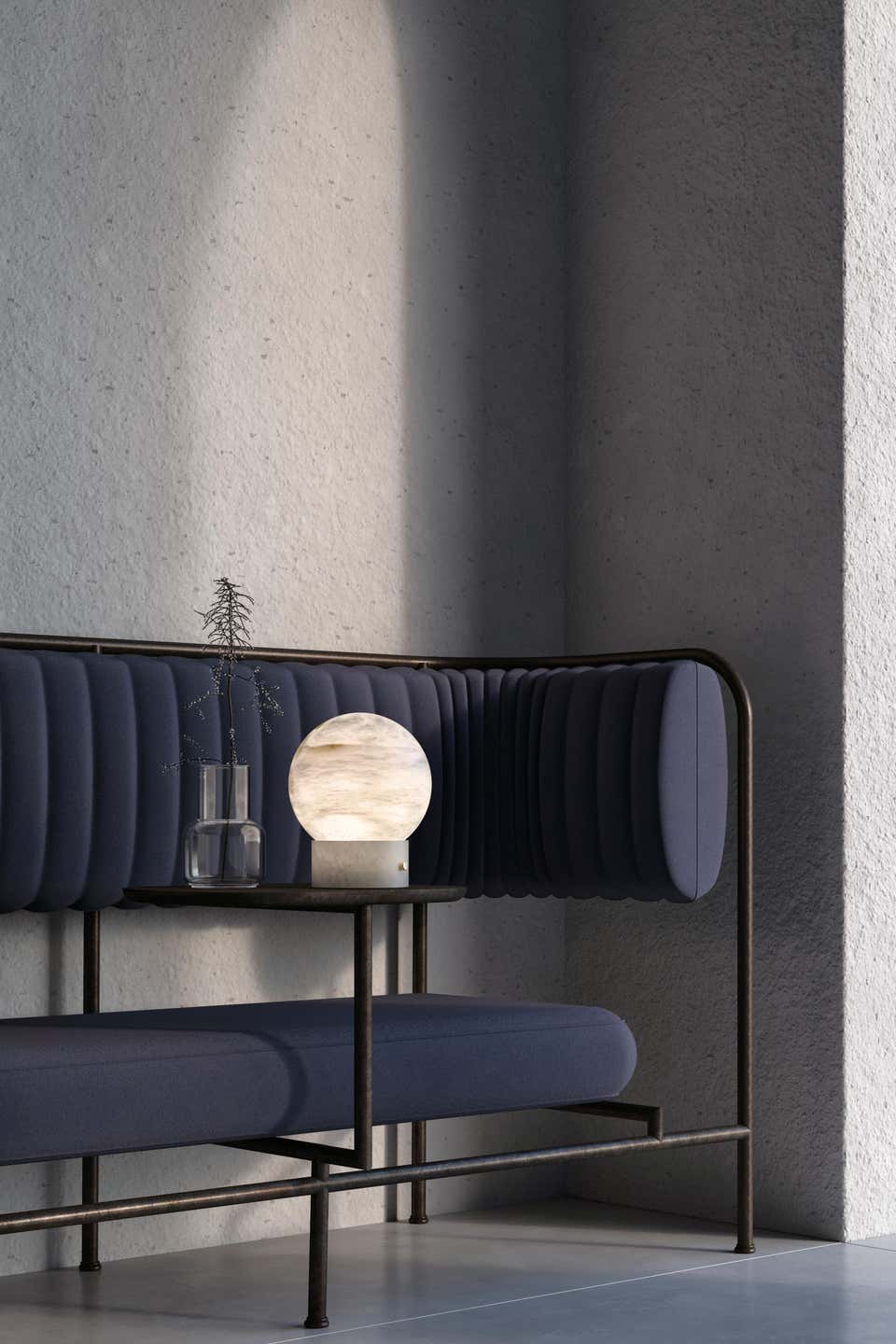
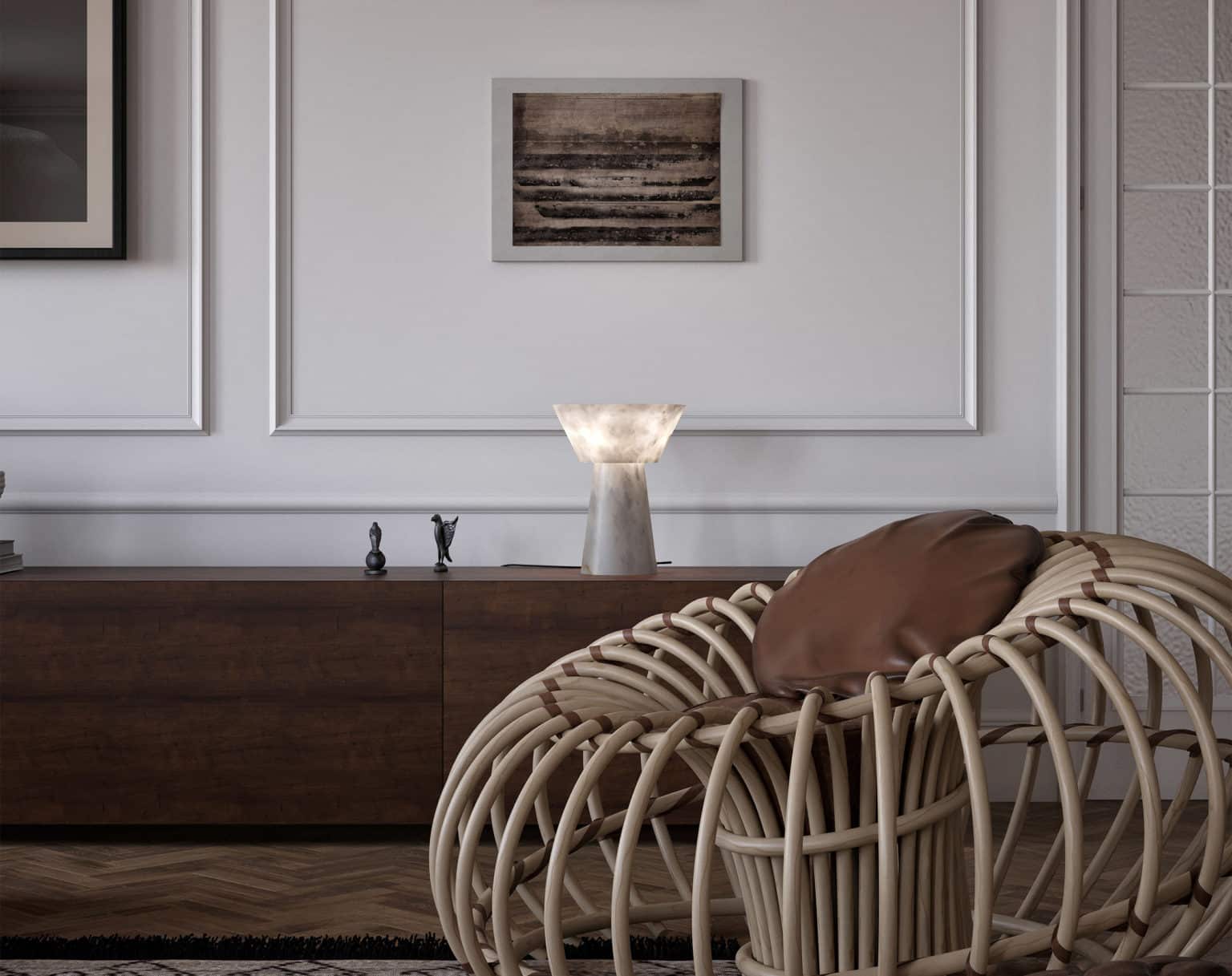
Light is the voice of alabaster. It awakens the stone, gives it radiance, and makes it extraordinary. There are other types of marble that rival the beauty of alabaster, but once you add light to it, no stone in the world can compare! Over the past 15 years, we have explored countless ways to work with alabaster. We’ve designed architectural projects with 88-ft. alabaster walls, fireplaces, dance floors, furniture, tables, dressers, cabinets, wine cellars, and of course, lighting elements, some of them enormous and weighing more than a ton. The only place where we cannot use alabaster is outside, where water, rain, and wind can penetrate the stone and damage it.
I love all the contemporary art museums around the world, and when I returned from a visit to London’s Tate Gallery, I envisioned a softly curved, sculptural form that unfurls freely and in total harmony with its environment. I do not search for inspiration from other artists, but I look deeply into their creations until something new emerges within me. Inspiration is like the wind; you have to open the window to your soul, and the current of air will either enter or it won’t. Infinity was a powerful wind that swept into me.
Design has always been a driver of creativity. Charlotte Perriand, Le Corbusier, JM Frank, Pierre Chareau, and Ruhlmann are examples of this. We all create to invent the future. Today, there are creators and copycats. Unfortunately, there is an increasing number of copycats.
Until now, we have never looked to collaborate with other designers, but we will soon start a foundation dedicated to Alabaster Art, and its aim is to collaborate with artists and designers. I am interested in working with others to invent new languages and explore new directions. Artistic adventure and experience are the foundation’s buzzwords, and the EGO will not be a central component. The greatest enemy of designers and artists is the ego. If we are motivated by celebrity, we’ve missed out on the essential. After all, art is pure, right?
I was born in Paris. My family, friends, and culture are in Paris. I do not compartmentalize my life; my work and my social life are symbiotic. So, I would never move to NY just because that’s where things happen or to pay less taxes. I prefer to share the beauty and true culture of France. I am grateful to France for my freedom of spirit, my love for design, my lifestyle, and for its stunning landscapes. Through my work, I hope to share the poetic essence of France with the rest of the world.
Over the past 15 years, we have developed a specific design style. It’s refined, simple, effective, and resembles who we are. You can always recognize an Atelier Alain Ellouz piece. I never look at what others are doing, and I am not interested in becoming the next inspiring design figure. I firmly believe that everyone has to find their own style.
I am grateful to the US for their incredibly open arms. In France, innovation is poorly received because of the country’s strong ties to tradition. But in the US, they love creativity and newness, and they recognize beauty. Indirectly, we already work quite a bit with China, where we have installed some magnificent alabaster creations in luxury boutiques for major brands such as DIOR, Lecoultre, Chaumet, Van Cleef, and Rolls-Royce. Our alabaster design can be seen in many places across the region, such as in Shanghai, Macao, Hong Kong, Beijing, etc. BUT, to really know a country – and China is much more than a country – you have to integrate it. Indeed, that terra incognita offers a fabulous project for me in the future.
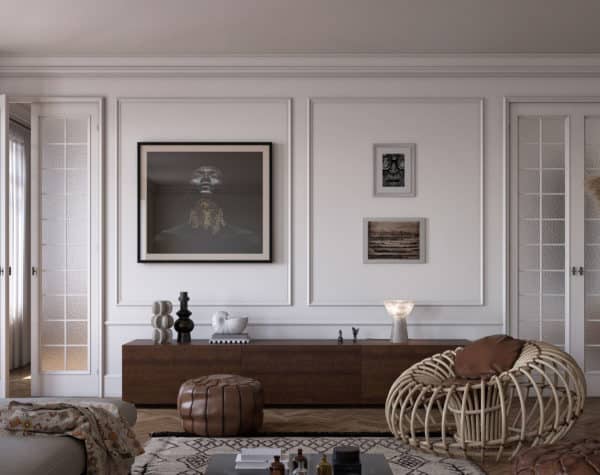
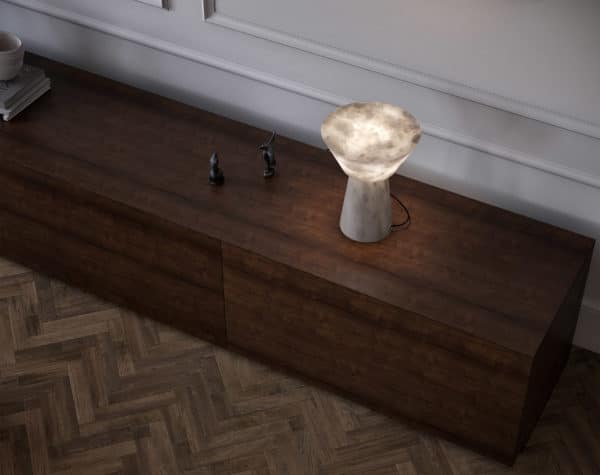
For every problem, there is a solution. We took advantage of the time we had to create a new department: EDITION. Edition is a new range of luminaires designed for sale through a worldwide network of dealers and showrooms. In two months, we developed the offer and closed deals with ten or so of the world’s leading showrooms, and I hope we will soon have a major partner in China.
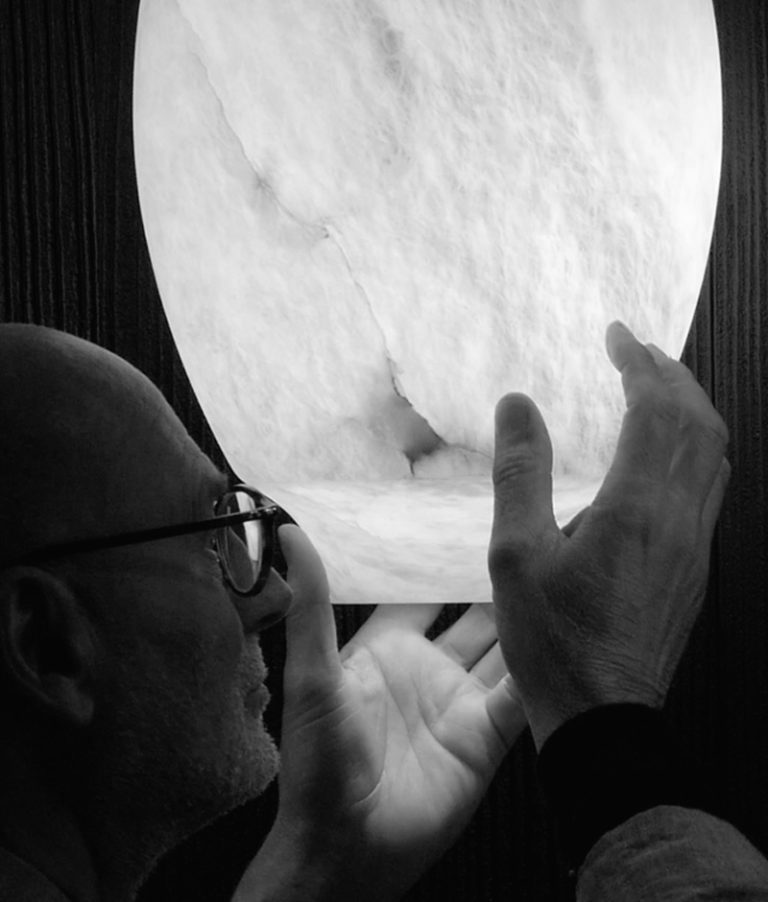
“Inspiration is like the wind; you have to open the window to your soul.”
The Questions
(The Proust Questionnaire is a set of questions answered by the French writer Marcel Proust.
Other historical figures who have answered confession albums are Oscar Wilde,
Karl Marx, Arthur Conan Doyle, Stéphane Mallarmé, Paul Cézanne…)

SHARE :