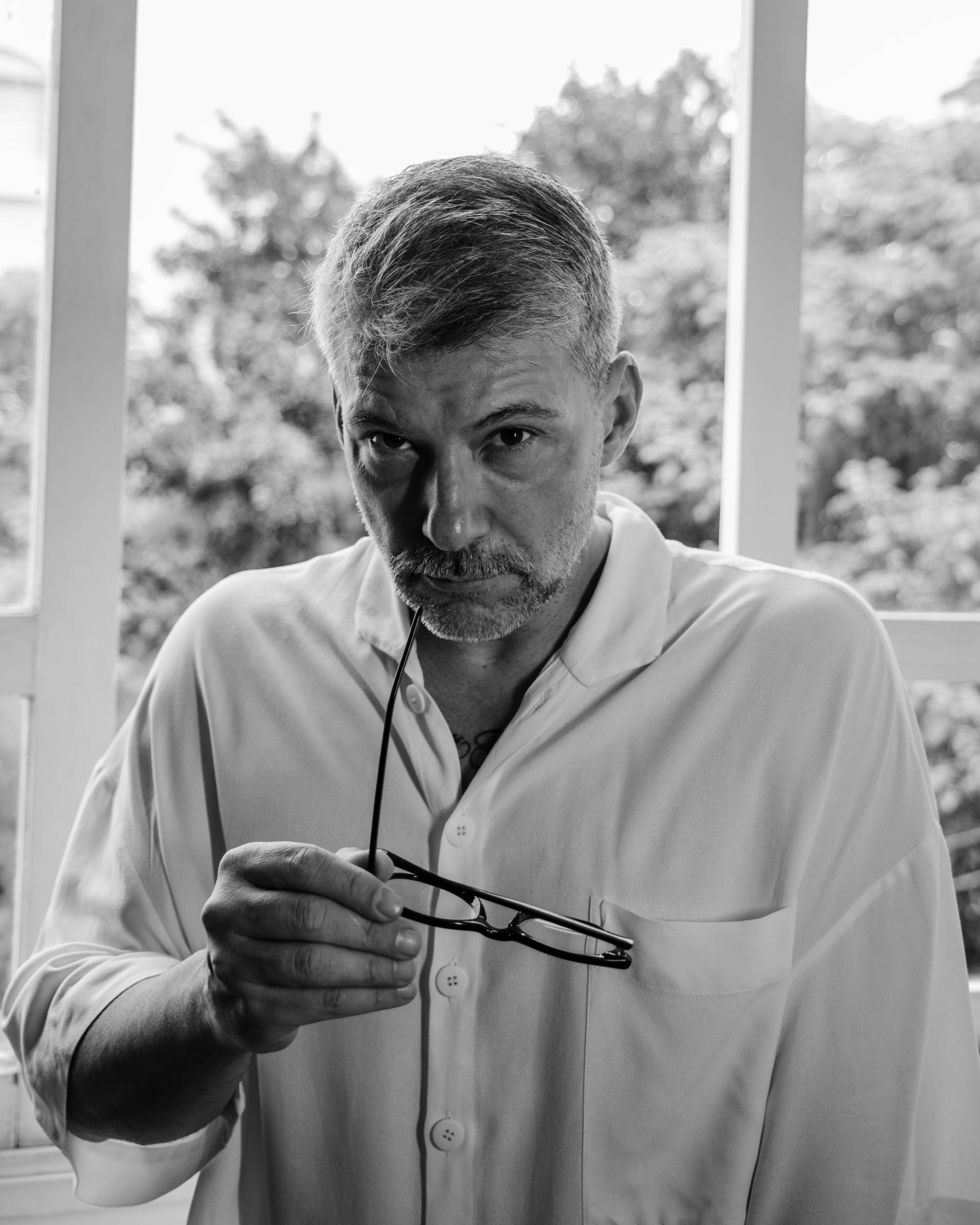
Ben Barber
Ben Barber is a British artist and designer whose practice explores the intersection of sculpture, material experimentation, and functional design. Working across furniture, lighting, and collectible objects, he creates pieces distinguished by their expressive forms, tactile surfaces, and strong sense of craftsmanship.
Drawing on an intuitive and hands-on approach to making, Barber embraces the inherent qualities of materials, allowing process and experimentation to shape the final outcome. His work balances sculptural presence with functionality, resulting in objects that feel both contemporary and deeply rooted in materiality.
Interview
I was born in Vancouver, BC Canada. Lived here for most of my life!
I had lots of memories as a child looking at my grandmother’s watercolour paintings; she would always gift portraits to us, and adorn her home with them. While I never saw myself growing up as an artist, it was something I was exposed to. After high school, I was a little lost as to what career path to take, so I decided to take a year off and travel. While on a trip in London, I visited the Tate Modern and felt a great connection to the pieces I saw. Seeing more modern work expanded my view of what art could be. I came home and enrolled in a local art school. This opened the door for me to study in New York at the Pratt Institute. During that time, I’ve learnt that a creative career path is exactly where I wanted to be.
Pretty much! After I got my BFA, I got an internship at a furniture design studio, which is what introduced me to the industry. After my internship, I started working in the film industry and slowly transitioned into focusing on my own studio practice.
I found I could appease my love for art/creativity, but also the more structured side of myself that likes engineering and architecture. Furniture design blends the two.
It tends to focus on a form and work out from there. It can begin with a simple shape, and through the design process, certain materials and further shapes can come into play. For instance, the Ida table is a very pared-down hemispherical form. After the form has been worked on, I have to begin to focus on the fabrication processes. These can then come back to influence further tweaks to the form. Other times, it may start with a material I want to work with, and its boundaries can help decide the form.
I like to work relatively scheduled. It keeps me on track and prevents me from losing too much focus. Generally, the day will start on the computer. This can range from emails, design work, admin, etc. Once completed, I would like to have the afternoon be more production-focused.
I like to work with various metals because they have very little baggage. We created it; it’s a non-organic material, so you can do whatever you like with it and not have to consider the geographical timeline. You can create the shapes you want and apply the finish you prefer. Of course, each alloy can have its little quirks, but for the most part, you can dictate how you want it to look. Once finished, it’s extremely durable and requires very little maintenance. Stone, on the other hand, is the complete opposite. Everything about its appearance and uses is dictated by where it came from, and there is an inherent nod to time. Stone can’t be created overnight. It’s this contrast that makes it the perfect material to pair with metal.
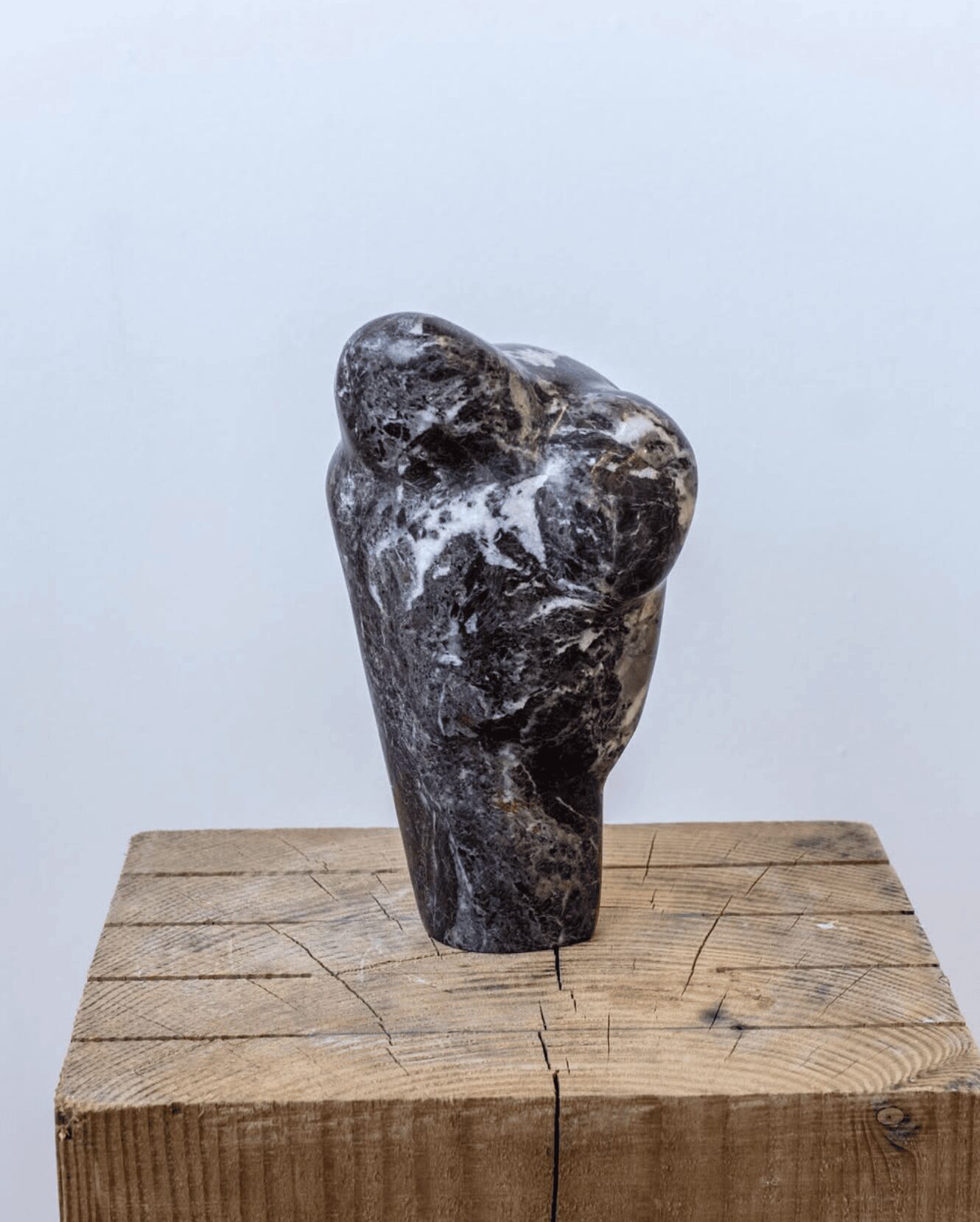
I was once told that a lot of my work appears very simple on the surface, but to get that form, there are a lot of complicated structures/processes in place to make it come together.
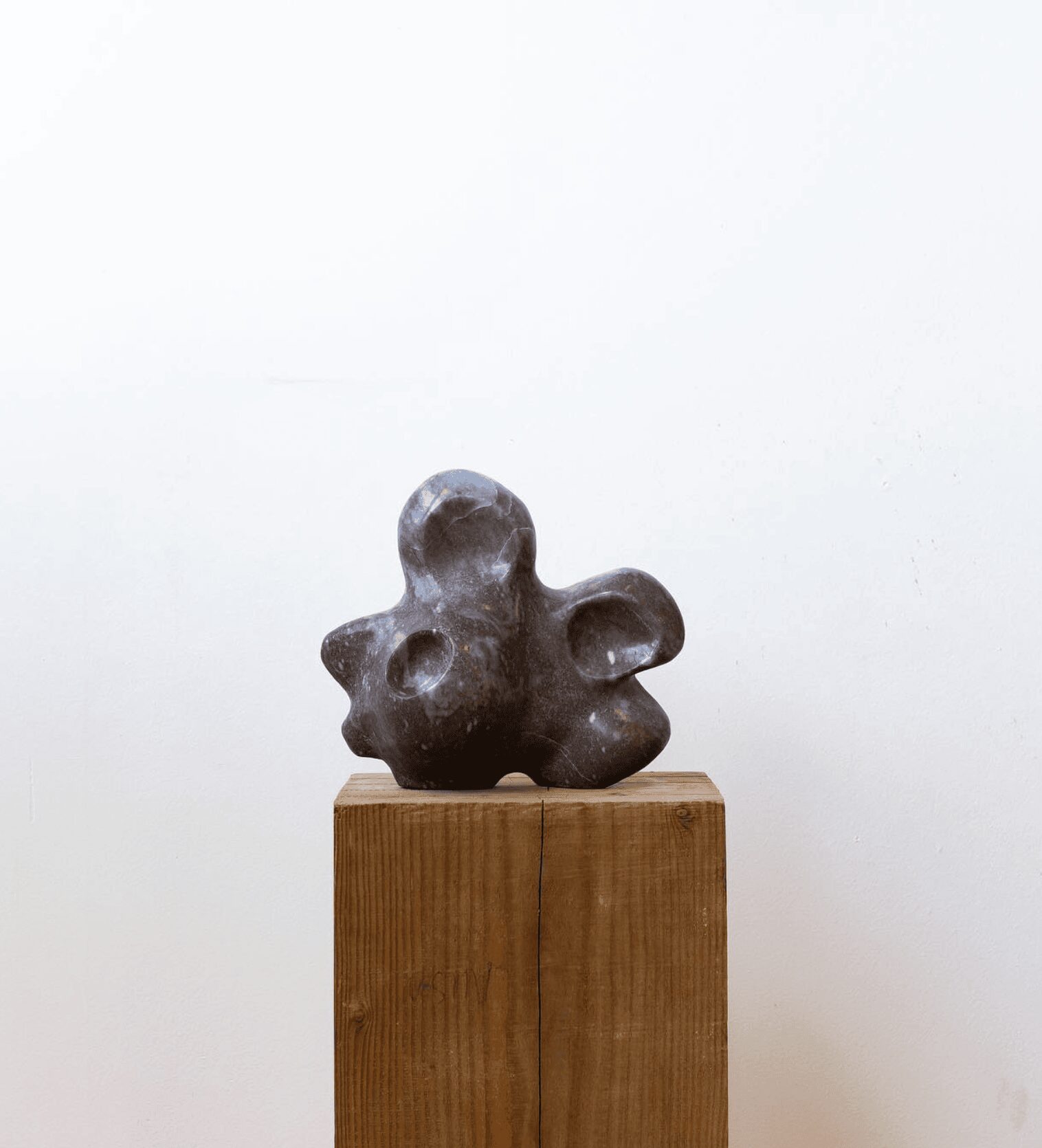
Refined expression of form and material.
Be yourself, and never stop working towards your goals. Try not to get too caught up in others’ successes. Avoid comparing your career path with others because every single one is different. Just because someone got successful within a year does not mean it’s the only day. If you put the time in, it will come.
Initially, I would lean towards minimalism, but I don’t feel it’s quite right. The forms might be quite refined, but some have a finish that is expressive and rough. Perhaps it lies more in a futurist materialism realm?
So many to name, a lot of my initial influences came from sculptors. People like Noguchi, Richard Serra, Anish Kapoor, Barbara Hepworth, and Olafur Eliasson.
I think we are in an incredible era of designers. I appreciate anyone pushing boundaries of what is art and what’s furniture. Too many to name!
Kwangho Lee, Max Lamb, Vincenzo De Cotiis, Alma Allen, Brian Thoreen, and Hector Esrawe, to name a few.
“Just because someone got successful within a year does not mean it’s the only way. If you put the time in, it will come.”
The Questions
(The Proust Questionnaire is a set of questions answered by the French writer Marcel Proust.
Other historical figures who have answered confession albums are Oscar Wilde,
Karl Marx, Arthur Conan Doyle, Stéphane Mallarmé, Paul Cézanne…)
Good friends, good food and good wine.
Not putting my everything into my work.
I can be overly critical. It’s a double edge sword.
Would rather not speak about others!
Anyone is doing their best to inspire others.
Wine and food.
Calm and focused when reflecting on my path, but concerned and empathic to the world.
Patience.
–
–
“Cynicism is easy, optimism is hard”
I think any talent can be achieved through dedication. So there are none I would like to have that I don’t already.
Hard to say, every negative has some inherent positive within.
That has yet to be realized!
A fat house cat!
South of France sure would be nice.
Our family home.
A feeling of no purpose or drive.
THIS!
Probably my bluntness.
Humour.
Gilles Deleuze.
Luke Skywalker.
None of the top of my head.
Any one who has achieved greatness within their profession. Lewis Hamilton would be one example.
–
–
–
–
–
“A lot of my work appears very simple on the surface, but to get that form there are a lot of complicated structures and processes in place to make it come together.”
SHARE :