Brajak Vitberg
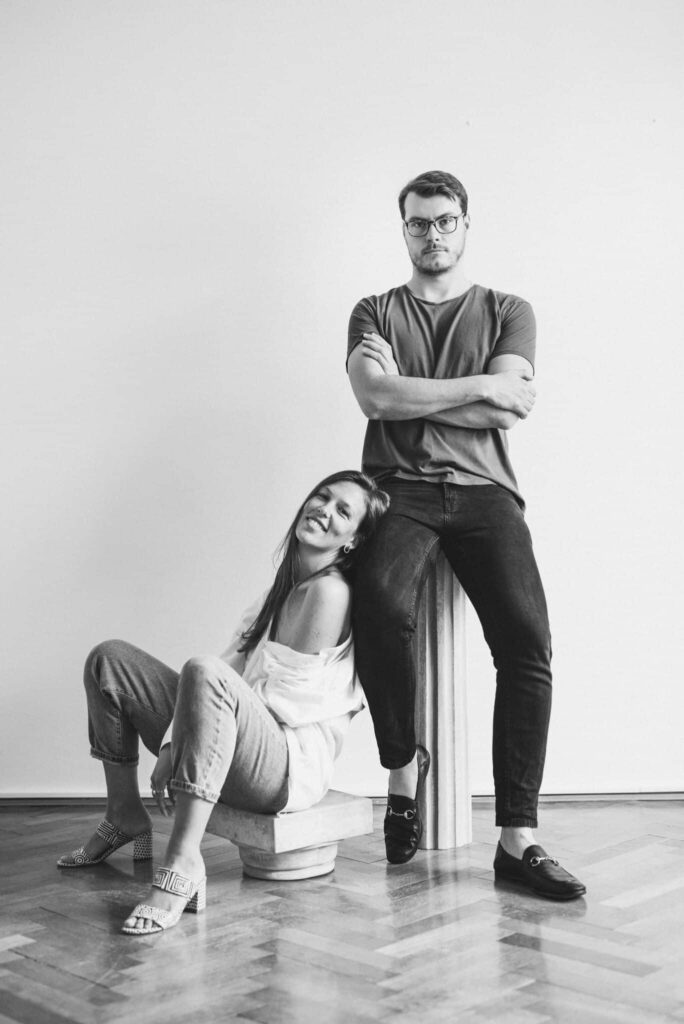
Brajak Vitberg is a multidisciplinary art and design studio founded by architects Petra Brajak and Robert V. Bijelić in Ljubljana, Slovenia. Working across collectible lighting, furniture, and objects, the studio is known for its experimental approach, combining craftsmanship, material exploration, and a distinctive visual language inspired by the idea of “incomplete perfection.”
Through limited-edition and handmade pieces, Brajak Vitberg creates works that balance architectural rigor with poetic expression, exploring light, color, and form through contemporary collectible design.
Interview
Petra: I was born in Ljubljana, Slovenia, and I live there too. My parents previously lived in Croatia, and most of my family still does, so a lot of my childhood memories are from there.
Robert: Zagreb, Croatia, currently living and working in Ljubljana, Slovenia.
Petra: All my mother’s paintings have been in our apartment since day one. My biggest inspiration.
Robert: A house full of my father’s paintings. Also, my dad often used to take me to city museums after kindergarten. I was fascinated by pieces in the archaeological museum’s ancient Greek and Egyptian departments.
Petra: Yes. After college, I immediately began designing and started working in a studio that I share with my friend and university colleague, Robert.
Robert: Being surrounded by art since I was little, it was only natural for me to end up in the design world.
We have always had an urge to instantly materialise our visions without discrepancies between the creative process and the realisation: our design is an intersection of the creative part and the material one. This is something that other forms of design, such as architecture, often fail to offer to an artist. Beauty makes us both feel alive, either through architecture, art, furniture design, or fashion.
We watch, feel, explore, learn, and then design. We really talk a lot about things we like and things we have experienced. The world and the people around us are our best inspiration. It is hard to say what one’s obligation is in our studio. We really help each other with ideas while designing, and we share other responsibilities too… Sometimes Robert focuses more on the technical part of our design, and I focus more on the presentation of the design, but in the end, we always make decisions together, making everything a product of us both.
Coffee first. On most occasions, we meet at our favourite café downtown Ljubljana, where we share our ideas and intertwine our creative minds so each of us has something to offer to Brajak Vitberg. On some occasions, we think and create, and on others we realise our ideas, turning them into prototypes and products. Both of us have different dynamics, but we support each other, so when one gets lost or has difficulties in expressing their ideas and visions, the other is there to help with the articulation. We are friends first, then partners. We have had a strong personal bond before starting the project, meaning that this collaboration is more like a ‘productive friendship’ than a team.
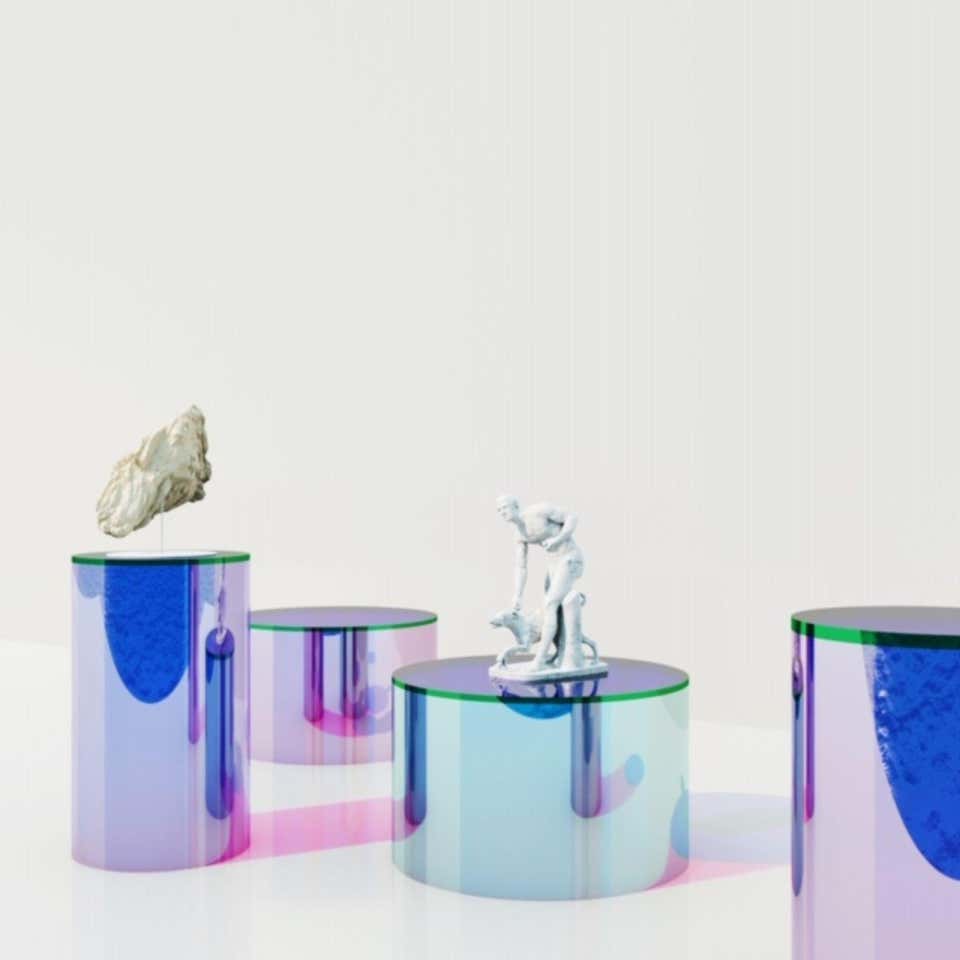
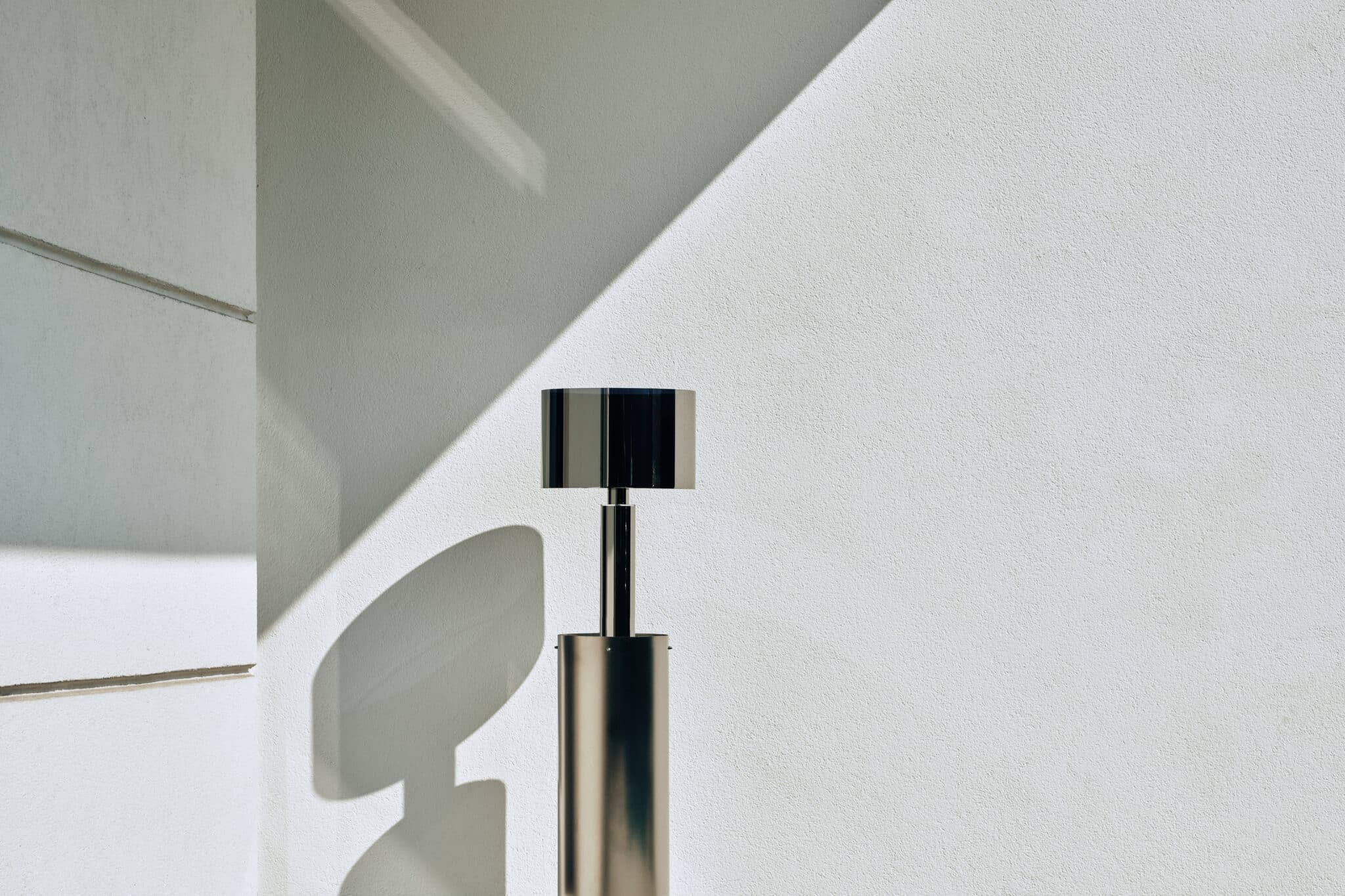
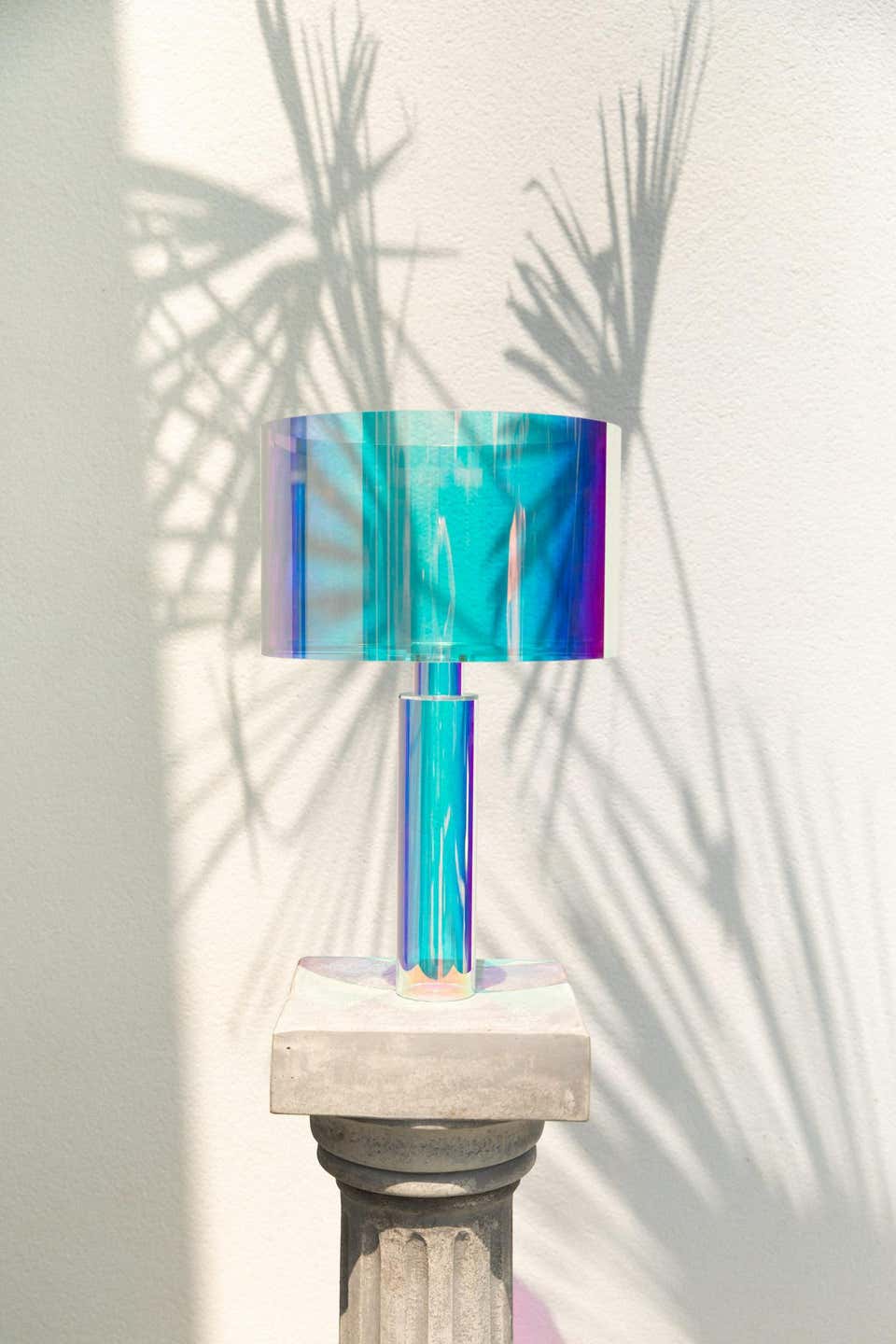
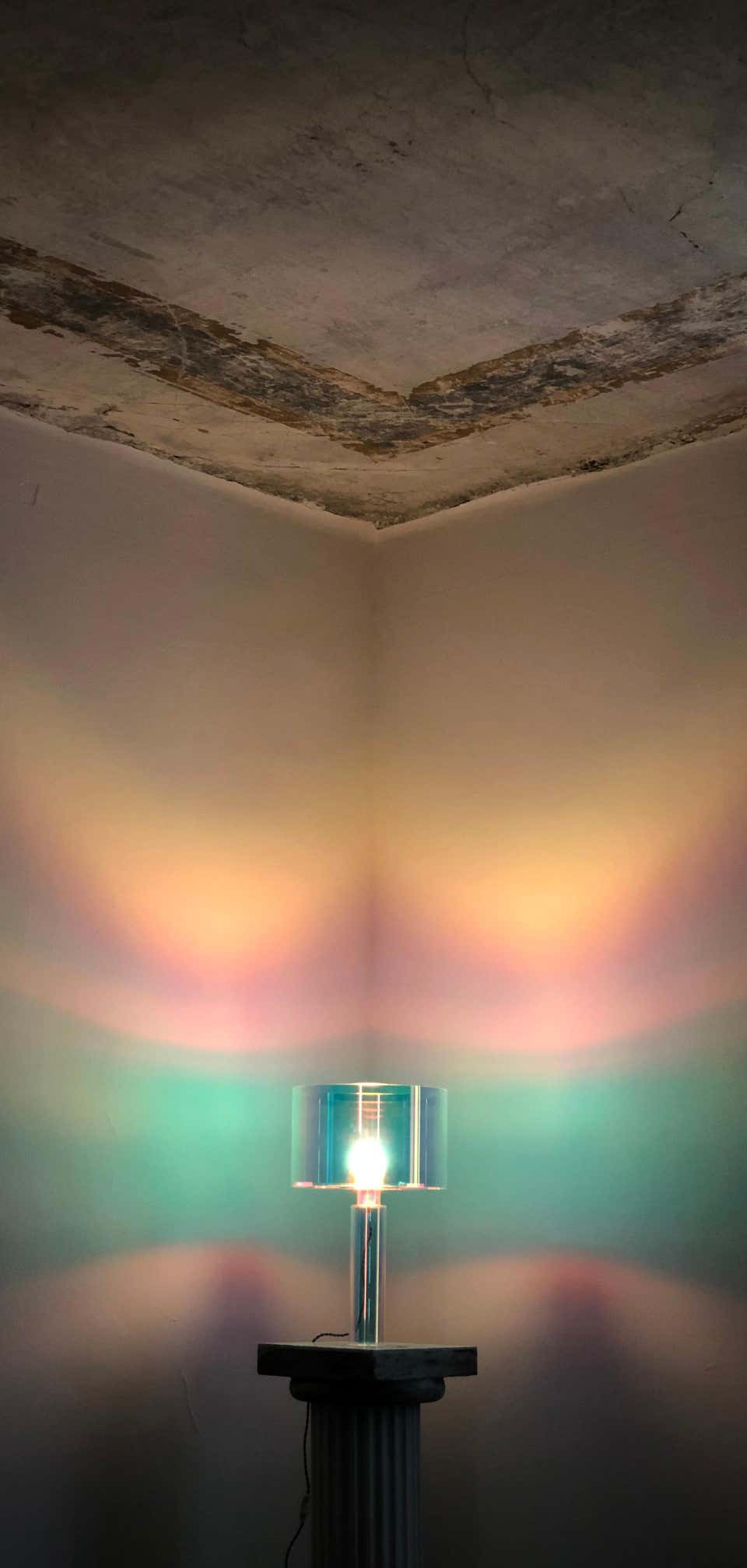
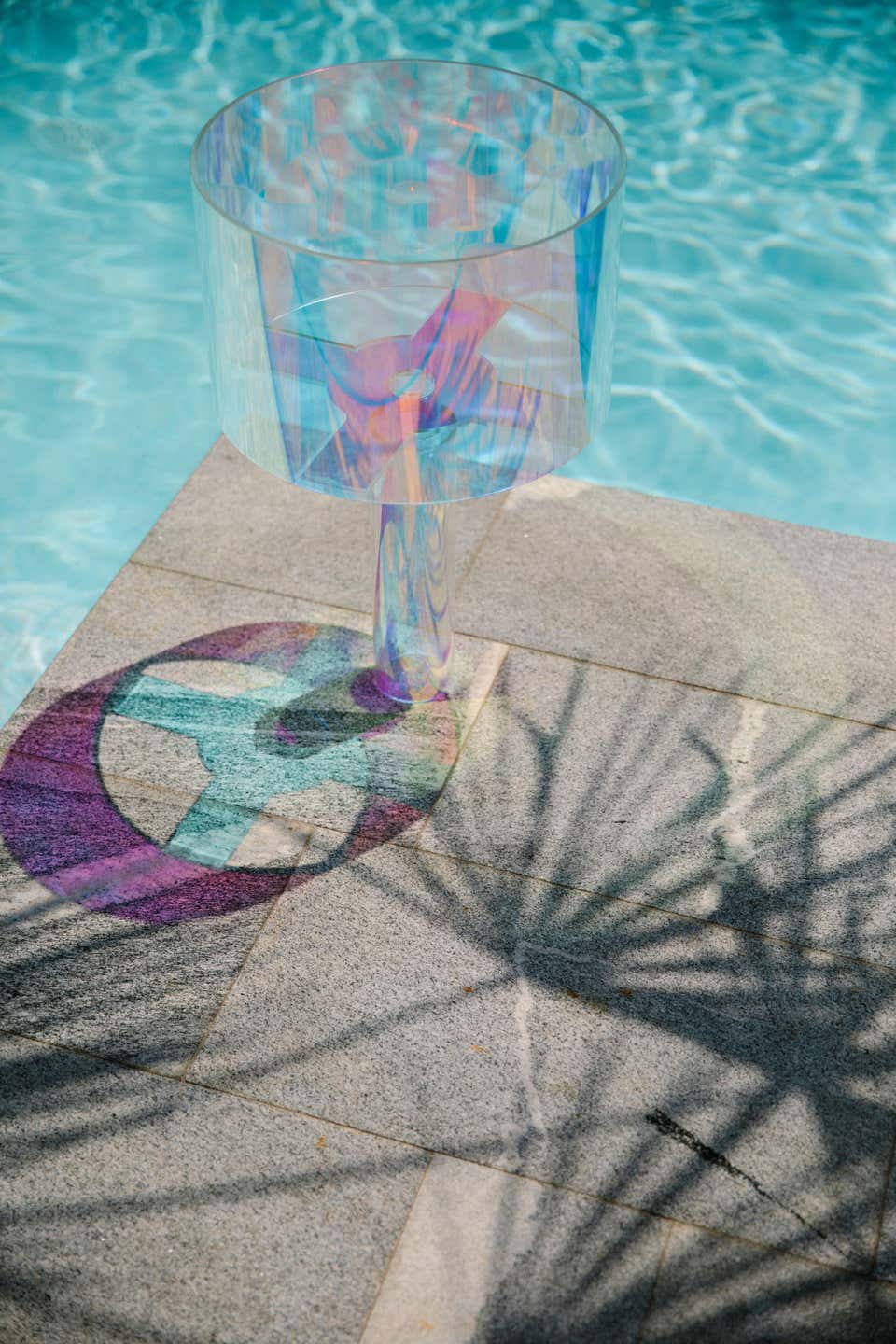
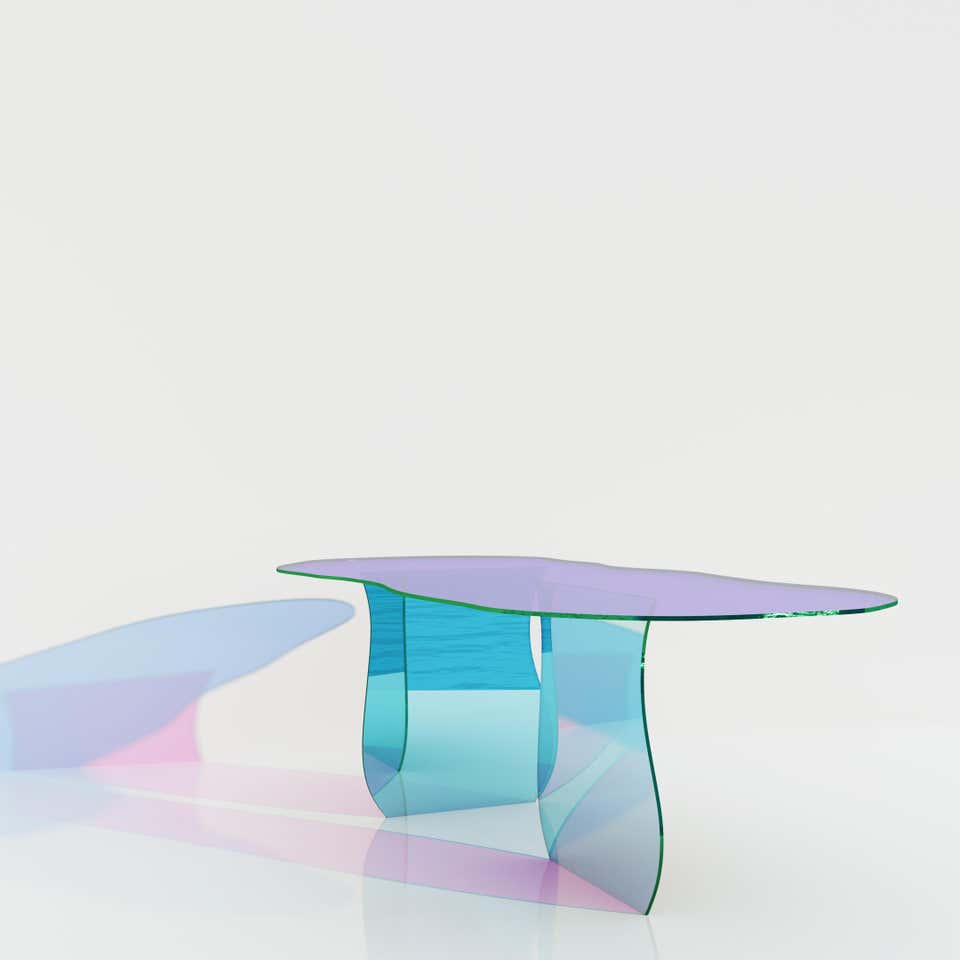
We experiment with many different materials. We seek and want to learn more and more, currently working with glass, lucite, metal, and marble, but we want to broaden our design to include more varied and different materials. Our signature material is the dichroic foil – because it is so perfectly playful.
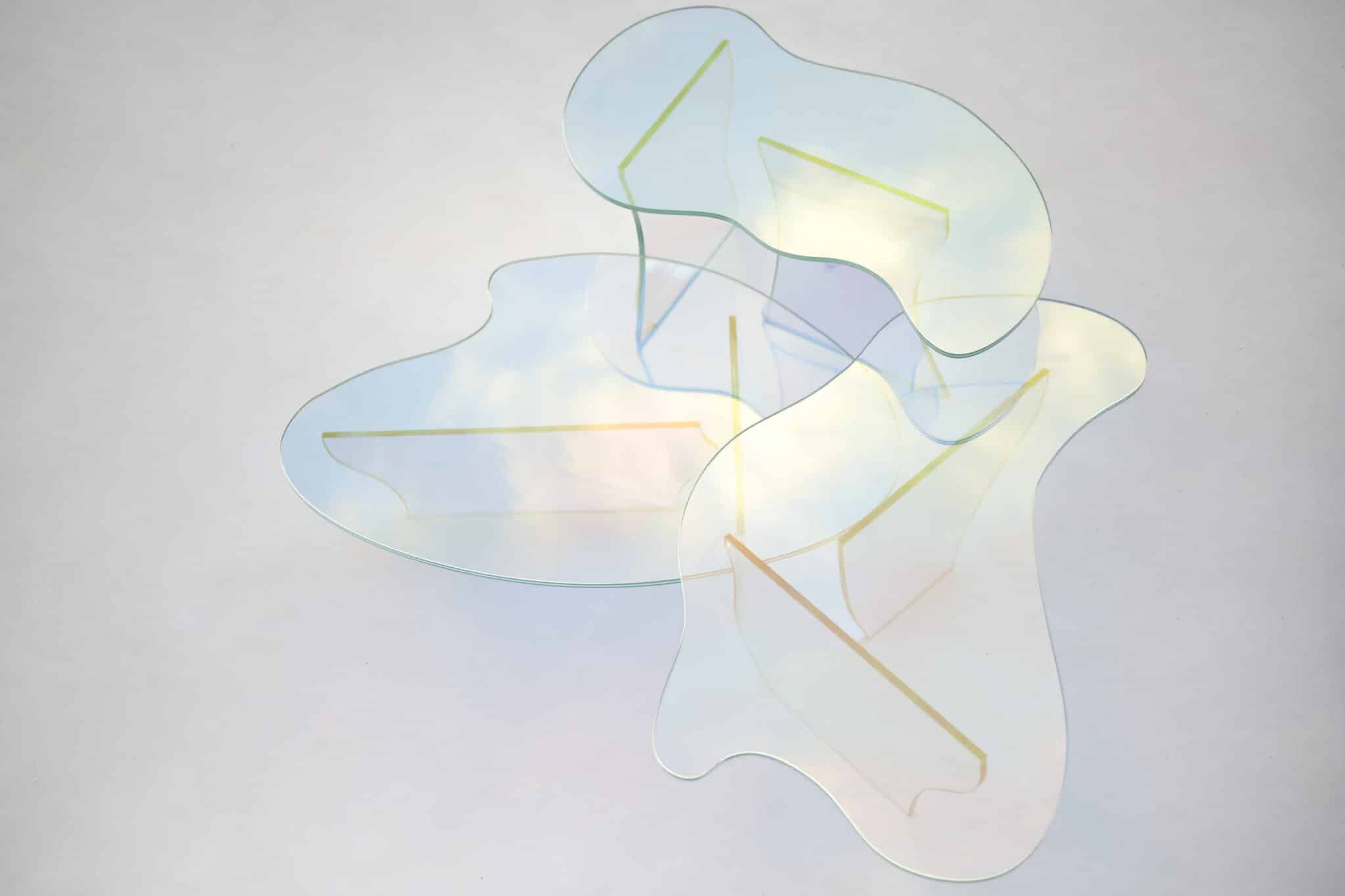
Glass lamination. Also, we use various approaches, which can sometimes be tricky, so we must make sure all the details are done right, which makes the process unstructured and full of improvisations and ad hoc decisions. It can be stressful, but if the product is as perfect as we strive for it to be, then it is all worth it.
Experiment with the materials. Be open to everything. Always try, and do not give up when someone says your idea is impossible to make. Stick to your ideas and to yourself.
Contemporary.
Petra: Gabriella Crespi, Yves Klein, Achille Castiglioni.
Robert: Geatano Scolari, Gino Sarfati, Cini Boeri, Willy Rizzo.
Petra: Vicenzo De Cotiis.
Robert: Voukenas Petrides.
Petra: Olafur Eliasson.
Robert: Eli Halili, Vojtech Kovarik
Search for eternity.
“Beauty makes us both feel alive, either through architecture, art, furniture design, or fashion.”
The Questions
(The Proust Questionnaire is a set of questions answered by the French writer Marcel Proust.
Other historical figures who have answered confession albums are Oscar Wilde,
Karl Marx, Arthur Conan Doyle, Stéphane Mallarmé, Paul Cézanne…)
Petra: Realisation of myself.
Robert: Self fulfilment.
Petra: Being mediocre, average.
Robert: Being alone.
Petra: Indecision.
Robert: Stubbornness.
Petra: Manipulation.
Robert: Small-mindedness.
Parents.
Petra: Vintage clothes.
Robert: Old books and flea markets.
Petra: “I want more” mind.”
Robert: Chase.
Self-discipline.

Petra: Reliable, intellectual.
Robert: Being a good cook.
Petra: To be sophisticated.
Robert: Independence.
Petra: I am hungry.
Robert: It is what it is.
Petra: To play Rachmaninoff.
Robert: To speak all languages.
To stop procrastinating.
Petra: Love for others.
Robert: It is yet to happen.
Petra: The best version of me.
Robert: Antinous.
Petra: Between Italy and NY.
Robert: Dalmatian island of Vis.
Petra: Family.
Robert: …
Petra: Blaming others for your failure.
Robert: Not being yourself.
Petra: Coffee first thing in the morning.
Robert: Socialising.
Petra: Authenticity.
Robert: Extraversion.
Petra: Genuineness.
Robert: Humor.
Petra: Hermann Hesse.
Robert: de Sade.

Petra: Batman.
Robert: Catwoman.
Petra: Cleopatra.
Robert: …
Petra: Parents.
Robert: Single moms.
Petra: Esther, Pierre.
Robert: Fredrik, Handrian, Kiara.
Petra: Injustice.
Robert: Envy.
Petra: Not listening to my instinct.
Robert: I forget everything.
Petra: In the apocalypse.
Robert: In a plane crash.
Petra: Surround yourself with beautiful things and great minds.
Robert: Do whatever you want.
“We have always had an urge to instantly materialise our visions without discrepancies between the creative process and the realisation.”
SHARE :