Elsa Foulon
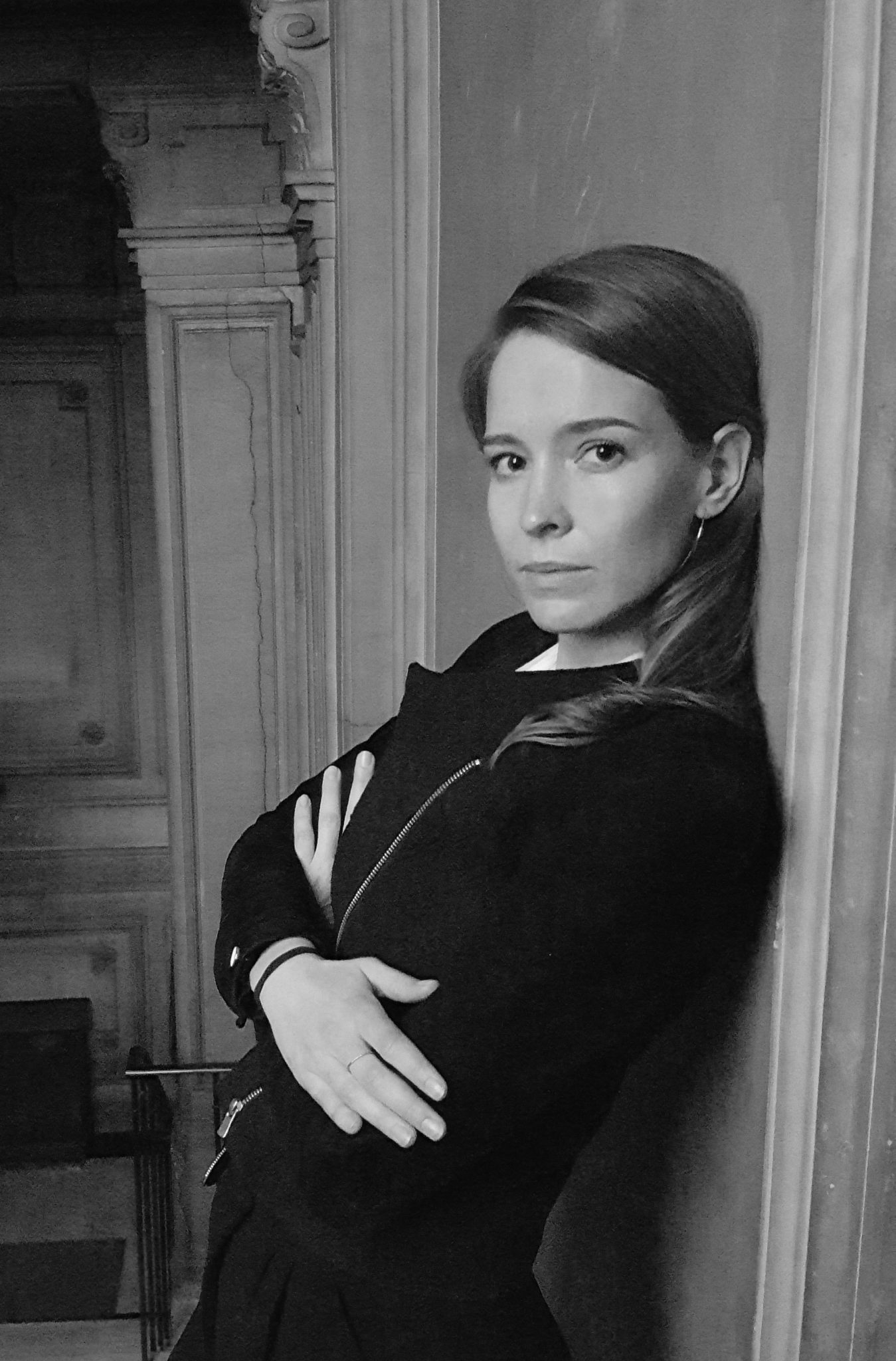
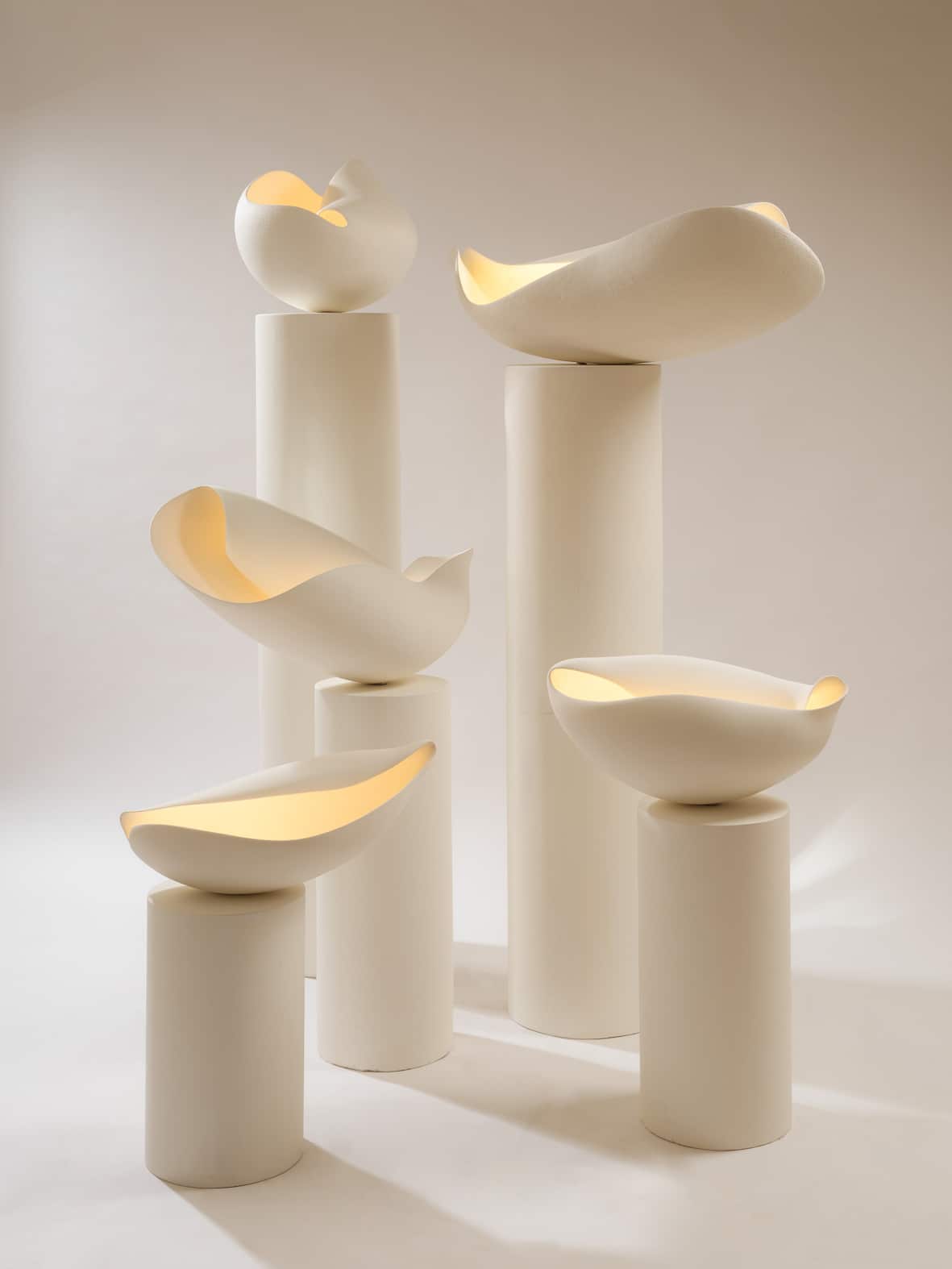
Elsa Foulon is a Paris-based designer and maker whose practice centers on sculptural lighting and functional objects crafted in ceramic. After more than a decade working in decorative arts and design furniture, she founded her studio to explore the expressive potential of clay through collectible design. Her work is distinguished by organic forms, refined proportions, and a deep sensitivity to materiality, balancing sculptural presence with functionality. Drawing inspiration from mid-century design, decorative arts, and traditional craftsmanship, Foulon develops pieces that celebrate the beauty of the handmade and the unpredictability of the creative process.
Handcrafted in her Paris atelier, her lighting and furniture collections reveal a distinctive visual language shaped by experimentation, technical innovation, and a fascination with volume and light. Through a contemporary interpretation of ceramics, Elsa Foulon creates works that blur the boundaries between object, sculpture, and architecture, establishing her as a notable voice within contemporary collectible design.
Interview
I was born in Roubaix in the North of France. I live and work in Paris, on the hill of Montmartre.
When I was ten years old, my mother took us to a small art-house cinema to see films by Jacques Tati. I loved the minimalism of this visionary author.
Before becoming a designer, I was a decorative art dealer for more than ten years at the Saint-Ouen flea market. I was interested in the furniture of architects and designers from the 50s and 60s.
By dint of having these superb objects in your hands, of being able to touch and manipulate them to understand how they were designed, I also started to want to create. Humbly, I started drawing in notebooks to lay down my ideas about 5 years ago. One day, a friend offered me to put a lamp in his gallery, and it was sold during the day, I couldn’t believe it! This sale was the trigger: my creations could touch people, so I dared to make it my job. Then I opened my studio in Paris two years ago.
My credo is to go straight to the point. I was greatly inspired by the simplicity that we found in the manufacturers, lines, and design of the 50s and 60s. This period is the post-war era. Everything had to be reinvented: the materials, the methods of manufacturing, the way of thinking about space… A great moment of renewal and of innovation, very different from what was done before. For example, we started to design chairs that were lighter, smaller, and that could be moved around easily. Appliances have arrived. It was the period of functionalism: we tried to produce in large quantities while maintaining high production quality. I am also inspired by currents of decorative art from the end of the 19th century and the first half of the 20th Century.
In the morning, before starting the intense day of the workshop, I take the time to answer the emails. Then I get my team together, and we take stock of the day ahead. Then comes the production stage: shaping the clay, drying, sanding, enameling, then assembly, electricity, and before packing in boxes to ship the orders. All this is interspersed with appointments with customers, craftsmen of suppliers.
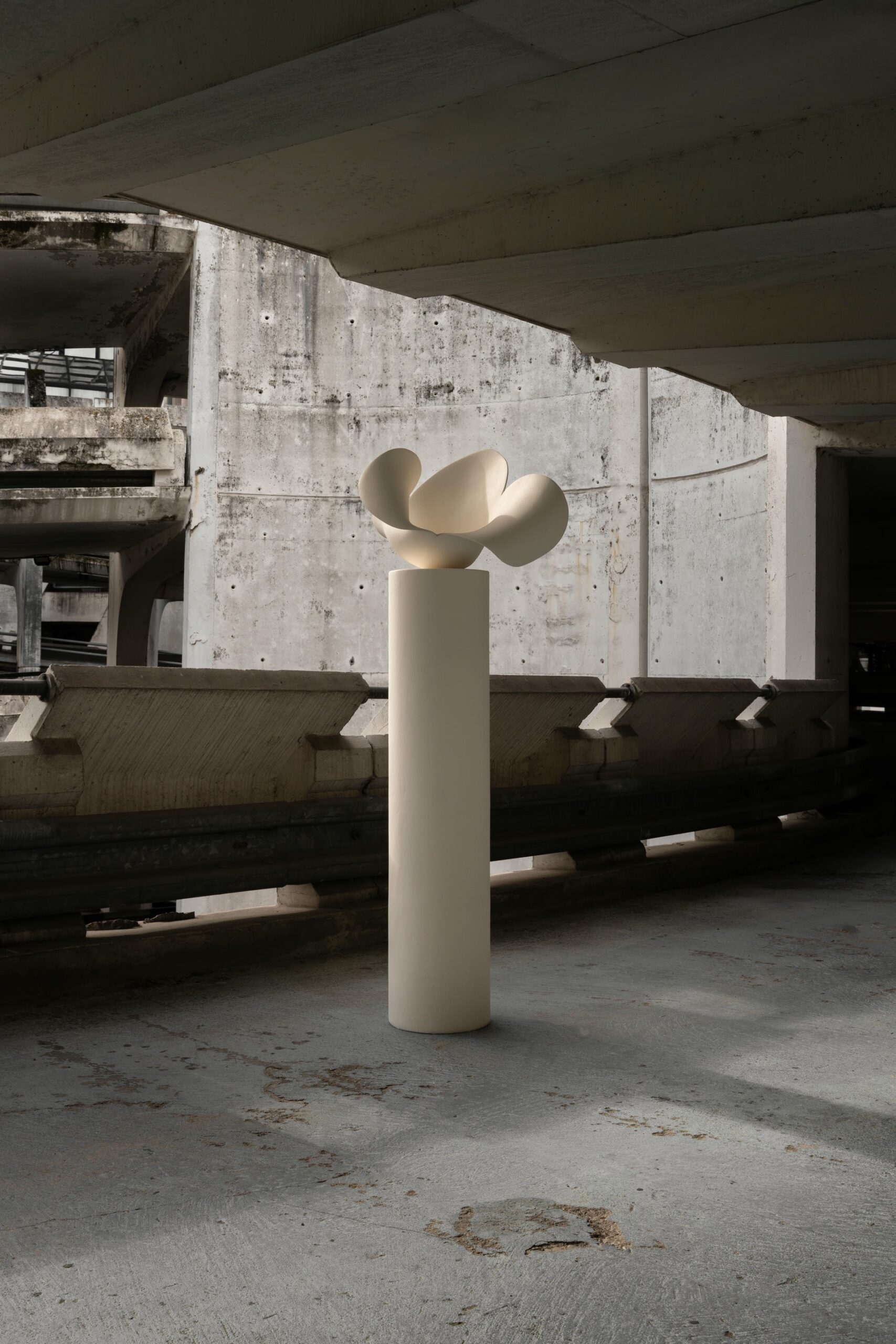
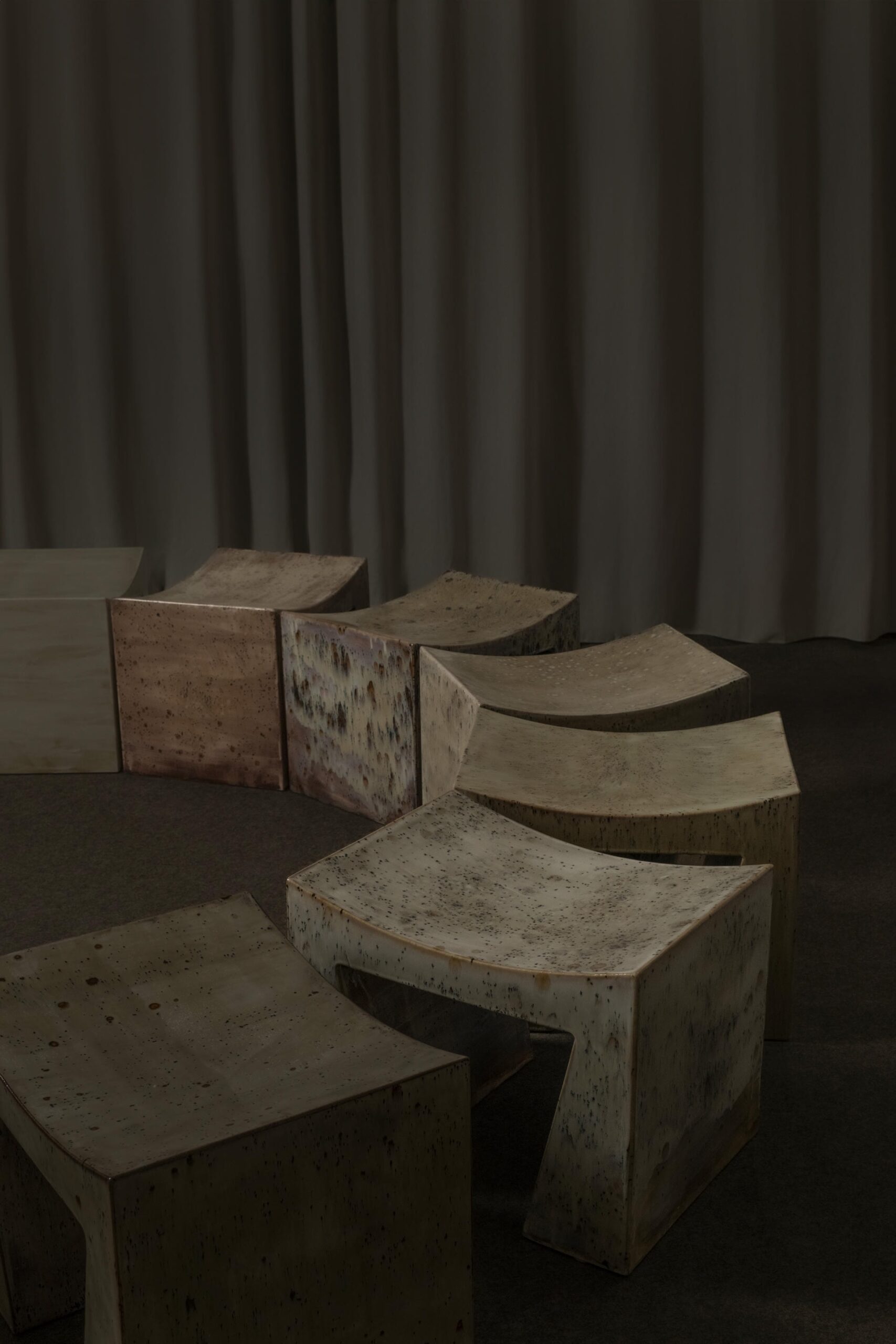
In my former work, I was fascinated by ceramics, by this ancestral gesture which combines four elements: water, earth, fire, and air, we can create anything we want, and for thousands of years. I also chose this medium because I started alone and without a production budget. A little naively, I said to myself that ceramics would make it possible to produce volumes quickly and to concretize my ideas. But I discovered that, in reality, ceramic is a complex and capricious material, which requires a lot of logic and attention. The slightest error in drying can crack or cause the collapse of a room. Oven accidents are common. It takes years of practice. I would even say that it takes a lifetime to become a ceramist.
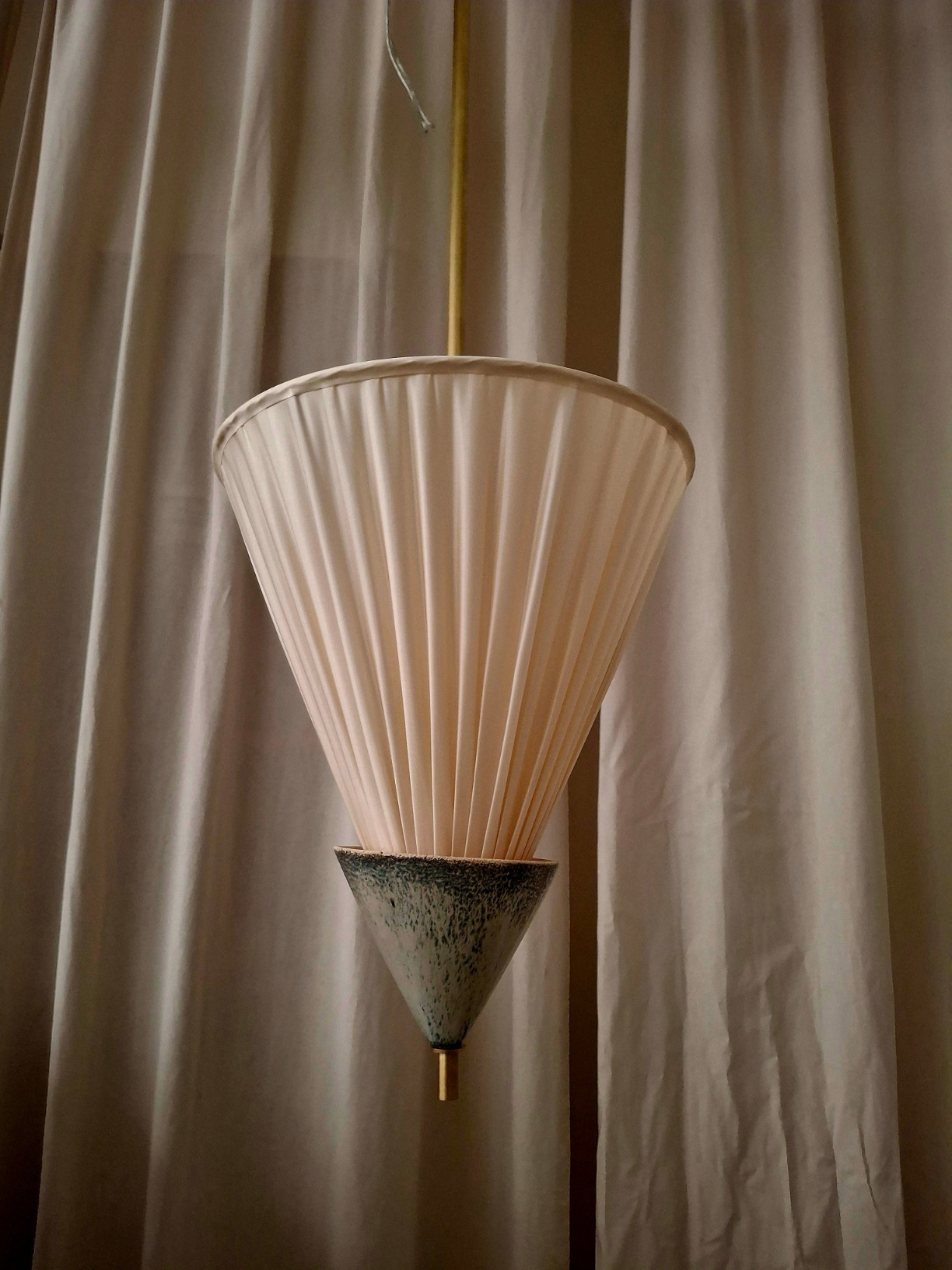
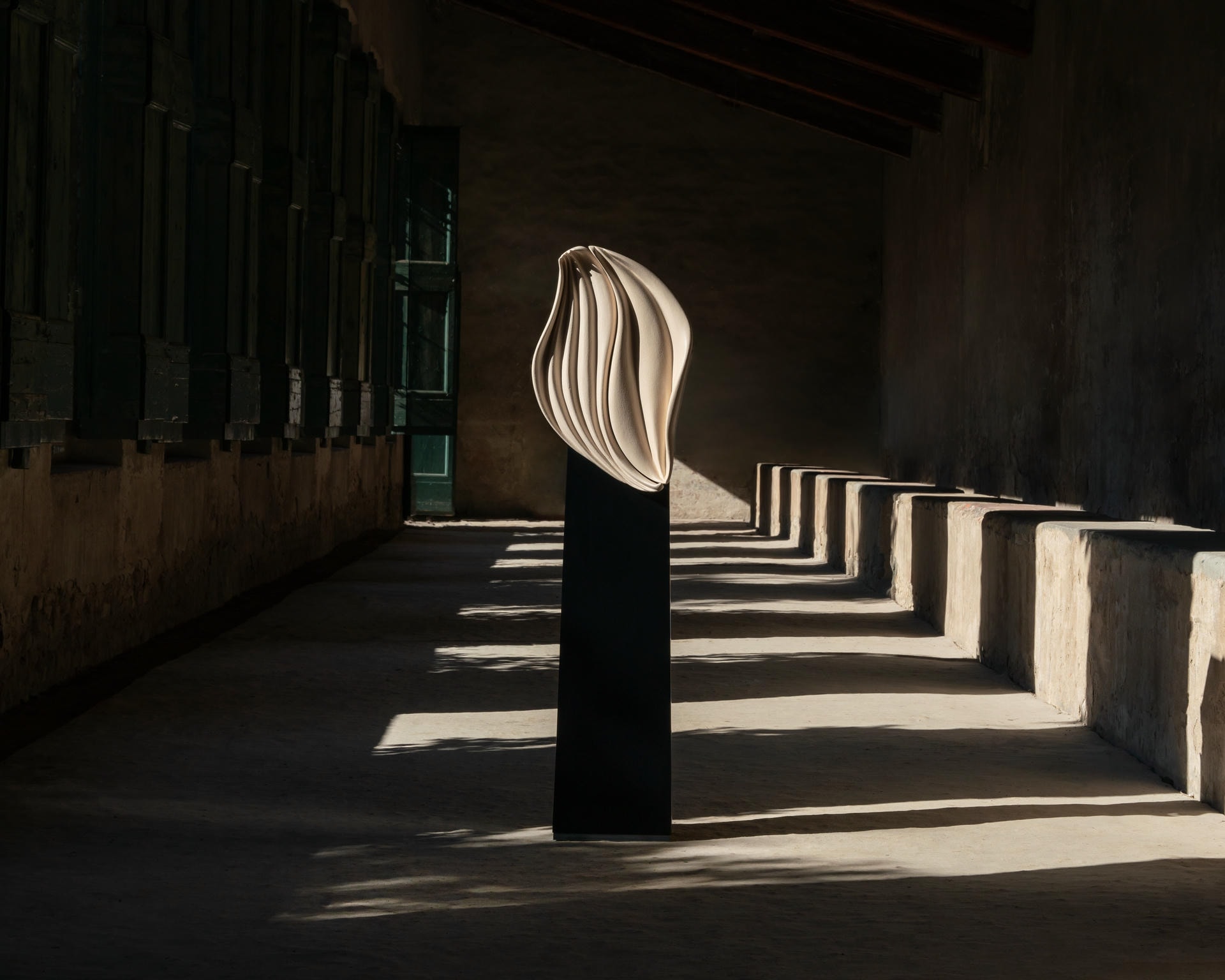
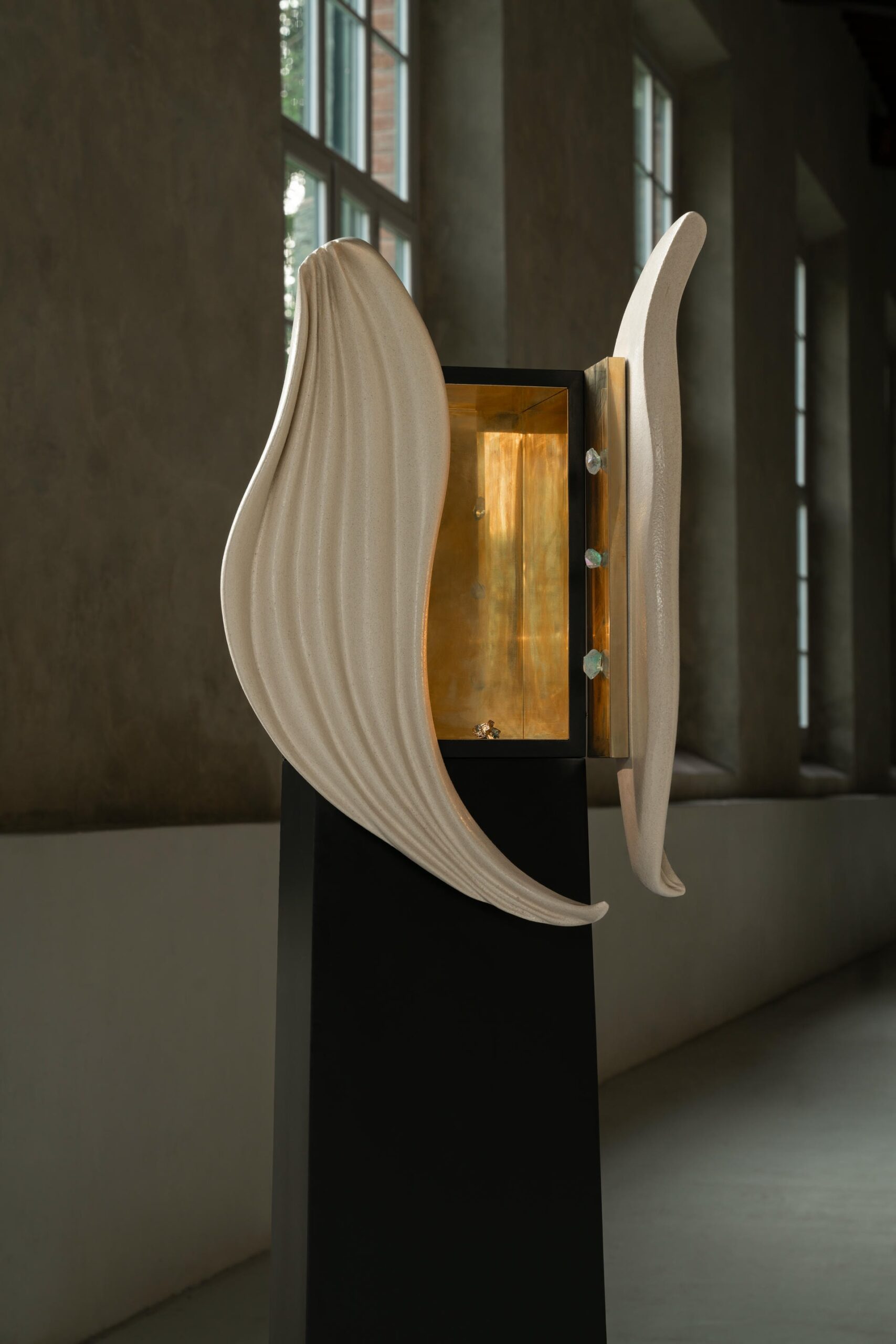
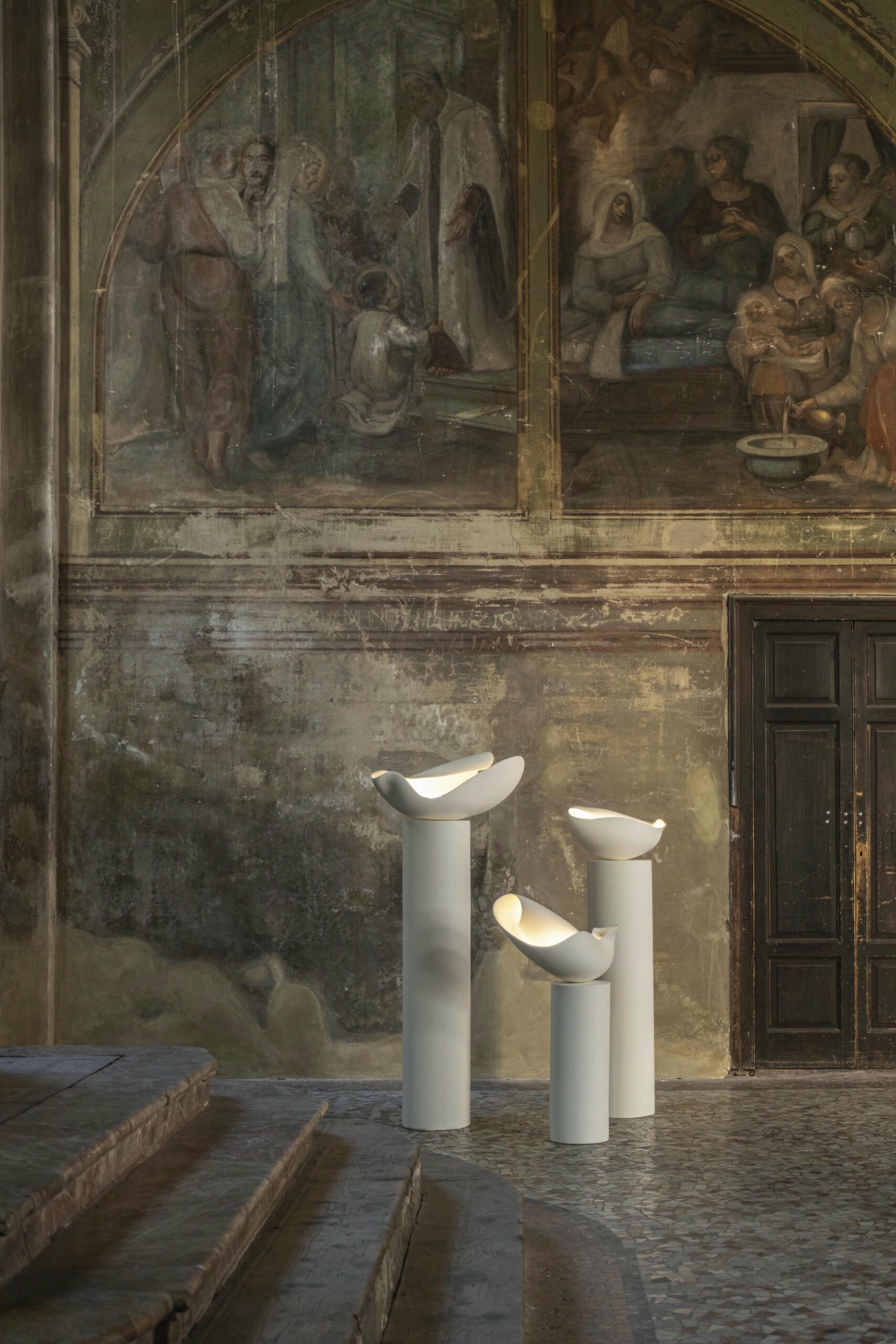
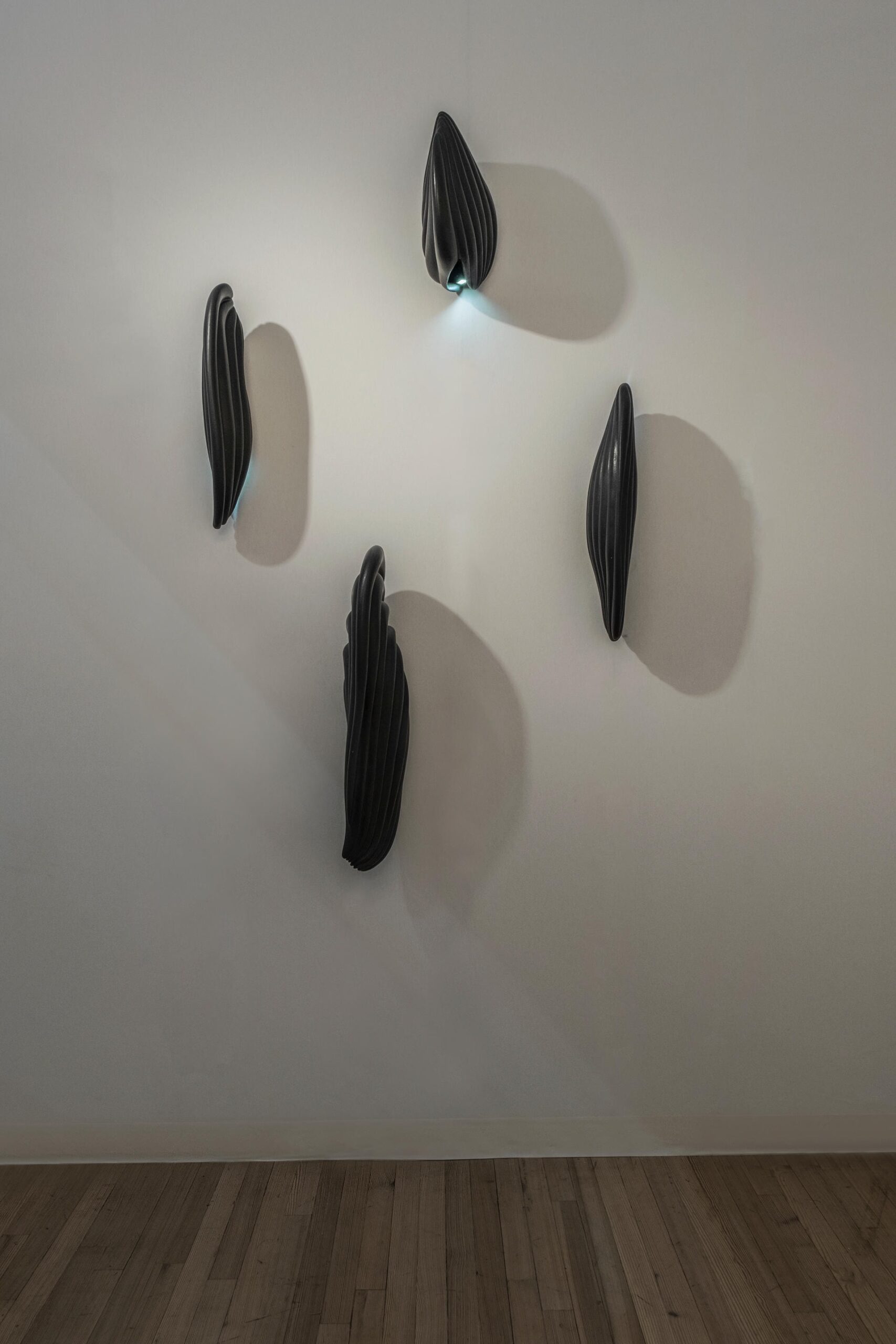
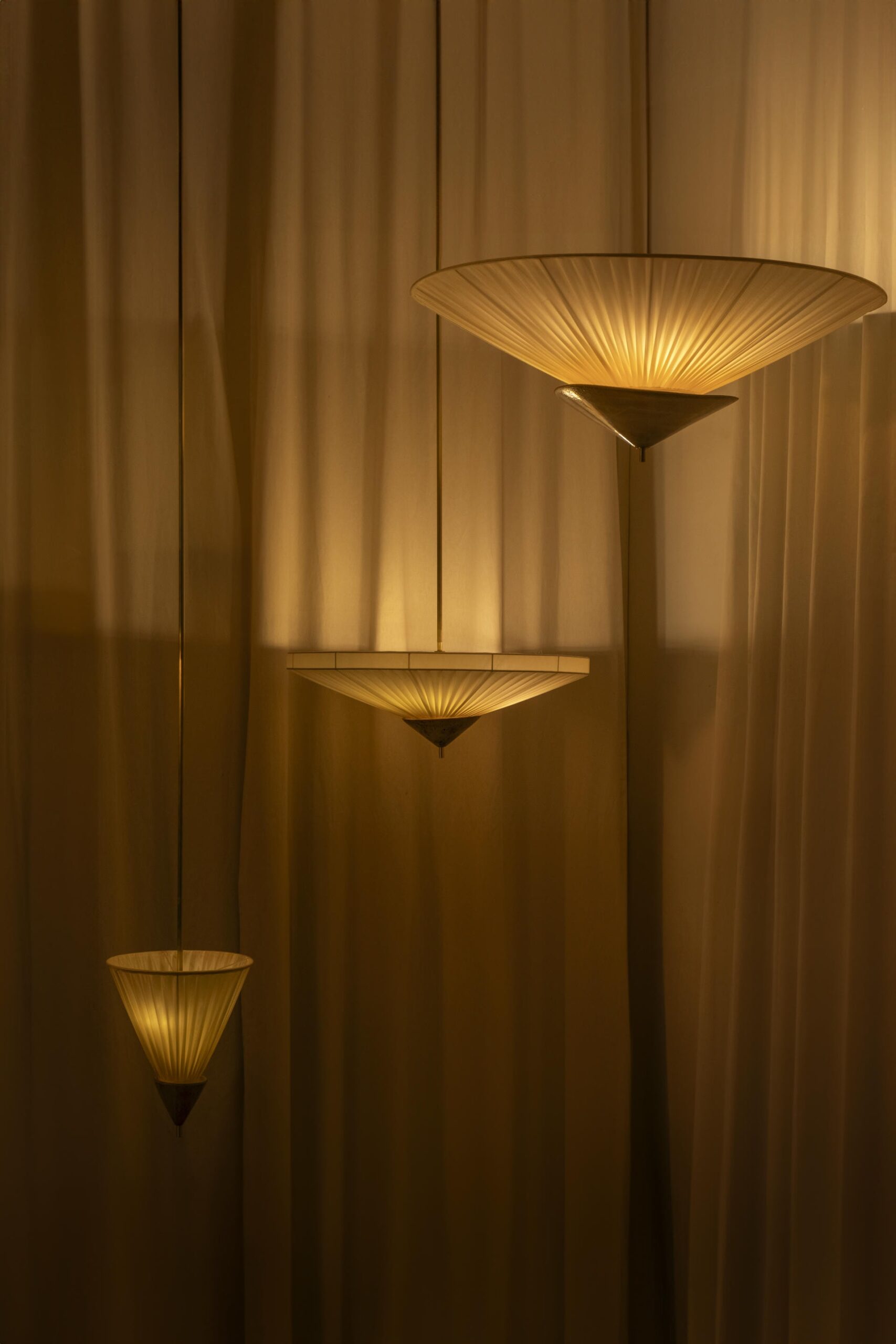
I work with large volumes of very thin ceramic plates. I use soil mixed with paper fibers so that they are lighter and stronger after cooking. I try to simplify the line as much as possible. Everything is made in my workshop. The clay comes from France, the brass is shaped in Paris by an artisan turner from brass. Lampshades too. I am very attached to this production of unique local pieces of quality.
Get started! Don’t be afraid to try, make mistakes, or fail.
I stand between functionalism and symbolism. Unconsciously at first time, the perfect forms of nature have been a great source of inspiration. Then one day, it was pointed out to me that my sconces looked like conches. I started to take an interest in seashells and to deepen the aestheticism that surrounds them. The wealth and variety of their shapes fascinate me. The shell is aesthetical, but also useful, since it protects a mollusk that lives there. The beauty of the object matches its function.
All the designers of the 40s-50s. Paavo Tynelle for the lights, Jean Royère for the furniture, the geniuses of Italian design like Ico Parisi, Angelo Lelli, Max Ingrand… I already appreciated it when I was a seller at the flea market, all my inspirations were already there. But I went into them later.
I really like the work of Vicenzo DeCotis, the Parisian Mathias Kiss or the group of designers “Waiting for The Barbarians”.
Franz West, Hubert Duprat, Alexandre Bigot, and my friend Jihee Han.
Simplicity requires great rigor.
“Get started. Don’t be afraid to try, make mistakes, or fail.”
The Questions
(The Proust Questionnaire is a set of questions answered by the French writer Marcel Proust.
Other historical figures who have answered confession albums are Oscar Wilde,
Karl Marx, Arthur Conan Doyle, Stéphane Mallarmé, Paul Cézanne…)
The complicity of a giggle.
The sorrows of love.
Don’t take the time to ask me those kinds of issues…
And if I preferred to appreciate their qualities?
I love all living beings (well almost…)
Dare to answer this questionnaire.
I’m questioning myself.
Prudence.
Her femininity.
His masculinity.
Oh la vache!
To sing.
One thing? If I have to change one thing, then I change everything! Otherwise, I don’t change anything.
It’s too early, come back to see me in twenty years!
As a human being, to start a new story.
In a painting by Douanier Rousseau.
My family and my friends.
That it exists.
To float on the sea.
An unfortunate tendency to dodge questions…
Their vacation home.
Bret Easton Ellis, John Fante and the French Lise Kervennic.
Shrek & Fiona, aren’t all real heroes are anti heroes?
Antoine de Saint-Exupéry and the Petit Prince.
–
Frida and Diego.
Bad faith.
My biggest regret will be is to one day to have one.
Petrified by Medusa.
The accident is simply the success that is desired.
“Simplicity requires great rigor.”
SHARE :