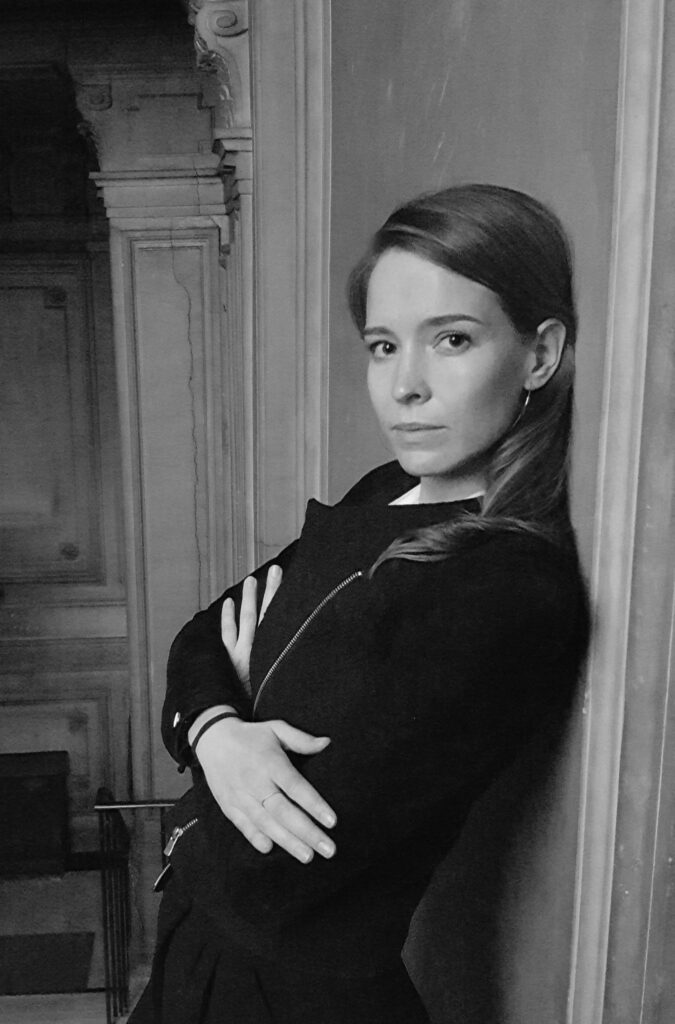
Ewelina Makosa
Ewelina Makosa is a designer and maker whose practice explores the relationship between material, memory, and form. Working across furniture, objects, and spatial interventions, she creates pieces distinguished by their sculptural presence, tactile qualities, and sensitivity to craftsmanship. Her work is guided by a fascination with process and transformation, balancing contemporary design with a deep appreciation for material expression.
Through a thoughtful and experimental approach, Makosa develops objects that evoke both function and emotion. Drawing inspiration from architecture, nature, and everyday rituals, her creations reflect a refined yet intuitive design language that celebrates individuality, material honesty, and the enduring value of handmade work.
Interview
I was born in Warsaw, Poland.
I would say that my first significant memory connected to the art world would be an exhibition of Gerhard Richter’s in The Neue Nationalgalerie Collection with the title Exciting Art of the 20th Century. It was the year 2007.
Yes, I did. Both design and art were close to my heart, but the art came first. Then I started to study Interior Architecture and, in parallel, the painting faculty as well.
I think it was the lack of beauty around me. Growing up in the country, which had been destroyed during World War II and then by communism, and never rebuilt properly, gave my thoughts that certain things can be done in a better way in this field.
It is a matter of first observations and sensibility, secondly, research, creative process, and conclusions and selection. Whether it is doing art or working in a design field.
It is divided between my art practice and work as a designer. It also varies, depending on where I am. When I work in Warsaw, I have less time to focus on my art practice. Whenever I am in Berlin, my life is more simple, and I have more time to work on my art pieces. Doing art is a process that needs to be continued every single day, so I try to stay focused as much as I can. I try to sketch every single day. Sketches are reflections of my thoughts and allow me to go deeper with my art process and then draw insightful conclusions.
I do not have any specific material I work with. The topic I want to express in my art practice determines the material that I work with. It can be a painting, an installation, or a video, depending on various circumstances.
It varies a lot, depending on what I actually work on.
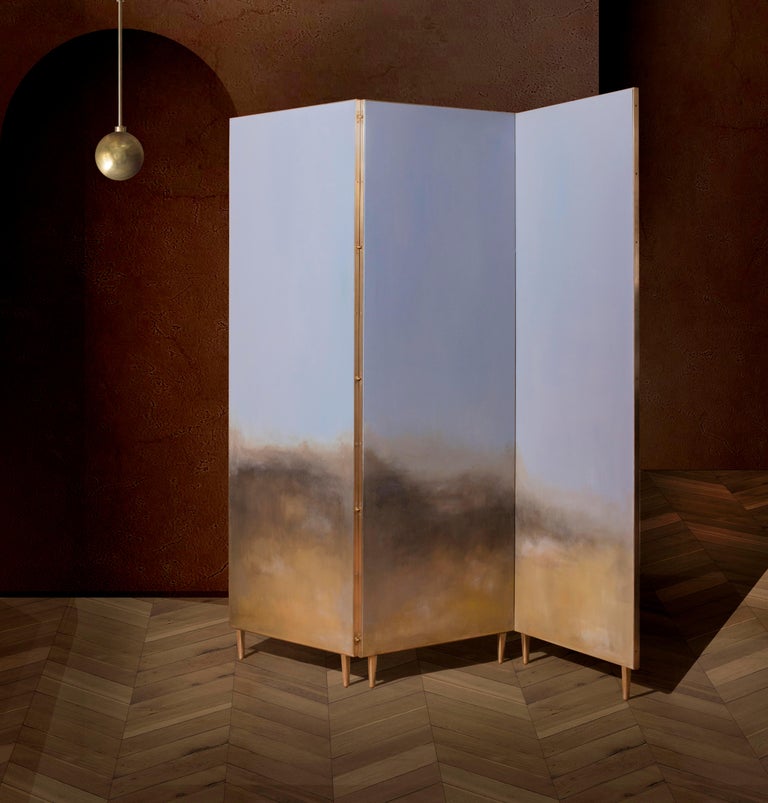
I think that the reference to our childhood is always great. Remembering how fresh and not typical our observations were at that time could be a great start to any creative process.
I hope my creations will always look contemporary and up to date. That’s why I would never consider looking back at the past in reference to my artworks. Great examples are the works of Ives Klein and his International Klein Blue, the art pieces that stay extremely up to date and do not refer to the past.
Jan Garncarek, Gisbert Poepler, Kelly Wreastler, Joseph Dirand.
Jan Garncarek, Kelly Wreastler, Joseph Dirand.
Leon Tarasewicz – he is a Polish visual artist and my professor.
Reflection of my observations and feelings.
“Doubts kill creativity.”
The Questions
(The Proust Questionnaire is a set of questions answered by the French writer Marcel Proust.
Other historical figures who have answered confession albums are Oscar Wilde,
Karl Marx, Arthur Conan Doyle, Stéphane Mallarmé, Paul Cézanne…)
Living without rush and being able to work in tranqulity.
Lack of courage.
Lack of courage.
Lack of passion.
My Grandfather.
Strange, abandoned spaces which has potential to gain beauty again.
Tranquility – due to coronavirus crisis I can finally be more focused on my goals and not be disturbed by other circumstances and people.
Religion.
Ability to listen.
Intelligence.
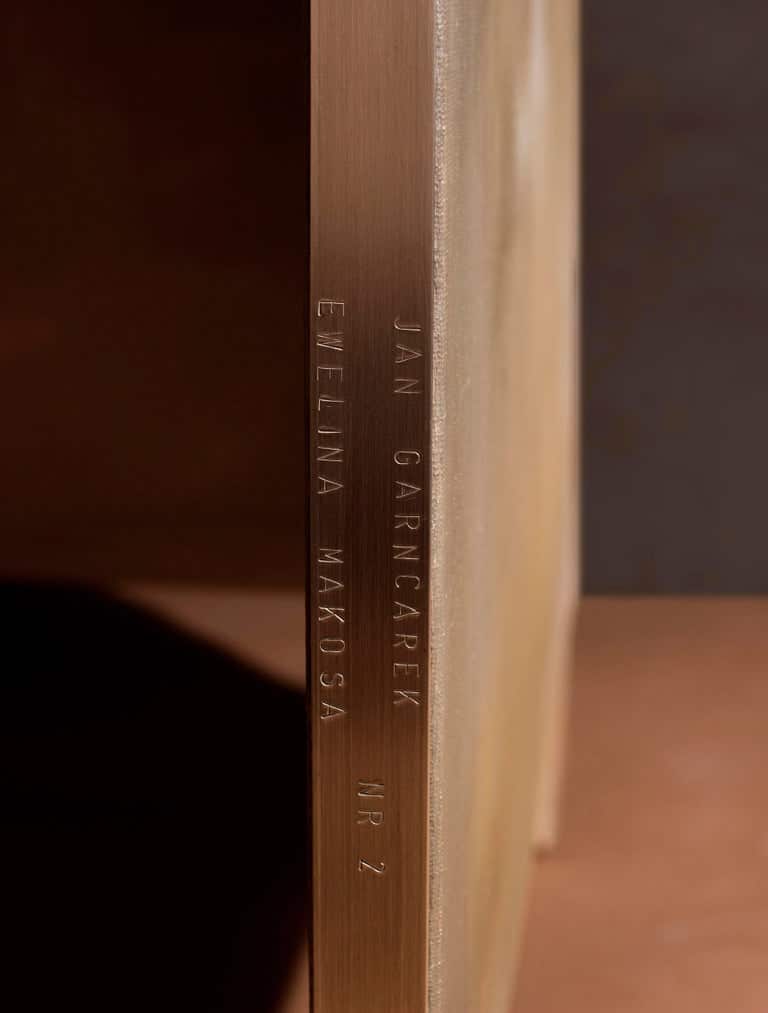

–
Musical skills.
Be more patient.
My PhD studies in fine arts, which took me 7 years.
An ocean.
Currently Venice or Paris.
My knowledge and experience.
Stupidity.
I value creative occupations, do not have any specific one.
I am organised and I can find myself easily in every circumstances.
Involvement.
Zygmunt Bauman, Olga Tokarczuk, Andrzej Stasiuk.
I do not have any.
None.
My grandfather and grandmother.
I do not have any.
Stupidity and judging by appearances.
I wish I have the knowledge I have know ten years ago.
It does not matter, but I would like to experience conscious dying and keep my best awarness during this process.
“Doubts kill creativity.”

“The topic I want to express in my art practice determines the material that I work with.”
SHARE :