Ia Kutateladze
Iaku Tateladze is a Georgian artist and designer whose work moves fluidly between sculpture, collectible design, and spatial experimentation. Rooted in a deep sensitivity to form and material, his practice explores the relationship between structure, movement, and perception, creating pieces that balance sculptural expression with functional purpose.
Working across furniture, objects, and installations, Tateladze develops works distinguished by their architectural presence and tactile materiality. Through an ongoing process of experimentation, he investigates how objects can shape experiences and evoke emotional responses, producing a body of work that exists at the intersection of art, design, and contemporary craftsmanship.
Interview
I was born and raised in Tbilisi, Georgia. Now I am based in Berlin.
I have a terrible memory, so most of my childhood has unfortunately faded. But my father is a painter and fresco restaurateur, so I guess seeing him create would be the first memory connected to art. I had quite a broad interest as a child, so I cannot say that becoming an artist was a dream of mine early on.
I actually started studying psychology in the US, and took a lot of different classes in a liberal arts program, a lot of them in art and design fields, from there I got more and more interested in pursuing this direction. So I moved to Italy to study interior and product design. Since then, I have always been in this field. It is the biggest passion and joy of my life, so I cannot imagine doing anything else.
As I mentioned, this is what I studied and found my true self in, so it was a natural continuation of life for me. But the course of creating changed completely throughout the years.
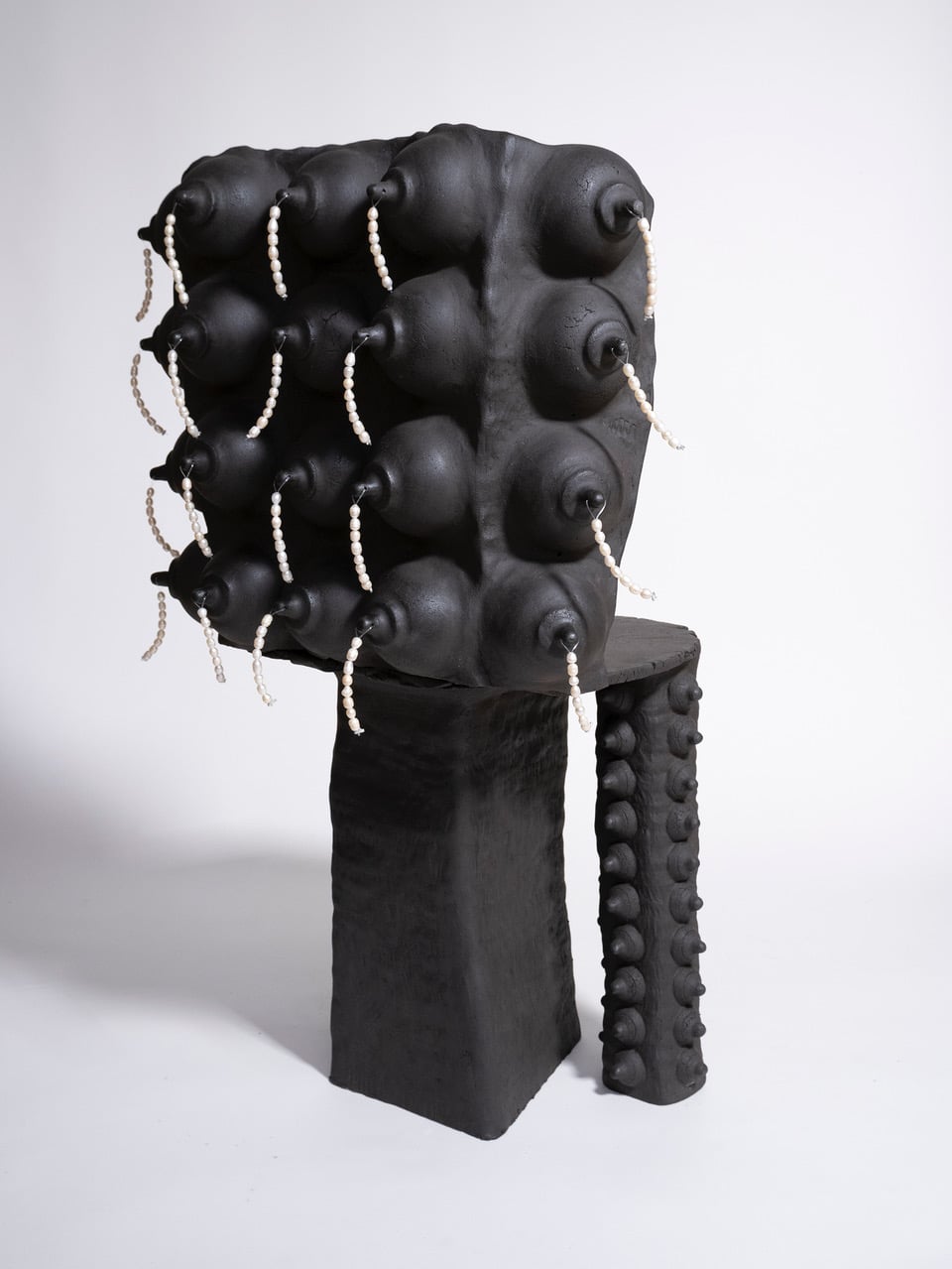
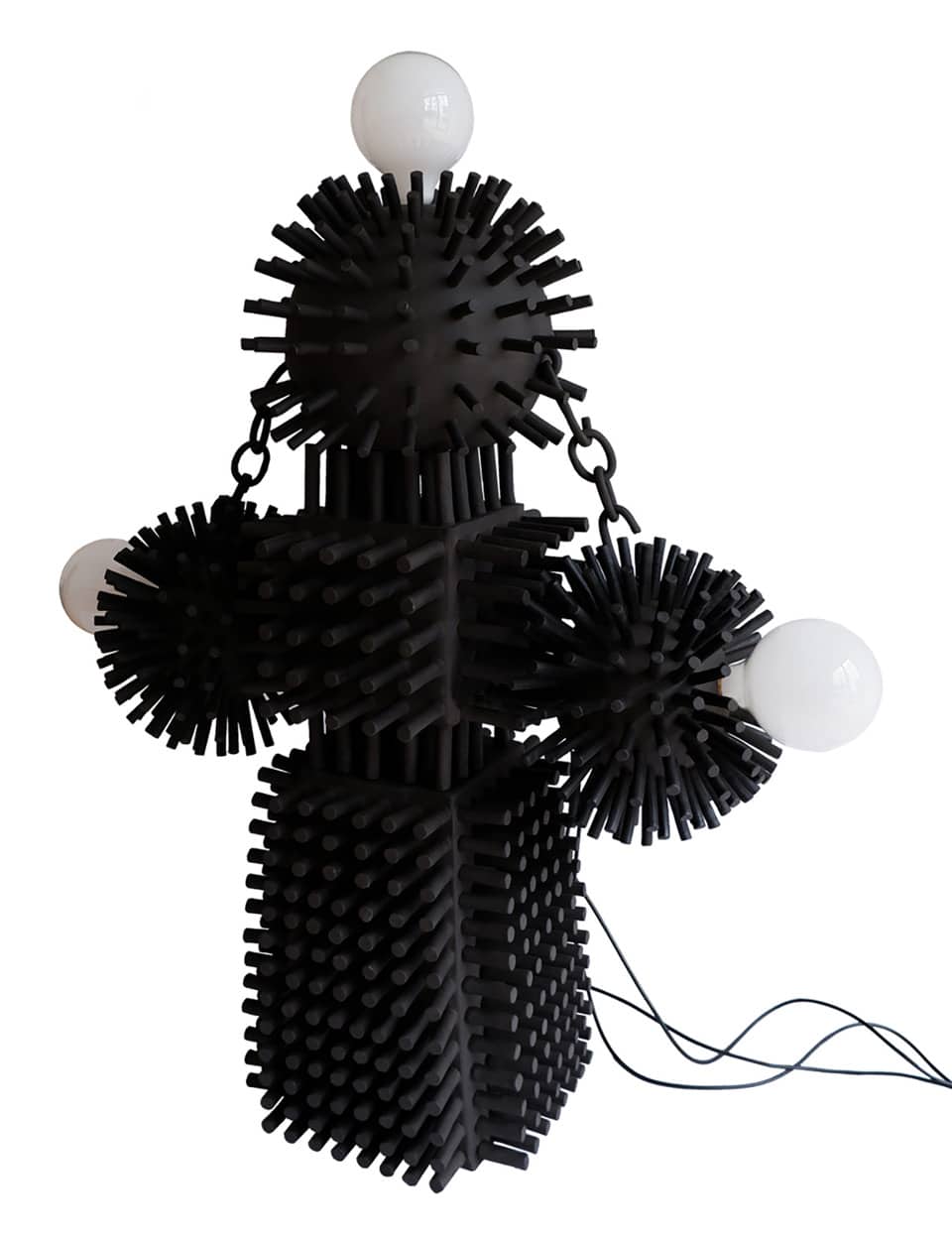
My process of creating has changed drastically since I moved to Berlin. In Georgia, I used to collaborate with artisans, creating mainly sketches and technical drawings. Since moving to Berlin, I needed to find a way to base the whole production on myself, so I started working with metal, creating jewelry, and then with clay and other materials. Now, I create all the pieces with my hands; I can never go back to how it was. This became the most important aspect of the creative process for me: to feel the material, to work intuitively, to learn from each of them something different. The process is just so much more intimate and satisfying. It does come with a lot of difficulties, though.
I need my mornings to be slow, so I like to take my time at home. I don’t go to the studio very early in the morning. I try to respect my needs in this sense. I don’t really have a typical day, as it depends on what I am working on. If it is an order, then the process is much more straightforward and structured. If it is more conceptual work, then it consists of a lot of sketching, journaling, and trying things out. Playing around. Some days are more oriented toward production, some are more imaginative and playful.
Somehow, they naturally spoke to me. As I didn’t have any previous experience working with materials prior to moving to Berlin, I was very open and curious, and still am. I love clay, as it really grounds me and teaches me quite a lot, but also drives me crazy quite a lot, too. Even though it is the main material at the moment, I don’t want to be bound to it. I would like to try to learn everything. It is my biggest dream to have a big enough studio with many different material tools and equipment.
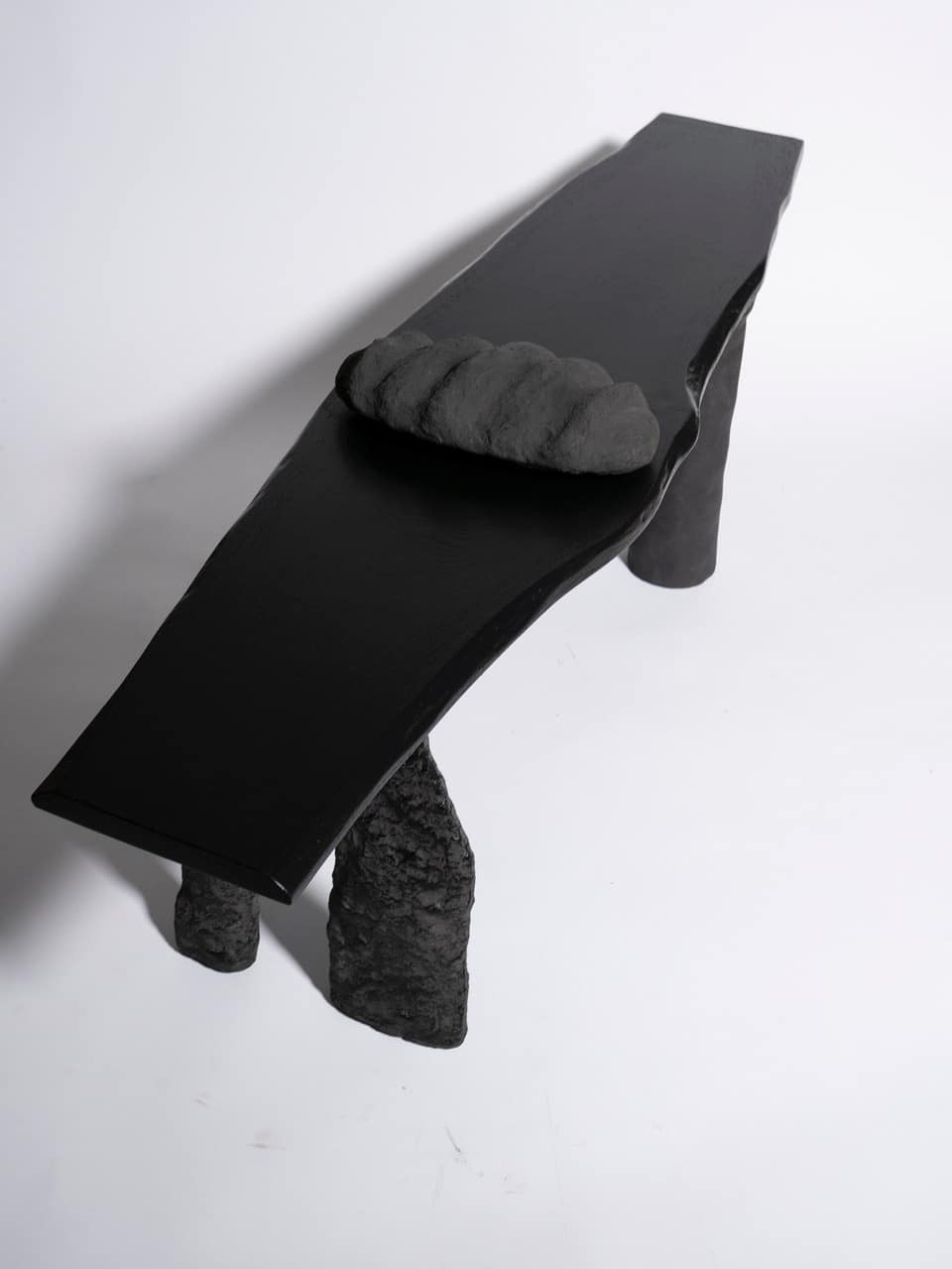
I am more and more interested in creating bigger objects, furniture, and sculpture with clay, and not only in clay. But since this material is very fragile, before being fired, it comes with a lot of challenges when you want to build bigger, more complicated structures. There have been numerous occasions when I had to redo very time-consuming pieces over and over again. So I have to be very patient and persistent in this sense. But in general, I am not a technical perfectionist. I like the visible flaws of handcrafted materials. It’s more humane for me.
Find your inner voice and your true, genuine vision. It takes some time to get there, but believe in yourself and don’t just make things for the sake of selling. Be mindful of the fine line between being inspired by someone and copying their work. And most importantly, be honest with yourself and true to your values throughout the crazy ride.
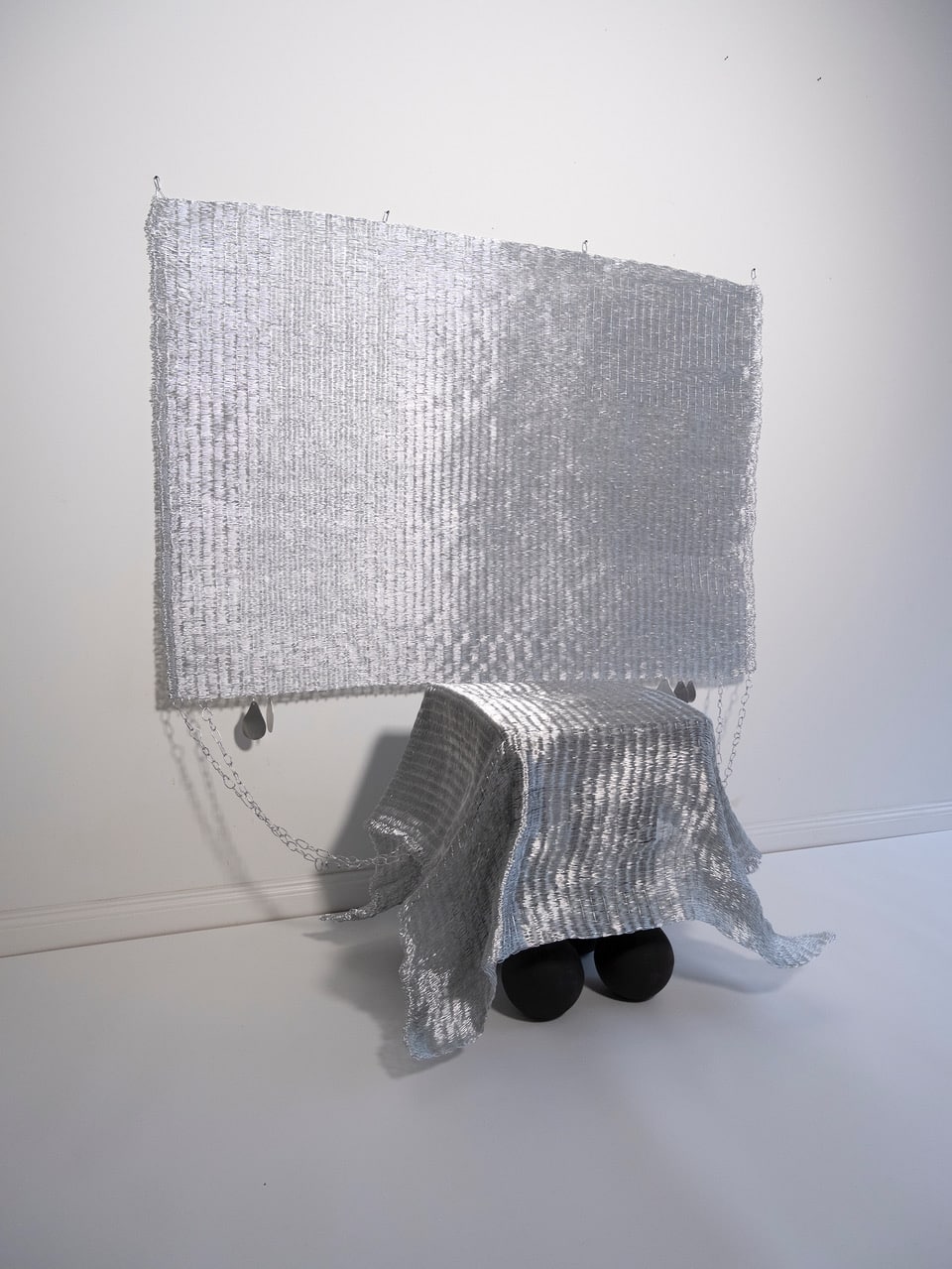
Lately, I’m very much into surrealism, maybe somewhere between brutalism and surrealism.
I am not sure if any designers have directly influenced me; there are too many whose work I love, would be difficult to pick.
Also, so many of them, I always find it difficult to name a couple. But, just a few examples are Panorammma, Laurids Gallee, Minjae Kim, Wendy Andreu, fellow Georgians Rooms Studio, and Studio Gypsandconcrete.
Some examples are Brancusi, Barbara Hepworth, Ruth Asawa, Louise Nevelson, Alina Szapocznikow, Marc Leschelier, and GaHee Park.
A quest to directly connect personal and surrounding emotional and psychological processes with the material and form exploration.
We are living in very difficult times, and hope that we will all find healing and peace in honest creative expression.
“To feel the material, to work intuitively, to learn from each of them something different.”
The Questions
(The Proust Questionnaire is a set of questions answered by the French writer Marcel Proust.
Other historical figures who have answered confession albums are Oscar Wilde,
Karl Marx, Arthur Conan Doyle, Stéphane Mallarmé, Paul Cézanne…)
Freedom of creation and peace of mind
To not be able to do what I love the most
Rigidity
Pretense, dishonesty
My mother
Extravagance is a too strong of a word
Disheartened
Being educated
Nonconforming the toxic gender roles
Nonconforming the toxic gender roles
Not sure
Being able to work on all the materials out there
Being able to be better salesperson
Self-compassion and being true to oneself
Zebra
Seaside in Italy
I guess, my books
Complete hopelessness
Making morning coffee
Having exact idea of what I want
Honesty and uniqueness
Just to pick one – Haruki Murakami
Pippi Longstocking
No one
Any human being who manages to be kind and genuine regardless of the difficulties they face
Mia
Bias and hypocrisy
I try not to regret things
In peace
No where to be but within
“I like the visible flaws of handcrafted materials. It’s more humane for me.”
SHARE :