John Brevard
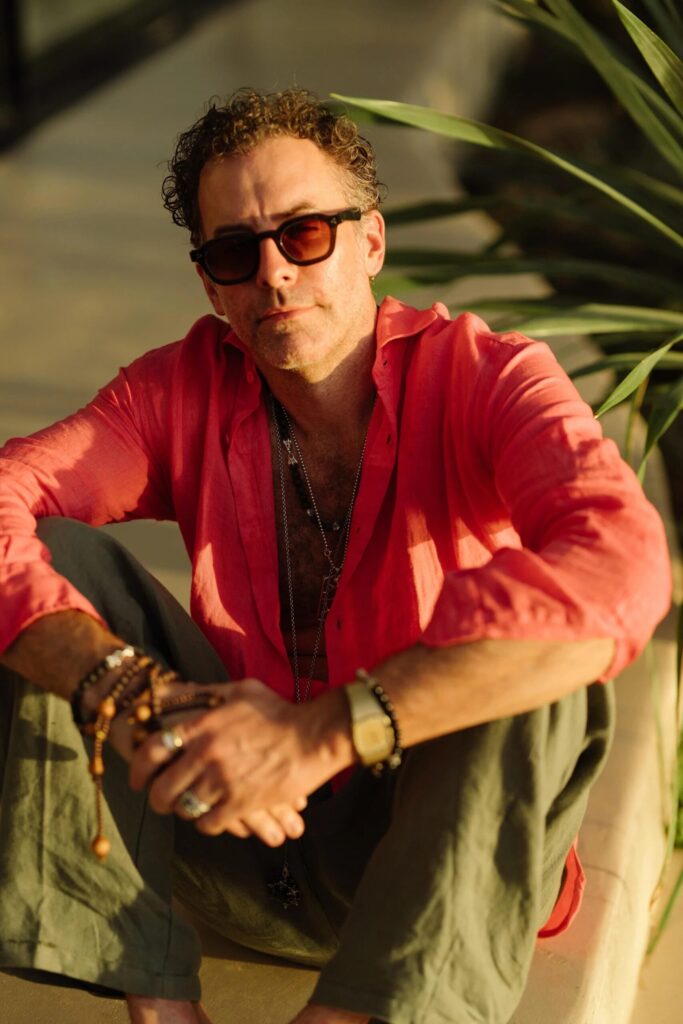
John Brevard is an American designer whose multidisciplinary practice spans furniture, sculpture, jewelry, interiors, and architecture. Working across scales and disciplines, he has developed a distinctive visual language informed by fractal geometry, biomimicry, and the patterns found in nature. Through his eponymous studio, Brevard creates collectible pieces that merge sculptural expression with architectural thinking, exploring the relationship between form, materiality, and human experience.
Drawing inspiration from sacred geometry, natural systems, and computational design processes, Brevard’s work balances technological innovation with artisanal craftsmanship. His creations have been presented internationally through galleries, design fairs, and cultural institutions, while his broader practice extends to hospitality, residential architecture, and immersive spatial design. Whether expressed through a piece of furniture or a built environment, his work seeks to reveal the interconnected structures that shape both nature and contemporary life.
Interview
I was born in the lively city of Miami, Florida. This unique blend of environments has deeply influenced my creative pursuits, offering a diverse backdrop that resonates in my work.
Following a significant coma, my first artistic memory was sculpting forms and constructing a tree house in my home’s yard. This period of creation was more than just play; it represented my early explorations into art, forming a fundamental dialogue with space and form.
Art and design have always been more than just professions for me; they are sanctuaries. My passion for creation, the innate drive to shape, imagine, and transform, has found its truest expression in these fields.
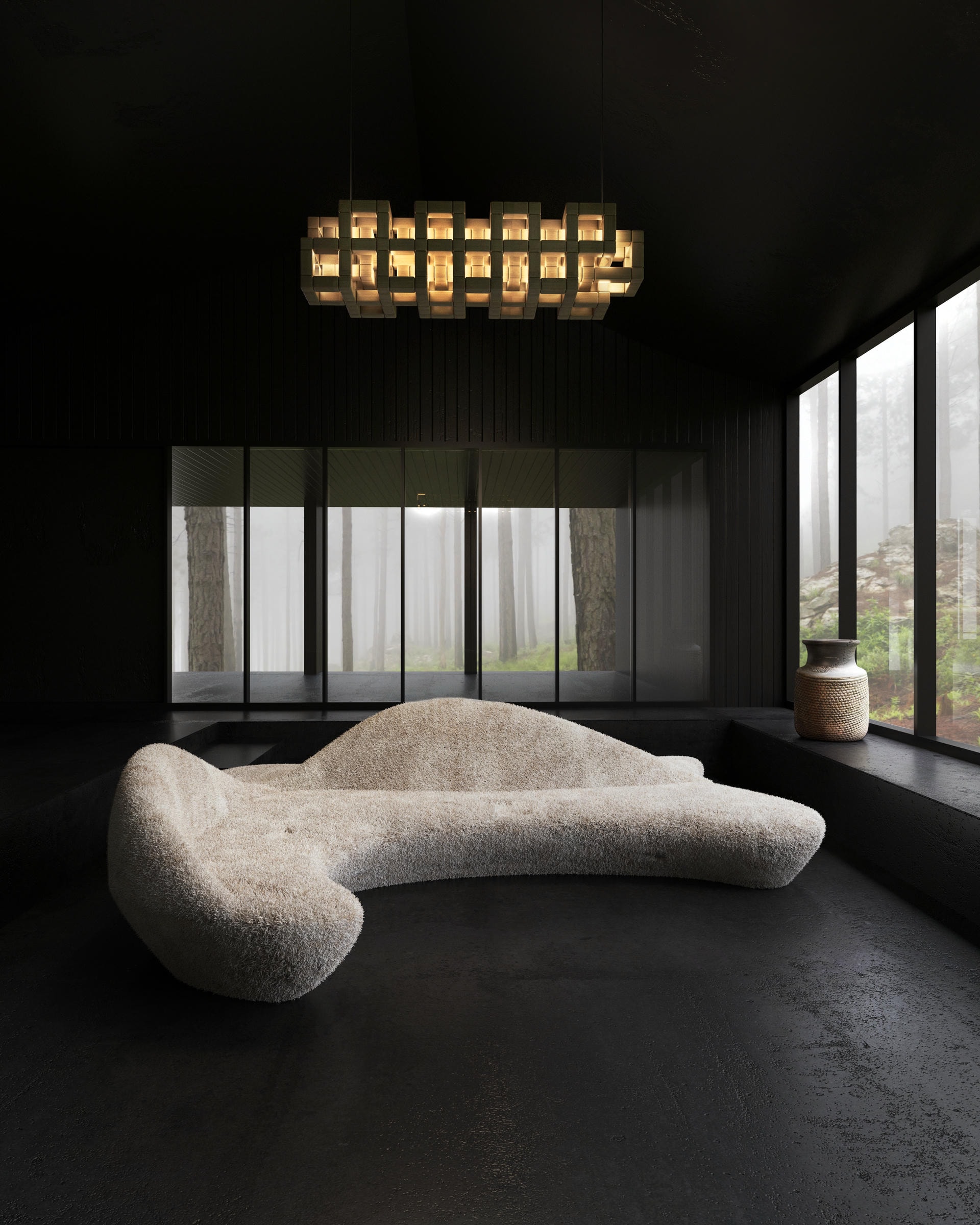
Since childhood, I’ve been attuned to the energies spaces emit. I believe the arrangement of art and furniture, and the intentional blending of nature within interiors, profoundly affect a space’s essence. I’m convinced that adding a sculptural or design element doesn’t just fill space; it alters its frequency and transforms its spirit. My lifelong passion is crafting spaces that resonate with strength and harmony, serving as sanctuaries that elevate and inspire connection with one’s higher self.
My creative process starts with an instinctual spark, followed by sketching and then 3D modeling. This approach allows me to transform initial inspirations into tangible designs.
My day begins early with a Muay Thai session and a hike with my baby and my husky in Ibiza, followed by addressing client emails and visiting construction sites. In the afternoon, I dedicate time to design, concluding with sunset meditation and painting, balancing my professional responsibilities with personal well-being.
I use recycled materials, metals symbolic of our techno-tectonic era, and elements like petrified wood, which remind us of our timeless nature. The choice of metals and stones is also aimed at enhancing the energy of my pieces.
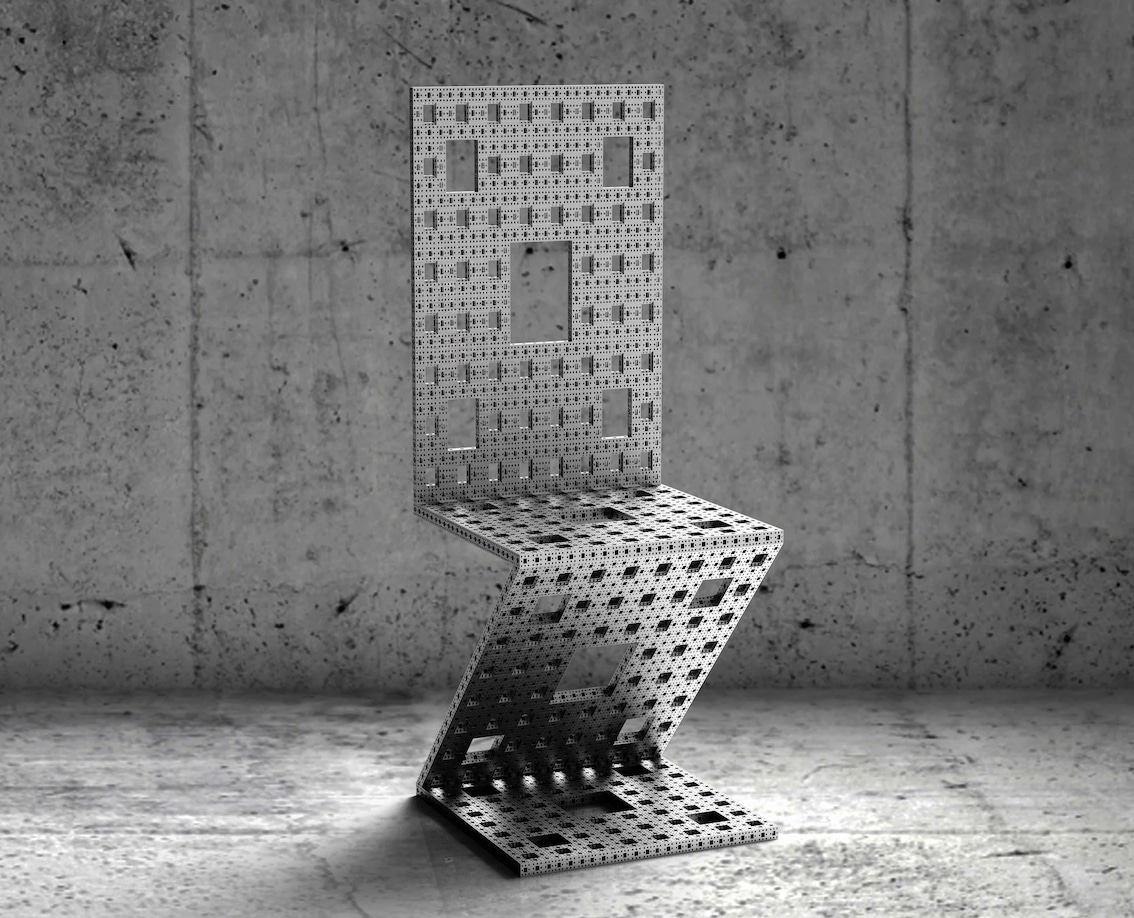
My designs are inspired by fractals, sacred geometries, and natural forms, reflecting my fascination with the repeating patterns in nature and their broader implications.
For those starting in sculptural design, finding your unique voice is key. Work diligently, maintain a positive attitude, and remember that your consciousness is the primary driver of your creativity.
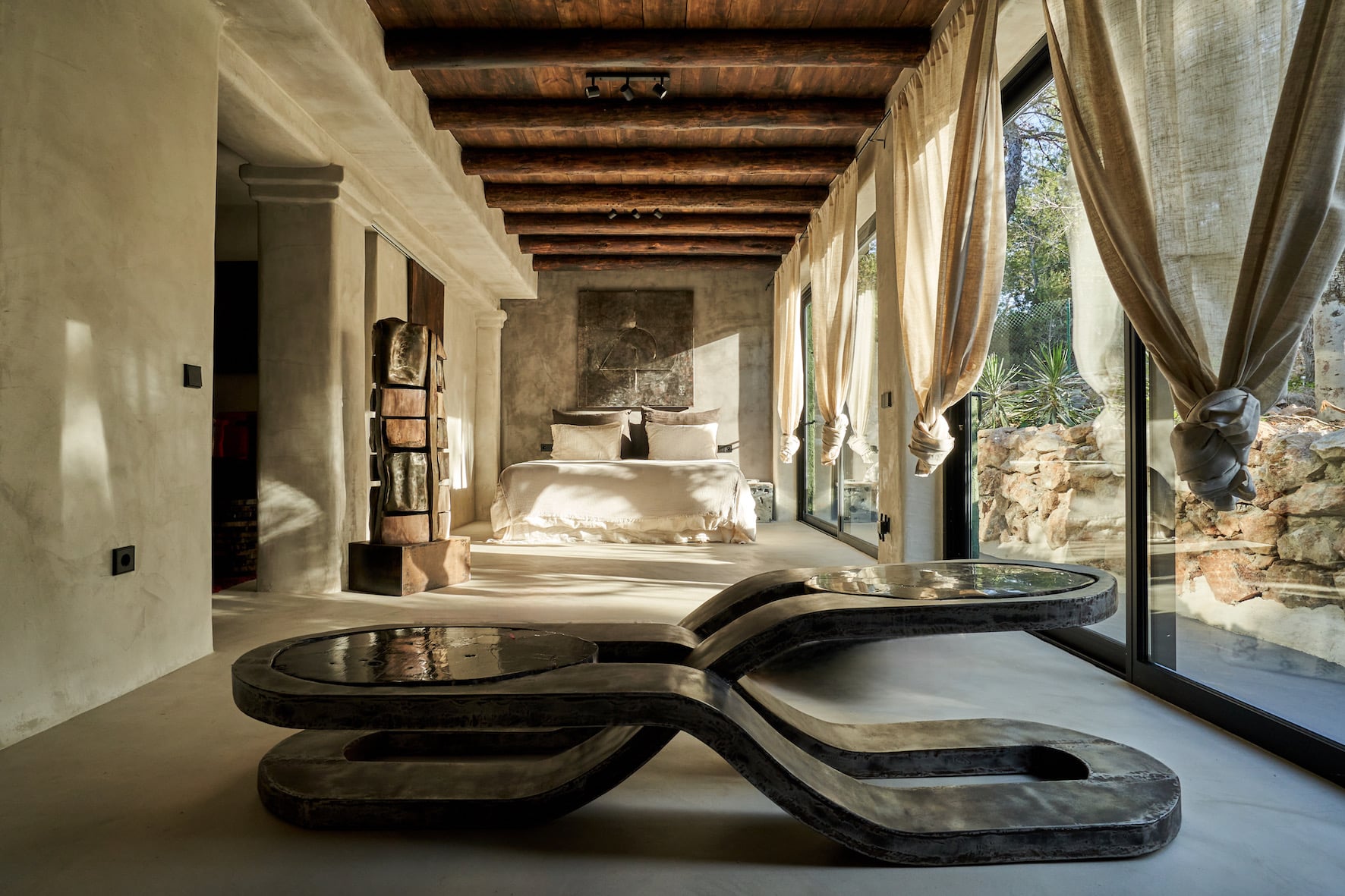
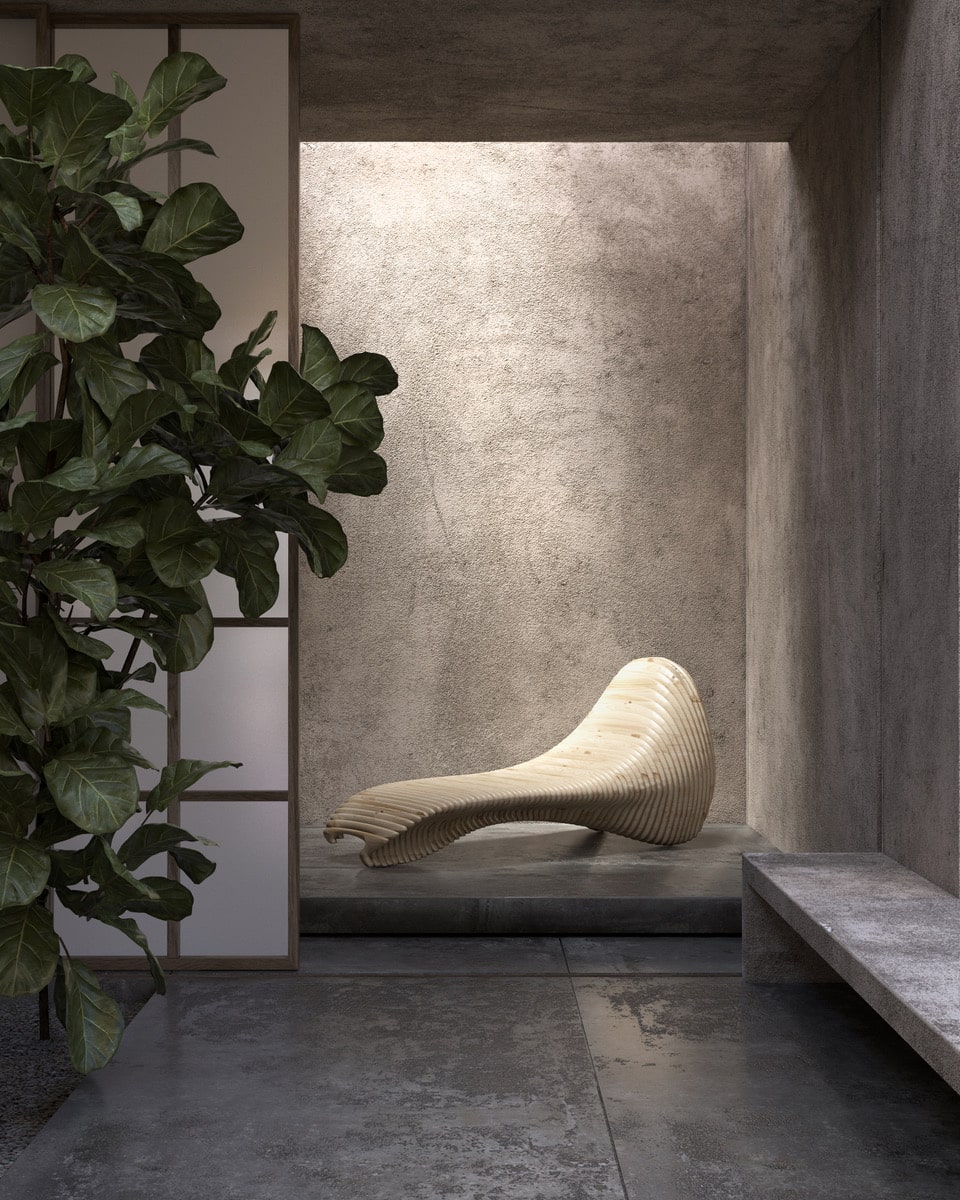
My work is a blend of futurism and brutalism, combining forward-thinking design concepts with raw, elemental forms.
I am influenced by the architect Calatrava, whose work resonates with my design philosophy.
Currently, no contemporary designers particularly stand out to me; my work tends to carve its own path.
Similarly, no contemporary artists immediately come to mind. My inspirations are drawn from broader concepts and natural forms.
If I were to summarize my creations in one word, it would be ‘fractalize,’ reflecting the intricate and repetitive patterns found in my work.
I am intrigued by the concept that fractals are a fundamental component of everything, including the dimension of time.
“I’m convinced that adding a sculptural or design element doesn’t just fill space; it alters its frequency and transforms its spirit.”
The Questions
(The Proust Questionnaire is a set of questions answered by the French writer Marcel Proust.
Other historical figures who have answered confession albums are Oscar Wilde,
Karl Marx, Arthur Conan Doyle, Stéphane Mallarmé, Paul Cézanne…)
Being at my home in Ibiza, surrounded by friends and family.
I prefer not to give way to fear.
Harshness.
Lack of self-reflection or consciousness.
There are so many special humans; it’s hard to choose just one.
Collecting artifacts.
Peaceful, even as I watch the coming storm.
Hard work.
Kind heart within genuine strength of character.
Love and nourishing nature.
“Are you ok?”
Deep engineering skills.
None.
Still working on it.
I would choose to come back as myself.
Exactly where I am now.
My family.
Misery itself, especially negative self-talk.
Creativity.
My stare.
Nurturing love.
Shakespeare, Henley, Kipling, and James Allen.
Neo.
Shakespeare.
The selfless among us, like nurses, caregivers, and service workers.
Aria Wolf.
Dislike itself.
Perhaps not following my gut more.
Surrounded by those I love and who love me.
“If it flows, it goes.”
“If I were to summarize my creations in one word, it would be ‘fractalize.’”
SHARE :