Karen Chekerdjian
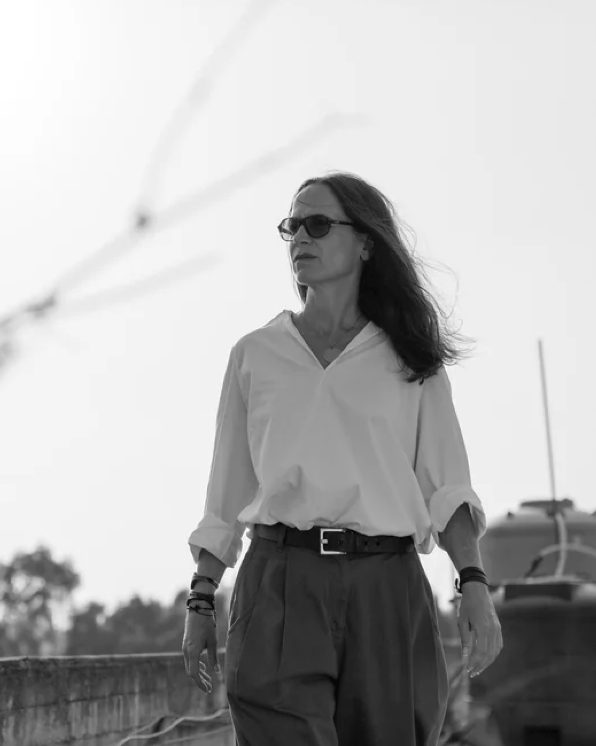
Karen Chekerdjian is a Lebanese-Armenian designer and artist whose multidisciplinary practice spans collectible design, furniture, interiors, and spatial installations. After beginning her career in advertising, film, and graphic design, she studied Industrial Design at the Domus Academy in Milan under the mentorship of Massimo Morozzi before founding her eponymous studio in Beirut in 2001. Through a continuous dialogue between concept, material, and craftsmanship, Chekerdjian has developed a distinctive design language that explores objects as evolving forms rather than fixed functions.
Working in close collaboration with local artisans, Chekerdjian creates furniture and objects that embrace ambiguity, transformation, and interaction. Rooted in the cultural landscape of Beirut yet informed by an international perspective, her work balances sculptural expression with everyday use, inviting each piece to acquire meaning through time, memory, and human experience rather than through function alone.
Interview
I was born in Beirut, Lebanon, in 1970. I am from an armenian origine. Both my families came to Lebanon from Turkey at the beginning of the last century.
I used to be fascinated by modernist painting when I was still in school, and I gradually painted all my walls in my room with copies I did myself of Cocteau, Magritte, and others.
Always! I went from movie direction to advertising, then I did graphic design, and finally I ended up as a furniture designer.
I finished my college just at the end of the civil war in Lebanon, and we only had, at that time, very few possibilities to study in the art field. Everything I wanted was not taught at university. There was no graphics, no movie direction, and no industrial design. I chose them probably instinctively because I was in need of creativity. After my experience in graphic art, I felt the need to design an object in 3D, versus 2D. I had the urge to design all the objects I used in my daily life.
I cannot say that I only have one creative process. But I have to say that none of my work came easily to me as an inspiration. My pieces are the result of hard work and perseverance. When I start to draw, it is a long and tough process that is sometimes very frustrating, and I am never easily satisfied with my ideas. And suddenly, after a long hard work, it becomes obvious; I see it clearly. This process was very difficult before, still is sometimes, but now I know that this is the only way, and I accept that you can sometimes design nothing good for a while. You need to be patient with yourself.
I can be influenced a lot by an art piece, an architecture, an element of nature, an archeology, or even a story. Very much, a story is atypical; the pieces I designed came in circumstances, without the context, I would never have done it.
Nothing really in a routine. It can be very variable. Going to the craftsman. Working in the office to do all the office work! Yes, it takes so much time to follow up with the office and the team.
I chose what I found. When I started to work in Lebanon in the year 2000, I was just back from Italy, where everything was possible. And here I am in a totally different situation. Working here was a new experiment. I had to reinvent the way I worked and be on my own. At that time, it was the opposite of everything Italian design was. I was only working with the craftsman and the material I would find locally.
Many years later, I was able to go outside Lebanon and fetch the material I wanted that was not found locally.
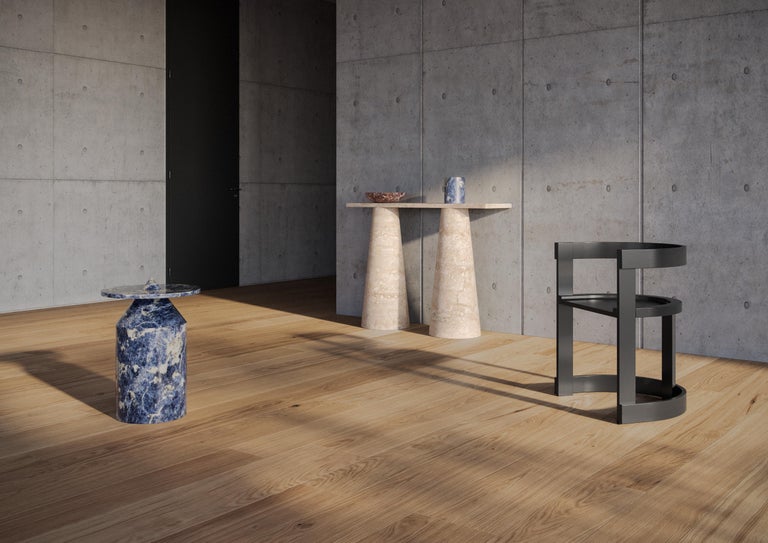
My drawings are basically ideas. And most of the time, to transform the idea into an object, you need to know how. But I cannot have all the knowledge needed for each material I would like to work with. So I always need the mastery of the craftsman. I always remember coming with drawings that my craftsman would say were impossible to do. I would start to be so insistent because I didn’t believe there was a solution for it. And he was always finding a solution for me. Thanks to him, I can say that every piece was a technical challenge that I wouldn’t know how to solve, but I was lucky enough to have someone to solve it for me.
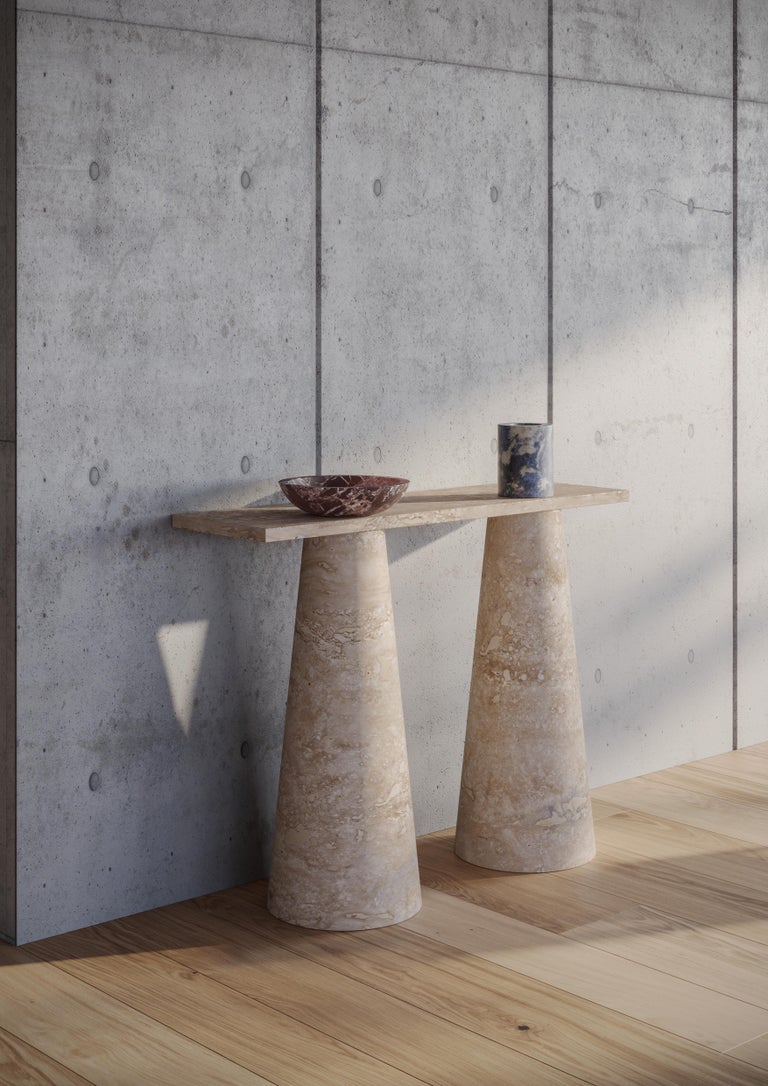
Perseverance and courage to do things that are not politically correct in the sense that they don’t look like something you’re already used to. Always question the meaning and the aesthetic.
Probably I would have liked to be in the Bauhaus movement, but I am not sure I would fit. I have been in movements and experimenting with a lot of different roads. I was sometimes attracted to Memphis, sometimes to Archizoom, and sometimes none really.
By a lot of the maestros like Eileen Gray, Charaud, Perriand, Scarpa, Sotssass, Branzi, and mainly my mentor Massimo Morozzi.
Frank Stella, Kusama, Penone, Serra, Artschwager, Walter De Maria, Lee Ufan.
My work should always have a meaning and never give up its age.
“You need to be patient with yourself.”
The Questions
(The Proust Questionnaire is a set of questions answered by the French writer Marcel Proust.
Other historical figures who have answered confession albums are Oscar Wilde,
Karl Marx, Arthur Conan Doyle, Stéphane Mallarmé, Paul Cézanne…)
Imperfection
War
Shyness
Greed
Everyday someone new
My way of being myself
Live the day
Morality
Empathy
Courage

Who cares
Easy speech
My laziness
Myself
Myself, as I am at my age, at a younger age
Now on a Greek island for 6 months a year
My children, if they are a possession
Solitude
A drink with my friends
Manfichism
Trust
Now Malaparte but tomorrow I don’t know
Darth Vador
–
Gandhi
My kids names Adam and Athena
Weakness
Not having been loved passionately
In peace with myself
Believe that life is taking you where you should go
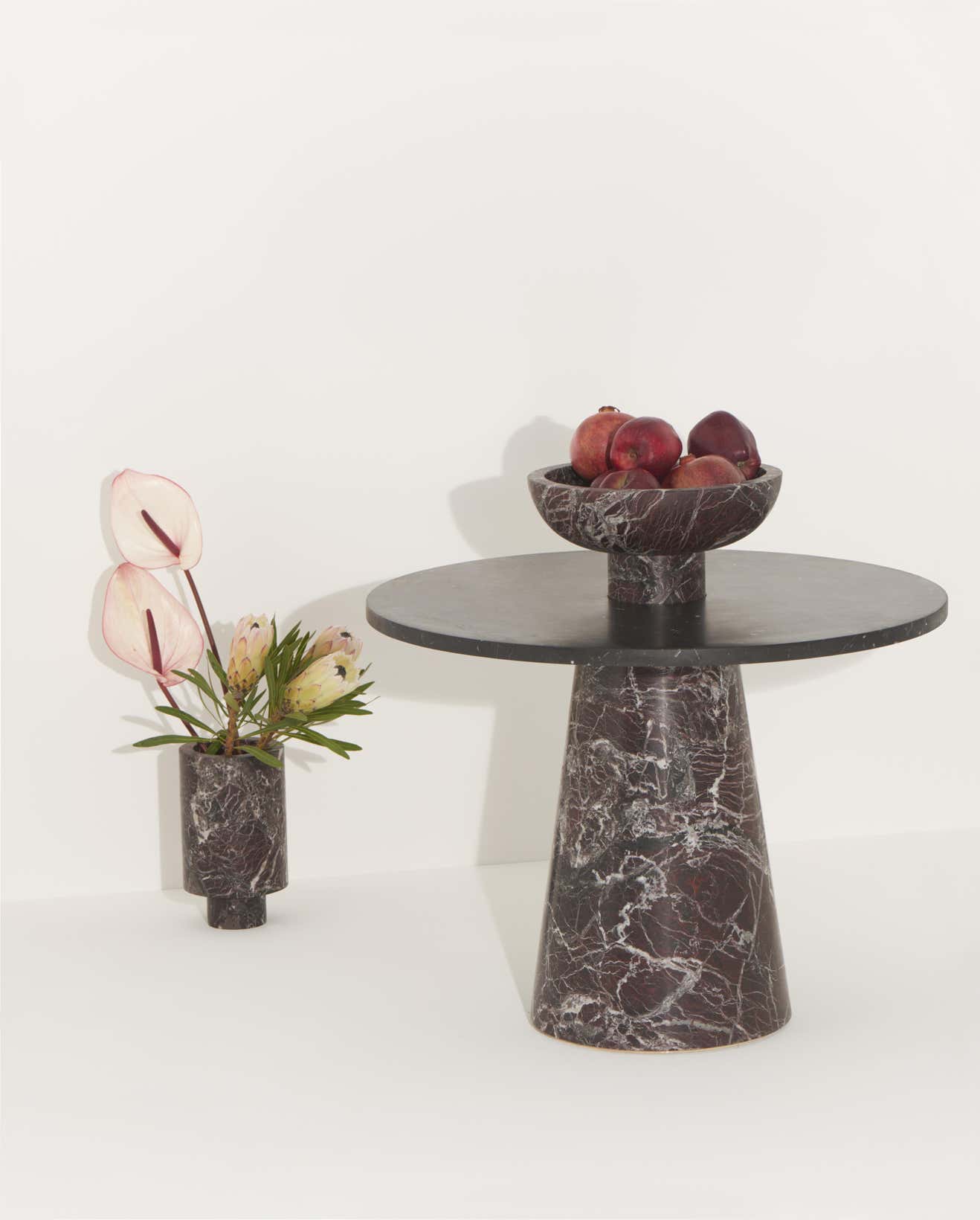
“My pieces are the result of hard work and perseverance.”
SHARE :