Mesut Ozturk
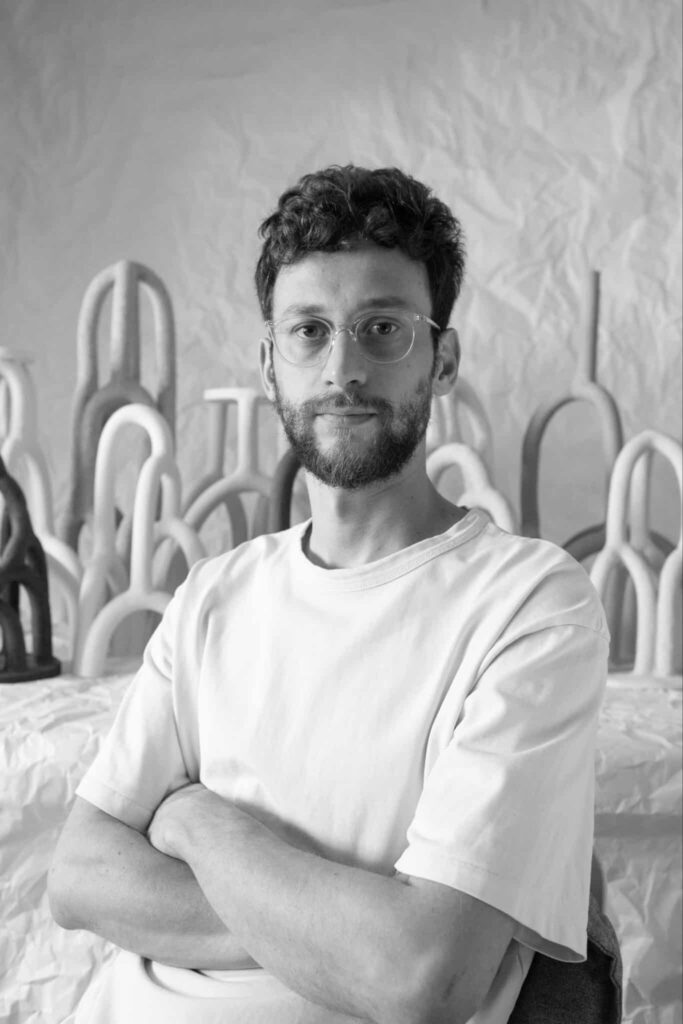
Mesut Öztürk is a Turkish artist and designer based in Istanbul whose multidisciplinary practice bridges architecture, ceramics, and collectible design. Trained as an architect and holding a master’s degree in the history, theory, and criticism of architecture, his work explores the relationship between structural experimentation, timeless forms, and the expressive potential of clay.
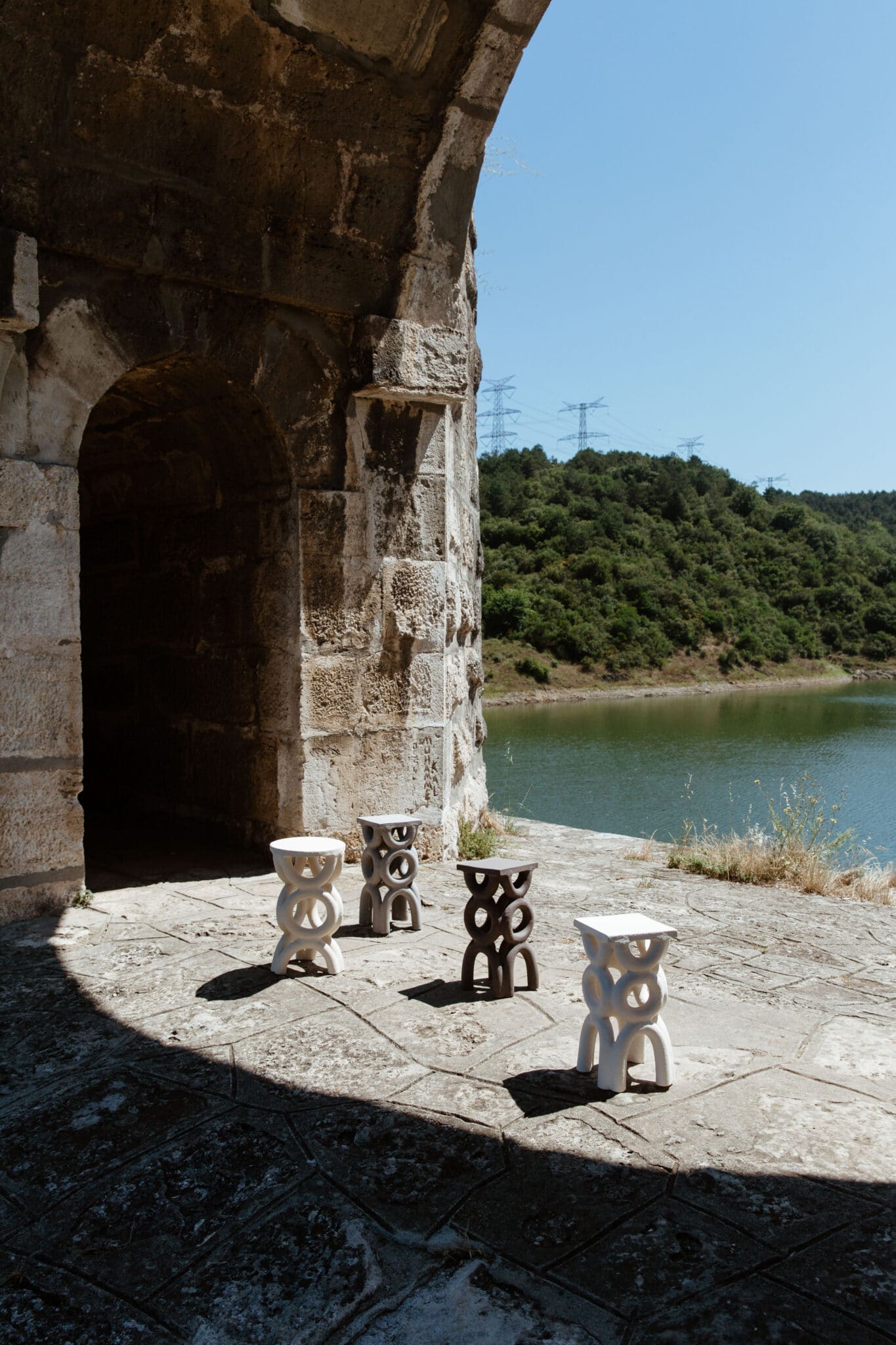
Working primarily with hand-built ceramics, Öztürk creates sculptural furniture and objects distinguished by their architectural presence, poetic simplicity, and material honesty. Through an ongoing dialogue between craftsmanship, experimentation, and cultural memory, his practice transforms clay into contemporary works that evoke a quiet sense of permanence.
Interview
My family and I moved to Turkey just after I was born in Krumovgrad, Bulgaria. I grew up in the European part of Turkey. After living in 4 cities in Turkey, I recently settled in Paris.
I was enjoying drawing pictures or shaping play dough when I was a kid, like everyone else. I haven’t stopped creating something after I turned into adulthood. One day, I decided to make my passion my main practice for living.
As an architecture graduate, I worked as an architect for a couple of years. Then I worked as an academic at an architecture school in Istanbul.
My occupations were not satisfying my need to create freely and individually while I was working as an architect and academic. Something was missing. I was seeking a more creative field that would allow me to express myself. After I met with the clay material, I immediately realized that it would be my thing.
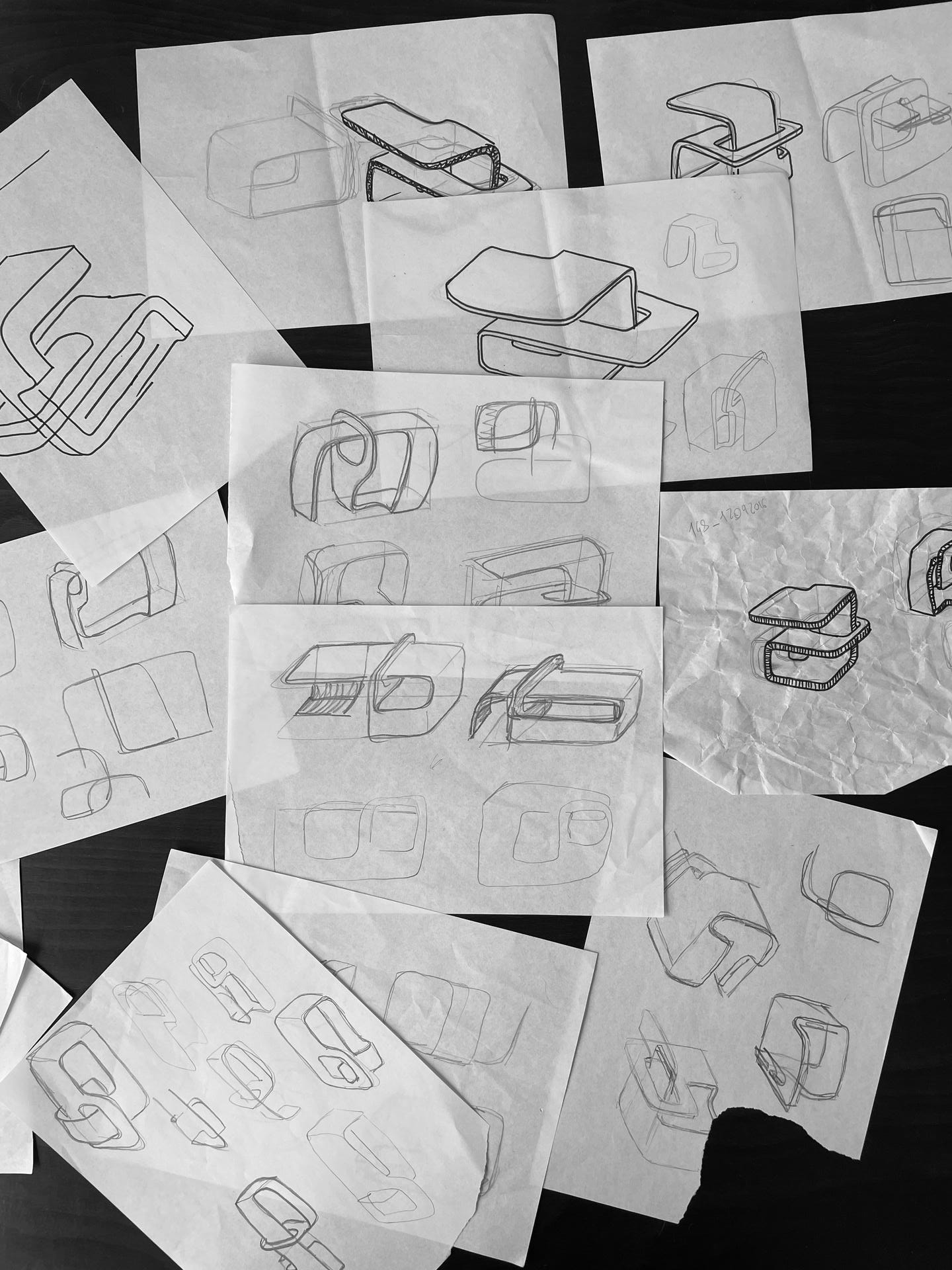
My creative process is two-sided: creative thinking and physical labor. Defining my creative thinking process would be the same as defining myself. It is always with me. Sometimes seeing a good movie or going for a run can trigger my creativity, and I can’t resist sketching some ideas. On the other side, physical labor requires significant self-discipline. I am busy with clay in my studio most of the time.
I wake up at 9 am. After having coffee and planning my to-do list, I have a large Turkish breakfast. I reply to some emails and do some daily errands in the city, like buying materials. I start working in my studio in the afternoon. If I don’t have a plan at night, usually I work until midnight. I am happy when I don’t have any emails to reply to and any errands outside.
I feel I can create anything with clay. It gives me a lot of freedom. I also feel confident with my hand skills. I also like the material’s nature and history. It has been used since the agricultural revolution, which makes clay a poetic material. Moreover, it is probably the most sustainable and ethical material because it is basically the soil.
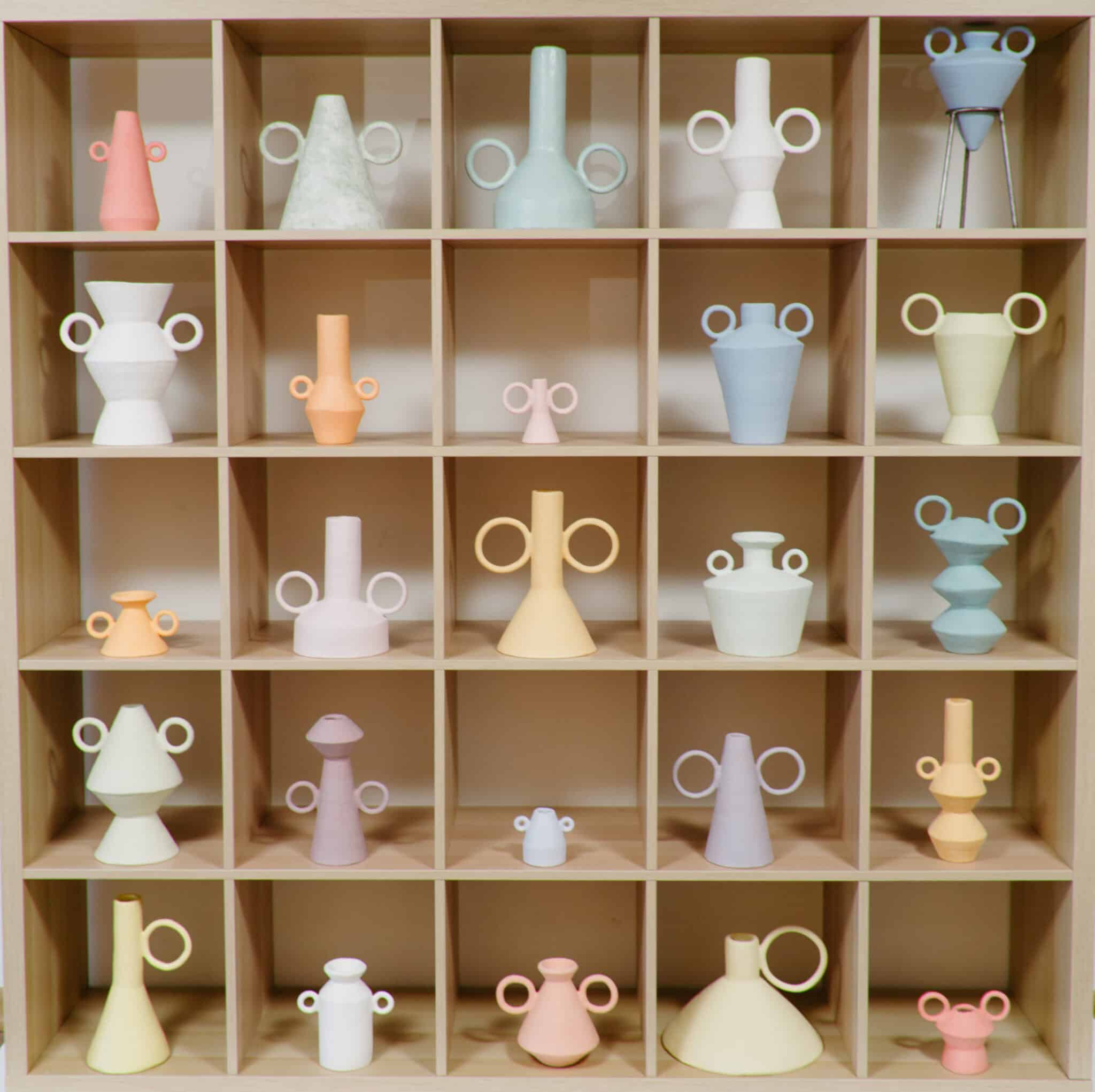
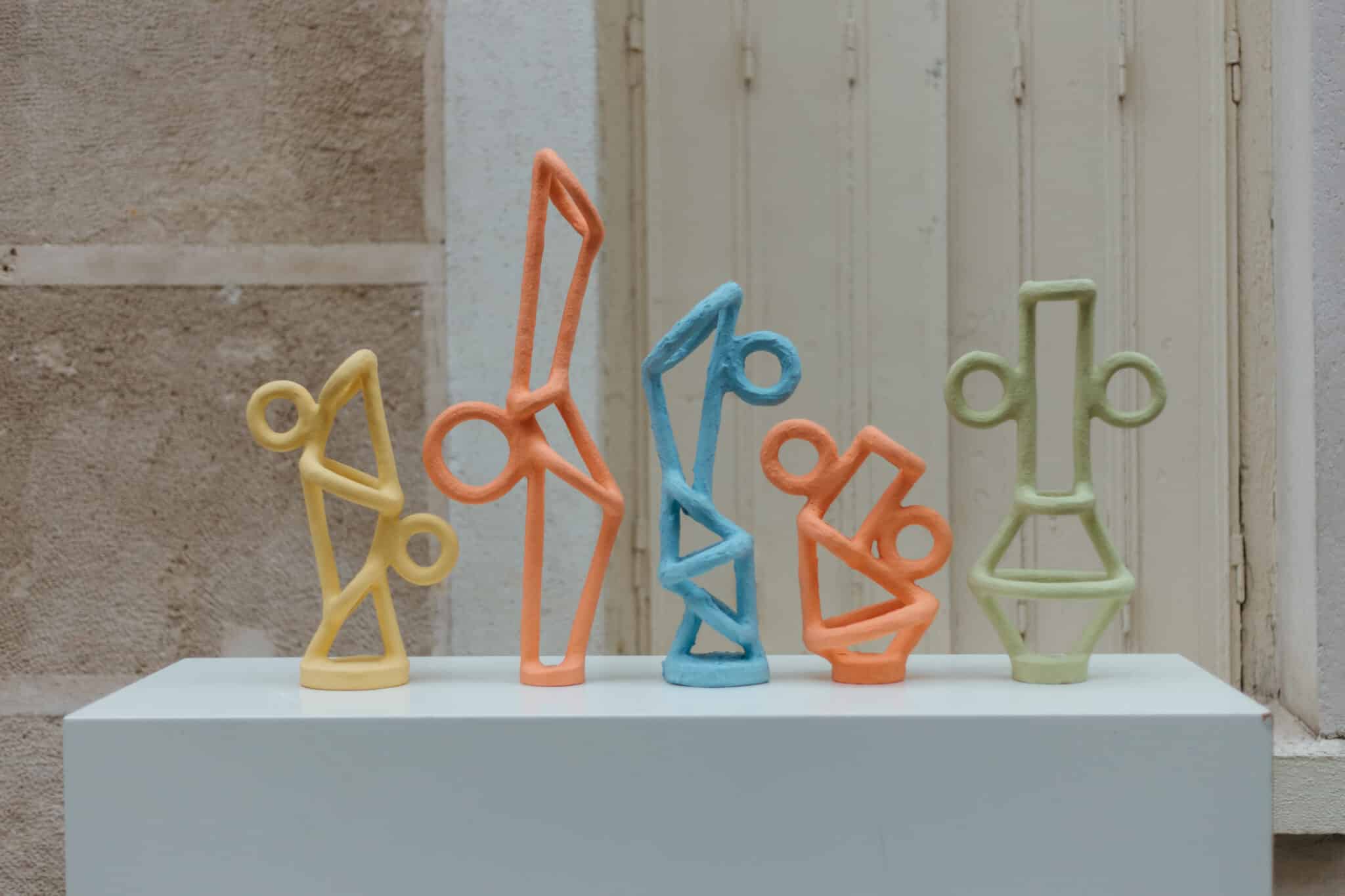
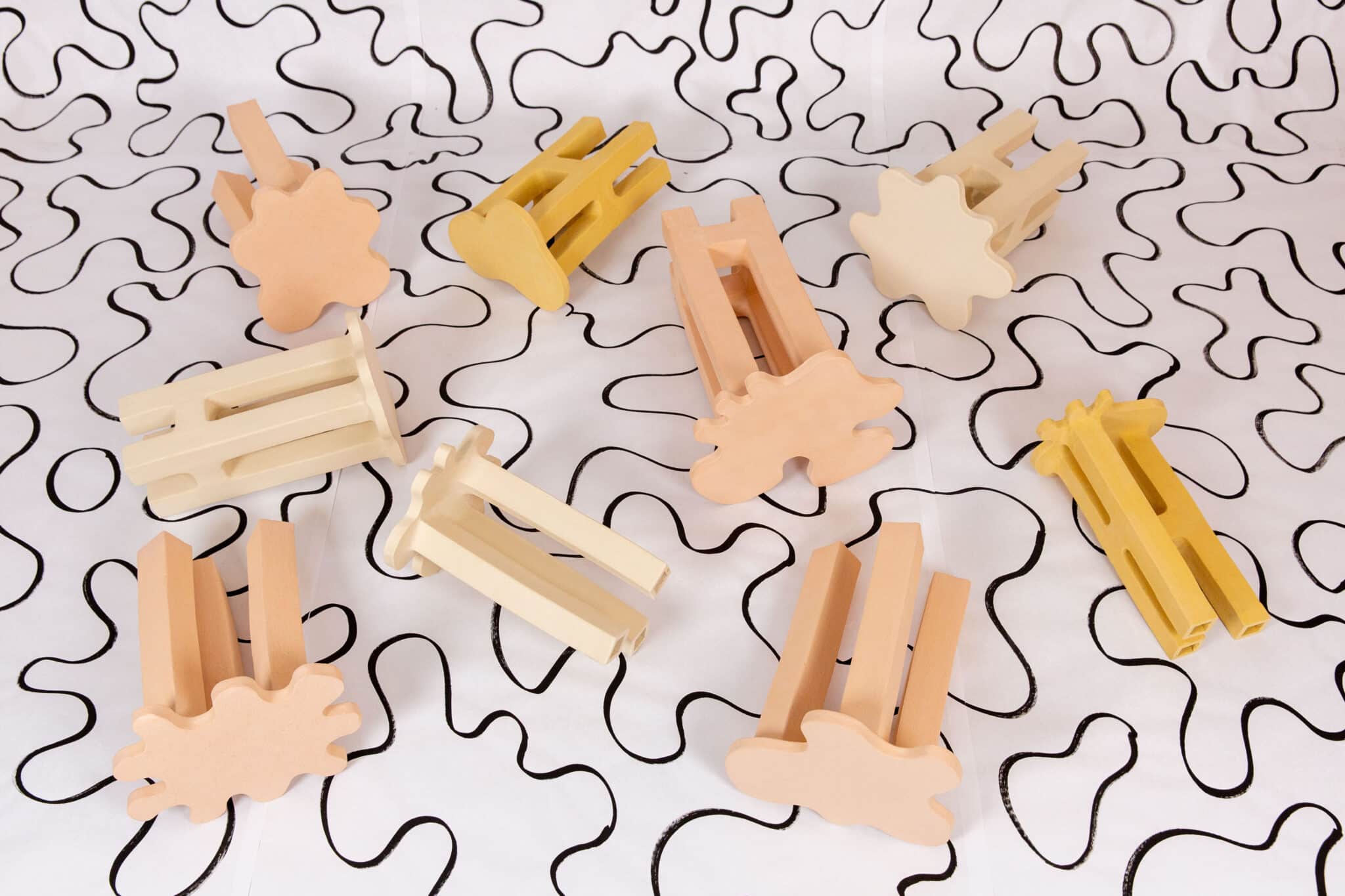
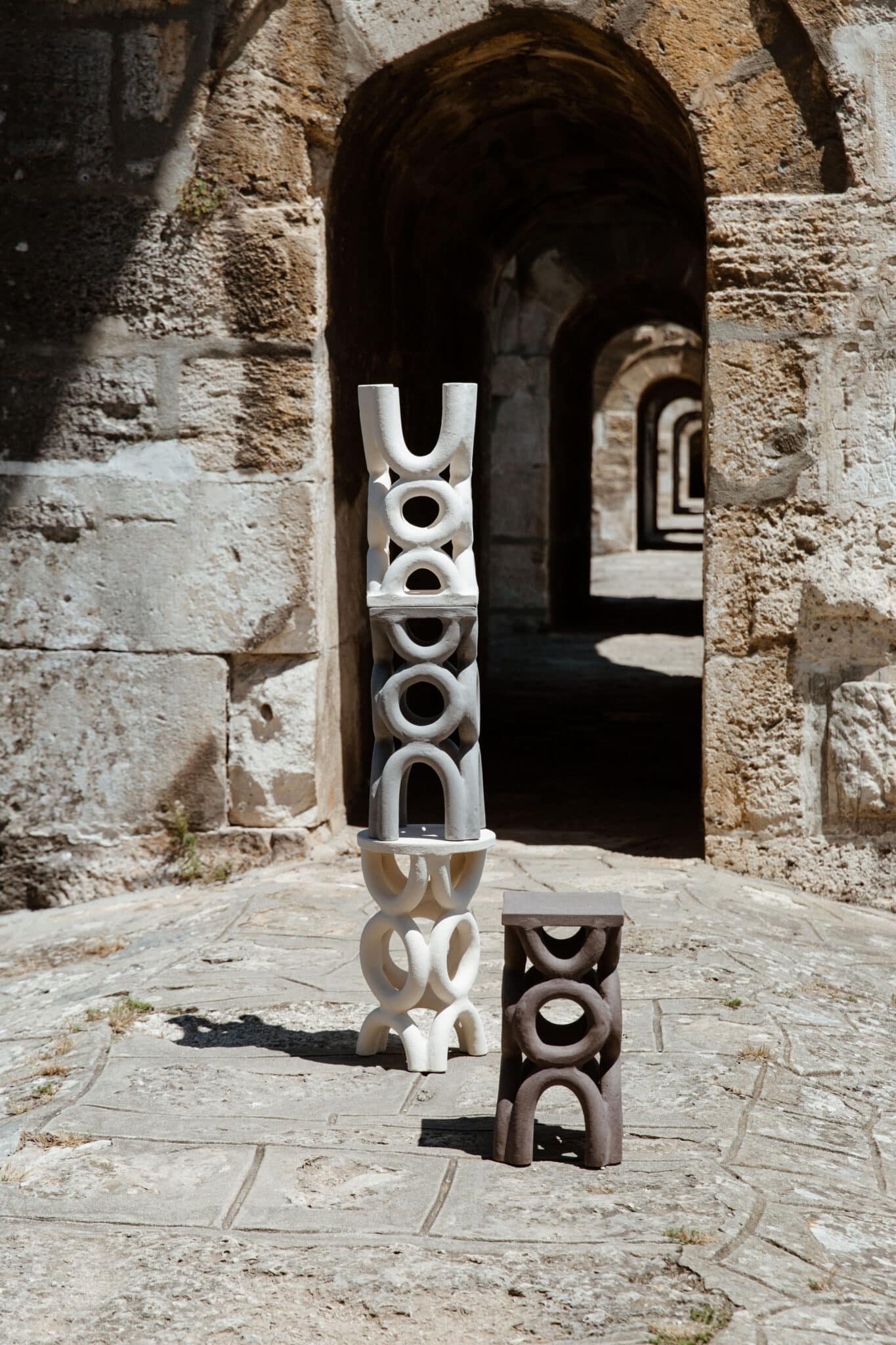
They are all ceramics; I didn’t use any other material. I enjoy experimenting with different ceramic clays. While most of my works are made of white stoneware clay, I made some pieces with porcelain, low-temperature clays, and black, red, and yellow clays. Because I don’t like shiny surfaces, I mostly don’t use glazes, which is a significant part of ceramic art. I color them with paints while keeping the materials’ own rough surface. It is reasonable with my sculptures, but it can be tricky when I make sculptural design pieces. Many people don’t like the idea of a table with a non-waterproof surface, but I like contradictions.
They should know themselves; their skills, their taste, what they want to express. They should be authentic. Having research or seeking inspiration in other artists’ works helps, but it shouldn’t be more than enough. They should be good at self-discipline and establishing a daily routine for working. My studio is like my sacred place; sometimes I go there just for my daily routine, without having any ideas, and I find myself finishing a prototype at the end of the day.
Thank you for the detailed interview. I think the collectible design / functional art scene is growing, and it is important to make the creators of this field visible.
All movements and labels are arguable. Even the title of my practice is arguable. Different people call me an artist, designer, maker, or entrepreneur. When I try to label my practice and my “movement”, I feel like I am limiting myself. People can define my practice however they want, but I usually say, “I make some things with clay” when I meet with someone.
Not only designers, but I will say some sculptors and architects as well: Sotsass, Brancusi, Noguchi, Aldo Rossi, Bofill, Carlo Scarpa, brutalist architects of the Soviets, ancient potters of the Mediterranean.
Honestly, I follow hundreds of creators, and it is not easy to highlight some of them.
Mostly, my main inspiration comes from the past. It is impossible not to be affected by the images we see; probably I am inspired by some artists, but I can’t point to any of them.
All my creations are paving stones in my journey to the unknown.
“After I met with the clay material, I immediately realized that it would be my thing.”
The Questions
(The Proust Questionnaire is a set of questions answered by the French writer Marcel Proust.
Other historical figures who have answered confession albums are Oscar Wilde,
Karl Marx, Arthur Conan Doyle, Stéphane Mallarmé, Paul Cézanne…)
Ability to accept what life brings
Losing a loved one
Overthinking
Pretentiousness
Nuri Bilge Ceylan
Travelling
Naughty
Paying taxes
Not living in the men gender role
Not expecting man to live in the men gender role
Form, experiment
Not worrying about the little things
Being people-pleaser
Dropping out my PhD and becoming an artist
Better version of me after some lessons learned
In a Greek Island
My library
Not knowing how to love and to be loved
Playing tennis, going to cinema, drawing sketches
Calmness
Talking about own weaknesses
Pamuk, Dostoyevsky, Proust
Martin Eden
Atatürk
My mother and father
Panta (as a pet name)
Inequality
I don’t call anything as regrets
Suicide in my 80’s
Keep working
“All my creations are paving stones in my journey to the unknown.”
SHARE :