I am Polish, born in Poland. My hometown, Zielona Góra, in the western part of the country. Right now, our design studio is located in Wroclaw.
MAGAZINE · INTERVIEW
Oskar Zieta
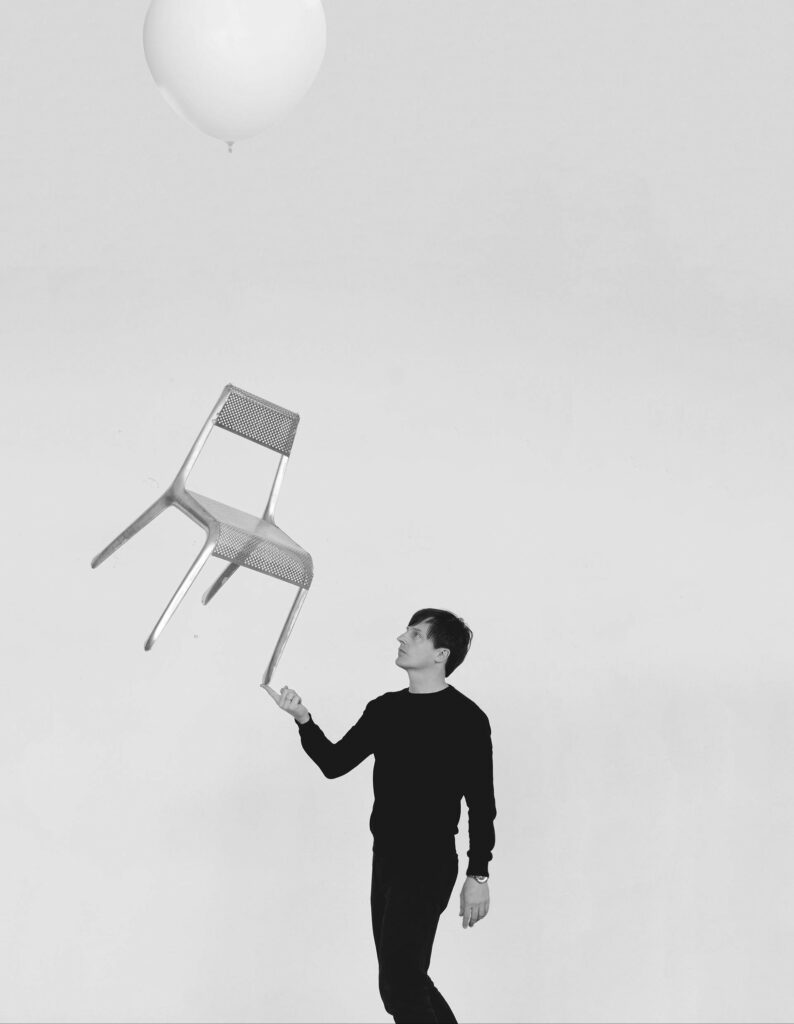
Oskar Zięta is a Polish architect, process designer, and artist whose work explores the intersection of engineering, material innovation, and collectible design. Trained at ETH Zurich, he is the inventor of FiDU, a proprietary technology that uses internal air pressure to shape steel into lightweight yet structurally robust forms. Through this pioneering process, Zięta has redefined the possibilities of metal, creating works that blur the boundaries between industrial production, sculpture, and design.
Working from Wrocław, Zięta develops furniture, public installations, and sculptural objects that combine technological experimentation with an organic aesthetic. His iconic designs, including the PLOPP stool and ULTRALEGGERA chair, reflect a continuous exploration of the expressive potential of steel, earning international recognition and a place in the permanent collections of institutions such as the Centre Pompidou, Museum für Gestaltung Zürich, and the Museum of Fine Arts, Montreal
Let's know more about
Interview
Where were you born and where are you from?
What is your first memory connected to the art world?
I remember my regular bike route to athletic training. I used to ride by the municipal art gallery BWA (the Art Exhibitions Bureau). On the façade, there was, and still is, a relief by Marian Szpakowski, an avant-garde Polish artist. It was always the most tempting piece standing out from the neo-baroque tenement houses surrounding it.
Have you always worked in the art/design field?
My first dream was to be a professional sportsman. I used to be a determined athlete. When it came to choosing my university, I had an inner dilemma between architecture school and the physical education academy. I chose architecture, and that is how my current life route began.
What led you to design creation?
It was a process, like everything I do. People call me a process designer, and I consider myself that. I started by working on methods for the stabilization of steel at ETH Zürich. The time in Switzerland grounded my passion for metal. I explored its technical features and possibilities for deformation. Maximizing stabilization brought me to the world of beautiful and functional objects—that is what we consider to be design. But I never tend to limit myself to any definition. I love the spaces “in between” and I gladly jump between.
How would you describe your creative process and its influences?
That is a tricky question, because I could say that I treat creation as a constant and complex process itself. I observe nature, its structuring and colorization contexts. I often look into the sky, feeding my fascination with cosmic wonders. I am obsessed with light reflections in terms of both their aesthetics and interference. My brain is a multi-layered construct of art, emotions, and physics. As a consequence, the creative process that you ask about is a complex narrative about me experiencing reality, trying to interpret it in mental deformations.
Could you describe a typical day of your work?
If your work is your passion, you do not feel like you are at work, because you enjoy it. This is my case – I love what I do. I try to balance myself between being a creator, engineer, salesman, craftsman, and head of my studio. It is challenging, but I have to say I like it. Thanks to this, I can consider my life an unpredictable adventure.
Why did you choose the specific materials you work with?
From the very beginning, I was fascinated with metal and the techniques of processing, forming, and stabilizing it. I believe that my way to it was paved by my grandfather, who was a “blacksmith 1.0,” as I like to call him. My major interest used to be steel, especially during university times. Now I have grown up to experiment with various metals, like aluminium and copper. Sometimes I call myself the Blacksmith 4.0.
What are the technical particularities of your creations?
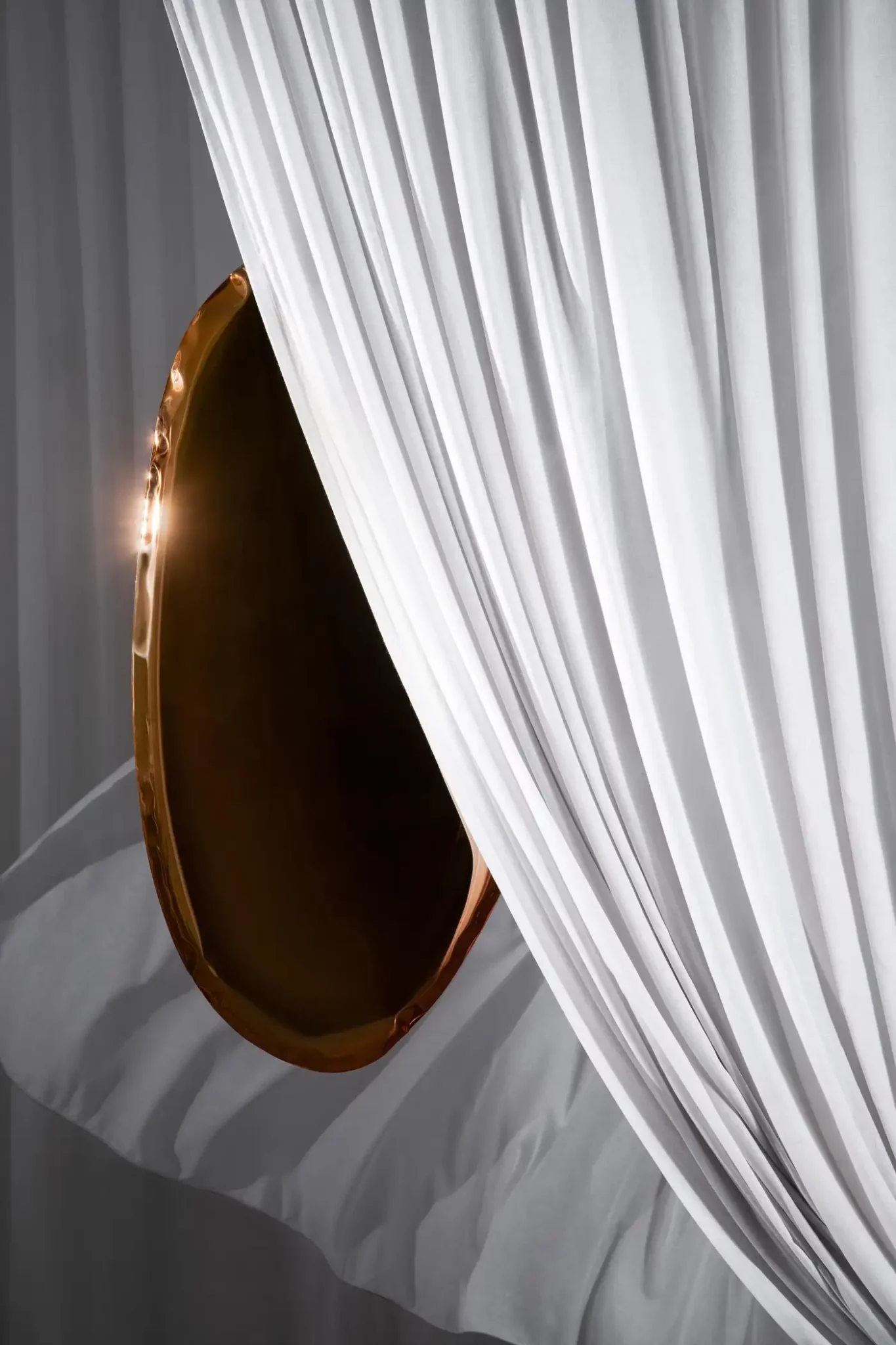
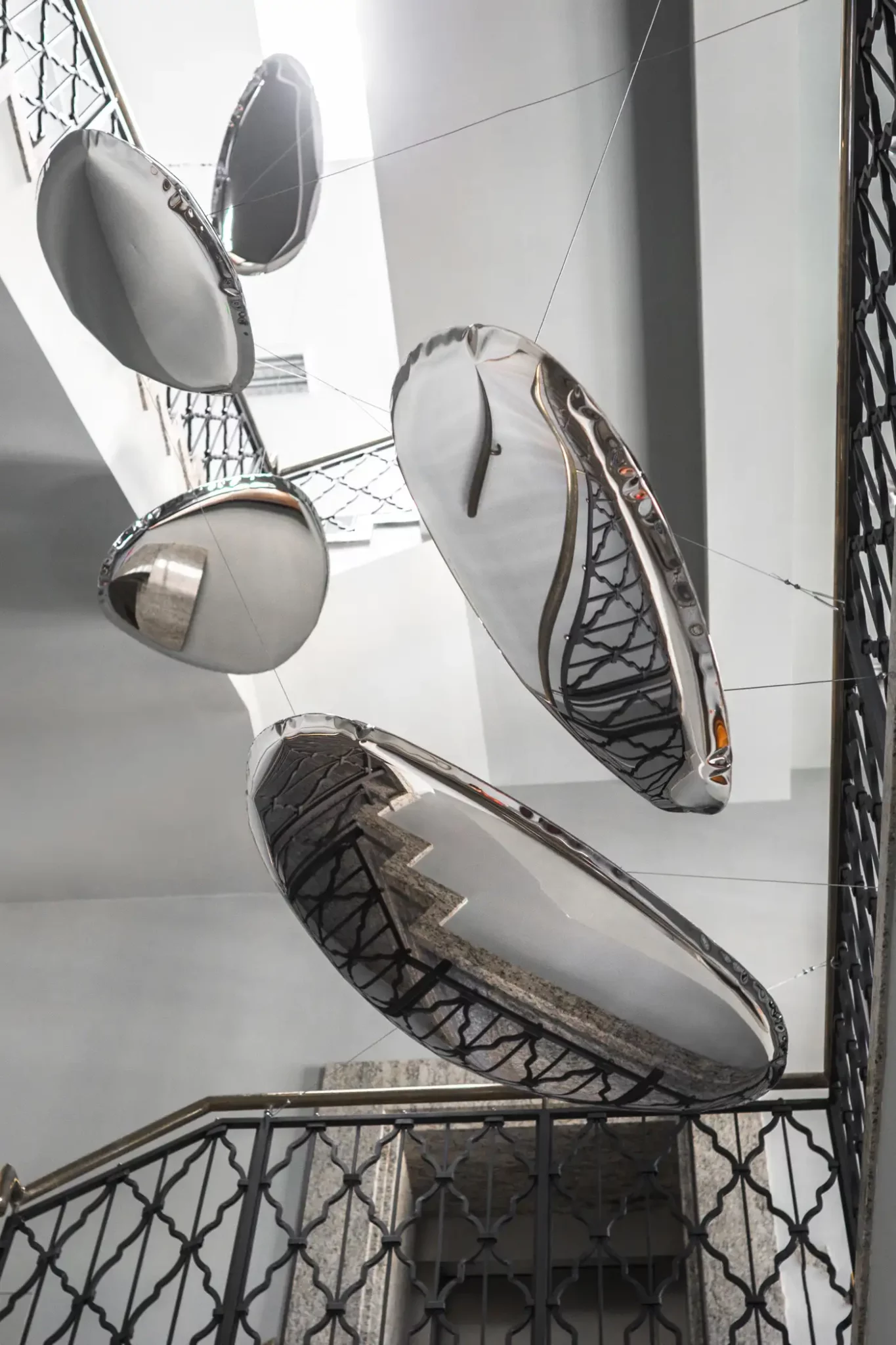
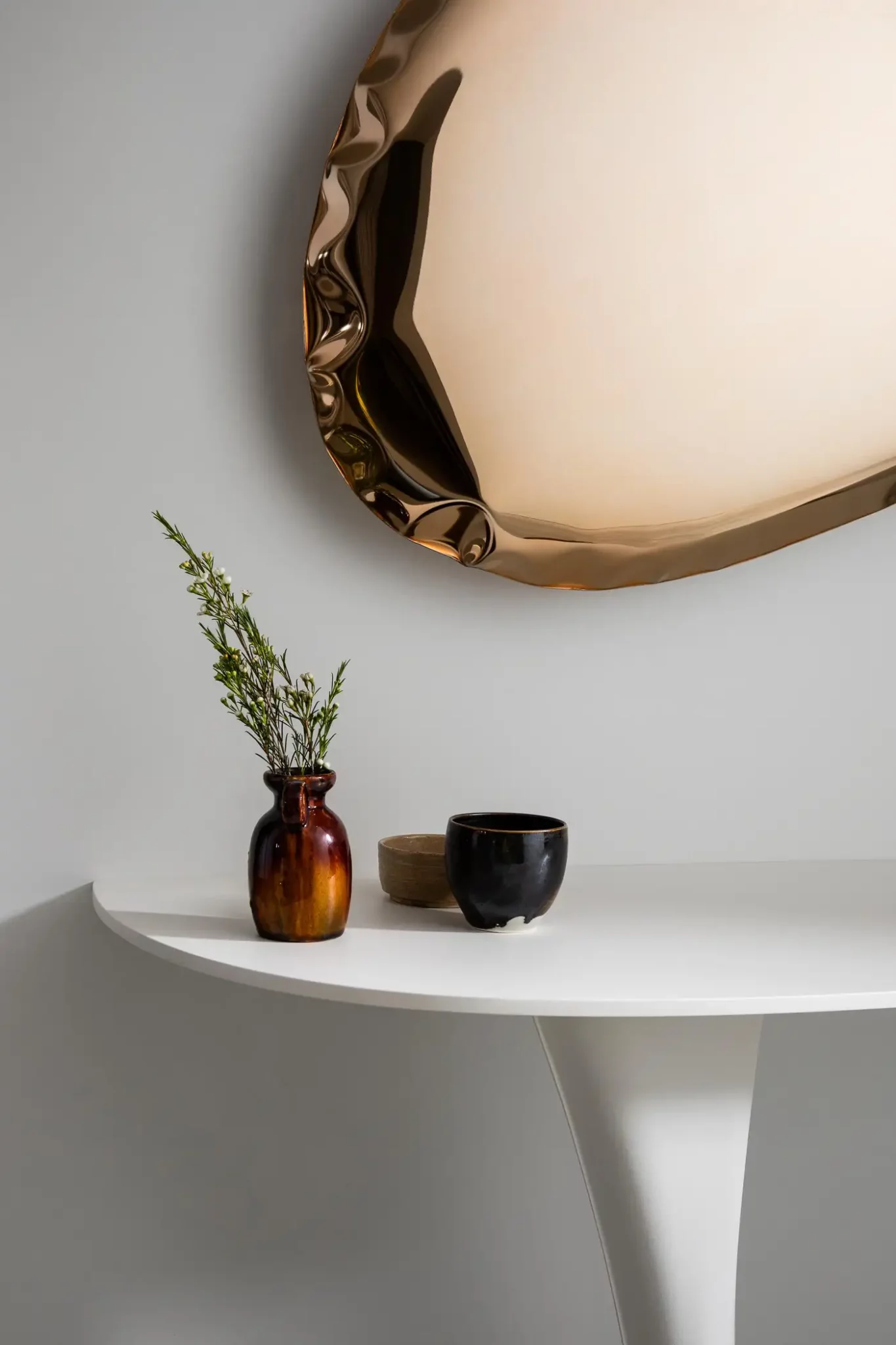
Each object of mine is filled with technical particularities—even though it is literally empty inside. I developed the manufacturing process FiDU (from the German Freie Innendruck Umformung), which is an acronym for free internal pressure forming. Every object I create is a complex study of material, form, and stabilization. At Zieta Studio, we rely heavily on robotics—parametric design, laser cutting, welding, 3D printing, and scanning. Each stage is strongly based on both new technologies and human potential. If I need to point out a certain particularity, I would say it is air. Without inflation, there is no deformation.
What advice could you give to beginning artists who would like to create sculptural design works?
Sculptures are the essence of stabilization. If not for the early human body studies by Michelangelo, among others, we might not deliver a perfectly crafted impression of sculptured selves. Material studies are the core issue. Later, you go through experimentation, research, and constant contact with your creative self. And the advice? Create and never be afraid of failure.
If your works had to belong to a design movement, how would you define it?
Design is a point on the matrix of creation that I touch, but it is not set by a definition. For me, it is a prism of interdisciplinarity—art, bionics, and technology.
What designers and artists have influenced you?
I was fascinated by the creations of French architect and designer Jean Prouvé. I analyzed his work more than 20 years ago, and his way of thinking inspired me. I asked myself what a world of his metal structures could look like if he could use the current potential of new technologies.
What contemporary designers do you appreciate?
I don’t want to point to only one. I admire all creators with passion, charisma, and determination to stick with their fascinations.
What contemporary artists, in any kind of art, have you been inspired by?
Again, it is difficult to cultivate only one. I believe that at a certain point in our lives, different works of art influence us – both consciously and subconsciously while we are kids.
If you had to summarize your creations in one word or sentence, what would it be?
Controlled loss of control.
Is there anything you would like to add?
We blow with love 🙂
“My brain is a multi-layered construct of art, emotions, and physics.”
The Questionnaire
The Questions
(The Proust Questionnaire is a set of questions answered by the French writer Marcel Proust.
Other historical figures who have answered confession albums are Oscar Wilde,
Karl Marx, Arthur Conan Doyle, Stéphane Mallarmé, Paul Cézanne…)
What is your idea of perfect happiness?
Unlimited time.
What is your greatest fear?
Boredom.
What is the trait you most deplore in yourself?
Perfectionism.
What is the trait you most deplore in others?
Laziness.
Which living person do you most admire?
Too many talented and hardworking people of passion to name one. At the moment, it is certainly Volodymyr Zelensky.
What is your greatest extravagance?
“Blowing with Love”
What is your current state of mind?
Circular.
What do you consider the most overrated virtue?
Corporations.
What is the quality you most like in a man?
I like to look at the human, not at the gender.
What is the quality you most like in a woman?
I like to look at the human, and the gender ;)
Which words or phrases do you most overuse?
Controlled loss of control. We.
Which talent would you most like to have?
Playing the piano.
If you could change one thing about yourself, what would it be?
A short fuse.
What do you consider your greatest achievement?
Family.
If you were to die and come back as a person or a thing, what would it be?
Perpetuum mobile.
Where would you most like to live?
By the ski slope.
What is your most treasured possession?
Passion.
What do you regard as the lowest depth of misery?
War.
What is your favorite occupation?
Creation. Understanding.
What is your most marked characteristic?
Insolence.
What do you most value in your friends?
That they are.
Who are your favorite writers?
Olga Tokarczuk.
Who is your hero of fiction?
The Wizard of OZ.
Which historical figure do you most identify with?
My Grandfather Blacksmith 1.0.
Who are your heroes in real life?
People full of passion.
What are your favorite names?
Zosia, Marysia (my daughters).
What is it that you most dislike?
Unevenly torn pages.
What is your greatest regret?
I do not regret. I discover.
How would you like to die?
With smile on the face.
What is your motto?
BLOWN WITH LOVE.
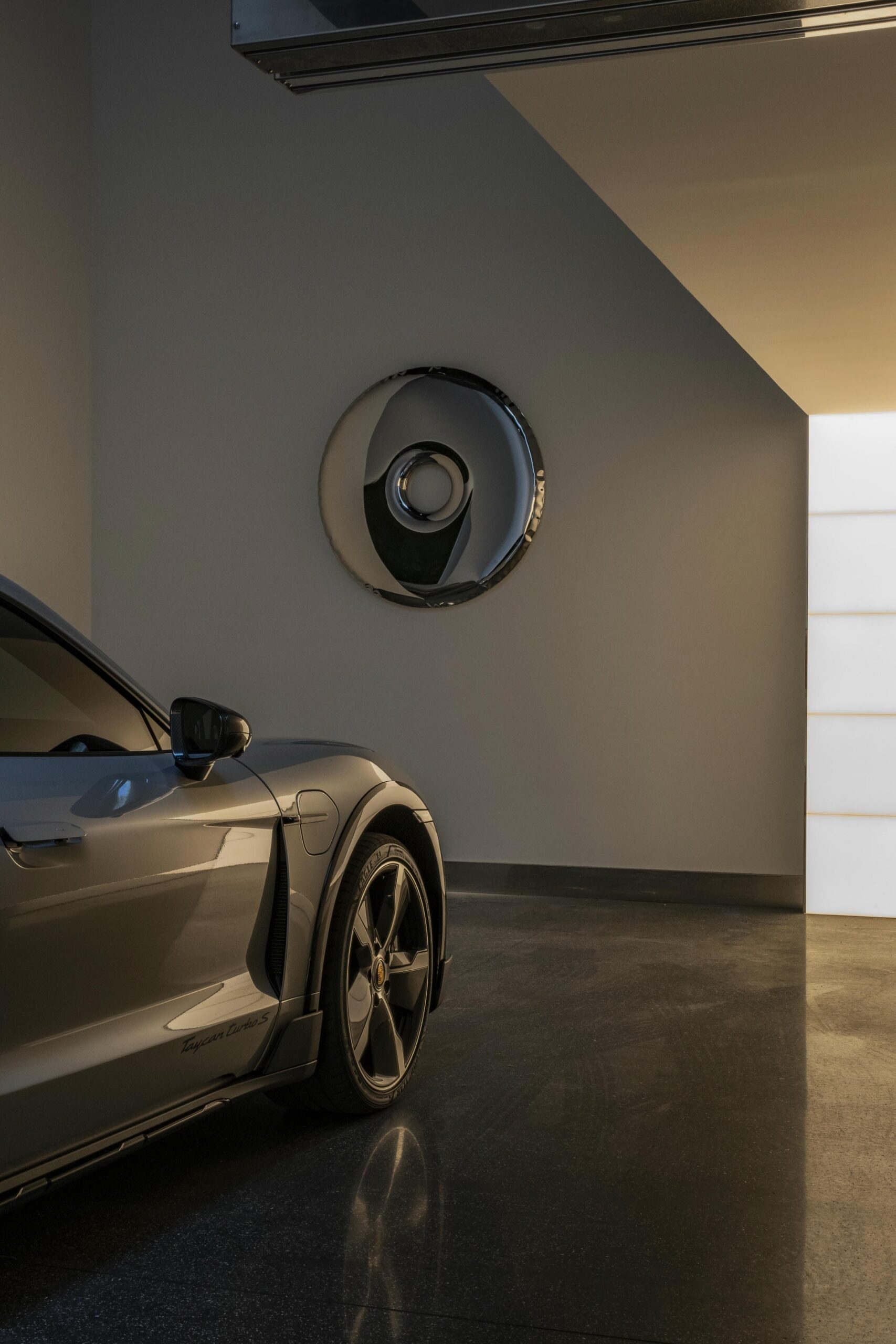
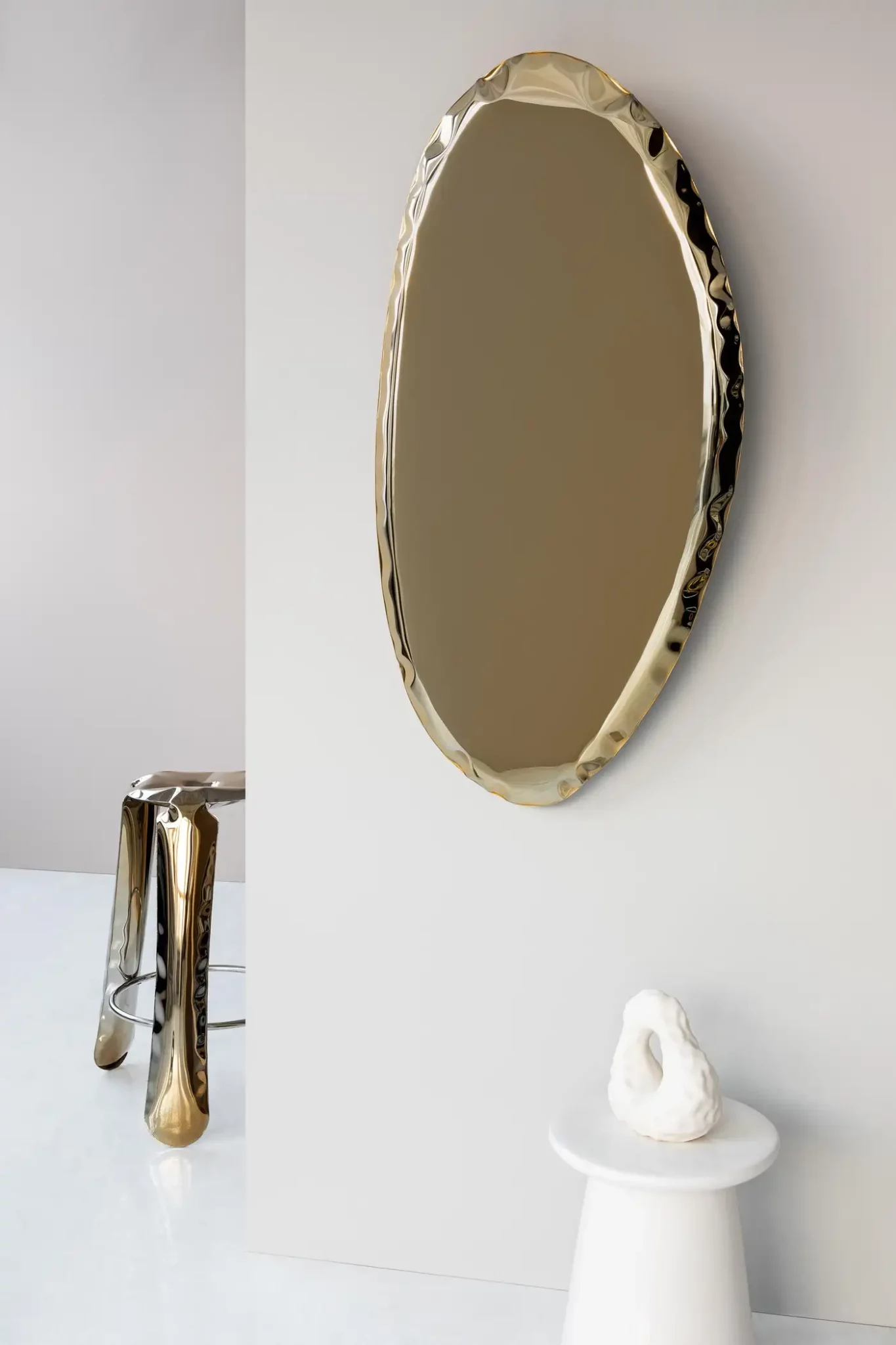
“Design is a point on the matrix of creation that I touch, but it is not set by a definition. For me, it is a prism of interdisciplinarity—art, bionics, and technology.”
SHARE :