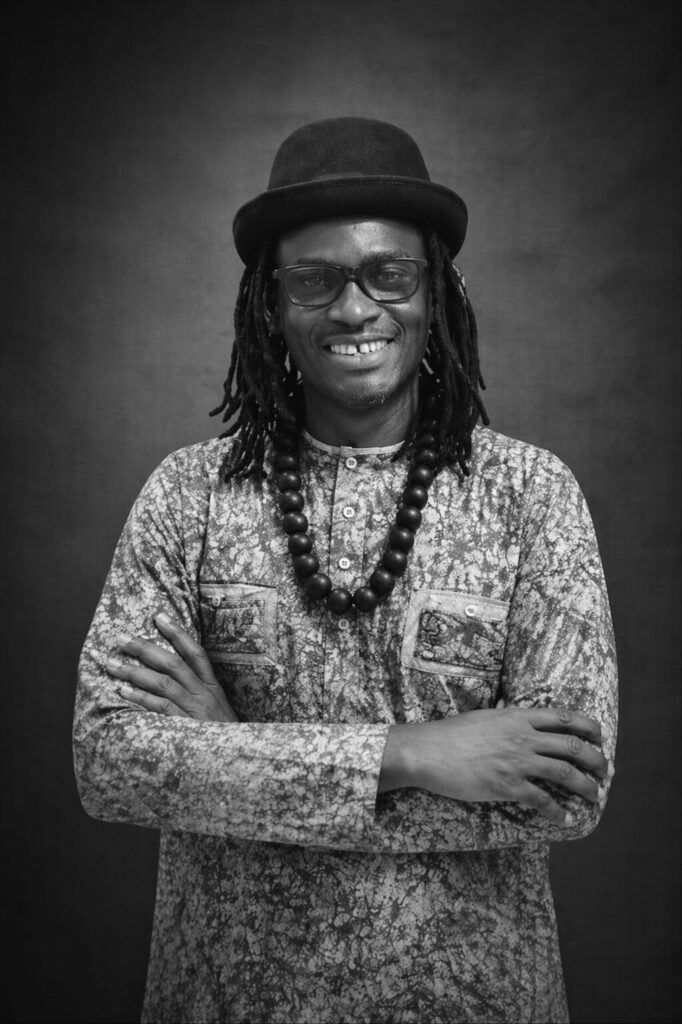
Hamed Ouattara
Hamed Ouattara is a multidisciplinary artist and designer based in Ouagadougou, Burkina Faso. For more than three decades, he has transformed reclaimed industrial oil drums into sculptural furniture and objects that reinterpret the architectural and cultural heritage of the Sahel through a contemporary lens. Working alongside a workshop of skilled artisans, Ouattara combines traditional craftsmanship with material innovation, creating distinctive works defined by intricate textures, rhythmic forms, and a deep connection to place and history.
His work has been exhibited internationally and is held in the permanent collections of several leading museums and cultural institutions. Through a practice rooted in sustainability, craftsmanship, and storytelling, Ouattara continues to expand the dialogue between African artistic traditions and contemporary collectible design, creating works that celebrate material transformation, cultural identity, and enduring craftsmanship.
Interview
I was born in Ouagadougou, Burkina Faso, and that is where my work is rooted. My family belongs to the Toussian people, with deep ties to the western region around Bobo-Dioulasso. I move today between Ouagadougou and Atlanta, but the Sahel remains the soil my practice grows from. Everything I make carries the dust, the light, and the memory of that land.
My first memory is the sound of metal being worked. As a child in Ouagadougou, I was fascinated by the forgerons and artisans who came from Bobo-Dioulasso, men who shaped objects with a precision that felt almost ceremonial. I would stop and watch them for hours. The rhythm of the hammer, the way fire transformed a flat sheet into something alive, the patience and silence of the gesture — that was my first encounter with what I would later understand as art. Before I had any vocabulary for it, I already knew that making something with your hands was a serious thing, almost sacred.
Yes. I have never really known another life. Even as a child, I was drawing, building, and taking things apart to understand how they were made. I went to ENSCI Paris in the early 2000s, and I founded Studio Hamed Ouattara more than thirty years ago. Design has not been a choice in the sense of a career path. It has been the only language I knew how to speak fluently.
What led me to design was a need to answer back. I grew up surrounded by objects that did not belong to us, objects imported from elsewhere, often badly suited to our lives, our climate, our gestures. At the same time, I was surrounded by an extraordinary visual culture — the architecture of Djenné and Bobo-Dioulasso, the textiles, the masks, the rhythm of the markets. I felt very early that something was missing: a contemporary African object that took itself seriously, that did not apologize, that spoke from here rather than imitating elsewhere. Design became my way of building that object.

Soundiata, 2002 © Hamed Ouattara
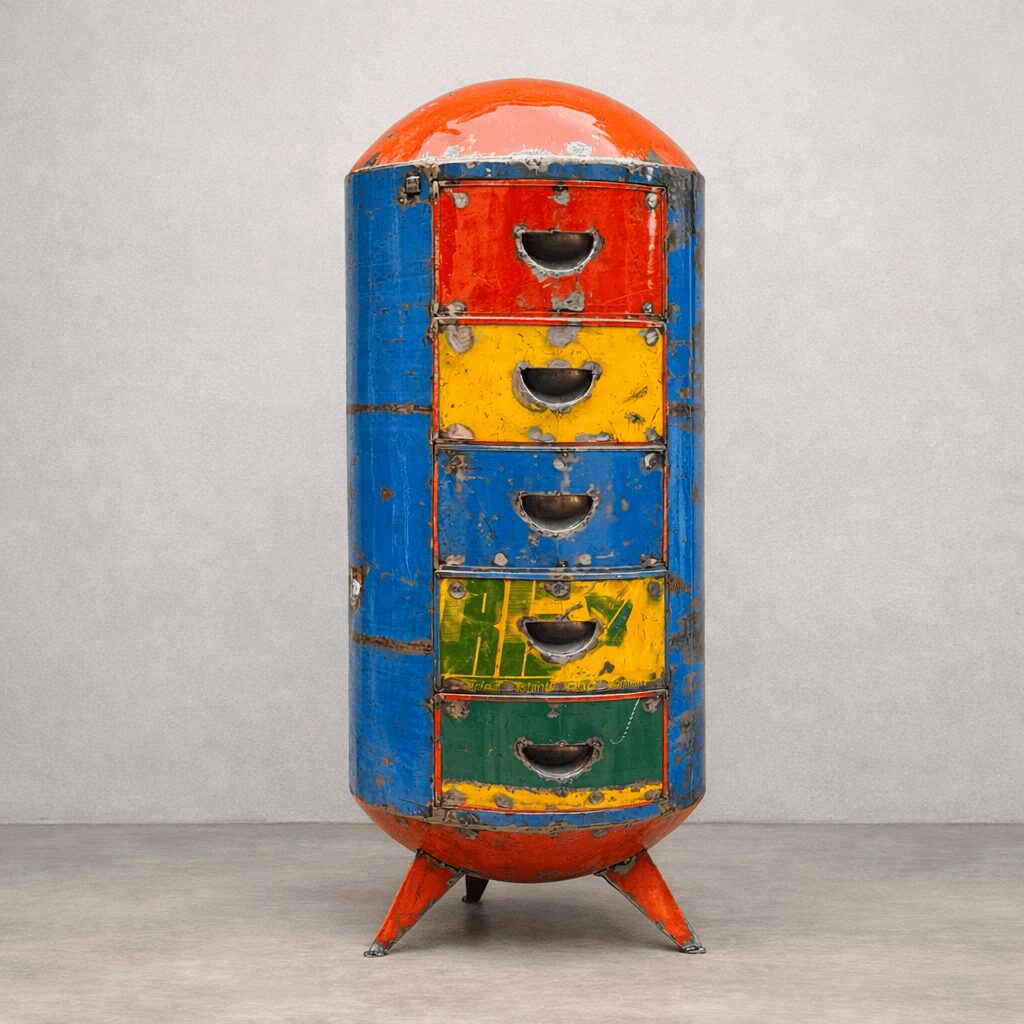
Three forces work together in my process. The material comes first. I work mostly with recovered industrial barrels, and the metal already carries a memory, a curvature, a resistance. It dictates a part of the form before I draw anything. Then there is the architecture of the Sahel, the great earthen mosques and houses of Djenné, Tombouctou, Bobo-Dioulasso. They give me a grammar of proportion, of vertical accents, of mass and lightness. And finally there is the workshop itself, the daily dialogue with the artisans who work with me in Ouagadougou. We function as a compagnonnage, around fifteen people, and a piece is never the work of one hand. Ideas circulate, get tested, get refined in the gesture. The three things — matter, architecture, and human dialogue — are inseparable for me. None of them works alone.
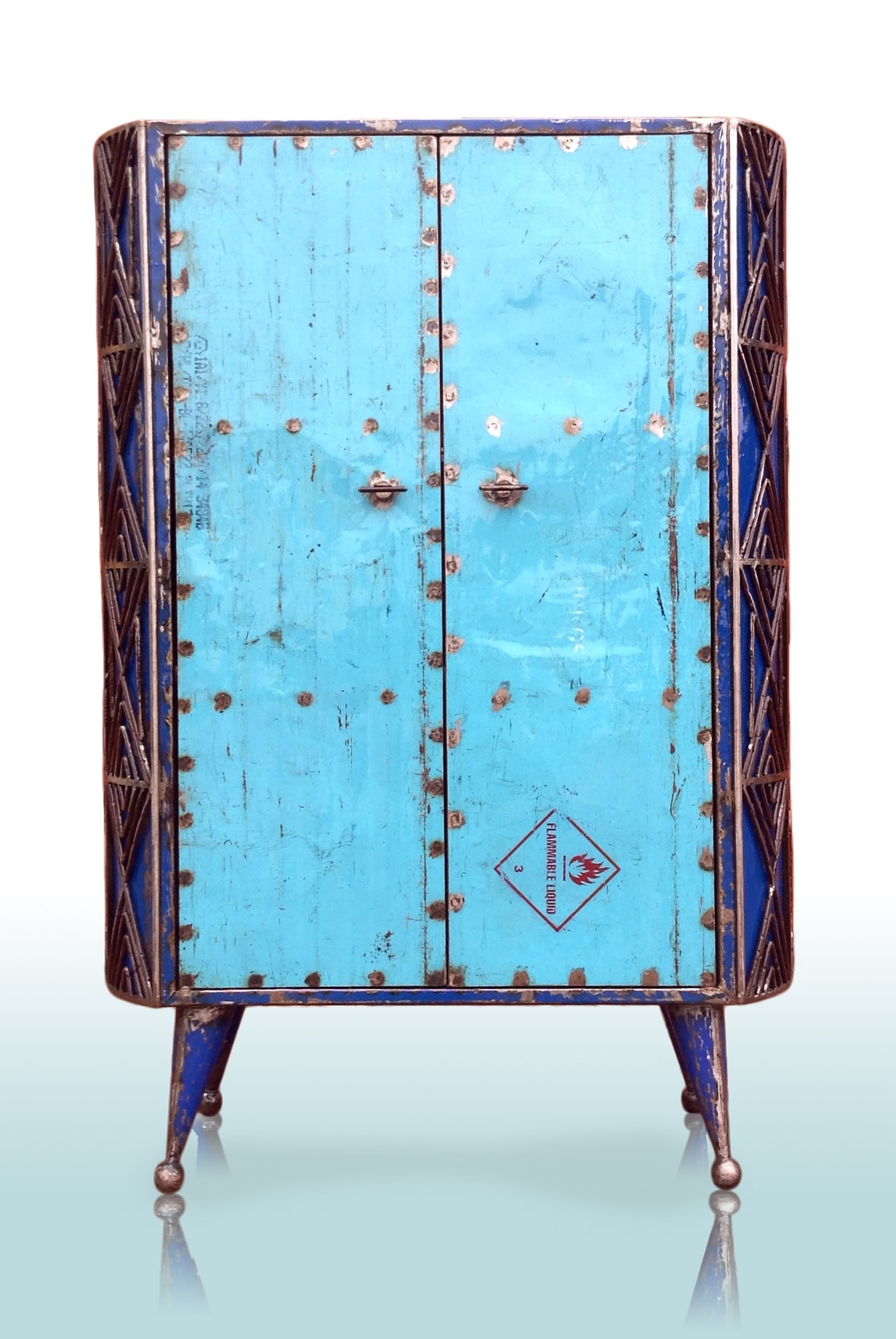
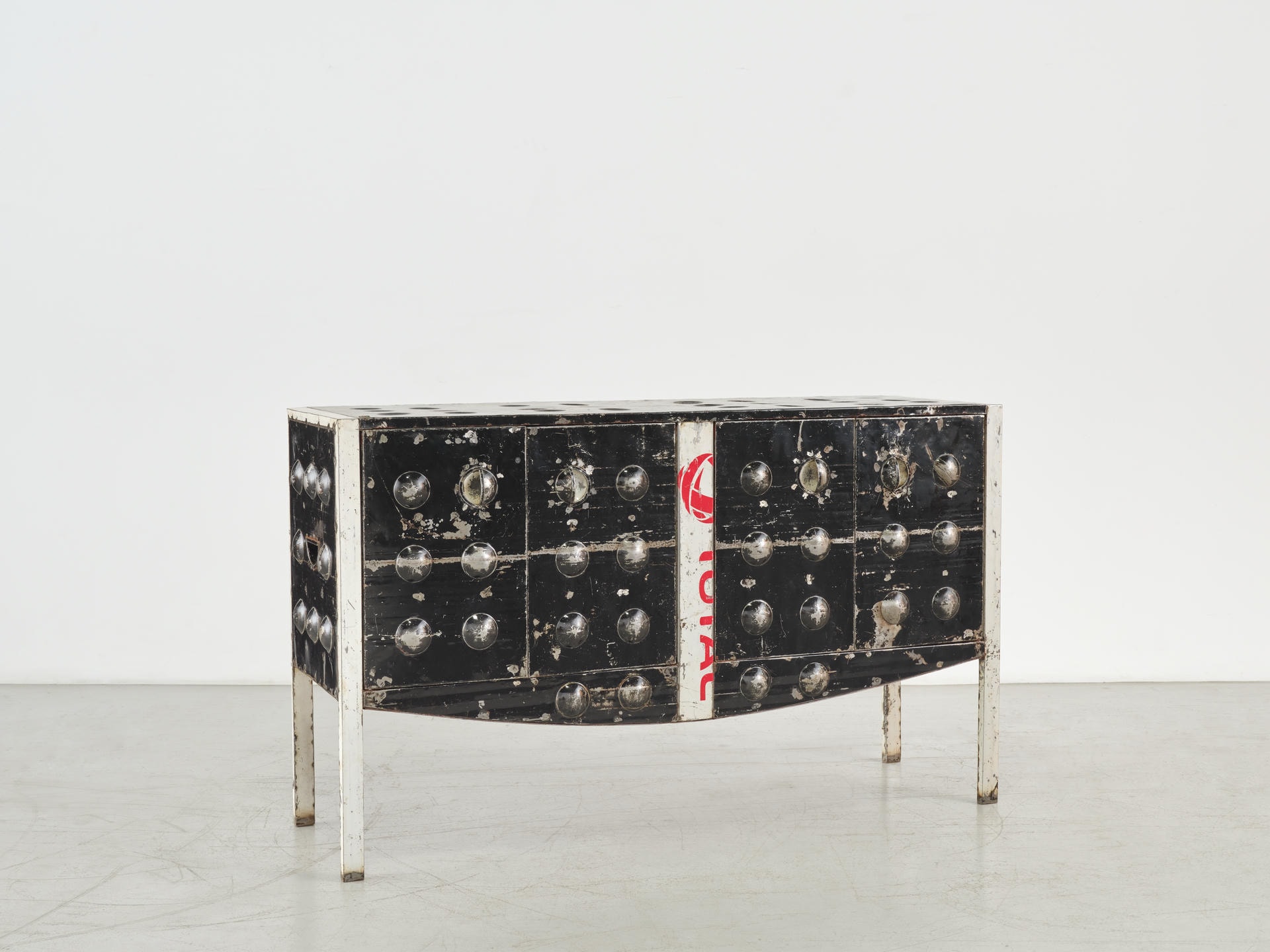
Ouaga, 2015 © Hamed Ouattara
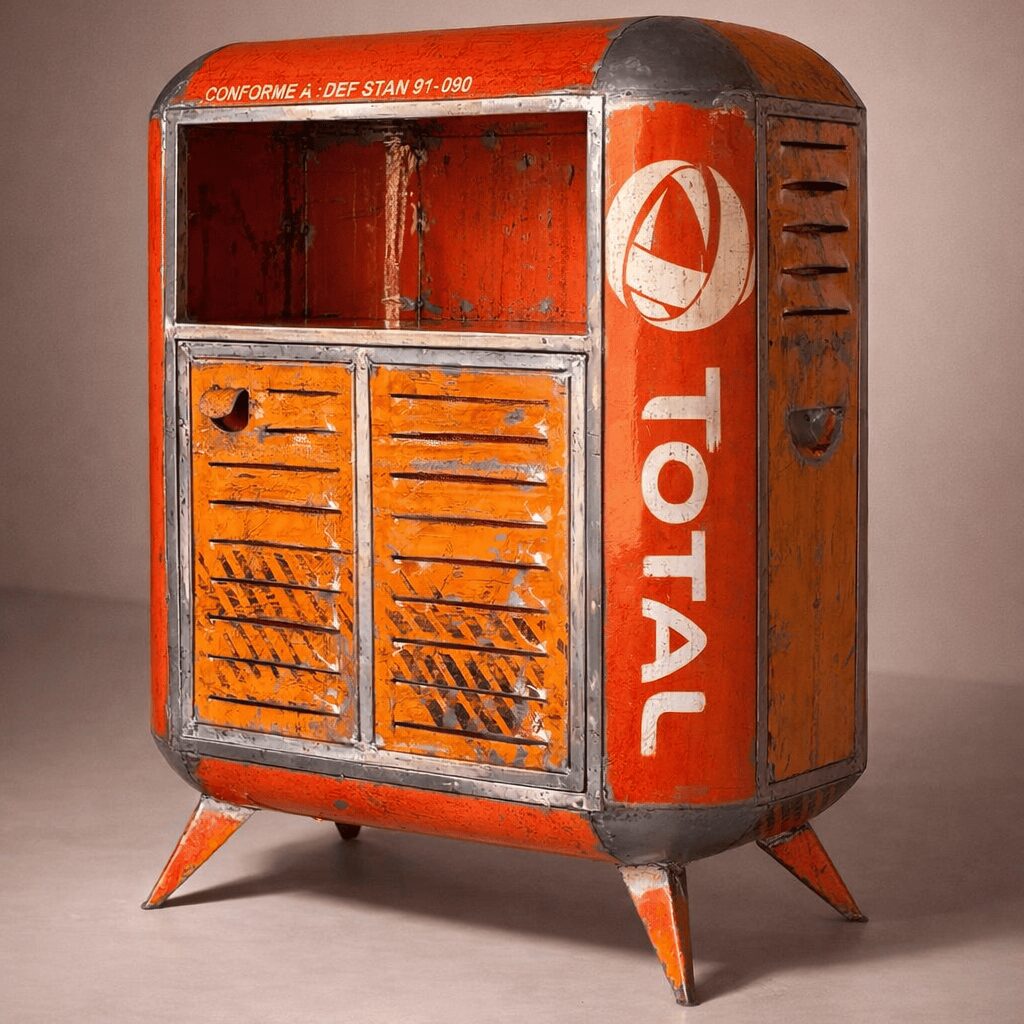
Know where you stand. Before chasing a style, before chasing a market, take the time to understand the place you come from, the materials available to you, the gestures of the people around you. Originality is not invented in isolation, it grows from a deep relationship with a context. Then, respect the workshop. The hand teaches things the eye cannot anticipate. Spend time with artisans, accept that you do not know everything, and let the matter correct you. And finally, be patient. A signature is not built in a season. It is built across decades, through pieces that you sometimes have to abandon and remake. The work has its own time, and that time is longer than any trend.
I am at the studio early. The first part of the day is the workshop itself: walking through each station, looking at what was started the day before, talking with the artisans, adjusting, sometimes redirecting. There is a smell of metal, the sound of the hammers, the heat. I draw a lot directly in the workshop, often on the piece itself. The middle of the day is administrative and institutional, emails, partners, museums, galleries. The end of the day belongs to reading, writing, and reflection. I keep a second life as BRASONKABRA, a more philosophical voice I share publicly, and that part of me asks for quieter hours. A good day is one where the workshop and the writing have both been fed.
The barrel is not a neutral material. It is an industrial object that has traveled, that has carried oil, chemicals, sometimes nothing but air, across continents. By the time it reaches my workshop in Ouagadougou, it already has a history. Working with it is a way of intercepting that trajectory, of refusing to let our environment be defined only by what is imported and discarded. There is a question of material sovereignty: we transform what was sent to us, and we send it back as something else, something that belongs to us. There is also a question of memory, because the metal is marked, scratched, dented. I leave a lot of those traces visible. And there is, very simply, the beauty of metal worked by hand, the way light catches on a surface that has been hammered, folded, patinated. The three dimensions — memory, sovereignty, and beauty — come together in the same gesture.
Every piece is hand-formed. The barrels are cut, flattened, hammered, folded, and assembled by hand, with techniques that come partly from traditional metalwork in West Africa and partly from solutions we have invented together in the workshop over the years. We use very little machinery. The patinas are developed slowly, sometimes over weeks, by controlled oxidation and finishing by hand. The structural vocabulary often refers to Sahelian architecture, with vertical accents, layered planes, and a sense of mass that recalls earthen walls. Each work carries a reference under our own system, SHO followed by category, year, and sequence, because I want the work to be traceable like any serious body of work should be.
I do not feel I belong to a single existing movement, and I have come to think of my practice as part of a contemporary African design that is still writing its own definition. If I had to place it in dialogue with existing categories, I would say it stands at the intersection of sculptural design, post-colonial material practice, and what could be called a design of refondation: a design that rebuilds, on our own terms, the relationship between matter, heritage, and contemporary life. The label matters less to me than the conversation.
My first influences were anonymous: the forgerons and builders of Sahelian architecture, whose names history did not record but whose intelligence is everywhere in the region. Among named designers, I have a deep respect for Charlotte Perriand for her sense of structure and her dialogue with non-Western cultures, for Pierre Jeanneret for his rigor and his Indian period, and for Jean Prouvé for his honesty with materials. I also feel close to the spirit of African builders and sculptors who were never called designers but who held that intelligence entirely.
I follow with great interest the work of my peers represented by Friedman Benda and of other galleries working at the edge between art and design. I am particularly attentive to contemporary African designers and to the new generation emerging from Lagos, Dakar, Abidjan, Casablanca, and Ouagadougou. The conversation has shifted in the last decade, and there is now a real chorus rather than a few isolated voices.
I am inspired by writers and thinkers as much as by visual artists. The novels of Yambo Ouologuem and Ahmadou Kourouma shaped my sense of African voice. In contemporary visual art, the work of El Anatsui has been a deep reference for what can be done with the discarded and the everyday. I also draw a lot from cinema, particularly the films of Souleymane Cissé and Idrissa Ouedraogo, for their sense of pace and silence.

Indigola, 2016 © Hamed Ouattara
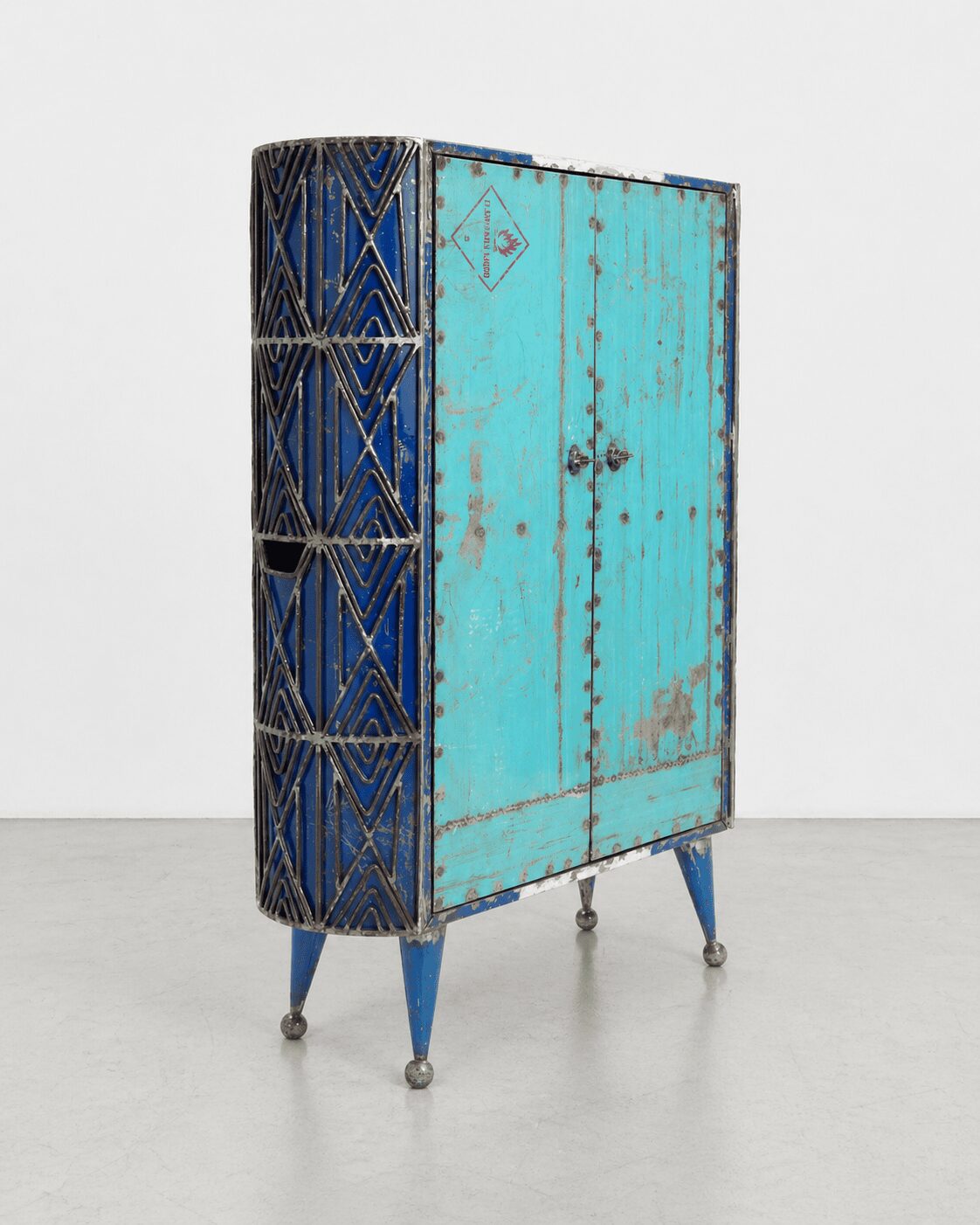
Memory made standing.
Only this: my work is not a nostalgic gesture. I do not look back toward Africa, I look from it, forward. The Sahel is not a memory I am preserving, it is a position from which I think and build. What I am trying to do, with my workshop and with each piece, is to make that position visible and dignified inside the contemporary conversation. The rest follows.
“I do not look back toward Africa, I look from it, forward. The Sahel is not a memory I am preserving, it is a position from which I think and build.”
The Questions
(The Proust Questionnaire is a set of questions answered by the French writer Marcel Proust.
Other historical figures who have answered confession albums are Oscar Wilde,
Karl Marx, Arthur Conan Doyle, Stéphane Mallarmé, Paul Cézanne…)
A long afternoon in the workshop, with the artisans, when a piece finally finds its form.
Losing transmission. That the gesture dies with us.
Impatience.
Cynicism.
My partner Hahoua, for her steadiness over twenty-six years.
Books.
Concentrated, with Homo Faber on the horizon.
Politeness without substance.
Loyalty to his word.
Quiet strength.

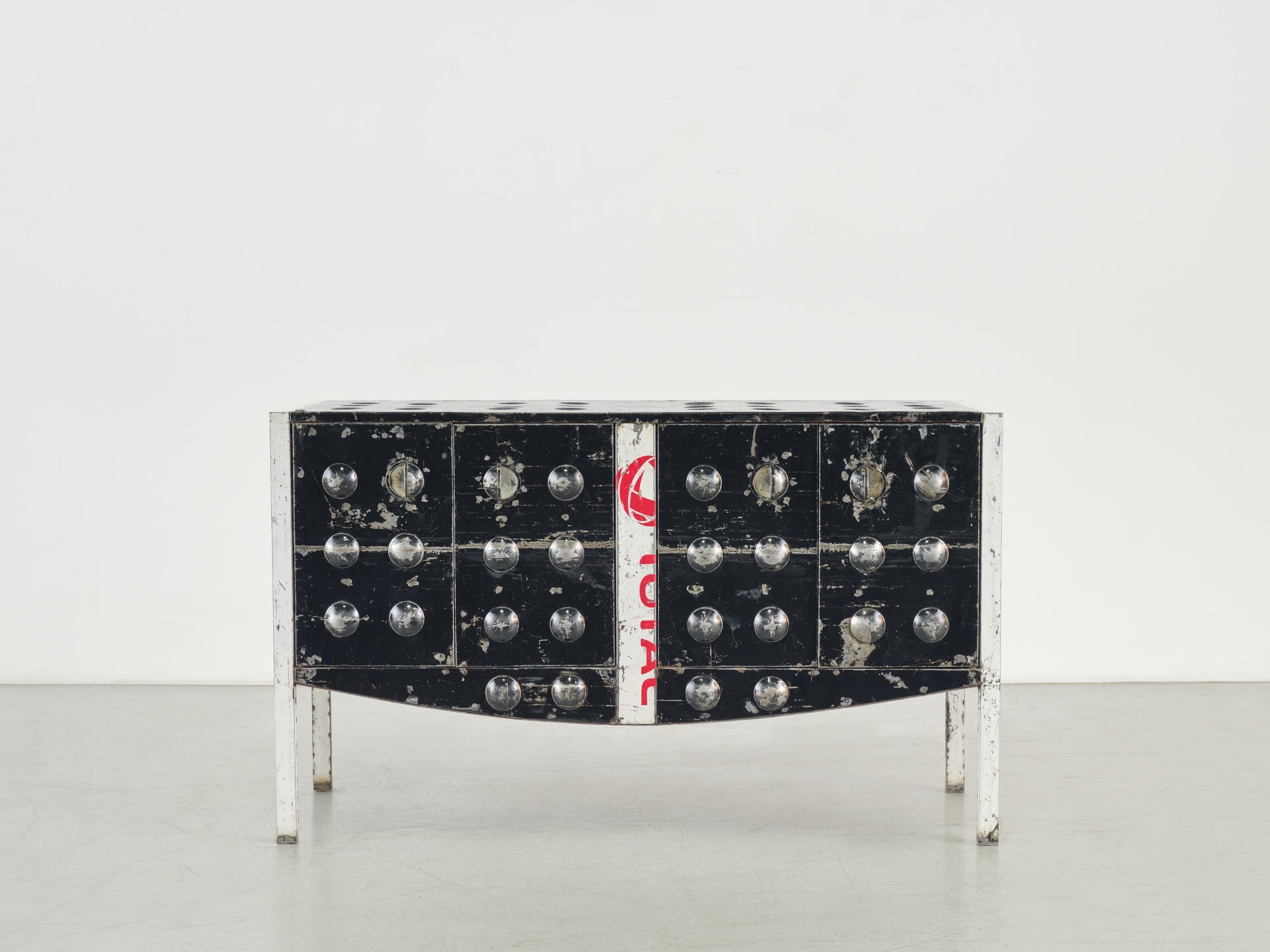
Djeli (Tradition Teller), 2022. Courtesy Friedman Benda and Hamed Ouattara
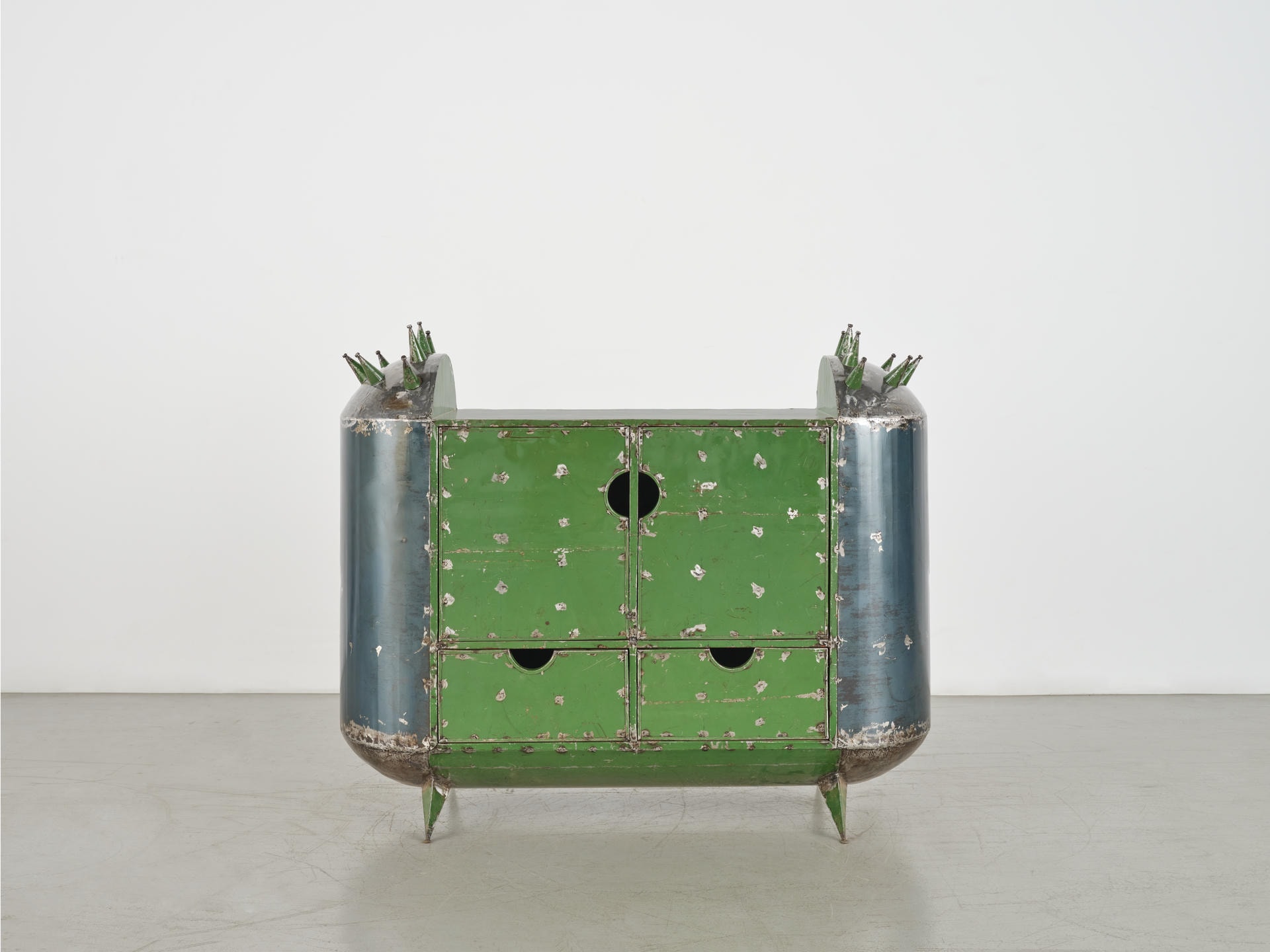
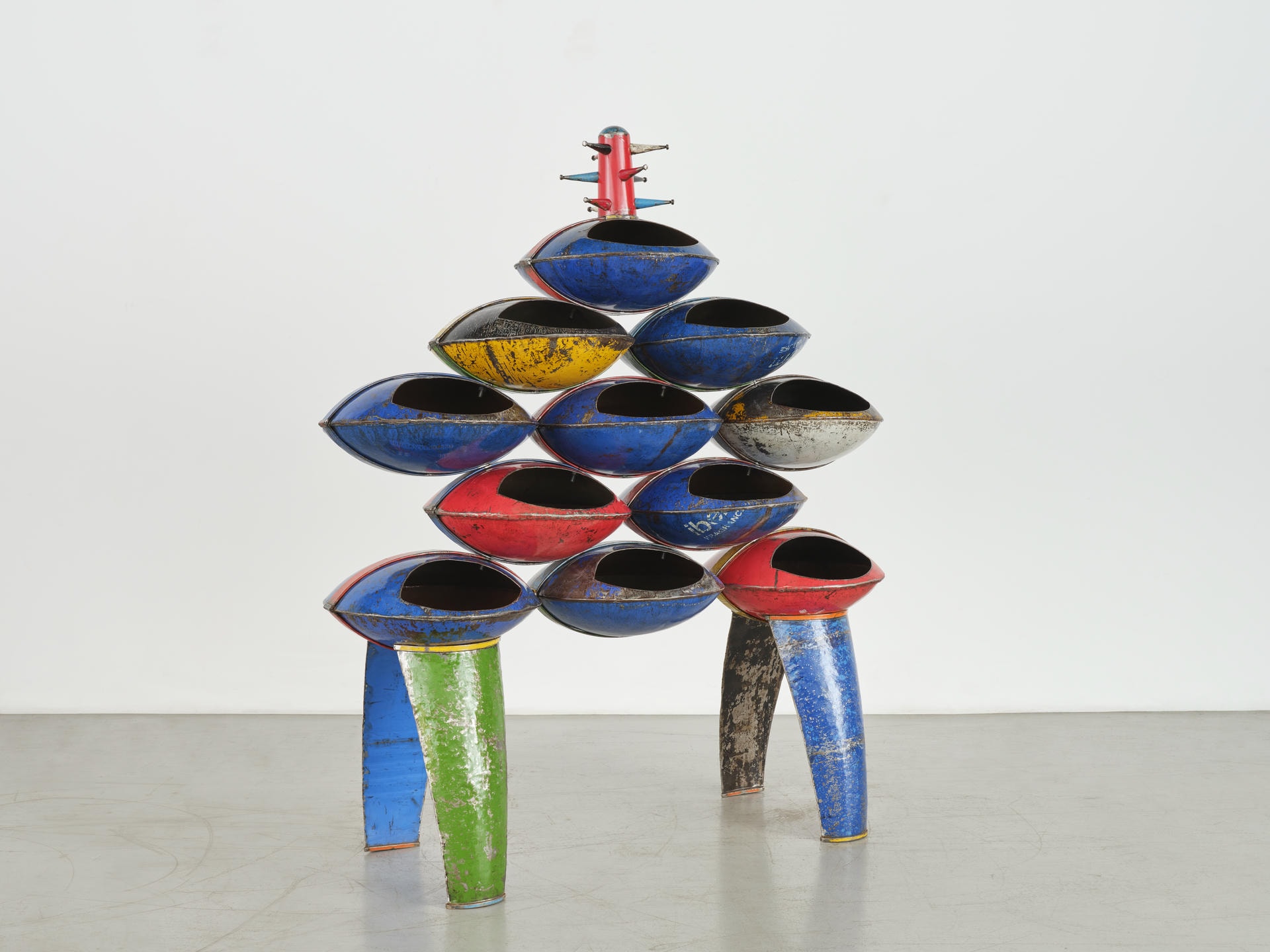
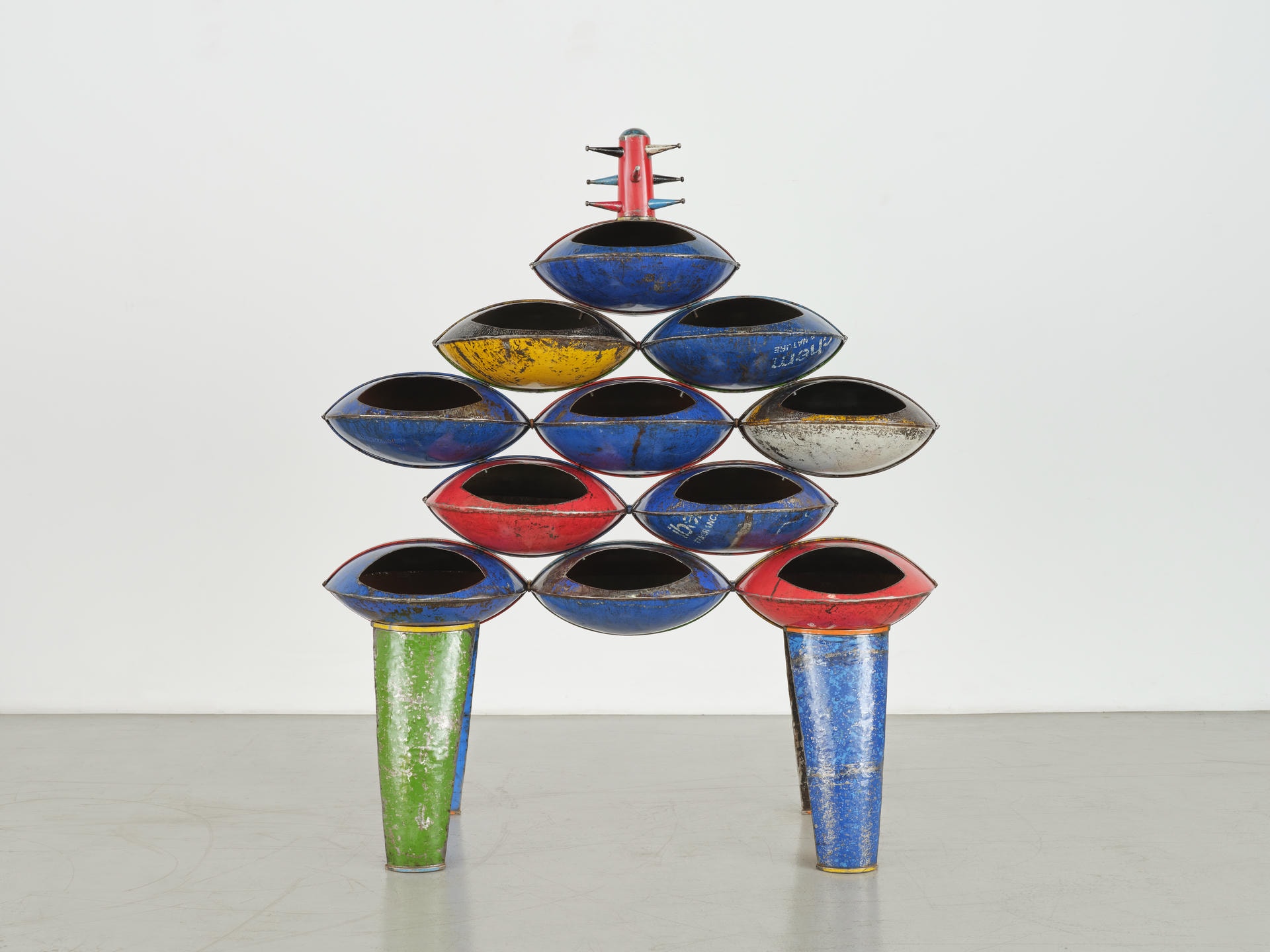
Dioulassoba (Dioula's Town), 2022. Courtesy Friedman Benda and Hamed Ouattara
“Refondation.” “The matter speaks.”
To sing.
To sleep less and read more.
Building a workshop in Ouagadougou that gives dignity to a craft.
A baobab.
Between Ouagadougou and a quiet place by the sea.
A photograph of my great-grandfather, the original BRASONKABRA.
To lose the freedom to create.
Drawing directly on a piece in progress.
A stubborn faithfulness to my origin.
Honesty without complacency.
Yambo Ouologuem, Ahmadou Kourouma, Aimé Césaire, Édouard Glissant.
The griot, in any tale that names him.
Thomas Sankara.
The artisans of my workshop.
Hahoua. Brasonkabra.
Contempt disguised as expertise.
Not having written down everything my elders told me.
Standing, with a tool in hand.
Build with what is here, for those who are coming.
Balan (Balafon), 2022. Courtesy Friedman Benda and Hamed Ouattara
“Originality is not invented in isolation, it grows from a deep relationship with a context.”
Soundiata, 2002 © Hamed Ouattara 
Indigola, 2016 © Hamed Ouattara Dioulassoba (Dioula's Town), 2022. Courtesy Friedman Benda and Hamed Ouattara Balan (Balafon), 2022. Courtesy Friedman Benda and Hamed Ouattara
SHARE :