Gildas Berthelot
Interview
I was born in Sainte-Geneviève-des-Bois in the suburbs of Paris.
When I was a child, we went quite frequently as a family to the Louvre Museum, the Museum of Decorative Arts, or even the Rodin Museum. Additionally, my father was a cabinetmaker. He made copies of period furniture and restored antique ones. The question of beauty imposed itself on me at a very young age.
Not at all. Like many artists, I used a second job to pay my rent. When I was a student at the Beaux-Arts in Paris, alongside my studies, I worked on my own as a cabinetmaker-restorer of old furniture, a trade that I had learned before coming to the Beaux-Arts in Paris. Once in Montreal, I worked in different fields: scenography as a carpenter or sculptor, artistic director for video clips. Lastly, the last job I had outside of my artistic practice was teaching in a school of cabinetmaking.
I learned the profession of cabinetmaking at a young age in my father’s workshop. Later on, I continued my studies in sculpture at the School of Fine Arts in Paris. I graduated in 1989. A few years later, and almost naturally, I undertook a synthesis between cabinetmaking and sculpture. In fact, I don’t feel like a designer; I have neither the spirit nor the skill.
It all starts with drawing. I have always loved drawing, and I have totally integrated it into my working method. Craftsmanship requires significant technical means: sharp tools, machines, plans, templates, etc. Drawing involves another field of expertise. Drawing is, first of all, an impulse and is as much a matter of introspection as of liberation. When my intentions become clearer, I make a scale model.
Between the drawing and the model, I like the notion of “passage”, that is to say, this moment when the premises of an idea, or rather a kind of mental image, become sketches made on the corner of a table with an HB pencil and an eraser. This image becomes more real when I move on to the model in plasticine, styrofoam, or wood. I am then in the field of sculpture and therefore of reality. It’s yet another passage during the drawing, and all the technical problems appear: stability, functionality, ergonomics…
I have a very simple life. I usually get up pretty early, around 6:00 a.m. Sometimes I start my day with an hour or two of drawing. Around 8:30 am, I go to my studio that is connected to my home. Sometimes during the day, I stop working in my workshop to take care of the management part: answering emails, accounting, etc. I work all day until around 6:00 p.m.
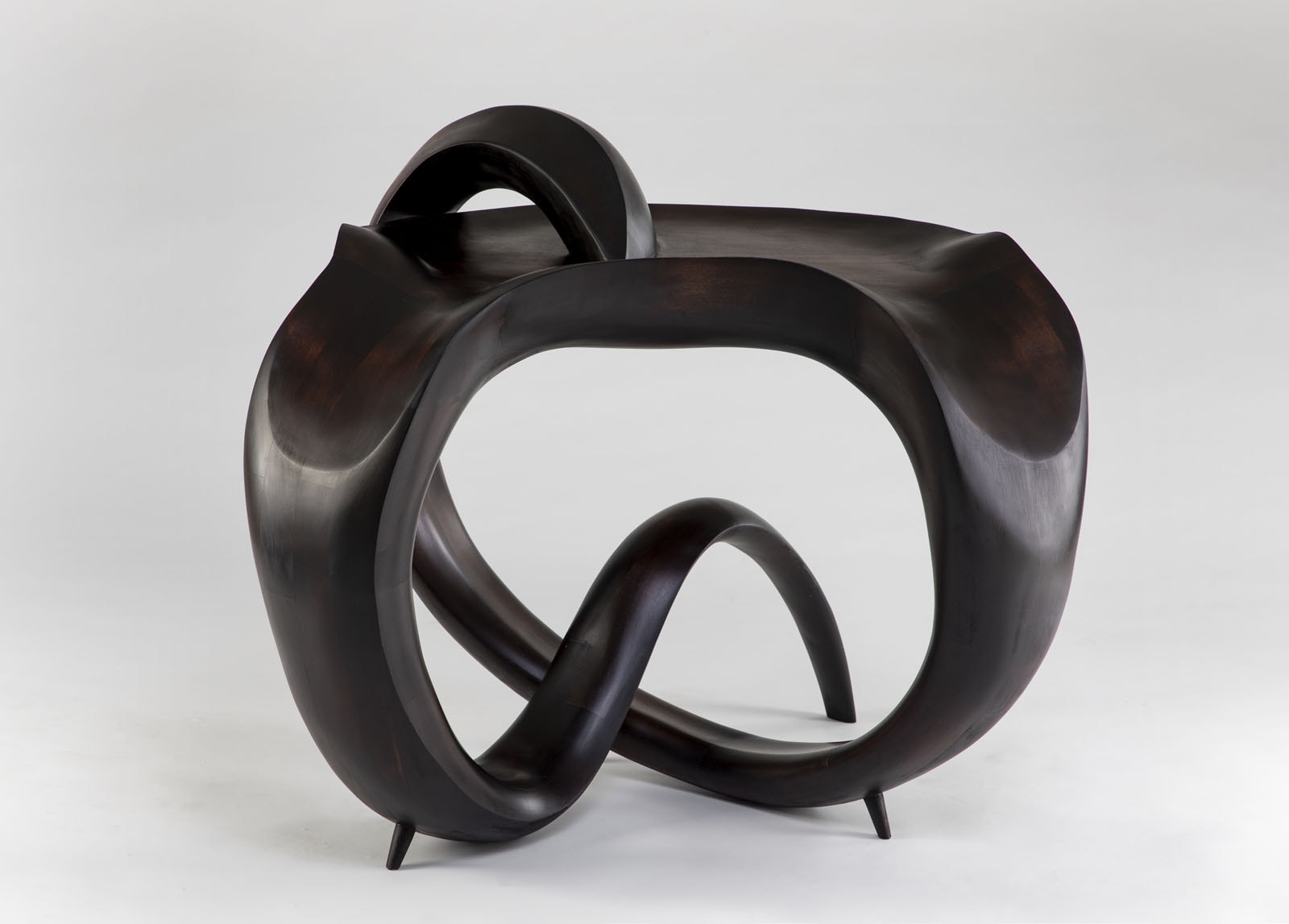
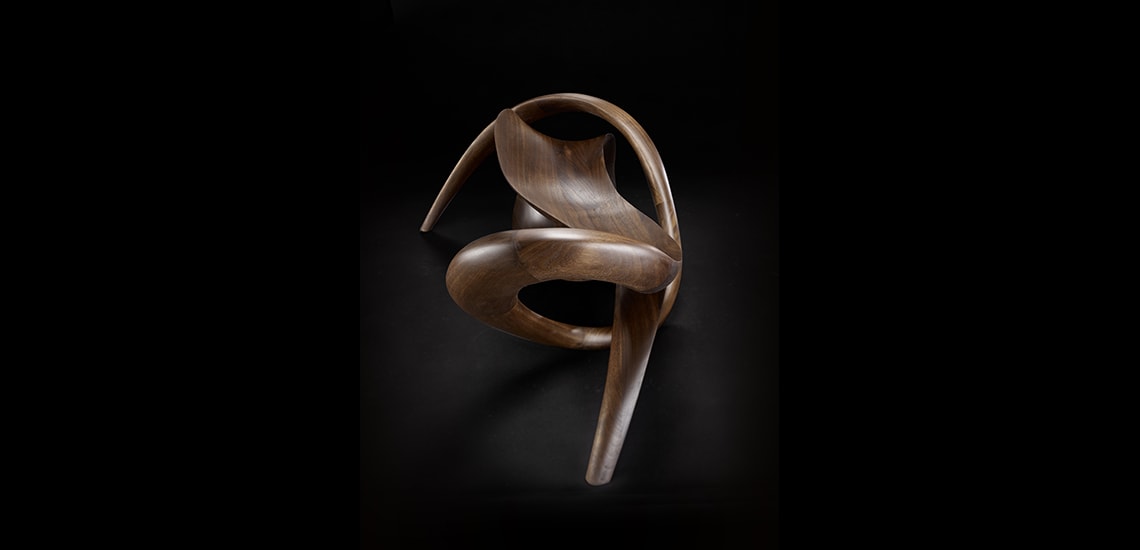
During my career, I have used all kinds of materials, but it is with wood that I have the most intimate relationship. Moreover, it is a material that I know well. I learned the trade of cabinetmaking at a young age in the workshop of my father, who, as a cabinetmaker, passed on his passion and knowledge to me. Wood, by its constitution, allows a considerable range of colors and aspects. It can be tinted, varnished, waxed, sanded, or left raw. It can be matte or shiny. Wood allowed me, I believe, to realize myself as a sculptor.
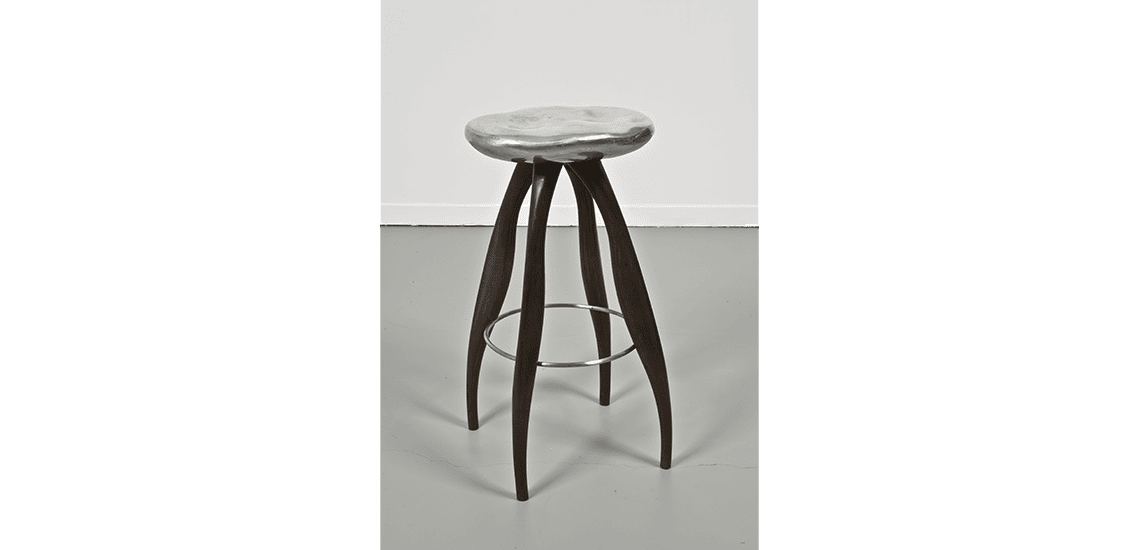
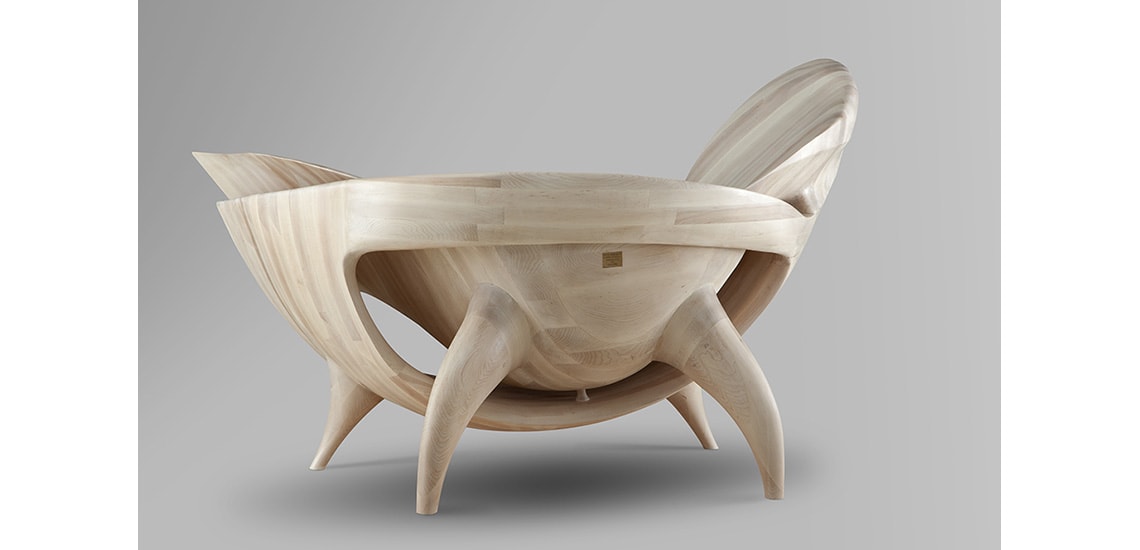
All my furniture is made of solid wood, usually maple or sometimes black walnut. The boards are rolled to obtain a block of wood that I carve. The blocks are assembled to each other by means of tenons and mortises. Subsequently, each block is scraped and sanded. These last two steps are fundamental to obtaining a fluid and homogeneous shape. The piece of furniture is then oiled.
I would advise a young artist to keep an open mind, to always question their work, to avoid easy paths because they don’t go anywhere. Finally, I would advise him to avoid disillusioned and cynical people who can try to drag them down.
I do not see myself in any movement, but I would have liked to live at the time of Art Nouveau.
The sculptors have influenced me at least as much as the designers, and I feel much more like a sculptor than a designer. English sculptors were decisive for me. I’m thinking of Tony Cragg, Richard Deacon, and Anish Kapoor. As for the designers, Ron Arad and Zaha Hadid influenced me a lot.
I really like Starck, the Campana brothers, the Bouroulec brothers, and the designers of the Memphis movement: Andrea Branzi, Ettore Sottsass, and Michele De Lucchi. And also Joseph Walsh.
Three words: fluidity, strange, carnal.
It was very nice to answer these questions. Thank you.
“Wood allowed me, I believe, to realize myself as a sculptor.”
The Questions
(The Proust Questionnaire is a set of questions answered by the French writer Marcel Proust.
Other historical figures who have answered confession albums are Oscar Wilde,
Karl Marx, Arthur Conan Doyle, Stéphane Mallarmé, Paul Cézanne…)
To live by the sea.
To be poor.
Procrastination (I got a lot better).
Meanness.
Jean Nouvelle. Every time I go to Paris, I go through the Institut du Monde Arabe.
I am not extravagant except sometimes when I design furniture.
I am calm and serene.
Prudence.
Resilience.
Resilience and punctuality.
“Hello, how are you doing?”
To know how to play the piano.
My lack of confidence (I have made a lot of progress).
Doing a job that I love.
I haven’t the slightest idea!
By the sea.
My tireless imagination.
Doing a job you don’t like and waiting for retirement.
Waking up with an idea of shape, getting up and drawing it.
My liking for solitude.
Their presence.
Chateaubrillant. Paul Auster. Houellebecq. Primo Levi.
Zorro (but it was a long time ago).
Blaise Cendrars. Éric Tabarly.
I don’t have any.
I do not understand the question.
Melting snow (in Quebec, it lasts about two to three weeks).
I have no regrets (I’m like Edith Piaf).
I would like to die at 120 looking at the sea and drinking a glass of Muscadet.
I do not have a motto.
“Between the drawing and the model, I like the notion of passage.”
SHARE :