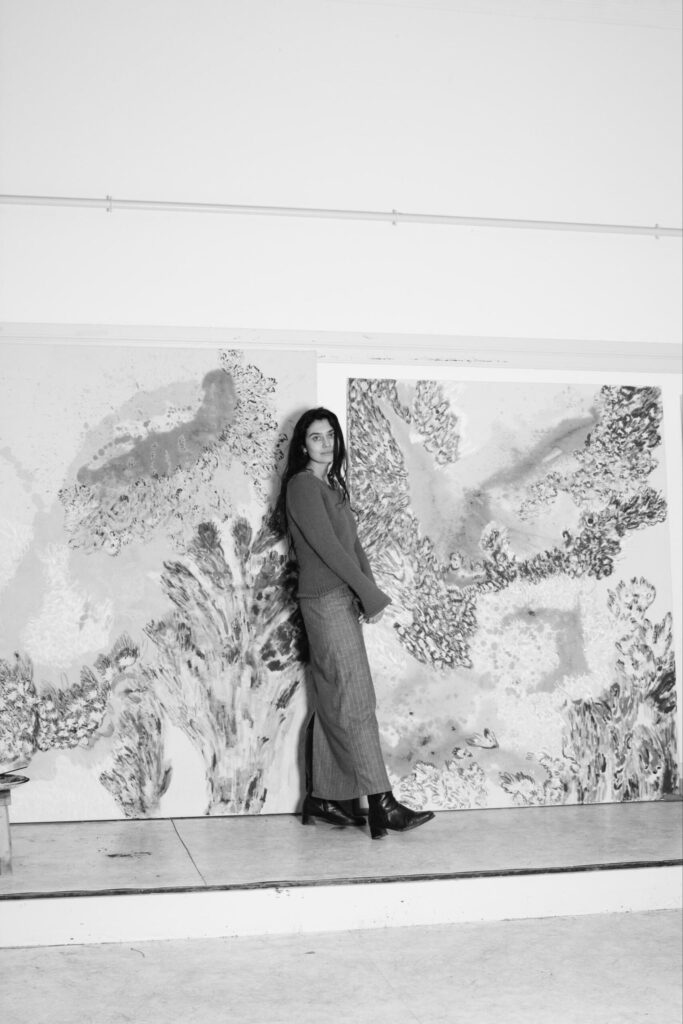
Eline Martherus
Interview
I was born in Son & Breugel, a small village in the South of the Netherlands.
One of my earliest and most vivid memories is seeing Stomp—the performance group known for transforming everyday objects into instruments and creating immersive installation-like experiences. The simplicity, paired with powerful rhythm and raw energy, felt like pure magic to me. That duality—playful and profound—stayed with me ever since.
In my own way, yes. I have a background in (Textile) design, and before I started painting spent many years making natural pigments and weaving on my loom.
For me, design is a visual language I’ve taught myself—an intuitive way to reflect on the world as I perceive it. It allows me to create an intimate dialogue, both with myself and with the viewer, inviting resonance and layered interpretation. I see it as a reflection on my own reflection—like the paradox of eating your own hand, it’s self-referential, raw, and revealing.
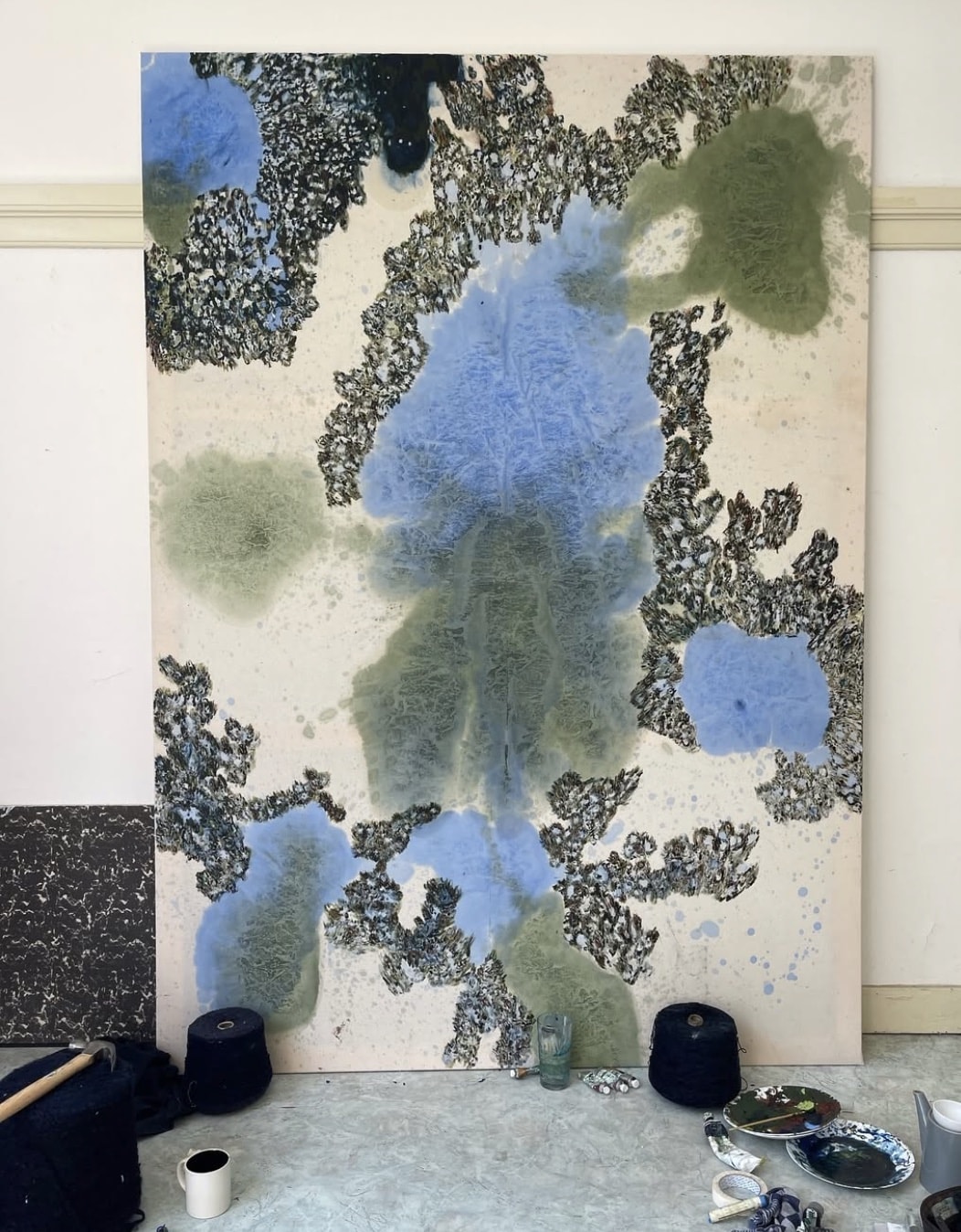
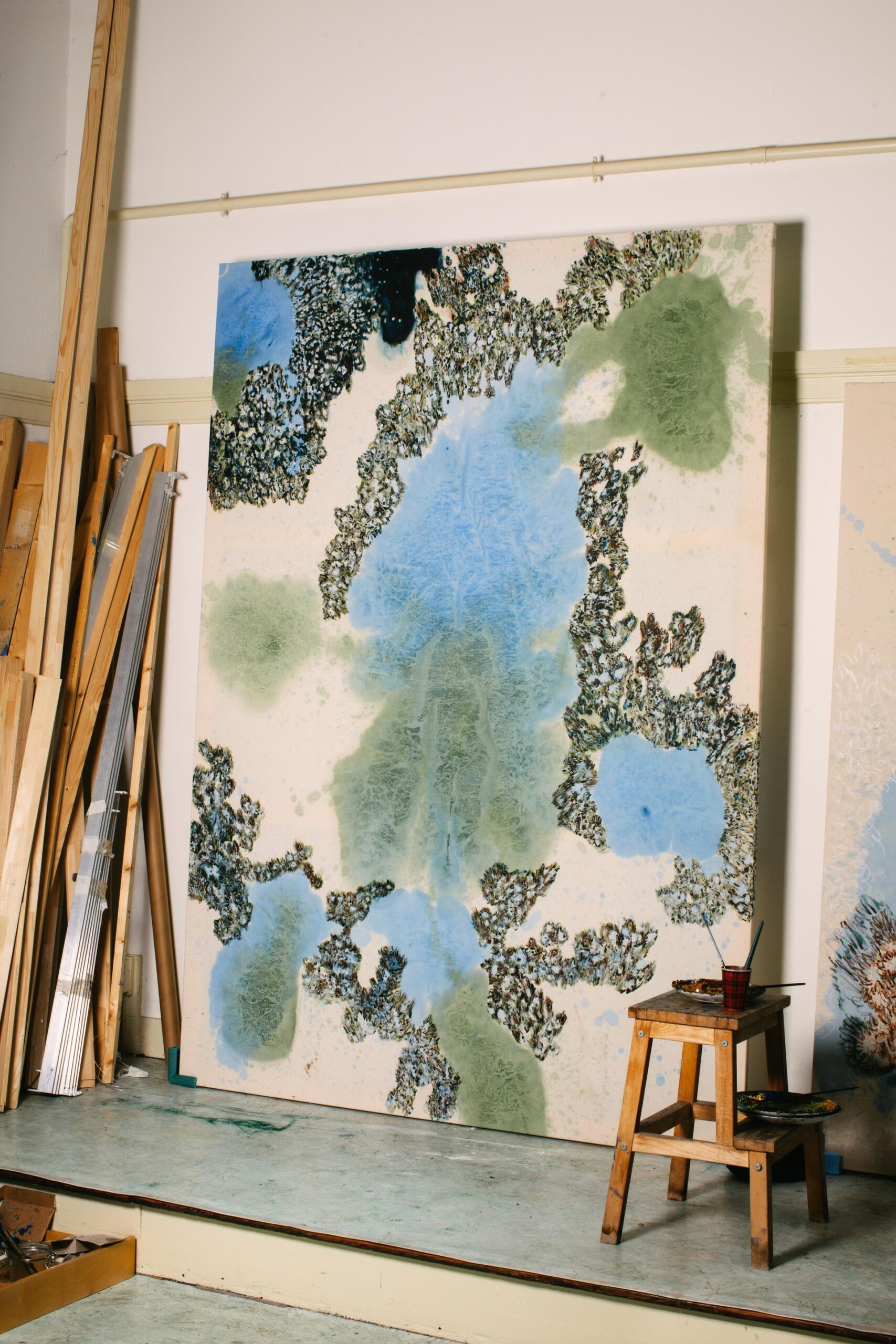
My creative process is intuitive and rooted in nature’s constant motion. I treat the canvas like a textile, letting natural pigments such as indigo flow and settle organically. With a background in textile innovation, I approach painting like chemistry—experimenting with recipes and materials to discover new visual textures. Often working from a larger “mother cloth,” I cut my compositions into fragments, echoing life’s cycles of transformation. Movement, tension, and stillness coexist in my work, inviting reflection within complexity.
There is no such thing as a typical day in my practice. Just like nature, my mind is in constant motion, and I follow its rhythm rather than a fixed schedule. I never know how I’ll wake up or where my creative energy will lead me that day. When I enter a phase of creation, I often paint for 12-hour stretches over several days, fully immersed in my own world. During those times, I exist in a kind of capsule—completely devoted to the work. In general, I spend a lot of time in my studio because it needs to breathe the work and I need to co-exist, together. I need to understand it from many different perspectives.
I see my working method as that of an alchemist—constantly creating recipes where each element influences the final outcome in unexpected ways. This process holds a certain kind of magic for me. I’m drawn to the transformation of materials and the dialogue they create with time and environment. Working with a clear intention from the start is essential; it gives structure to the otherwise fluid and intuitive process. It’s this balance between control and surrender that defines my relationship with materials.
The technical approach in my work has evolved over time. In the early years, I worked almost exclusively with indigo pigment—its ability to shift from grey to purple through dilution revealed a vast emotional spectrum within a single color, which fascinated me for years. Over the past three years, my palette has expanded to include more purples and greens—a dialogue, for me, between mystery and serenity. I currently work on unprimed Belgian linen, which allows the pigments to soak in like ink stains, creating organic flows and unexpected textures. This unmediated interaction between material and medium is central to my process.

Screenshot
My advice to beginning artists is this: if your desire to create comes from the heart and not the ego, it will naturally find its way. Stay close to your practice, spend time with it, breathe with it. Let it grow slowly, so you not only shape the work but also come to understand the process that shapes you.
I believe the interpretation of my work ultimately lies with the viewer, but if I had to place it within a design movement, I would describe it as contemporary abstract. My work often evokes emotion and, at times, invites interaction through installation, aligning it with the sensibilities of this movement.
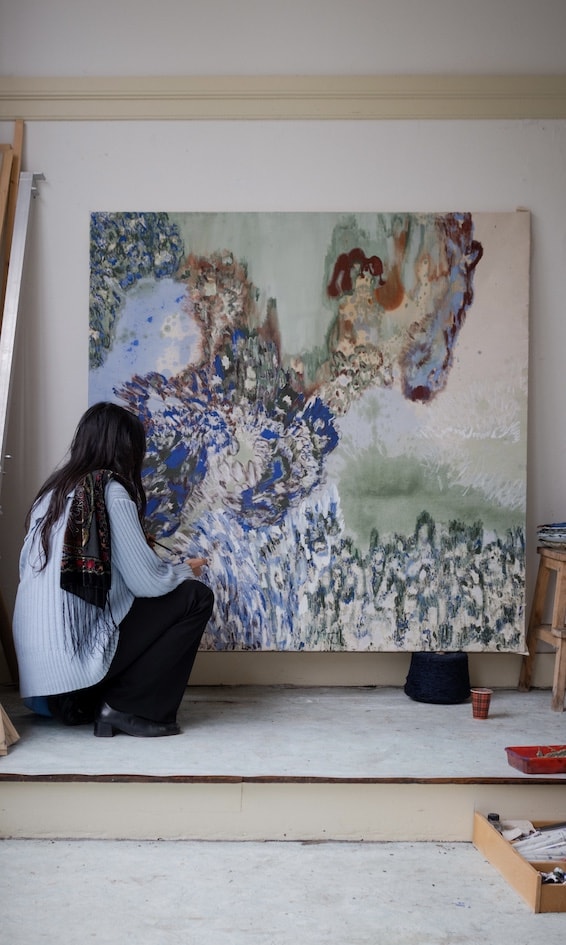
Painters such as Helen Frankenthaler, Per Kirkeby, and Matisse, poets, and performance art, which include water and sound.
A Dutch collective called Studio Drift.
Studio Drift, Dries Verhoeven, Stomp.
The blueprint of humankind.
“If your desire to create comes from the heart and not the ego, it will naturally find its way. Stay close to your practice, spend time with it, breathe with it.”
The Questions
(The Proust Questionnaire is a set of questions answered by the French writer Marcel Proust.
Other historical figures who have answered confession albums are Oscar Wilde,
Karl Marx, Arthur Conan Doyle, Stéphane Mallarmé, Paul Cézanne…)
Painting while floating on the water with nothing inside but water.
Losing my fascination for play.
The fastness of emotion can be too fast to capture at times.
Seeing problems instead of possibilities.
My mom for her teachings on unconditional love. The gift of giving without expecting.
I move around a lot – travel and residencies. To explore my handwriting on the canvas of the world.
Grateful, inspired, chaotic, and entrepreneurial.
Control.
Implicable with his words.
Softness in shelter.

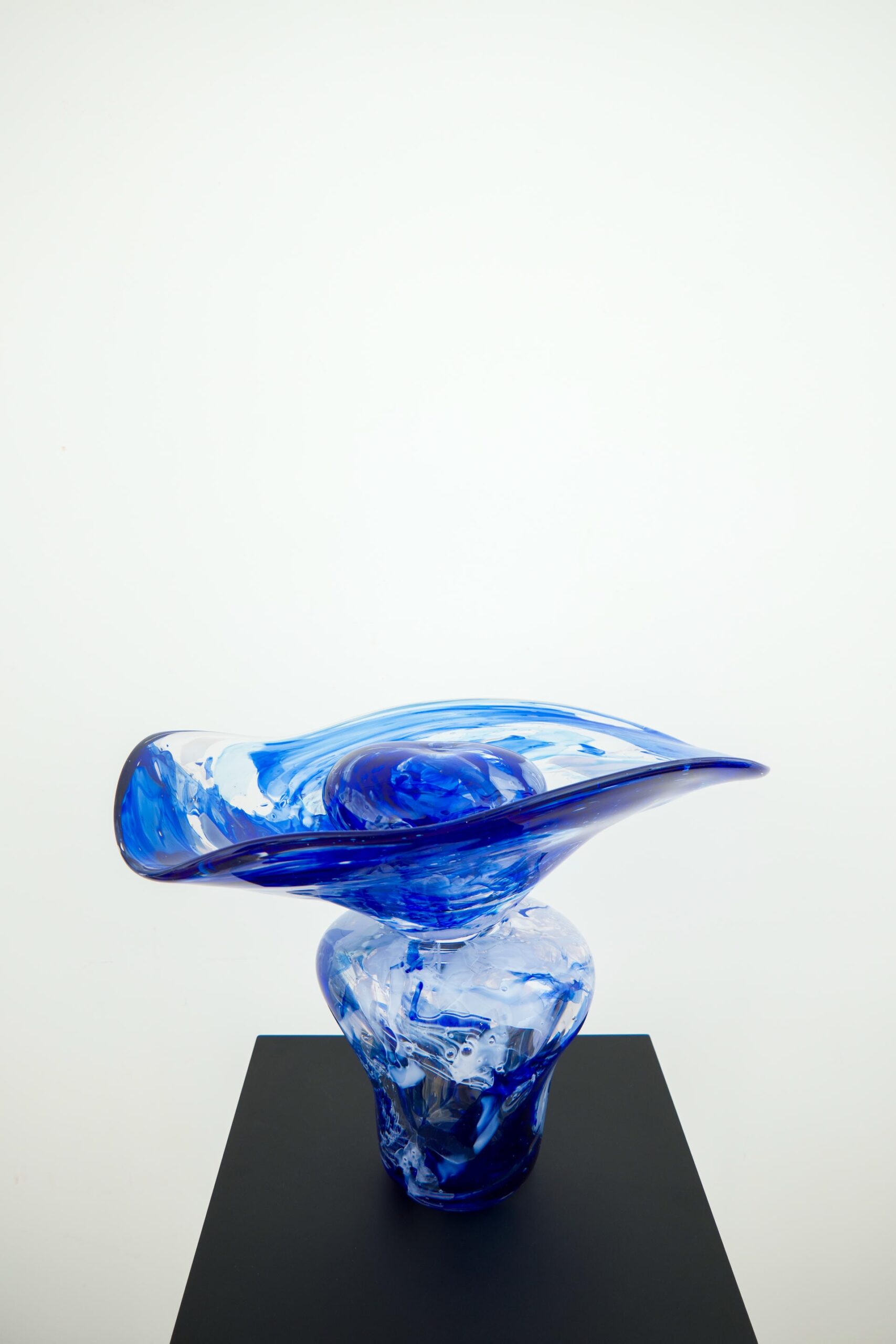
It’s a matter of perspective.
Thrive on 3 hours of sleep.
I think it would be nice for my surroundings if I were less chaotic in communication. Pick up the phone more often.
Building a life where I get to share my greatest love with the world.
A wild horse on an island near the Flores Sea.
This is an ever-changing answer –At this point in life, I like to be with my family and closest to the sea as possible.
My memories.
If you haven’t traveled, your mind.
Translating emotions unfiltered onto the canvas.
Capturing the fastness of emotions and translating these into colours.
Playfulness and the use of their sense to witness life.
Carl Jung, Marion Woodman.
Winnie the Pooh.
Helen Frankenthaler would be a true compliment.
People in their Dharma.
I like short names starting with an R.
Being restricted before it even started.
Betraying my own intuition.
Full of memories and stories.
Everything flows, nothing is permanent, panta rei.

“I see my working method as that of an alchemist—constantly creating recipes where each element influences the final outcome in unexpected ways. It’s this balance between control and surrender that defines my relationship with materials.”
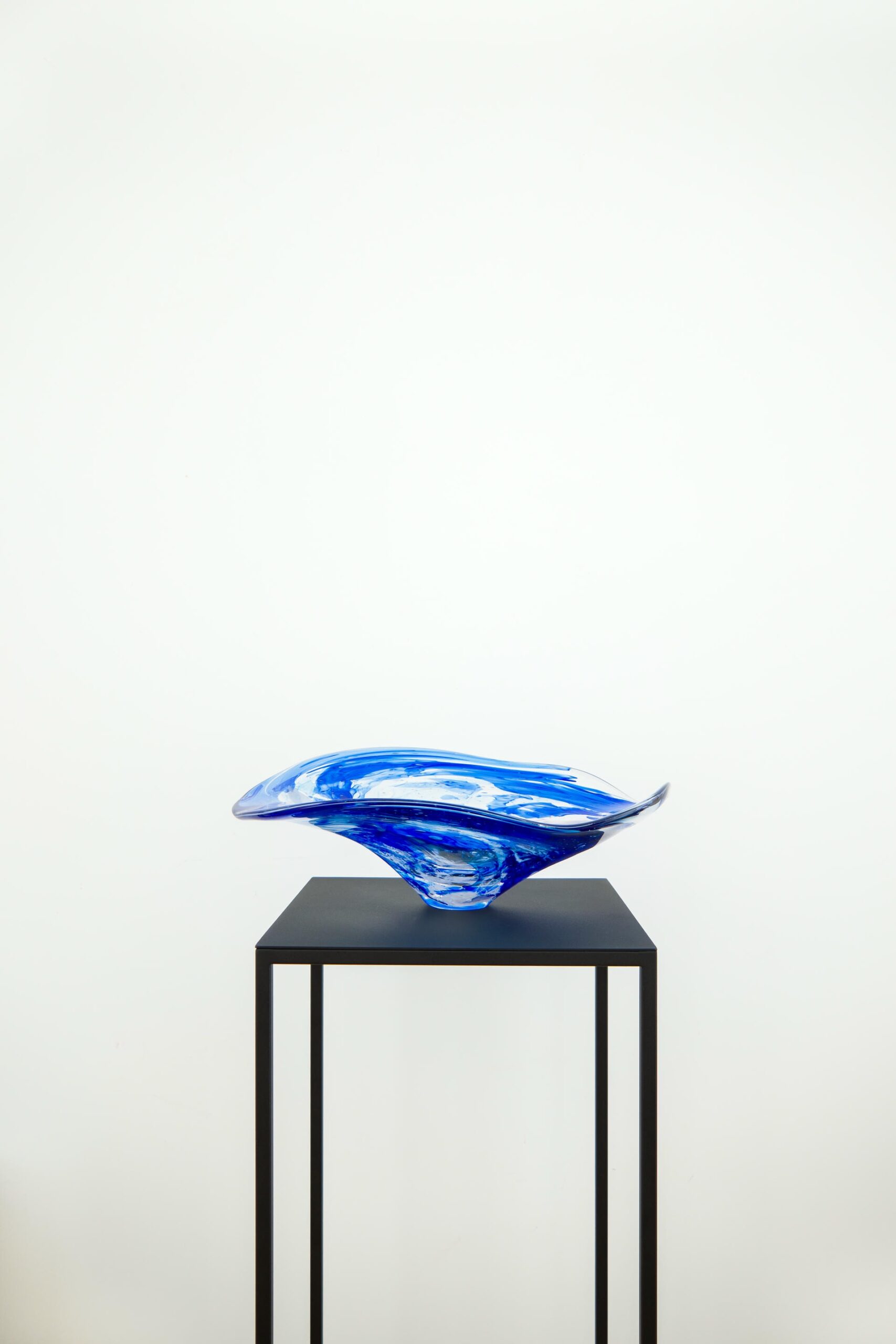

SHARE :