Hanna Englund
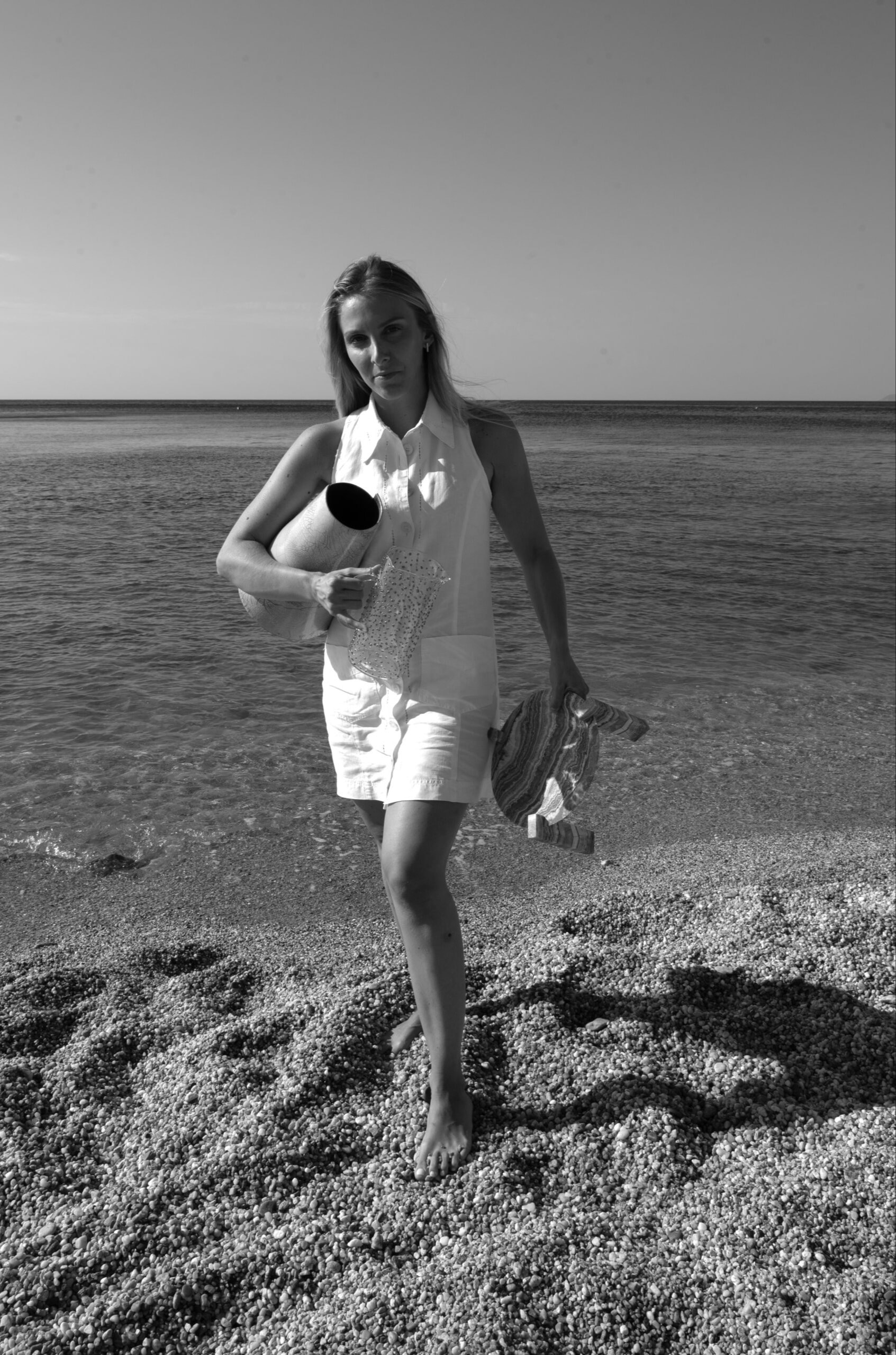
Hanna Englund is a Swedish ceramic artist based in Rio de Janeiro. With a background in fashion and product design, based in Stockholm and Shanghai, her love of creation has always been an essential part of her life. She turned to ceramics after moving to Brazil, drawn by the grounding and meditative nature of clay.
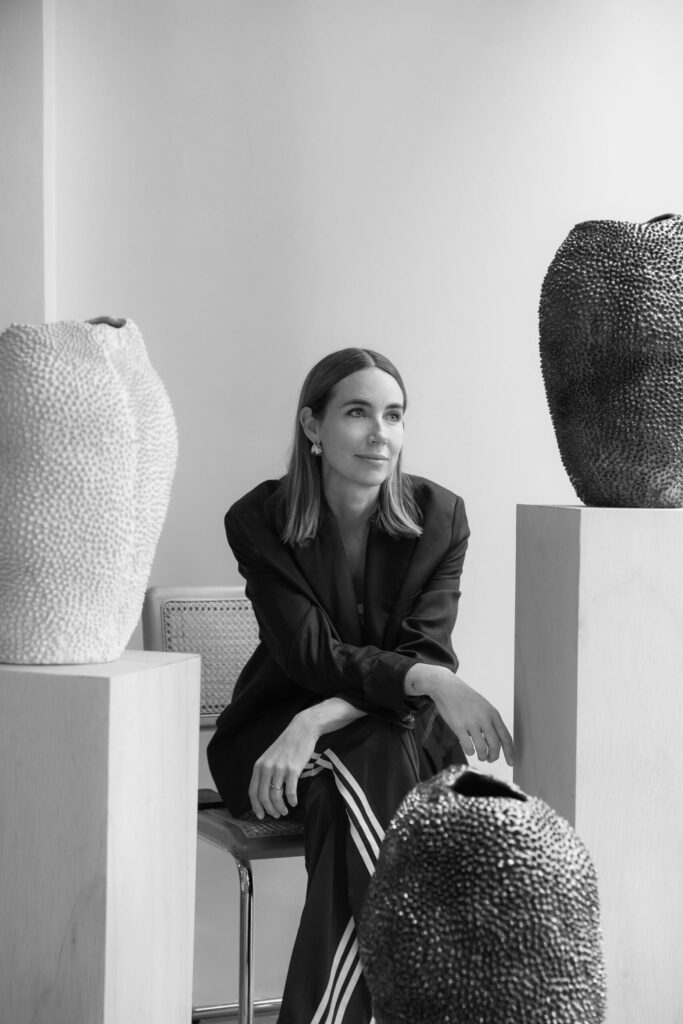
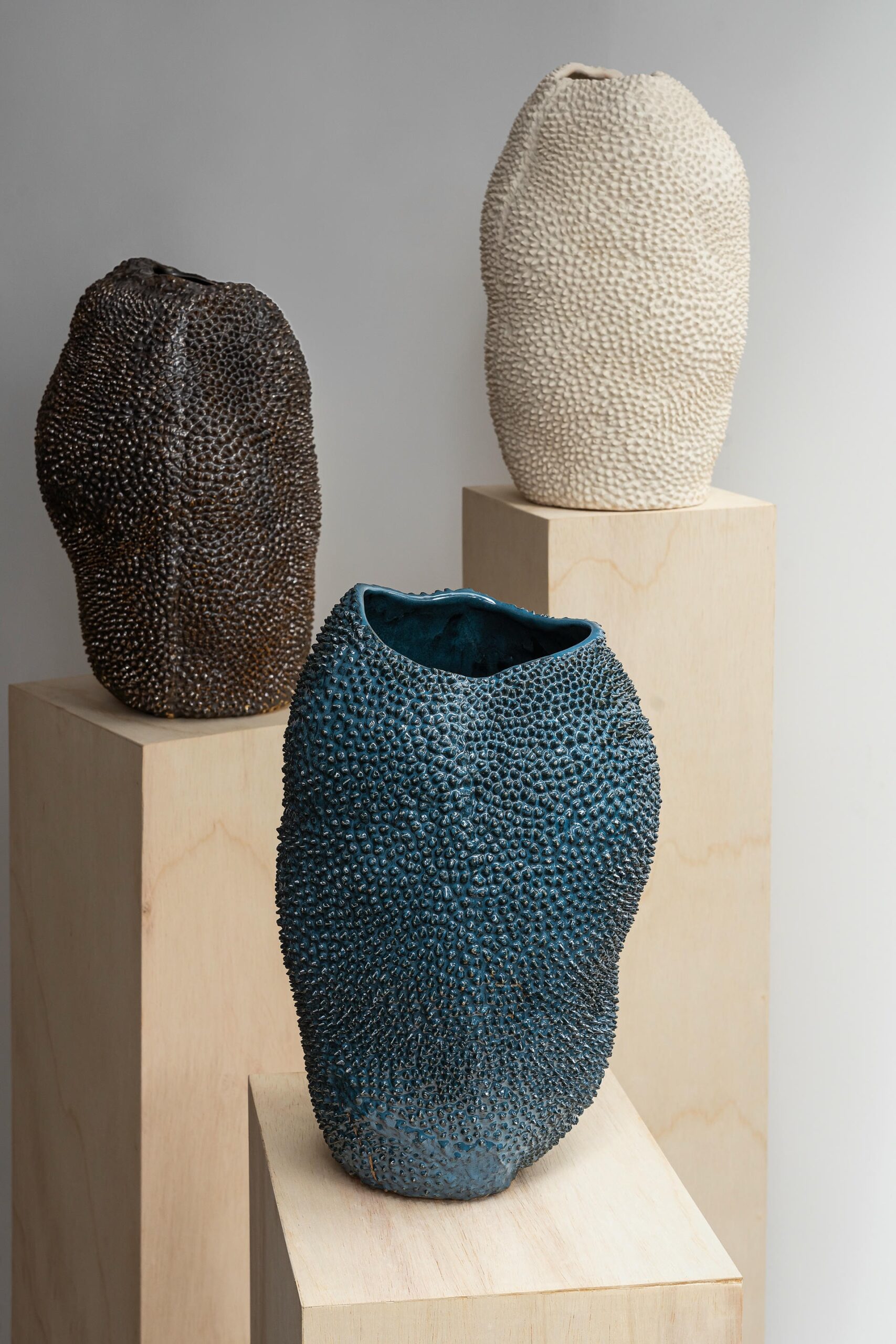
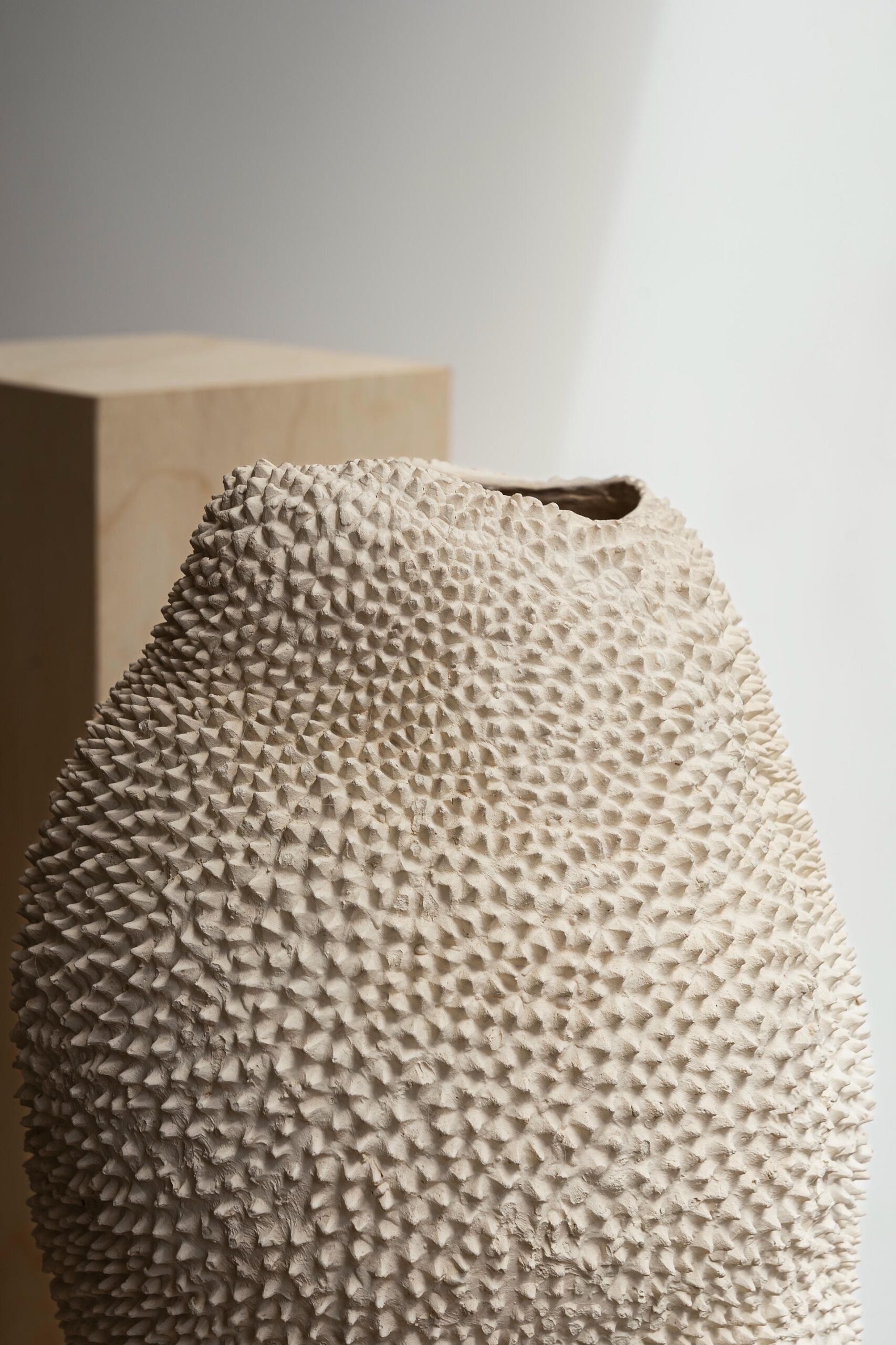
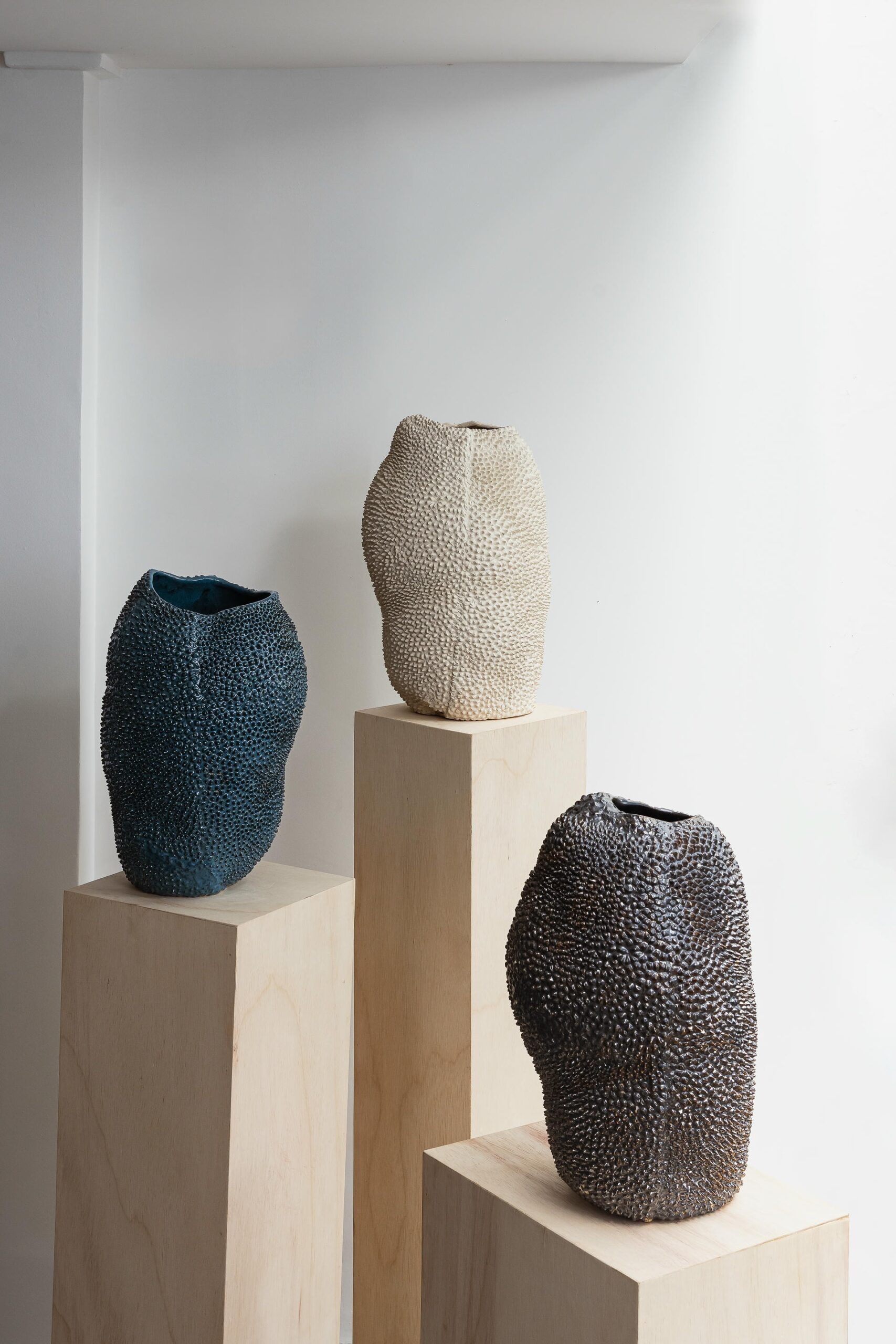
Her sculptural work blends Scandinavian minimalism with the organic boldness of Rio. Influenced by the human body and tropical nature, her pieces explore form through hand-building and casting techniques. A signature element is the use of molds made from tropical fruits – an intuitive way of honoring forms that live deeply in the Brazilian imagination. Self-taught, Hanna embraces experimentation, tactility, and material honesty, allowing the process to shape each piece. Many surfaces are left raw, while others are treated with deep, oxidized glazes. Her practice reflects a commitment to durability and timelessness, creating objects meant to endure physically and emotionally. Her work includes sculptures, lighting, and vessels designed for architectural interiors and exhibitions, all made by hand in her Rio de Janeiro studio.
Interview
I was born in Stockholm, Sweden, but I’ve been based in Rio de Janeiro for over ten years. I believe the Scandinavian sense of minimal and functional design still shapes my aesthetics, but after so many years in Brazil, my work has likely become more emotionally expressive.
My first clear memory is from childhood, visiting a ceramicist’s studio on a school trip in the suburbs of Stockholm. I remember the smell of wet clay and the calm energy in the atelier. I didn’t fully understand it at the time, but something about that moment stayed with me.
No, but I’ve known for as long as I can remember that I needed creative expression to be a central part of my life. I worked for many years in fashion, combining product development and buying, which meant a lot of travel and being surrounded by aesthetics and trends from all over the world. I also lived in Shanghai during part of those years, and the contrast between Eastern and Western visual culture definitely shaped how I see things. But eventually, it stopped feeling meaningful to me. While on holiday in Rio, I met my love, which led me to let go of my fashion career and start a new chapter in Brazil. Ceramics came after, as a way to create something more personal and fulfilling.
The need to slow down. Clay offered an antidote to the fast, screen-based life I had known. What began as a way to reconnect with my hands and with nature gradually became my creative language. I see my work as a kind of slowness practice – a pause in a world that moves too fast. It’s not about trends, but presence. I hope that’s what people feel when they live with one of my pieces.
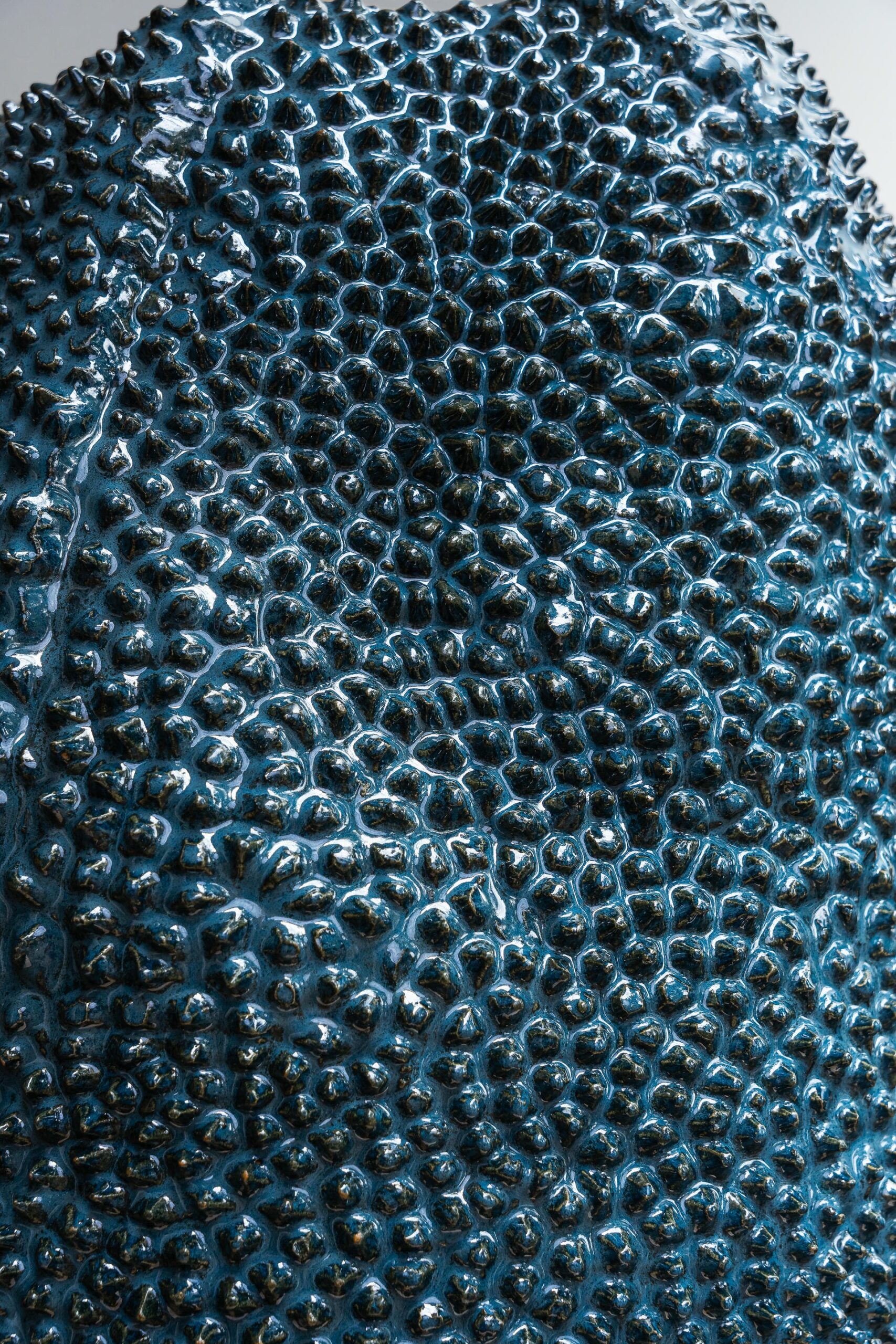
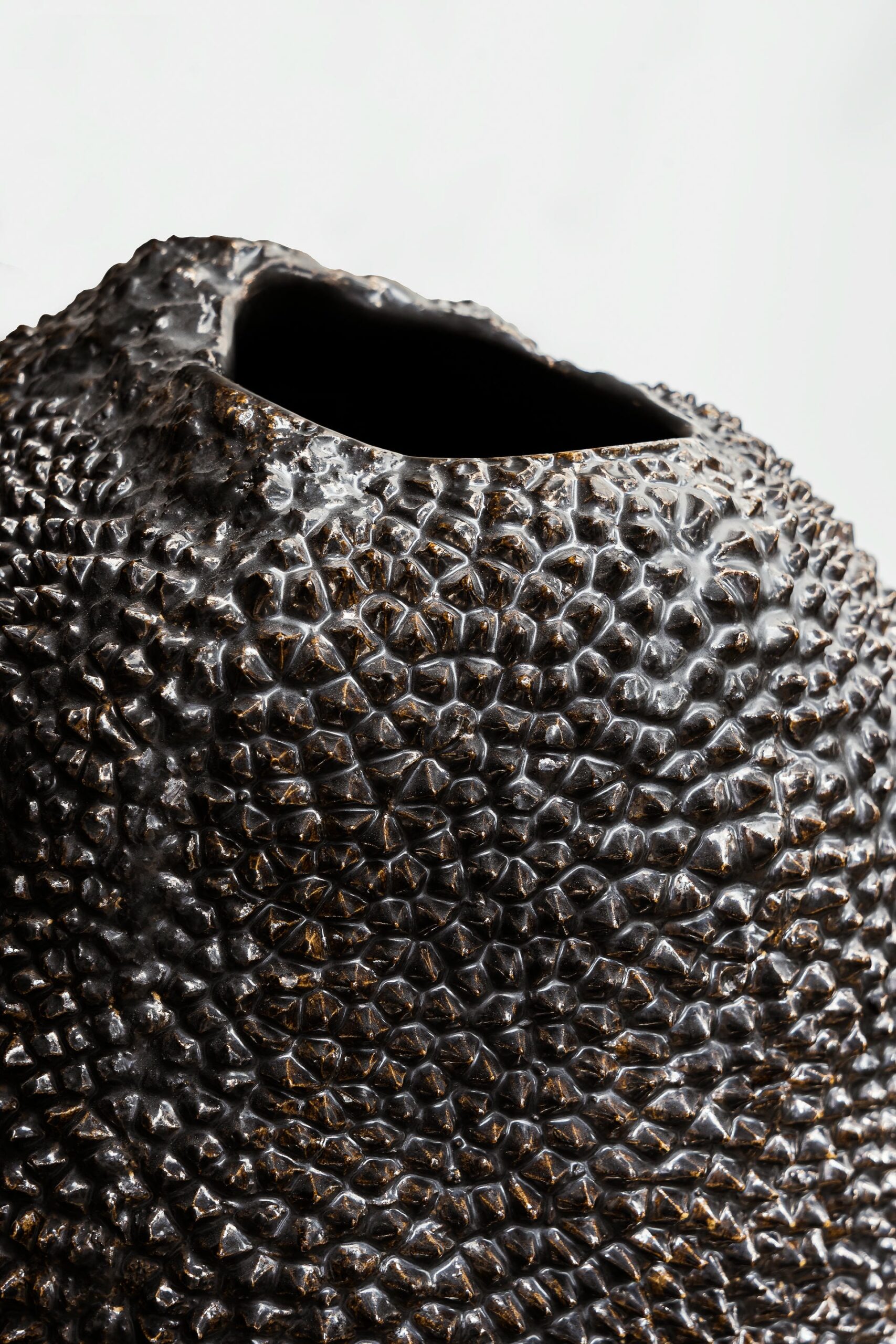
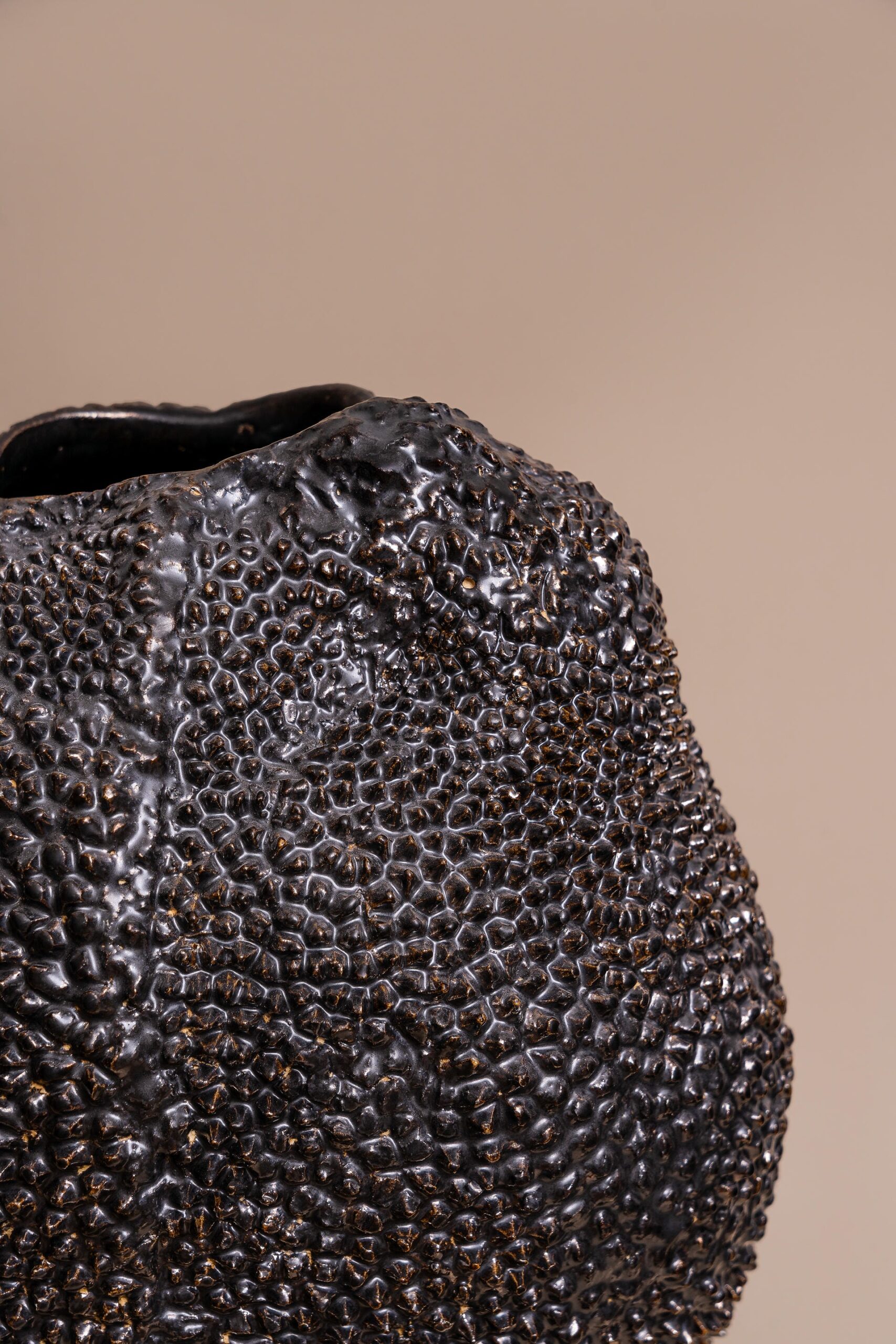
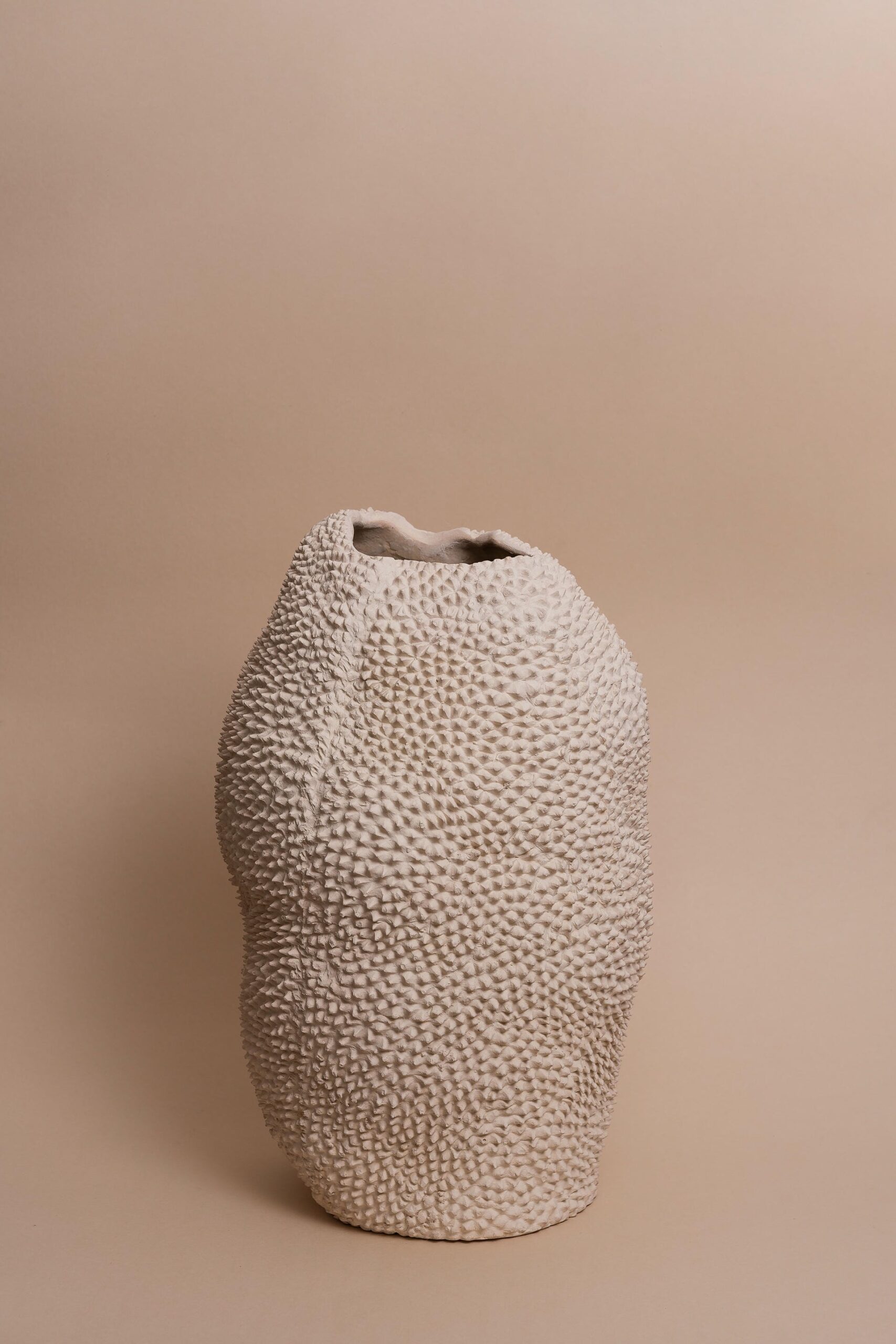
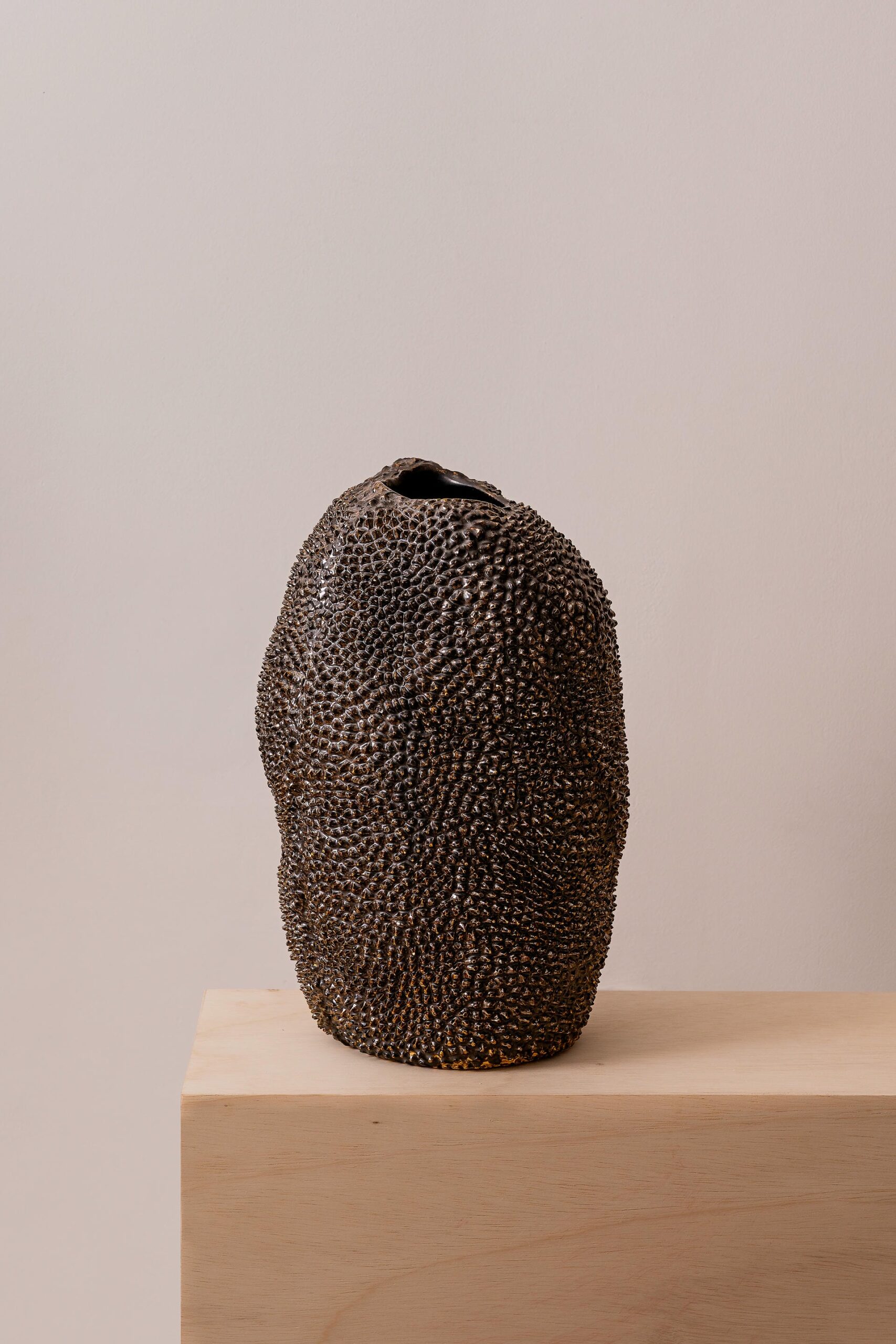
My process is intuitive and physical, I rarely sketch or work from strict plans. I usually just let the clay guide me. I’m influenced by organic shapes in nature, by body curves, by the spontaneous language of the material itself. My Swedish design roots – minimal and functional – meet the raw expressiveness of Brazil in every piece. Living in Rio, I’m constantly surrounded by vibrant, lush nature. One form in particular, the jackfruit (jaca), with its wild, spiky texture and incredible mass, has become symbolic to me. The Jaca Collection was born from this fruit. Its form is chaotic, sensual, textural – yet grounded. You could maybe see it as a kind of metaphor for the city itself. Rio is a place where softness and danger, beauty and rawness, all coexist. That tension has taught me a lot.
Roberto Burle Marx has also been a great influence – not only in his landscapes, but in how he viewed native nature as high art. His bold compositions, flowing forms, and sensitivity to Brazilian flora have stayed with me since the beginning of the Jaca Collection.
I work from my studio in Santa Teresa in Rio de Janeiro, usually starting after dropping my two boys off at school. I bike there – fast, with good music in my ears – it helps me clear my mind before work. I usually begin with the more technical or administrative tasks. The afternoons tend to be more physical: shaping, carving, casting, glazing. The studio is surrounded by tropical trees, and I love the green view from my windows. It brings a sense of calm, especially on stressful days. No two days are the same, but they all usually begin with touch.
Clay has an honesty I’m drawn to. It holds every touch, every decision. It feels alive – responsive and unpredictable. Stoneware, especially, allows for both ruggedness and delicacy. It invites imperfection, which I embrace. I often leave my pieces partially unglazed to let the material breathe and speak. Working with clay reminds me that some things just take the time they need. From liquid slip to solid form, stoneware clay is at the center of everything I do.
I like to experiment with different techniques, letting curiosity guide the process. Being self-taught, I don’t follow strict rules – it’s all about trial, error, and intuition. A signature aspect of my work is using sculptural molds made from real fruits found in Rio’s natural world. As I mentioned, the Jaca Collection draws inspiration from tropical nature, especially the Brazilian jackfruit, both as a form and a symbol. Bold surface texture often plays a key role in my creations. Many pieces are left unglazed to reveal their raw, organic character, while others are finished with deep, oxidized glazes to emphasize surface detail. For items like my lamps, I combine ceramics with light to explore the interplay of shadow and form. I see them as sculptures first, functional objects second.
Don’t aim to impress – aim to connect. Start with your hands, not your head. Make a hundred things before judging any of them. Let the process shape your voice. And don’t rush – repetition and intuition build the foundation for originality
I’d say Organic Modernism, infused with Brazilian brutalism. My pieces are sculptural and sensual but also grounded. I’m also drawn to Wabi-Sabi principles: celebrating imperfection, time, and the natural wear.
I’m drawn to designers whose work connects deeply to nature through texture, form, and material. Marcin Rusak’s use of real botanical matter resonates strongly with my own desire to preserve and elevate natural forms, as I do in the Jaca Collection. I also admire Fernando Laposse for his commitment to sustainability and his use of indigenous materials like corn husk, creating objects that are both tactile and culturally rooted. And Lara Bohinc and Florence Louisy, whose sculptural works blur the line between functional design and art – something I continuously try to explore in my own practice.
Living and creating in Brazil has transformed me. There’s something about this place – the wildness of the fruit, the softness of the air, the contradictions of the city that gets under your skin. My pieces are my response to that energy; I hope they feel alive, as if they’ve been grown more than made.
I’m inspired by Lina Bo Bardi, not only for her architectural vision but for her commitment to material honesty and cultural relevance. Oscar Niemeyer has shaped my appreciation for sensual curves and expressive space, while Sérgio Rodrigues brought a tactile, human warmth to modern Brazilian furniture that continues to resonate with me.
In sculpture, I’ve been deeply influenced by artists like Barbara Hepworth, Valentine Schlegel, Henry Moore, Isamu Noguchi, Jean Arp, and Alexander Calder. Their exploration of form, negative space, movement, and volume has shaped the way I think and work. What resonates most with me is their ability to evoke emotion through minimal, organic shapes – there’s a kind of quiet power in that simplicity. These influences have been present from the very beginning of my Biomorphic Series of vases and lighting pieces, and they continue to guide how I approach balance, softness, and spatial presence.
I’m drawn to artists who celebrate organic material and the tactility of nature in a raw, unpolished way. Ernesto Neto’s immersive, sensory environments resonate deeply with my desire to connect the body to nature through material. I also admire Arlene Shechet, for her intuitive relationship with clay, and Olafur Eliasson, for his use of light, space, and perception.
While not contemporary in the strict sense, Lygia Clark and Tarsila do Amaral, both Brazilian women who redefined form, intimacy, and play in art.
Minimal yet expressive, my work explores organic form through bold texture and timeless, tactile presence.
“I see my work as a kind of slowness practice – a pause in a world that moves too fast. It’s not about trends, but presence.”
The Questions
(The Proust Questionnaire is a set of questions answered by the French writer Marcel Proust.
Other historical figures who have answered confession albums are Oscar Wilde,
Karl Marx, Arthur Conan Doyle, Stéphane Mallarmé, Paul Cézanne…)
When I recognize what I have and appreciate it.
Losing someone I love.
Self-doubt, anxiety.
Arrogance.
My sons.
Good cheese.
Thoughtful and exhausted.
Moderation.
Emotional intelligence and confidence.
Someone who knows her worth and helps others know theirs too.
Nice” and “not nice” – proof that my English isn’t always ready for my full range of opinions.
Better language skills.
That I’d be happier with less.
My kids and my studio. In that order, most days.
A jackfruit-shaped lamp – obviously :)
Between Stockholm and Rio.
My kids’ drawings.
Losing a child. Can’t imagine any deeper sorrow.
Creating… or eating.
Quiet intensity.
Honesty, loyalty, and humor.
Haruki Murakami, Patti Smith. Right now, Miranda July and Lena Andersson.
Pippi Långstrump.
I would never pretend to identify myself with any historical figure.
Teachers, nurses, ecologists… people who put others and the planet first.
Dante and Caetano – they also happen to be my kids’ names.
Small talk.
Not allowing myself to be satisfied more often.
Peacefully.
What’s meant to be will always find a way.
“Rio is a place where softness and danger, beauty and rawness, all coexist. That tension has taught me a lot.”
SHARE :