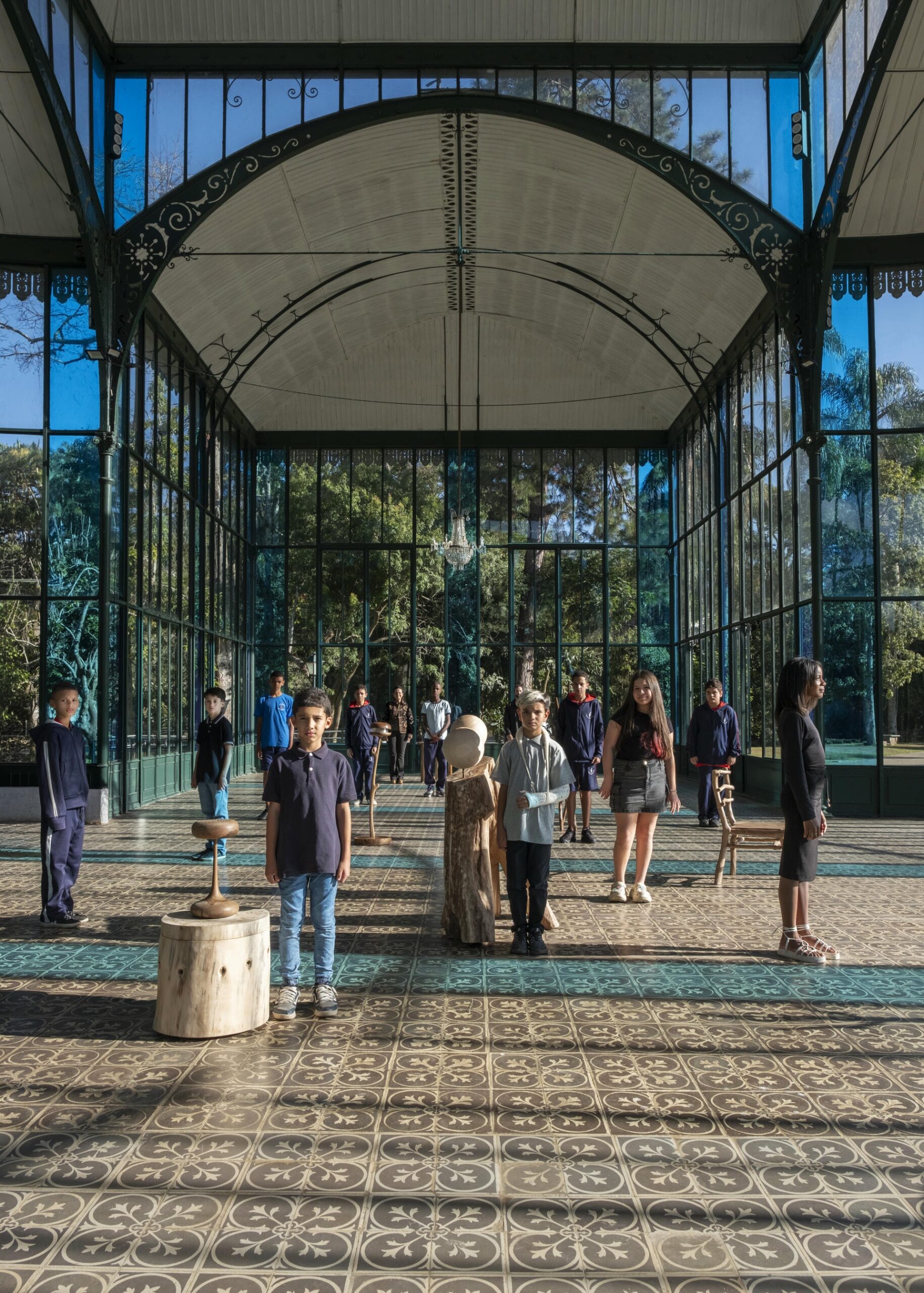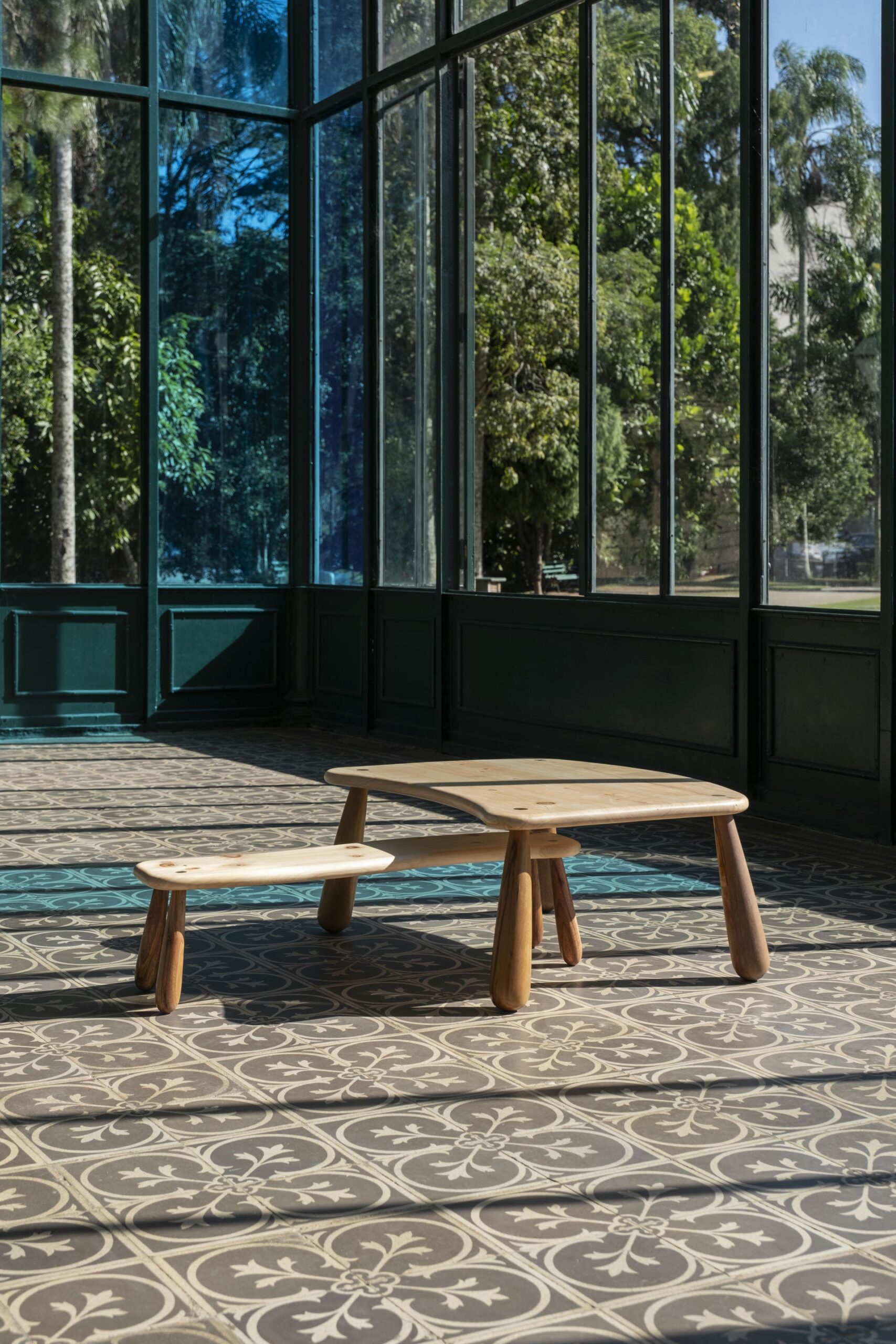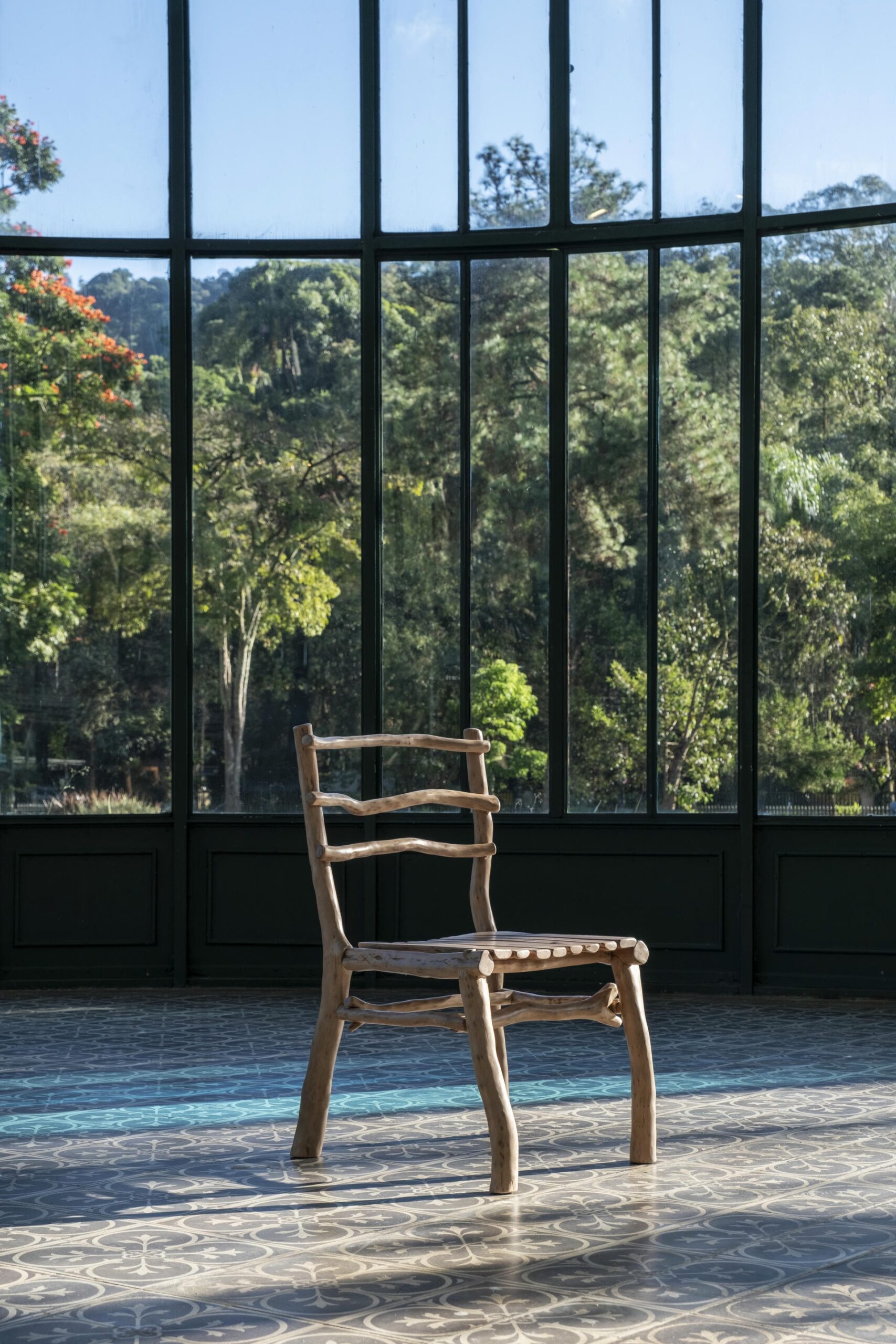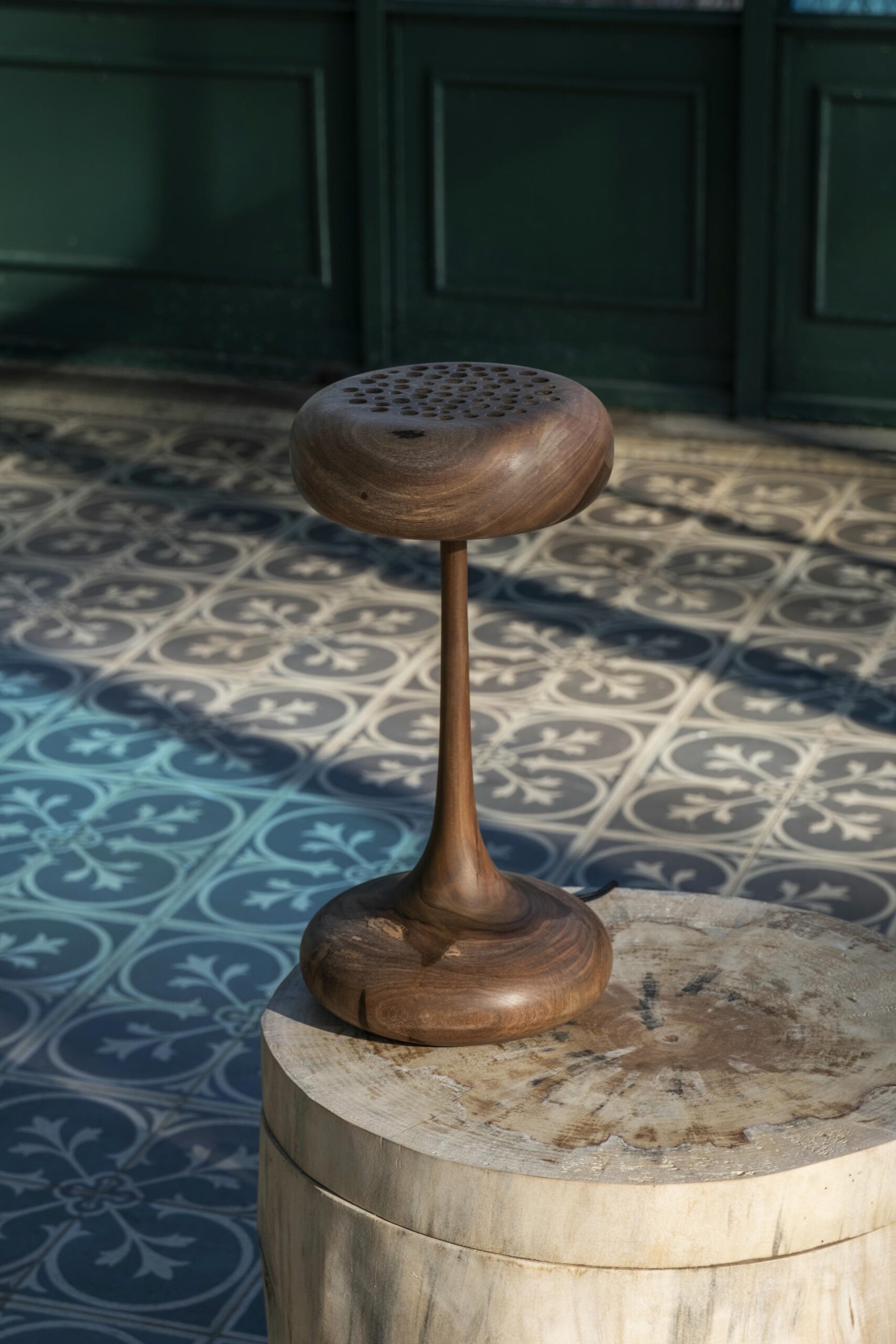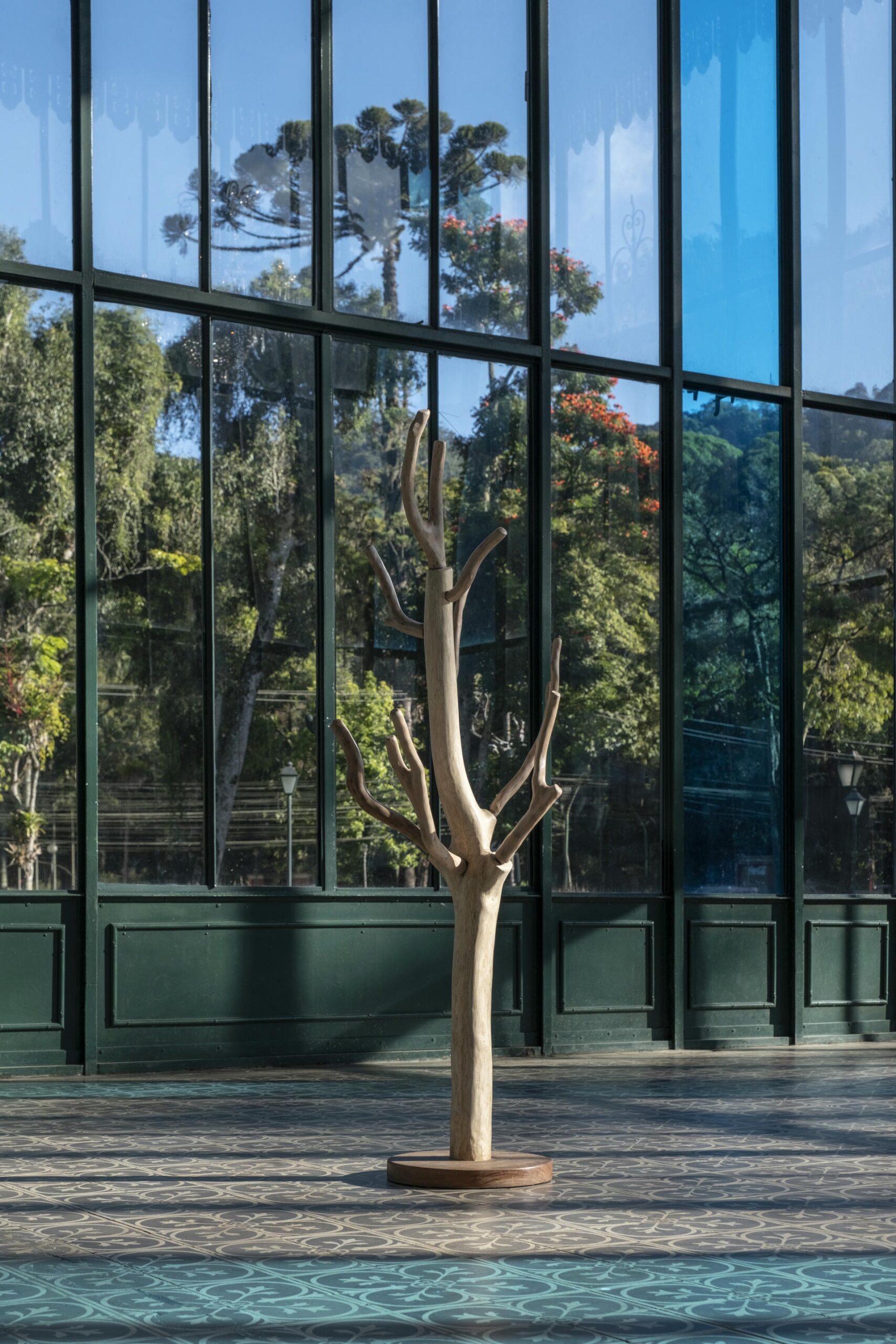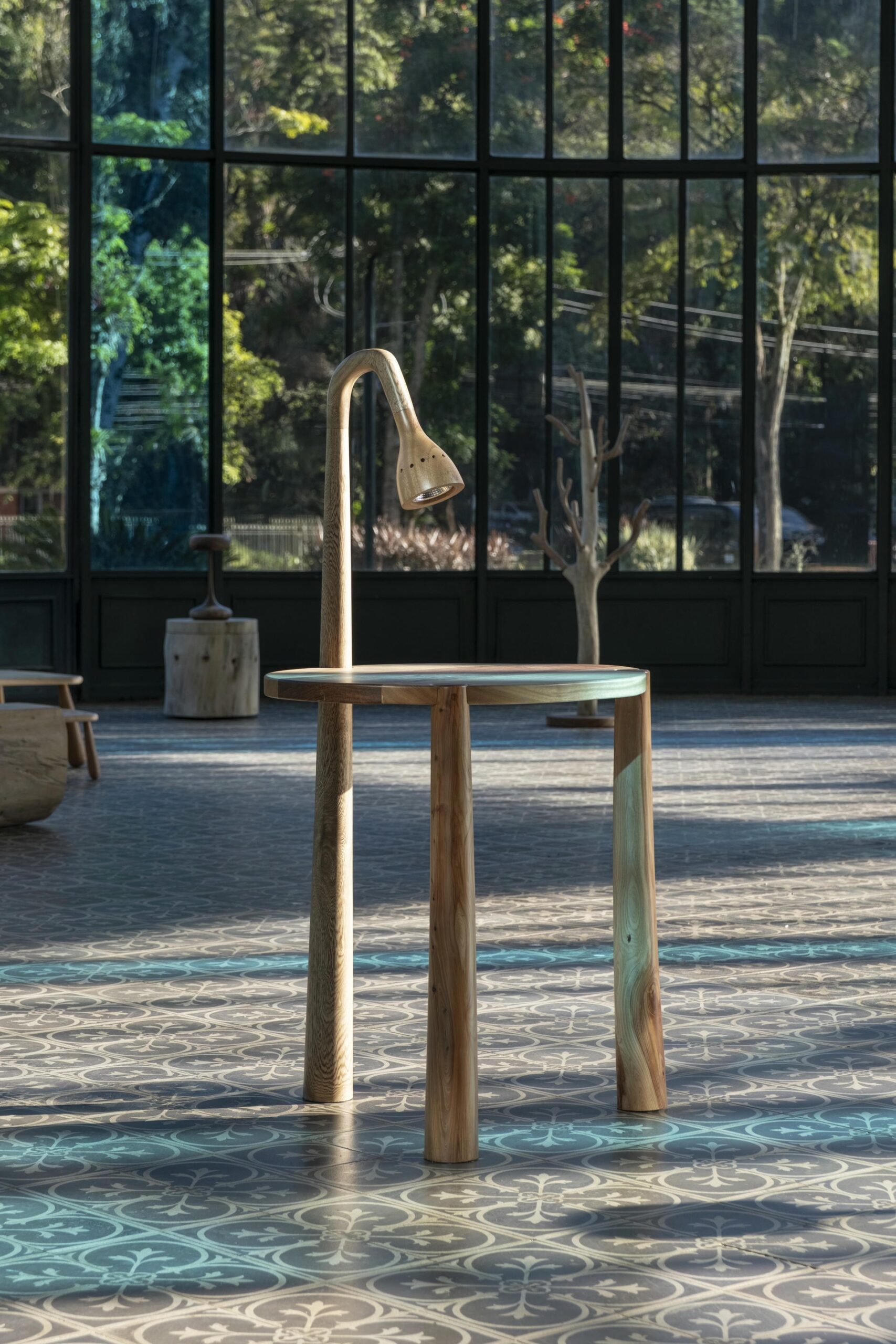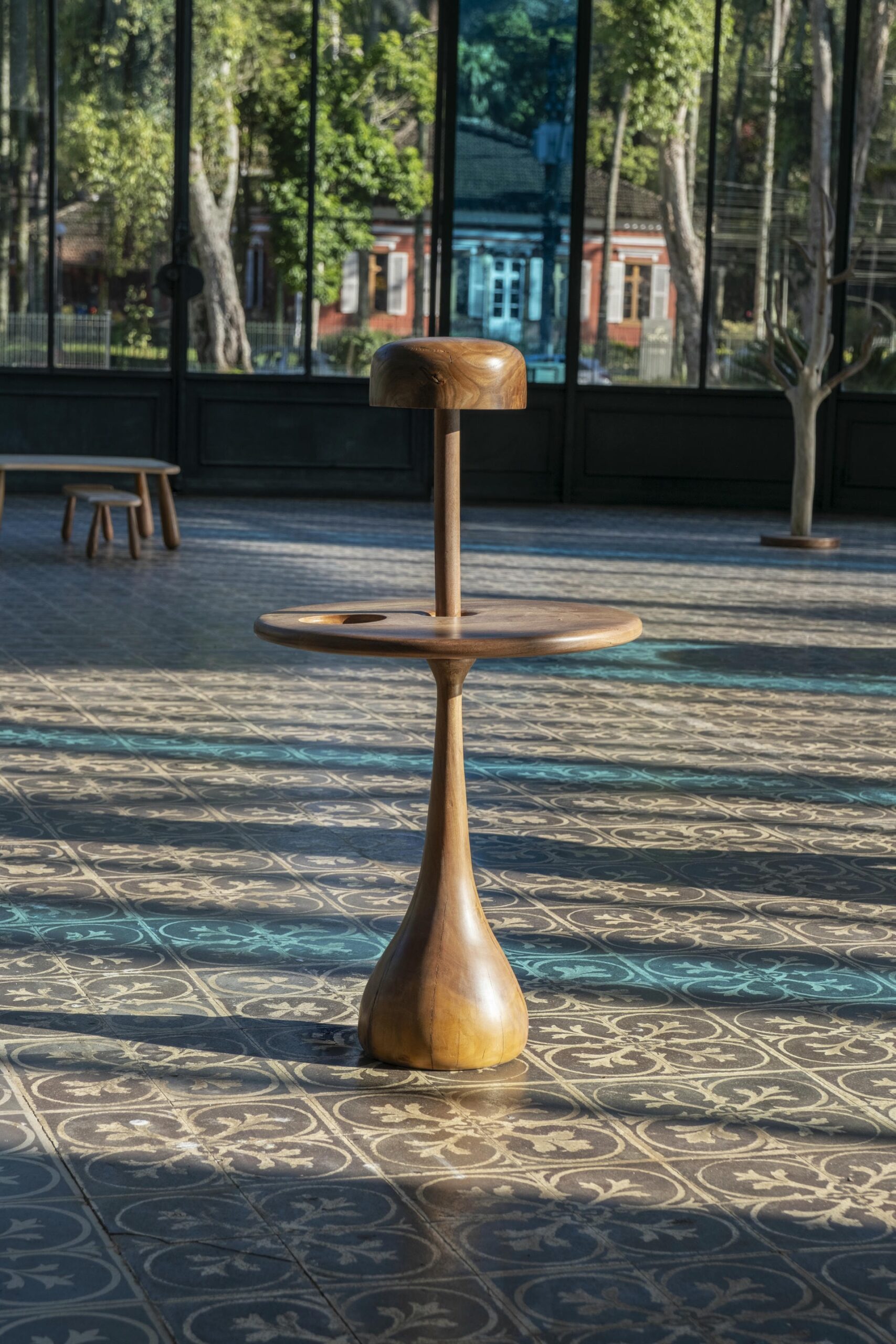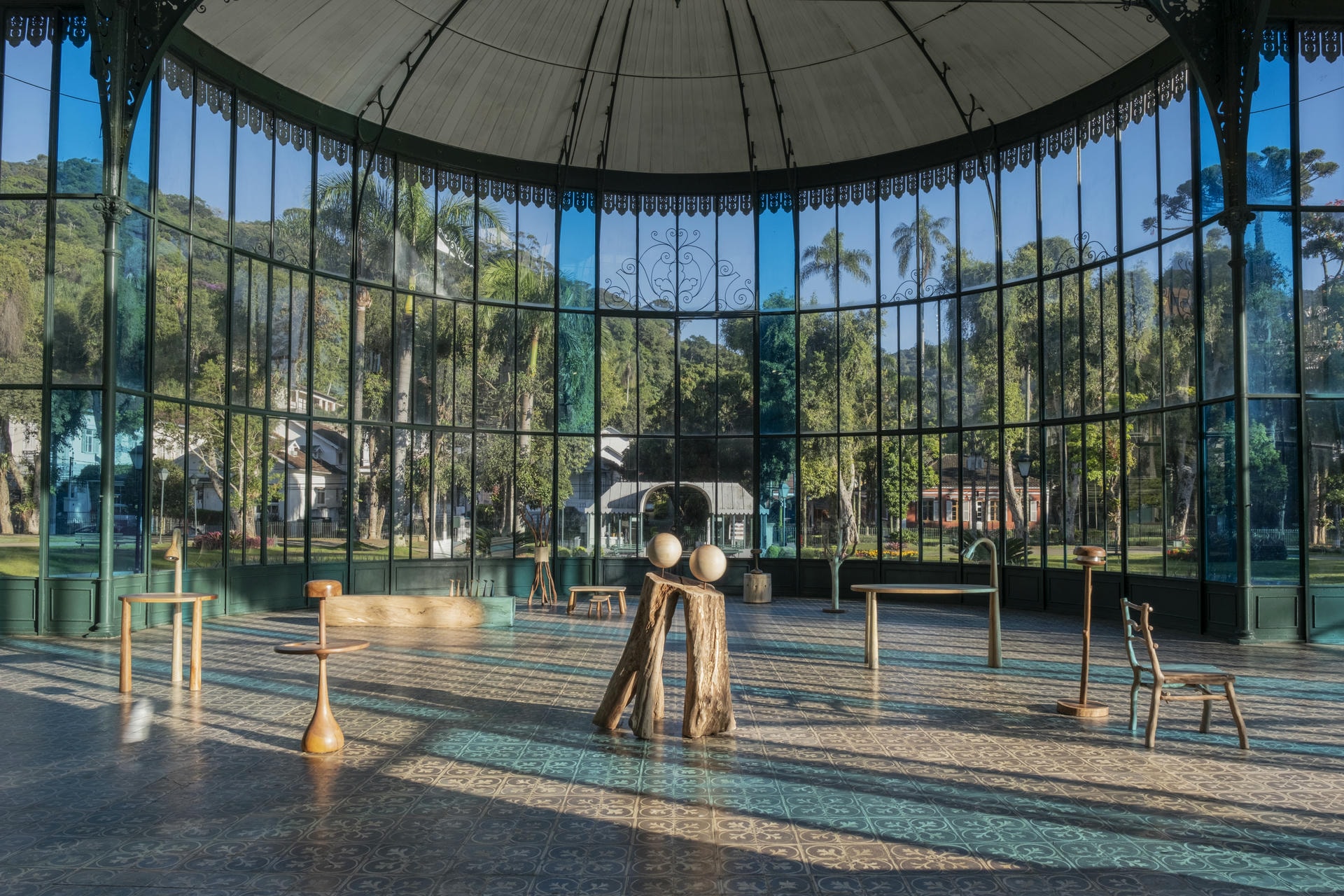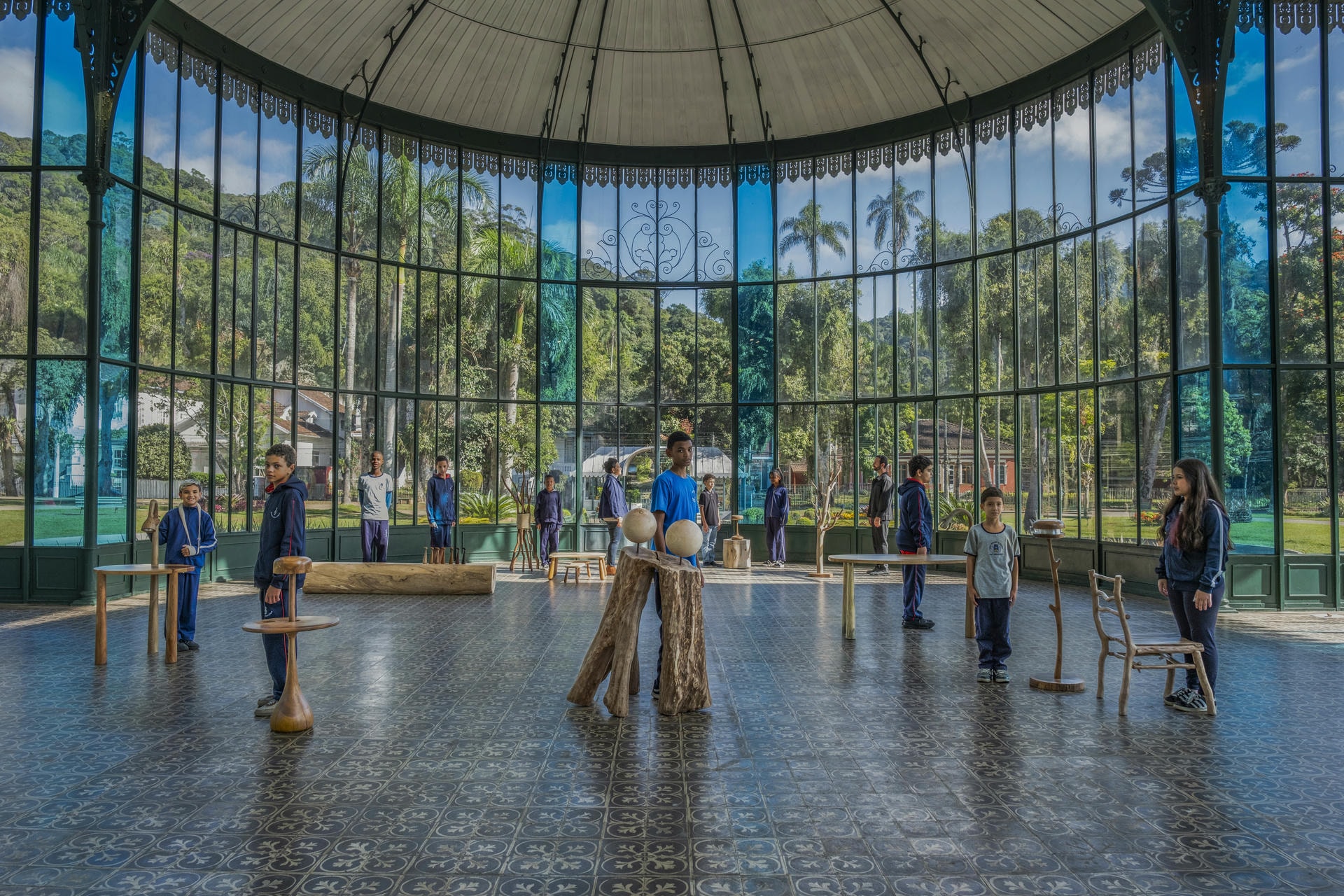
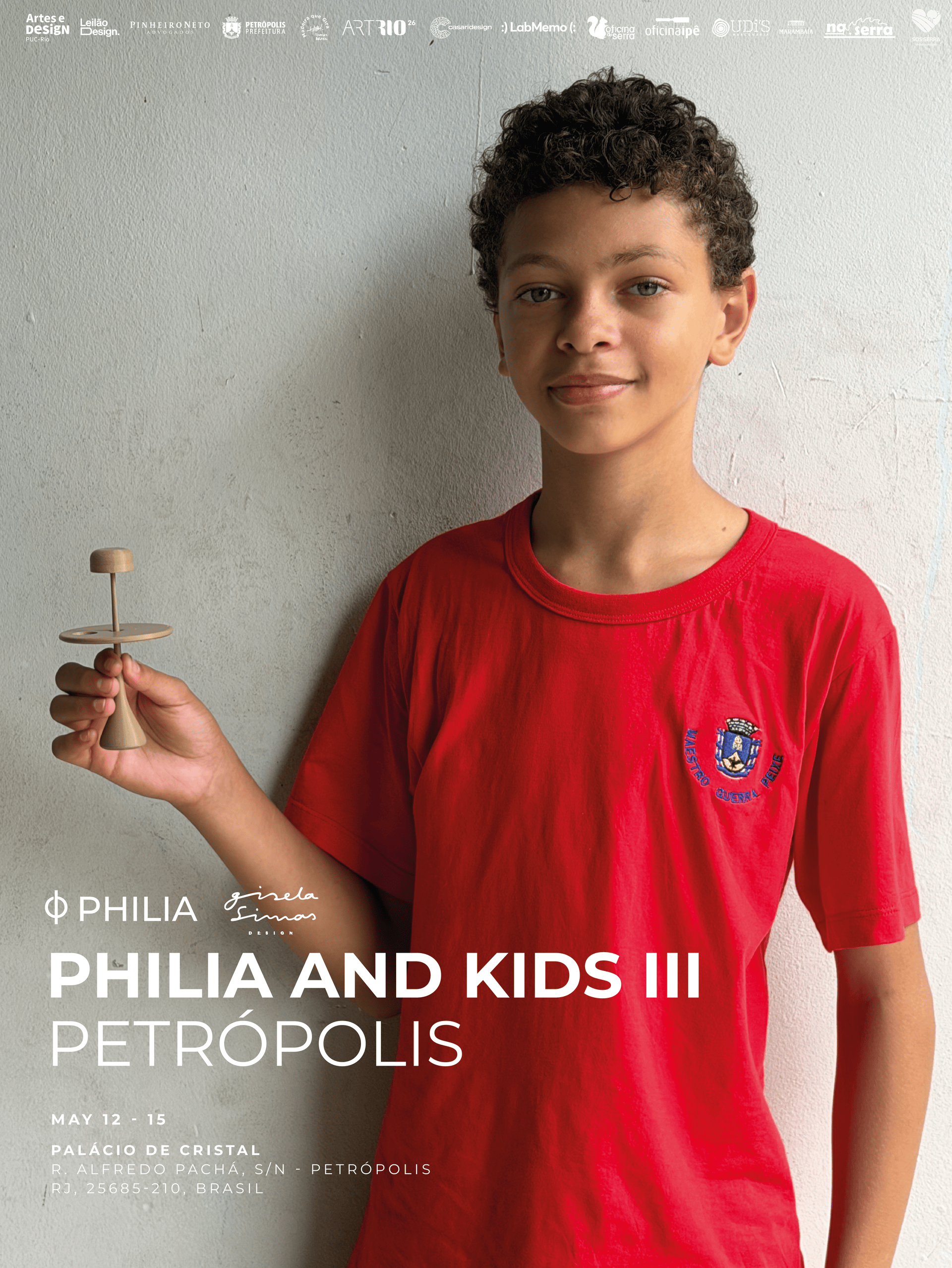
For this new chapter, PHILIA partners with Brazilian designer Gisela Simas, working with 4th and 5th grade students from underserved communities and underprivileged neighborhoods in Petrópolis through the Alcobaça parish school, in partnership with the local organization SOS SERRA.
Over several months, the children participated in a series of workshops exploring the relationship between nature, material, and form. Using wood collected from fallen trees at the COMDEP green waste center, the students were invited to imagine and draw their own furniture sculptures, inspired by their observations of the surrounding landscape. Visits to Marambaia Farm allowed them to closely observe natural structures and organic forms, which became the starting point for their creative proposals.
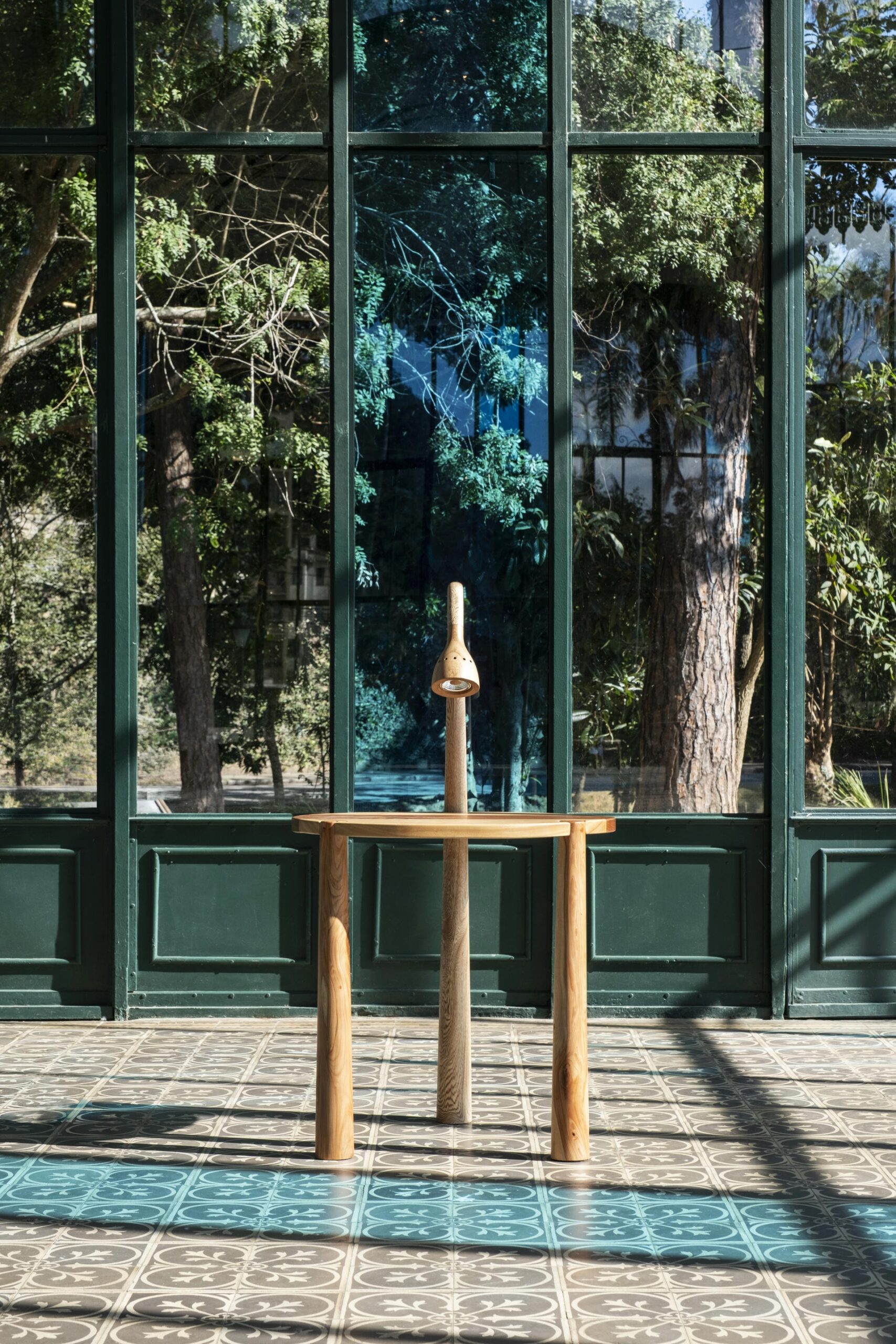
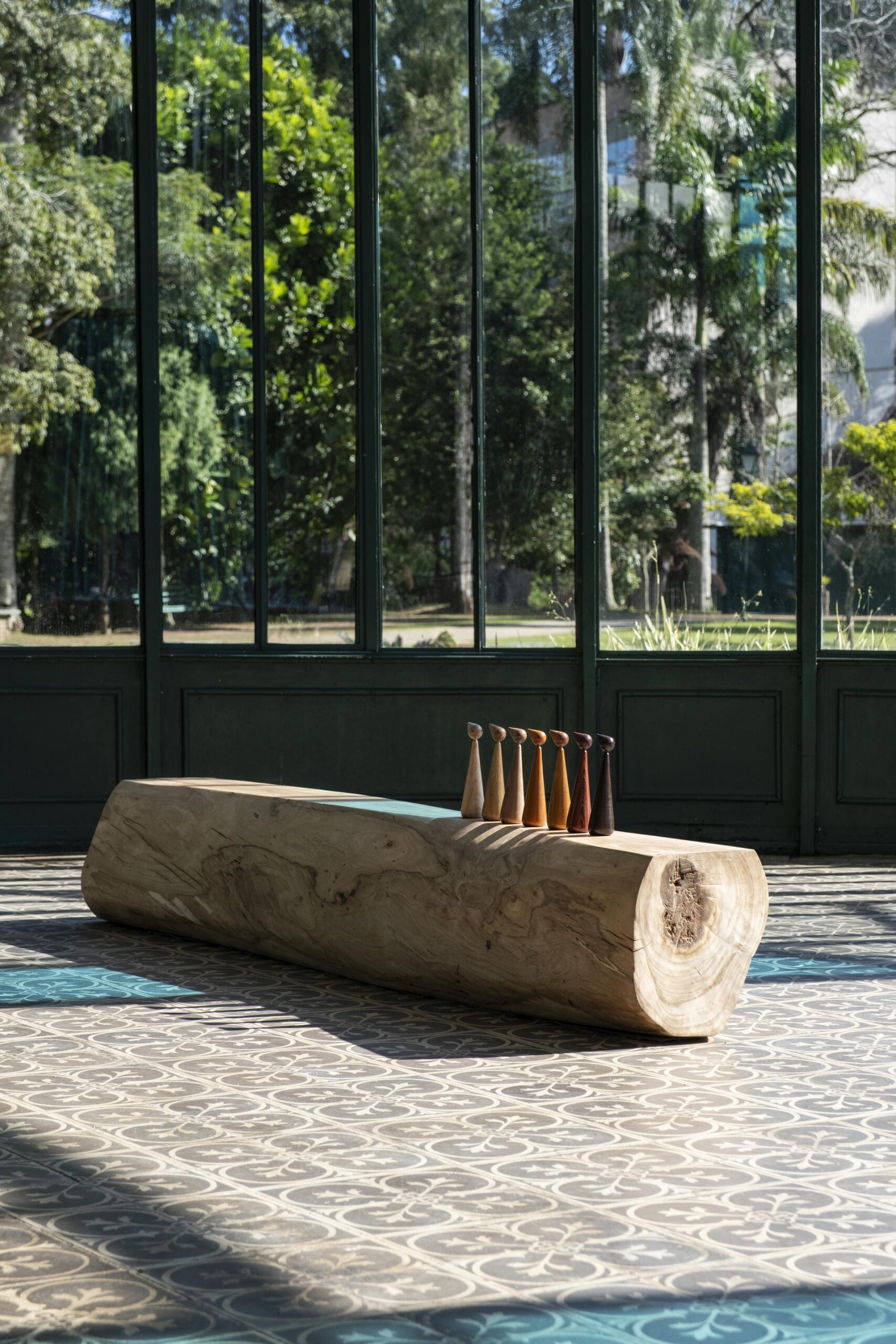
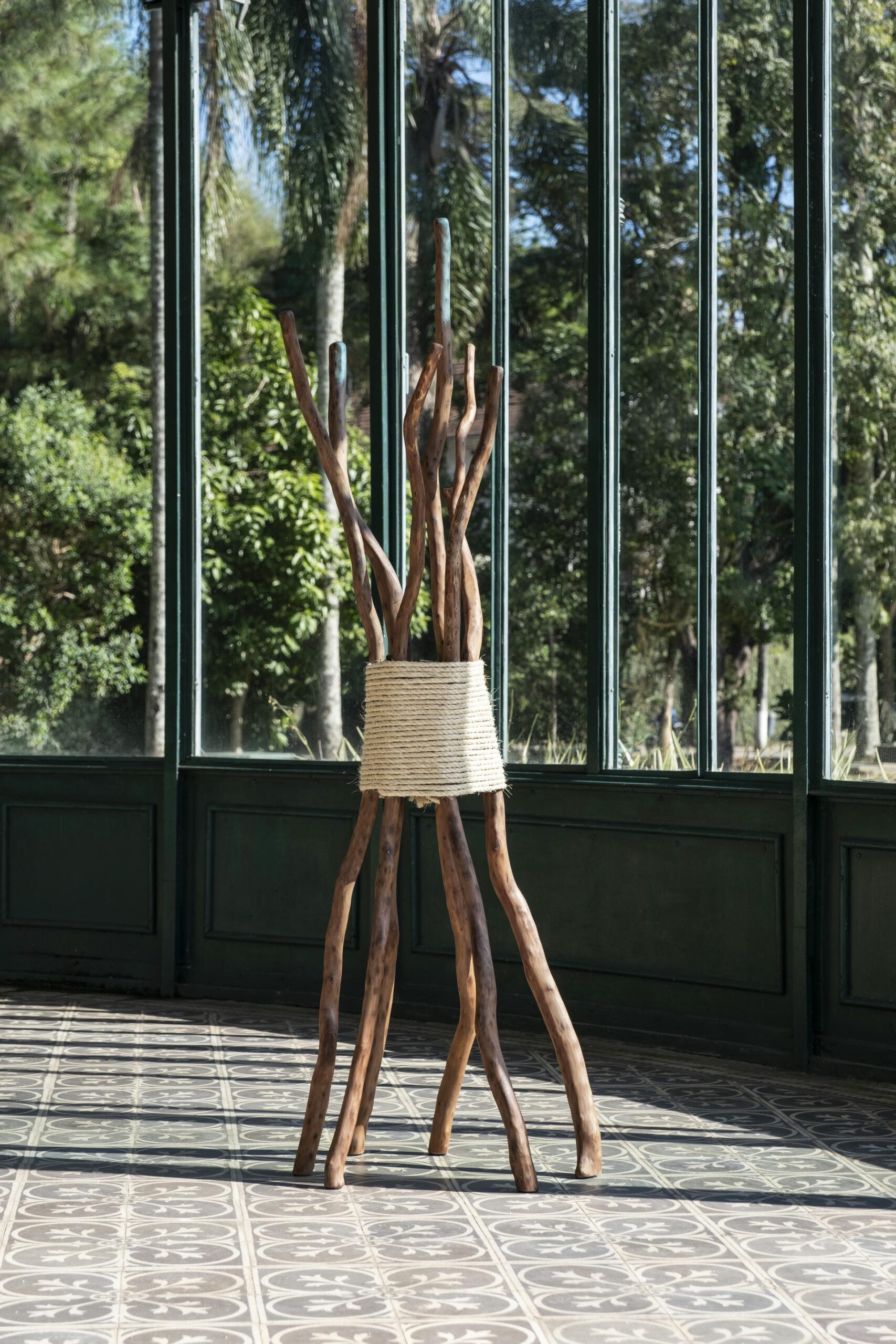
Guided by Gisela Simas and supported by Master Artisans led by Guga Casari, including Thomaz Brasil, Tomé Peregrino, Cláudio, Paulo Pissurno, and Vinícius César, the children’s drawings were transformed into functional and artistic design pieces crafted from reclaimed wood that would otherwise have been discarded. Each work reflects both the imagination of its young author and a broader message about sustainability, material reuse, and the creative potential of local resources.
The resulting pieces will first be presented in an exhibition at the Crystal Palace in Petrópolis from May 12 to May 15, 2026, before traveling to São Paulo for a second presentation, expanding their visibility within Brazil’s cultural landscape.
The works will then be presented in a charitable auction on June 9, organized in partnership with Leilão Design, alongside pieces by internationally acclaimed artists and sculptural designers carefully selected and invited by Galerie Philia. Each piece is conceived as part of a limited edition; in the event of a sale, additional editions (2/8 onwards) will be produced in collaboration with the artisans. These subsequent editions will notably be exhibited in Rio de Janeiro at the MAC Niterói from August 11 to August 20, 2026, in partnership with Art Rio, offering the project a further institutional platform.
All proceeds from the auction, as well as from any subsequent sale of the works, will be entirely dedicated to supporting and expanding the Philia & Kids initiative. This collective commitment ensures the continuation of future editions of the program, enabling the development of new workshops with children from underserved communities and reinforcing the long-term impact of the project.
In parallel, the long-term ambition of Philia & Kids is to establish a permanent school in Petrópolis, offering weekly workshops in craftsmanship, art, and design, and providing children with continuous access to creative education and hands-on learning opportunities.
Since its creation, Philia & Kids has developed as an evolving platform connecting children, designers, and local materials through collective experimentation. The initiative began with Design Brut in France, a six-month workshop with primary school children in Breil-sur-Roya, a small and relatively isolated town in the Roya Valley. Inspired by Jean Dubuffet’s notion of Art Brut, the project explored the raw and uninhibited creativity of children through sculptural design. The drawings produced by the students were later realized as physical objects carved in local olive wood and exhibited in the chapel of Notre-Dame-des-Monts in Breil-sur-Roya.
The following year, the program expanded with Chantiers Partagés, developed in collaboration with the Société du Grand Paris and designer Frédéric Saulou. This edition took place in Palaiseau, within a middle school located in a working-class suburban environment on the outskirts of Paris. Working with students from the César Franck middle school, the project explored the reuse of Meulière stone extracted from the construction site of the Grand Paris Express, transforming a material from a major infrastructure project into sculptural furniture pieces created through dialogue between children, designers, and craftsmen.
With Philia & Kids III, the initiative now expands its reach in Brazil, working with children from local underserved communities, and demonstrating how design can inspire new forms of learning, creativity, and environmental awareness while offering young participants a meaningful introduction to the creative world.