Emilie Lemardeley
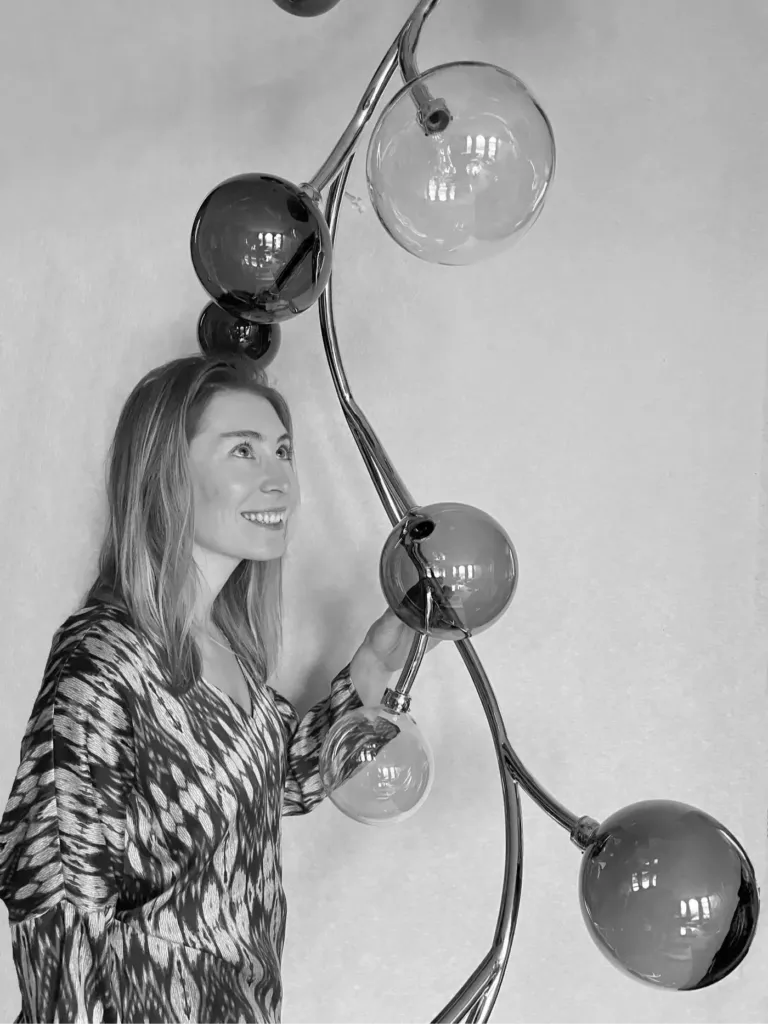
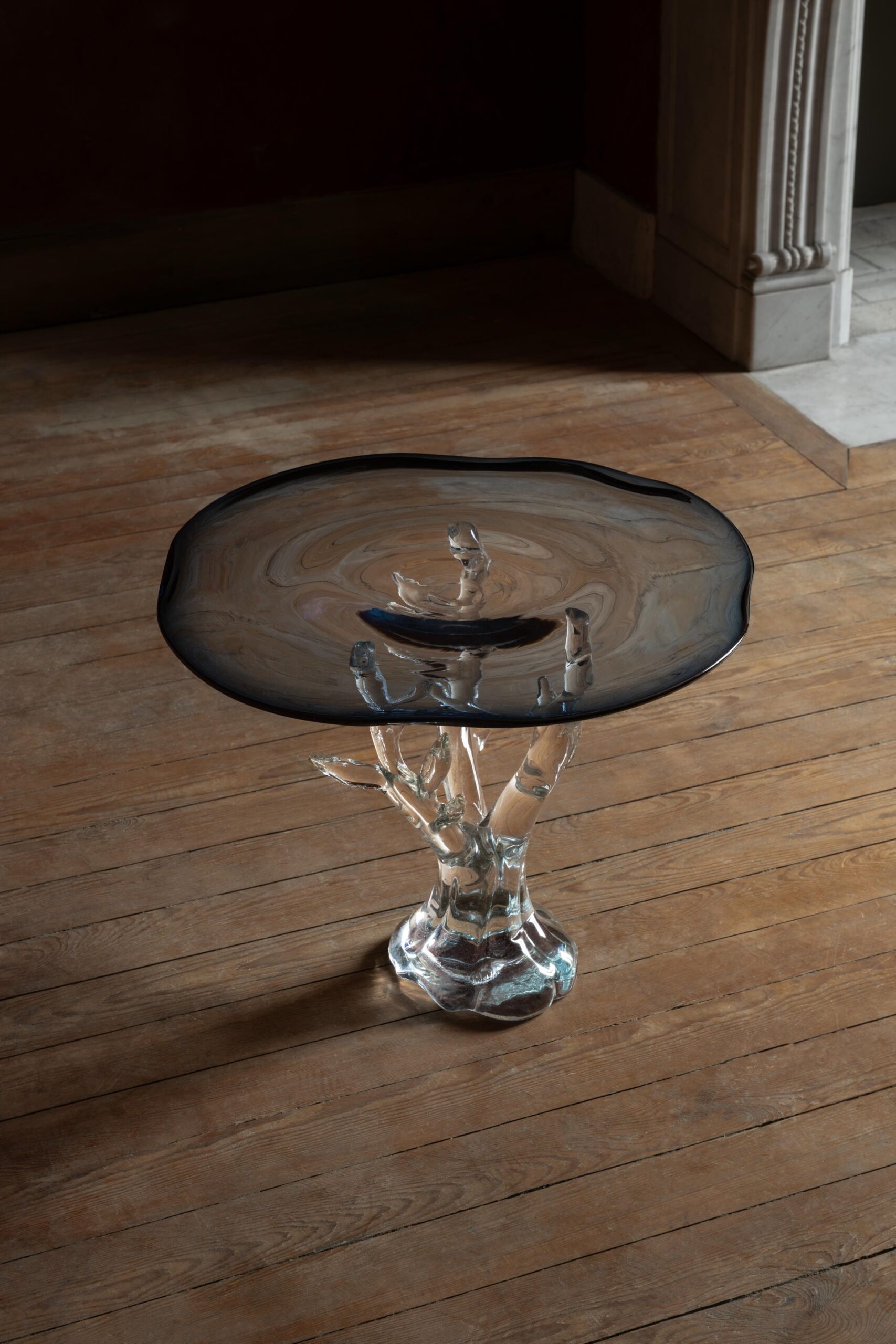
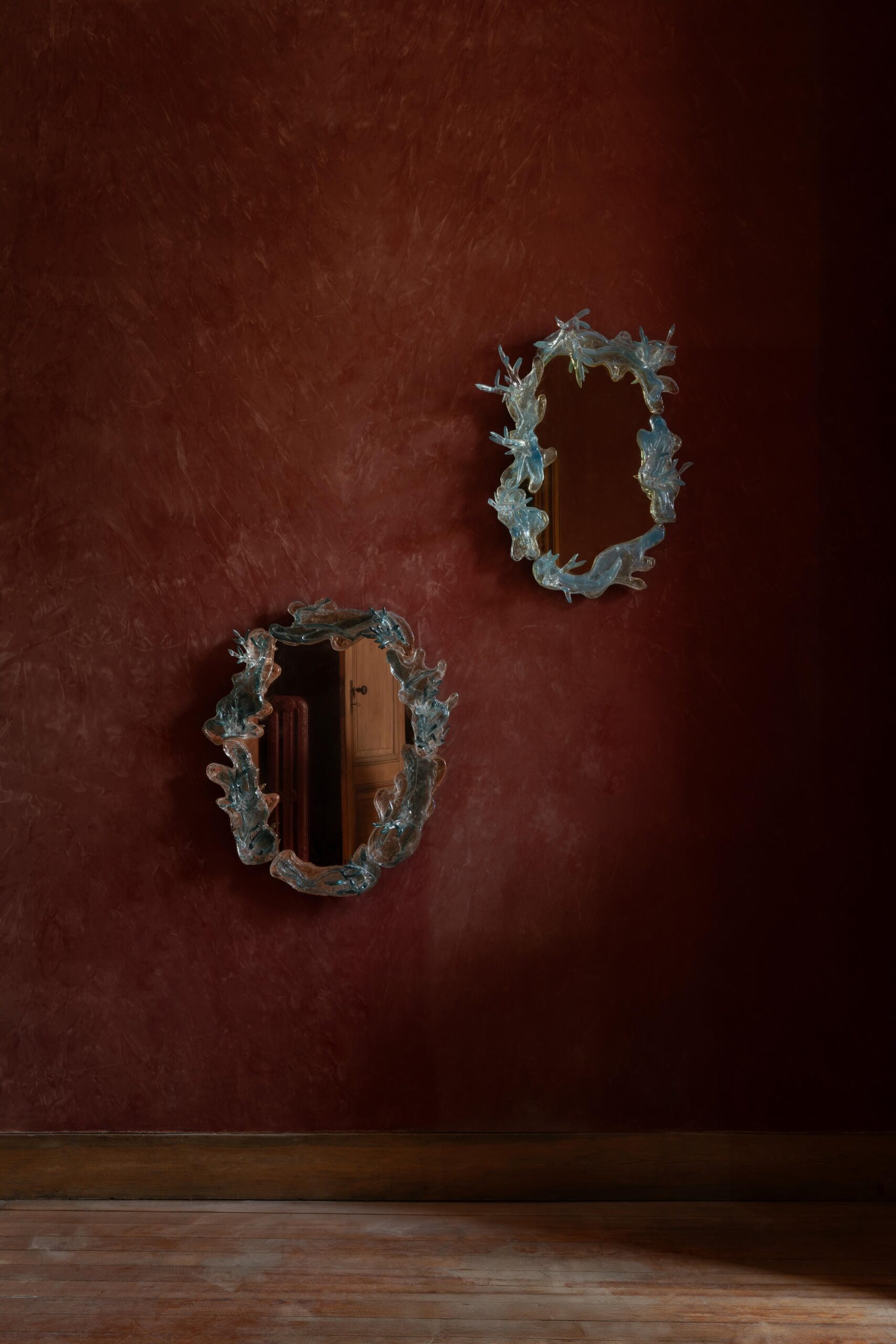
Émilie Lemardeley is a French designer and sculptor whose work explores the relationship between light, material, and emotion. Working primarily with glass and metal, she creates collectible lighting, furniture, and sculptural objects distinguished by their organic forms, luminous presence, and refined craftsmanship. Inspired by Art Nouveau, decorative arts, and the natural world, her creations balance delicacy and strength while celebrating color, movement, and the poetry of everyday life.
After studies at the Institut d’Études Politiques, the École du Louvre in Paris, and the Sotheby’s Institute in London, Lemardeley founded her studio in 2012. Collaborating closely with French artisans, including glassblowers, bronze casters, and metalworkers, she develops works that embody the richness of French savoir-faire while maintaining a distinctly contemporary language.
Through collections such as Dryade, Dionysos, Eole, and Adamas, Émilie Lemardeley creates objects that blur the boundaries between design, sculpture, and ornament, transforming functional pieces into poetic expressions of light and materiality.
Interview
I was born in Bordeaux, on the Atlantic coast of France. And then I traveled a lot and lived in Paris and London.
I don’t remember the objects I was looking at. On the other hand, as I traveled a lot with my parents, I remember the amazement and the attraction that I had systematically when we visited a new city or country, for all kinds of museums or galleries presenting objects or paintings. Even in the smallest village, I would look for a painter’s gallery or a ceramist’s workshop. Discovering local creations in Kenya, Egypt, Namibia, or even on the banks of the Volga was a great pleasure for me. So there was no precise event, but I have always known that artistic expression attracted me. But for me, art is a feeling that can be found in the core of any artwork and everywhere else as well.
Yes, I started by working in a contemporary art gallery in London, and then I worked in the auction of 20th-century furniture at Christie’s in Paris. It was a great experience, because I learned to observe, touch, and preserve incredible objects that looked more like works of art than simple everyday objects. That’s when I realized I wanted to create such objects. I then went back to school and trained to be a designer at Olivier de Serres in Paris. I was 10 years older than the students here, but I knew exactly what I wanted to do: I wanted to create art objects to make our daily lives more beautiful.
The need to make people dream, to embellish their daily lives with my objects. I like to think of my objects as “interior jewels, intended to brighten up the daily life of their owner ». The materials used are often noble and rich, as one would for a jewel – fine gold, bronze, brass, and glass are my favorite materials to work with. Also, the work that I ask the craftsmen is a delicate work which requires a lot of know-how and skills, as one would ask a jeweller to conceive a jewel. In fact, my assembly techniques are close to those of a jeweler, and we use the same polishing tools for metal pieces. All this makes my objects true “everyday treasures.”
I am very interested in jewelry, and I study its shape, the balance between frames and gemstones, and their assembly techniques to highlight the stones. I personally use glass instead of gemstones, but as for jewels, I like to polish the metal and make it shiny. I like to adjust the glassware so that it is highlighted and crowns the object.
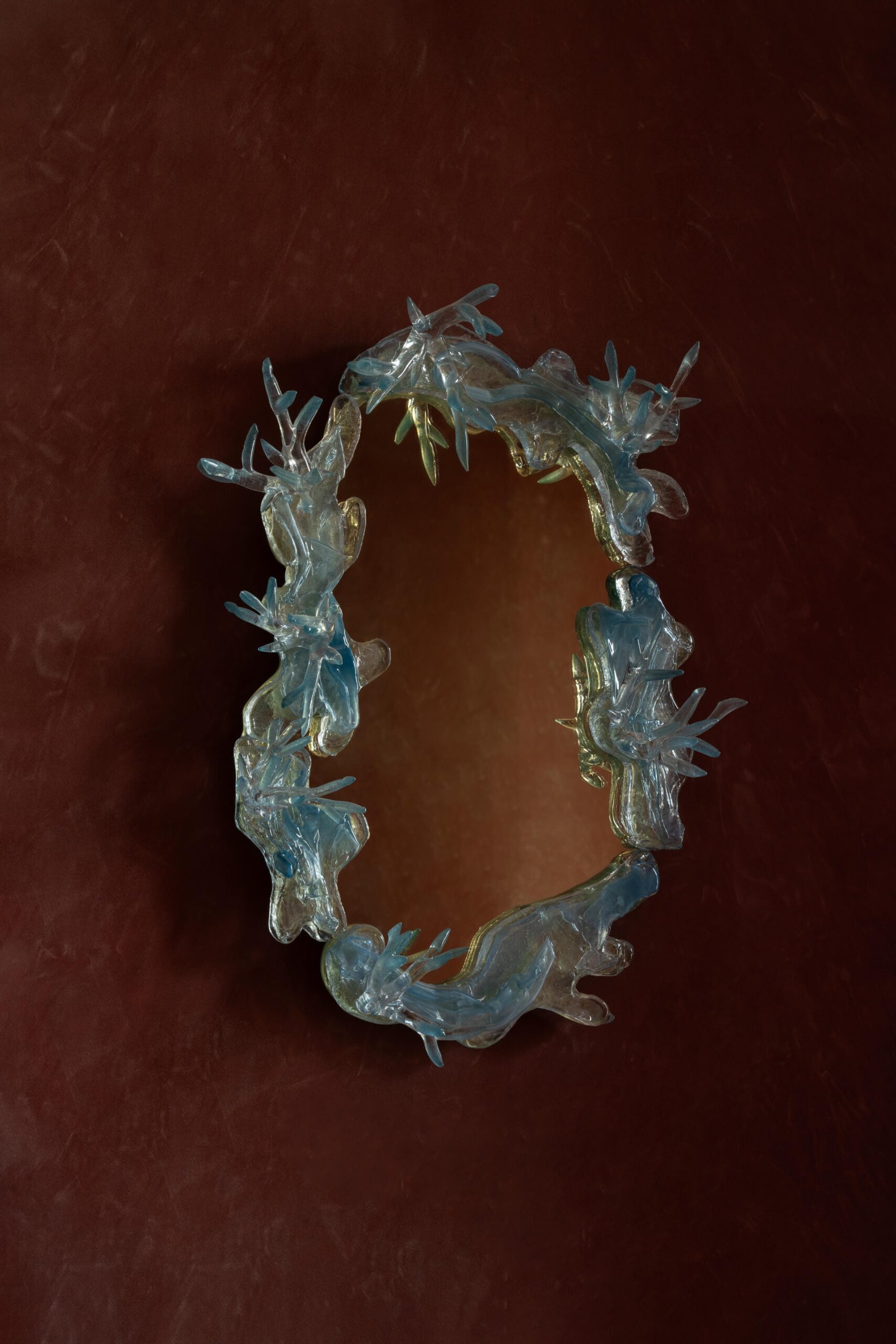
In addition, jewels have a very complex composition; either they are symmetrical, or their form, being small and requiring meticulous work, is very balanced. I consider my objects to be like great jewels, interior jewels. And therefore, I take care of their composition, their balance between glass and metal, their range of colors, and the reflection of their material. I try to create a play of reflections between the different materials (brass, glass, steel). This makes them more alive.
I don’t have a typical daily routine, everyday is different. Except maybe the time I allow myself in the morning when I wake up to capture and feel the dreams of the night. The sleepy phases are very important for my creativity. My ideas always come when my body is resting, whether it’s on a train, in a car, or in bed.
So, in the morning, I often start by drawing and experimenting: I take clay, resin, a sheet of paper, and I create, I test, I pencil.
I often answer my emails, and in the afternoon, I visit the artisans with whom I work to follow the creations in progress.
In the evening, I take care of my children, and then, as I work a lot with the USA, who have a time difference with me, I finish my day by answering their emails.
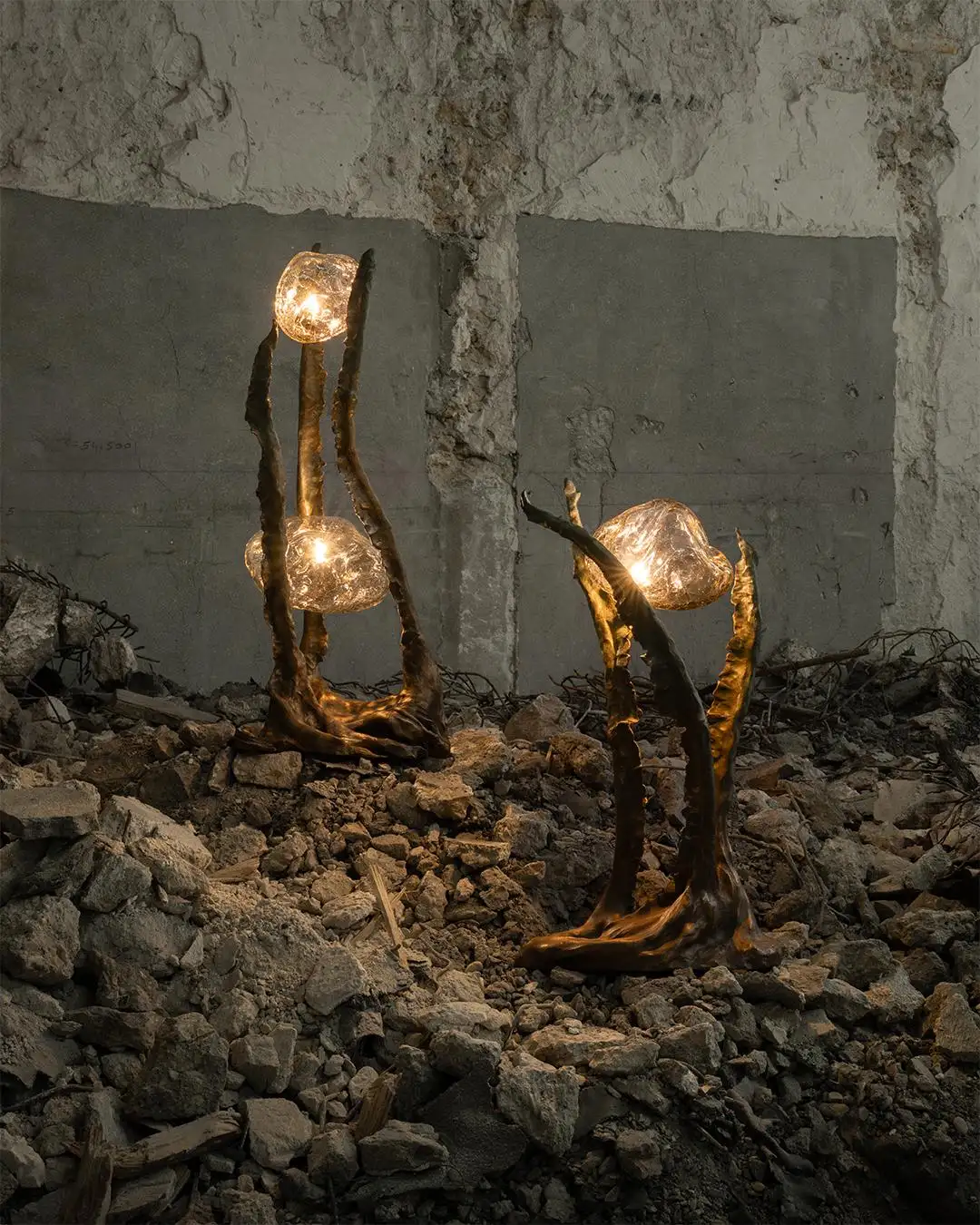
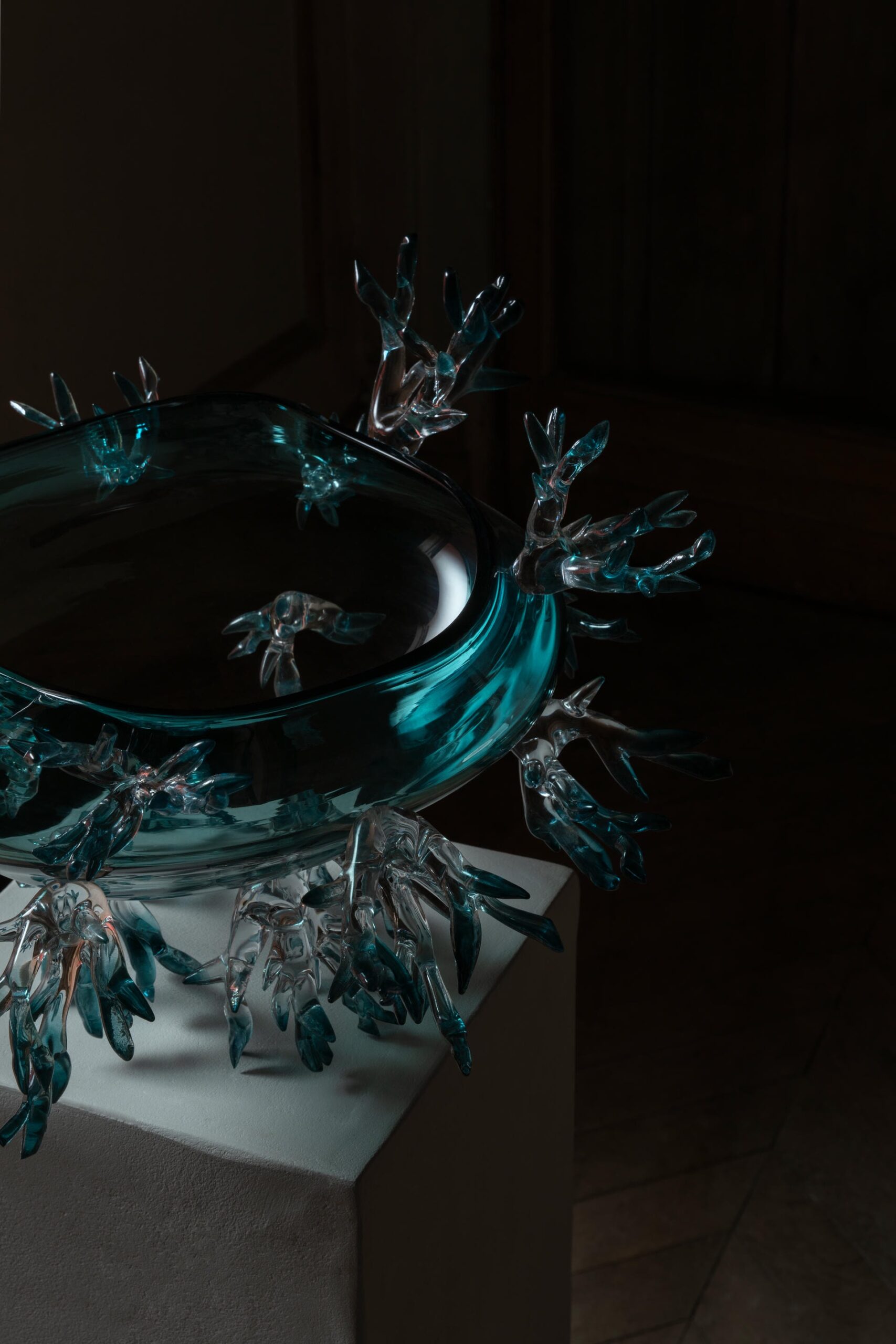
My objects are most of the time made out of glass and metal. It was obvious to me right at the beginning: my goal is to animate the interior living space. My objects, therefore, have sinuous and light forms with varied colors. I came naturally to glass, for the multiple colors and the play of reflections it offers. To make it stand, I chose metal for its finesse and solidity, rather than wood, which seemed heavier to me for making those lights. Metal offers the advantage of finesse and lightens the place of the object in the space. It also offers multiple possibilities of finishes: polished and shiny, brushed and matt, patinated and colored. Everything is allowed.
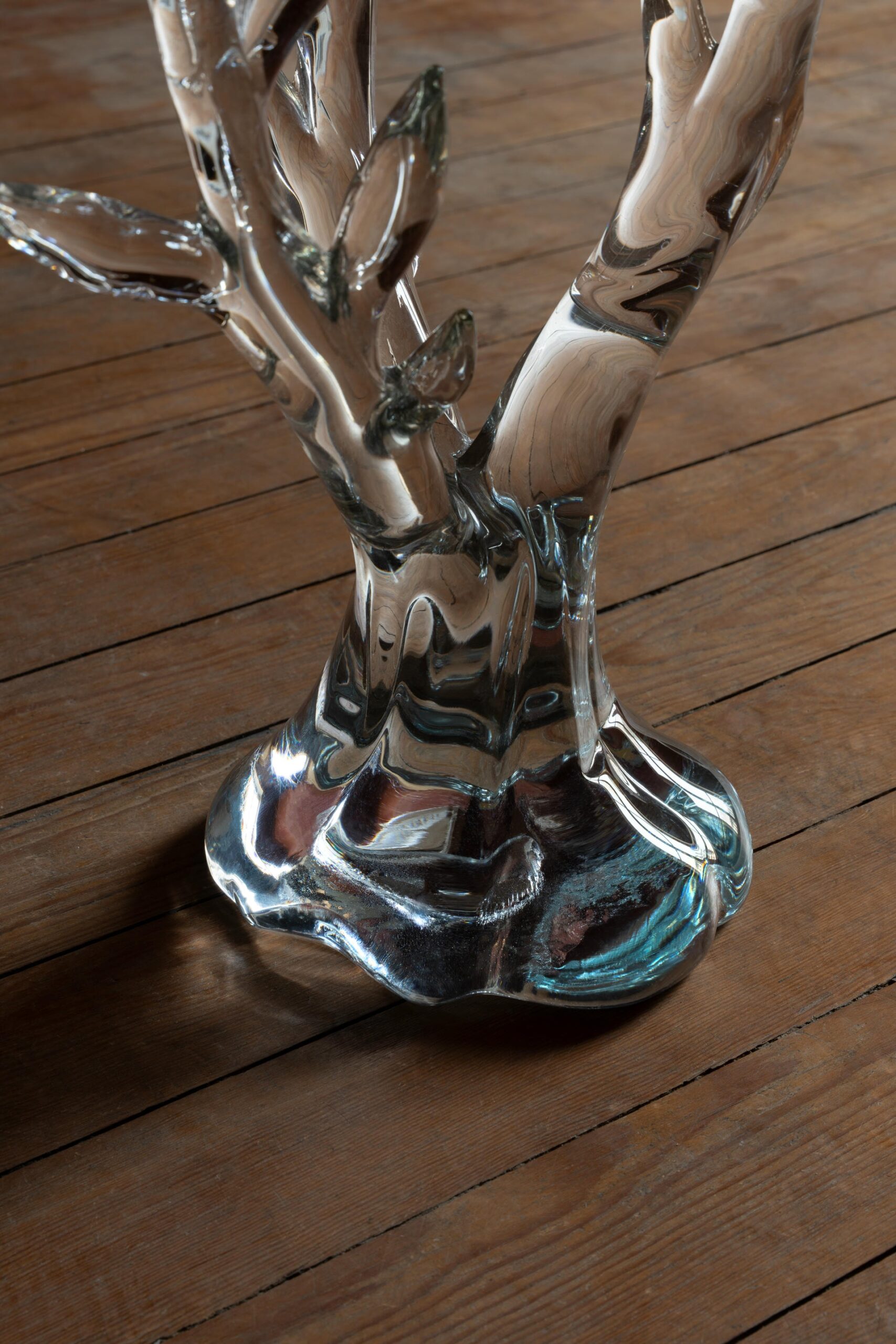
The search for a certain balance. A balance between curves and straights, a balance in the color palette that I decline, a balance between transparency and opacity, between gloss and matte.
I would tell them above all to listen to their heart, and that’s all. Art is the palpable translation of their impalpable identity. I believe that we also create for ourselves and to discover ourselves.
The form is a balance; it resonates in space. When you have found the right composition, you know it; it is an obviousness that imposes itself and destroys everything else. Above all, you have to trust yourself.
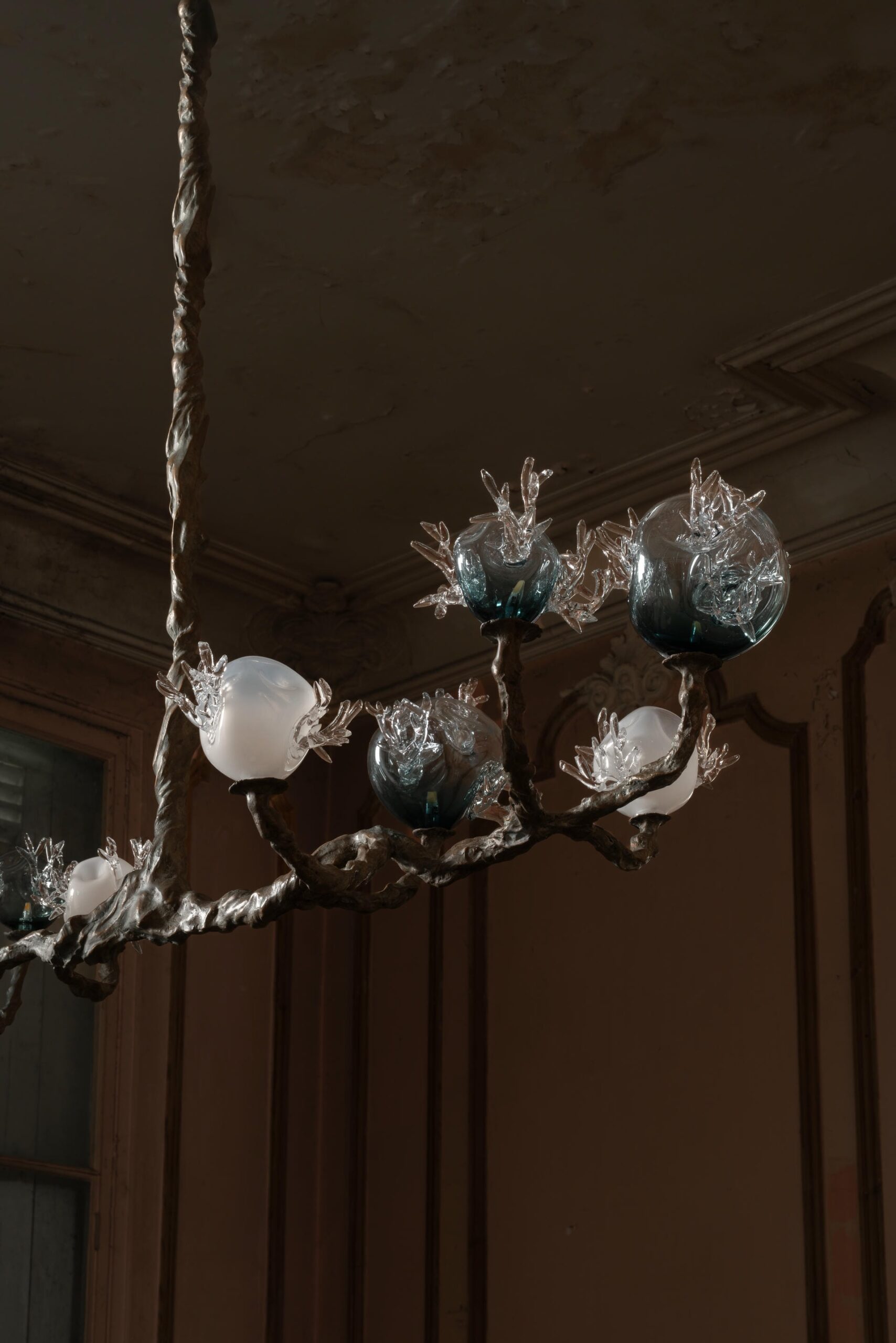
Each object and each sculpture is for me a celebration of life and of our freedom.
My art is ornamental art, and while I used to be a little ashamed of it, now I totally affirm it. My art also has to do with sacred art; it tries to open a door, to bring meaning, and above all, it celebrates color and life. As such, it is close to the art nouveau of the early 20th century.
The golden age of French decorative arts is, for me, the Art Nouveau, and so, I admire Hector Guimard or Gaudí for the incredible creativity and freedom they showed. I also love the Memphis group of the 60s and 70s in Italy, especially for their casualness and freedom with color.
But what moves me the most is perhaps the art of jewelry, made mostly by anonymous craftsmen with patience, know-how, and creativity, often bluffing. Etruscan jewelry in particular has inspired me a lot.
I really love the work of ceramists because I also practice clay, and I find it a good way to see very quickly the scope of an idea, the form, and the reality of the object. I find the work of Agnès Debizet and Veronique Rivemale, two French artists, very interesting. Both of them work with organic form, and their works resonate with me very strongly because of the link they have with nature.
I admire the work of Laurent Grasso, who mixes scientific experience and artistic translation. I find his work extremely varied and different from many current proposals. For me, he has opened a door.
“I like to think of my objects as interior jewels, intended to brighten up the daily life of their owner.”
The Questions
(The Proust Questionnaire is a set of questions answered by the French writer Marcel Proust.
Other historical figures who have answered confession albums are Oscar Wilde,
Karl Marx, Arthur Conan Doyle, Stéphane Mallarmé, Paul Cézanne…)
To love and be loved in return.
Not being able to express myself.
My innocence, but it is also my uniqueness.
Lying.
My husband.
Wanting to make bigger and bigger sculptures!
I am always short of time, as I would like to have enough time and life to carry out all the ideas I have in my mind. Unfortunately, I always feel like I’m leaving thousands of unfinished ideas behind.
To be able to step back from the fast-paced life we lead.
His understanding and support.
Her extravagance.

It’s a French expression: “les chiens aboient la caravane passe”. It’s a phrase my father often used to tell me, which means not to be too concerned about other people’s opinions.
I would like to have many lives!
I would try to be less impatient and more reasonable.
At the moment, a sculpture called “Proue” for a new neighborhood in Clamart, the city where I live.
A pencil to give shape to new ideas.
I dream of a house on a deserted beach, prey to the waves and the wind, an end of the world.
I am not materialistic, the most precious thing for me is my family.
The lack of hope generates the deepest of sadnesses.
Diging the earth in search of new ideas but without preconceived ideas. It is a real pleasure. Also, when I go for a walk or when I’m on vacation, my favorite game is to look for beauty in everyday life and in the flattest banality. Try it, you’ll see, you’ll never be bored again!
The innocent and joyful look I have on the world.
Attention.
Andrée Chedid’s books, whose descriptions are heart-touching and are like large open book paintings.
Peter Pan.
–
Philosophers who can think differently about the world. Shamans who see other realities than what we see.
My children’s names are Achilles, Caesar and Iris.
The lack of clarity in a speech. Speech is extremely important and using it badly is dangerous.
Not being able to choose between living at the end of the world and living in a big city. I like both and so for the moment I am dissatisfied.
Loved and gathered with the ones I love.
–
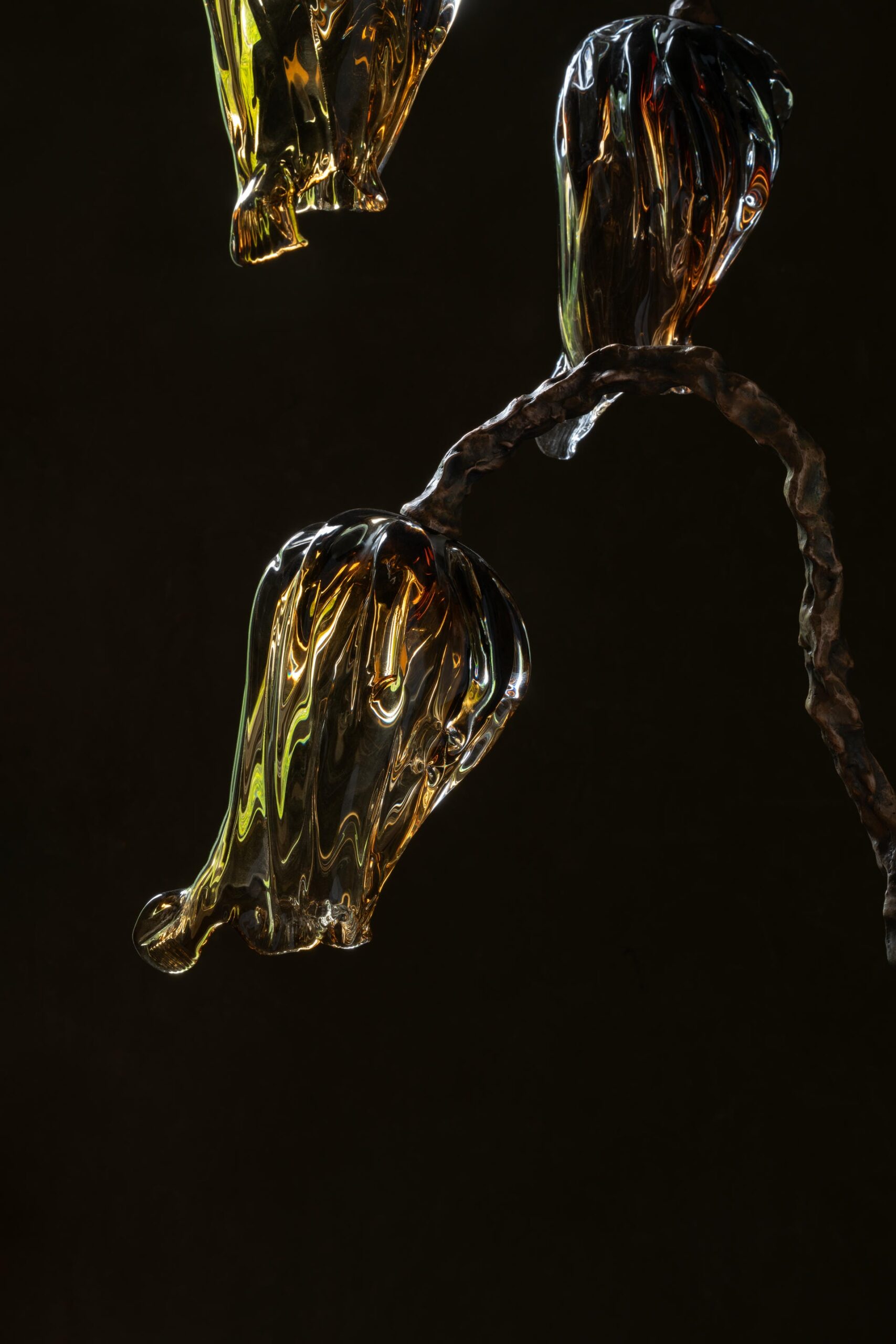
“Each object and each sculpture is for me a celebration of life and of our freedom.”
SHARE :