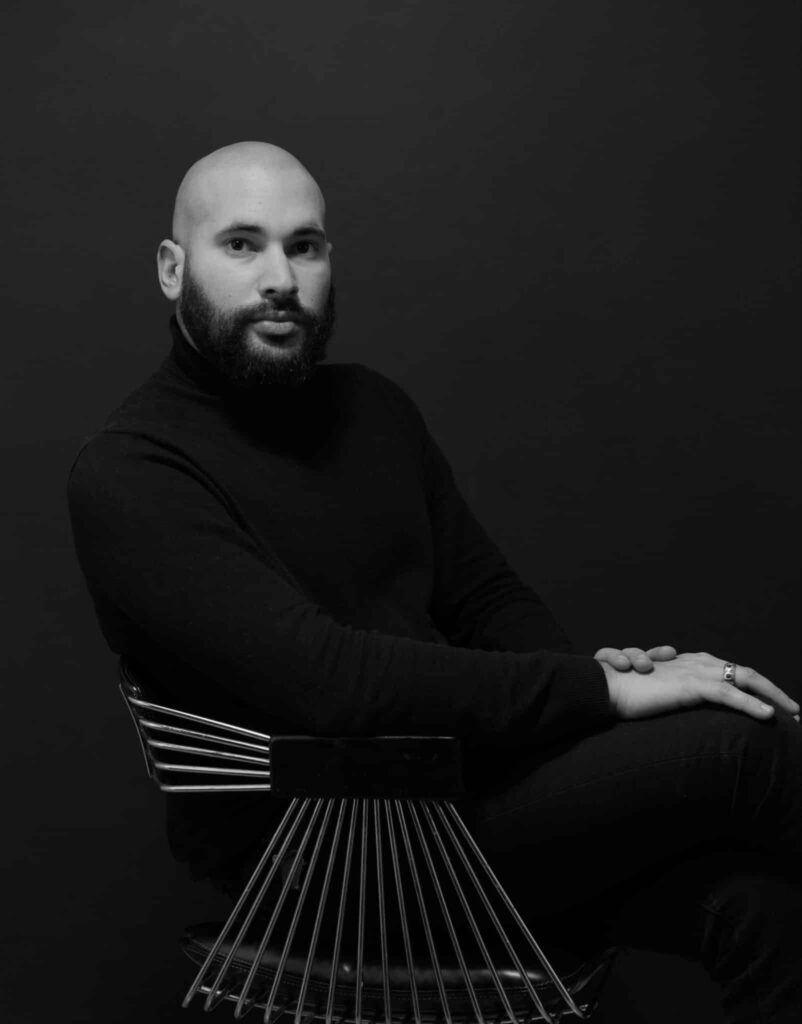
Ghislain Ayoub
Interview
Born and raised in France, currently living in Brussels, Belgium.
Probably a representation of the Caravage « Saint Jerome writing » hanging on a friend’s house wall.
As a kid, I was really impressed by the subject, the ambiance, and the silence that emanates from the scene.
Yes, most of the time. As a teenager, I attended an Applied Arts school, where I was interested in Art History, and finally graduated and began working in the field of the Antiques Art Market.
My experience in the field of Decorative Arts brought me the culture that I once lacked. It is also what made me discover the different techniques artists have used for centuries. This is how I noticed my attraction to metal objects and furniture. I didn’t know what I was venturing into (!)
Frequently, it comes from things I am passionate about, like natural sciences, Art History, myths, unexplored or fantasized universes, so when these universes crossed each other, this is the moment I want to create.
It never takes me a very long time to find a subject and start making, but the realization always takes more time.
Working and creating are always fun. None of these days pass by without music; it’s an essential ingredient, so first things first, that’s how it begins. I’m not an early bird, but I like to work directly after waking up.
Daytimes are often devoted to the metal work, and when the night comes, it’s essentially sculpting wax, 3D modeling, or drawing plans.
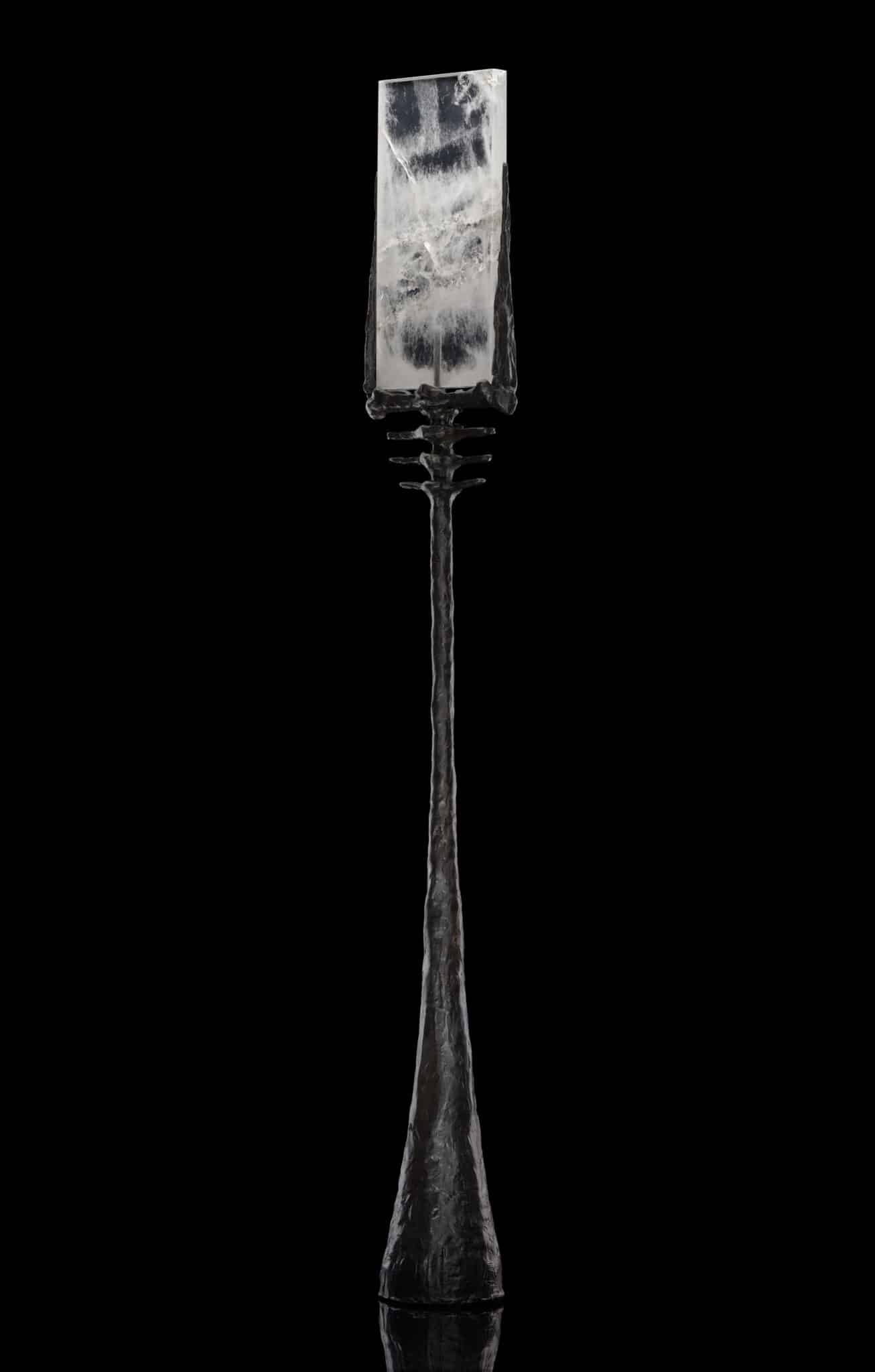
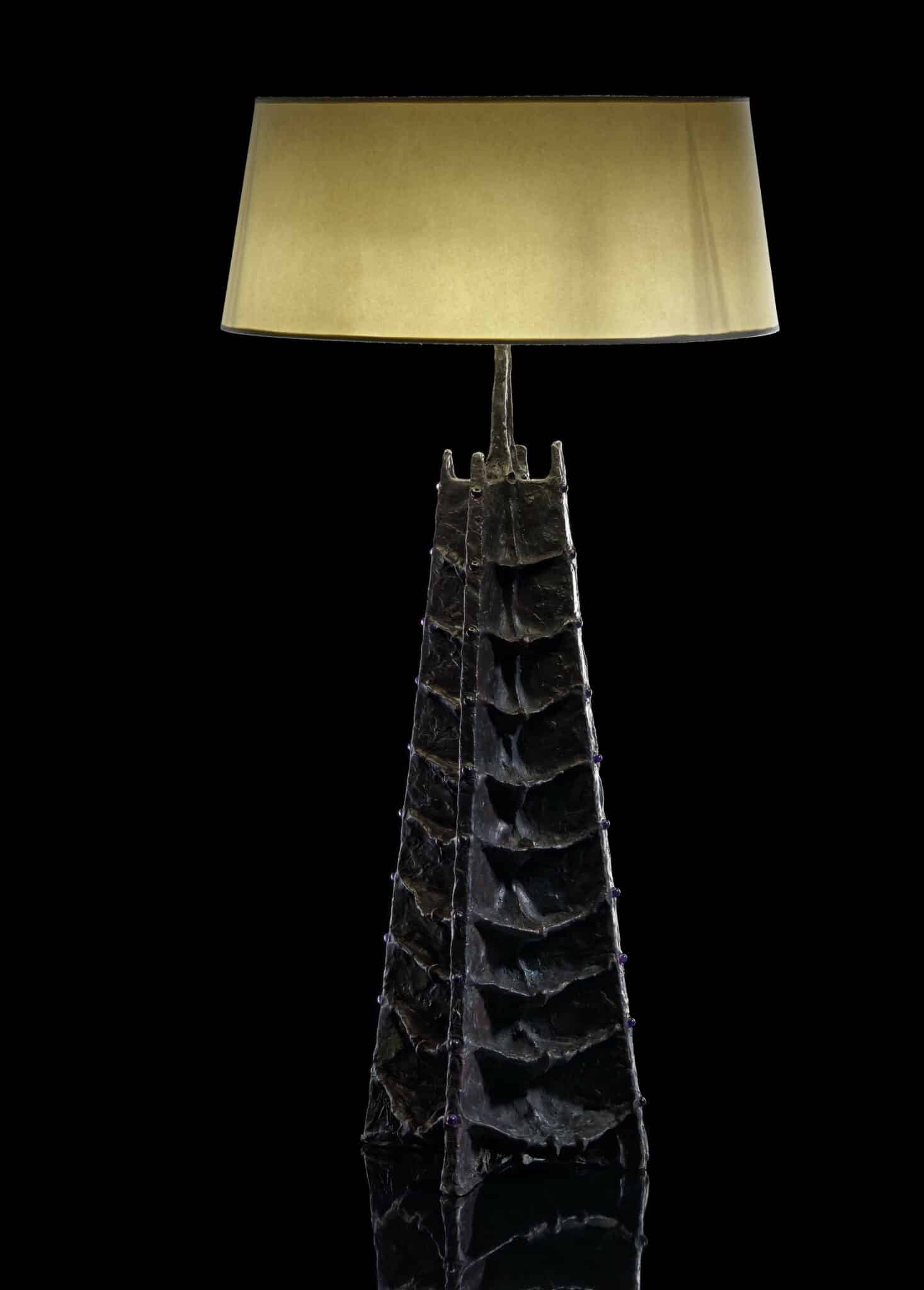
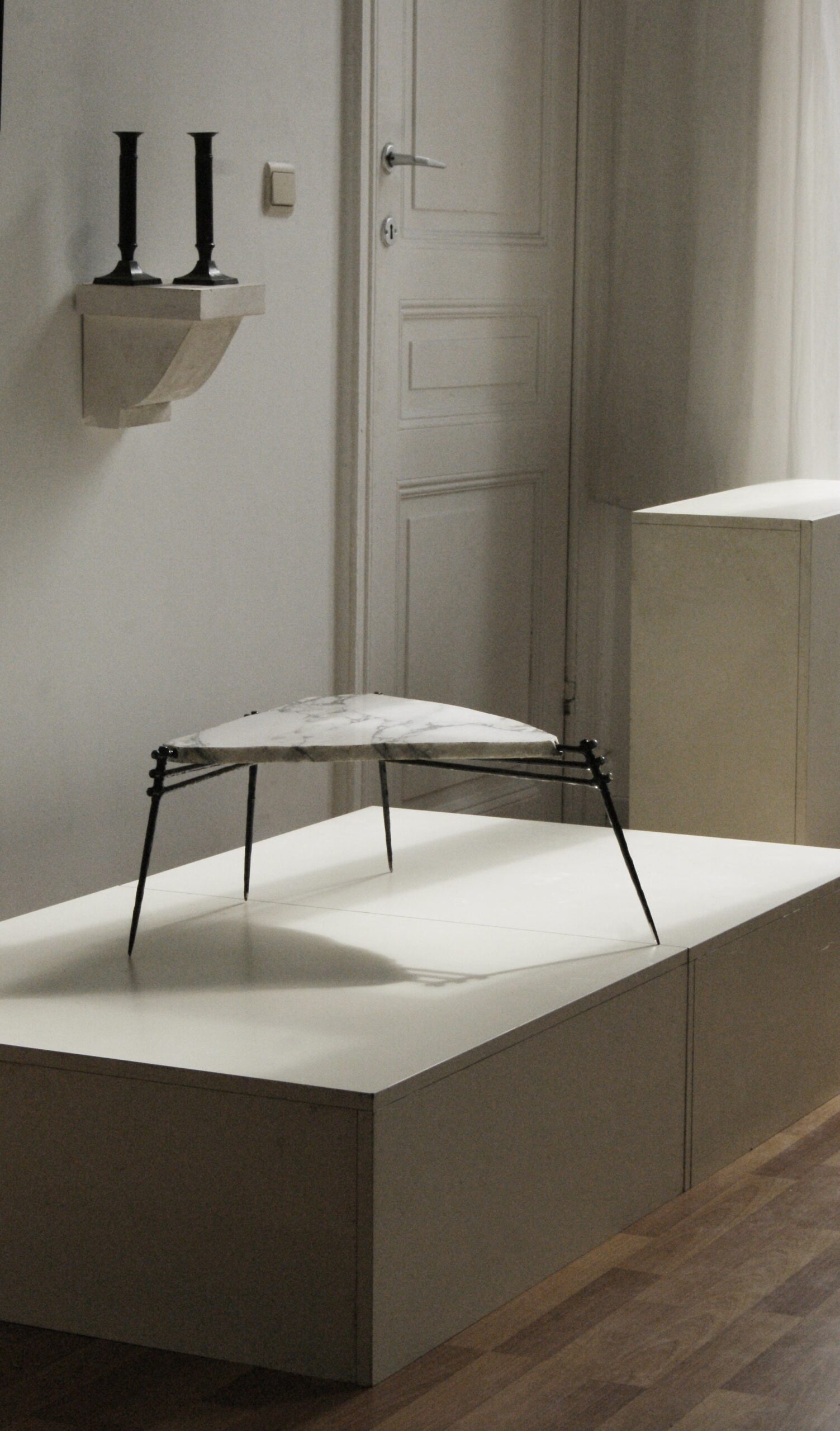
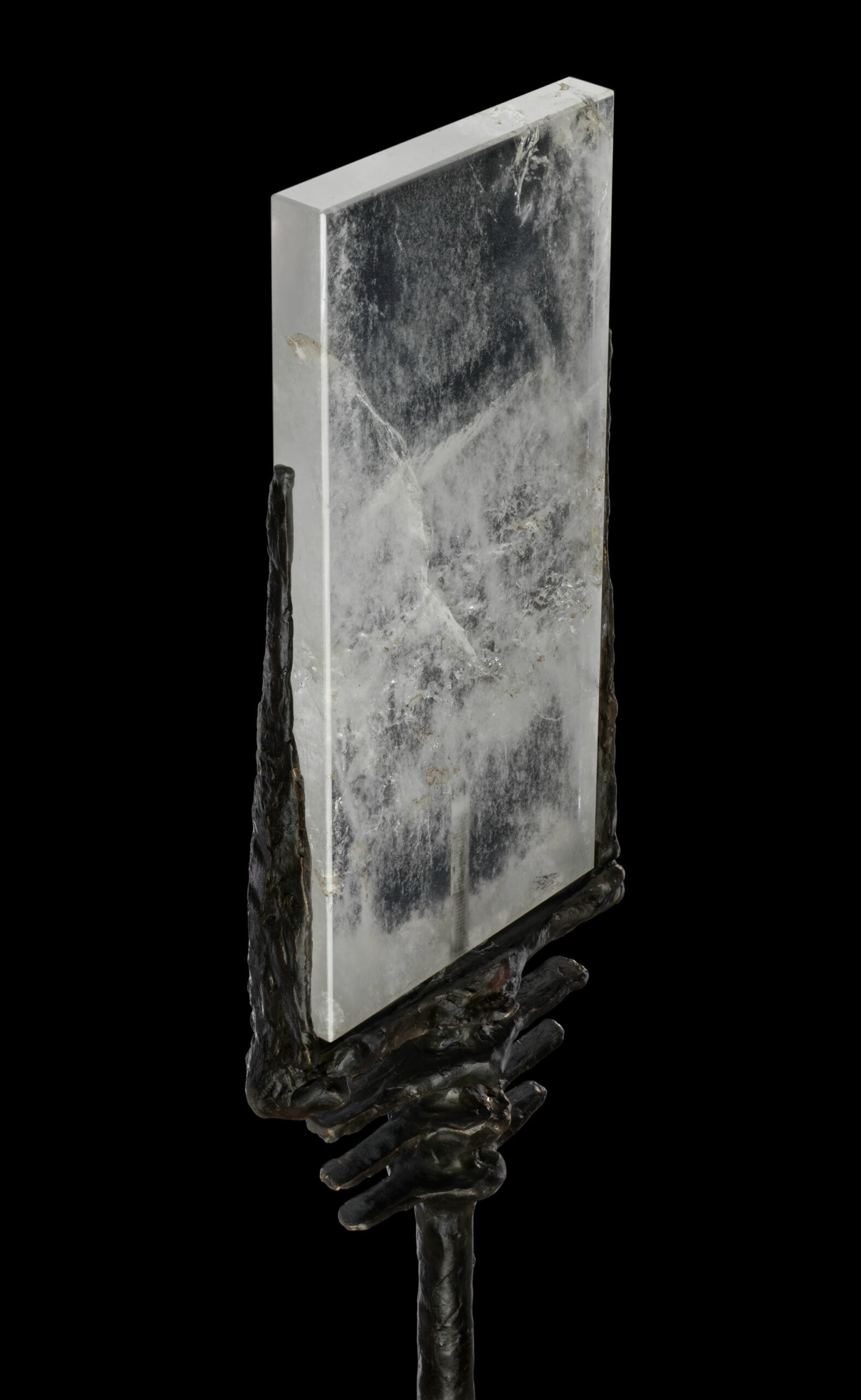
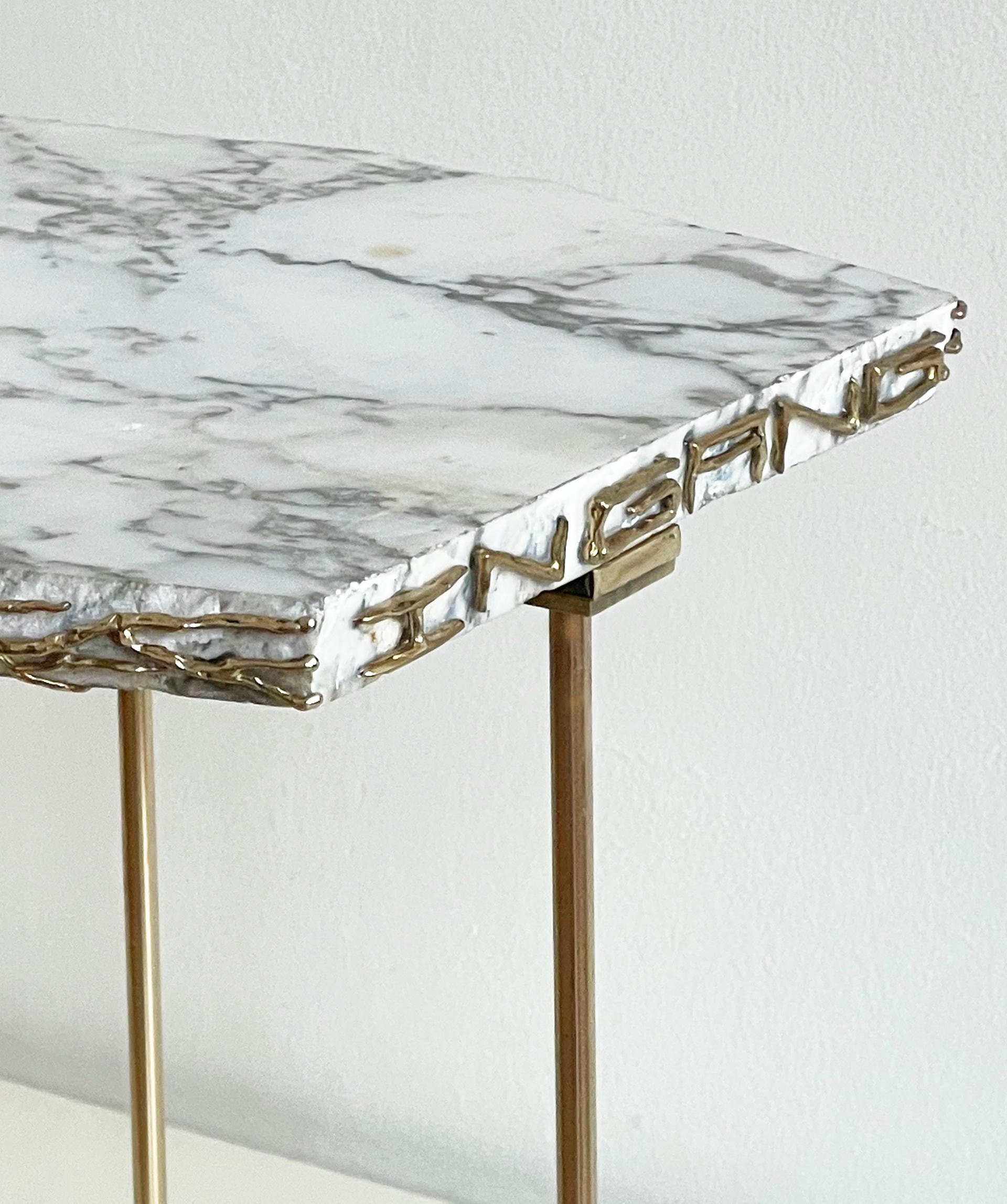
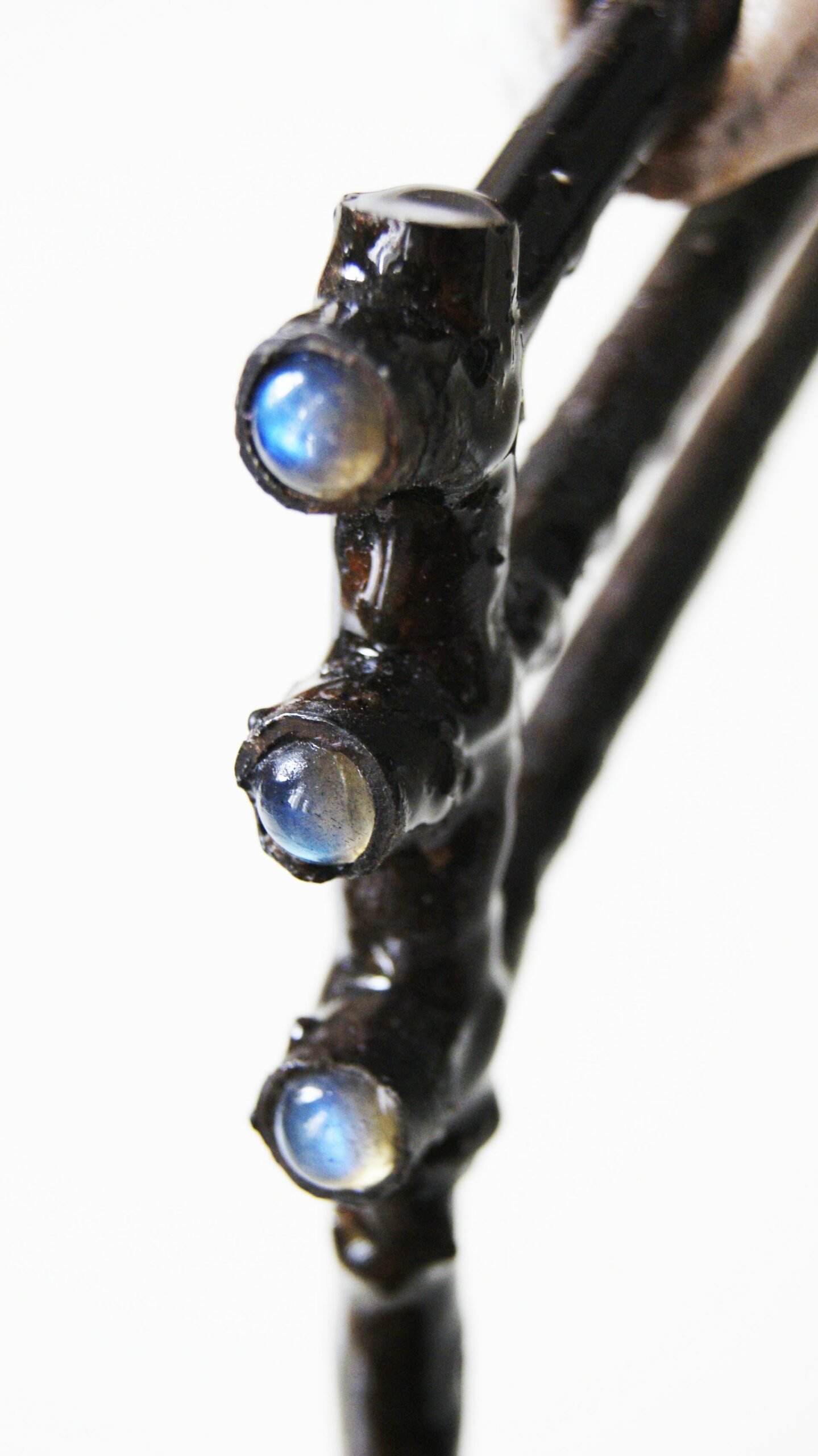
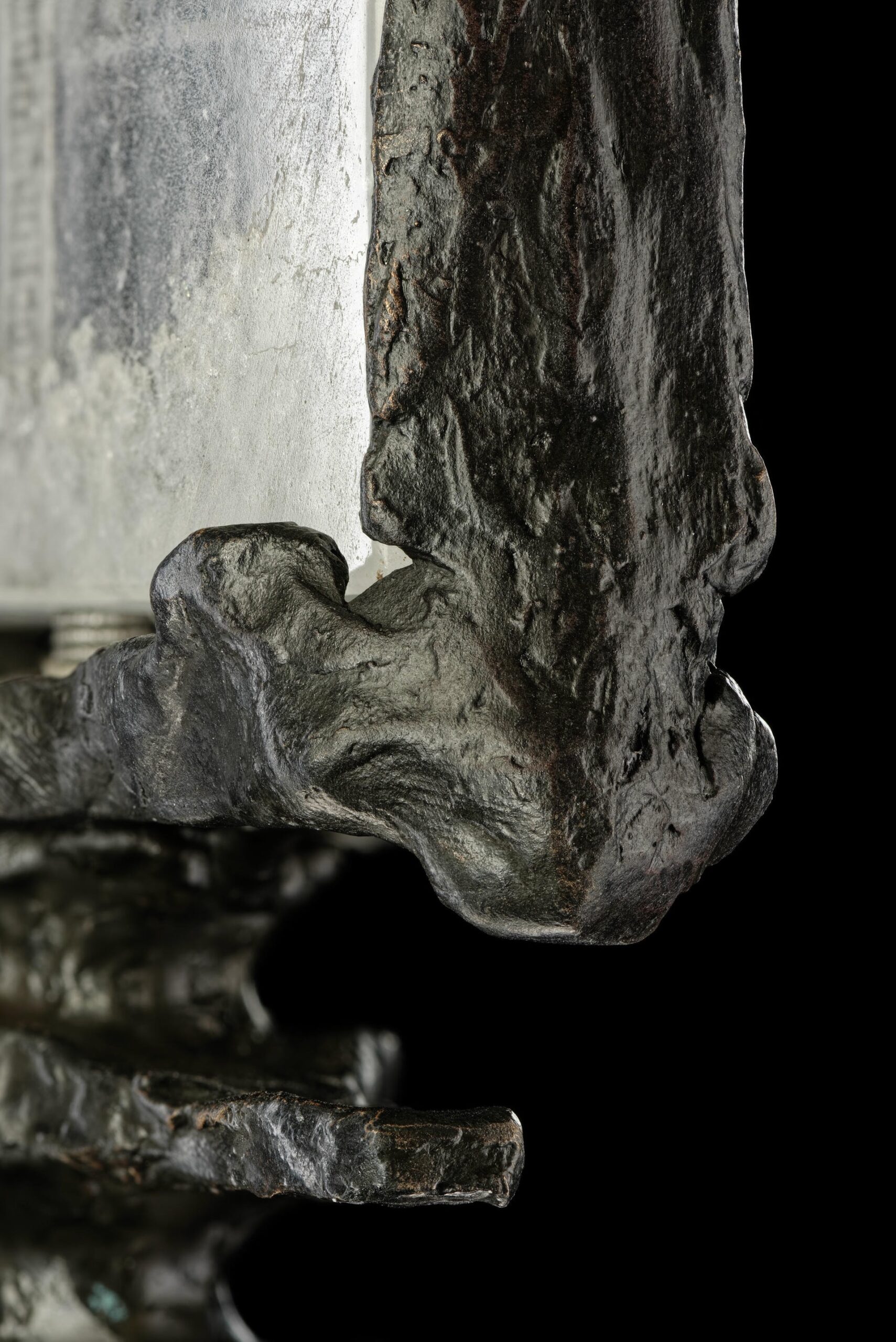
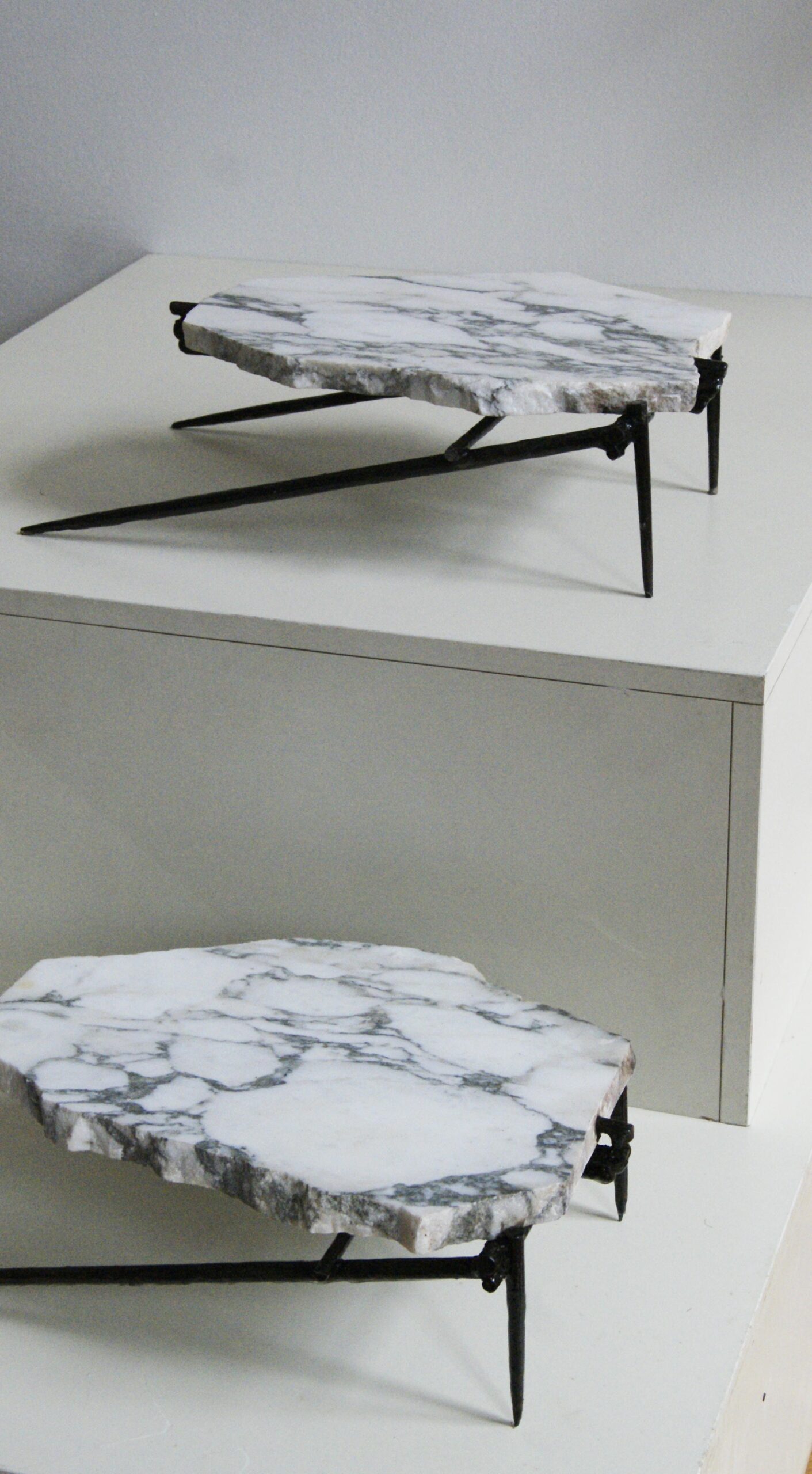
I like to create objects with clean, raw lines, but at the same time, highlighting a certain vulnerability, a preciousness. I like that contrast, that’s what inspires me most of the time. Stone is hard but can be clear like water, metal can be clean, shiny, and sharp, as well as rusty and bubbly. The important thing is to set a play in between these materials, to create a reaction, a dynamic, a story.
Doing objects that look like jewelry that would have grown underground.
Don’t expect others to make choices for you.
Bio-Archaïsm.
Josef Hoffmann and most of the Wiener Werkstatte members, Marc Duplantier, H.R Giger, Alberto Giacometti.
Too many to make a selection.
Steve Reich, Zaytoven, Nigo.
RADICAL.
“Doing objects that look like jewelry that would have grown underground.”
The Questions
(The Proust Questionnaire is a set of questions answered by the French writer Marcel Proust.
Other historical figures who have answered confession albums are Oscar Wilde,
Karl Marx, Arthur Conan Doyle, Stéphane Mallarmé, Paul Cézanne…)
A nice mango.
Losing my senses.
Procrastination.
Conformism.
My parents.
My gold grillz.
Stay true.
Honesty.
Eloquence.
Same.
« You know what I’m saying ».
Time traveling.
Though the question isn’t it?
Too early to talk about it I guess.
An old tree.
Where my love is.
Love.
Servitude.
Searching for antique stuff.
Sarcastic.
Sense of humor and trust.
–
Gordon Freeman.
–
–
Strapontin, pediluve.
Pastis.
I don’t know yet.
Probably from laughing too hard.
Cher Pelo.

Stacked from 50 images. Method=B (R=8,S=4)
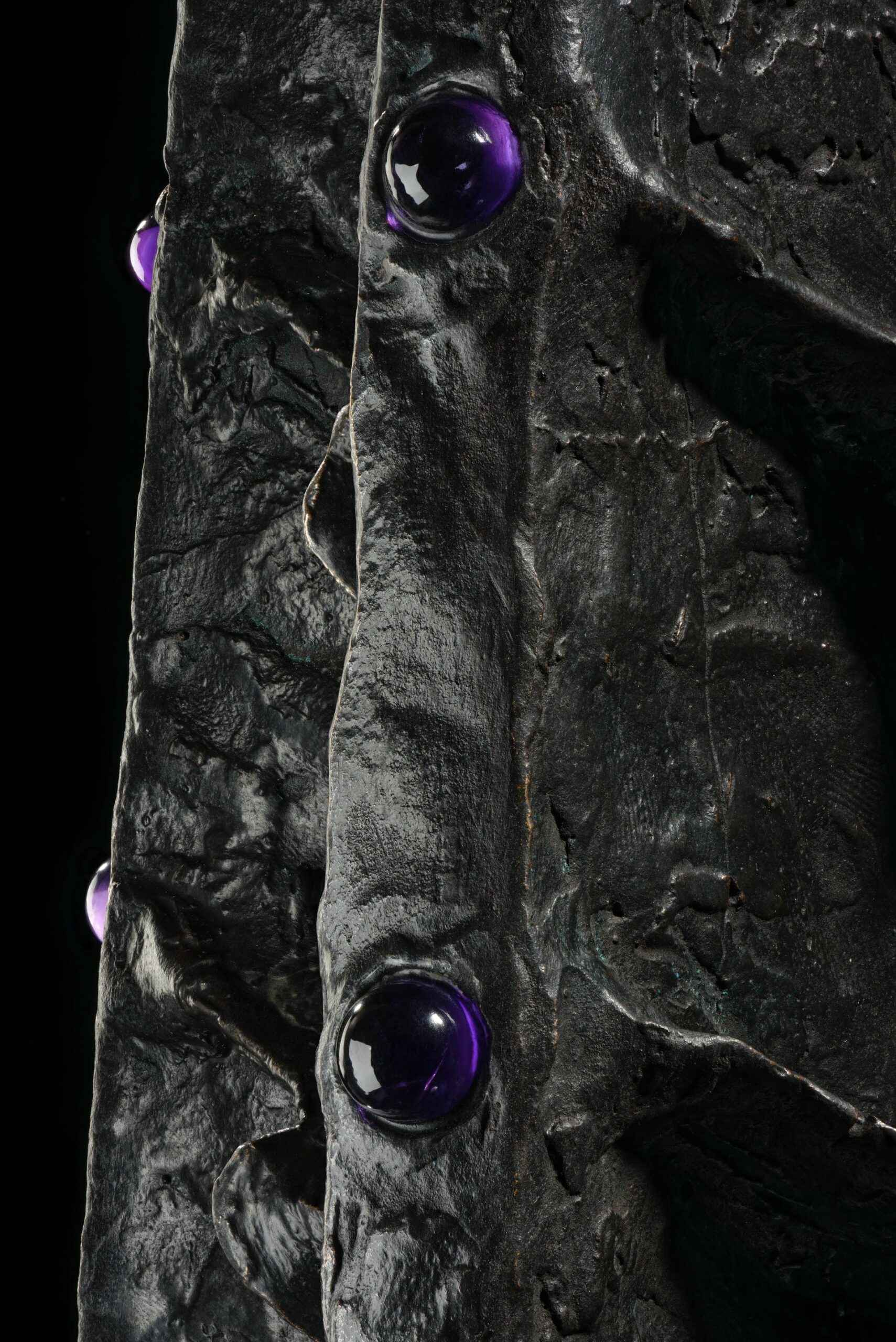
“The important thing is to set a play in between these materials, to create a reaction, a dynamic, a story.”


Stacked from 26 images. Method=B (R=8,S=4) 
SHARE :