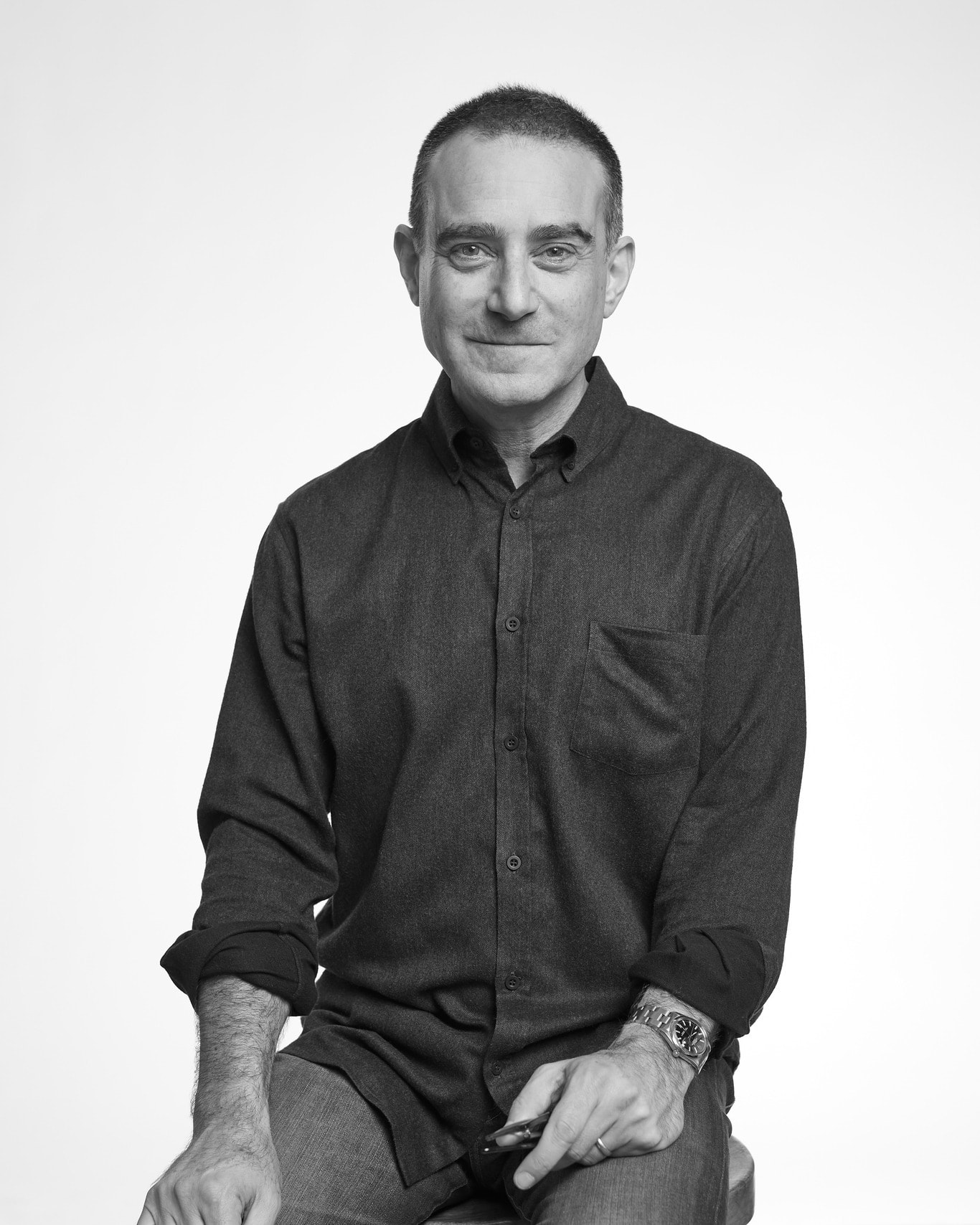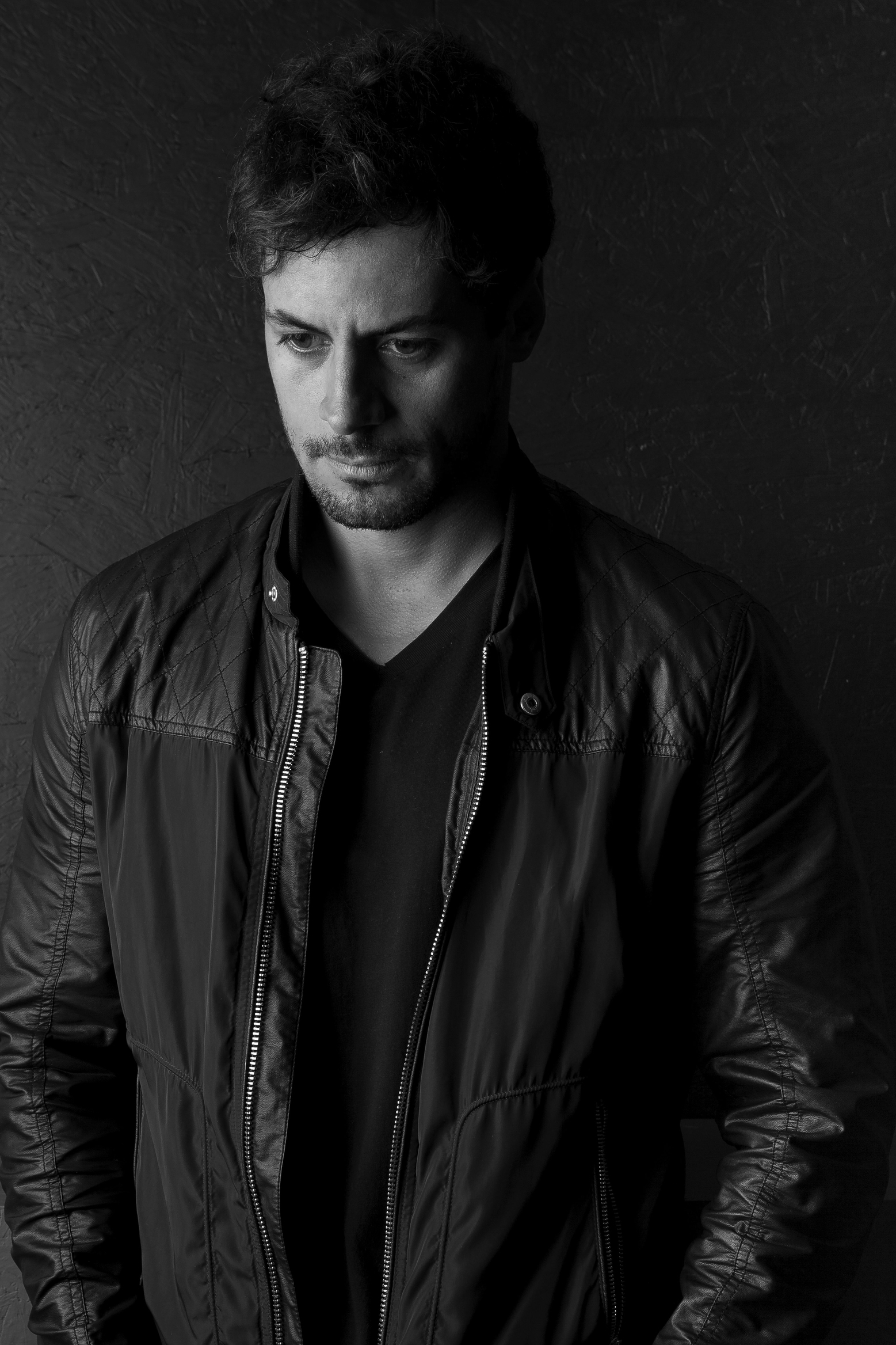
Jules Lobgeois
Jules Lobgeois is a French designer and sculptor whose work exists at the intersection of functional object and sculpture. Educated in industrial design at ENSAAMA Olivier de Serres in Paris and the DSAA Laab in Rennes, he gradually shifted his focus from design toward a more sculptural practice, developing a distinctive language shaped by craftsmanship, material exploration, and a close relationship with the natural world. Working from his studio in northern France, surrounded by forests and open landscapes, he creates pieces that balance organic vitality with formal precision.
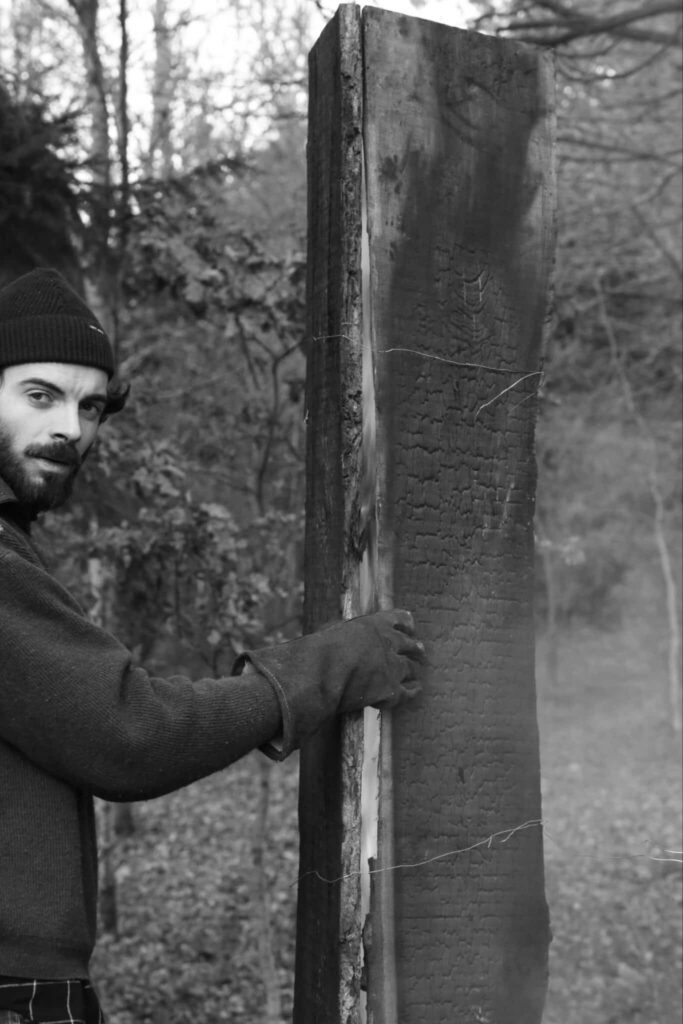
Drawing on training in both metalworking and wood sculpture, notably through his collaboration with sculptor Kaspar Hamacher, Lobgeois creates unique works that bring together the warmth of wood and the structural clarity of metal. Often using timber from fallen trees, he approaches each piece through an intuitive dialogue with the material, revealing its grain, volume, and character through carving, burning, and shaping. His works explore the relationship between light and shadow, function and sculpture, resulting in objects that are at once poetic, tactile, and deeply rooted in the living qualities of their materials.
Interview
Born in 1994, I live and work in a village in Hauts-de-France surrounded by forests.
When I was ten years old I used to go every Saturday to my father’s photo studio. We would develop the negatives together, it was a privileged moment for me.
I also worked for a custom bicycle frame manufacturer. I learned welding and precision there.
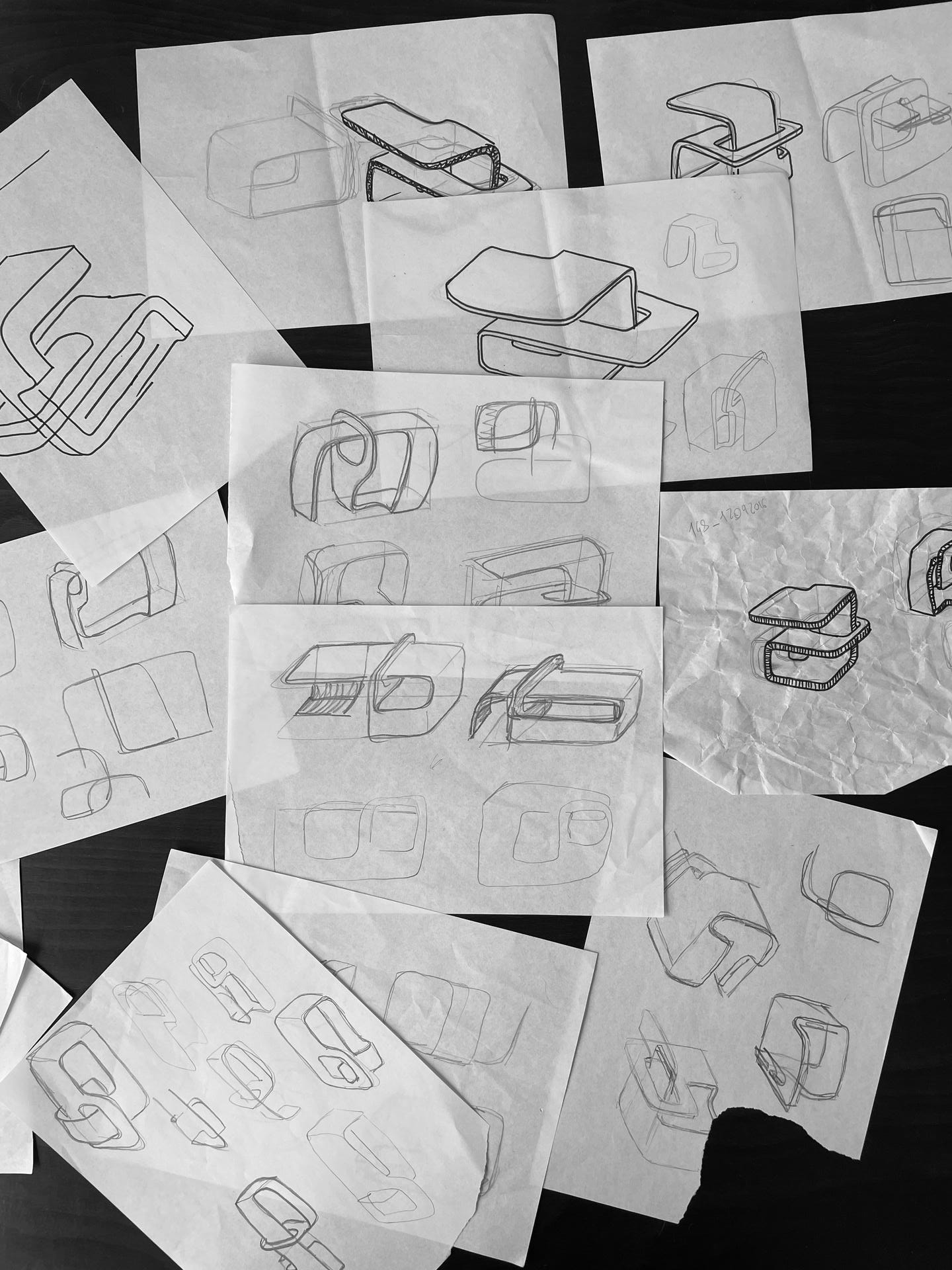
As a child, I wanted to become a car designer. I joined the Olivier de Serres school in Paris, then during my studies I gradually moved towards sculpture.
My creative process is influenced by my environment and my workplace: in a wood, under the open sky, surrounded by trees. Time is punctuated by the rustling of the fauna and flora. Naturally, I transcribe the physiognomic and physical characteristics of the living around me.
It was while working in the Atelier Banneel on the restoration of Jean Prouvé’s structures that I discovered steel work. My attraction to solid wood sculpture came from contact with the Belgian artist Kaspar Hamacher.
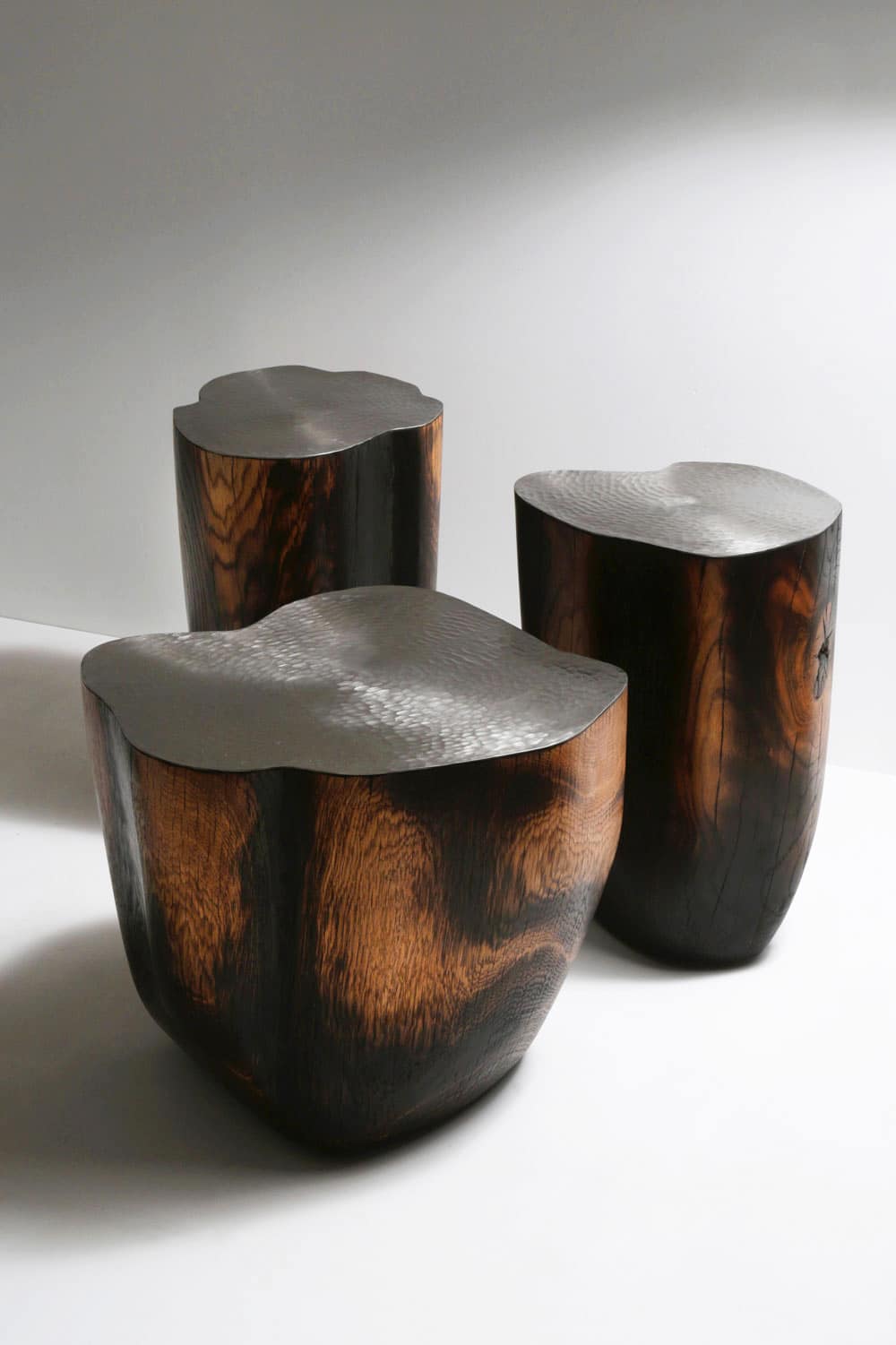
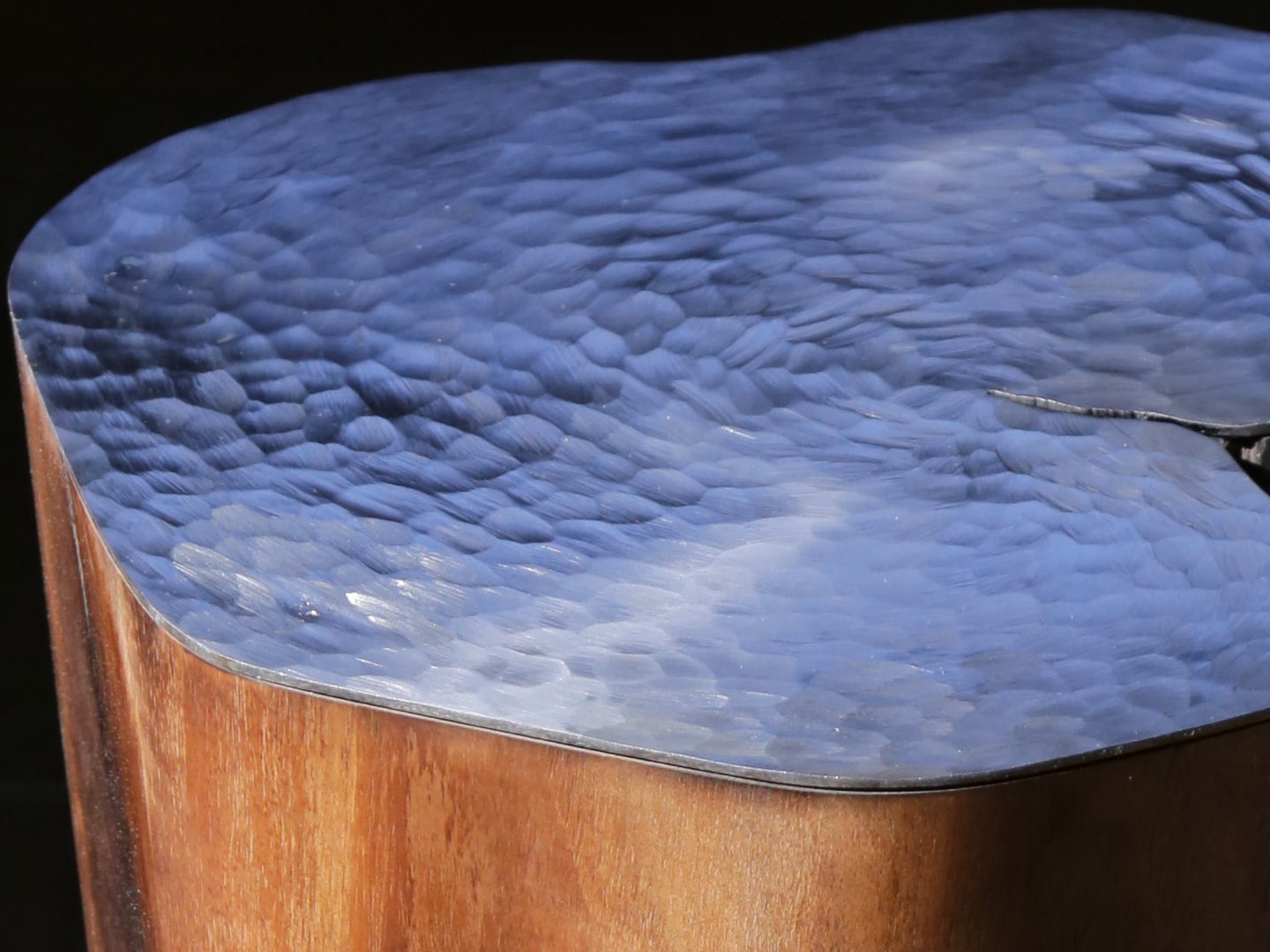
Halfway between a functional object and a sculpture, I intuitively shape pieces whose light is almost inherent to them. I burn the wood after I have carved it, using the fire as a paintbrush to emphasize the curves of my sculptures and produce shadows. For the same purpose, I deform and sculpt steel to make it glow in the dark.
Sculpt with your heart.
I admire Charlotte Perriand and Jean Prouvé for their accuracy in the choice and use of materials. I think it is important to have a production and a use of the material, in coherence with its time.
Eugénie Touzé, her video work is a gentle orchestration of chance. She provokes scenes in the infinitely large or the infinitely small. These are subjects that touch me for their mixture of authenticity and fantasy.
«From the shadow to the light.»
“My creative process is influenced by my environment and my workplace: in a wood, under the open sky, surrounded by trees.”
The Questions
(The Proust Questionnaire is a set of questions answered by the French writer Marcel Proust.
Other historical figures who have answered confession albums are Oscar Wilde,
Karl Marx, Arthur Conan Doyle, Stéphane Mallarmé, Paul Cézanne…)
SHARE :