La Fabrique Noire
La Fabrique Noire is a French design studio whose practice explores the intersection of architecture, furniture, and collectible design. Rooted in a strong appreciation for craftsmanship and material experimentation, the studio creates sculptural objects and interiors that balance functional clarity with a refined artistic sensibility. Through a careful dialogue between form, texture, and proportion, its work seeks to evoke quiet emotion while celebrating the expressive qualities of natural materials.
Working across limited-edition furniture, bespoke commissions, and spatial design, La Fabrique Noire develops pieces that blur the boundaries between art and design. Guided by a commitment to artisanal production and timeless aesthetics, the studio creates contemporary works distinguished by their tactile presence, understated elegance, and enduring relationship with materiality.
Interview
I live in Belgium, Fontaine-l’Évêque. I’m from Namur in Belgium.
The first time I was connected to the art world, it was unconsciously at the beginning of my life, when I saw nature; for me, art is everywhere in nature.
No, I was a steel craftsman in the industry before.
Passion for handmade, the liberty, the happiness sensation when I create, the possibility to transmit a message.
My creative process is a transmission of my moment feeling, my moment emotion.
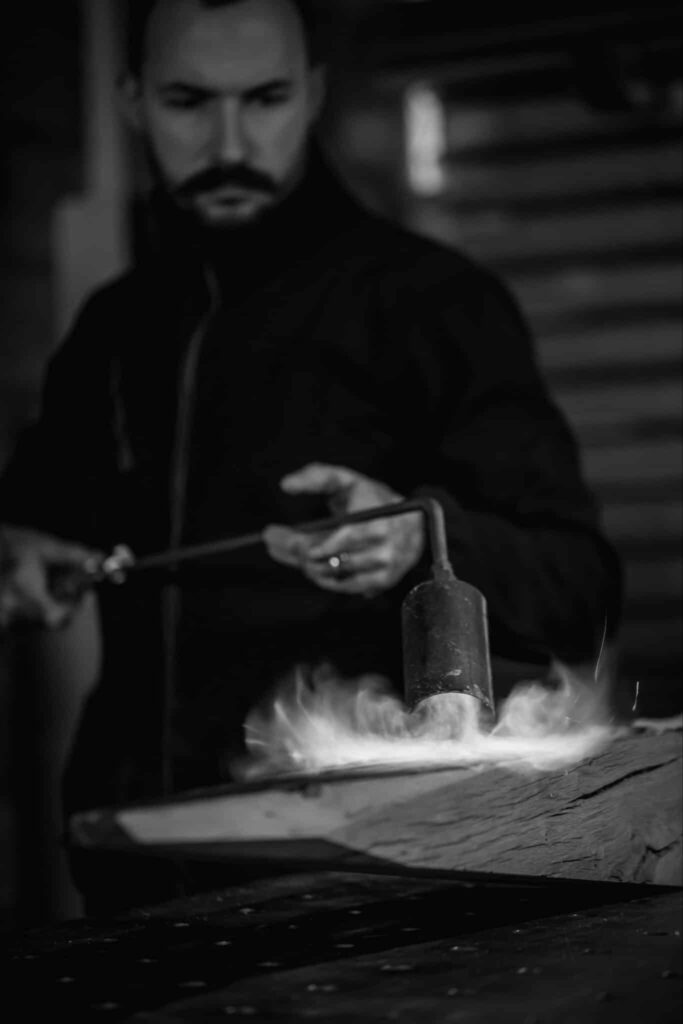
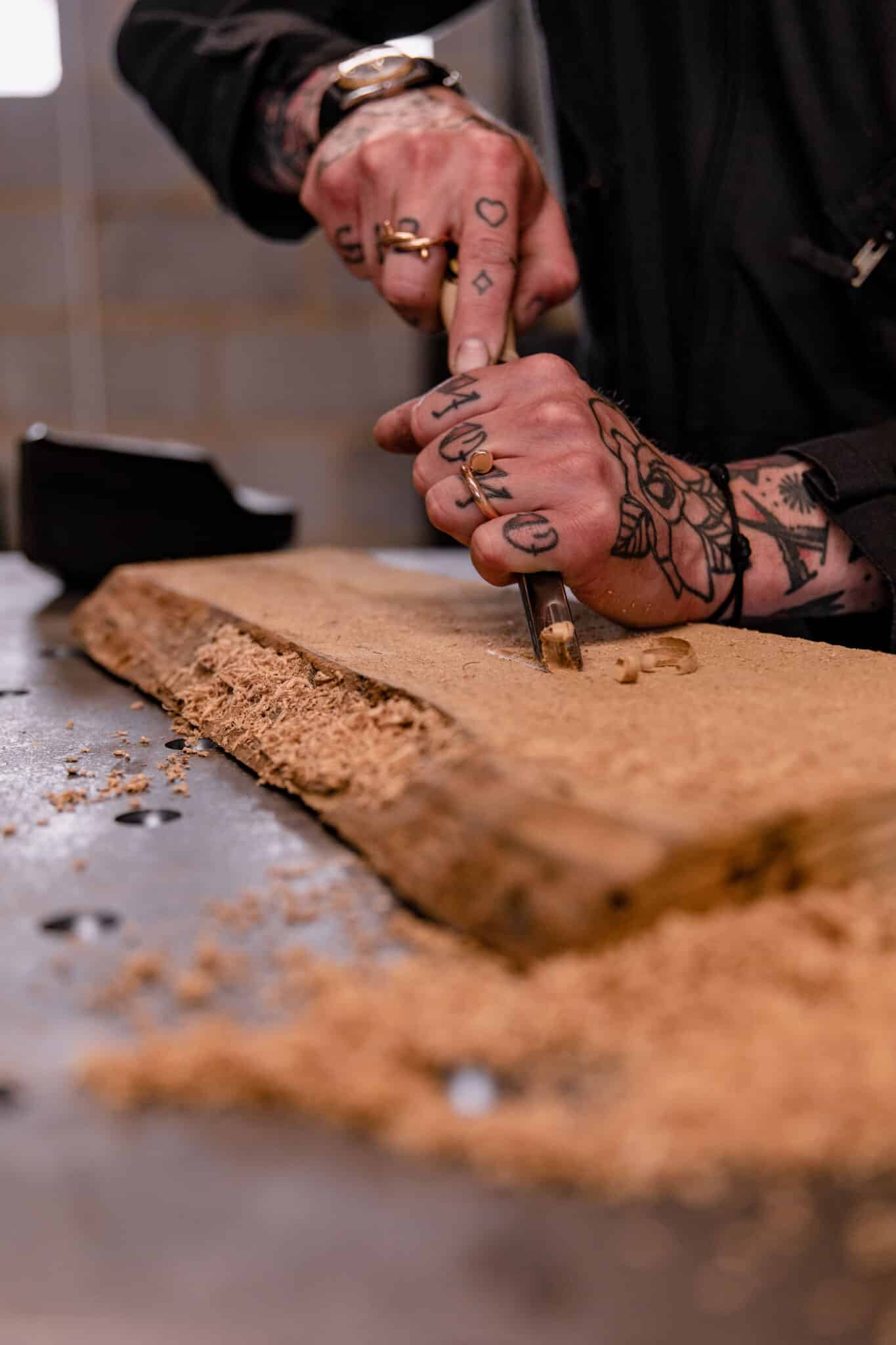
I always start my workday with a cup of coffee! But the real beginning was yesterday, when I thought, when I dreamed that I would do this or that. After coffee, I look at raw materials during some times, and inspiration comes to me. Depending on my inspiration, I start with woodworking or steel working or stone working. I work until my spirit is connected; I take a break when I feel it. The day is a mix of work, thoughts, and emotions. It’s different every day.
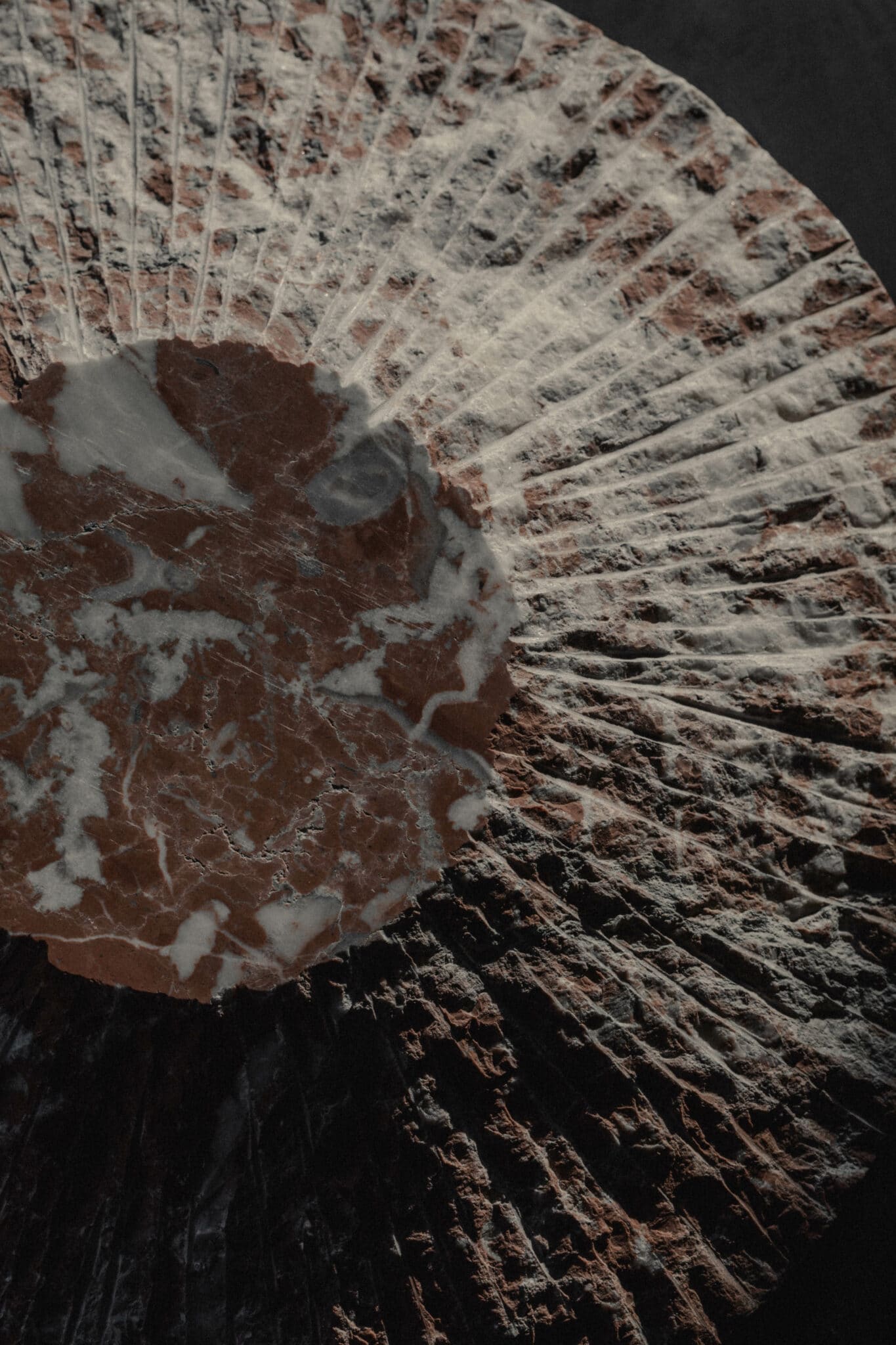
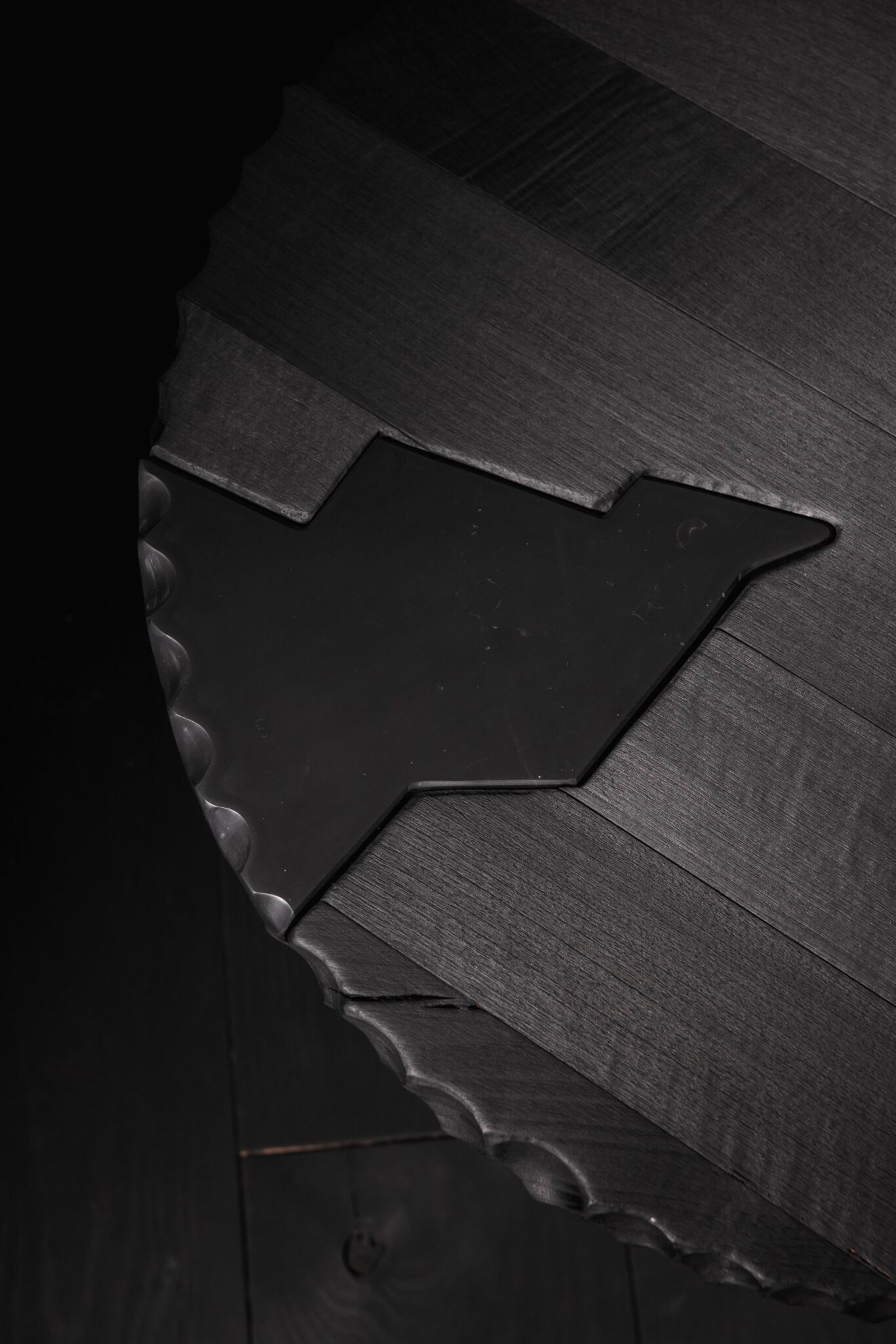
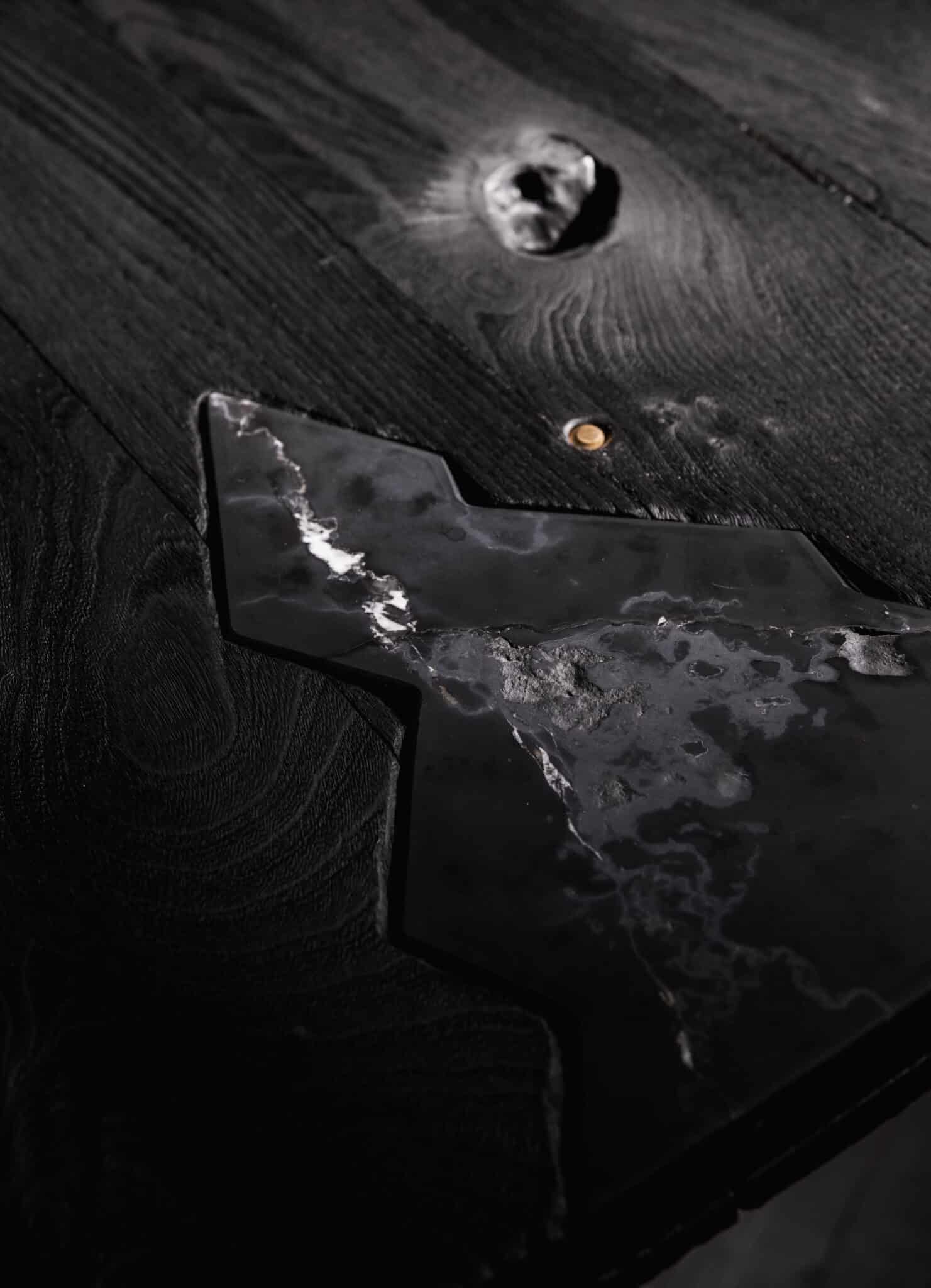
It’s a mix of old technicals, like shou sugi ban, tenon mortise, welding, stone working, and no conventional methods, too.
He must trust himself; he must listen to himself and let yourself be guided by your inspiration. Rest will come.
I do not define myself in a design movement; I am inspired by contemporary art, African art, Japanese art, and nature, obviously, so I let people judge where they see me
Georges Nakashima, Axel Vervoordt, Pierre Soulages, David Nash, Nature.
Kaspar Hamacher, Yann Dessauvages, Arnaud Declercq, Benoit Viaene, Frederic Saulou.
Ileana Moro, Pierre Soulages, Jojo Corvaia, and Katrien Doms.
Authenticity.
For me, it’s a privilege to be in this interview, so thanks for that.
“Nature has a lot of witnesses of the past; in wood, it’s the story of the weather; in stone, it’s the story of the earth.”
The Questions
(The Proust Questionnaire is a set of questions answered by the French writer Marcel Proust.
Other historical figures who have answered confession albums are Oscar Wilde,
Karl Marx, Arthur Conan Doyle, Stéphane Mallarmé, Paul Cézanne…)
The perfect happiness comes to me every day when I open my eyes, and I see nature, family, and friends.
Disappoint people I love.
I am stubborn.
Lack of open-mindedness.
My wife.
I will tell you that after a few drinks.
Full mindedness of all in my life.
Charity.
Sincerity.
Being a woman is already a quality.
If you are happy, I’m happy too.
Know how to paint.
Be calmer.
Be a good husband.
An eagle.
In a mountain chalet.
The memory of my grandmother.
The war.
Do bread.
I am sensitive.
Sincerity.
Jean d’Ormesson.
Batman.
Nelson Mandela.
My grandmother.
Elie.
Hot weather.
Be an artist earlier.
Smiling.
Less is more.
“My creative process is a transmission of my moment feeling, my moment emotion.”
SHARE :