Lost Profile Studio
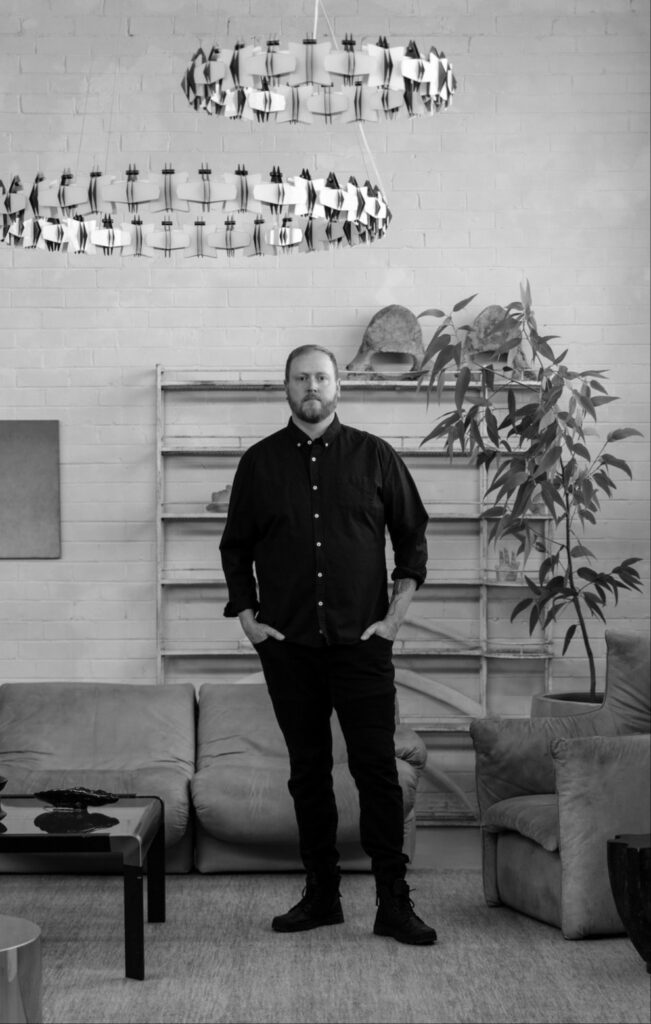
Lost Profile Studio is a Melbourne-based design practice founded by Oliver Wilcox in 2017. Working across collectible furniture, lighting, hardware, and curated vintage pieces, the studio explores the dialogue between historical references and contemporary design. Its name, inspired by the artistic concept of the profil perdu (“lost profile”), reflects a fascination with suggestion, restraint, and the enduring character of objects.
Guided by Wilcox’s multidisciplinary background in art, design, and curation, Lost Profile creates refined collections influenced by Art Deco elegance, industrial utility, and timeless craftsmanship. Through a thoughtful balance of sculptural form, tactile materials, and understated detailing, the studio develops pieces that celebrate heritage, material honesty, and the quiet poetry of everyday living.
Interview
I was born in Sydney, Australia, and I lived there until I was 18. I’ve been living in Melbourne, Australia, for about 13 years now.
I have a very early memory of having a babysitter when I was a child who made folded paper art with us. I was fascinated and begged my parents to have her babysit us again, but unfortunately, we never saw her again.
I studied Visual Arts, majoring in painting and sculpture. I started working for a mosaic artist named Scott Harrower while I was still studying, and later worked for another lighting designer named Christopher Boots for nearly 8 years. So for my adult life, yes!
I’ve always considered myself an artist, making paintings and sculptures for as long as I can remember. It was when I was working for Christopher Boots between 2012 and 2019 that I was really exposed to the world of functional art, fell in love with lighting and furniture, and started making design objects.
I am an avid collector of antiques, objects, and natural history. One of my most inspiring places to be is in a big antiques market or warehouse. I also take inspiration from the natural world, particularly anatomy, and the built environment (architecture). I spend time in these environments; I process the shapes, the proportions, I analyze the things that excite me and try to uncover the reasons why they excite me. I have ideas turning over in my head sometimes for years before I seek to realize them into a design. It’s the ideas that are still in my head after many years that I know will be successful and are worth pursuing.
I will spend my morning going over emails and checking in with my team of 7 staff, making sure they’re all up-to-speed with what needs to be achieved in the day. I’m currently renovating a showroom space for the business, so these days there will be a lot of liaising with the tradespeople and interior designer, and visiting the new property to make sure that’s all moving smoothly as well. I generally do a little bit of everything at work – some production, some sales and dispatching. I will meet with my industrial designer, discuss the latest version of a component we have 3D printed overnight, or touch base on the progress of the new pieces we’ll be showing for Milan Design Week 2025. My favourite thing to do at work is build new prototypes and art pieces. It’s important for me to personally build new pieces for the first time, rather than have my team build them.
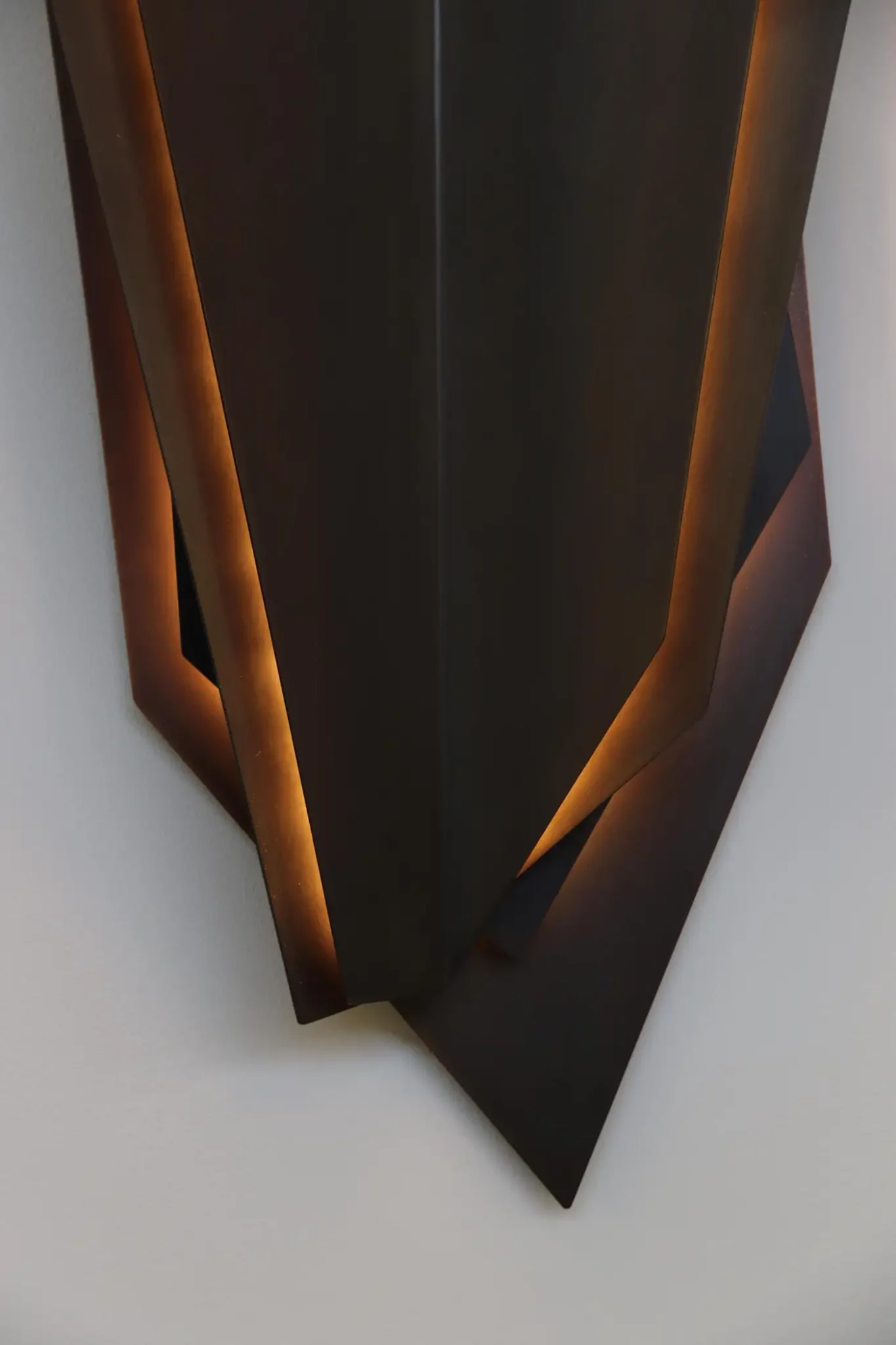
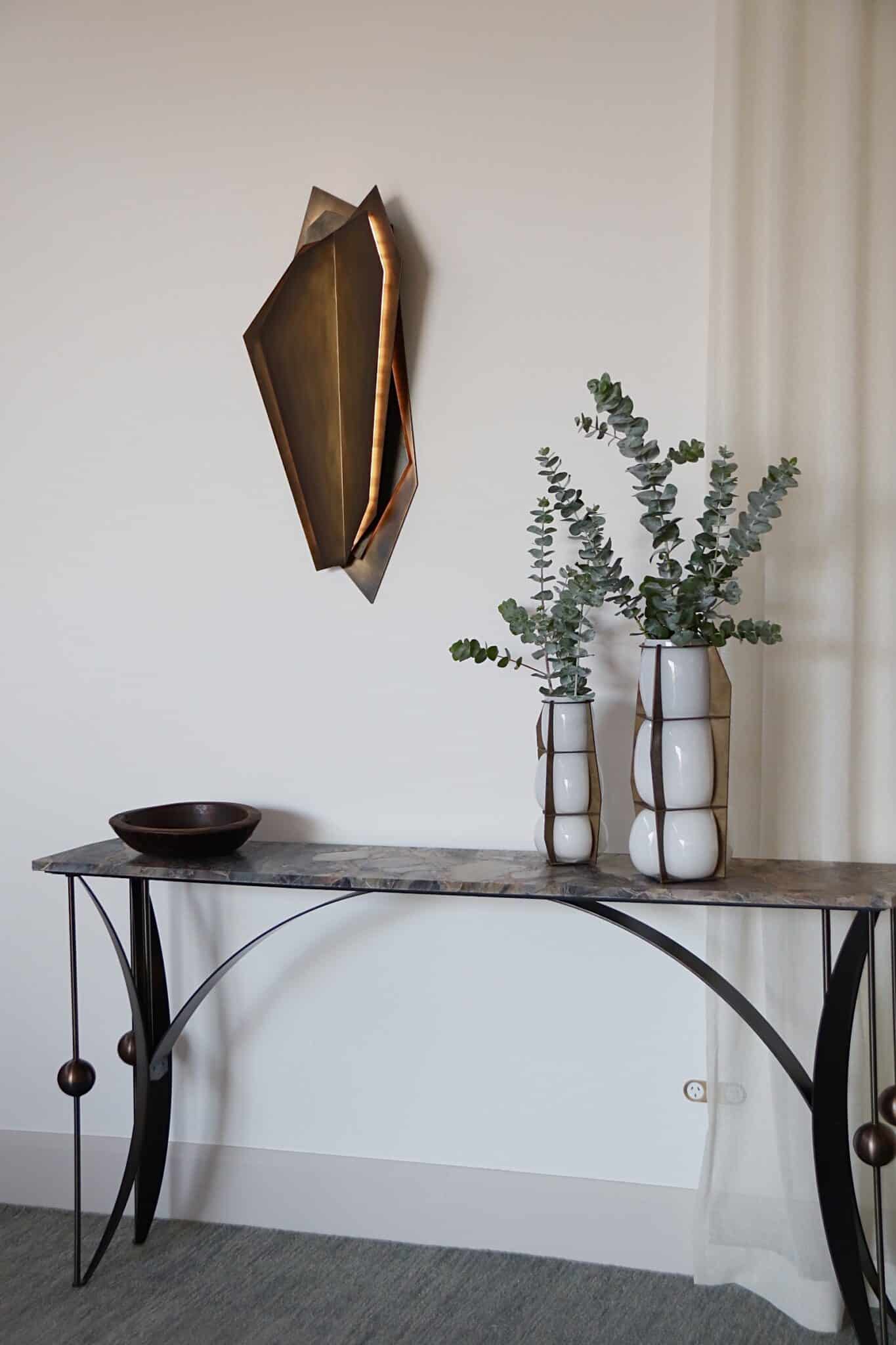
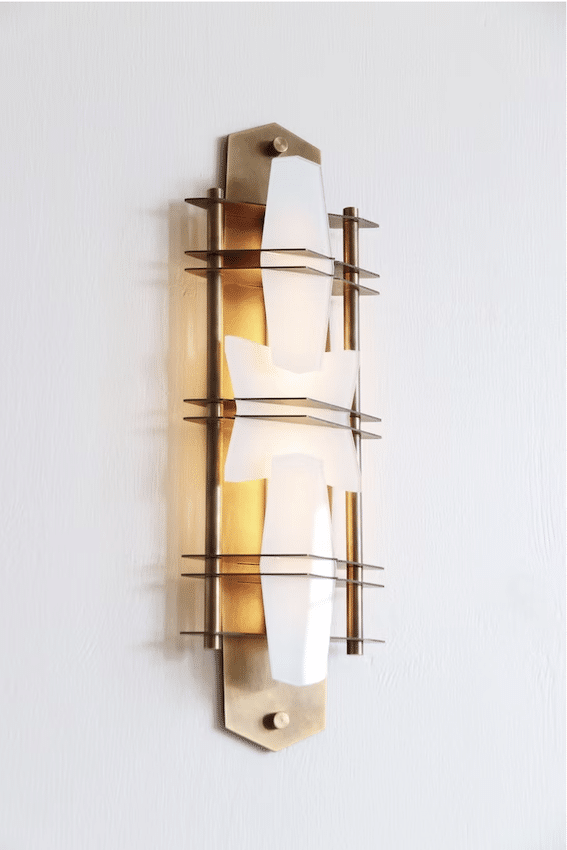
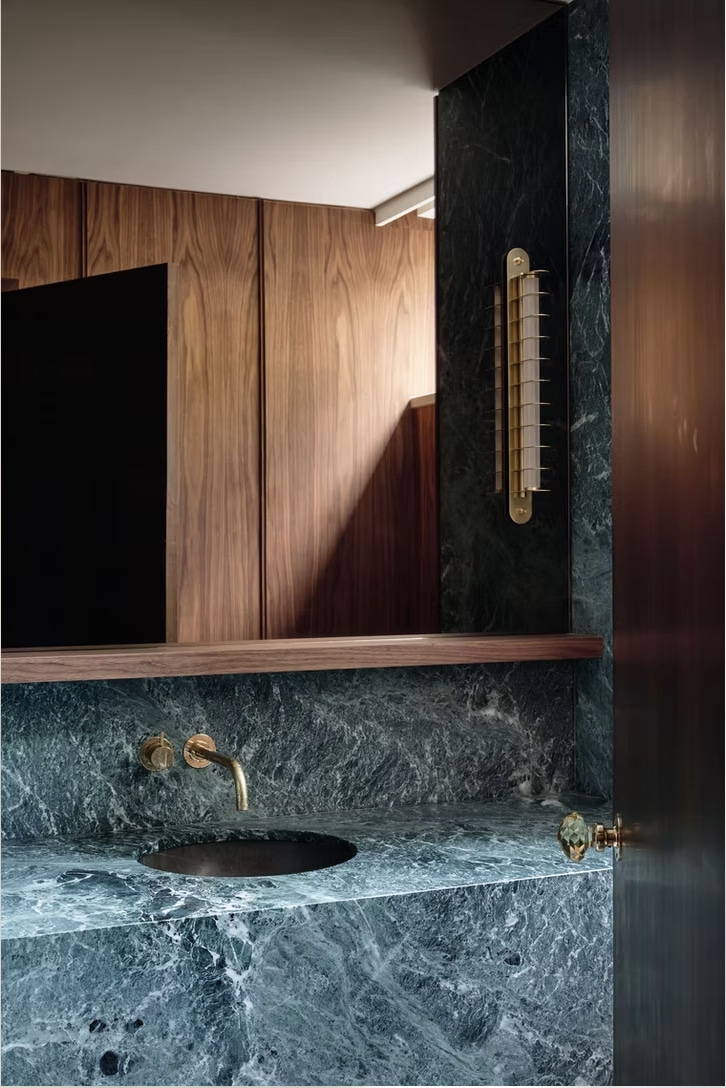
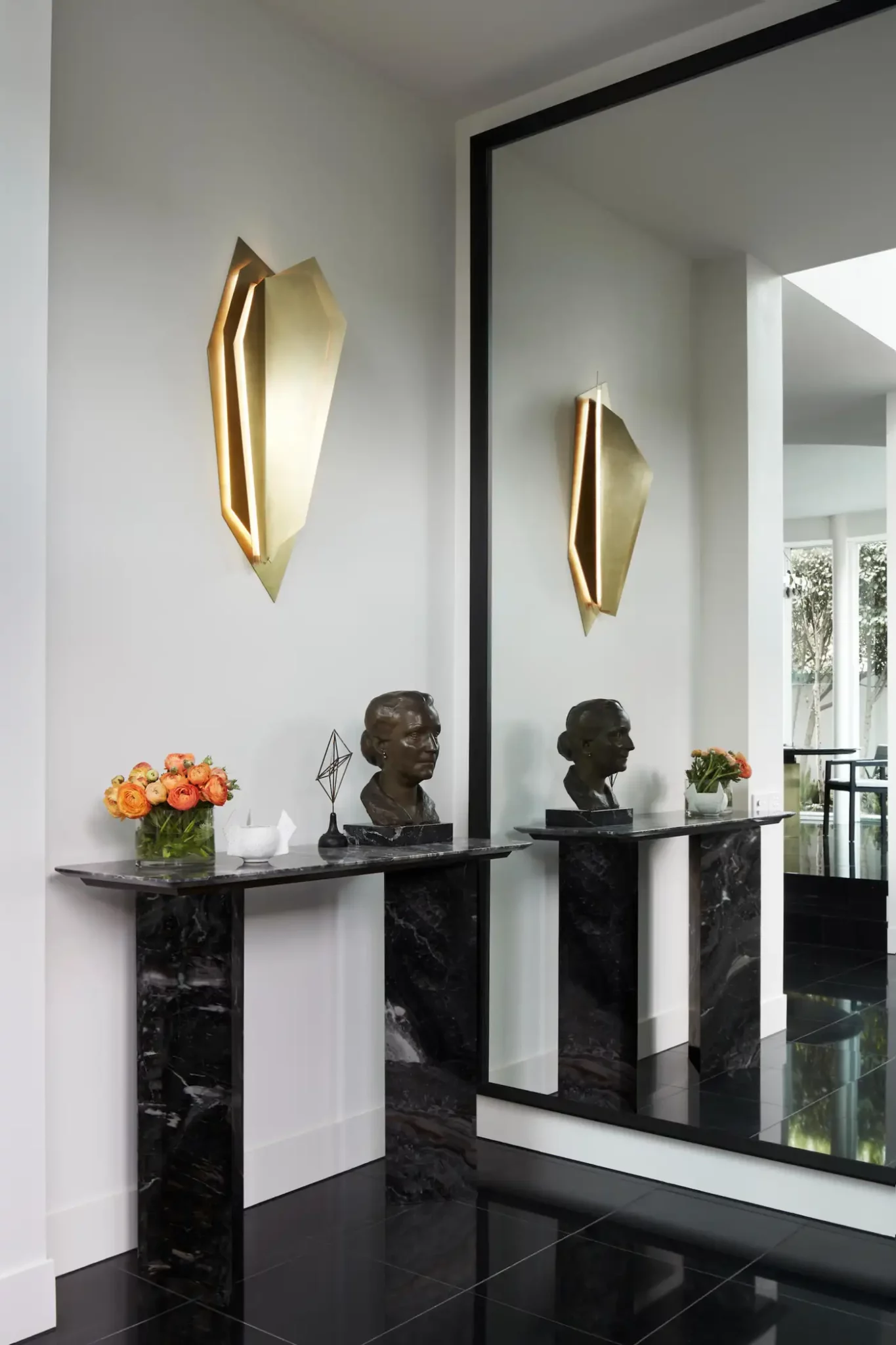
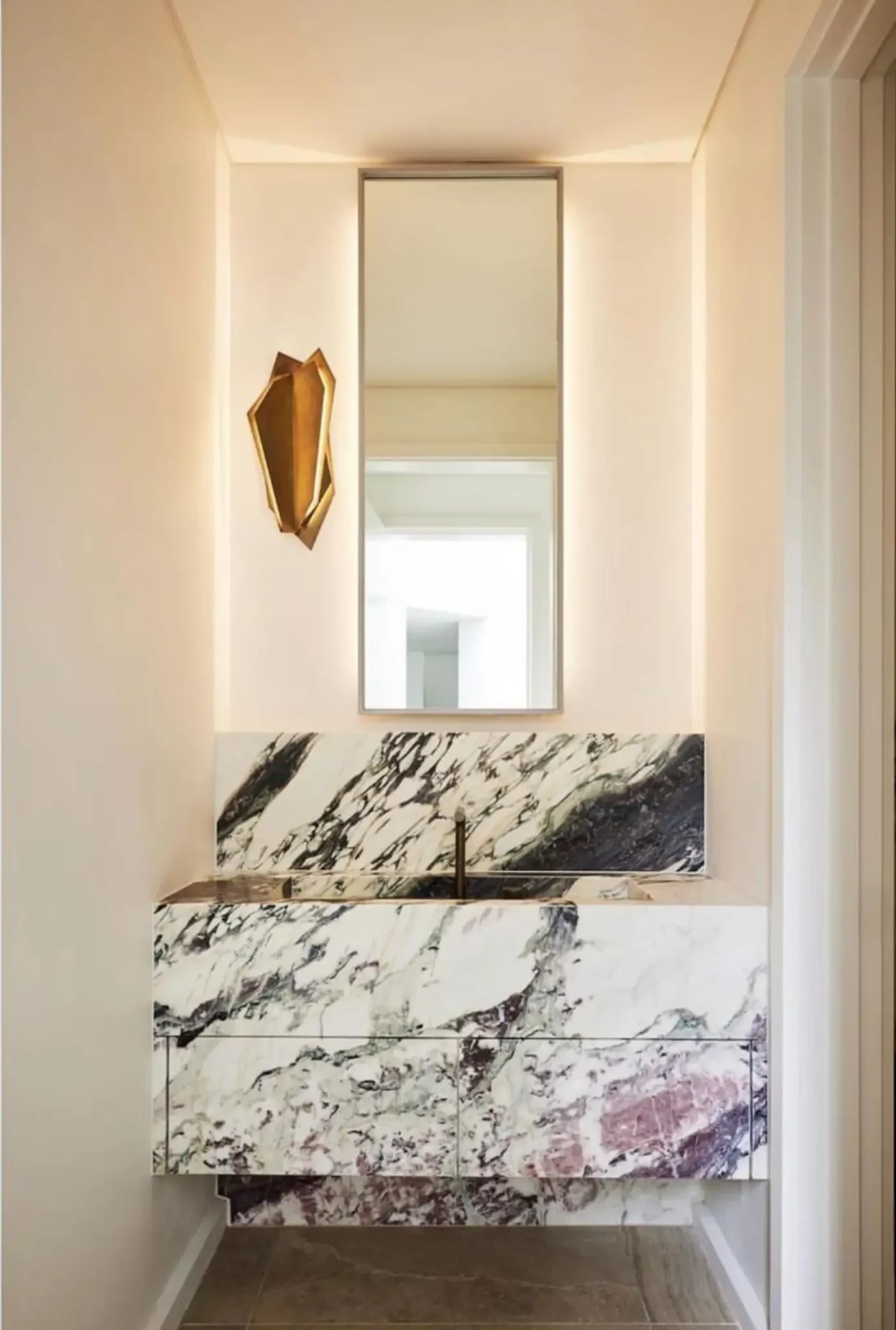
The main materials I work with are brass and glass. These materials have a long legacy in lighting design, and I like the idea of sticking to traditional lighting materials, but creating designs that are far from traditional. Brass can be so robust, but also have such a delicate surface. It can be gold and flashy; it can be dark and moody. It collects handprints and tells its own story. More recently I have been getting into cast bronze and aluminium. There is something so solid and permanent about these materials and the process. I’ve also been working with Four Seasons Quartzite a lot. I’m obsessed with the colours – the purples, greens, greys, rust colours. Colours that shouldn’t look good together, but in the context of this stone, they just work.
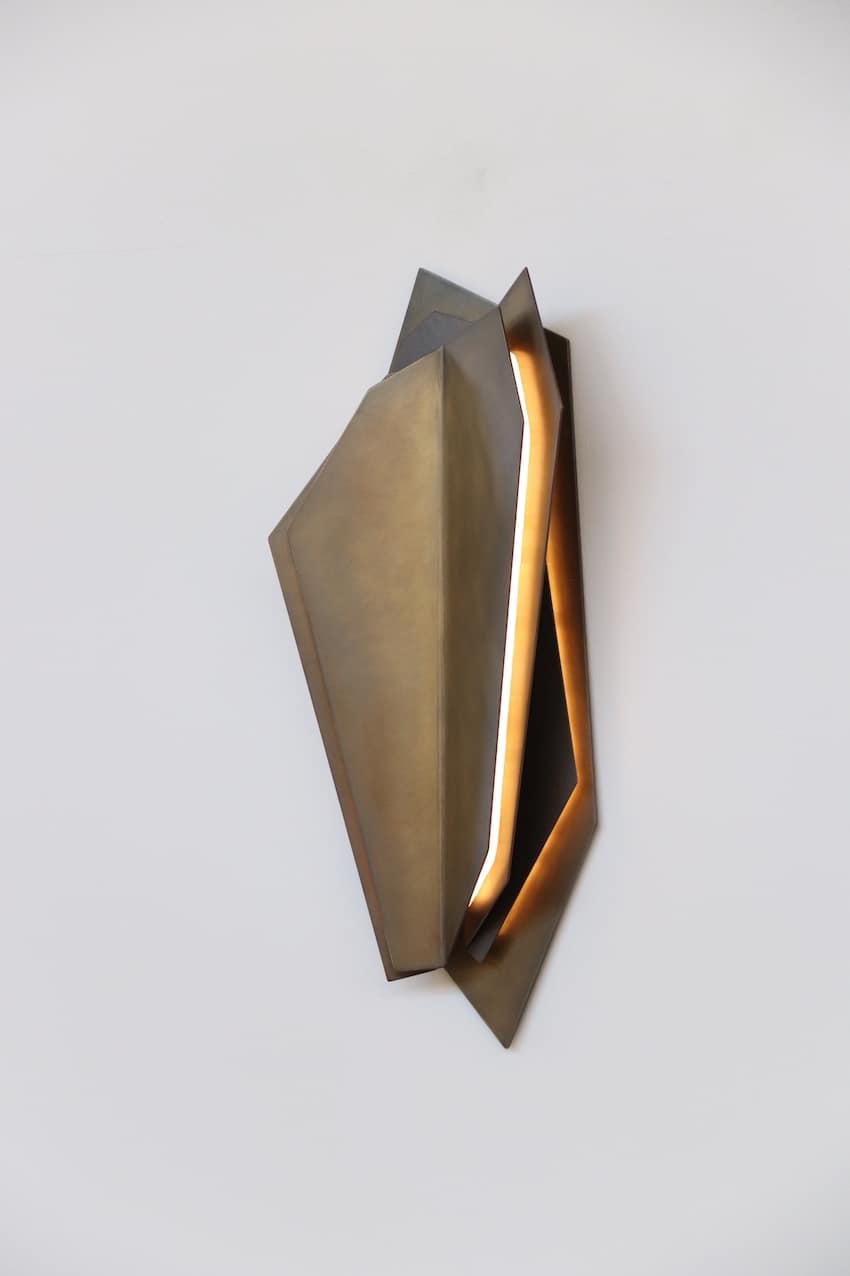
The artisans who work with me have backgrounds in metalwork, sculpture, and an understanding of electrical circuits. The surfaces that we work with are so delicate and reactive; a lot of care needs to be taken when handling the pieces. I think my designs are quite unique from a construction point of view; they have their own rules which need to be understood by my team. Sometimes it feels like the designs teach us how to make them over time.

Aim for absolute uniqueness. Look to uncommon sources of inspiration. Understand what is already out there in the market, and aim to create something that has never been made before. Don’t use spray foam.
Probably Arts & Crafts, or Art Deco. I love decoration, in the smallest amounts, finding the right places to put an angle or curve.
Josef Hoffmann. Carlo Bugatti. Eileen Gray.
Lindsey Adelman, Vincenzo De Cotiis, Rick Owens.
Nicolette Johnson (ceramics), Al Stark (painting), Jacques Green and Juno Mamba (music).
Apocalypse-chic.
“Brass collects handprints and tells its own story.”
The Questions
(The Proust Questionnaire is a set of questions answered by the French writer Marcel Proust.
Other historical figures who have answered confession albums are Oscar Wilde,
Karl Marx, Arthur Conan Doyle, Stéphane Mallarmé, Paul Cézanne…)
Kittens in an antique store
I don’t live in fear
Impatience
Ignorance
My parents, sisters, husband, friends!
Making time to make art
Grateful
Being busy
Vulnerability
Strength
Lol
Speaking another language
Exercise more
Building a healthy business
A whale
If not Melbourne, New York
Whale bones
Loss
Exploring the world
Calmness
Understanding
Rick Strassman
Donnie Darko
Charles Rennie Mackintosh
Health care workers, scientists
Poppy, NASA
Closed mindedness
No regrets
In my sleep, but bury me at sea
Take Care
“Sometimes it feels like the designs teach us how to make them over time.”

SHARE :