Marea Hildebrand
5 Picks from PHILIA Collection
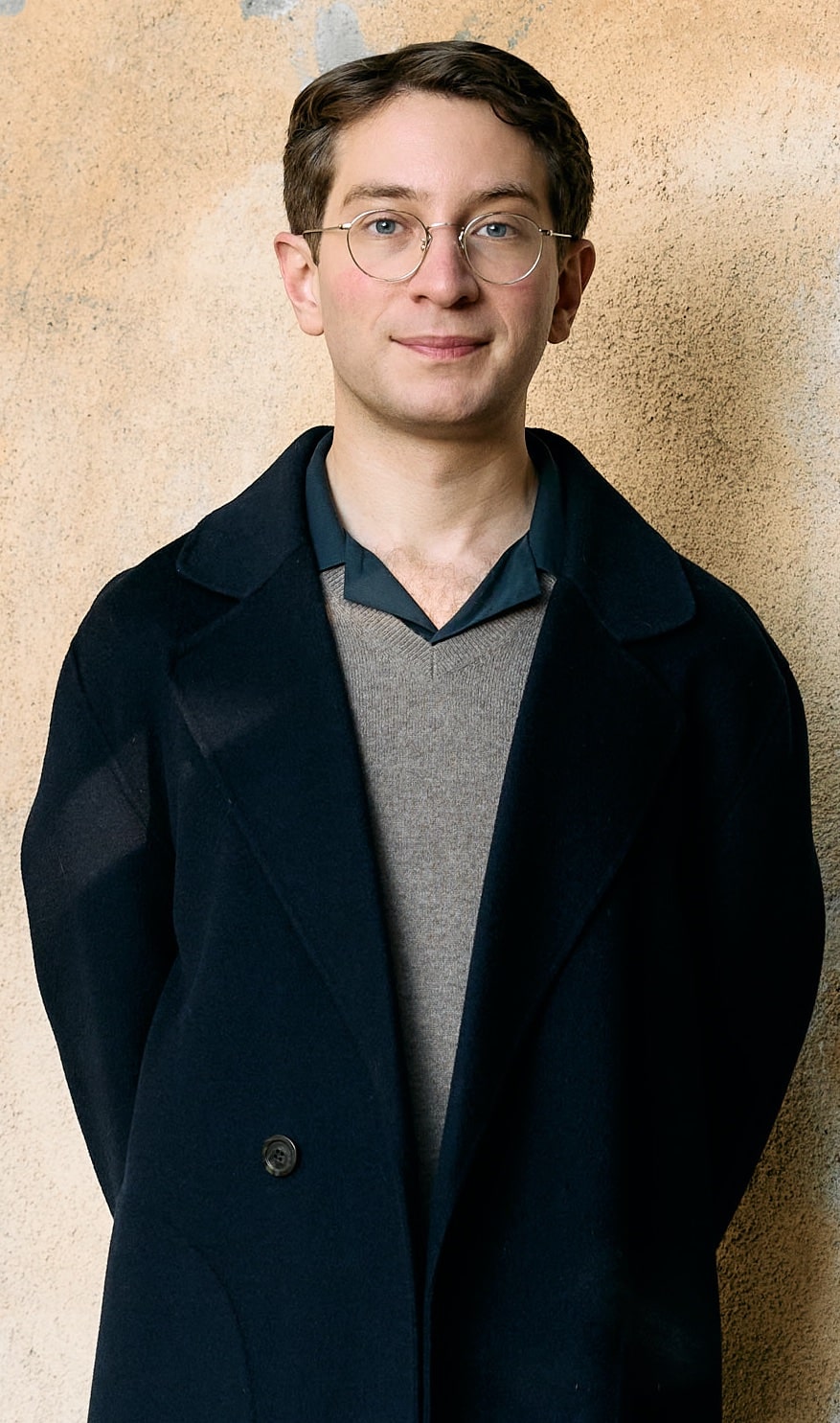
Marea Hildebrand (b. 1989) is a Zurich-based ceramic artist with a BA in Fine Arts and an MA in Transdisciplinary Studies from Zurich University of the Arts. During her master’s program, she became the Director of the School of Commons—an international education program dedicated to the study and development of peer learning in arts and cultures. She has curated numerous exhibitions or conferences across several countries and co-juried for art and design prizes.
Hildebrand is a self-taught ceramicist with a background in painting and textiles who uses the coil method to hand-build works that sometimes reach near to two meters in height. The unique surfaces of her pots are the result of a multi-firing technique and countless hours of painting and etching rhythmic patterns, creating one-of-a-kind pieces. Embracing imperfections and the beauty of transience, she crafts serene works that resonate a deep sense of calm. Hildebrand has referred to her practice as a way to set aside the restlessness of thought, let her hands do the thinking and find comfort in the weight and presence of natural materials and seemingly archetypal shapes. Her inspirations include Japanese and Korean Art, Abstract Art as well as the philosophy of 侘び寂び (wabi-sabi).

“Perfect balance in composition and a very intriguing contrast in materials.”
“A very interesting combination of materials, the roughness of the stone with the shiny surface of the steel, reminds me of Lee Ufan’s work, one of my favourite artists.”

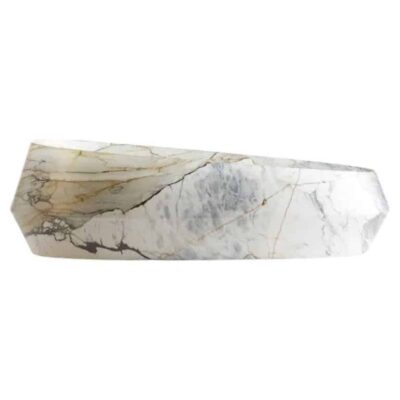
“What a bathtub! Streamlined, sculptural, and yet very natural, thanks to the pattern of the stone.”
“Delicate and yet very present, stone-like in surface and yet reminiscent of a mushroom.”
“I love Corvaia’s work—very solid and clear in form, and yet, the fragility of working with clay becomes visible.”