Michel Amar
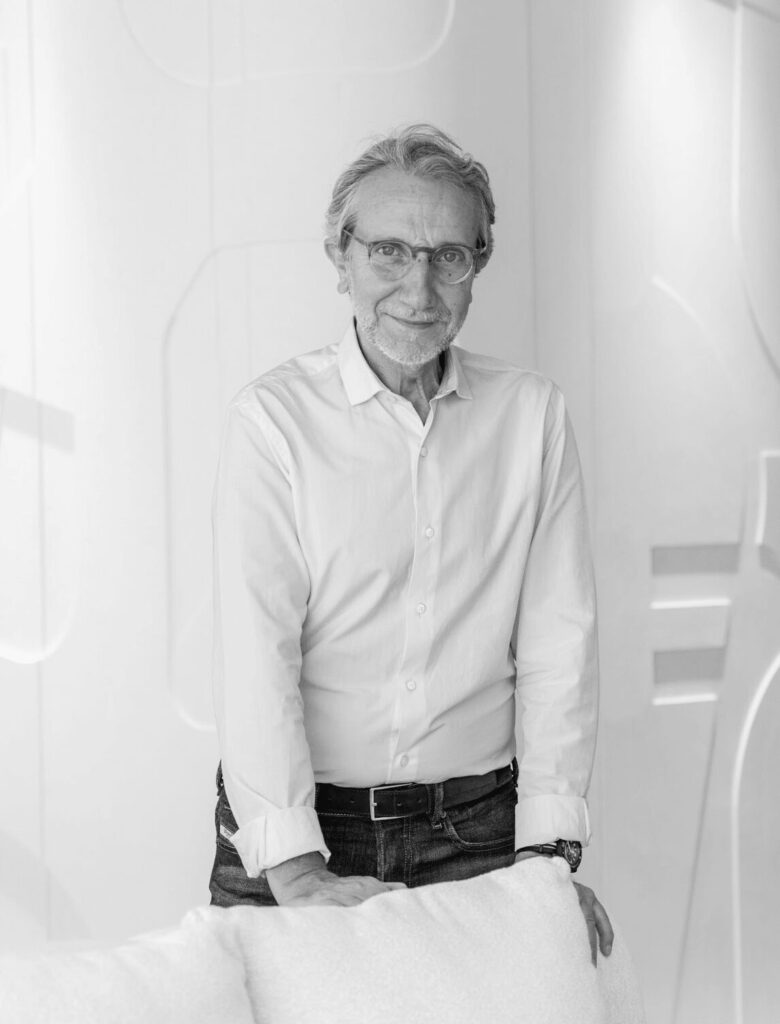
Michel Amar is a Paris-based architect and designer whose multidisciplinary practice spans architecture, interiors, and collectible design. Rooted in his Mediterranean heritage, he creates sculptural furniture, lighting, and objects distinguished by elegant proportions, refined craftsmanship, and a poetic approach to materiality, working primarily with bronze, stone, and alabaster.
Balancing architectural precision with artistic expression, Amar develops timeless collections that celebrate the dialogue between form, light, and natural materials. His work reflects a sensitive exploration of craftsmanship and contemporary living, resulting in pieces that combine sculptural presence with enduring elegance.
Interview
I was born in Casablanca, a port city in Morocco. Then, at the age of 4, we crossed the Mediterranean to settle in Marseille, France, another port city. So, my culture is doubly Mediterranean. I qualified as an architect there and then immediately moved to Paris to practice.
My first memory of the art world is of the Vasarely Foundation near Aix-en-Provence. The immense V and its synesthetic effect along the freeway fascinated me. Even further afield, the sensual feel of clay bewitched me. And it was this sensuality that I rediscovered when creating my first bronze coffee tables, the GIVERNY series.
I’m a practicing architect. It’s only been a little over 10 years since I started creating artistic objects. In my day, when you came out of architecture school (which was next door to art school, by the way), it was frowned upon to design objects.
It was certainly the desire to extend the creative gesture. I began creating fixtures and fittings a dozen years ago, then unique, made-to-measure furniture for my customers, and later proposed them to other architects to integrate into their projects.
Observation and curiosity are the keys to the creative process. Since my reasoning system is “horizontal”, I’m predisposed to creativity. In fact, I let myself be penetrated by multiple images emanating from various fields such as art, nature, science, music, and so on. Then it’s a detail that triggers the creative process, crystallizing the theme that has seduced me.
I quickly transcribe this detail into a sketch on study tracing or paper. From then on, I think in terms of a collection, and I know that I’m going to design a table, a console, a light fitting or a coffee table based on this theme. I archive these micro-sketches until the whole collection is complete. As soon as the shape and proportions are complete, I develop it technically to validate its technical feasibility (especially its ergonomics). Thanks to 3D, we can control the execution. I’m a perfectionist (I like detail and functionality), so it has to look good and “work”.
Almost every morning I wake up with an “idea”, whether it’s a shape or a detail. I put it down on paper as soon as I get back to the office after my site visits. I work on the drawing by hand, overlaying it with a study tracing paper. I often work on architecture and design in parallel, since the agency is an open space, which means I can move from one collaborator to another. I‘m surrounded by materials and art and design books, which I consult as often as possible.
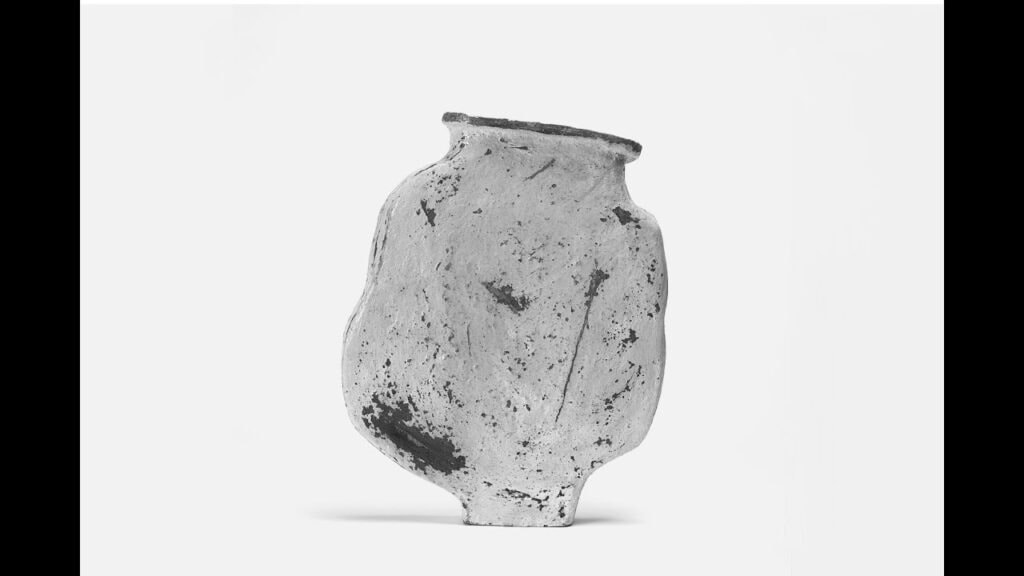
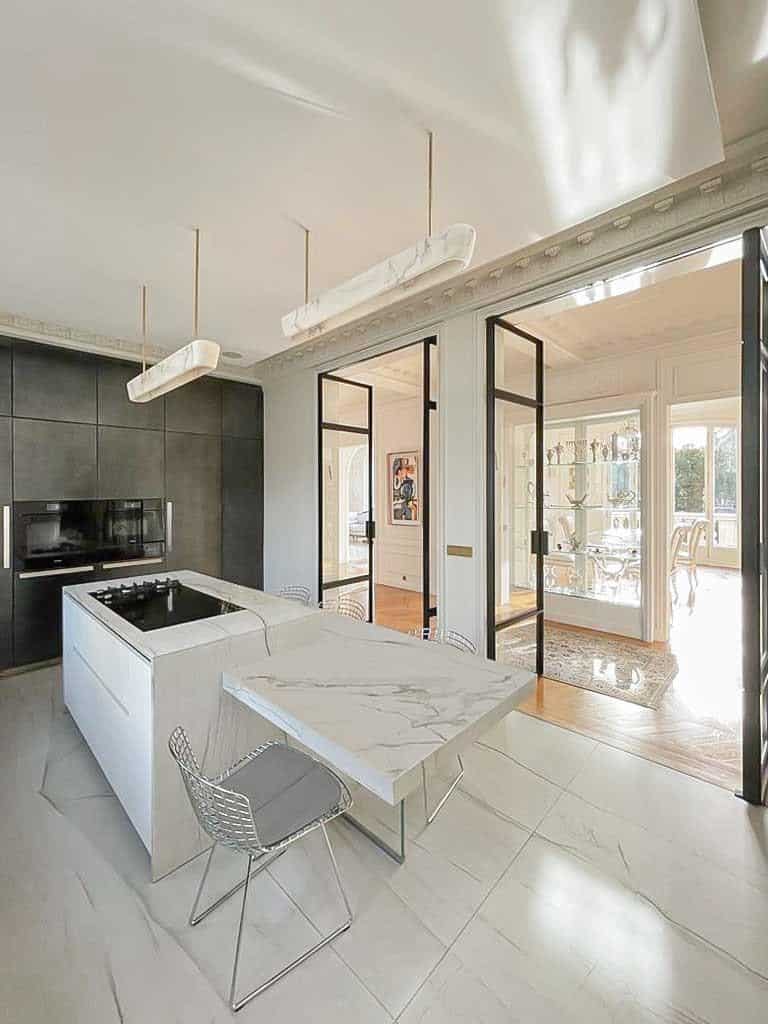
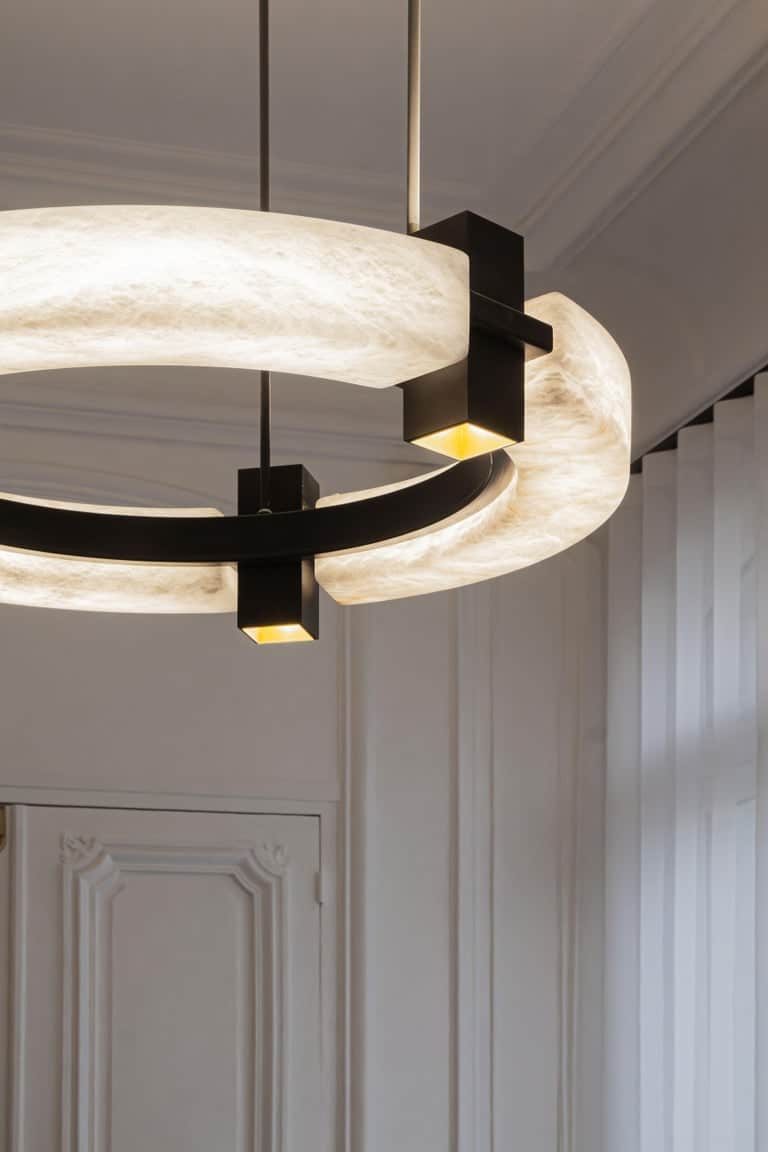
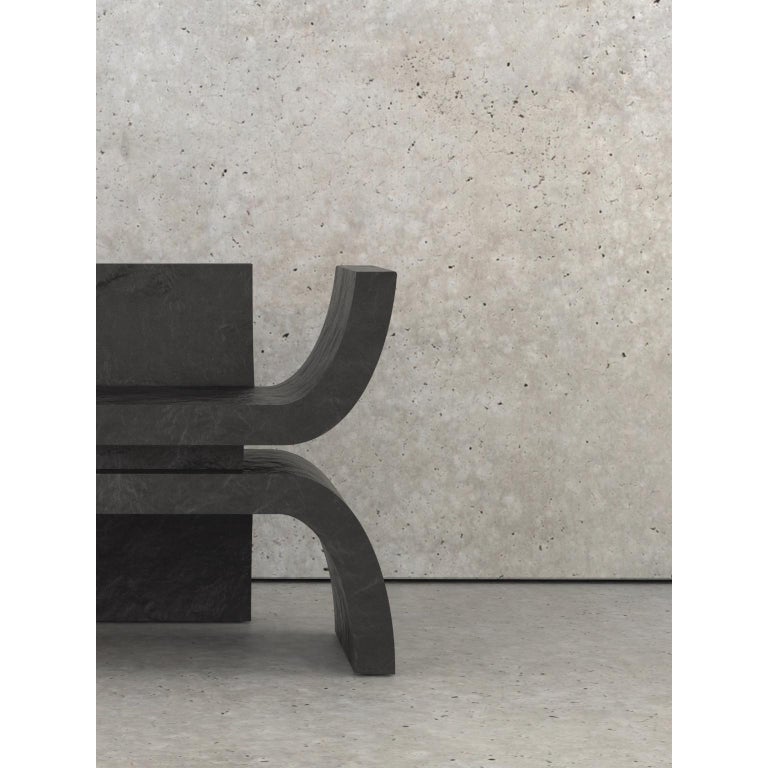
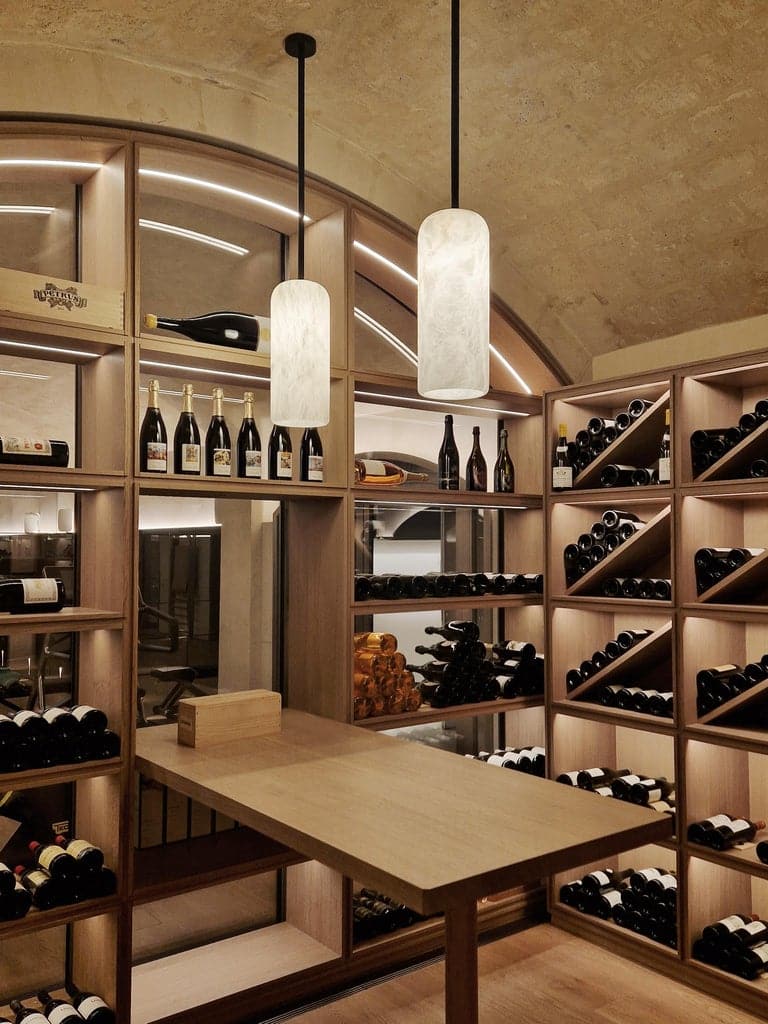
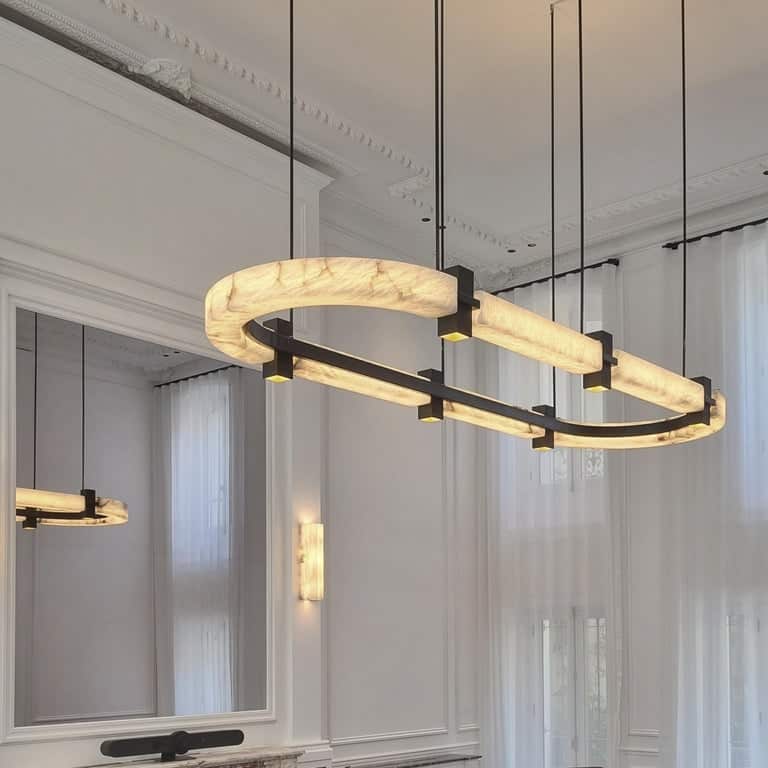
I work with bronze and stone. These are two materials that have almost no limits (shapes and sizes). They both have a sculptural dimension. For bronze: the volume emerges thanks to the casting process. For stone: as in sculpture, we obtain the desired shape by subtracting material. What fascinates me about stone is that each block, each origin, remains unique. There are always surprises in the disorder. So each object is unique in itself. For alabaster, it’s its ability to express light; Nature offers us a living picture, observing the infinite nuances and variations in 20 cm².
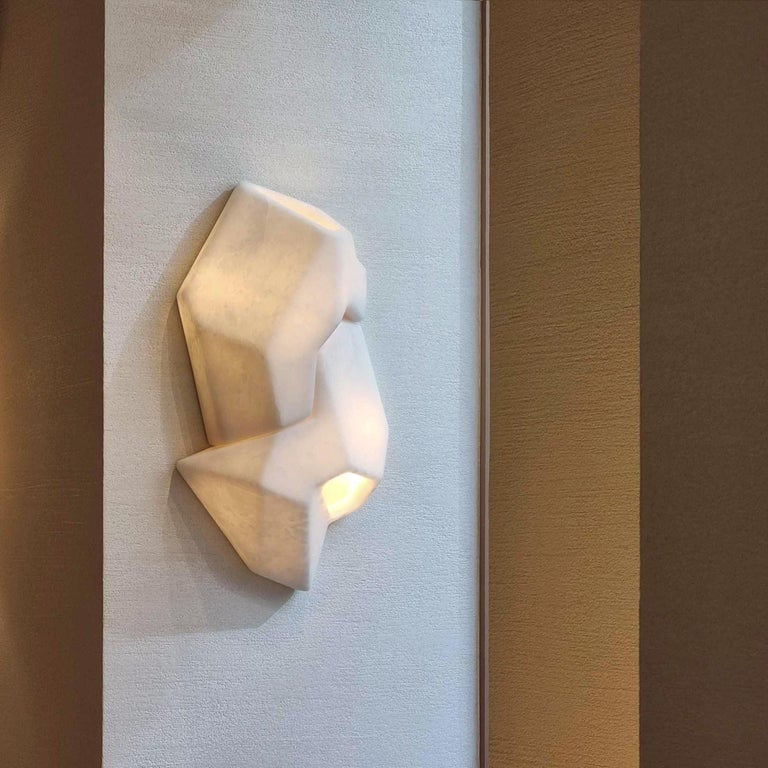
I use two techniques: For bronze, either lost-wax or sand casting. And for stone, 5-axis numerical control, which still requires manual finishing.
Above all, don’t let yourself be swayed by the “Instagram” fad. Picasso said a work is 1% genius and 99% work, so apply yourself to this motto. Stay curious and unsatisfied.
Paradise has been offered to us; it’s up to us to take care of its garden!
I assimilate myself to the slow design movement for two reasons: For the sustainability of the objects produced. For the maximum use of “waste materials”.
It was artists and architects who first influenced me. I was lucky enough to be introduced early on to LECORBUSIER’s Cité Radieuse housing project in Marseille, which I love for its avant-gardism. Brasilia, designed by OSCAR NIEMEYER, which I love for the creative force of its geometry. Tadao ANDO for his generous minimalism. Pierre CHAREAU for his house of glass and iron, but also for the way in which he is part of the tradition of the great builders. Isamu NOGUCHI, organic to the extreme. And BRANCUSI, a synthesis of all. And Chilida.
Aside from the Olympic torch, Mathieu LEHANNEUR is a great designer. Noé DUCHAUFOUR LAWRENCE is also very creative. The COMPANA brothers. WENDELL CASTLE, ALDO BAKER.
VINCENT DUBOURG, Antony GORMLEY, Anish KAPOOR, ZEKZLY, AI WEIWEI, ZAHA HADID, BASELITZ.
ELEGANCE AND PROPORTION.
“Observation and curiosity are the keys to the creative process.”
The Questions
(The Proust Questionnaire is a set of questions answered by the French writer Marcel Proust.
Other historical figures who have answered confession albums are Oscar Wilde,
Karl Marx, Arthur Conan Doyle, Stéphane Mallarmé, Paul Cézanne…)
To have my children and grandchildren close to me
Become blind
My kindness
Be stingy
My wife
At 16, I covered my motorcycle helmet with feathers
Worried but optimistic
Perfectionism
Tolerance
Grace
Be consistent
Composing music
My shyness
My children
A bird
On an isolated Greek island
My Harley-Davidson
Ignorance
My job
Empathy
Faithfulness
Patrick Suskind
Don Juan
Aaron, Moses’ brother
Firefighters and lifeguards
Ella, Gabriel, Samuel
Unfairness
Not to show my decidedly Rock and Roll side
By designing
Fluctuat nec mergitur

“Paradise has been offered to us; it’s up to us to take care of its garden!”


SHARE :