Milla Vaahtera
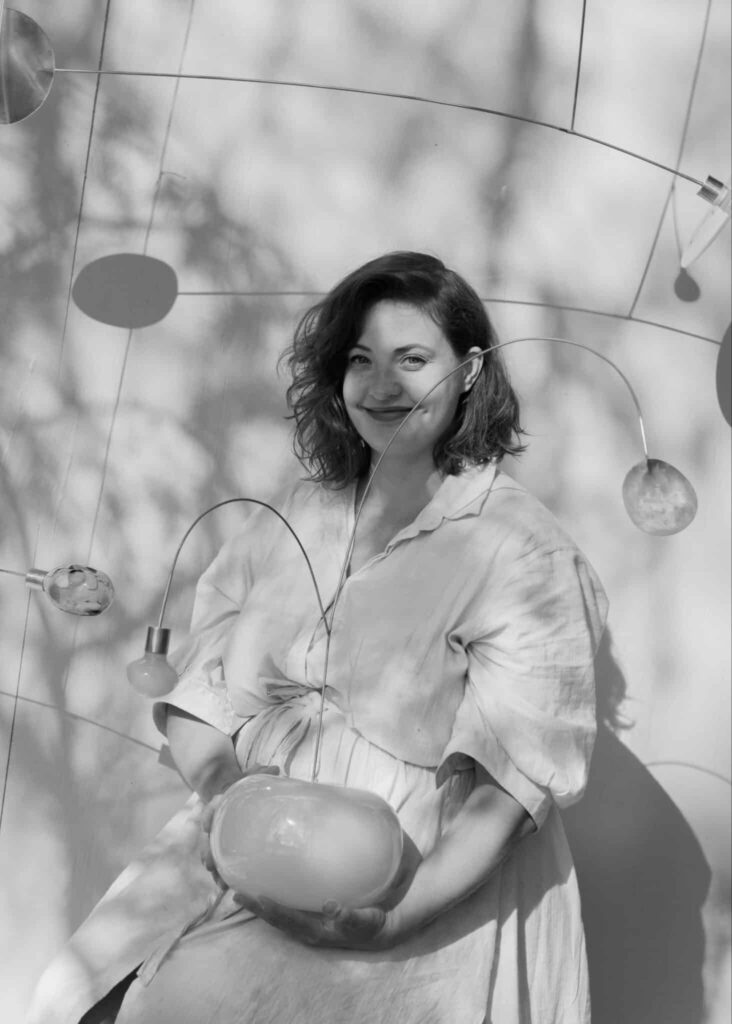
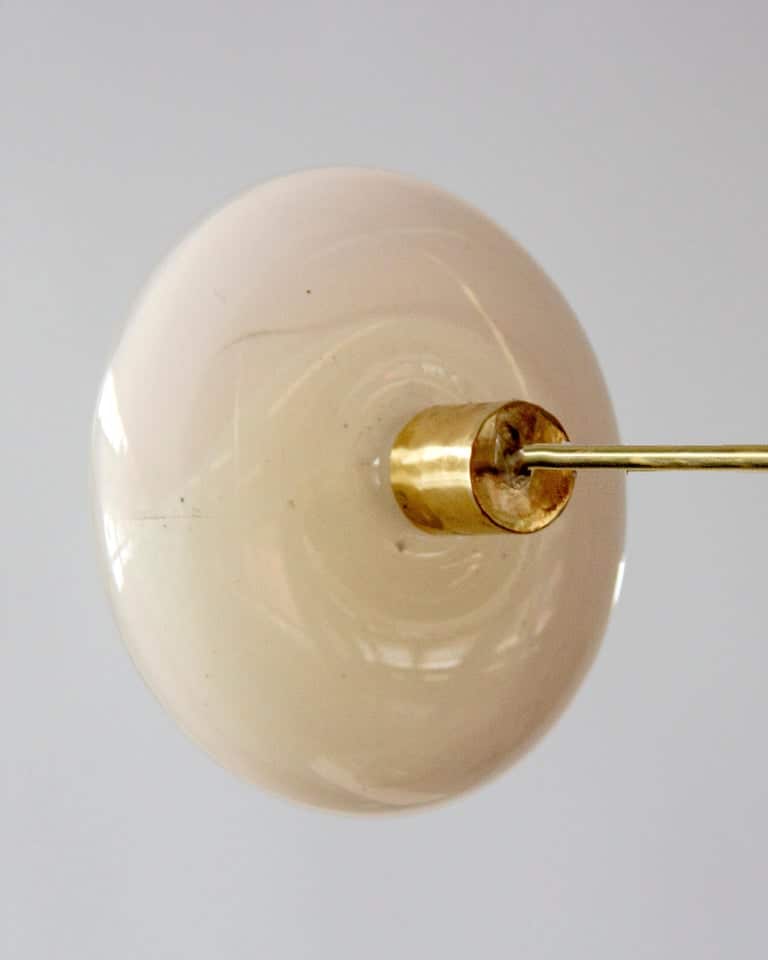
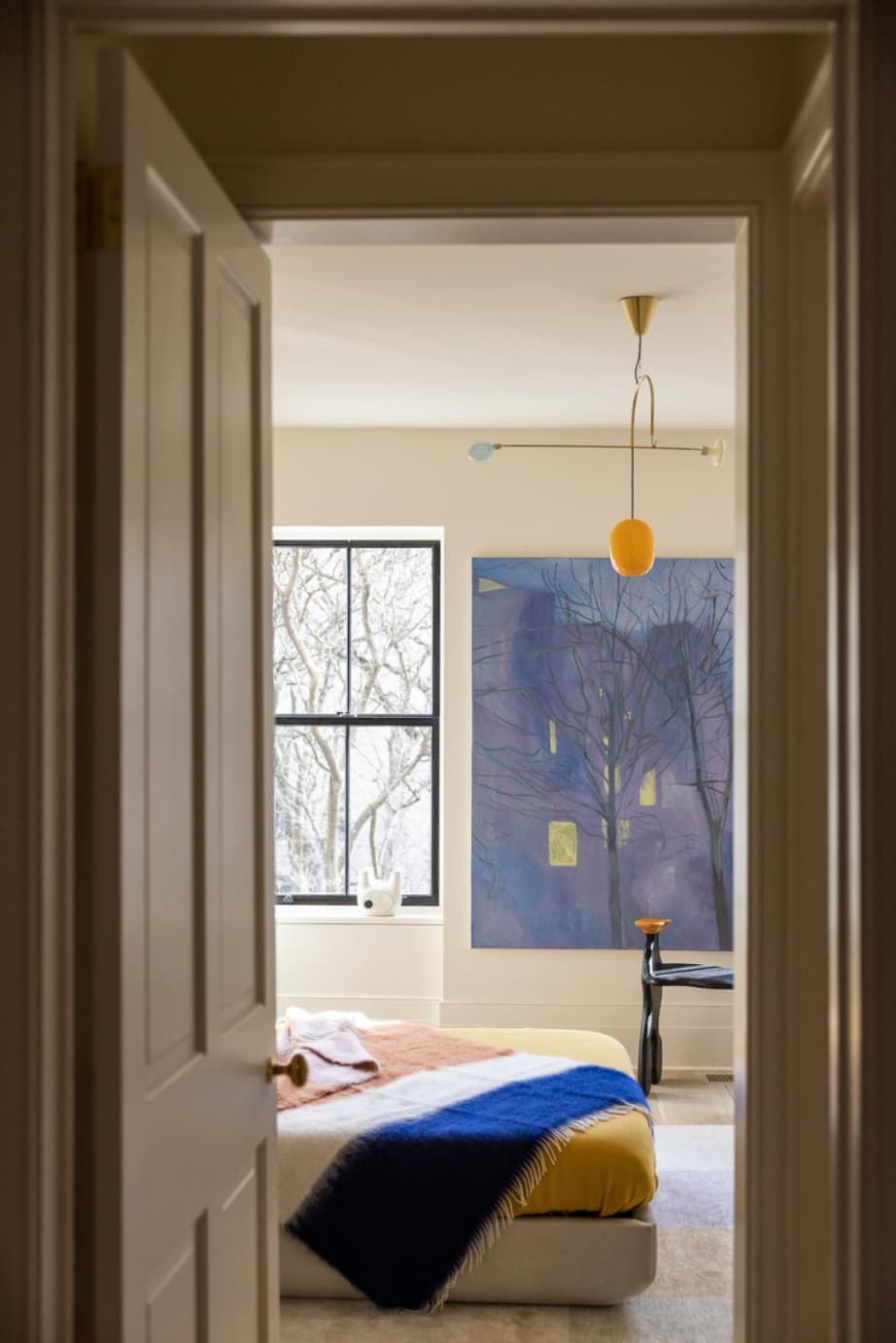
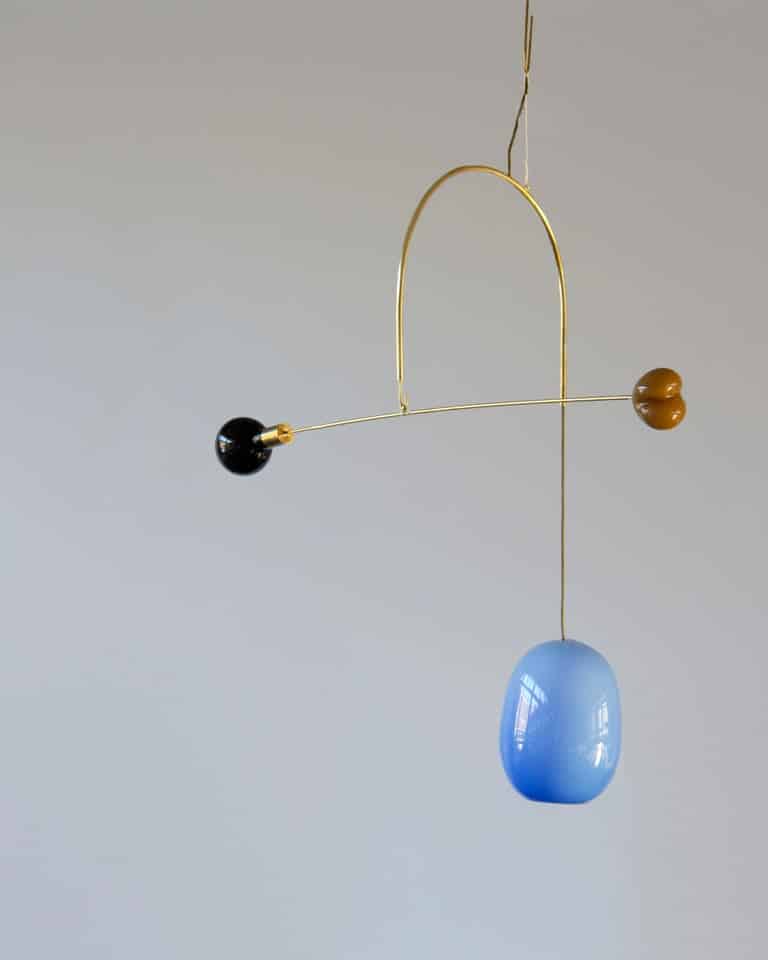
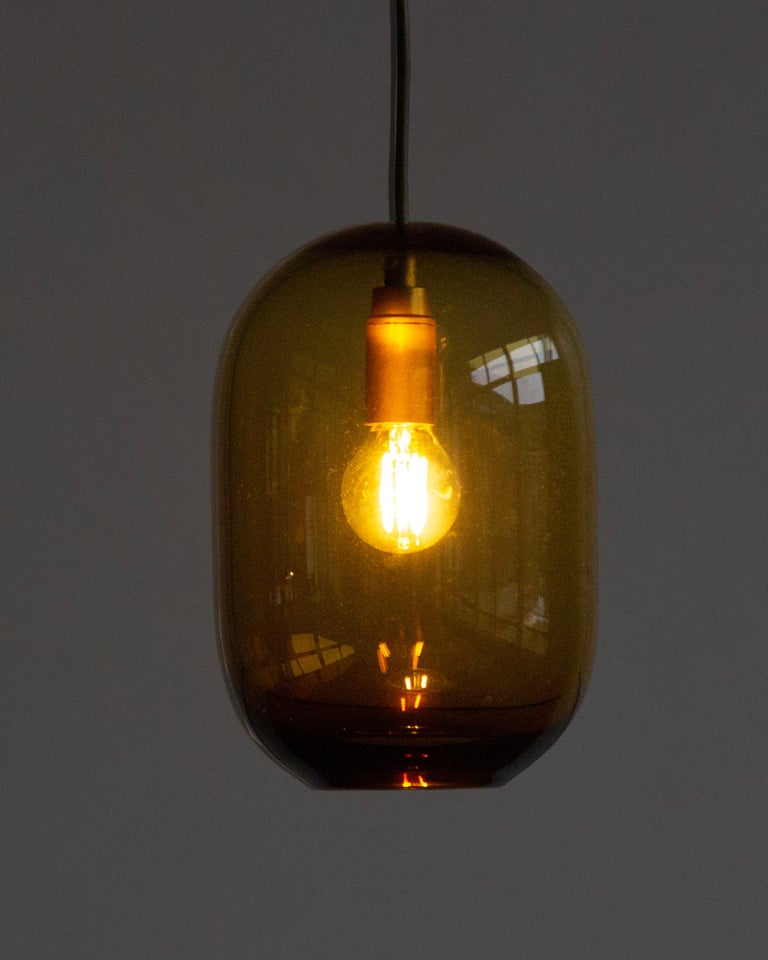
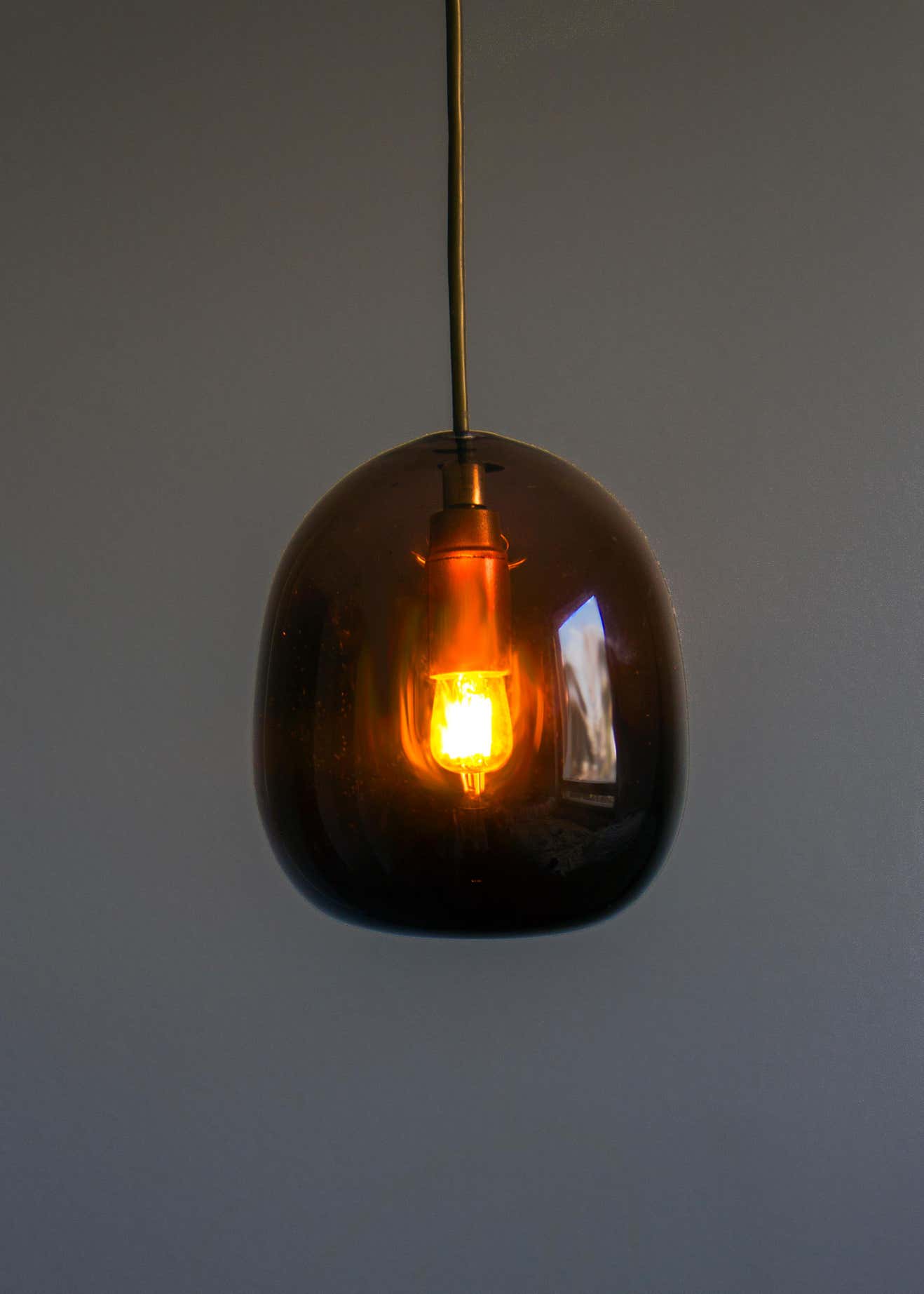
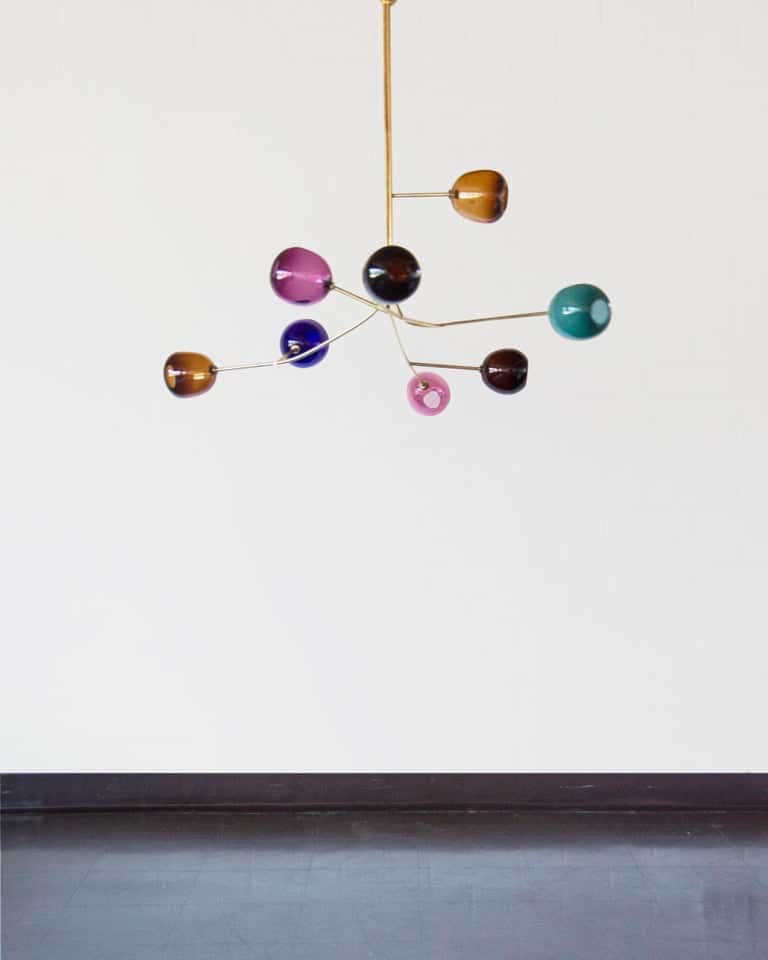
Milla Vaahtera is a Finnish artist and designer based in Porvoo whose practice bridges collectible design, sculpture, and contemporary craft. Best known for her sculptural lighting, mobiles, and stabiles, she creates expressive compositions that combine hand-blown glass with delicately handcrafted brass structures, exploring the dialogue between movement, material, and space.
Working in close collaboration with master glassblowers while crafting the brass elements herself, Vaahtera embraces improvisation and the unpredictable nature of handmade processes. Rooted in Finland’s rich craft tradition yet unmistakably contemporary, her poetic works transform light and form into spatial compositions that blur the boundaries between functional design and sculpture.
Interview
I was born in Finland when my parents were just graduating as goldsmiths. We moved to Northern Norway to live in a small artisan community. The community was built around a company that made silver jewelry. I have been at different workshops all my life, with my mom trying to keep me away from the poisons and flames. Northern Norway is very rugged, and in a way I feel that those hot workshops and the wild nature are part of me.
My grandmother was a history teacher with a fantastic method of giving me a strong art education. She was also referred to as a “too independent woman” at her time. After moving to Helsinki, she would take me out to see an art exhibition every Wednesday. For example, when the Frida Kahlo exhibition was at the Helsinki Art Museum, we saw a movie about her, and I got a book about her life. She gave me such a fantastic understanding of art, and my parents, as Goldsmiths, gave me a doorway to craft that I feel really grateful for.
I graduated with a Master of Arts in 2010 from Aalto University School of Arts, Design and Architecture and did my BA studies in Lahti Institute of Design in 2008. I was working for some years as an industrial designer, but started to self-sabotage my career. I was waiting for someone else to tell me that I’m doing the wrong job, but nobody did. Finally, I decided to escape from industrial design to the art end of design. My master’s in metalwork would definitely be my family. My mom, dad, and godfather are all goldsmiths. When I started to do mobile sculptures, my mom graciously let me into her workshop and has taught me everything I know.
I have always been very creative, to the point of ruining tools and paintbrushes in my own way. If I could stop creating, I probably still wouldn’t.
The creative process is the most important thing to me in my work. I also teach the creative process, and that has led me to where I am today. Traditionally, craft has been an area where professionals avoid failure. Lack of failure makes them good. Education of craft is also all about minimizing failure. I’m revolutionary in embracing failure in the craft process. I always find new techniques via failure. Failure is not the opposite of success; it’s a necessary part of it. When I find the flow of “not giving a shit” in my work, I find freedom and fun, and achieve the best work. Embracing failure shuts up the critical comments in my head, and I’m liberated. I´m inspired by everything and find influences all around me.
Most days I work with brass. We have two workshops with goldsmith tools, where I solder the parts together, polish them, try out different models, study the movement of the pieces, and make the sockets for the glass pieces. The hotshop days are very different. There is a team of 3-6 glass blowers and a lot of action and ideas flying around. Working with the process of improvisation is sometimes difficult in a team because creative work is so very vulnerable. I do my best to create a flow of acceptance and play to help the team work from excitement. My team is glassblowers Sani Lappalainen, Pauli Vähäsarja, Tommi Tikkinen, Otto Koivuranta, Penna Tornberg, Jonas Paajanen, Henni Eliala, Paula Pääkkönen & my mom, silversmith Kirsi Kokkonen.
I fell in love with glass when I first tried glass blowing. It chose me. When I found myself in the glass hot shop after working with many mediums, I started to learn the dos and don’ts of glass making with the gentle guidance from the glass blowers I collaborated with. I fell in love with the don’ts, the mistakes. The pieces where you could see the moment of melt in the final work are always my favorites. And I felt that now I work in dialogue with glass. I learned to use improvisation in the moment to maintain the wild nature of glass. Glass is like me, spontaneous and organic. My childhood was all about listening to goldsmiths talk about their craft and the sounds and the smells of the workshop. I feel proud to continue using the same tools and to develop the craft. I feel secure at my metal workshop even when my creative process is wild, and I feel lost.
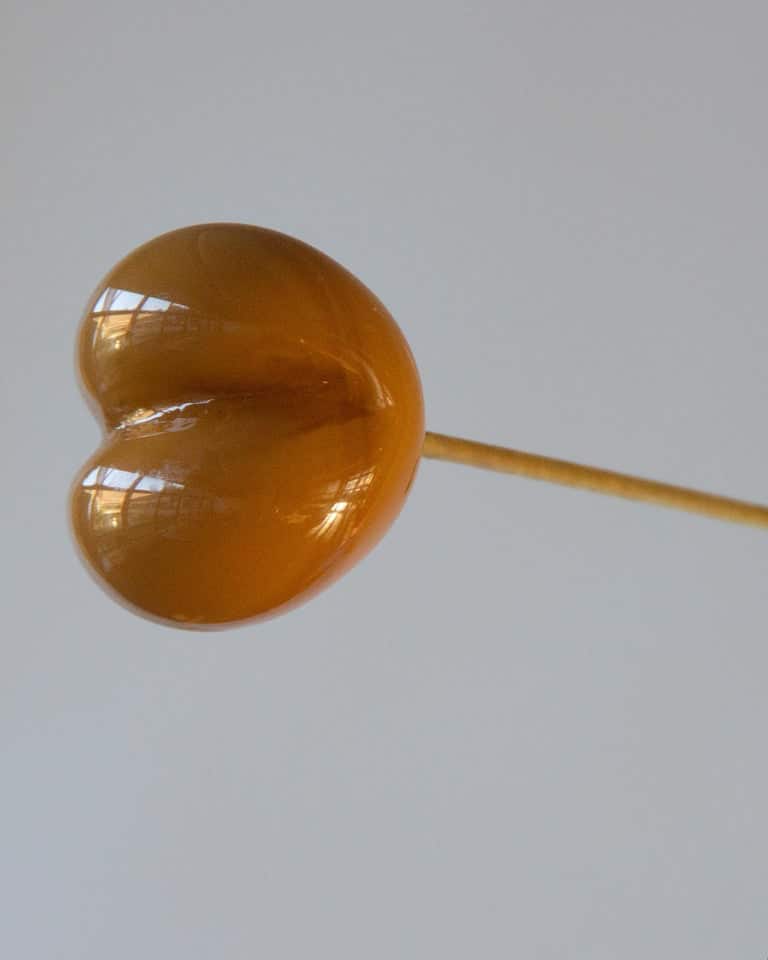
Doing things the wrong way, leaving tool marks and loving the mistakes. Well-made for me is probably the opposite of what it is to everyone else. I find beauty in the spontaneous and whimsical. However, and unknown to many, in the metalworking I do also appreciate the meditative process of polishing.
To anyone who wants to create, I say: Do whatever excites you the most until it’s done. And then next, concentrate on what excites you the most. Don’t worry about the “have to”s. Just follow your excitement and see where it takes you.

Post-Industrial-Craft-Art movement. And I’m on it!
Oh, I’m so inspired by others. I love anyone who can follow their creative path. I also love those who are still looking for it.
Hannakaisa Pekkala, Veera Kulju, Santtu Mustonen, Laura Pehkonen, Tero Kuitunen, Hanna Anonen, Markus Koistinen, Matilda Palmu, Maija Puoskari, Antrei Hartikainen, Jenni Tuominen, Ville Auvinen, to name a few from Finland.
Dora Cheffi, Paavo Halonen & Akira Minagawa, to name a few.
Poems of the space.
In Finnish glassblowing, many things are in danger. Old masters are retiring just as the craft is about to move into a new renaissance. I worry about the know-how getting lost and the workshops being closed. It is our responsibility to keep the traditional craft alive by finding new contemporary forms and ways of working.
“Failure is not the opposite of success; it’s a necessary part of it.”
The Questions
(The Proust Questionnaire is a set of questions answered by the French writer Marcel Proust.
Other historical figures who have answered confession albums are Oscar Wilde,
Karl Marx, Arthur Conan Doyle, Stéphane Mallarmé, Paul Cézanne…)
Acceptance of all
Resistance of all
Messiness
Overthinking
My 1-year-old son, Unto
Living an artist life
Gratitude
Doing things right
Energy
Energy
Coffee?
Patience to learn master carpentry skills
I’m ok
Being internally driven
A great pumpkin
By water and forest
My cabin
Living in the mind only
Artist fo sho
Extrovert
Humanity
John Irving
Pippi Longstocking
–
Gramma & mom
Laila, Aili & Mauri
Panic
Not learning more languages in school
Surprise me
Follow your highest excitement
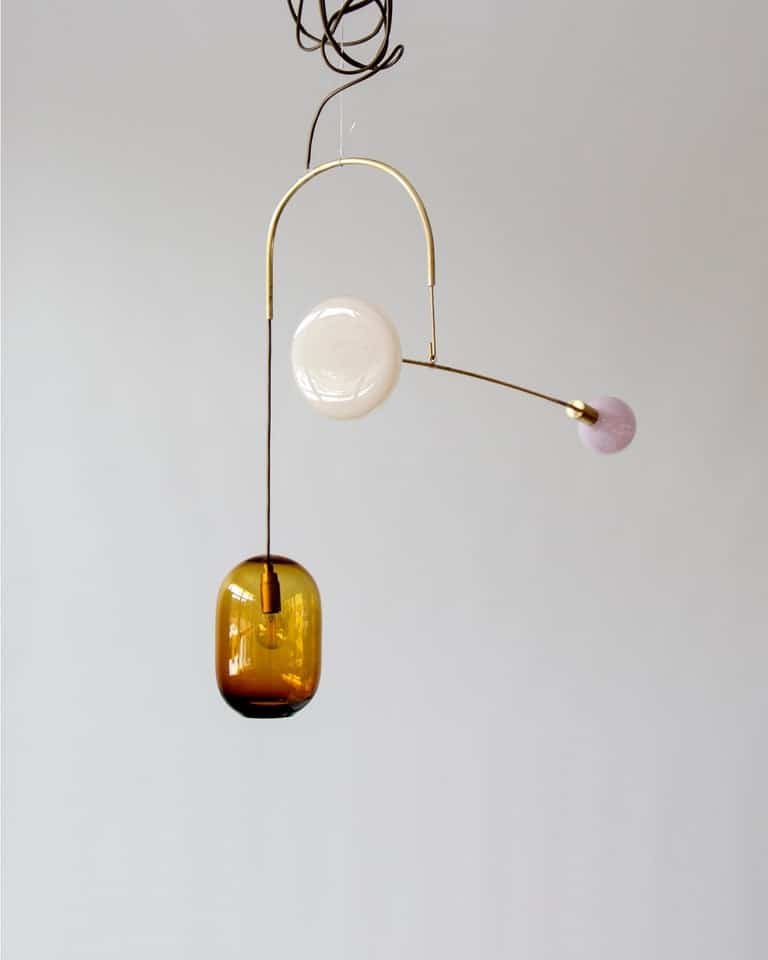
“Do whatever excites you the most until it’s done. Then concentrate on what excites you the most.”
SHARE :