Mirei Monticelli
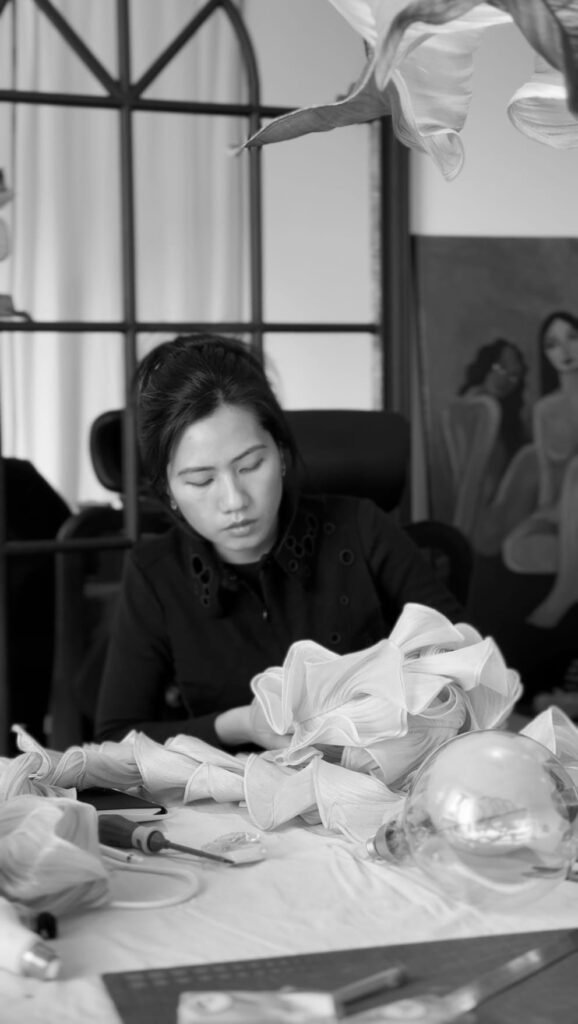
Mirei Monticelli is a Filipina designer based in Milan and the founder of Studio Mirei, an interdisciplinary practice dedicated to collectible lighting and sculptural objects. Blending contemporary design with traditional craftsmanship, she creates luminous works that explore the expressive relationship between light, textile, and movement. Her practice is deeply rooted in material innovation, often drawing upon natural fibers and artisanal techniques from the Philippines to develop objects that are both poetic and environmentally conscious.
Working at the intersection of design, art, and cultural heritage, Monticelli collaborates closely with artisan communities to reinterpret traditional materials through a contemporary lens. Her sculptural lighting collections balance organic forms with refined technical experimentation, transforming natural fibers into immersive compositions that blur the boundaries between object, sculpture, and atmosphere. Guided by a commitment to craftsmanship, sustainability, and emotional resonance, Studio Mirei’s work reflects an ongoing dialogue between cultural identity, innovation, and timeless design.
Interview
I was born and raised in the Philippines, and for the past 10 years, I have been living and working in Milan.
My earliest recollection of the art world dates back to my time in kindergarten when I crafted a papier-mache dog. The sheer joy of making a mess and fashioning something out of scraps of newspaper remains a vivid, happy memory.
I spent some years in the tech field, working with state-of-the-art technologies in augmented and virtual reality; however, I would still affirm that my career has always been closely aligned with the art and design field.
The pursuit of meaning in my life has been the driving force behind my journey into design creation. This profound search for purpose has guided me to where I am today, passionately engaged in the world of design.
My creative process is characterized by its laid-back and organic nature. I prefer to avoid forcing ideas or restricting myself with deadlines when developing new products or concepts. This approach allows for a more natural and authentic expression of creativity.
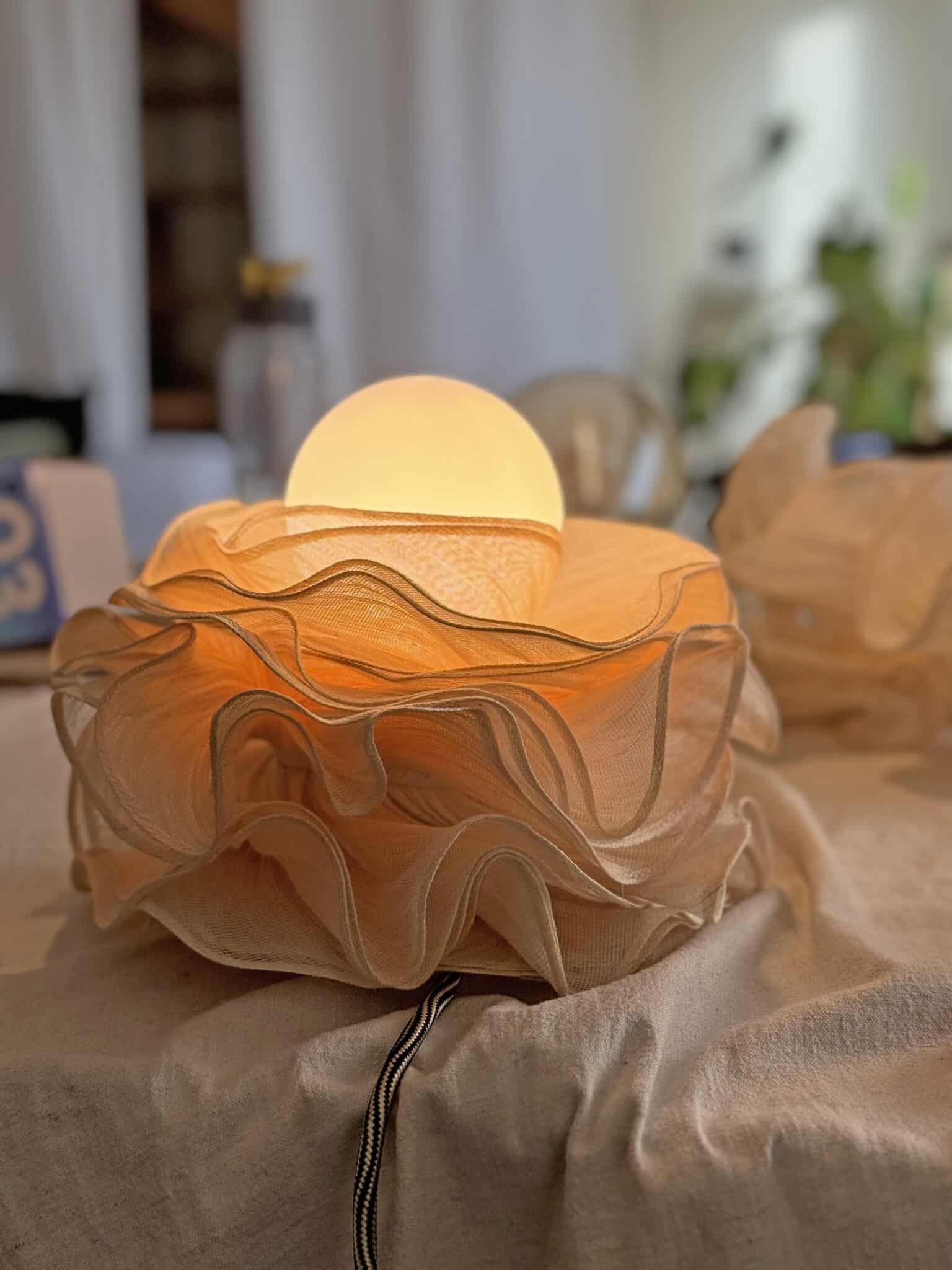
When I started out, my days were spent thinking of new ideas and making prototypes. Now I find myself on most days dedicating a significant portion of my time to hand-sewing and moulding banaca fabric into lampshades to fulfill client orders. My work routine also involves handling packaging tasks, responding to emails, taking photos, and visiting suppliers. To maintain balance, I make it a point to incorporate a brief yoga sequence into my day and savor a comforting cup of frothy matcha.
I chose to work with Banaca Textile because of their distinctive materiality, which captivates me, and their profound connection to my cultural roots. Collaborating directly with the skilled weavers in the Philippines, a tradition my mother initiated two decades ago, holds personal significance. Motivated by the challenges faced by families on the disaster-prone island of Catanduanes, I am committed to continuing and expanding this initiative. Supporting the banaca weaving industry not only creates sustainable employment opportunities but also aims to preserve a valuable tradition. My hope is to inspire the younger generation to embrace and perpetuate this cultural heritage in the face of natural disasters.
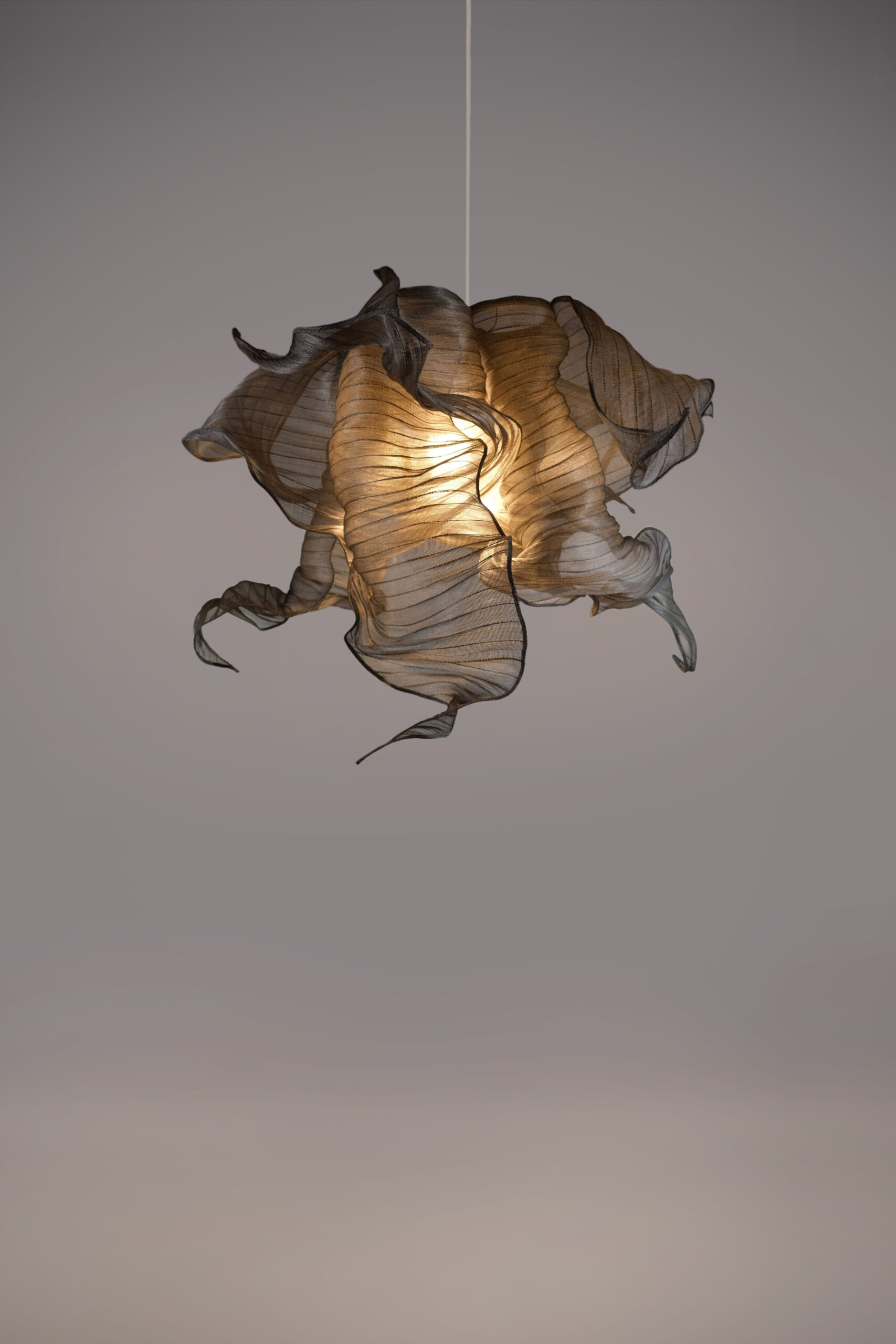
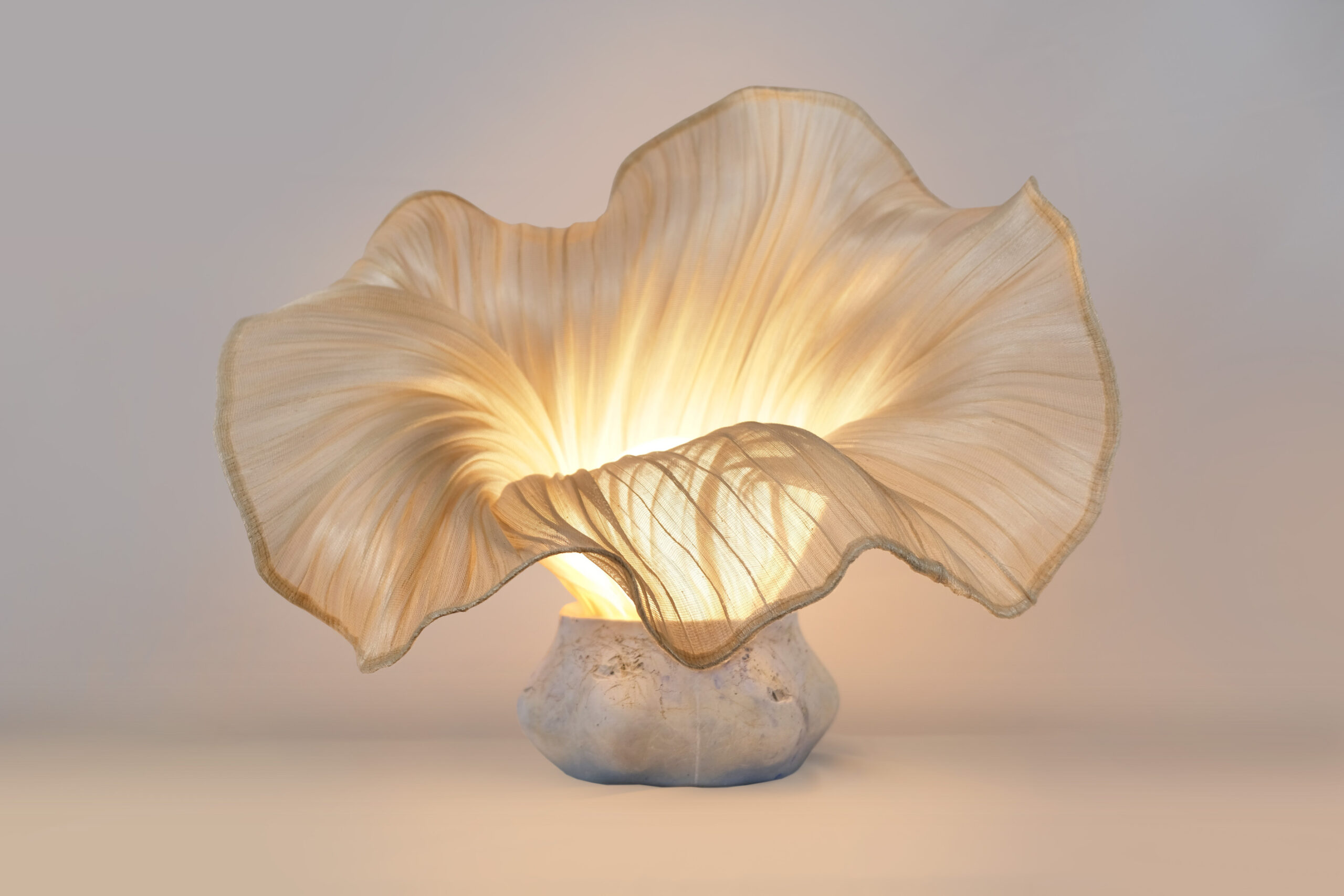
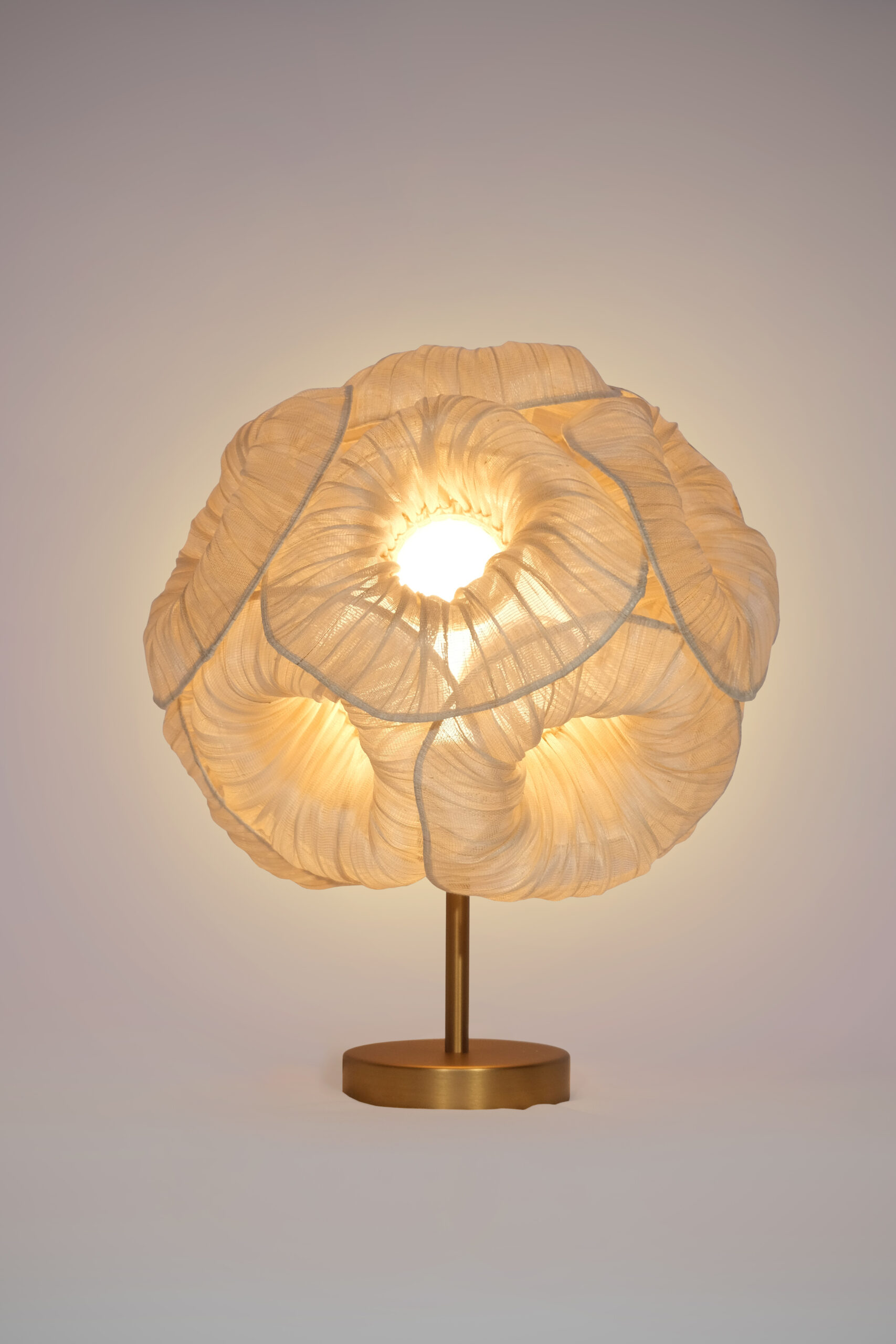
The technical particularities of my creations begin with the unique use of textiles for lamp designs, a less conventional approach in this field. I invent new techniques to impart volume and structure to the pieces, demanding meticulous handwork. The intricate nature of the process renders mass production impractical, emphasizing the craftsmanship and individuality of each piece. The inherent qualities of the fabric contribute significantly to the character of the lamp, imparting a sense of transparency, softness, and a feeling of lightweightness.
My advice to aspiring artists venturing into sculptural design is to stay true to themselves and discover what truly ignites their passion. By investing 100% effort into their craft, success will inevitably follow at some point.
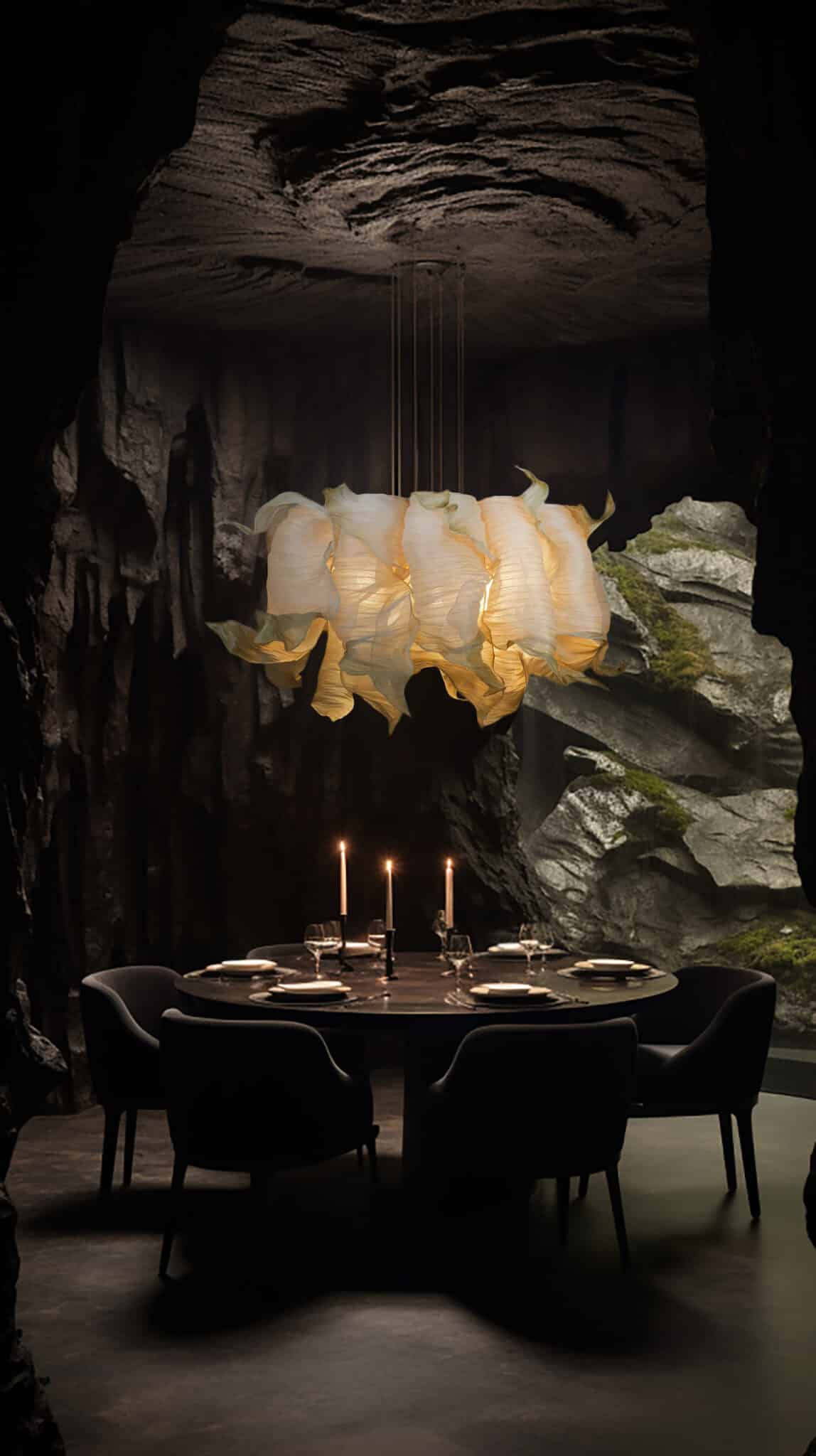
Classifying my works within a specific design movement is a challenging task, as they don’t neatly fit into any historical categories. However, if pressed to choose a favorite design movement, I definitely find a connection with Art Nouveau. The movement’s incorporation of organic elements from nature and ethereal characteristics resonates strongly with the essence of my work.
The designers who have notably influenced me include Zaha Hadid, Iris van Herpen, and Neri Oxman. Zaha Hadid’s innovative and groundbreaking architectural designs have inspired my appreciation for fluid and futuristic forms, pushing the boundaries of conventional structures. Iris van Herpen’s avant-garde approach to fashion, particularly her use of 3D printing and unconventional materials, has influenced my perspective on blending technology with artistic expression. Additionally, Neri Oxman’s work at the intersection of design, technology, and biology has sparked my interest in biomimicry and the potential for sustainable and nature-inspired design.
Nacho Carbonell’s work captivates me due to its whimsical and almost fantastical nature. His unique approach to furniture design, often resembling living organisms or sculptural forms, resonates with my interest in blending functionality with artistic expression.
Lindsey Adelman’s ability to create pieces that are both elegant and unconventional, often combining traditional craftsmanship with modern aesthetics, aligns with my appreciation for the interplay of tradition and innovation in design.
David Wiseman’s ability to seamlessly integrate natural elements into his creations, whether it be through delicate porcelain or metalwork, resonates with my own fascination with the organic world.
Yayoi Kusama’s immersive and avant-garde approach to art, particularly her iconic use of polka dots and repetitive patterns, resonates with my appreciation for the intersection of art and the viewer’s experience.
Olafur Eliasson’s mastery in his use of natural elements such as light and water to evoke emotional responses underscores my belief in the power of art to elicit profound feelings.
My creations can be summarized as ethereal, organic, and flowy.
I’d like to thank Galerie Philia for this chance to reflect on who I am as a designer and where I am in my career.
“I must create opportunities instead of waiting for them.”
The Questions
(The Proust Questionnaire is a set of questions answered by the French writer Marcel Proust.
Other historical figures who have answered confession albums are Oscar Wilde,
Karl Marx, Arthur Conan Doyle, Stéphane Mallarmé, Paul Cézanne…)
To do what I love every day of my life
Losing any of my senses
My laziness to fix my mess
People that are quick to judge
My husband
Business class tickets :D
Content because I finally found a place for my studio
Perfectionism
Intellect
Empathy
« I have a weird idea »
Coding
I would like to be more conscious about numbers
Building my own career and by following my own path
A silk dancer
A treehouse in the mountain overlooking the clouds with a crystal clear lake beside it
My skills
Being lonely
Artist 😊
My calm demeanor (most of the time)
They keep me grounded
Paolo Coelho, Neil Gaiman, Robert Greene
Darna, who is a well-known fictional superhero in Philippine culture
Beatrix Potter due to her passionate pursuit of what she loved, her entrepreneurial foresight and her dedicated conservation efforts
My parents
Demetria, Damiano
People who brag a lot
Not taking seriously math classes
In my bed
I must create opportunities instead of waiting for them
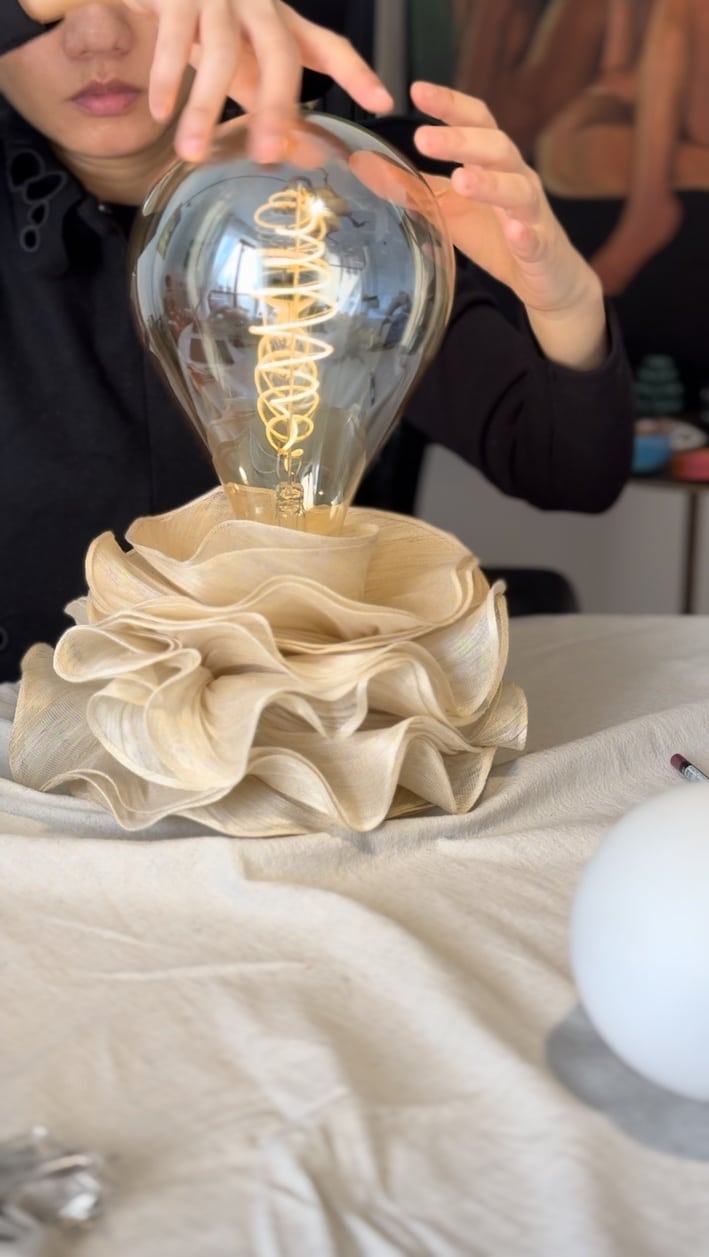
“My creations can be summarized as ethereal, organic, and flowy.”
SHARE :