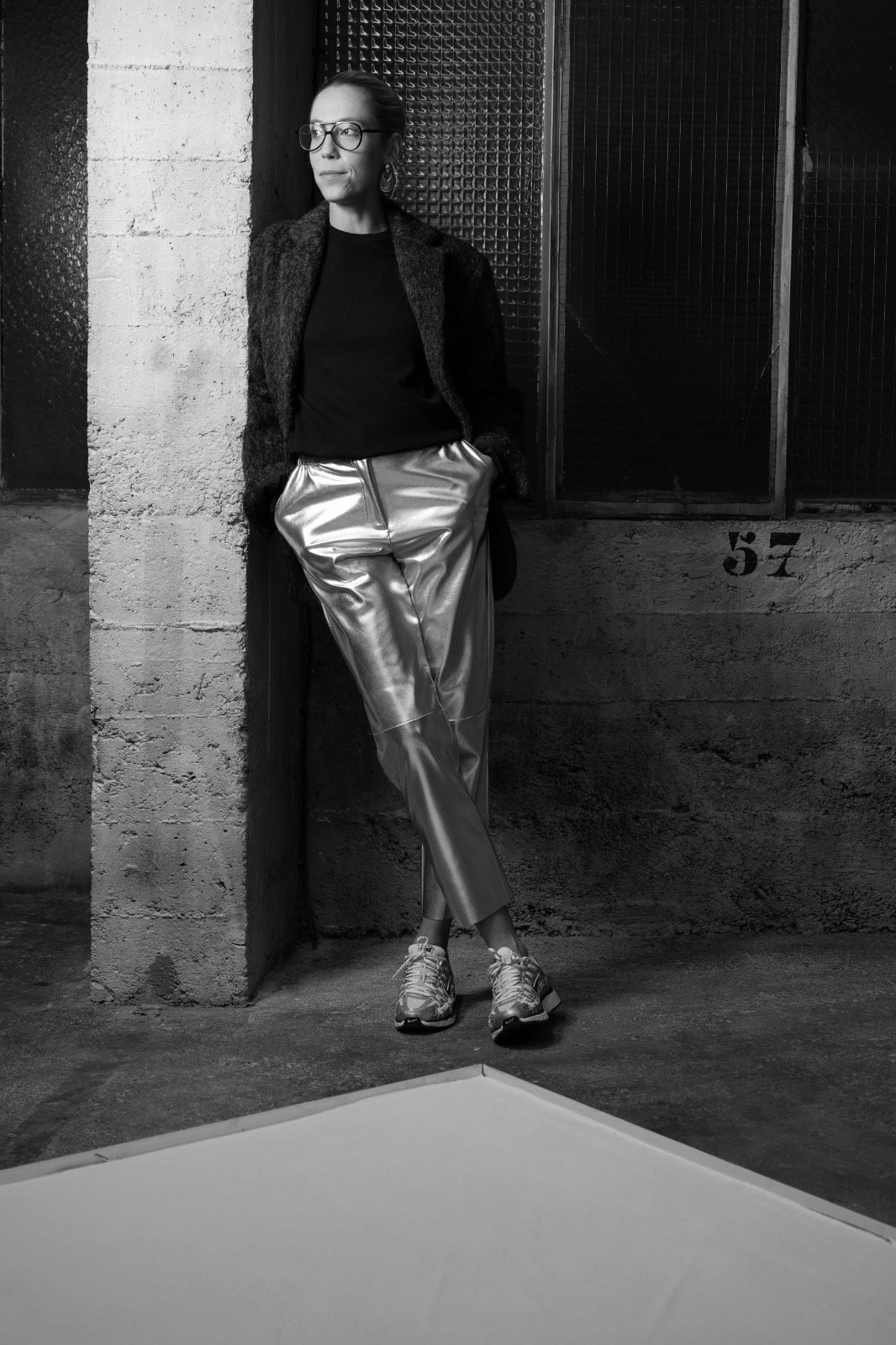
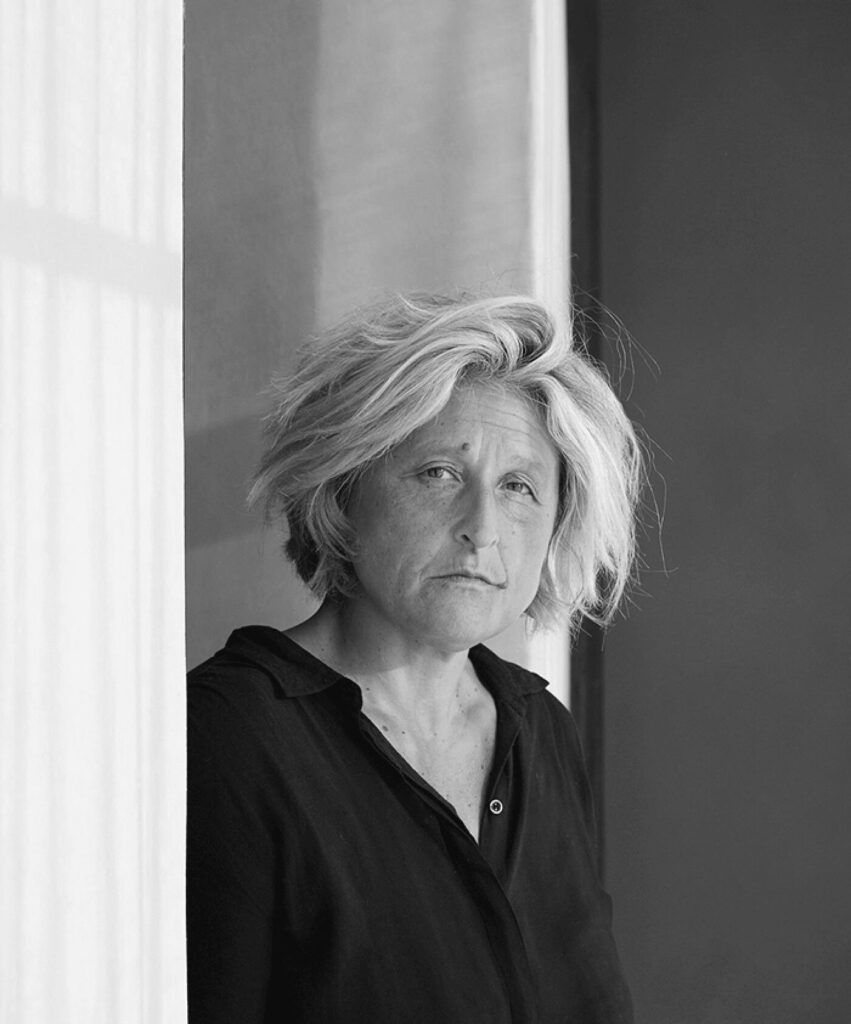
Serena Mignatti
“The process should become an engaging, empathetic journey.”
INTERVIEW

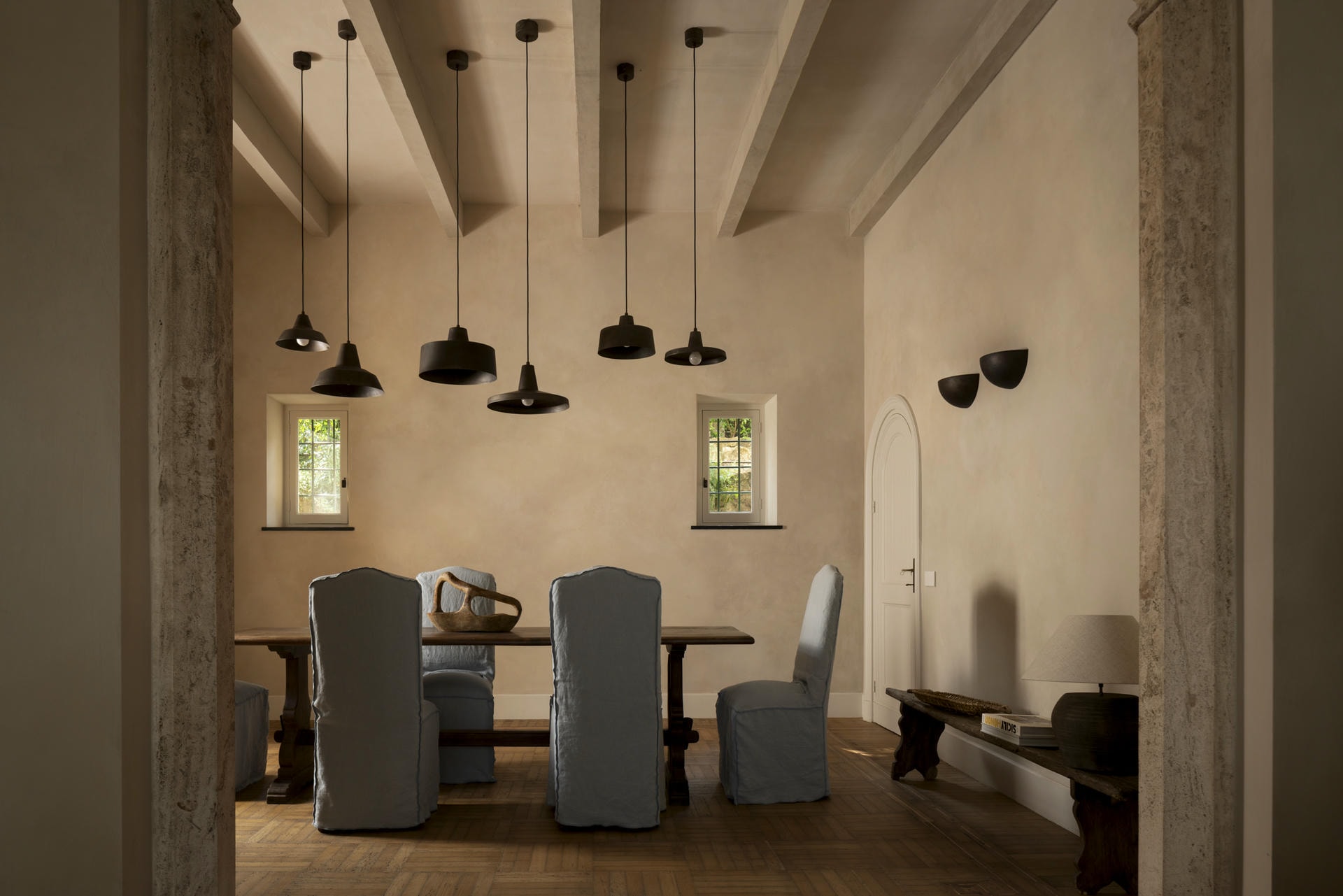
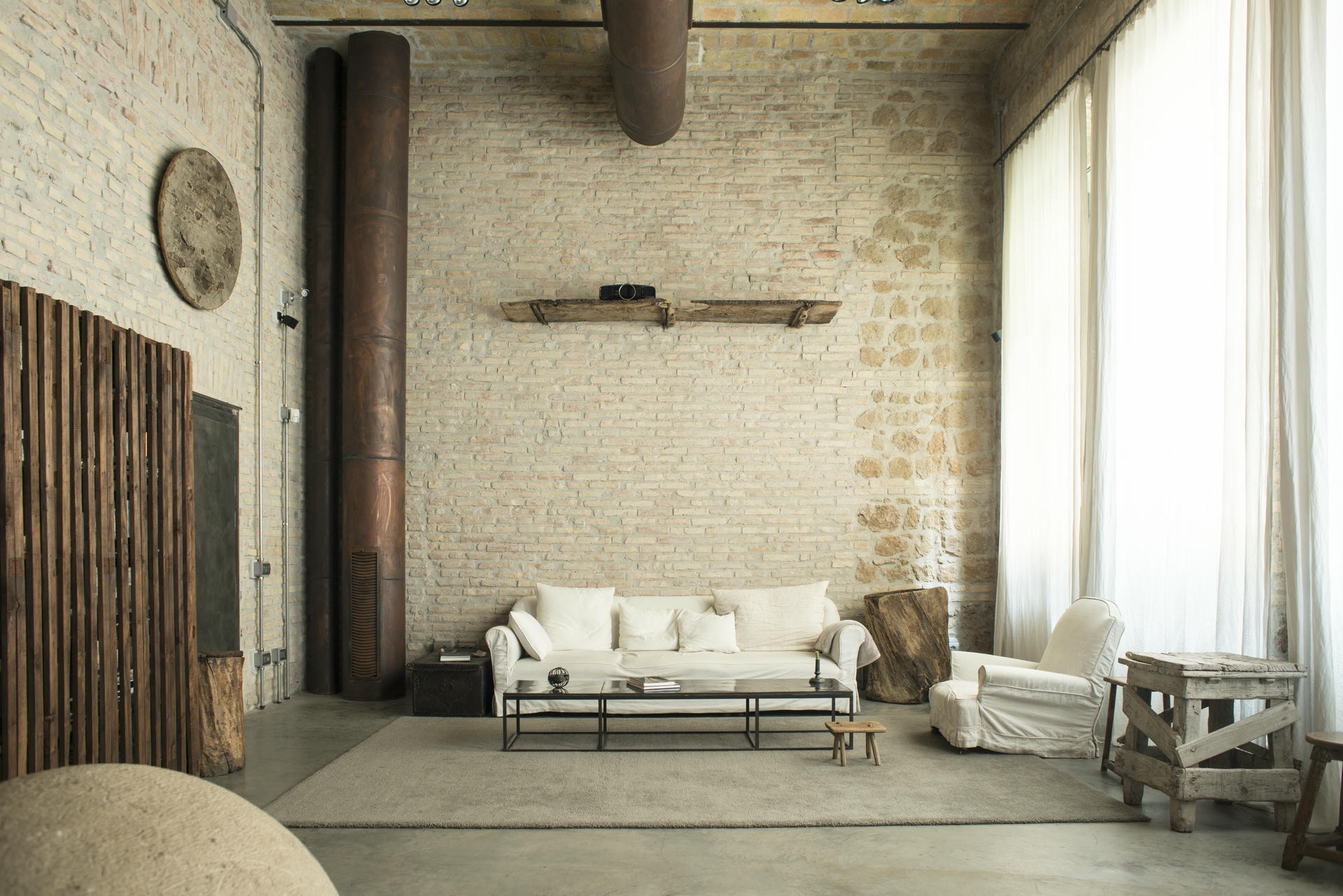
Villa Badia @ Dario Borruto
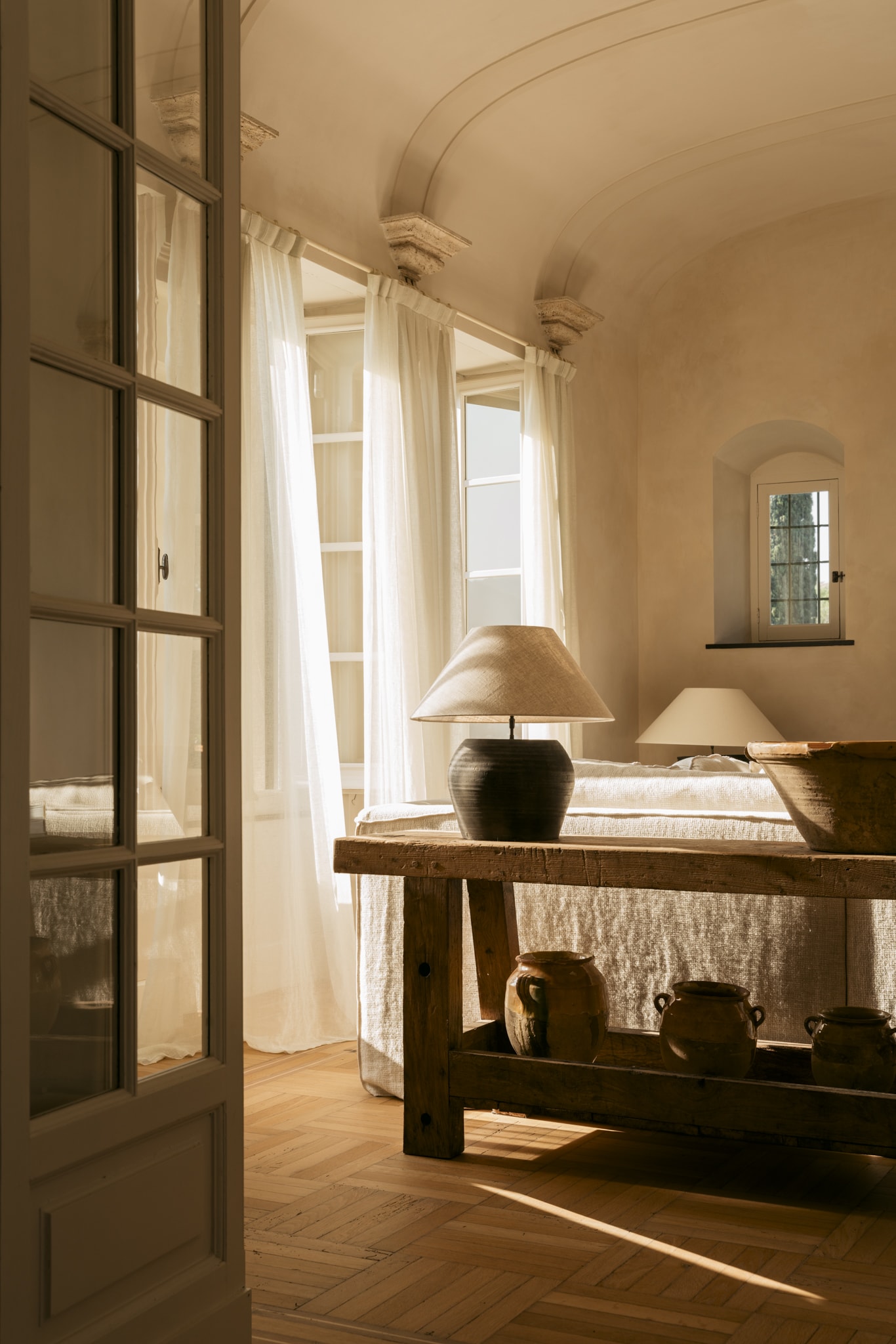
I don’t think there’s a single key to successful interior design. Some projects are simply more interesting than others in terms of research and depth.
The question I ask myself instead is: how can my work become truly meaningful for the client? What matters to me is that my research is able to respond to the needs of the people who choose to work with me. In a way, it’s also a matter of respect.
Among the principles that guide me are dedication, passion, and respect for one’s own research, but also honesty toward that research and respect for the client. I think people choose to work with me first of all because of a sense of affinity and empathy. Of course, they may also be drawn to the aesthetic of my projects and recognize themselves in a similar idea of beauty. But I believe the way I work, and the level of involvement I ask from clients throughout the design and construction process, also play an important role.
For me, it’s essential that clients take an active and constructive part in the process. Sometimes discussions can be intense, and that’s completely natural. It’s part of the creative journey. Our role is not only to offer the best of our vision, but also the best possible experience. After all, these are the spaces where they live. The process should become an engaging, empathetic journey, and even an enjoyable one. In the end, you grow together.
I never place anything ahead of what I believe is best for the project. And for me, what is best for the project must always coincide with what is best for the client. That doesn’t mean there can’t be different opinions. On the contrary, dialogue and debate are an essential part of the creative process.
First of all, I’m an architect. My path started at IUAV in Venice, and for me, interior design has never been a separate discipline from architecture. I actually find it difficult to think of them as two different worlds. In many ways, I see interior design as the place where architecture is truly completed, because it’s where you can control the details and every aspect of the project.
My professional path didn’t begin with interior design, though. My background is quite different. For about fifteen years, I worked in international practices, mostly on large-scale projects such as airports, towers, master plans, and other work that operates at a very big scale.
At the same time, I always felt a strong attraction to the more intimate scale of design. Even while working in large architecture offices, I tried to pursue a more personal line of research through smaller projects that felt closer to my own way of thinking.
One of the first projects in that direction was a recording studio for Katia and Marielle Labèque. It was a key moment for me, both professionally and personally. Later on, during the years I spent in Doha, Qatar, I truly entered the world of interior design in a more focused way, and it gradually became a central part of my work.
I believe the real value of a career lies in the whole journey: the encounters, the projects, the experiences, even those that at first might seem negative. I’m convinced that removing even a small part of that path would change the final outcome.
That’s why the idea of research, and its development over time, is so important to me. Every step, every experience, helps shape a vision.
That said, if I had to point to a truly defining moment, I would think of meeting Katia and Marielle Labèque in 2011. At the time, I was still working at Fuksas Studio, mainly on large architectural projects. I was at the beginning of a career that was still very much in the making.
Katia placed her trust in me by giving me a project that was very important to her: her music school and recording studio in Rome. She saw a strong potential in me, and I learned a great deal from that experience, not only professionally. It reminded me how essential attention to detail, care, and respect for the search for beauty are in art and culture. A beauty that is never superficial, but grows out of a dialogue with nature, tradition, and the memory of places. It was a lesson that shaped not only my work, but also the way I look at life.
Another important encounter was with Thom Yorke and Dajana Roncione. With them, a strong creative synergy developed, which over time also became a friendship. From that experience, I understood how important collaboration is, and how fundamental empathy can be in a creative process. It has been, and still is, a beautiful experience.
Of course, I also consider my time at Fuksas Studio central to my development. Working with Massimiliano Fuksas was undoubtedly a key step in my professional formation.
Like most architects, I always start from the building itself and from the context. I look for strong elements, things that already carry a certain beauty and that can support a narrative. It could be a view, a glimpse of the landscape, a particular perspective, or elements already present within the space. I like to begin from there and build a story around it.
In fact, I don’t really define myself as an interior designer. I need to have a broader vision. I need to develop a sense of empathy with the place and with the architecture itself. It’s not simply about placing objects in a space, but about shaping it, animating it, and respecting it through an overall vision.
Context is fundamental to me: where we are, what you see from the windows, the atmosphere you breathe. The city speaks, and we have to learn how to listen to it. I don’t like working in opposition to what I find. I prefer to respect and enhance the energies that are already there.
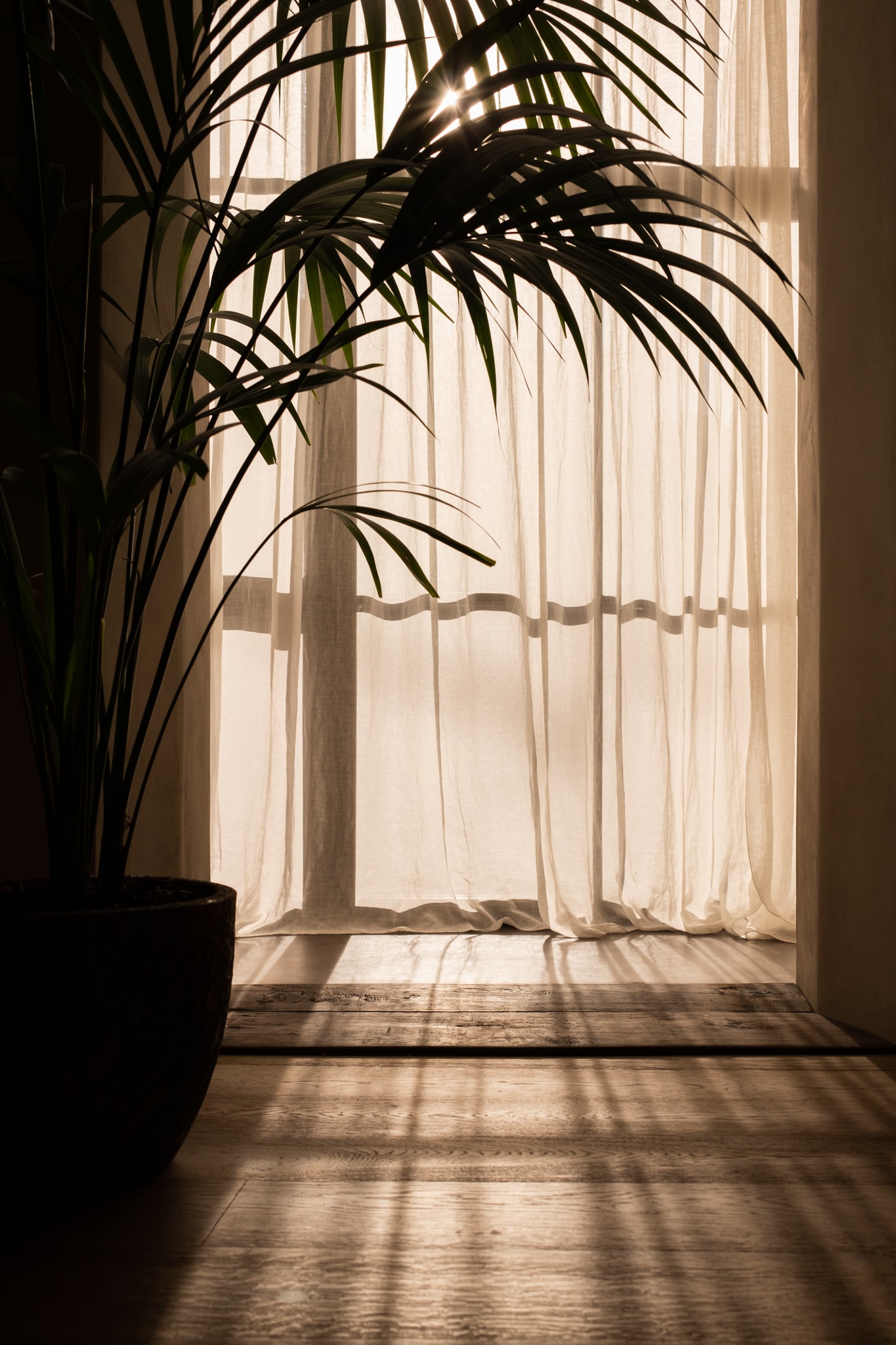
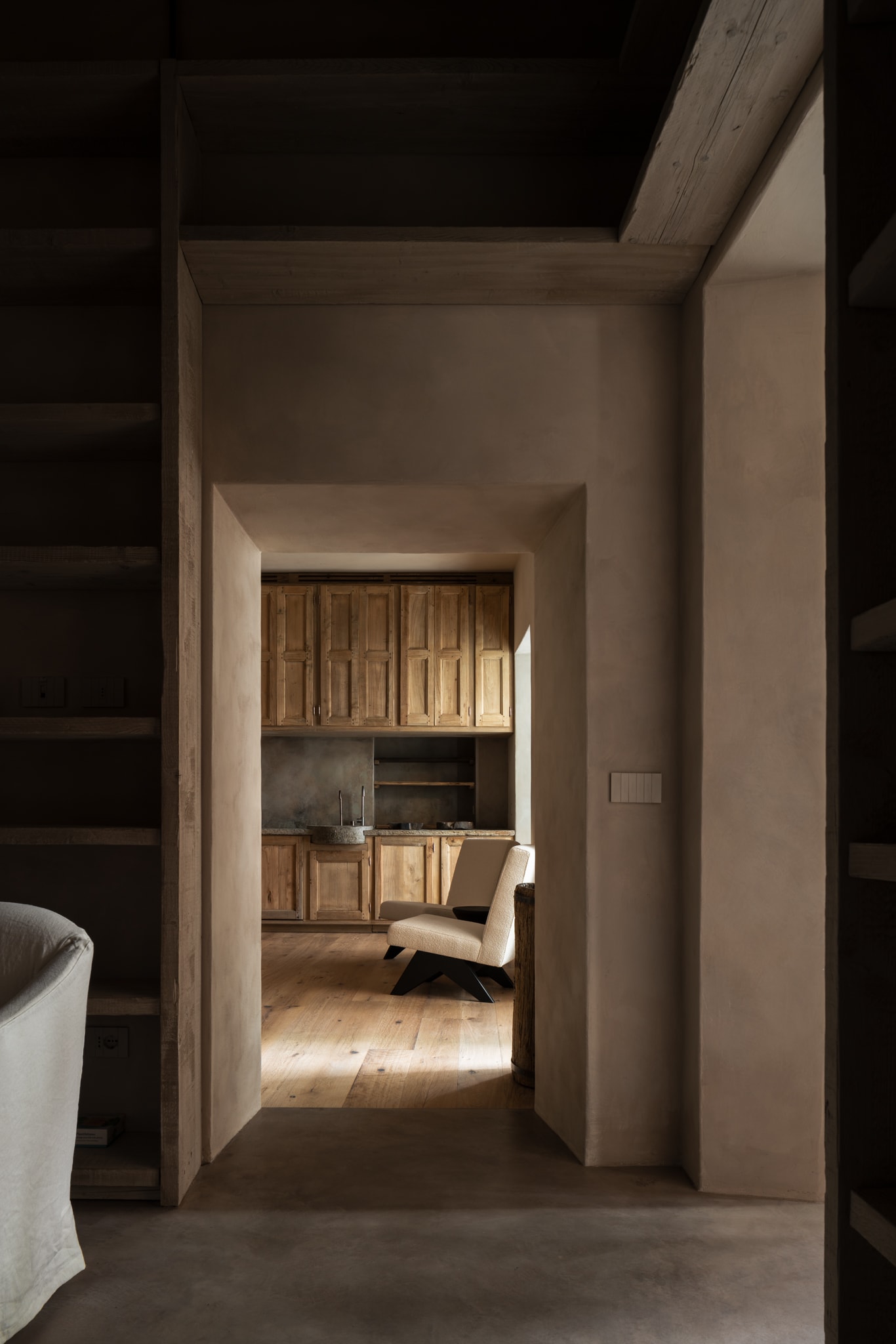
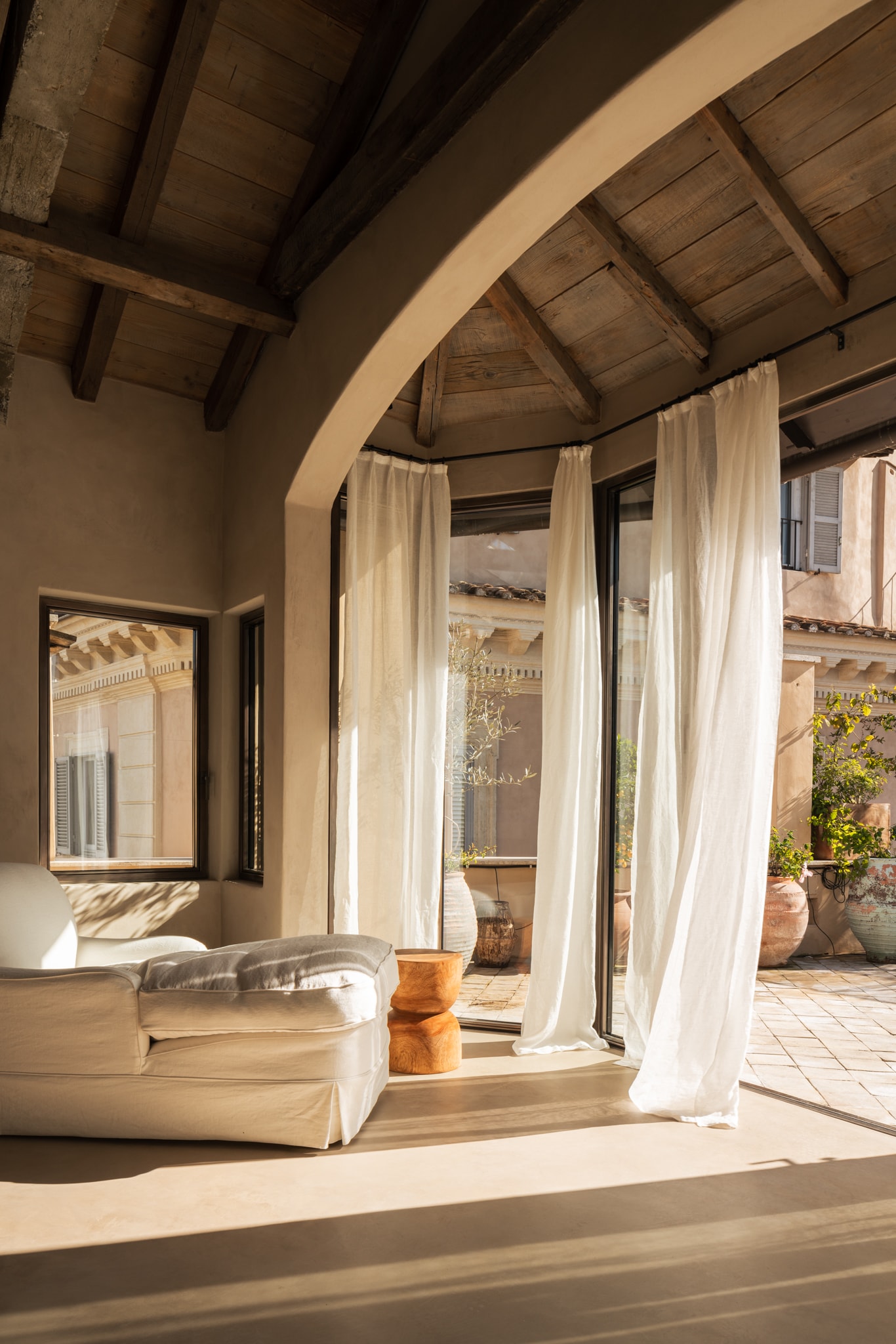
I work a lot with viewpoints. I like to imagine what a person sees while moving through the space. Natural light always plays a central role, and I like the way light and shadow can shape and enrich the interiors.
If I had to choose a few keywords, they would be respect and beauty.
I believe every project has its own story, its own path and experience, and for that reason, each one is always unique. There are many variables at play: the place, the client, and the kind of empathy that develops between us. It’s always a matter of teamwork and of very specific conditions that, each time, shape and define the experience.
For me, it’s essential to feel truly passionate about something. That’s why my “mantra,” if I had to call it that, is to find a passion and a clear vision within every project, and then build the entire experience around it.
If I had to summarize it in a few words, I would say that what drives me is the search for beauty. But beauty, for me, is never something superficial or purely aesthetic. It’s the ability to become deeply engaged with things. It’s the experience of well-being, the joy of a beam of sunlight entering powerfully through a window, or the subtle change in the intensity of light as you move through a space. And it’s also the ability to share that same passion with the client.

Palazzo Grazioli @ Dario Borruto
Probably learning how to start again from scratch, every single time.
The creative process is deeply fascinating, but also extremely complex. The timelines are always long, because an idea must eventually become a built reality. In my case, the construction phase is often the most interesting part of the creative process.
These journeys last for years. Along the way, you go through very difficult moments, and often the hardest ones are internal. When you are truly driven by the desire to do something well, to create something special and unique, the process becomes very intense. It brings enthusiasm and joy, but also effort, doubt, and personal growth.
The hardest lesson has been accepting that this process begins again each time from zero. When a project is completed and delivered, you almost feel as if you have reached a level where you no longer need to constantly prove yourself. But that’s not really the case.
Every new project means standing once again in front of a blank page and accepting that you have to begin again, every time, from the very beginning.
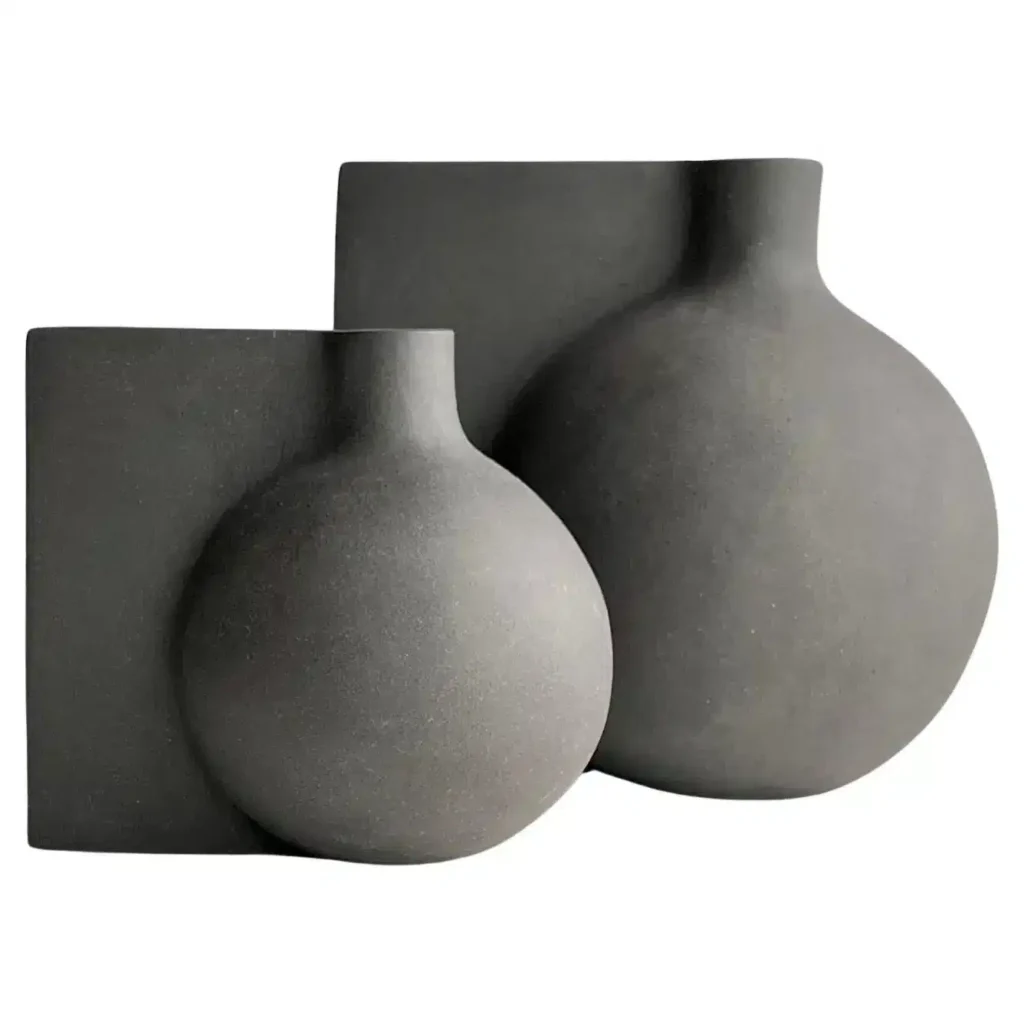

@ Dario Borruto
I believe strongly in gavetta, in the most authentic sense of the word. It’s probably the best way to gather lessons, even when they are not given explicitly. Many things you learn by “stealing” them: by observing, making mistakes, copying, and listening. In other words, simply by growing.
I don’t really believe in the idea of a master who gives direct advice. What I do believe in is the value of working alongside great masters and learning from them, often in silence. You absorb their intuitions, their way of working, their ability to look at things from a different perspective.
Among the many lessons I’ve received, one of the most important certainly comes from my experience working with Massimiliano Fuksas. He was never afraid to abandon an idea and start again from scratch when a project reached a dead end. Not becoming too attached to a solution and not being afraid to question everything were fundamental lessons.
And there is also a thought by Renzo Piano that I have always found very true: you should never be afraid to leave, to explore new places, and gain experience in the world. But then it’s important to return and put into practice what you have learned.
It’s difficult not to feel attached to all my projects. It’s a bit like asking a mother which child she prefers.
However, I can share an experience that, I have to admit, has been one of the most fun but also one of the most frightening projects I’ve worked on in recent years. Not only because of the architectural challenges, but also because of the weight that the project carried for me, both as a professional and as an Italian, in a very particular moment.
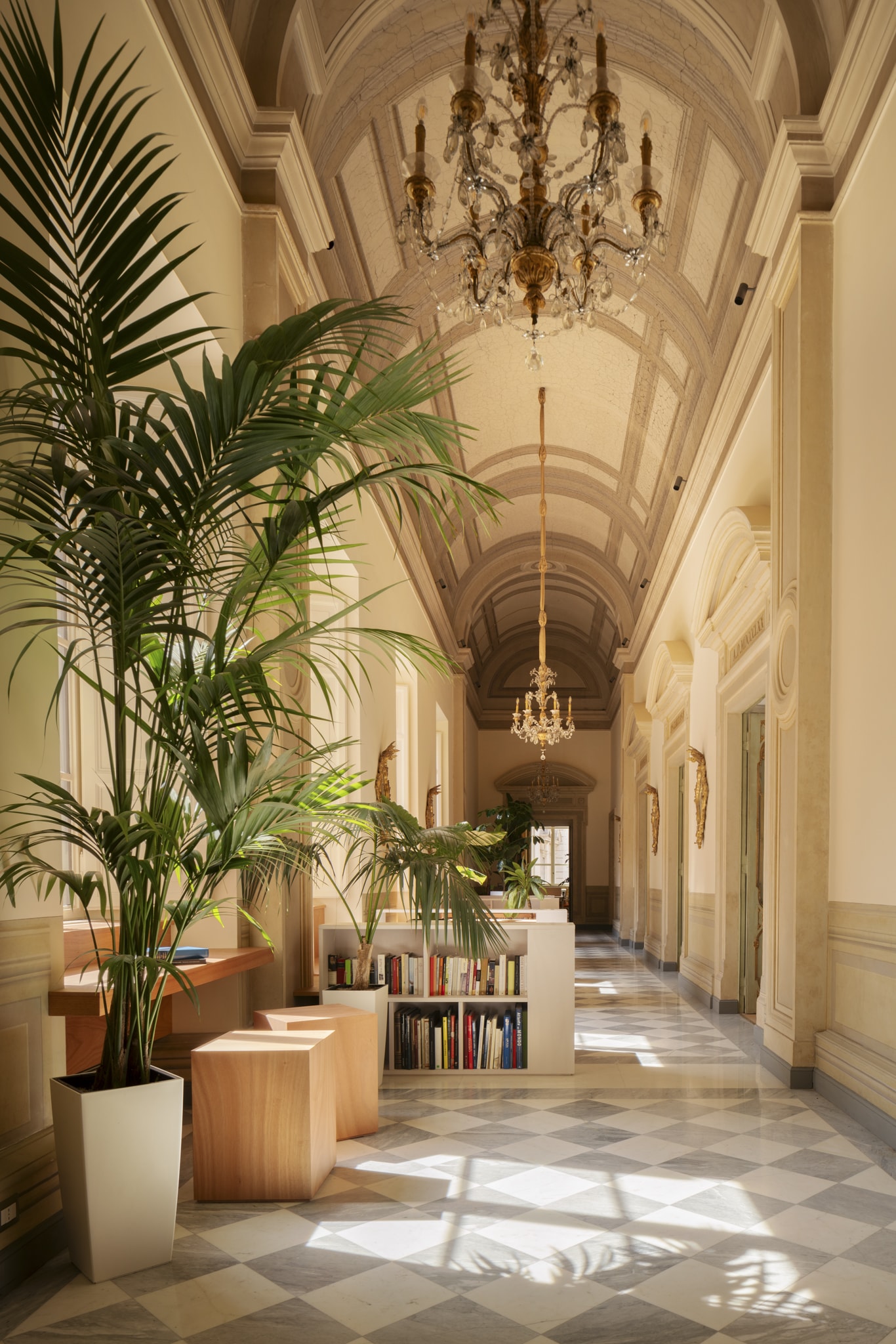
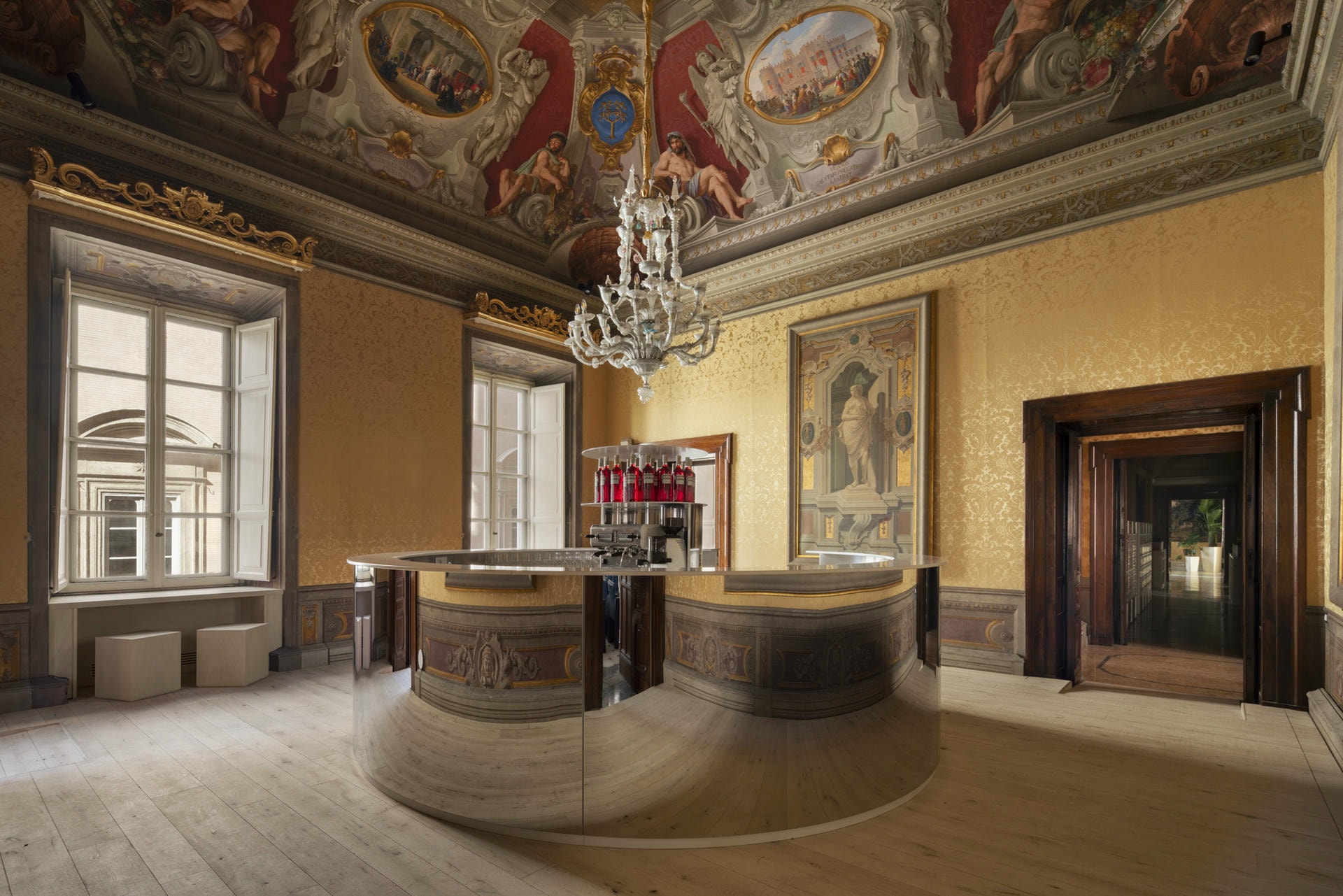
I still remember the day I received a phone call from a member of the board of the Foreign Press Association in Italy. They invited me, through a selection process, to take part in a competition for the design of their new headquarters in Rome: Palazzo Grazioli, on Via del Plebiscito, the former residence of Silvio Berlusconi. We are talking about around 2,500 square meters of space historically used as a residence, which had to be completely rethought and adapted into offices. All of this had to be done in less than nine months and with a very limited budget.
Just the idea of working within an extraordinary building like Palazzo Grazioli, with its layers of history between the seventeenth and nineteenth centuries, would have been enough to command respect. But there was also the symbolic and media weight of the place, which made the project even more delicate and, in a certain sense, very exciting.
My advice is the same one I often remind myself of. It’s simple: study, observe, and travel as much as possible. Train your eye. “Steal” with your eyes every detail that captures your attention, a color, a texture, a particular quality of light, an image that resonates with your sensitivity. Everything can become a source of inspiration.
Passion is essential, of course, but not only for our work. It’s just as important to cultivate interests and curiosity beyond architecture, because those passions make us more attentive to the world around us.
And don’t be afraid to change your mind. Making mistakes is part of the process. Sometimes you need to take a step back to find the right solution.
Ours is a complex profession, built on intuition, method, and also a bit of courage. You need the boldness to try, to experiment, and that positive audacity of someone who always has the desire to create.
If I had to give one practical tip, I would say: value light above all. Whether natural or artificial, light is a fundamental element in any space. I’m not referring so much to the lighting fixture itself, which I usually try to keep as discreet as possible, but to the effect that light creates within a room. The atmospheres and scenographic effects that light can generate, in my view, play a decisive role in shaping an interior.
The other element I consider essential is the presence of greenery. One should never be afraid to introduce plants into interior spaces. Even if you don’t have the luxury of a terrace or a garden, there are many ways to bring nature indoors. The combination of light and greenery already creates a very strong foundation for a sense of beauty.
More generally, I would suggest trying to change your point of view. Focus less on individual objects and more on the overall perception of the space. It’s rare to go wrong if you respect fundamental elements such as light, atmosphere, and the sense of well-being that a space can convey.
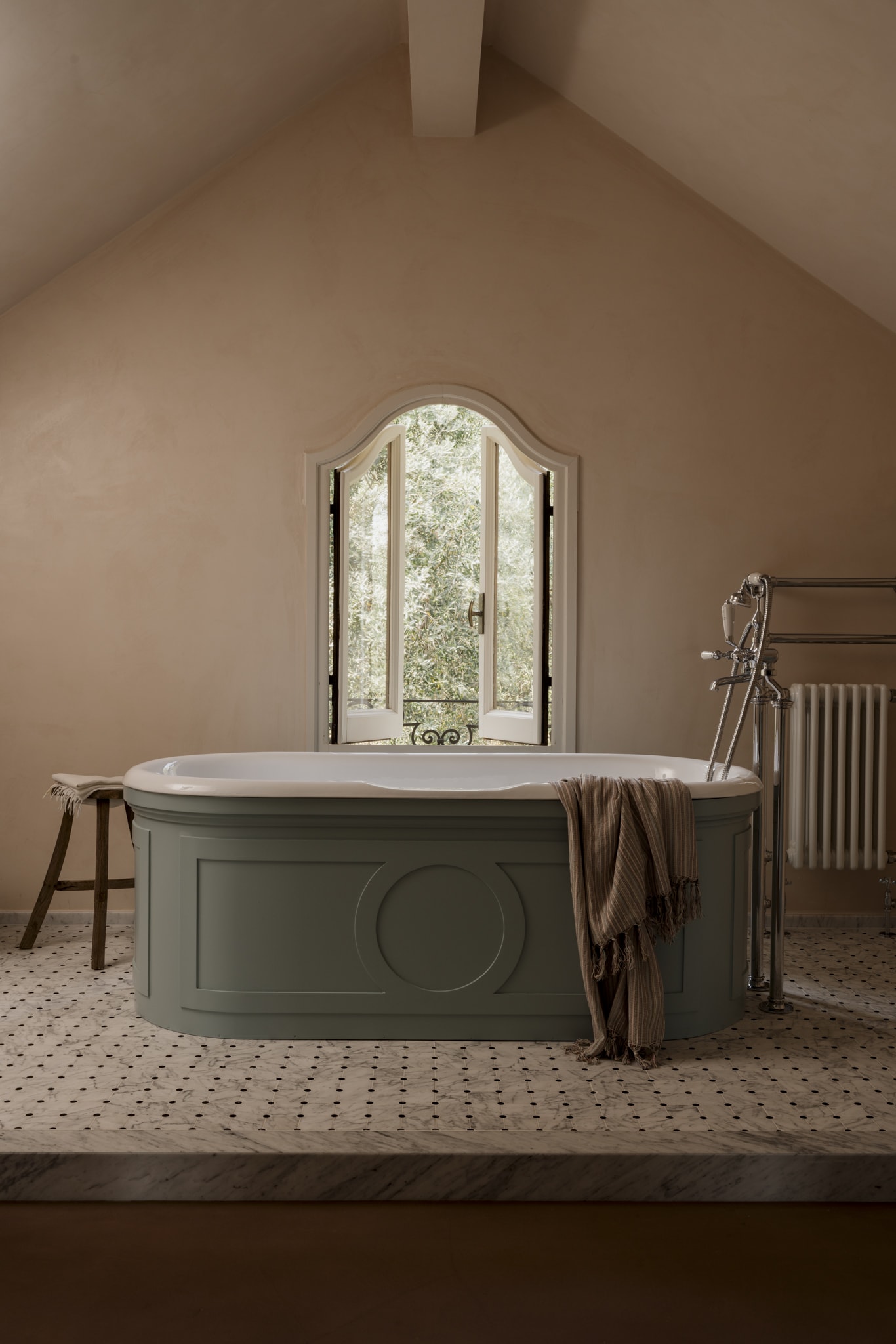
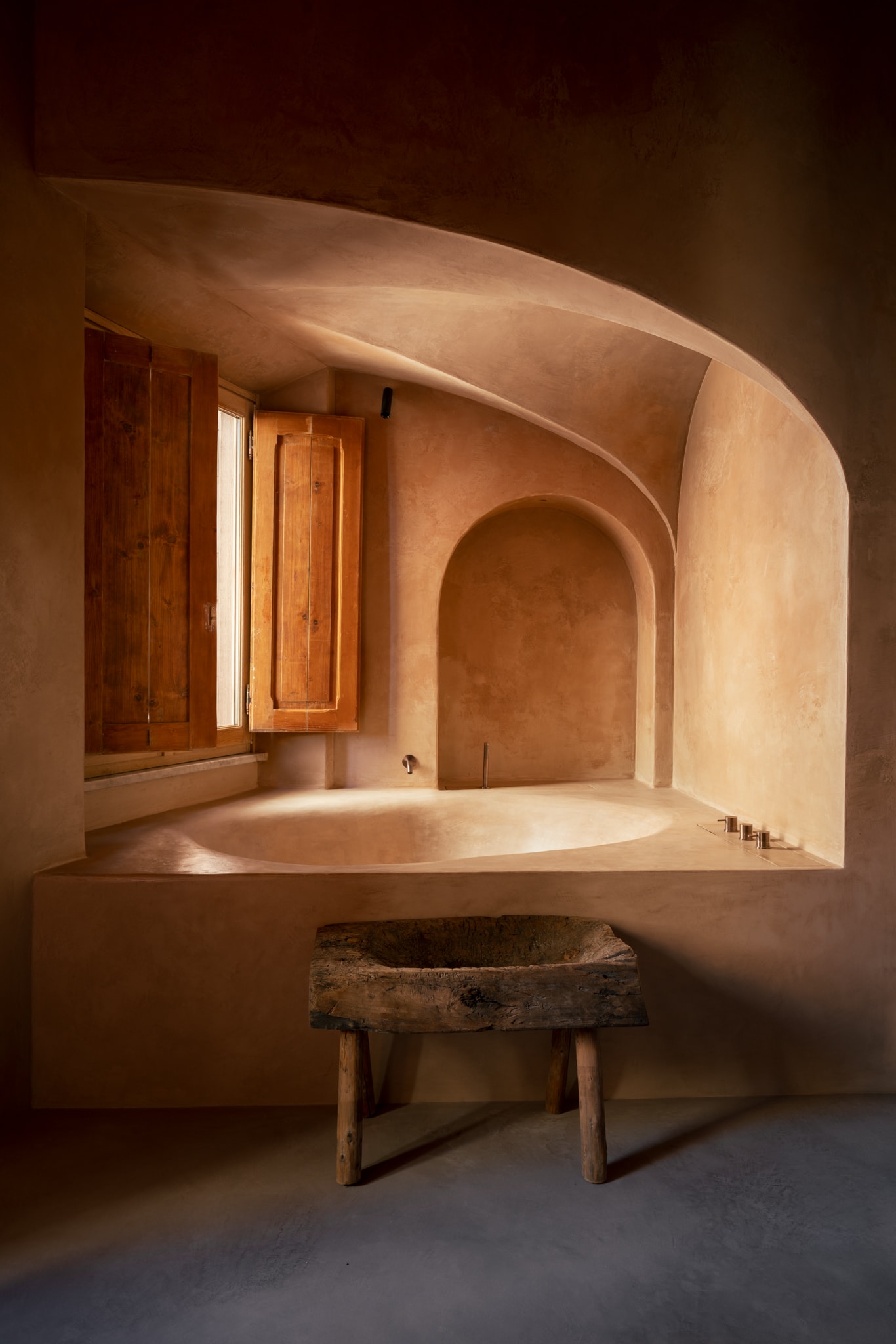
I often say that I don’t furnish a space with objects; I build an environment starting from how I want people to feel inside it. If we are speaking about a home, for example, I truly believe it should be a place of peace, rest, relaxation, and pleasure. For this reason, I tend to avoid strong contrasts or abrupt changes in colors and lighting. Instead, I try to create spaces that feel as if they have always existed that way, without leaving obvious traces of my intervention. The goal is to create places where people can truly feel well, almost like a small refuge for the soul.
@ Dario Borruto
@ Dario Borruto
I’m definitely more of a book person than a podcast listener. These days I’m reading Colorama: From Fuchsia to Midnight Blue, an illustrated book by the French artist and graphic designer Cruschiform. It was recommended to me by the artist and painter Maurizio Pettini, with whom I collaborate on many of my projects.
It’s a fascinating visual and cultural exploration of color. It’s not simply a catalogue of shades. Each page tells the story, meaning, and use of a specific color. It’s a beautiful and very engaging book, and I would absolutely recommend it.
There are also two books that have been fundamental for me. The first is Invisible Cities by Italo Calvino, and the second is Non-Places by Marc Augé.
In my view, they are both readings that help shift perspective and encourage us to look at space and reality in a different way, almost the opposite of what we are normally used to.
For anyone working with architecture and space, these books are truly essential.
I’m currently finishing a project I’m very attached to in London. It’s a rather special residential project for two clients I care about deeply. It has been a complex experience, but precisely for that reason, a very meaningful one.
As often happens, when the journey is not simple, the final result feels even more rewarding. I’m very happy with how it has turned out and, above all, with the satisfaction of the clients, which for me is always essential.
I’m also working on other projects. One is another residential project in Rome, very interesting, although for the moment, I can’t share too many details about it.
At the same time, I’m involved in the development of the Research Center and Biopark for Finagricola. With this project, I return to working with architecture on a larger and more complex scale.
Thanks also to the vision of the entrepreneur Massimiliano Palo, I believe it has the potential to become an important project for the territory and hopefully something that will spark wider discussion.
@ Dario Borruto
Thank you so much Serena, for this lovely interview!
Share article :