Belgium. I grew up in a small, idyllic town called Lier, just outside of Antwerp. I now live in Antwerp.
MAGAZINE · INTERVIEW
Thomas Van Noten – TOGIGI
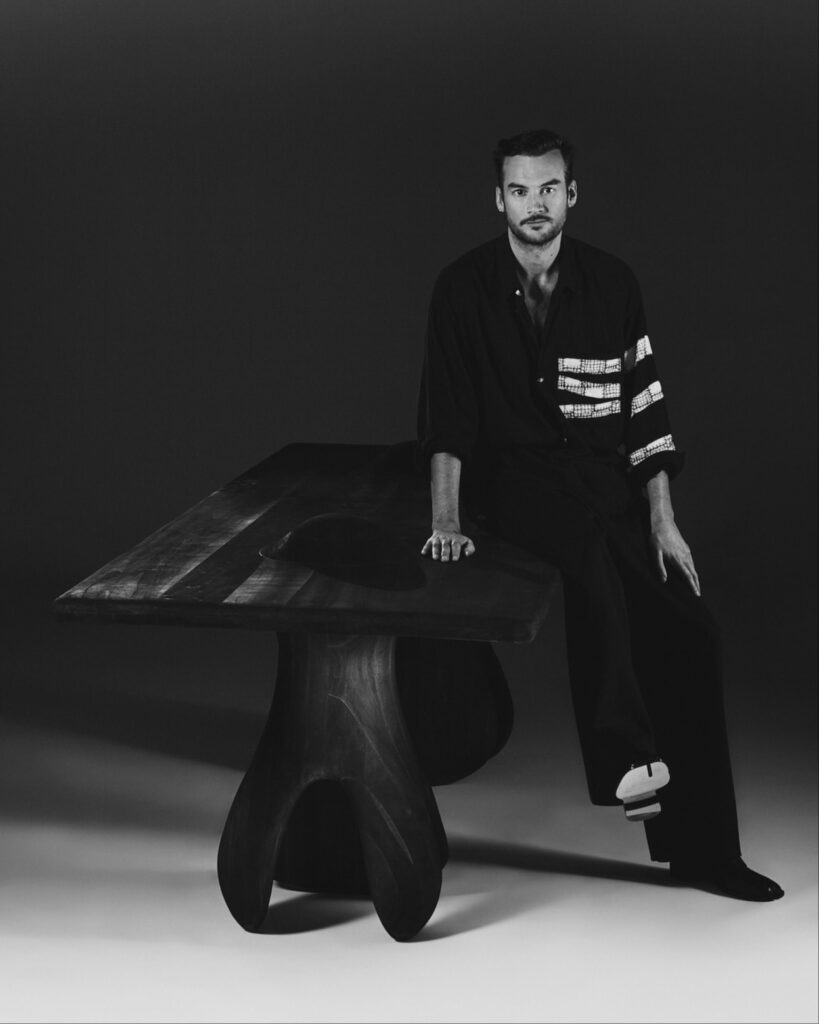
Thomas Van Noten is a Belgian artist and founder of TOGIGI, whose practice explores the relationship between architecture, nature, and ceramic sculpture. After leading large-scale construction projects, he established his atelier in 2024 to pursue a material-driven practice rooted in experimentation and craftsmanship. Working primarily with ceramics, he creates sculptural objects distinguished by their expressive textures, architectural presence, and organic forms.
Guided by a fascination with innovation and making, Van Noten continuously develops new techniques that expand the possibilities of ceramic craftsmanship. Drawing inspiration from both the built and natural environments, his work weaves together structure, light, and materiality, creating pieces that invite a sensory dialogue between human experience, nature, and architecture.
Let's know more about
Interview
Where were you born and where are you from?
What is your first memory connected to the art world?
Dries Van Noten. As a child, I remember my first-grade teacher asking if I was related. From that day on, I became fascinated by his work and persona. Living in the same city and sharing the same surname, people often asked me if we were related. I’m not.
Have you always worked in the art/design field?
No. I first built a career in construction and real estate development. I’ve always had a strong interest in the engineering side of creation. I often led the construction of medium- and large-scale projects. The skill set I developed there helped me tremendously in starting my own atelier, Togigi. However, it also has a downside, as I entered a world I wasn’t familiar with quite ‘late’. I spent a long time working in silence, polishing my skills. I often wonder if I should have shared pieces sooner. But I suppose you only know yourself when the time is right—and for me, that was this year (2024).
What led you to design creation?
I first encountered design-making during my short period in architecture school before transitioning to construction. At the age of 28, I moved to Mexico and traveled through Latin America. I lived quite “off the grid” for a long time. Breaking away from what you think is “normal” was absolutely necessary to (re)discover my passion for creation. The creative spirit in Mexico strongly influenced this decision. I began my journey by collaborating with a carpenter there. I chose to design a functional object that required ingenious woodworking techniques. I focused on designing before I started making it myself.
How would you describe your creative process and its influences?
Often, it’s nature that attracts me. I’m fascinated by how versatile it is and what we can draw from it. I love to create stories. If somehow, through my work, I could have any social impact, I would be happy.
Could you describe a typical day of your work?
No day is typical. I like having this freedom, even though the work often requires routine. I always start my day quite early (6-7 o’clock), a habit inherited from my time in construction. If any administrative tasks are needed, I plan them in the morning. I go to the atelier around noon and work there until the evening. If I don’t schedule atelier time, I need a 15-30 minute siesta. Sports, along with reading and drawing, are reserved for the evening.
Why did you choose the specific materials you work with?
Mainly natural products or materials that help me reflect a natural process or just create an absolute contradiction.
What are the technical particularities of your creations?
I have an experimental approach, and I wish to push the boundaries of craftsmanship by integrating innovation. I guess it comes from my background in engineering, but I have a deep passion for employing innovative techniques to create objects. These methods exist only because of our relentless pursuit of progress, so why not using it? The experimental side of the atelier stems from my deep interest in new things. I love gathering material from my surroundings and experimenting with it.

What advice could you give to beginning artists who would like to create sculptural design works?
Find your unique way of creating. It lies within you, but go beyond to test and trigger it.

If your works had to belong to a design movement, how would you define it?
Something contemporary.
What designers and artists have influenced you?
I mainly get my influences from sources other than design.
What contemporary designers do you appreciate?
The list is long, filled with the incredible work others produce. Along the way, I meet so many talented artists. I admire them a lot, and I’m always happy to see their work pop up somewhere. I enjoy having a personal connection with fellow artists, no matter their field. I particularly admire those who make a social contribution to art.
What contemporary artists, in any kind of art, have you been inspired by?
Martin Margiela, Noguchi, Yohji Yamamoto…
If you had to summarize your creations in one word or sentence, what would it be?
Storytelling.
Is there anything you would like to add?
Embrace failure.
“If somehow, through my work, I could have any social impact, I would be happy.”
The Questionnaire
The Questions
(The Proust Questionnaire is a set of questions answered by the French writer Marcel Proust.
Other historical figures who have answered confession albums are Oscar Wilde,
Karl Marx, Arthur Conan Doyle, Stéphane Mallarmé, Paul Cézanne…)
What is your idea of perfect happiness?
Freedom
What is your greatest fear?
Become mad
What is the trait you most deplore in yourself?
Procrastination
What is the trait you most deplore in others?
Dishonesty
Which living person do you most admire?
I have a warm family and a group of friends. So, every person in it. They know
What is your greatest extravagance?
Travel and discover new influences, and people and create new stories
What is your current state of mind?
Definitely not mad
What do you consider the most overrated virtue?
Television
What is the quality you most like in a man?
Humor
What is the quality you most like in a woman?
Humor, honesty and the ability to have a great persona for others


Which words or phrases do you most overuse?
Fantastic
Which talent would you most like to have?
To sing
If you could change one thing about yourself, what would it be?
Concentration span = 0
What do you consider your greatest achievement?
A good listener
If you were to die and come back as a person or a thing, what would it be?
Penguin
Where would you most like to live?
México or Spain. At the coast
What is your most treasured possession?
My apartment
What do you regard as the lowest depth of misery?
Being fake
What is your favorite occupation?
Hanging out with like-minded souls
What is your most marked characteristic?
Spontaneous
What do you most value in your friends?
The most authentic human beings. They have all the right to, but they don’t take themselves too seriously. They are the ones who make me laugh the hardest
Who are your favorite writers?
J.R.R Tolkien
Who is your hero of fiction?
Chandler Bing
Which historical figure do you most identify with?
Noguchi
Who are your heroes in real life?
My parents, my sister and my nephew
What are your favorite names?
I like the name my parents gave me
What is it that you most dislike?
Brussels sprouts
What is your greatest regret?
None
How would you like to die?
Having lived a rich life, surrounded by friends and family, laughing so hard that my heart stops
What is your motto?
Be kind to yourself and others

“Find your unique way of creating. It lies within you, but go beyond to test and trigger it.”


SHARE :