I was born in Lille, in the north of France. It is a city where the architecture is deeply marked by red brick, a humble yet solid material that makes up most of the buildings. Growing up in this environment made me aware very early of the strength of raw materials and their ability to define an identity.
MAGAZINE · INTERVIEW
Tristan Montabord-Marc
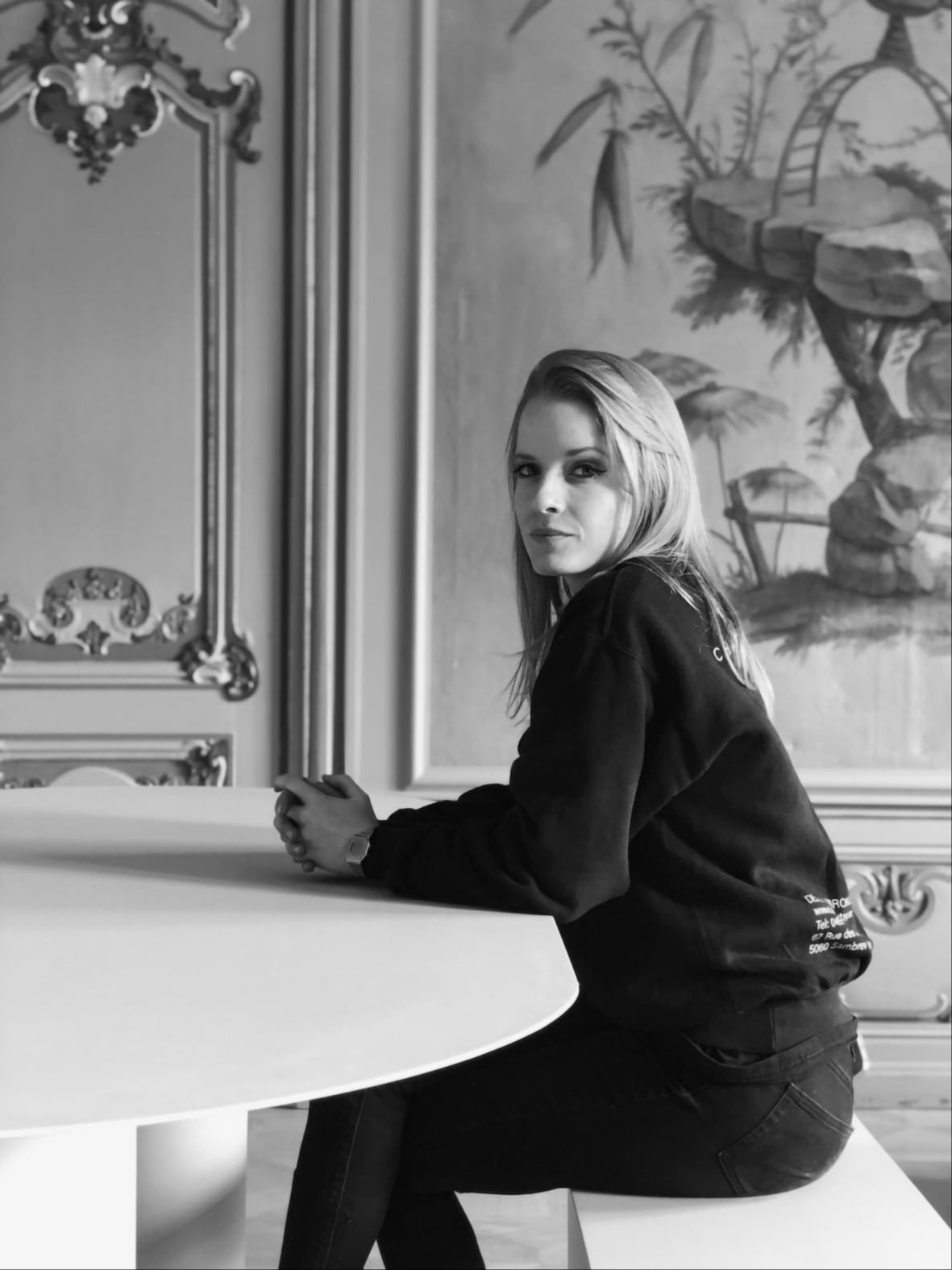
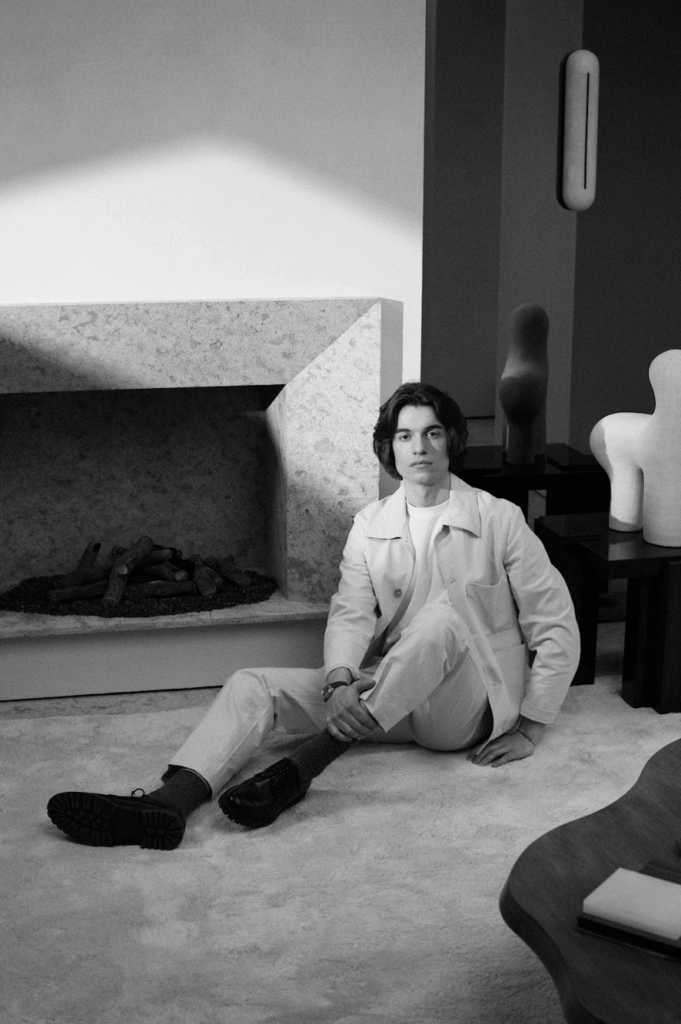
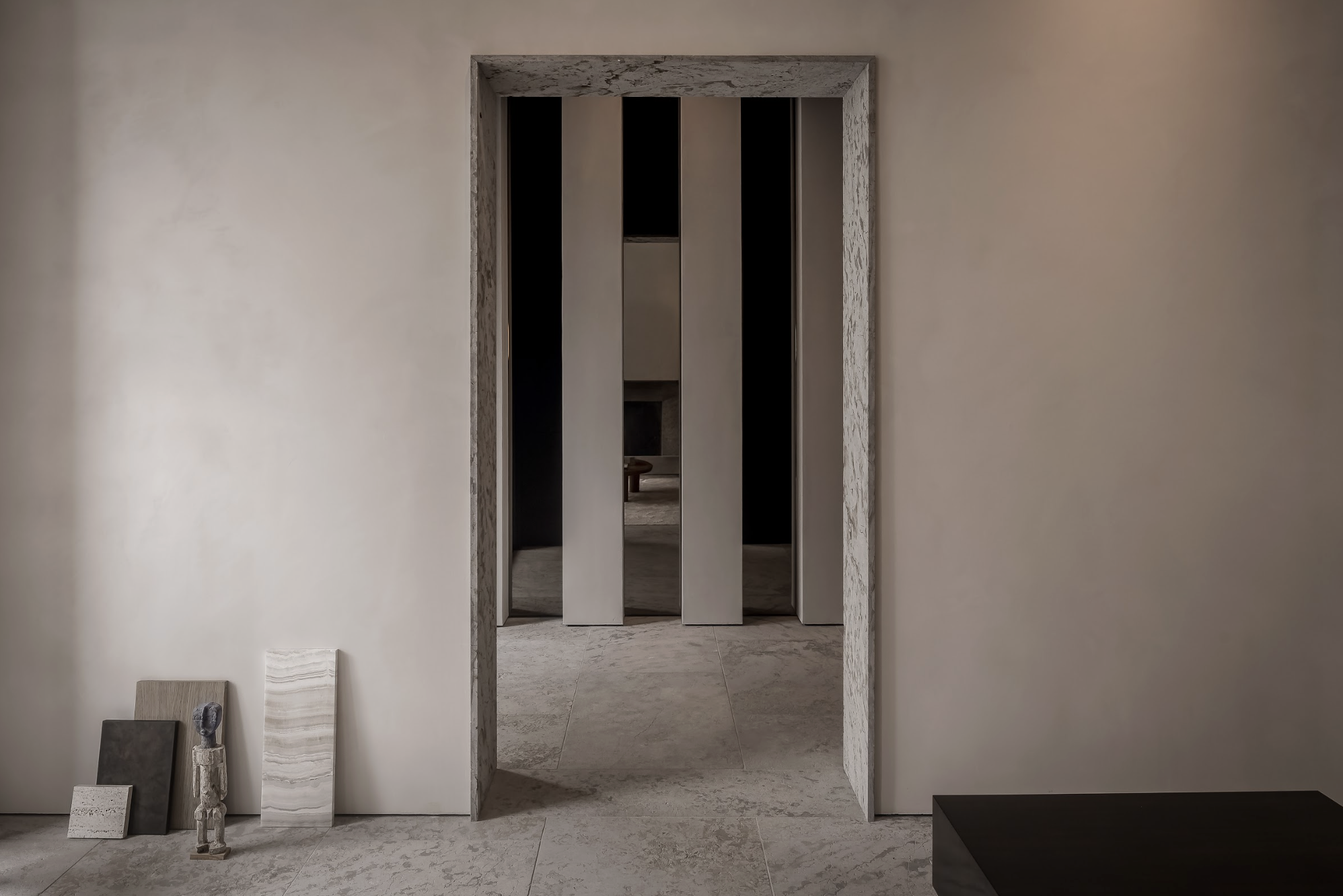
Tristan Montabord-Marc is a Belgian interior architect and designer based in Brussels, where he founded his eponymous studio. Working across high-end residential interiors and collectible design, his practice explores the relationship between architecture, craftsmanship, and timeless elegance. Guided by a balance of precision and poetry, he creates spaces and objects distinguished by refined proportions, noble materials, and a quiet sense of sophistication.
Extending his architectural practice into collectible design, Montabord-Marc recently introduced his first limited-edition furniture collection, Auguste, conceived as a series of sculptural objects that blur the boundaries between furniture and architecture. Characterized by meticulous craftsmanship, authentic materials, and subtle asymmetry, his work seeks to create a lasting dialogue between art, design, and architecture, revealing beauty through simplicity, balance, and enduring materiality.
Let's know more about
Interview
Where were you born and where are you from?
What is your first memory connected to the art world?
I was 8 years old when I discovered an exhibition of contemporary dance. What struck me was the precision and accuracy of the movements, the proportions, and that almost mathematical rigor which, nevertheless, created emotion. It is a foundational memory: I understood that art could both impose its presence and create calm around it.
Have you always worked in the art/design field?
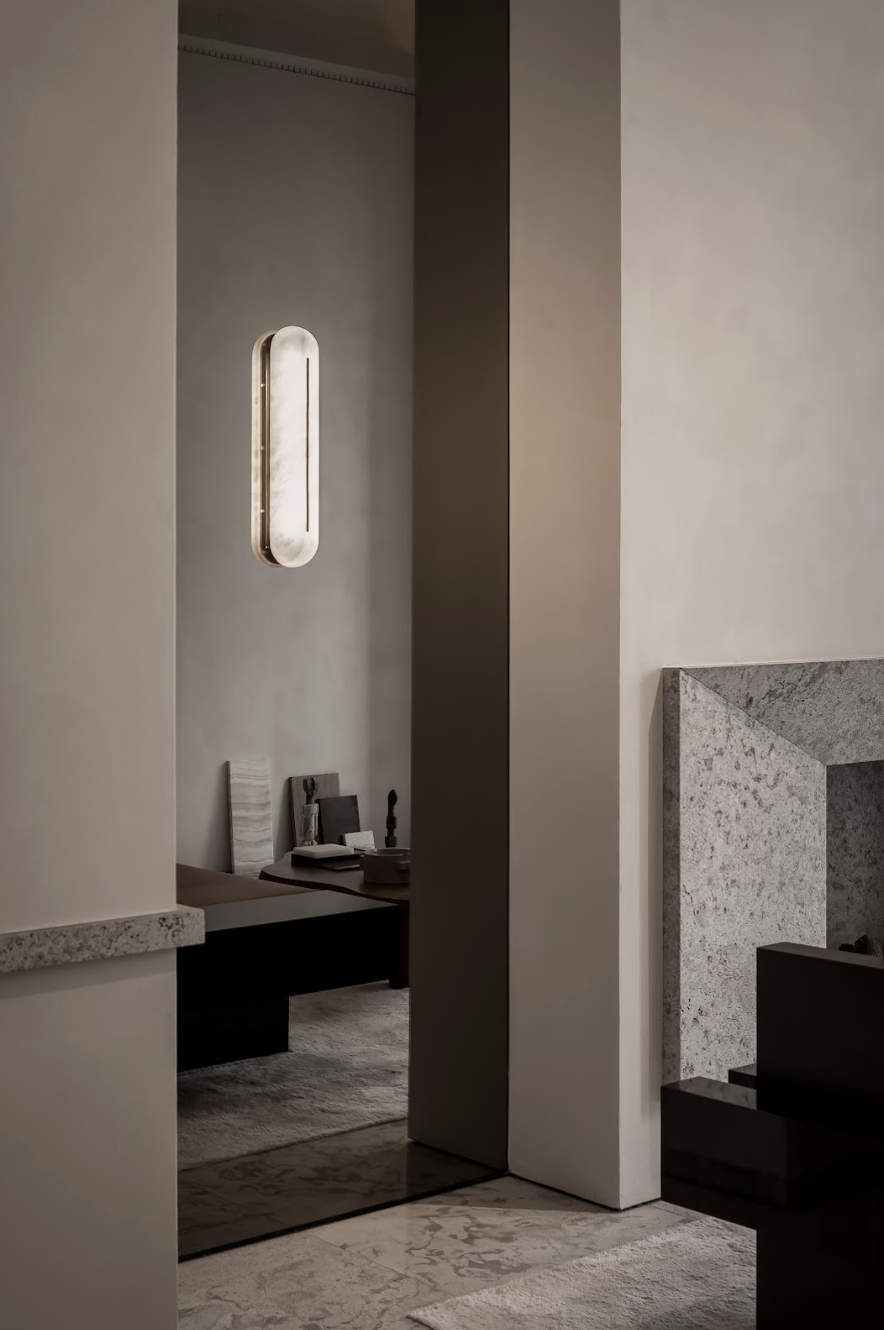
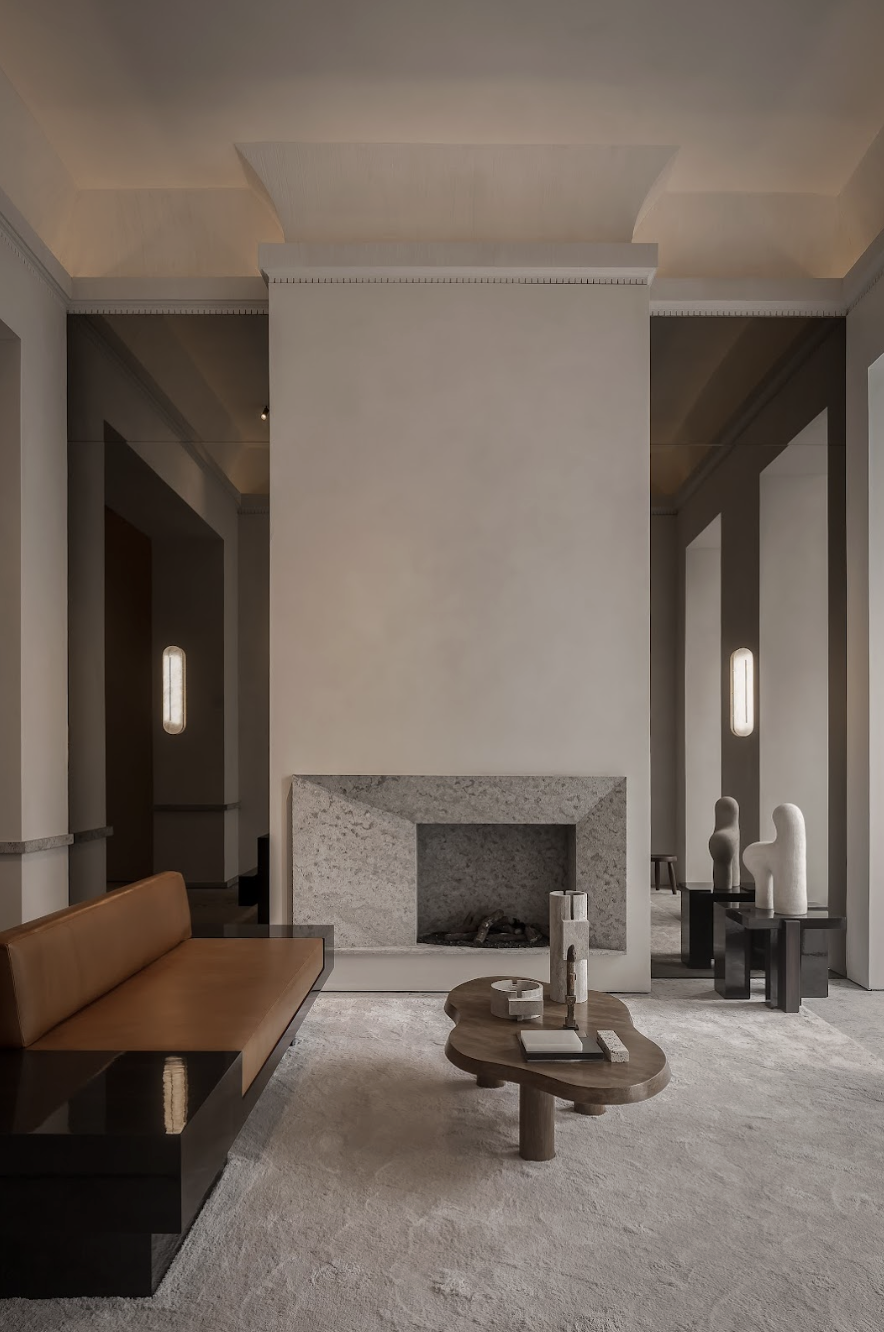
Yes, but always starting from residential interior architecture. It is my first profession, the one that taught me to compose with light, volumes, and proportions. The creation of furniture and objects came later, as a natural extension. For my first collection, I worked in close collaboration with carefully selected master artisans, capable of translating this demand into the material.
What led you to design creation?
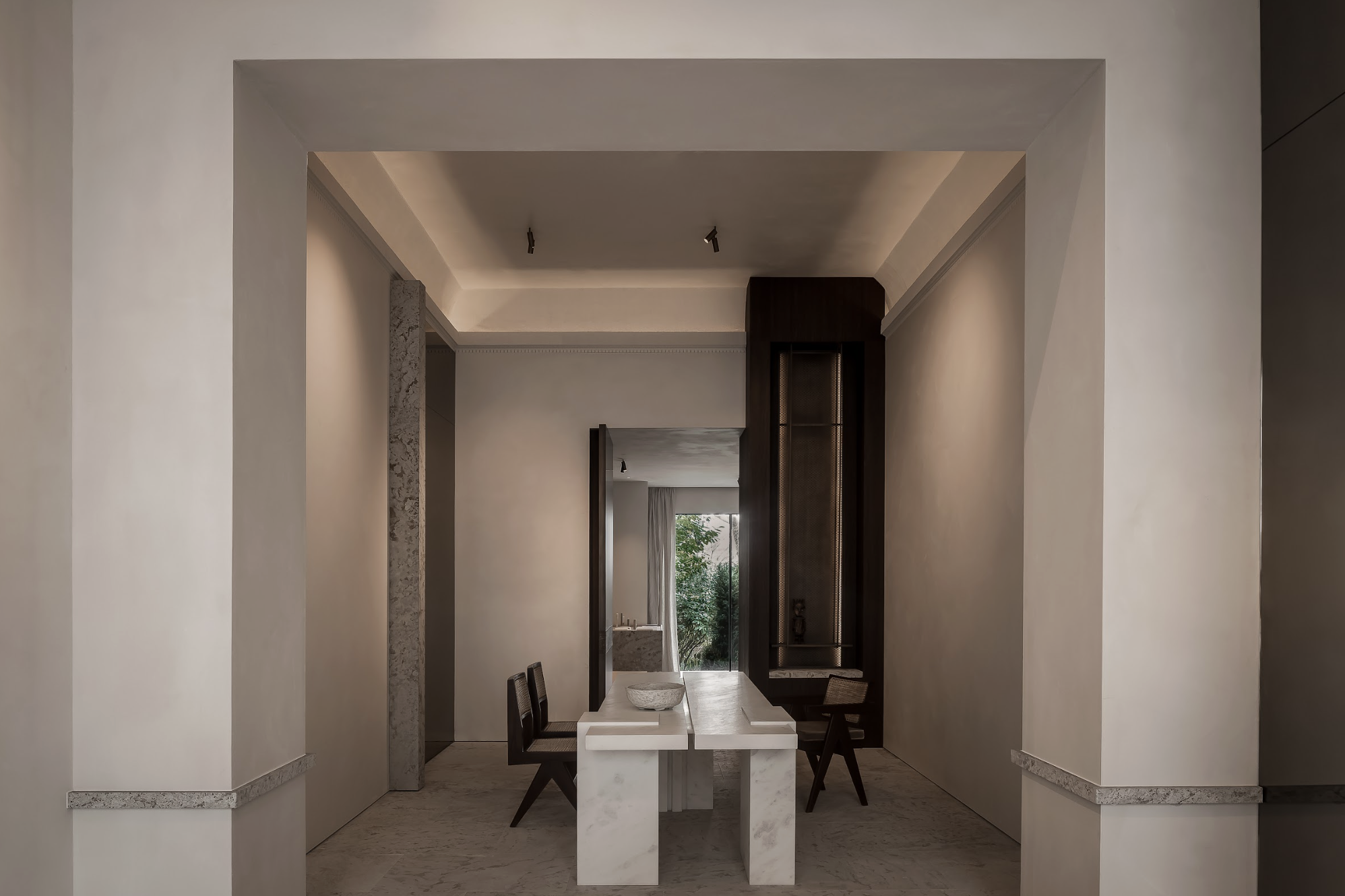
The desire to go further than the drawing of a space. Designing a piece of furniture or an object means giving immediate materiality to an idea. Furniture allows me to express the same rigor as in my interior projects, but on another scale: a table, an armchair, or a lamp become fragments of architecture that one touches, moves, and inhabits differently.
How would you describe your creative process and its influences?
My creative process is rooted in a search for precision and clarity until a form of essence can appear, justified by its function. My influences come as much from music as from sculpture, from art, from encounters, or from suspended moments of everyday life.
Could you describe a typical day of your work?
I start very early at the studio, in calm, to extend a reflection left in suspense the day before. I prefer to avoid throwing myself immediately into computers and leave a little more room for interpretation. The diversity of interior architecture projects sets the rhythm of my days, with team exchanges, artistic directions, and site follow-ups. In the evening, when silence returns and the light fades, I find a more intimate part of my profession. It is this diversity that makes this profession both fascinating and infinitely stimulating.
Why did you choose the specific materials you work with?
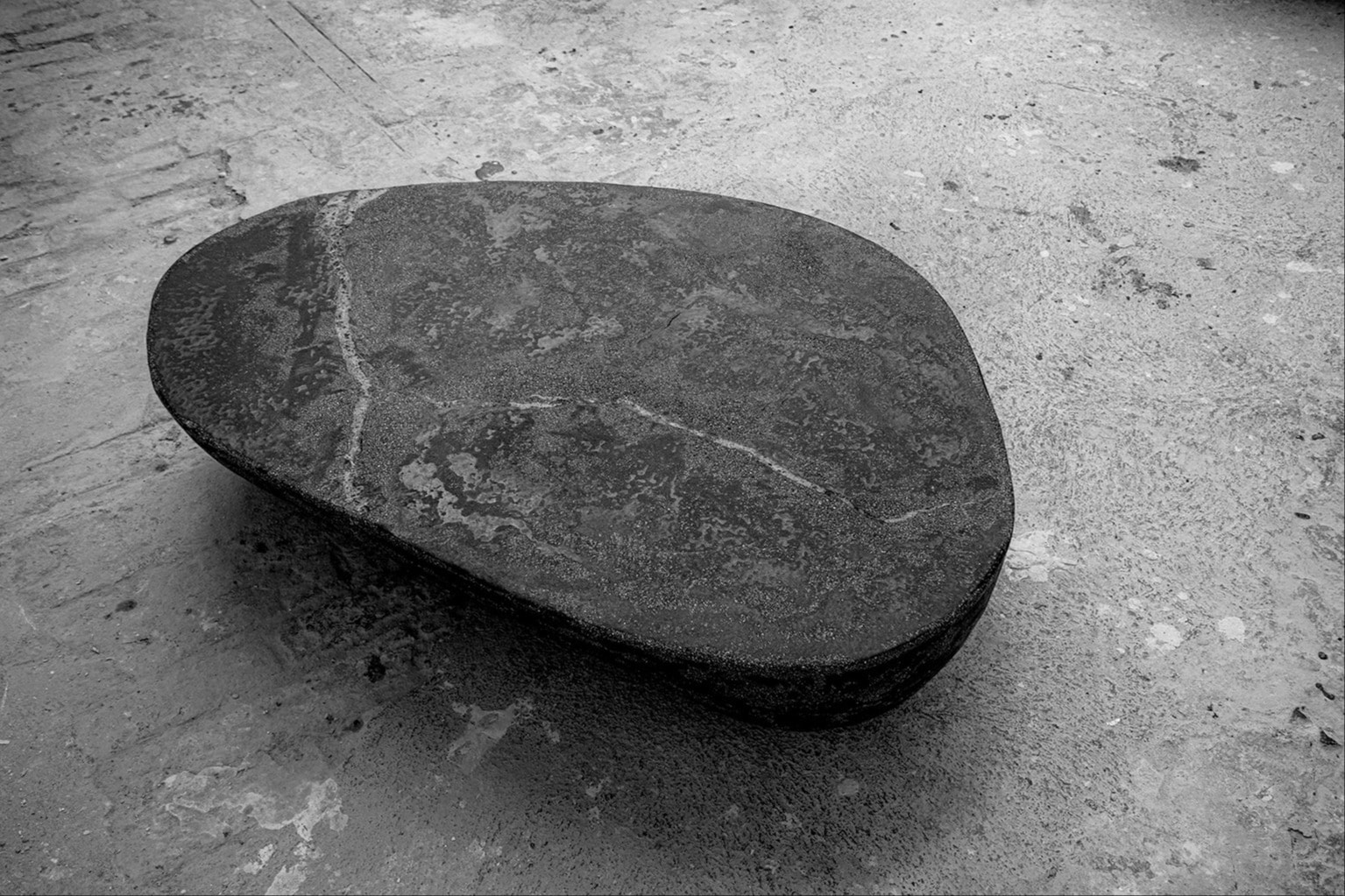
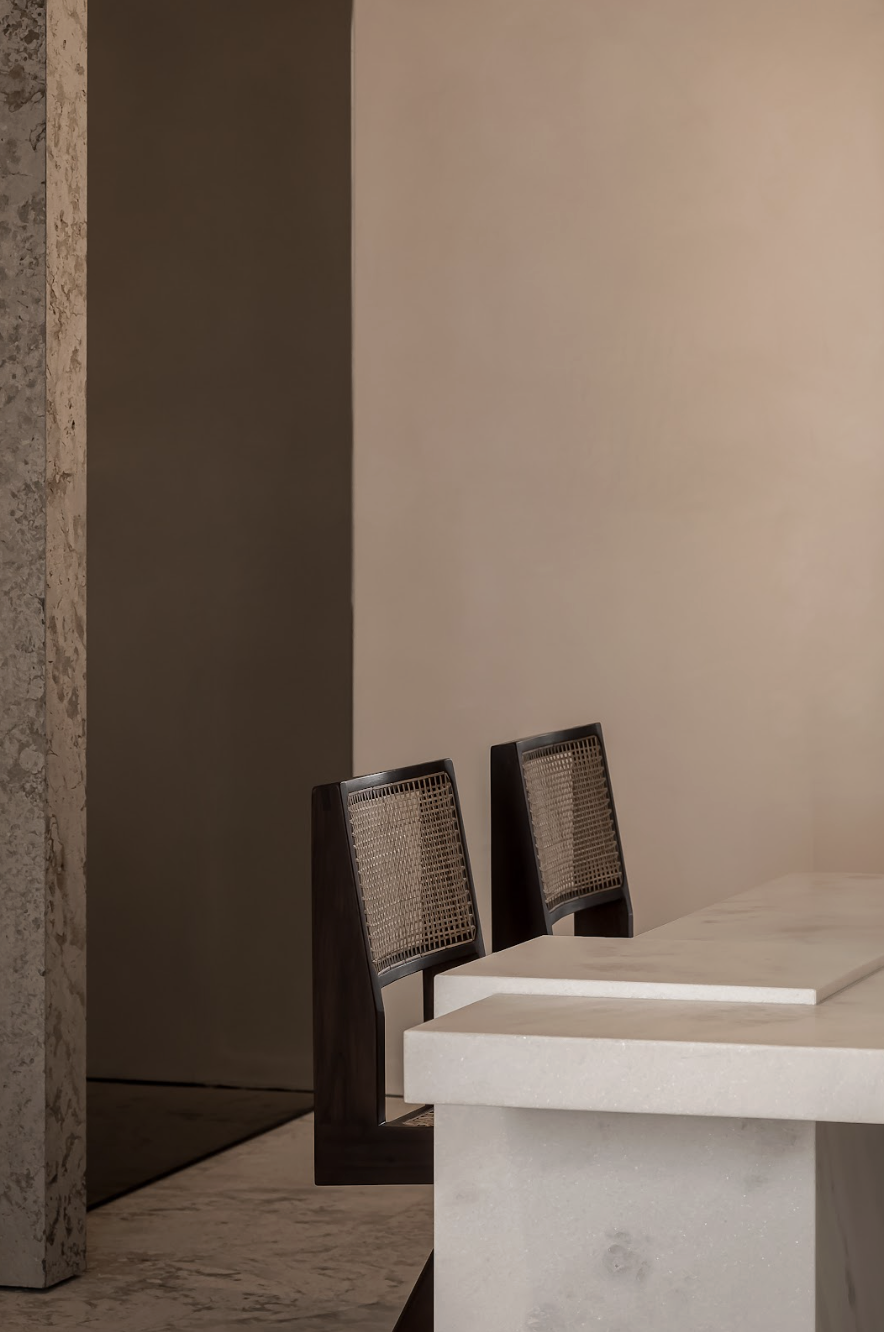
Because they have a truth and a presence. Onyx, for its form of visual fragility, almost frosted. Ziricote, a rare wood with vibrant veins, for its almost musical density. Bronze, for its timelessness. Mohair velvet, for its softness and discretion. These are materials that need no artifice and that age with nobility.
What are the technical particularities of your creations?
The precision of the assemblies, the management of weight and balance. My pieces appear simple, but every line is anticipated. The technical complexity is deliberately concealed to leave room for a direct, immediate experience.
What advice could you give to beginning artists who would like to create sculptural design works?
Not to be afraid of constraint, but to place it from the start as a path to freedom, to seek not to please, but to find what sounds right, what truly resonates, and to put honesty into it.
If your works had to belong to a design movement, how would you define it?
A contemporary modernism, tied to measure, to function, and to timelessness.
What designers and artists have influenced you?
I willingly turn to 20th-century architects whose works embrace frank proportions and measured monumentality: Auguste Perret, Le Corbusier, Louis Kahn, Lina Bo Bardi. Their way of giving weight to emptiness is significant.
What contemporary designers do you appreciate?
Ben Storms. I am absolutely fascinated by his work: raw, captivating, impactful. To place one of his wall pieces in a project would be a true honor for me.
What contemporary artists, in any kind of art, have you been inspired by?
Katrien Doms, for the intensity of her work.
Elisa Uberti, for the poetry of her forms.
Jeroen Broux, for the strength of his gesture.
If you had to summarize your creations in one word or sentence, what would it be?
A poetic dissymmetry, where each face reveals its own singularity. Like human beings.
Is there anything you would like to add?
I deeply believe that we have an immense chance to live surrounded by art and creation. But we must also be aware that certain populations are deprived of it. Art, for me, must be looked at with fresh eyes, without complacency, with a clear awareness of its role: to offer a form of impact on the world, however discreet it may be. It is a way of giving meaning, of sharing a sensitive experience, and perhaps, of bringing a little beauty where it is lacking.
“A poetic dissymmetry, where each face reveals its own singularity. Like human beings.”
The Questionnaire
The Questions
(The Proust Questionnaire is a set of questions answered by the French writer Marcel Proust.
Other historical figures who have answered confession albums are Oscar Wilde,
Karl Marx, Arthur Conan Doyle, Stéphane Mallarmé, Paul Cézanne…)
What is your idea of perfect happiness?
An enriching conversation.
What is your greatest fear?
Losing wonder.
What is the trait you most deplore in yourself?
Impatience.
What is the trait you most deplore in others?
Complacency.
Which living person do you most admire?
A free spirit.
What is your greatest extravagance?
Taking the first boat that left Athens.
What is your current state of mind?
Aligned.
Which living person do you most admire?
Perfection.
What is the quality you most like in a man?
Depth.
What is the quality you most like in a woman?
Subtlety and depth.
Which words or phrases do you most overuse?
Precision.
Which talent would you most like to have?
Reading music.
If you could change one thing about yourself, what would it be?
Less demanding.
What do you consider your greatest achievement?
My well-being.
If you were to die and come back as a person or a thing, what would it be?
A pine tree.
Where would you most like to live?
Facing the ocean.
What is your most treasured possession?
My freedom.
What do you regard as the lowest depth of misery?
Indifference.
What is your favorite occupation?
Entrepreneurship.
What is your most marked characteristic?
Detail.
What do you most value in your friends?
Perseverance.
Who are your favorite writers?
Frédéric Lenoir, Yourcenar, Valéry.
Who is your hero of fiction?
The Little Prince.
Which historical figure do you most identify with?
Marcus Aurelius.
Who are your heroes in real life?
Artisans.
What are your favorite names?
Auguste, Raphaël, Hugo.
What is it that you most dislike?
Noise.
What is your greatest regret?
Not having dared earlier.
How would you like to die?
In peace, without regret.
What is your motto?
All beauty is an eternal joy.
“Not to be afraid of constraint, but to place it from the start as a path to freedom, to seek not to please, but to find what sounds right, what truly resonates, and to put honesty into it.”
SHARE :