Vegetal colors by Cedric Breisacher
From vegetal to colors, an old knowledge used to stain natural fiber.
Once a piece of furniture is finished, the wood is sanded with 180-grit paper. Surfaces become soft as silk, and all the texture is revealed thanks to the light playing on the grain. The wood is left raw. In my local area, the woods are very light, such as ash and sycamore, and even oak appears white. In order to enhance its veneer and avoid an orange, old-school finish, I choose to use natural stains, which provide a wide range of colours from local resources.
Historically, natural dyeing was the only way to colour natural fibres before the emergence of industrial stains. It was a local resource for some regions because tinctorial plants are only able to grow on specific soils. Pastel, or Isatis tinctoria, for example, provides a deep blue from its leaves. It brought prosperity to the land of Cocagne (Toulouse, Albi, Carcassonne) in the south of France. Until the 16th century, it was the only region able to provide blue throughout Europe. Colours were rare, becoming a source of distinction between social classes. Almost every local plant can produce colour, such as grass or onion peels, which provide a soft pink, but to achieve a powerful red, you need to use cochineal or madder root, which were only affordable for the upper classes.
Egyptians were already using vegetal blends to create ink. The use of vegetal materials allowed the diffusion of communication and made possible the emergence of great civilizations. The iron-gall ink recipe has passed through the ages, and it was only in 1850 that it was replaced by synthetic ink. Voluptuous and indelible, iron-gall ink was the ink of Montesquieu and the Declaration of the Rights of Man. It can still be used after one hundred years if well stored and protected from light!
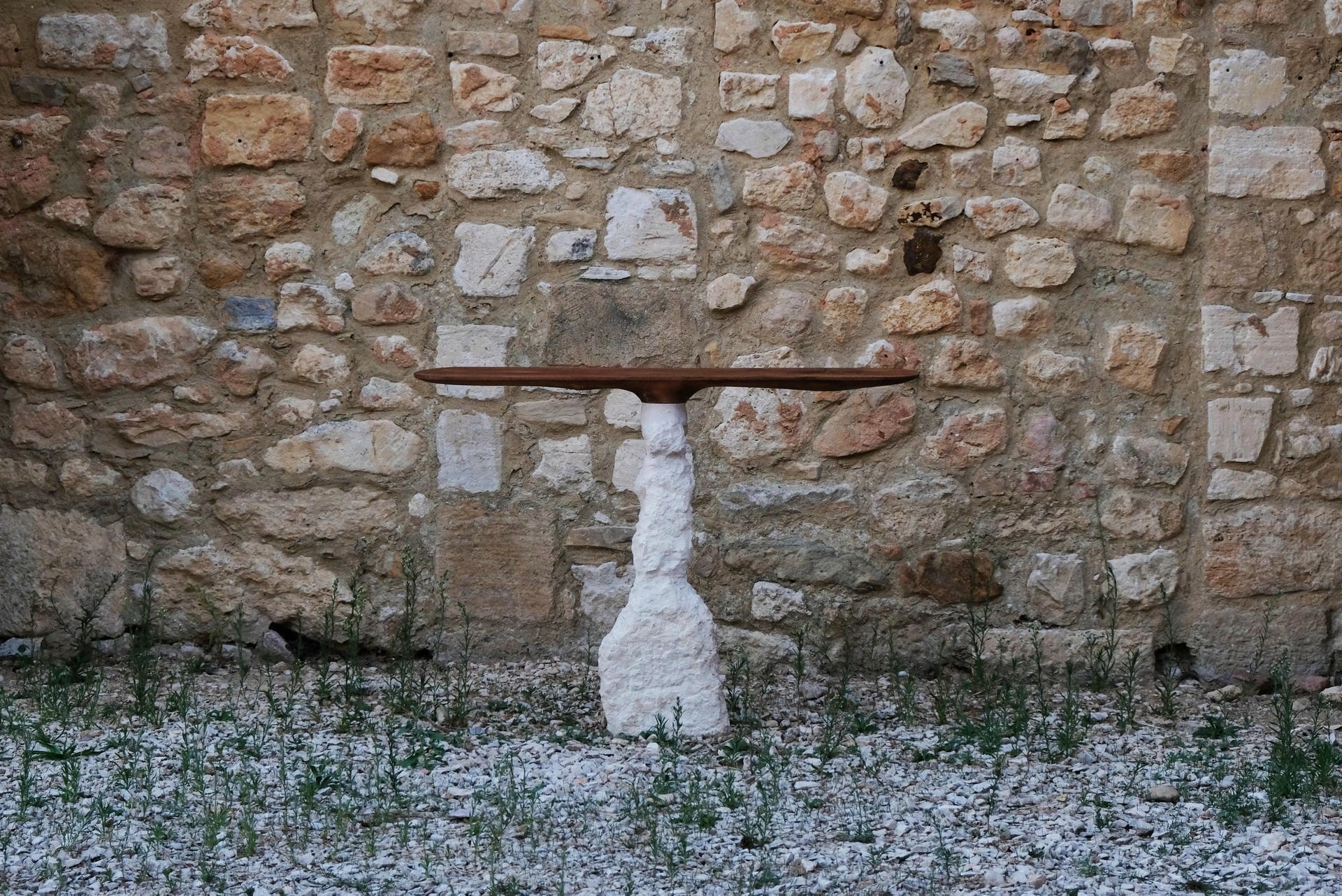
This ink has something magical, and this is where I started being fascinated by natural dyeing. When iron-gallic ink enters into contact with paper, it goes from green to dark instantly. A chemical process starts: it is called oxidation. The oxygen in the air interacts with the molecules of iron and acid present in the gall nut. The surface it passes over is oxidized and becomes black.
From those magical transformations, I developed my own black dye. Using mainly oak because of its tannin, I started to play with iron sulfate and vinegar. By adding cachou roots, the oxidation became even more powerful, and the result was a beautiful purplish black. An obsession with colour reactions on wood started to emerge. Never knowing what could happen and always being surprised made me curious and deepened my research. Then wood became a surface to play with chemical reactions, like patinas on bronze and copper. By using oxidation reactions, I translate wood into a precious alloy.
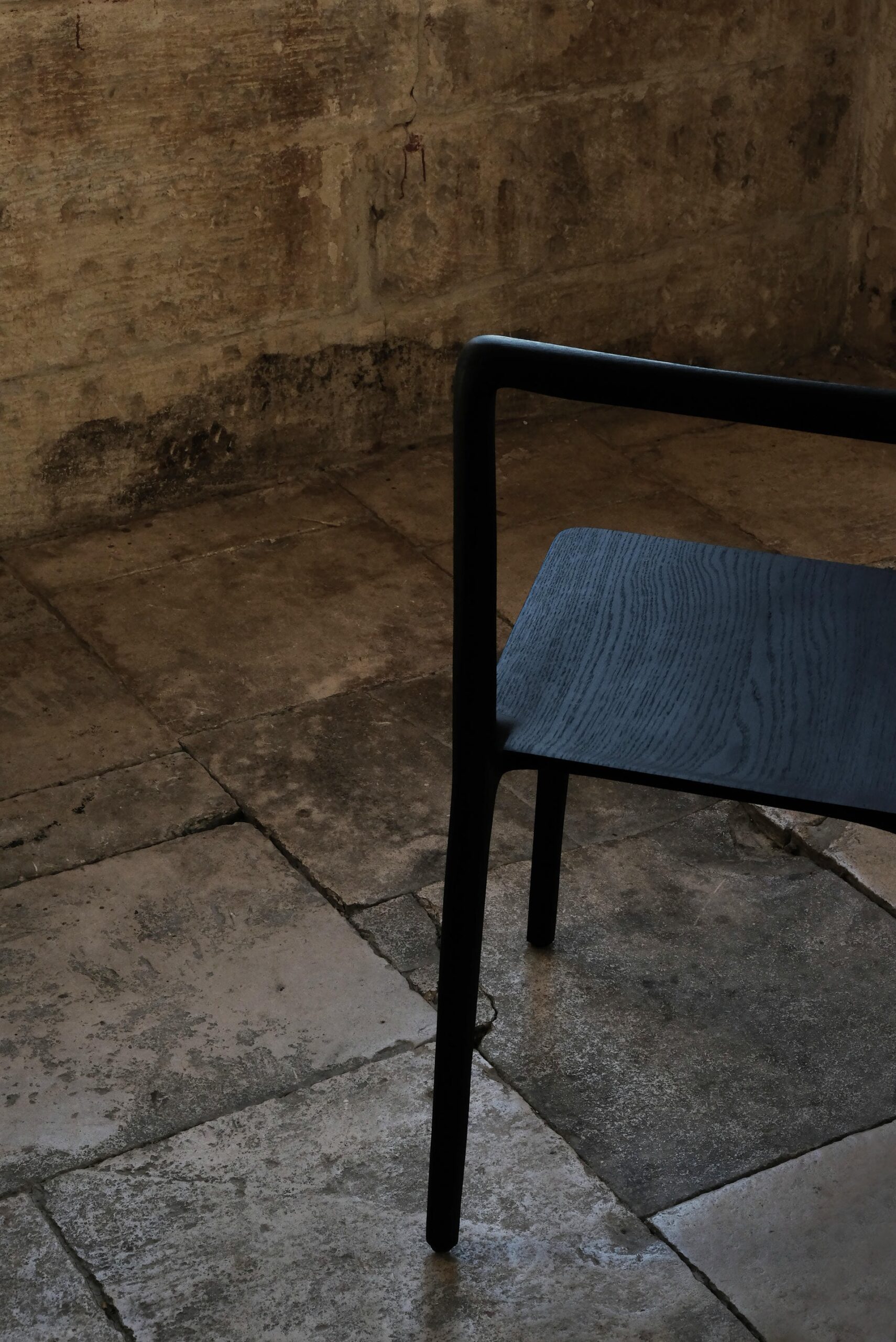
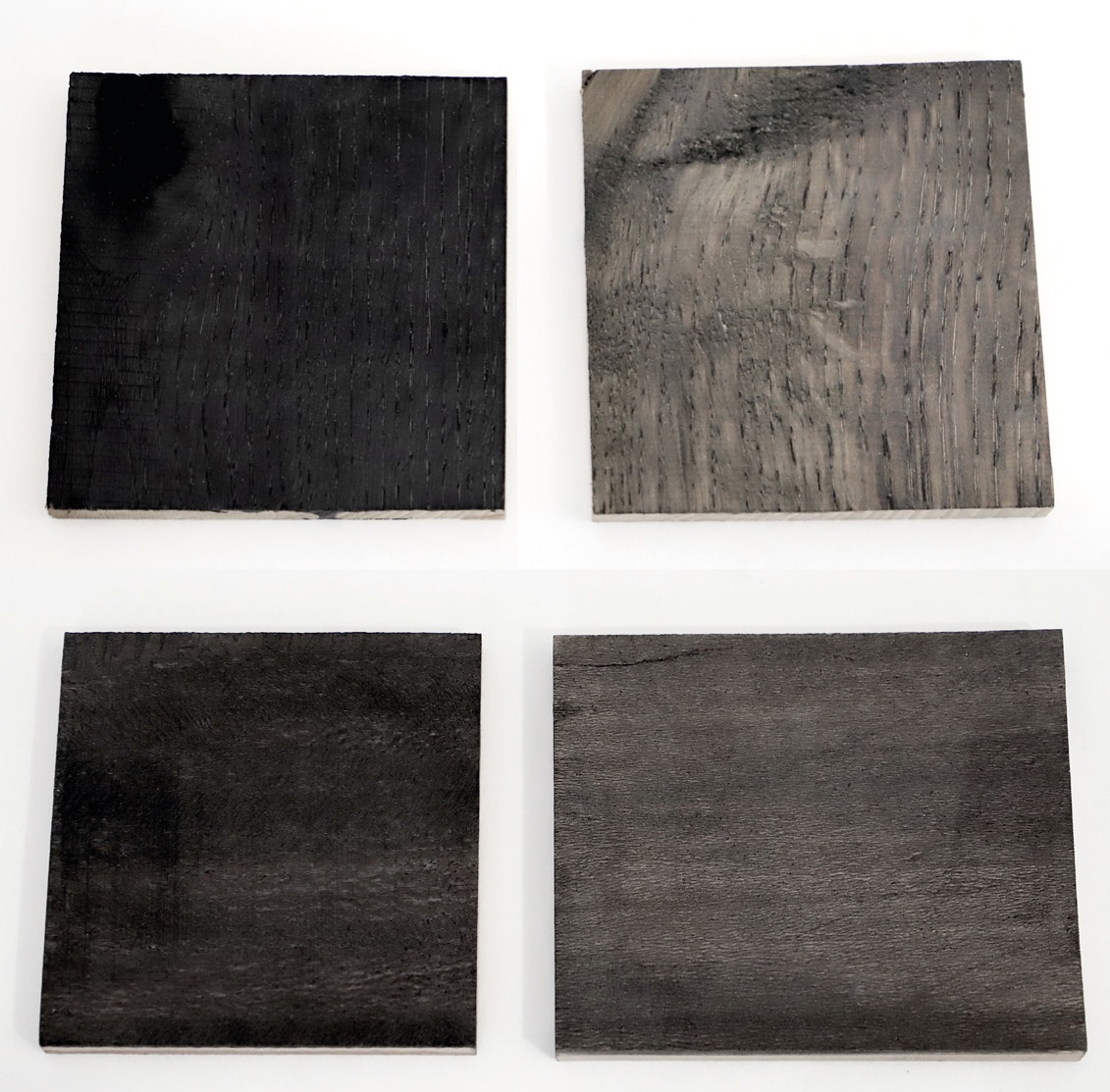
Dyeing by oxidation works thanks to the reaction of three factors: oxygen, acid, and metallic molecules. Used in vegetal dyeing, metallic molecules help fix colours deeply inside the fibre. A vegetal colour reaction differs depending on the way it rusts. Below is a small list of the principal reactions on oak wood:
Metallic molecule bite
1. Iron sulfate
2. Titanium oxalate
Color
Night-blue black
Orange
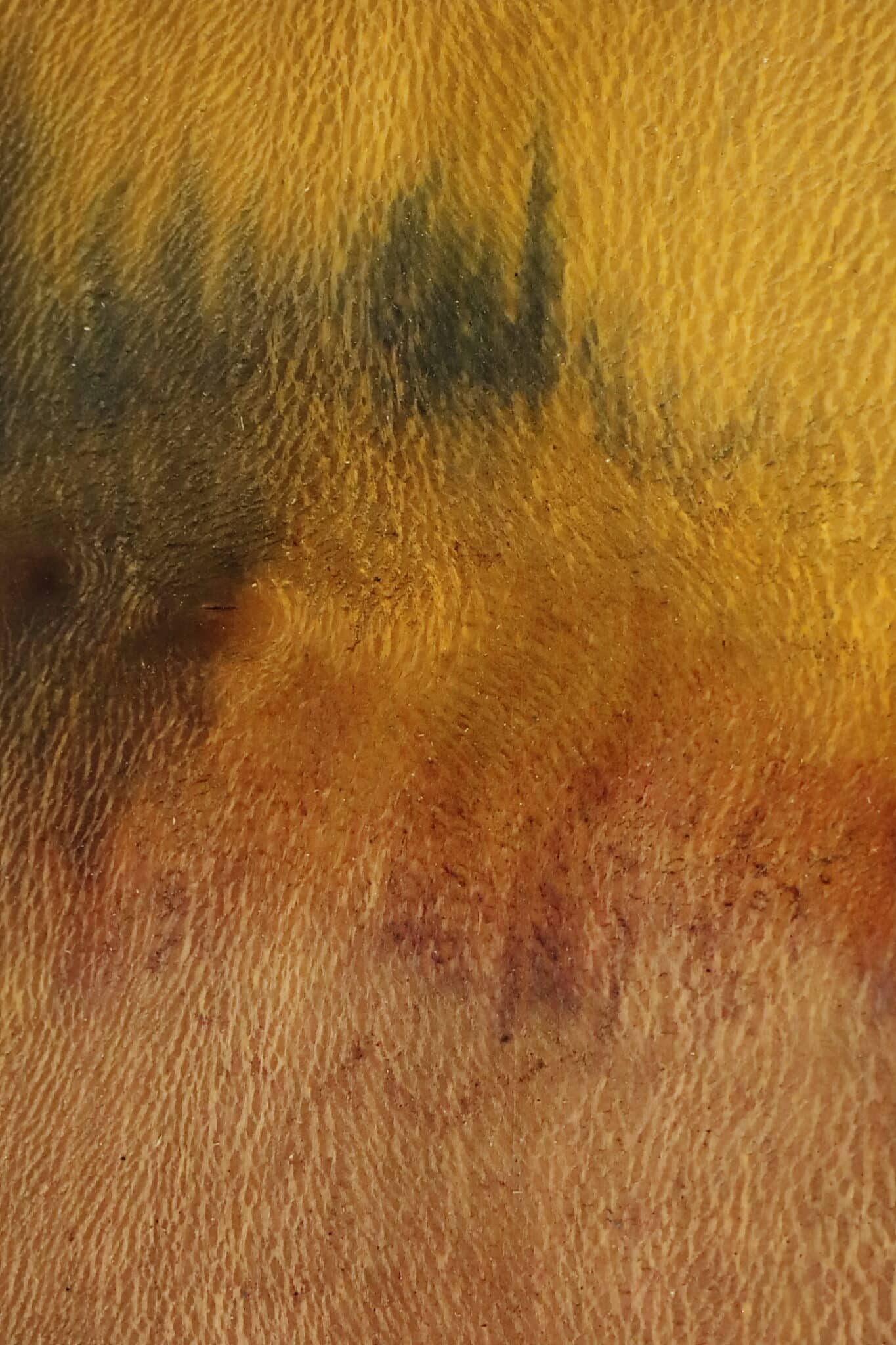
“La patine est l’écorce de la sculpture, elle la protège et la sublime” Attali – Pollès
As a bronze sculptor, natural dyeing allows me to play with colours and reactions that don’t exist on the market. It’s a real chemistry. The wood surface seems to become alive; the veneer appears and disappears under several stained layers. During dyeing, I like to trust my intuition. Different plants are used to extract the magnificence of a wood slab. Iron is used to create shadows, and alum brings colours to another level.
Hot water, in sufficient amount, can generate a gradient between two colours, melting them together so that a new finish can appear. Uncontrolled patterns can also be generated with this technique. The natural material becomes a surface for a multitude of explorations, like an astronomer looking at space.
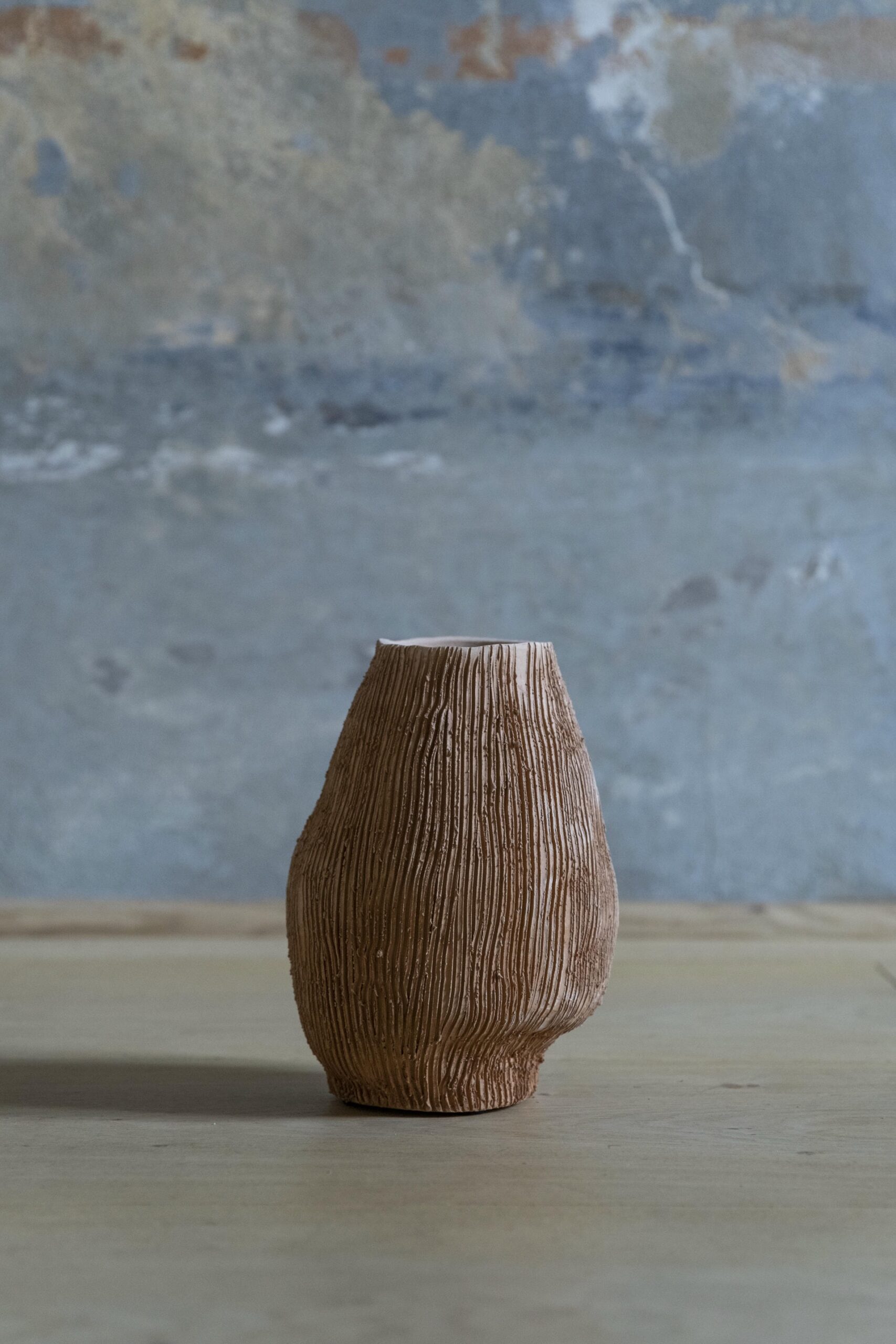
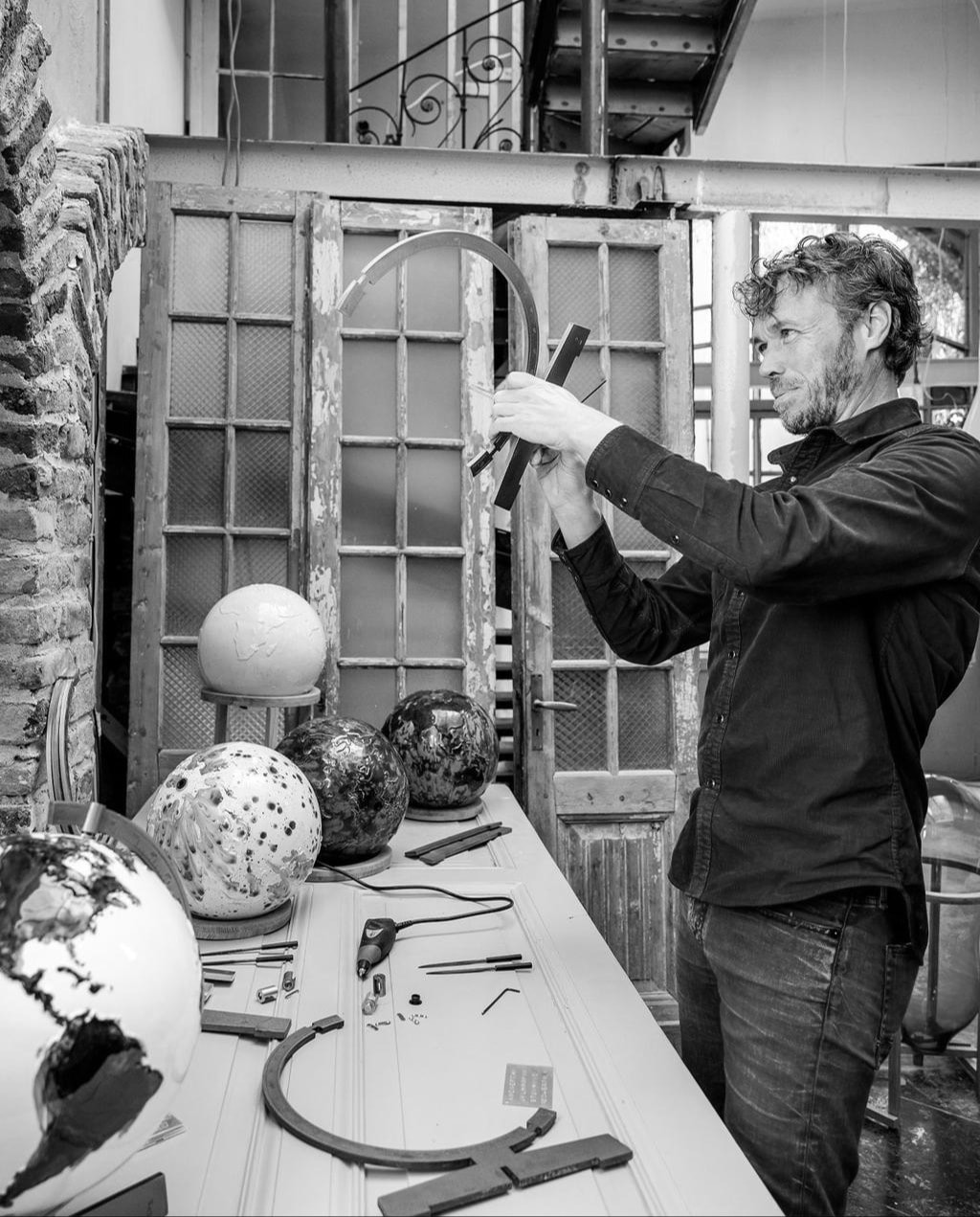
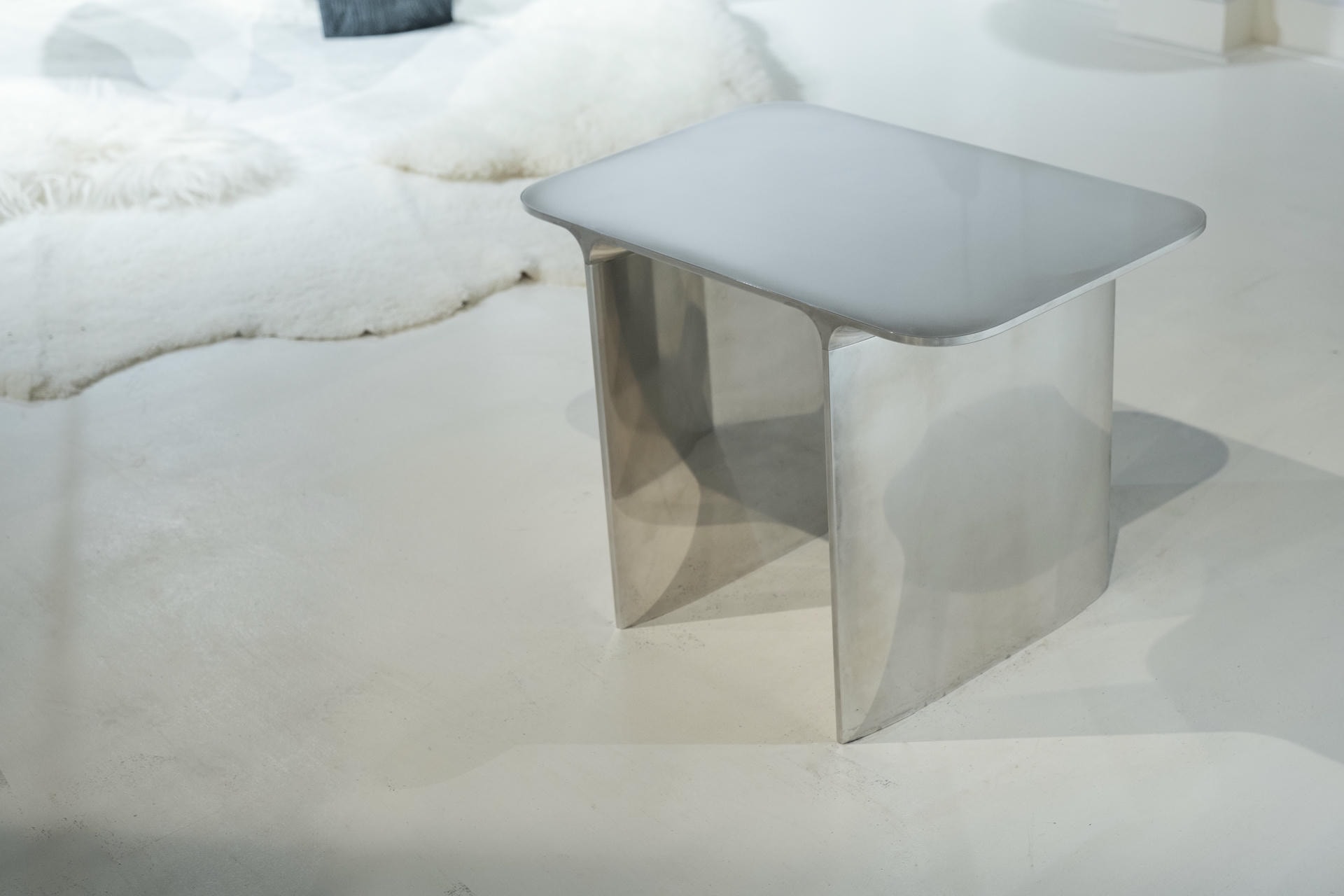
In my process, raw wood furniture is the first step. After assembling the pieces together, they are carved by hand with a mechanical tool. I have always been fascinated by surf shapers and their black rooms with neon lights to visualize the perfect curve. I like to feel a material alive. By carving all the junctions with a natural movement, the veneer connects to itself, and the piece looks as if it were made from a single solid block. But the connections can still be seen, and the illusion is not complete. So, to accomplish the trick, a second processing step was to stain the entire piece of furniture.
With oxide black dyeing, the furniture appears as a single entity, like a contrasted drawing made with one single pencil line. The line runs through the edges, and the curved surfaces catch every gleam of light. This last process is carried out in five steps. Each step requires one hour to dry before adding another layer of stain. To stop the chemical reaction and fix it over time, I use 95° varnish alcohol. Once again, you must wait before adding the first layer of wax. Twenty-four hours are required to let the wood breathe and fully stabilize the dye.
But this wish to use vegetal colours rather than industrial, ready-made bottles is also a way to better understand my environment, taking into consideration what is growing around me and how I can benefit from it. My studio was born around an ambition for local creation. Wood is a natural material that brings within its roots all the history of a territory. Working with its local resources requires a naïve respect. This wish brought me to explore vegetal chemistry without any prior knowledge. Inspired by vegetal dyeing in textiles, I made my first indigo vat and started to play with natural elements. Oxidation is part of a process to tell the story of an ancestral material passed through the ages. Like the patina on brass, it instantly brings years of outdoor life and reveals the secrets present within its veneer.
At the end, vegetal chemistry is a game of colours made of recipes and time. Depending on temperature, humidity, and feelings, a creation can be significantly different. Natural elements do not exist inside a controlled environment. This unique process embraces the subtle variations created by nature, crystallized on a surface, and captures a present moment for generations. A real collaboration appears once you forget to have everything under control, as a discussion between two biological elements: Nature always has the last word.
SHARE :