Six Dots Design
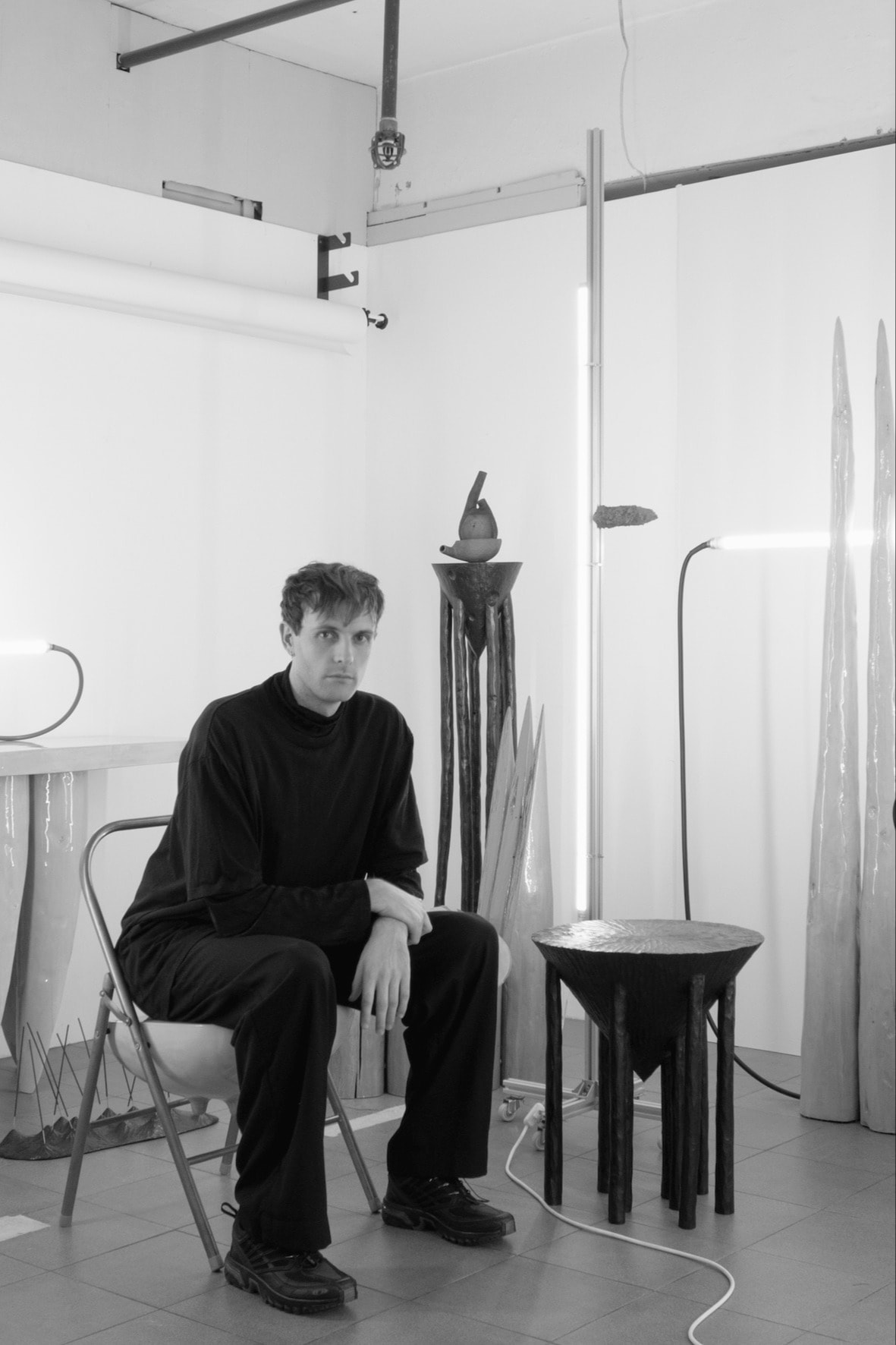
Six Dots Design is an East London-based furniture and homeware studio founded by British designer Joseph Ellwood in 2020. With a background in architecture, Ellwood studied at the University of Bath before completing his master’s degree at the Royal College of Art, while an early period working alongside a cabinet designer and maker brought him closer to the process of furniture making. These experiences eventually led to Six Dots Design, where architecture, craft and experimentation come together in a distinctly playful and unconventional approach to furniture.
Since presenting its first collection, Contemporary Vanity, Six Dots Design has developed an increasingly recognisable presence within contemporary British design. Ellwood’s work embraces individuality and the imperfections of the making process, creating objects with a sense of character that often sit somewhere between the functional and the expressive. Alongside independent collections and exhibitions, the studio has collaborated with brands including Rimowa, H&M, IKEA, Maison Margiela and CUPRA, while its work has been presented at Collectible in Brussels and recognised by Wallpaper, which named Six Dots among its “Future Icons” in 2022 and awarded the studio a Wallpaper Design Award in 2026.
Interview
I was born just outside of London, UK, and I am based in London now. I lived in France briefly as a child but have been UK-based basically my whole life.
I come from parents who are both accountants and grew up in suburban England, so art always felt like a different world. I would draw late into the night as a child and started making objects when I was four years old, but I never really connected what I was doing to the art world.
It wasn’t until I started my master’s at the Royal College of Art that I felt like I began to understand the art world a bit more.
I studied architecture at university but was always more interested in art/design. I left my master’s and started my studio straight away, so I’ve never really had another job!
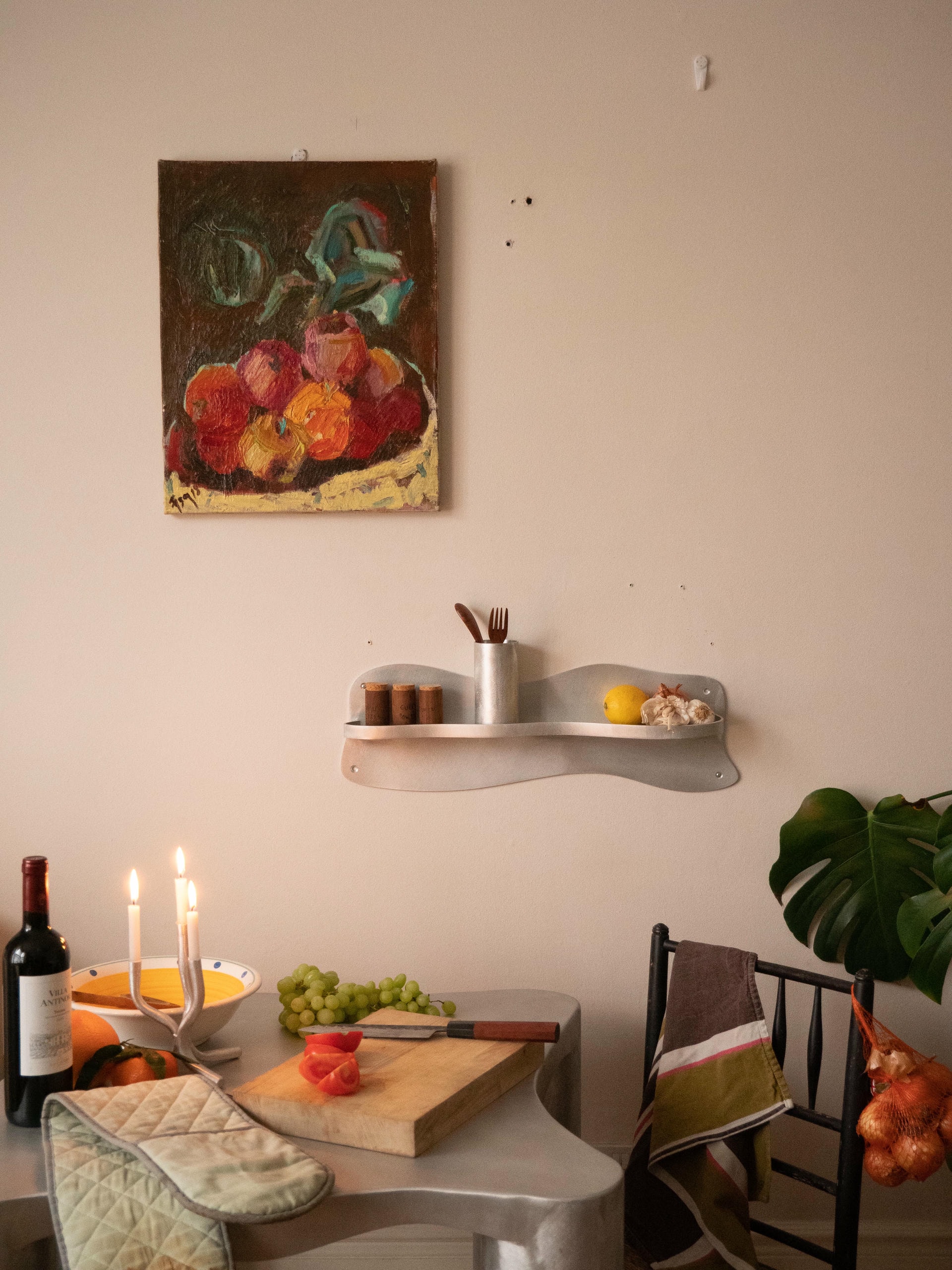
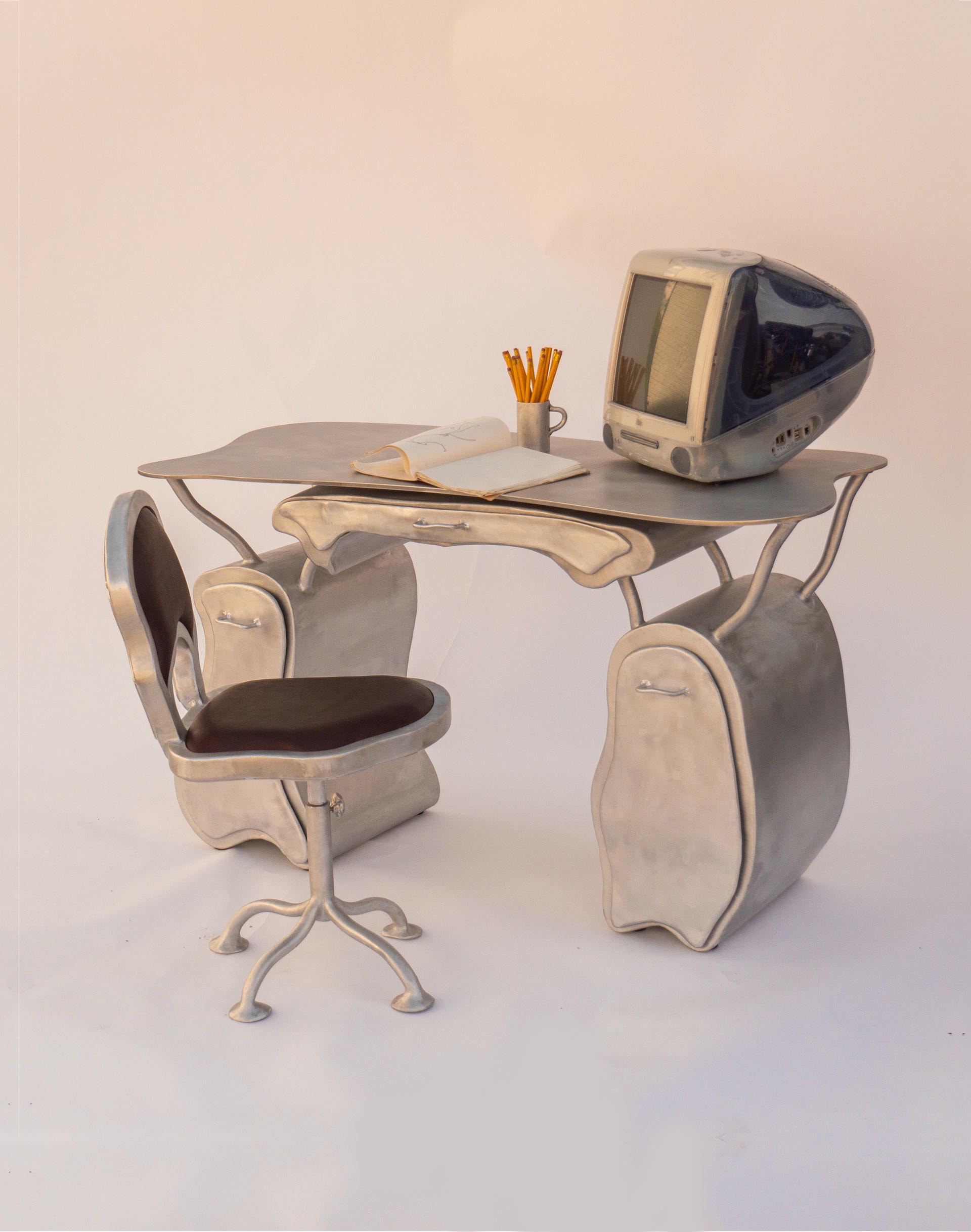
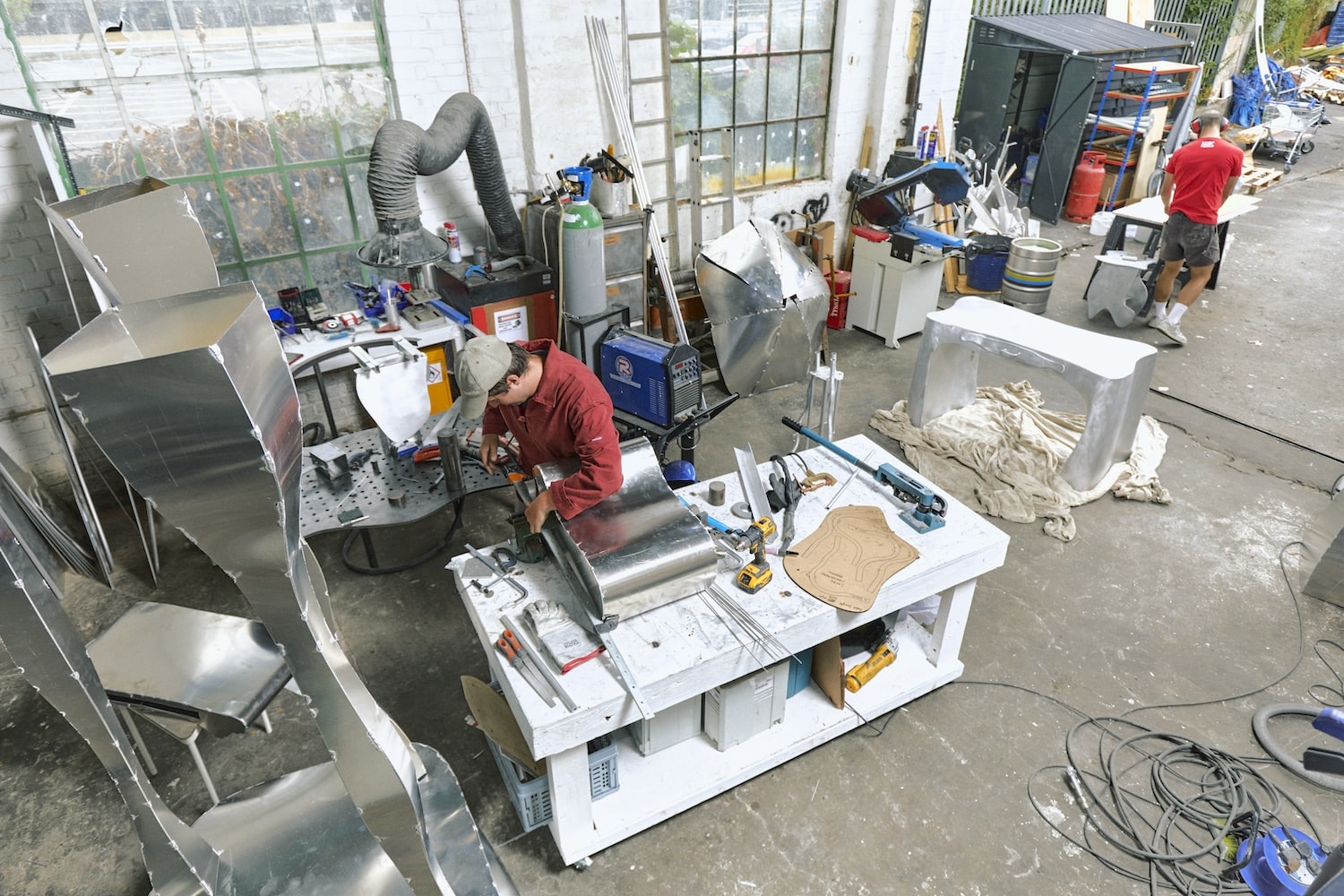
My creative practice is constant. I make new work continuously, year-round. I then cultivate and curate my output into collections. I have ideas continuously and am constantly scrambling to realise all of them. I go straight from a picture in my mind to physically making the piece, I like there to be as little drawing or planning as possible between the vision I see in my mind and creating the physical object. I think this helps me translate the feeling I have in my head into the final piece with no dilution of the essence through drawing. In terms of influence, I love painting, sculpture, fashion, and people watching from a cafe with a glass of wine. I am a huge fan of art and culture in all of its forms, and that fuels my creative practice.
So I work in our workshop 9/9:30 am – 6 pm every day and stay later once or twice a week. I’ll come in, chat to the team about what the plan for the day is, and then focus on getting my admin, emails, and drawing done in the morning. I try to keep my afternoons as free as possible to make. I have a fairly rigid structure to my day, which helps me deal with the pressure and stress of running a studio.
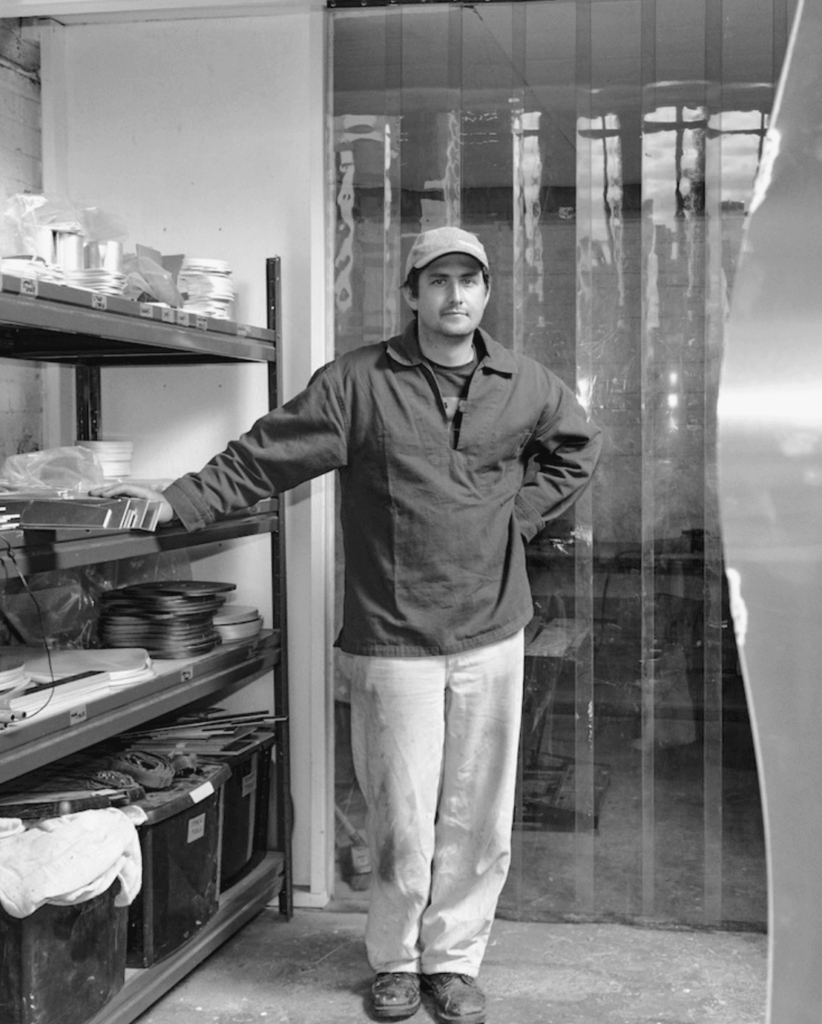
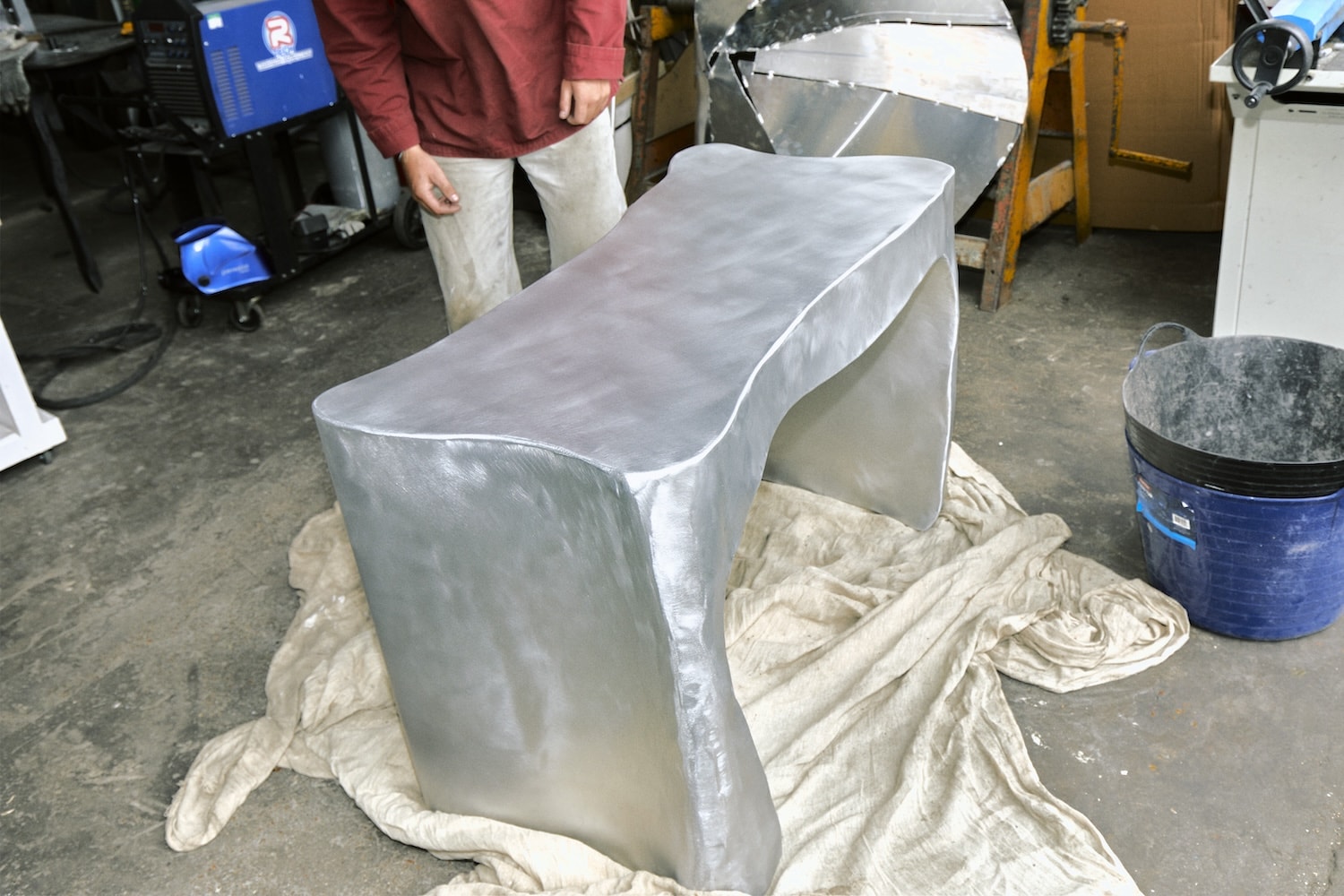
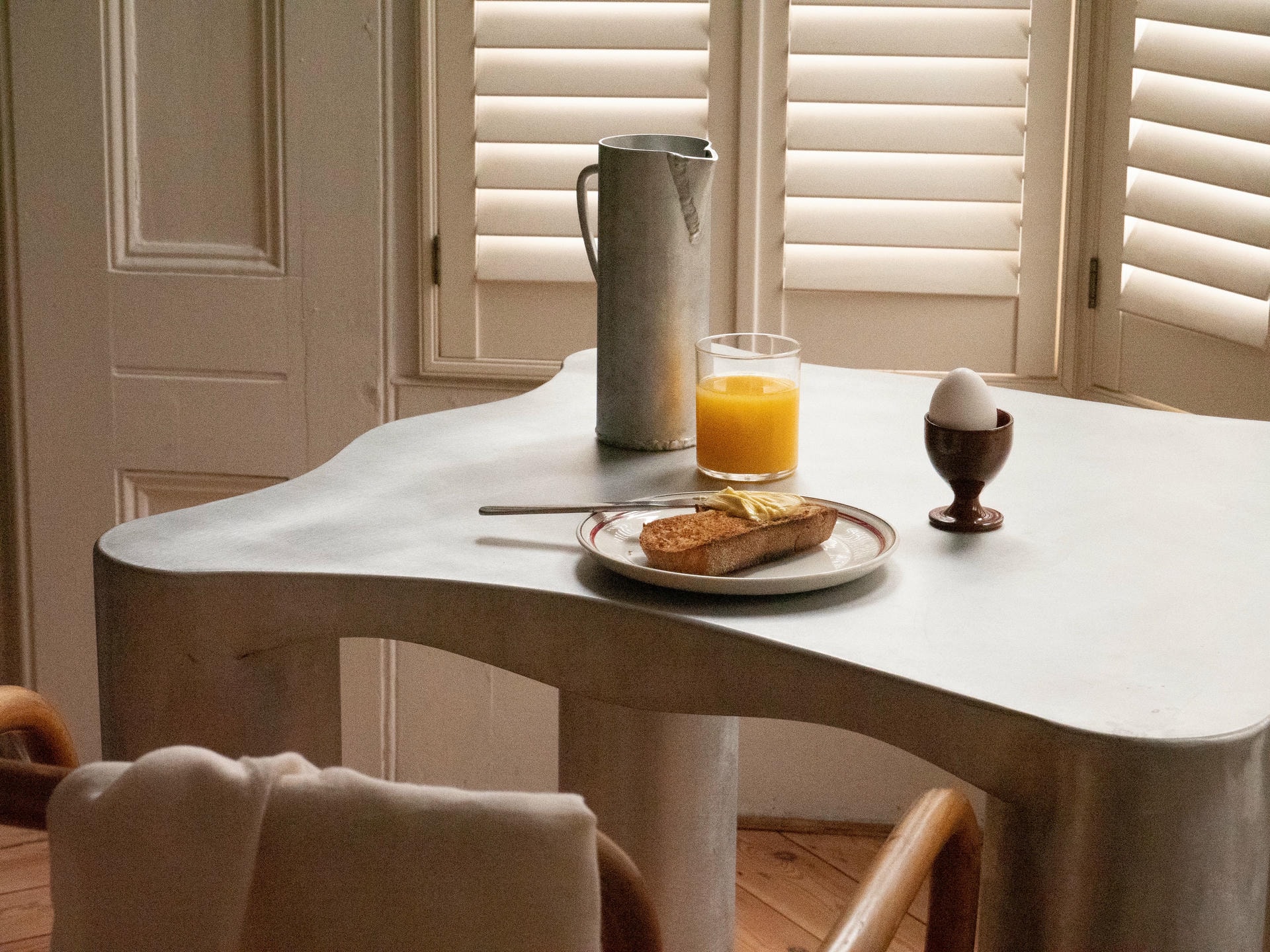
We work almost exclusively with aluminium. I started working in aluminium about four years ago now. I was working in wood previously; I’d been working for a cabinet maker, and it felt natural to make things from timber.
I picked aluminium because I wanted to be able to work in a way that felt more sculptural than wood allowed me to. Metalworking is a very fluid process; you can cut and reweld, melt down and reshape, which lends itself well to my iterative way of working.
It’s also the world’s most abundant metal and has a beautiful warmth to it compared to stainless steel or other metals.
With my design practice, I like to make work that reaches as many people as possible. This means we sell work at various price points. In order to do that, we rely on a lot of laser-cut components as well as other more industrial processes like press-forming.
We use traditional coach working techniques mixed with more abnormal processes that we have developed as a practice to create our work.
I think, like all art or expression, it is really all about doing the work. If you make work regularly and with enthusiasm, then everything else that you need to consider around that becomes clearer and clearer, but the start and end of any designer/artist day should be creating the work.
I think that today there is a growing artisan class of designers and artists who are making unique small-batch products.
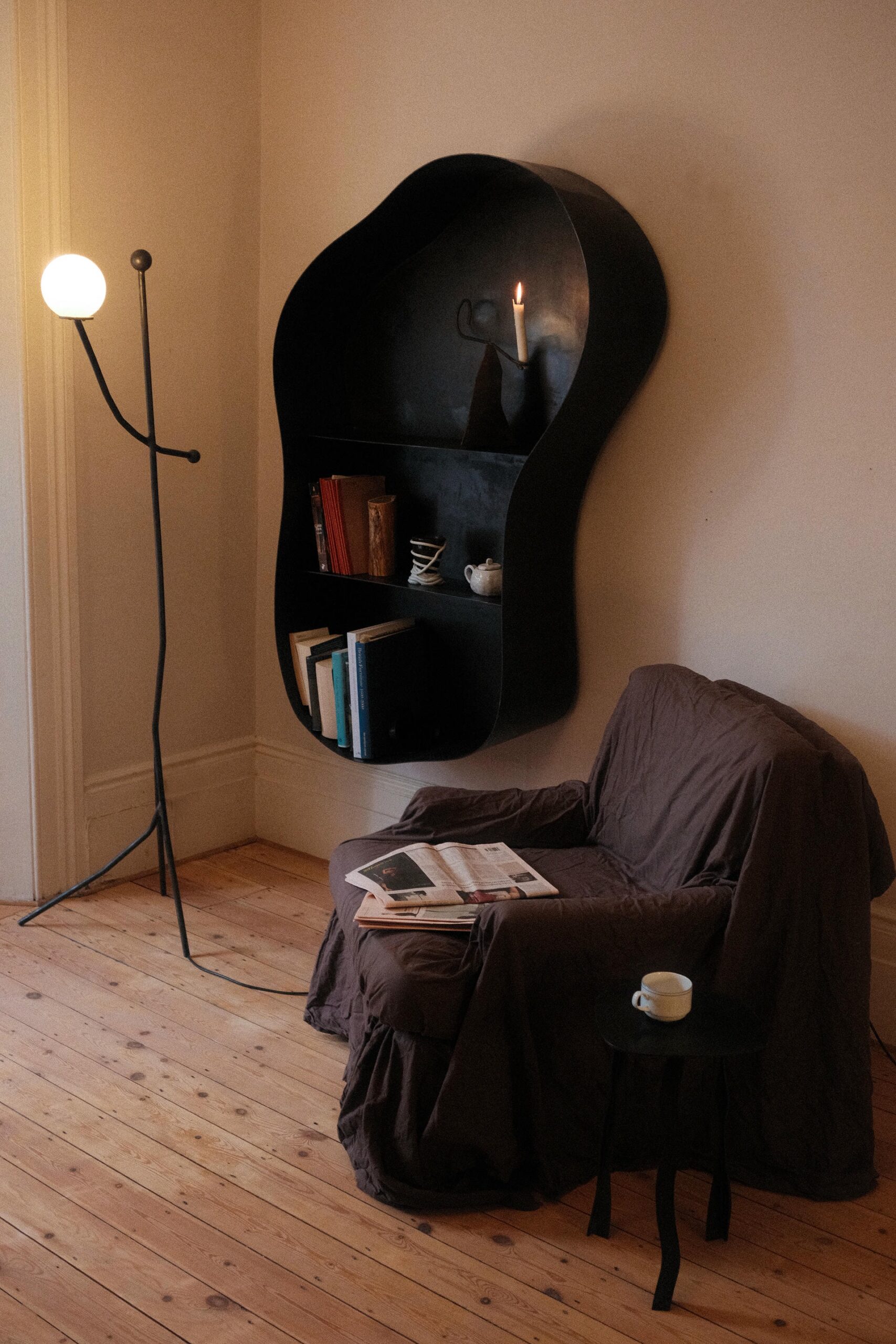
I like to think that we are part of a new design movement that favours individuality over mass production and craftsmanship over machine-made.
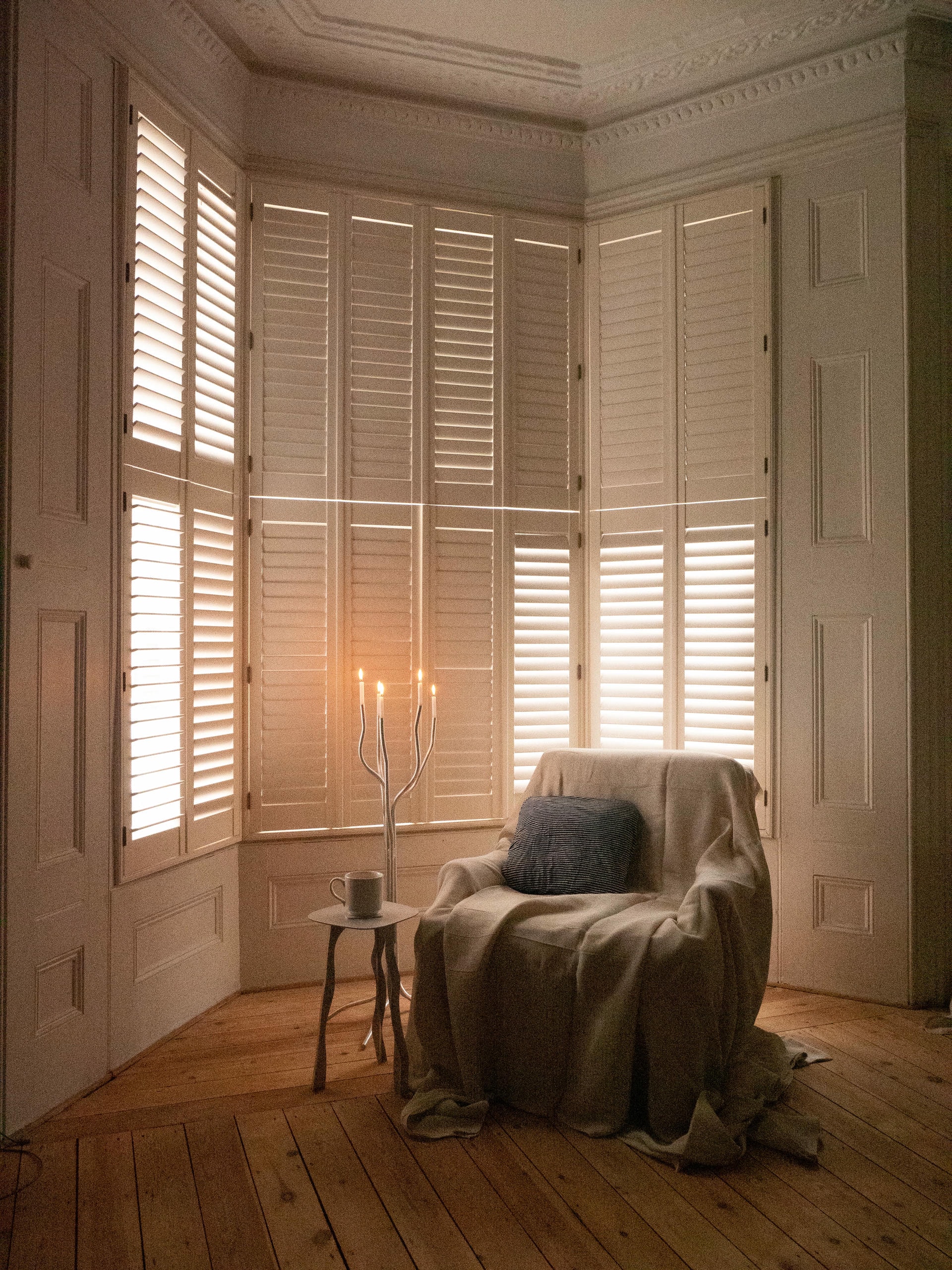
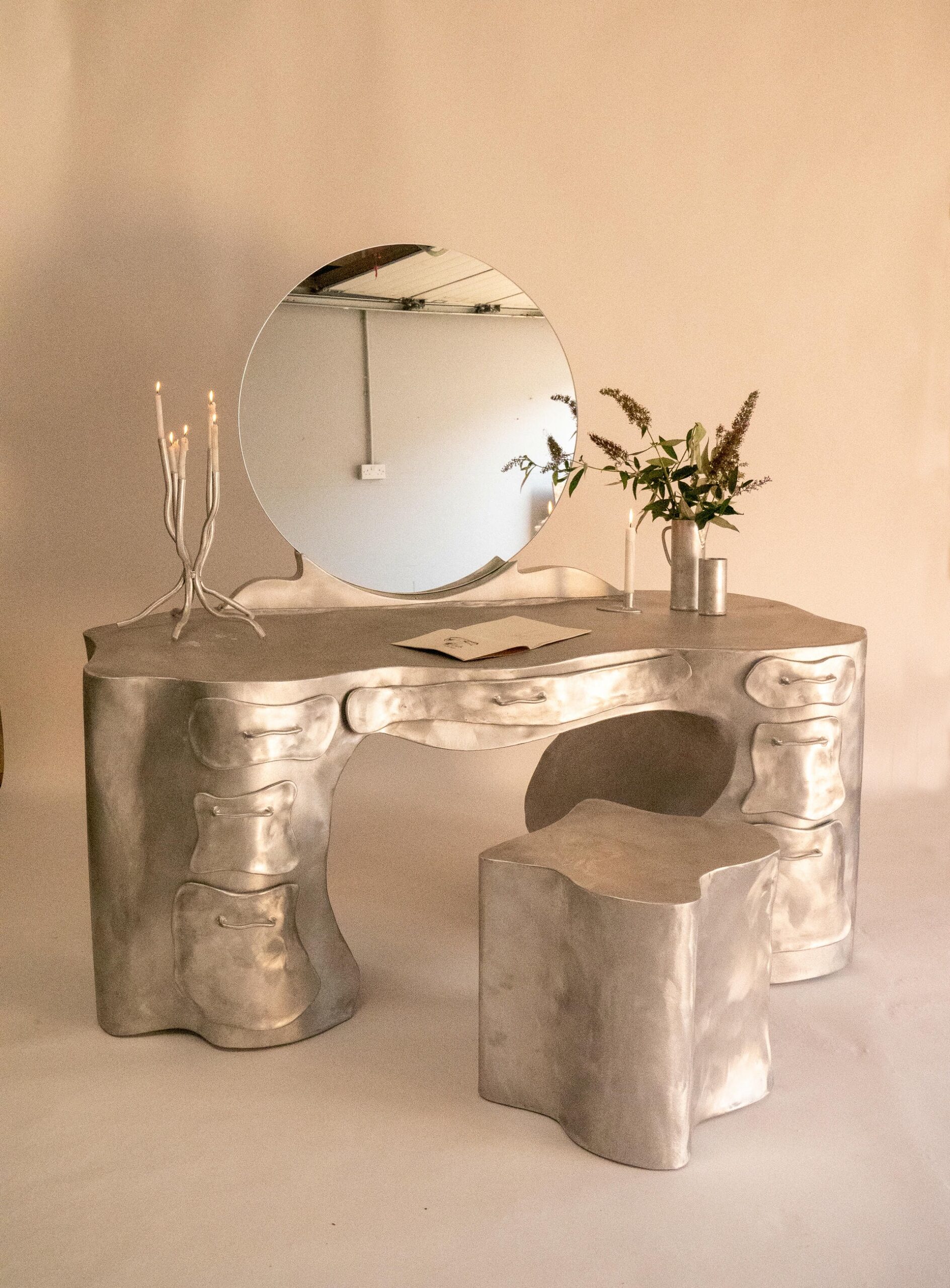
The first designer I really fell in love with was Ron Arad – his early work, in particular, I love the texture, the restlessness, and how expressive it was. Generally, however, I am more interested in painters and sculptors; some favorites include Calder and Dali.
There is so much talent out there, but the truth is I really try not to look at what other designers are doing. Particularly in the age of social media, it can be really overwhelming and demoralizing to be constantly consuming other designers’ work and comparing your own work to theirs. I think that is why I try to get my references from outside the design world.
In terms of contemporary artists, I love Tracey Emin’s textile and video work. I recently saw some Peter Doig that I really enjoyed. I also love contemporary music and really admire the world of Charlie XCX and Olivia Rodrigo. I think in many ways pop music is the art form that is closest to the culture at the moment, and I think we’re in a pop music golden age at the moment.
Well! Our brand motto is Imperfection, Self-Expression, and Self-Determination, and I think that describes our work best.
“Designing and making has always been my safe space and my default position.”
The Questions
(The Proust Questionnaire is a set of questions answered by the French writer Marcel Proust.
Other historical figures who have answered confession albums are Oscar Wilde,
Karl Marx, Arthur Conan Doyle, Stéphane Mallarmé, Paul Cézanne…)
A glass of white wine outside a french cafe
Losing my loved ones
Forgetfulness
A sense of superiority
All of my heroes are sadly dead
A large workshop space in London
Focused
Attention to detail
Humour
Humour
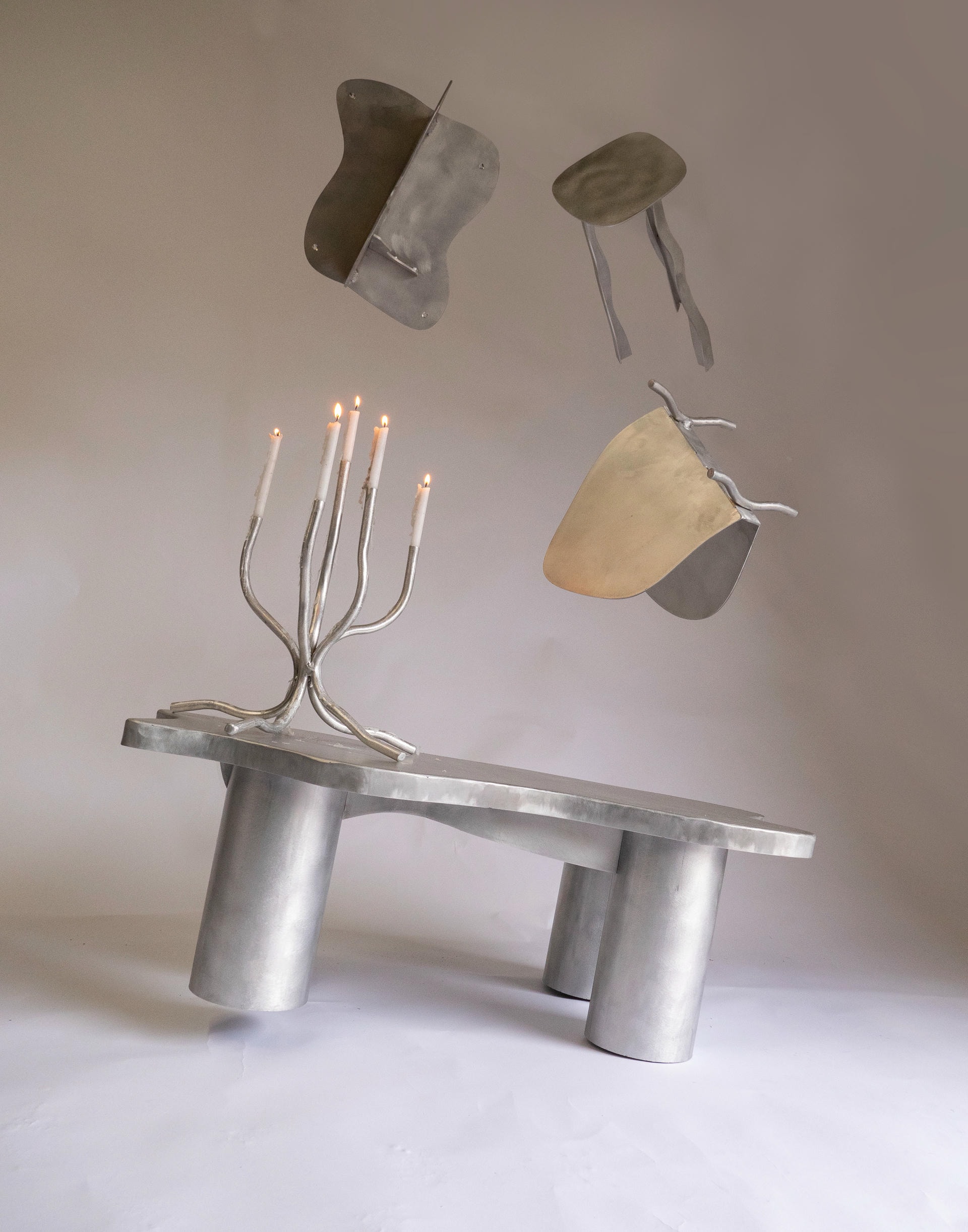
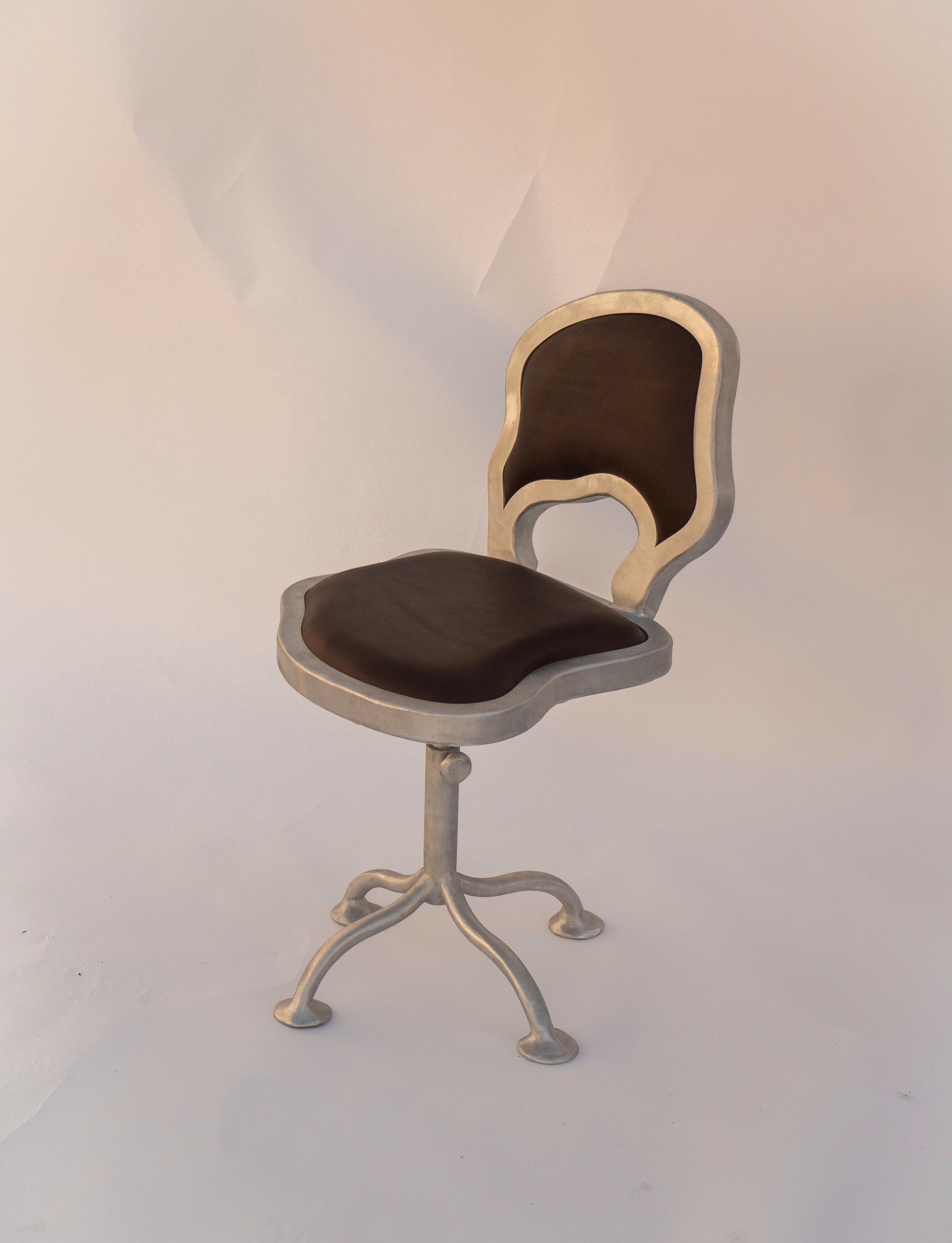
Aluminium
To be able to write music
My forgetfulness
Living in London as a full time designer
Probably a frog
Paris or New York, or in a lake house
My collection of vintage Apple Computers
Grief
Making new work
You’ll have to ask the people that know me
A good disagreement
Probably John Lennon
Juno
Anthony Bourdain
Anthony Bourdain
I would like to call my future dog Penny Lane
Green Beans
Too many to count!
I’m not sure but I want live and let die to play at my funeral
Imperfection, Self expression, self determination
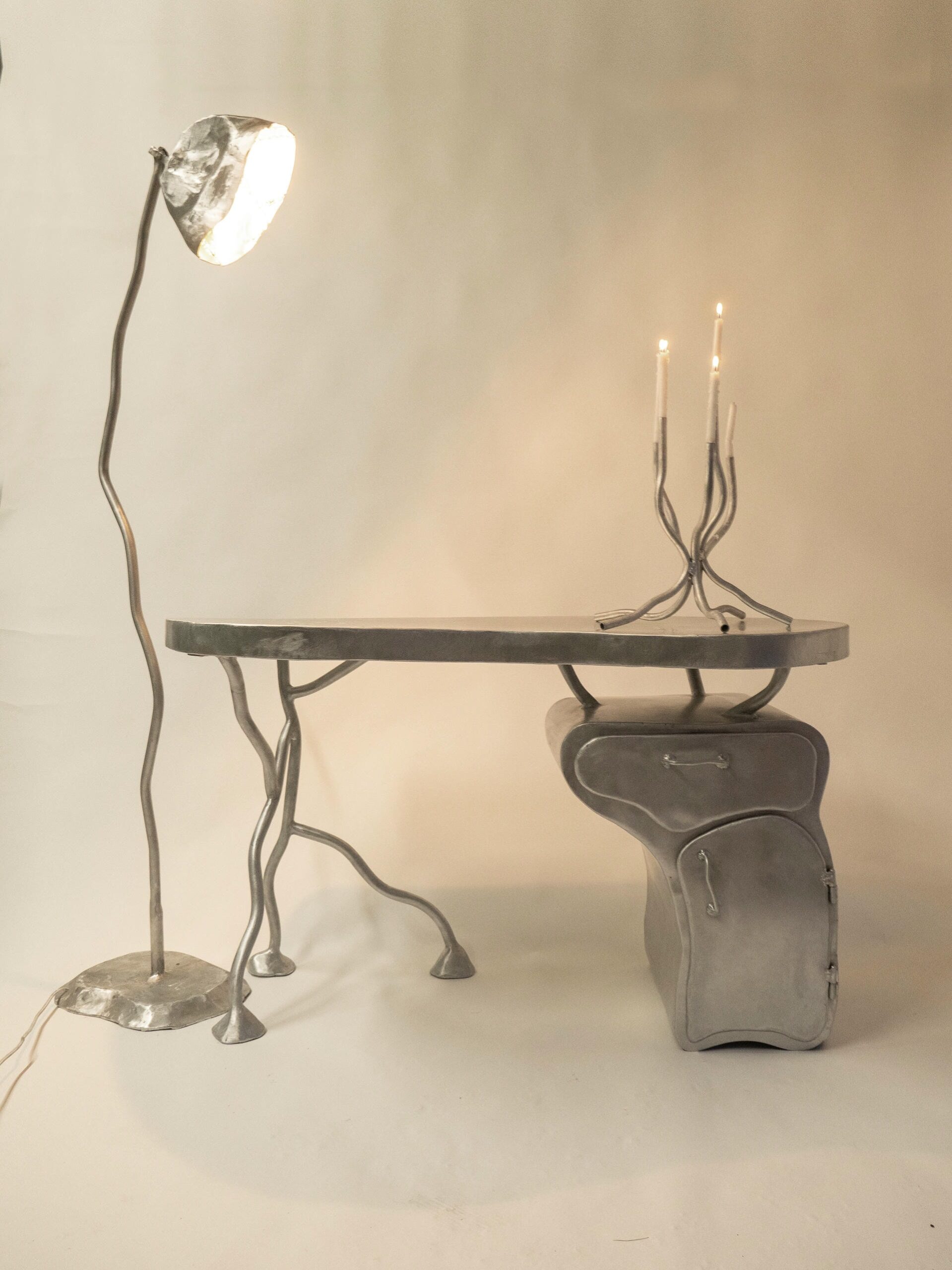
“I go straight from a picture in my mind to physically making the piece. I like there to be as little drawing or planning as possible between the vision I see in my mind and creating the physical object.”
SHARE :