David Allan Charette

“Bouclé, you stay.”
INTERVIEW

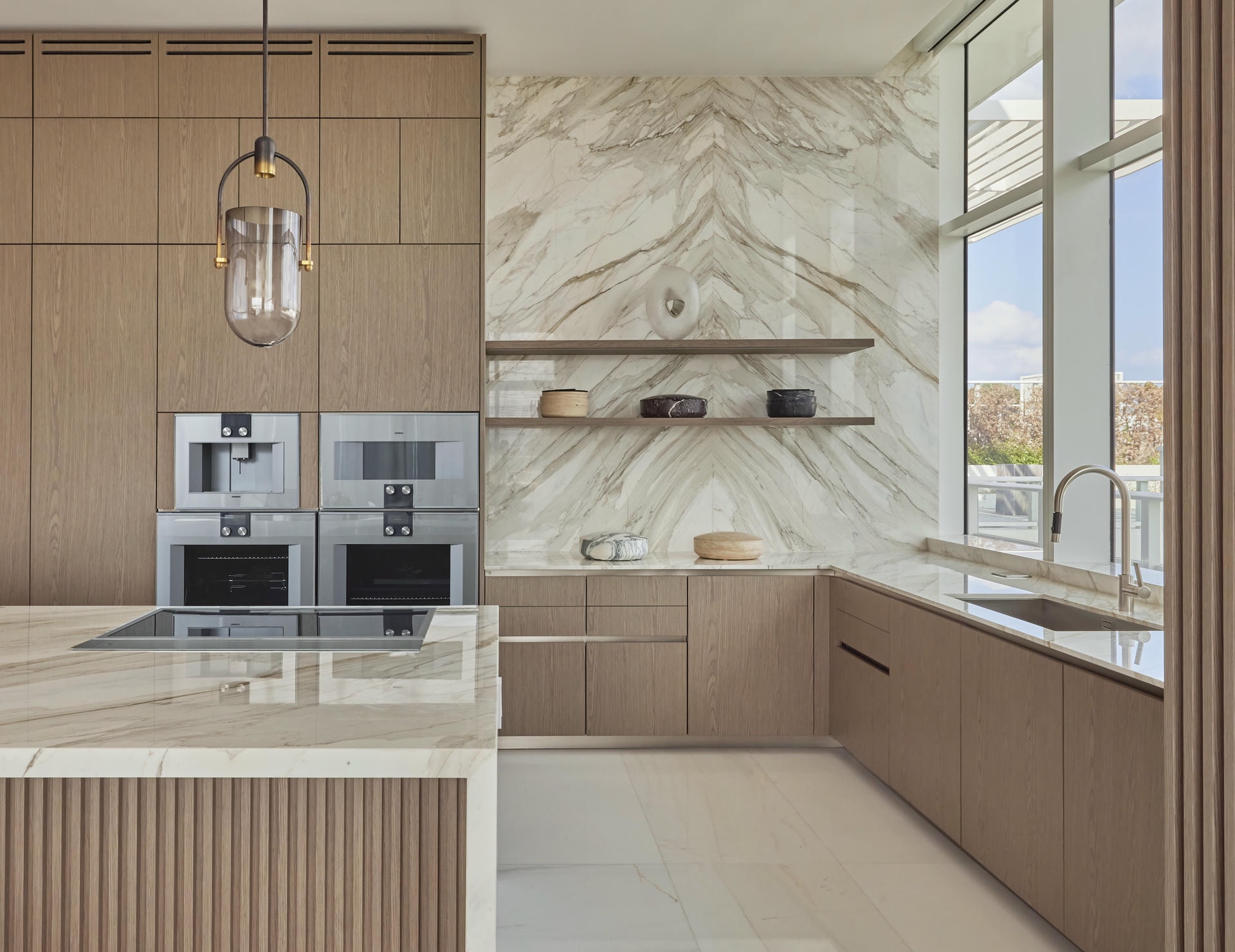
Ritz-Carlton PH Miami Beach © Mike Schwartz

I noticed when working for a large A&E firm in Detroit that there seemed to be a lack of attention paid to the interiors component of design. And the firm didn’t recognize the profit potential nor how important it is to balance the building envelope and the built environment with the interiors. A firm like Gensler has done well because they saw interiors as a key component. There’s a component of interiors where you have potentially less liability and greater profitability. There’s also a balance between the life cycle and working with facilities maintenance teams on corporate campuses and in higher education.
And understanding interiors can be as important, and in some cases more important, than other aspects of design. Ninety percent of our interactions with a building are with interiors. Roughly 80% of our time is spent indoors and 6% in vehicles. So for me, taking interiors into account and giving them the priority they deserve really launched me into this part of my design journey.
There’s been a balance between understanding that each work environment could be conducive to you, the sectors you’re interested in, and what you want to get out of it as an education. I’ve learned a lot from firms I hated working for. And firms are like people; they change over time. Your interests and professional goals will change over time. The highlight of my career, I think, is yet to come.
It goes back to scope, fee, timeline, and budget. Those are the four critical components of a project. You also need to have an understanding of the client and program, and you need to manage liability, profitability, and your clients’ expectations. There are many good interior designers, but to make the leap between design and successful projects requires that you build an infrastructure and a solid team.
Anyone can build an impactful AI image of an interior. But are you able to get it built in a timely manner? On budget? With the required permits? Do you understand how to bid in war with GC’s and have them take care of means and methods? Do you understand code and ergonomics? Those take experience.
It’s also imperative that you understand market sectors. For example, there’s a vast difference between corporate campus and hospitality, but a corporate campus could include hospitality. And it’s absolutely essential that you write a good contract, or you’ll lose profit and you’ll have liability. Much of this, I discovered, isn’t taught in college.
We start with a good contract.

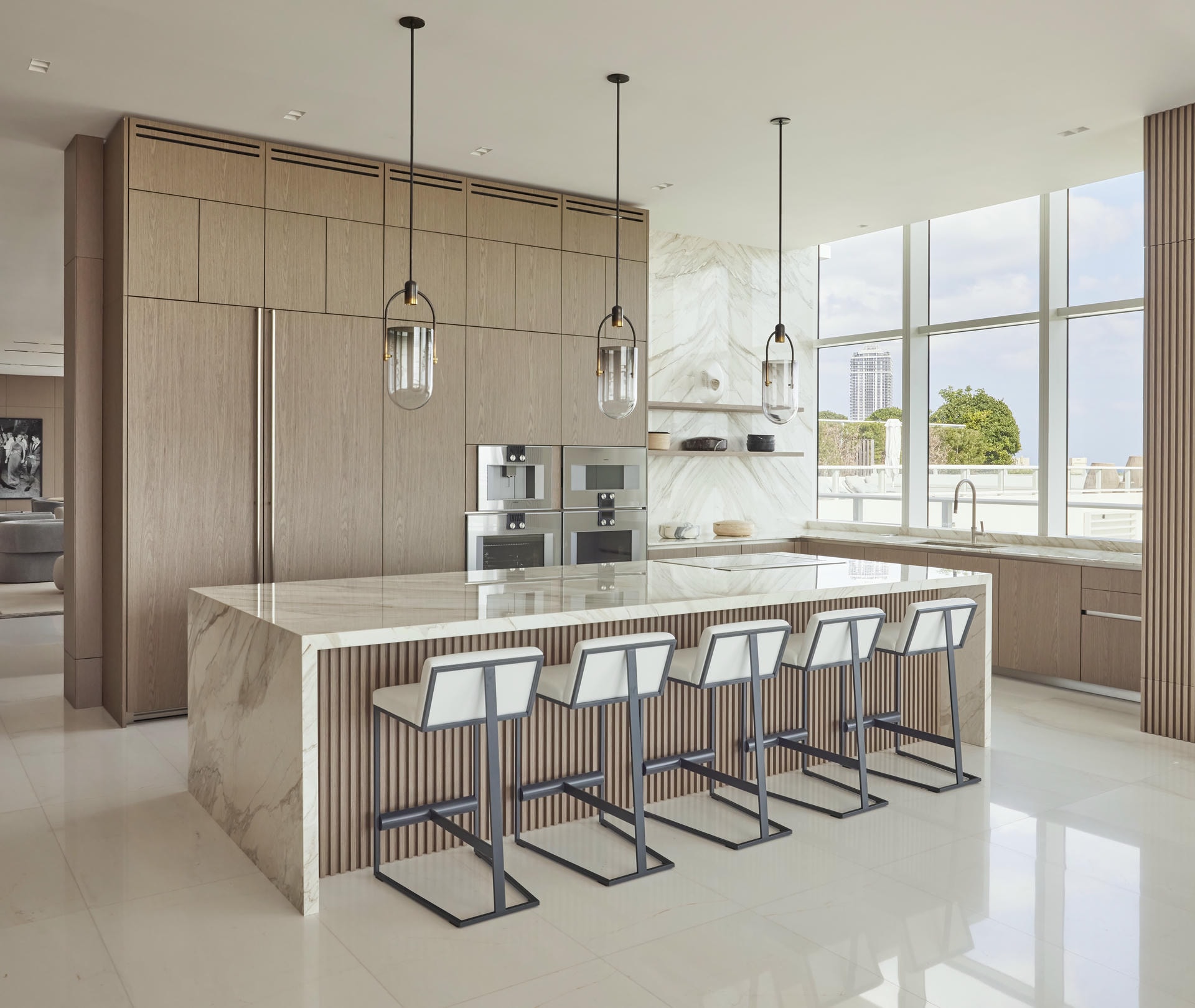
Ritz-Carlton PH Miami Beach © Mike Schwartz


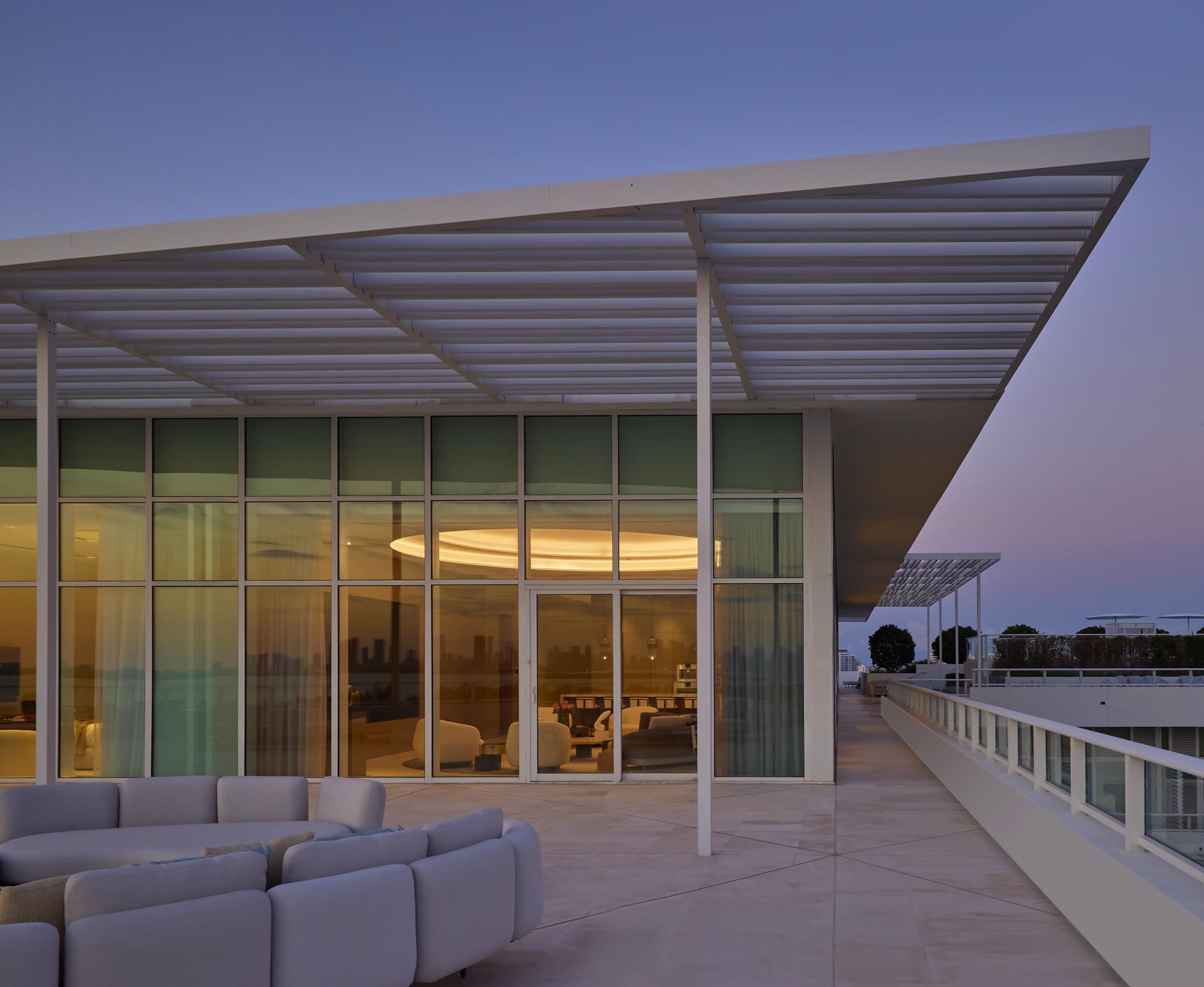
Ritz-Carlton PH Miami Beach © Mike Schwartz
We always say inspired…and we consistently select materials and textures that add a timeless quality to the project. Clearly, any good architect or designer can tell you when a project was completed. We can’t divorce ourselves from that. But we have a clear understanding of what makes the elements successful. You also need to understand that hospitality isn’t about timeless design. They’re trying to do something thematic—something that’s not intended to last forever.
On the other hand, architect Louis Kahn created masterpieces in the ’70s that have a timeless quality to design with integrating interiors and exteriors. The Kimbell Art Museum in Fort Worth and the Yale Center for British Art are two great examples of how Kahn used materials like travertine, concrete, and oak to create timeless buildings. Coco Chanel is another great example of timeless design. I would argue that her library of materials would be just as influential today as when she was alive. For me, I’m comfortable always referencing materials like linen, bouclé, and mohair for their timeless contributions. In fact, one of my favorite cheeky quotes is “Bouclé, you stay.”
Sometimes you have to walk away, you have to quit. The client isn’t always right, and you have to have a contract that allows you the right to terminate an agreement. We’re told to always find a solution. But that doesn’t always work. You might revise or look at it differently in the future, but it isn’t true that the client is always right. If you have a vision for a project, you have to be able to make difficult decisions. You need to be able to terminate agreements.
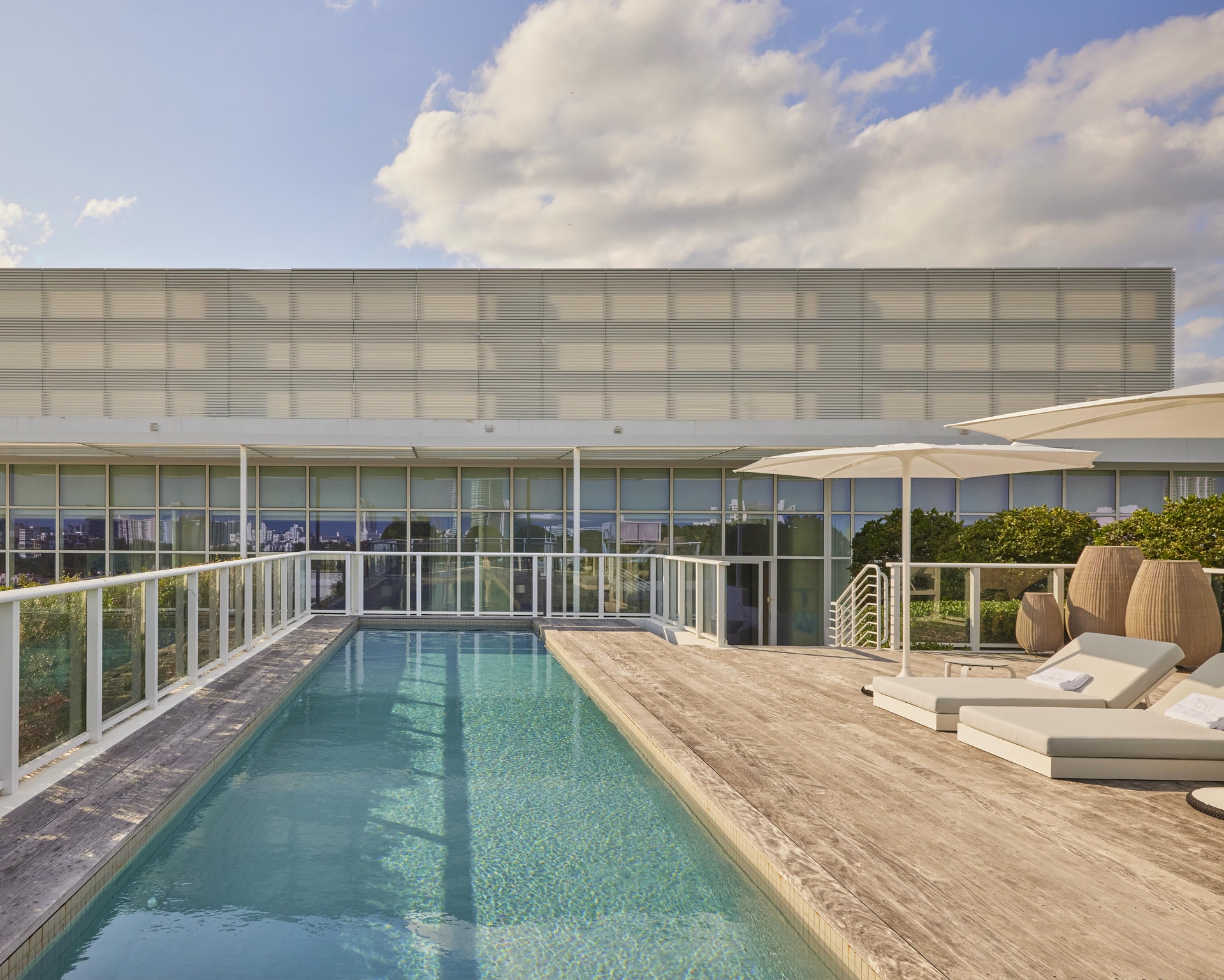
The Ritz-Carlton penthouse in Sunny Isles that we designed for our VIP client was one of my favorite projects. It was a clean slate, and the penthouse had commanding 360-degree views. Our client gave us carte blanche when it came to designing his penthouse, and we ran with it. We had these incredible high ceilings to work with and an amazing primary bedroom suite with a very unique shower and vanity. We created a spectacular foyer and media room, and we experimented with unique soffits and custom GFRC domes that just really provided a wow factor. I’m proud to say that those innovative ceiling details my team and I perfected are now something that our competitors try to emulate.
I did not follow the best advice I received, unfortunately. The former dean of my alma mater strongly urged me not to accept a position at a large A&E firm, but I didn’t listen. My professional career path has been as much about learning what to do as learning what not to do. It hasn’t all been bad, but when you work in a large corporate environment, you’ll deal with nepotism, favoritism, and people who are in positions because of friendship and not talent. If you’re OK with that and good at diplomacy, then go work for that type of firm. But if you’re an independent spirit, you need to become a star architect. You need to understand that in any institution, you’ll be dealing with politics. It’s just a fact. And if you ignore it, it’s at your own peril. A lot of work in a large firm is rooted in politics. You must be able to navigate it in order to work successfully in that environment.

Ritz-Carlton PH Miami Beach © Mike Schwartz


Ritz-Carlton PH Miami Beach © Mike Schwartz

Start with what YOU want to accomplish with your career. And you need a firm understanding of market sectors. There is an enormous variety of sectors, and each has distinctive career paths/requirements. When you pick a market sector, you need to understand that if you choose a sector like GSA, a project could easily take four years.
You’ll have a career of roughly 35–45 years, and in that sector, you will potentially work on 10–15 projects over the course of your entire career. But in hospitality, where the rooms are typically renovated every seven years, and in retail, where they’re renovated even sooner, you’d work on far more projects with greater diversity and maybe 50–60 jobs during your career.
There’s also a different level of profitability and, ultimately, by knowing the market sector you want to work in, you’re far more likely to be productive and advance and become a principal or associate. You can achieve this sooner by having a clear concept of which companies do what, and which ones you want to work for. You want to choose the sector you enjoy—choosing the appropriate sector is imperative.
Finally, save EVERYTHING. Your timesheets, CAD/Revit files, etc. Take pictures of what you create and create a toolkit of fabrics, furniture, and finishes so that you have a solid foundation of reference for your portfolio. But of course, if you work for the GSA, you have to destroy content because it’s top secret.
I’m currently reading Determined and find the nature vs. nurture and free will concepts intriguing. I’m also reading Love, War, and Diplomacy, which explores anthropological ideas around language, written records, and the misinterpretation of anthropological evidence. I’ve also been reading History of the Jews and Plato and the Tyrant. I’m interested in these books because I think they touch on key concepts of being human and of our ignorance. I also just finished Project Hail Mary, but I believe the movie is much better than the book. We think of ourselves as the center of the universe, and we create a construct of aliens being hostile/garrulous. We make the same mistakes over and over and over.
Do NOT underlight a space.
We have some fantastic projects on deck right now, and one of them is in New York. It’s a 20k sq. ft. detached single-family residence. We’re designing it for an incredible couple and their family. They are repeat clients, and we’re honored that they’ve chosen us for this comprehensive project. I love meeting with them and working together on design ideas. I can’t wait to share it with you once it’s completed. You can learn a little more about it here on our website.

Ritz-Carlton PH Miami Beach © Mike Schwartz




Thank you so much David, for this lovely interview!
Share article :