Gini Moynier
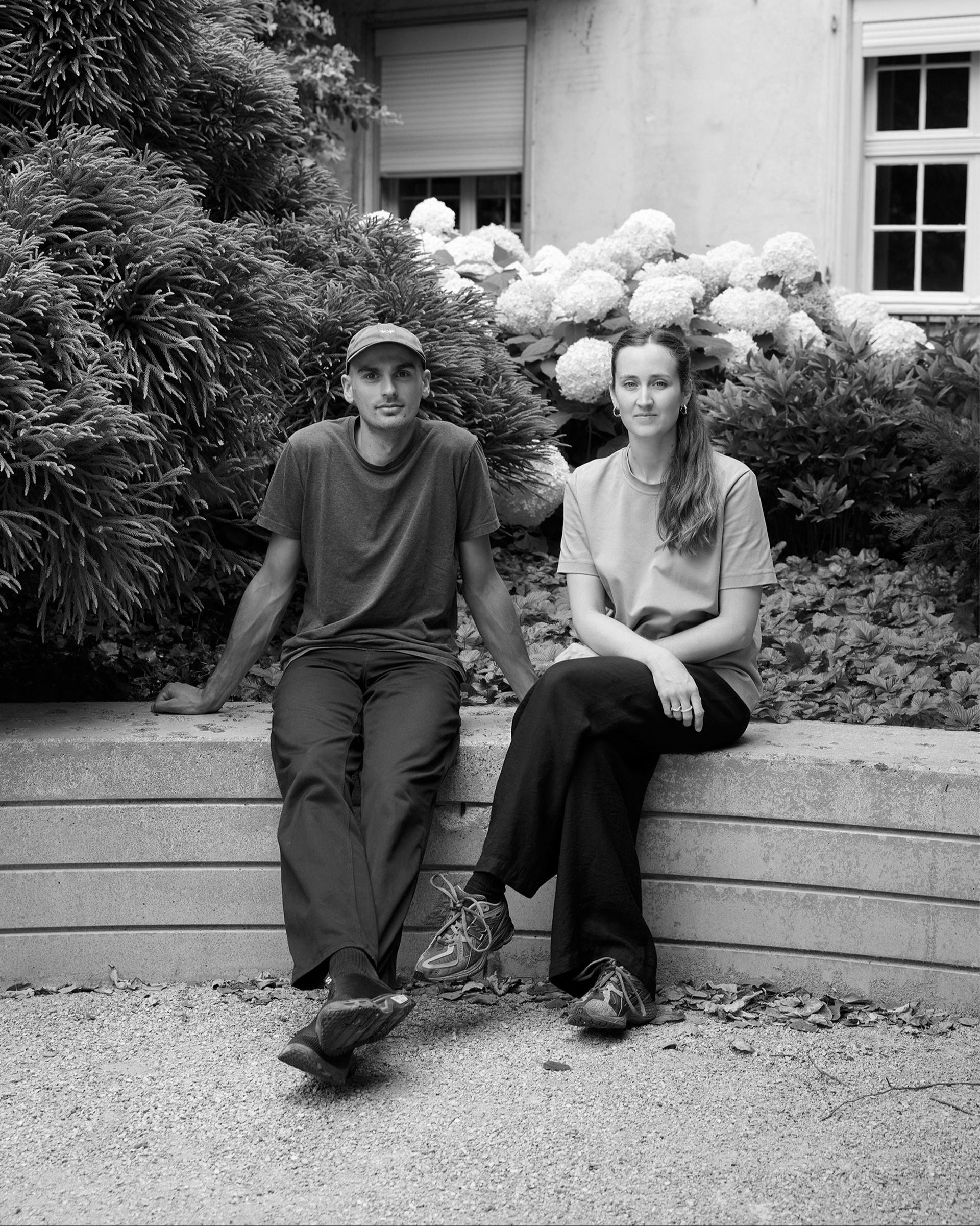
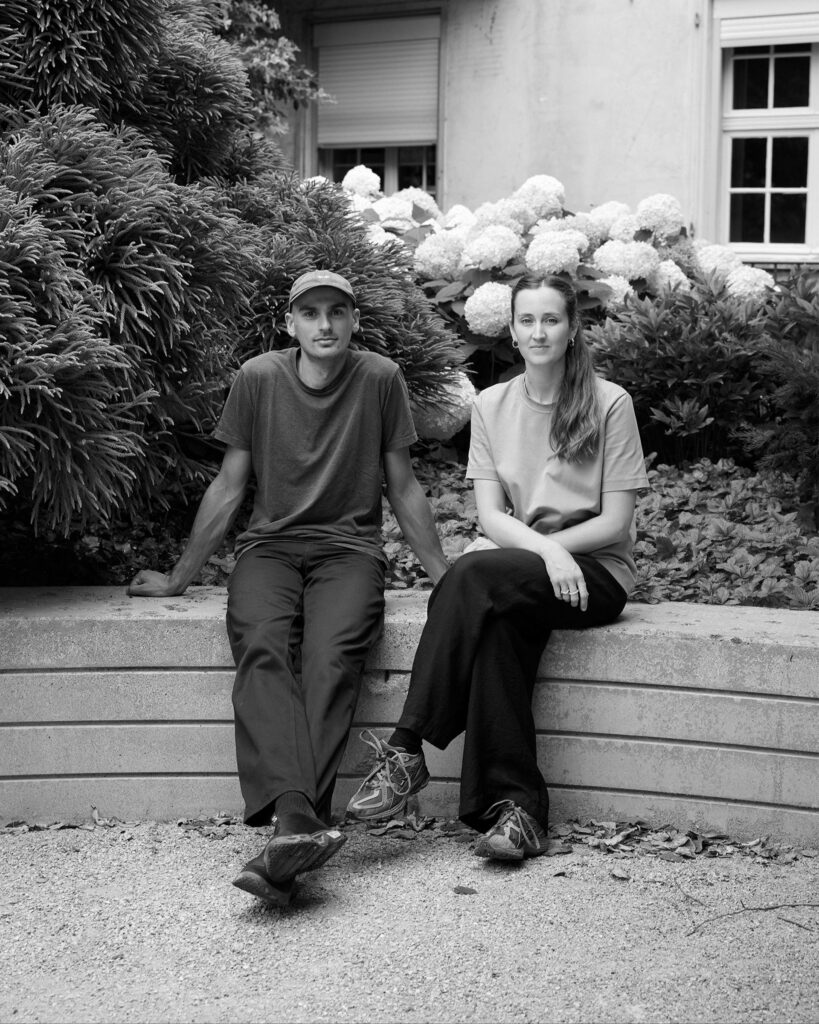
Gini Moynier is a creative office based in Switzerland, founded by Amandine Gini and Victor Moynier. Working across products, spaces and imagery, the duo grounds its practice in research into materials and processes. Their work brings contemporary social questions into dialogue with cultural heritage, developing narratives through design.
Their clients and collaborators include the International Olympic Committee, Karimoku New Standard, Ligne Roset, the Musée d’Ethnographie de Genève, On Running and Tajimi Custom Tiles. Their work has been exhibited at the Salone del Mobile in Milan and the Palais de Tokyo, and they have received awards and grants from the Dezeen Awards, Fondation Casino Barrière de Montreux, Pro Helvetia and the IKEA Foundation Switzerland.
INTERVIEW

© Luca Caizzi
It always starts with context. What is the content, who is it for, and what story or experience should the exhibition create?
We first try to understand the curator’s intention and the reason for the exhibition to exist. With Shared Matter, the ambition was to give visibility to a new generation of Swiss designers while connecting their practices with industry and a wider international network. That became the foundation for how we thought about the space.
We met at ECAL, where Victor was studying for a Master’s in Product Design, and Amandine was completing a Bachelor’s in Industrial Design.
After graduating, we both worked independently until a client brought us together for a research project. The collaboration felt natural, and we simply kept working together afterwards. Gini Moynier grew from that relationship rather than from a plan to create a studio.
It grew over time. We didn’t start with a defined idea of what the studio should be. We came from slightly different directions, exhibition design and product design, and gradually found a common language.
One of our first projects together was a collection of inflated paper lamps for NOV Gallery. It was an opportunity to explore materials and processes, and it helped establish an approach that still runs through our work today. From objects and furniture, it naturally expanded into exhibitions, spaces, and art direction. The scale changes, but the attention to material, detail, and experience remains.
One of our earliest experiences with exhibition design came through a scenography project for a local museum, where we explored how the institution’s archives could be displayed. What interested us was that an exhibition can be approached almost like a product: you work carefully with materials and details, but you also have to think about movement, narrative, and the experience of the visitor.
We also enjoy the temporary nature of exhibitions. There is a certain freedom in working with something that exists for a limited time. Decisions become physical very quickly, and the process is much more immediate than developing a piece of furniture.
The six projects came from very different practices and each had its own story, so one of our main challenges was to create a strong common environment without flattening those differences.
The aim was to create an exhibition rather than a collection of individual presentations. The six practices were brought together through a common visual language, while each project was given its own space and rhythm.
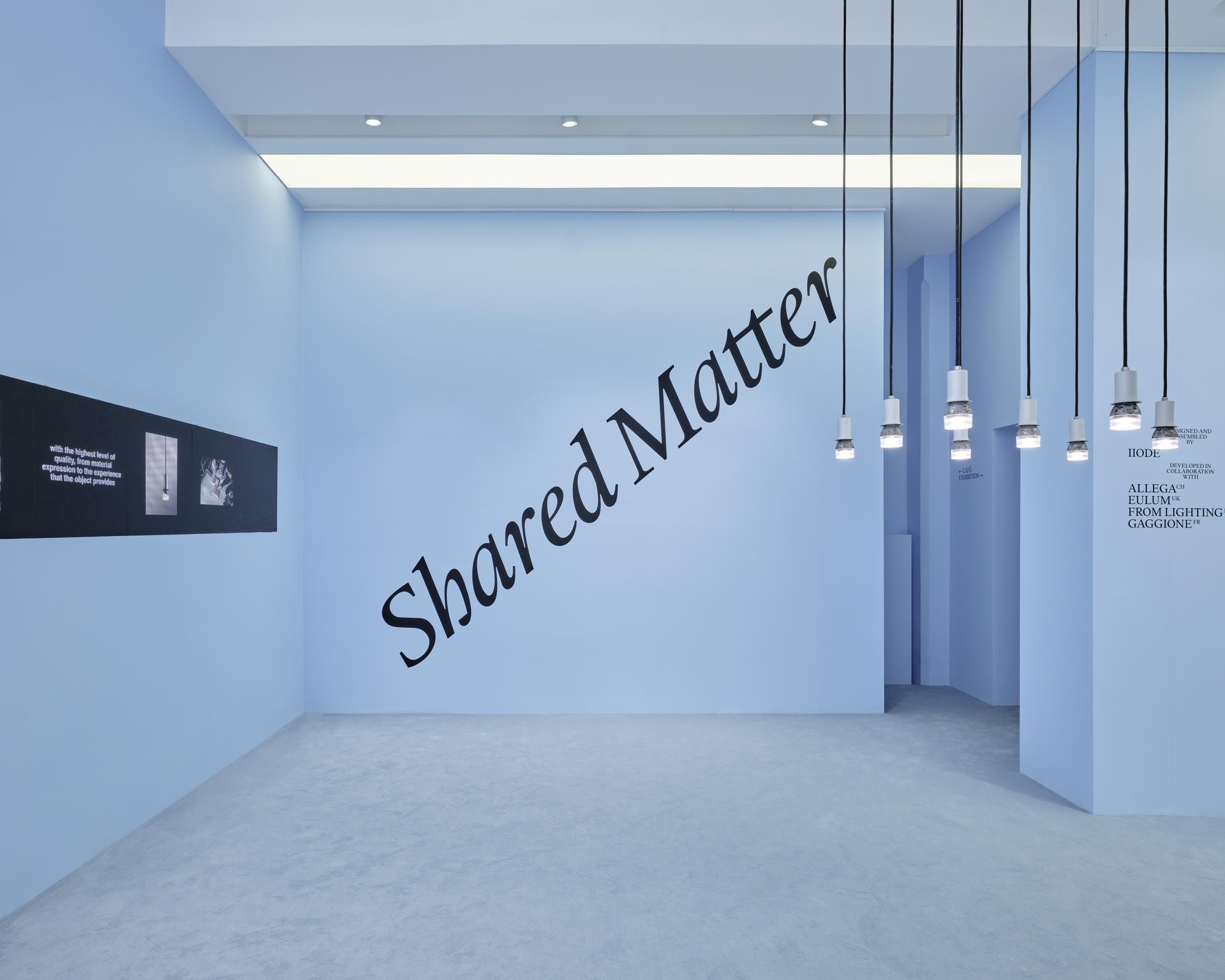
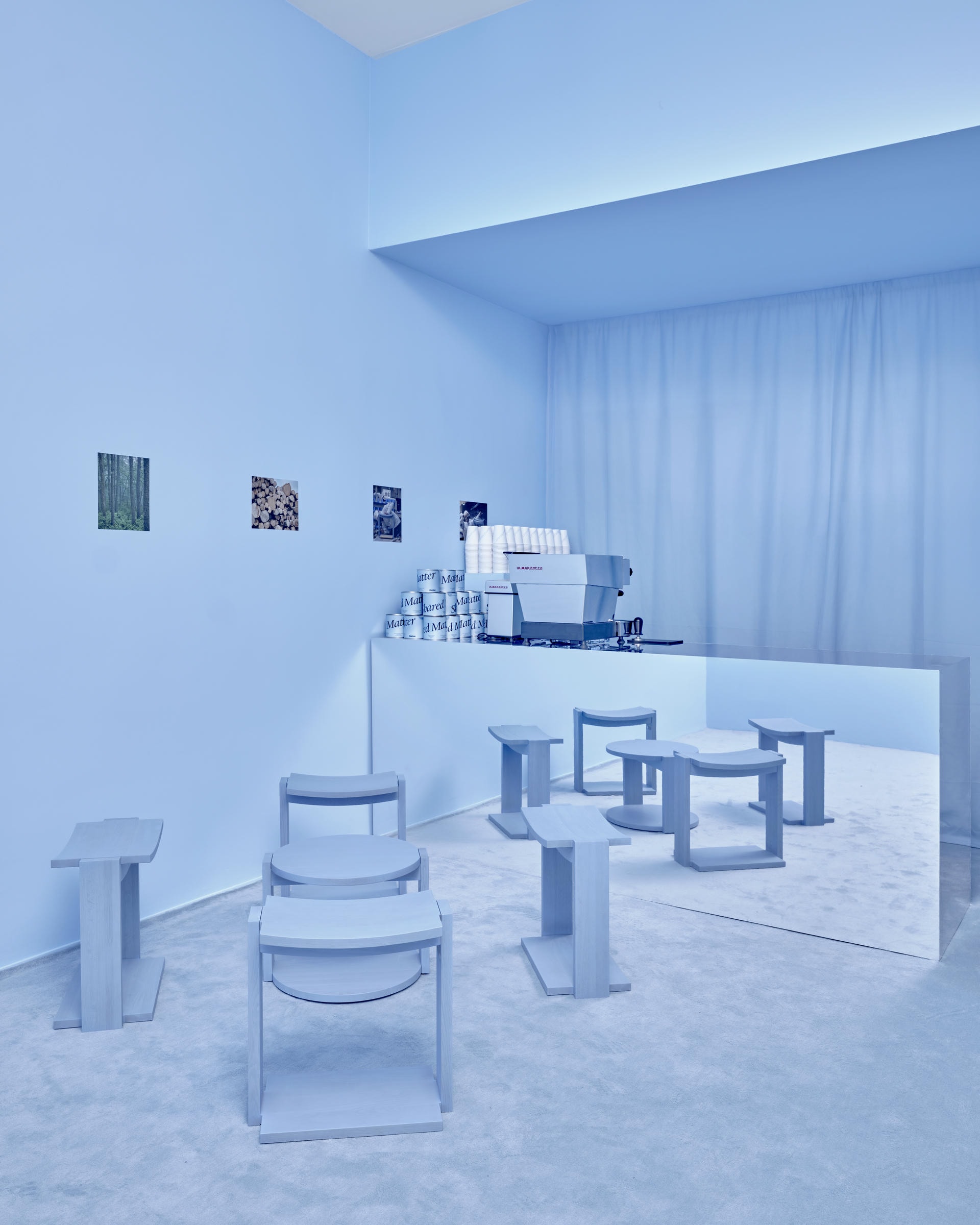
We approached the exhibition almost like a gallery, using a monochromatic environment to give the whole project a strong and immediately recognisable identity. At the same time, we wanted it to feel welcoming and calm. Milan Design Week can be extremely intense and overwhelming, so the blue environment, the coffee and the terrace were conceived as an invitation to slow down.
At the entrance, the LED wall presented the six practices as one visual essay. Inside, the scenography became much quieter, allowing the objects and their individual approaches to take over.
We wanted the exhibition to be a place not only to look at objects, but also to sit, meet and have informal conversations. In that sense, the social experience was as important as the visual one.

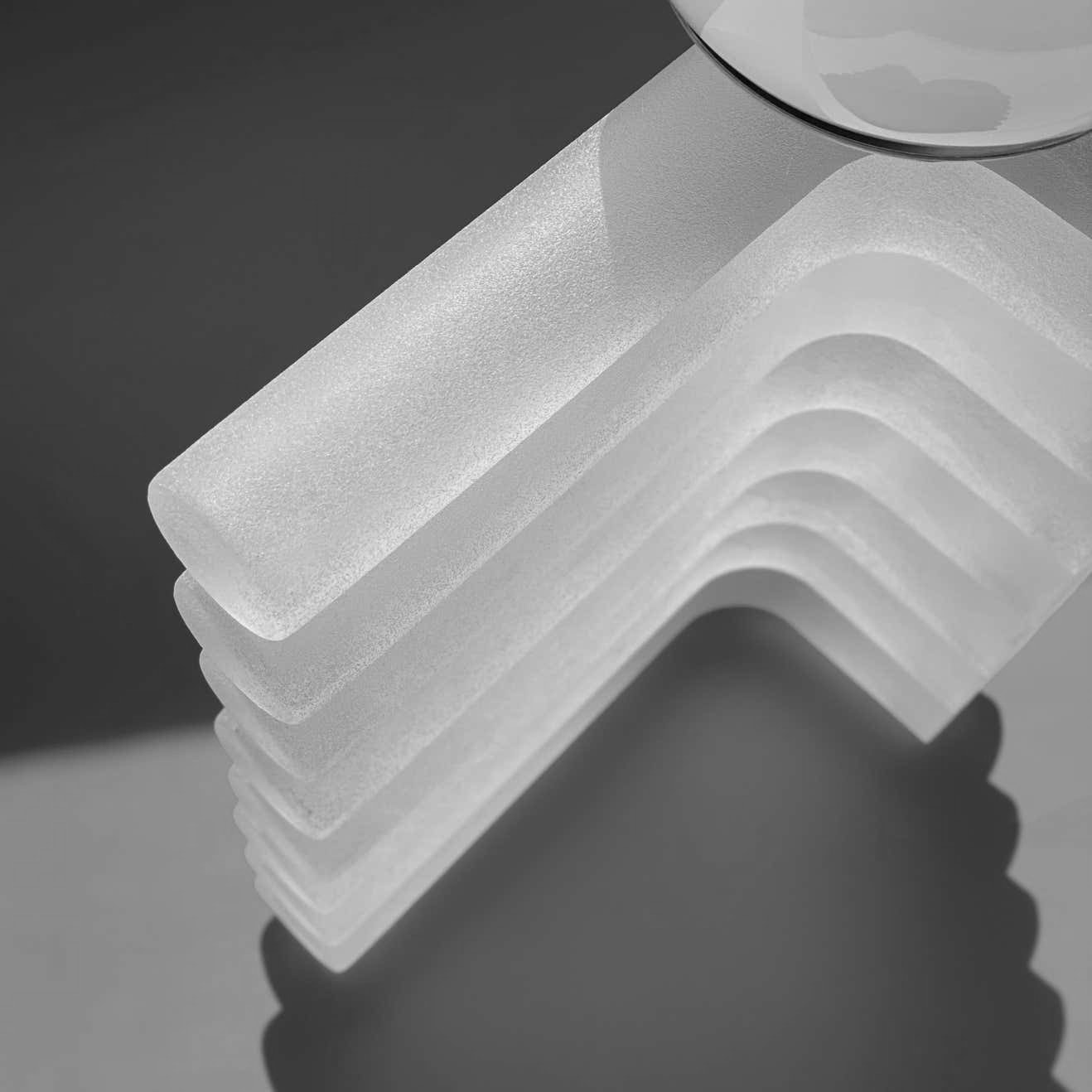
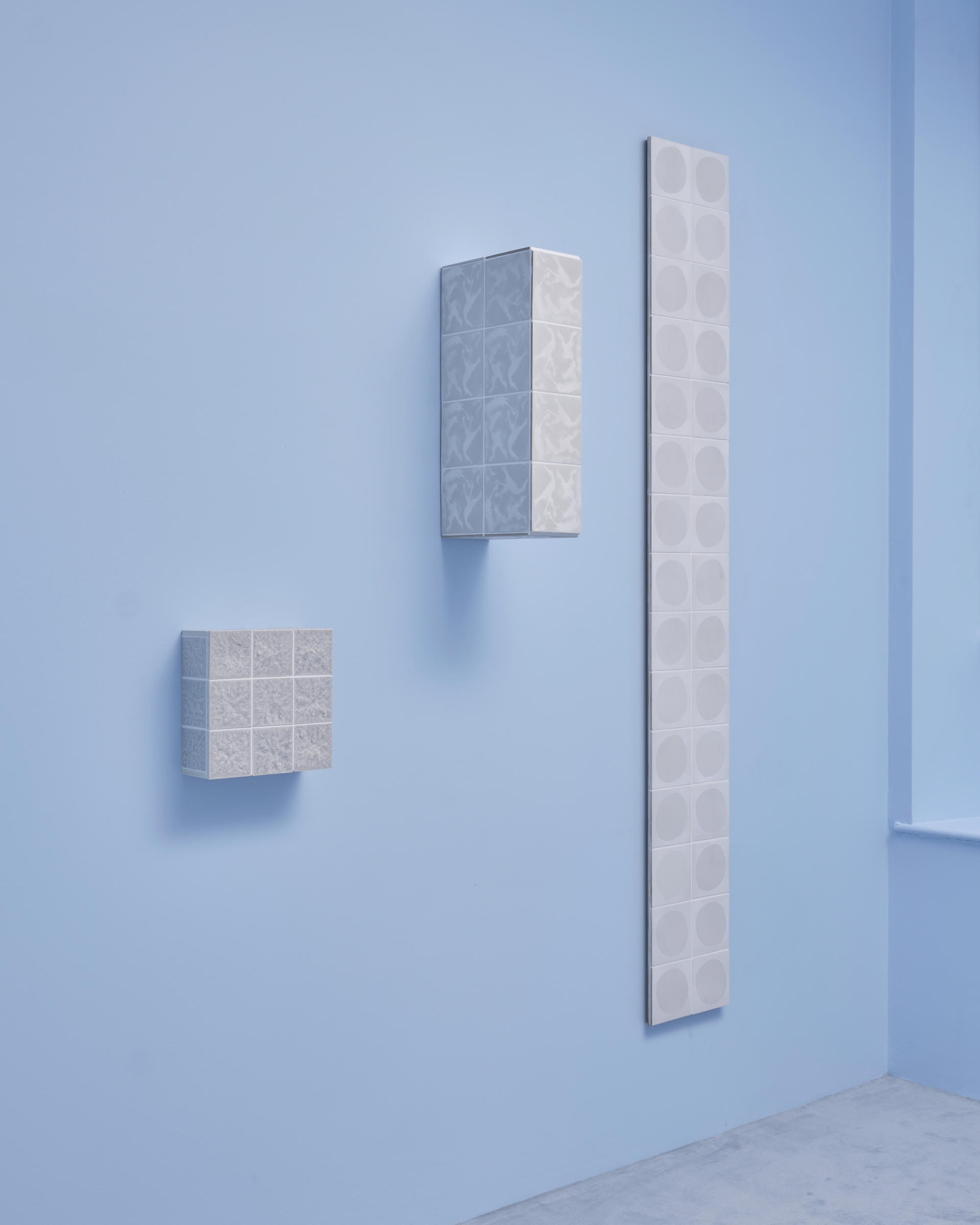
FORMWORK, shelf © Cynthia Mai Ammann
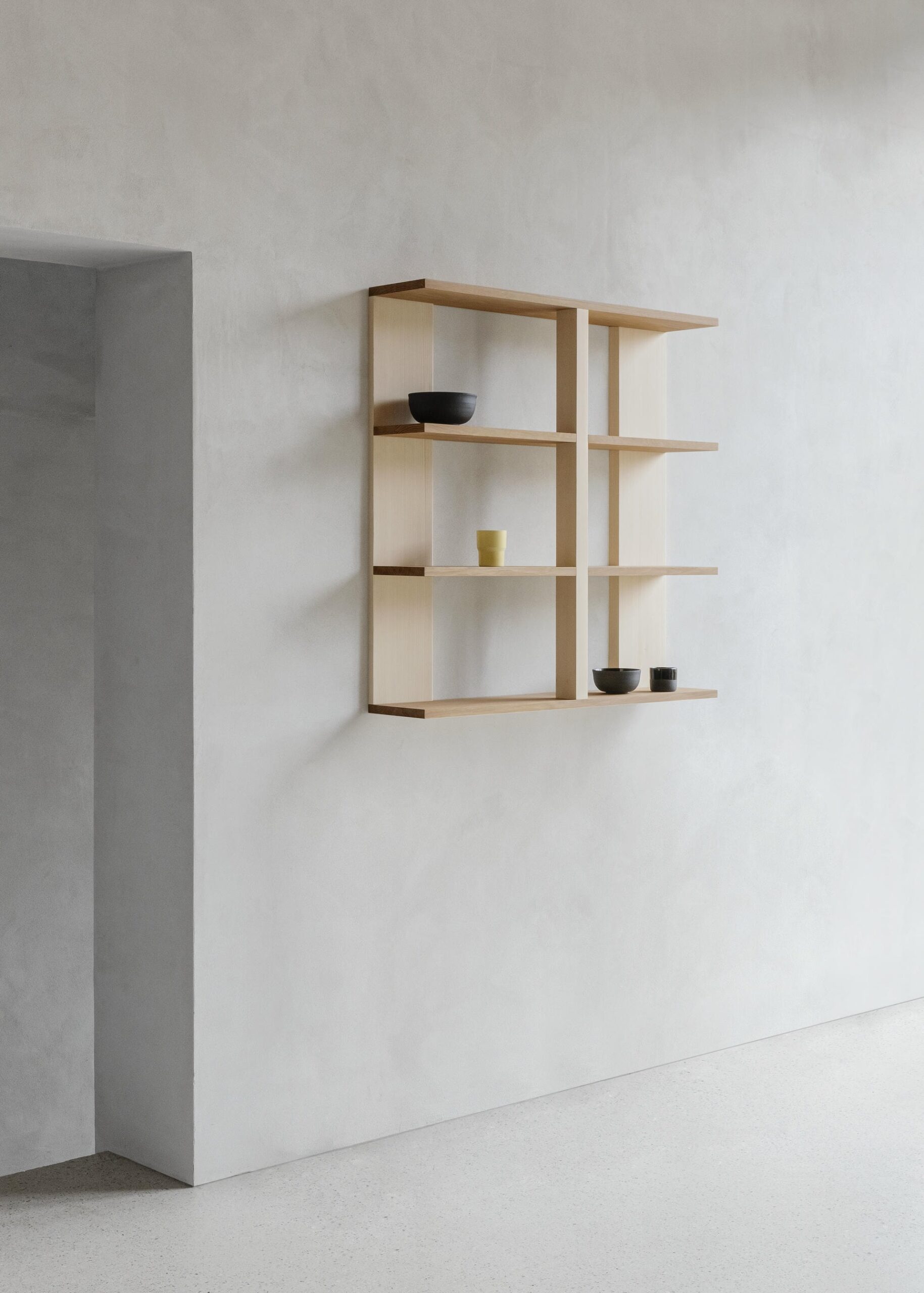
© Luca Caizzi
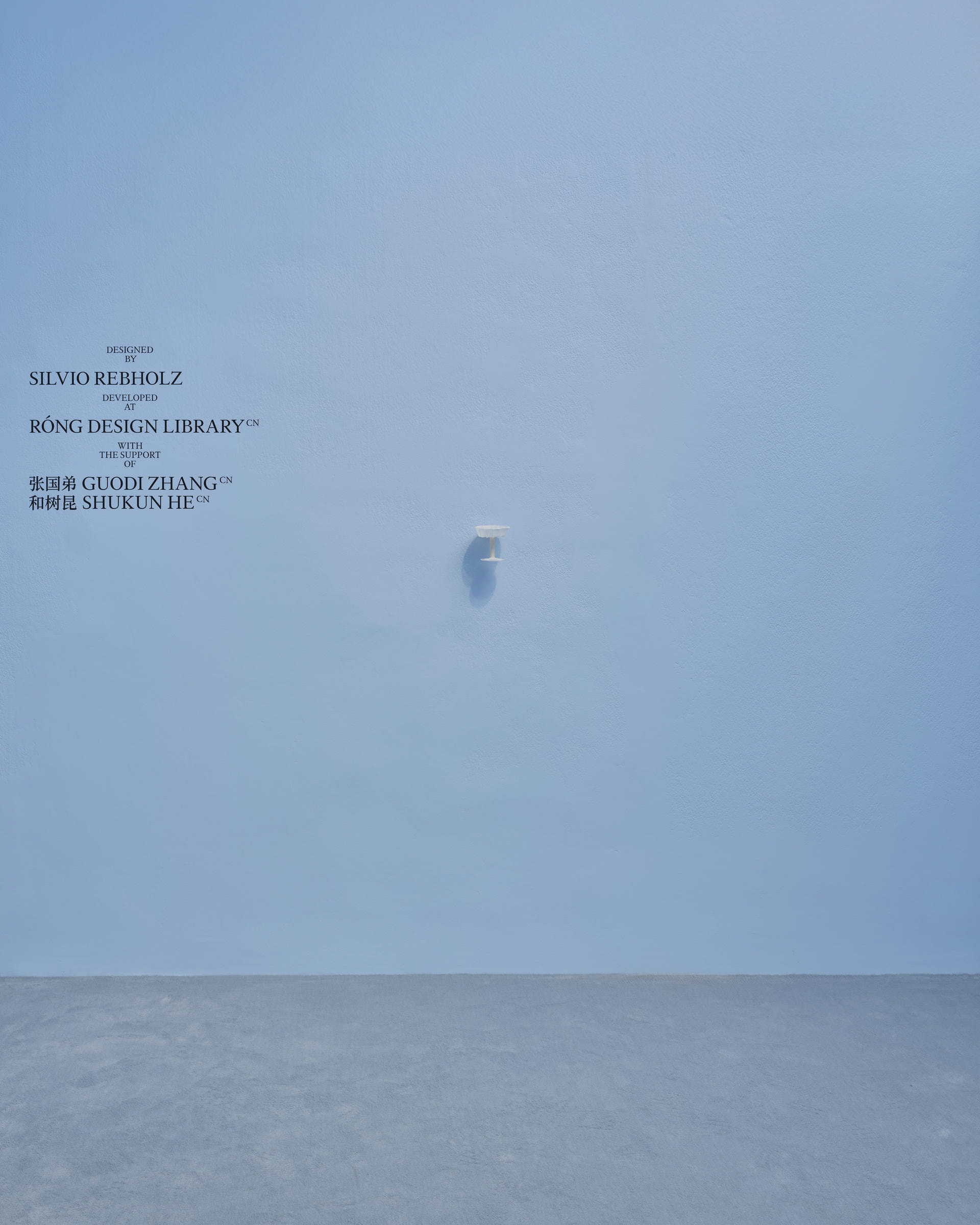
We translated their research into a large visual essay on the LED wall at the entrance.
Together with Nicolas Bernklau, we selected images from their collaborative process and the designers’ own words to create six videos, shown side by side as one collective piece.
The format highlighted the collaborative nature of the projects while revealing the different ways each designer works with craftspeople, industries, other creatives, and institutions around the world.
It was a very close collaboration from the beginning. Nicolas joined the project early, so the graphic identity and the spatial concept developed alongside each other rather than being treated as two separate layers.
Typography, image, colour and space were treated as parts of the same system, applied to both spatial assets and graphic design ones.
It depends on the project, but with Shared Matter, the initial idea was surprisingly precise from the beginning. The project went through a long process of refinement rather than a complete transformation.
Little by little, we defined the details, materials and proportions, but the final exhibition remained very close to what we had imagined months earlier. Of course, there are always surprises during installation, and you have to adapt quickly on site, but those were mostly small adjustments rather than fundamental changes.
A lot of problem-solving, and usually very quickly. The final days are about checking details, reacting to unexpected situations, and finding practical solutions together with the people building the exhibition. Sometimes that can also mean cycling to the nearest hardware store!
But what we enjoy most about installation is the human side of it. It is a very intense moment of collaboration between many different people. There are often curious neighbours passing by, asking questions, and you slowly start seeing the first reactions to something that has existed privately for months.
There is also a moment of letting go. After eight or ten months of working on a project, it slowly stops being ours. Once the doors open, it belongs to the designers, the visitors, and everyone who inhabits it.

© Luca Caizzi
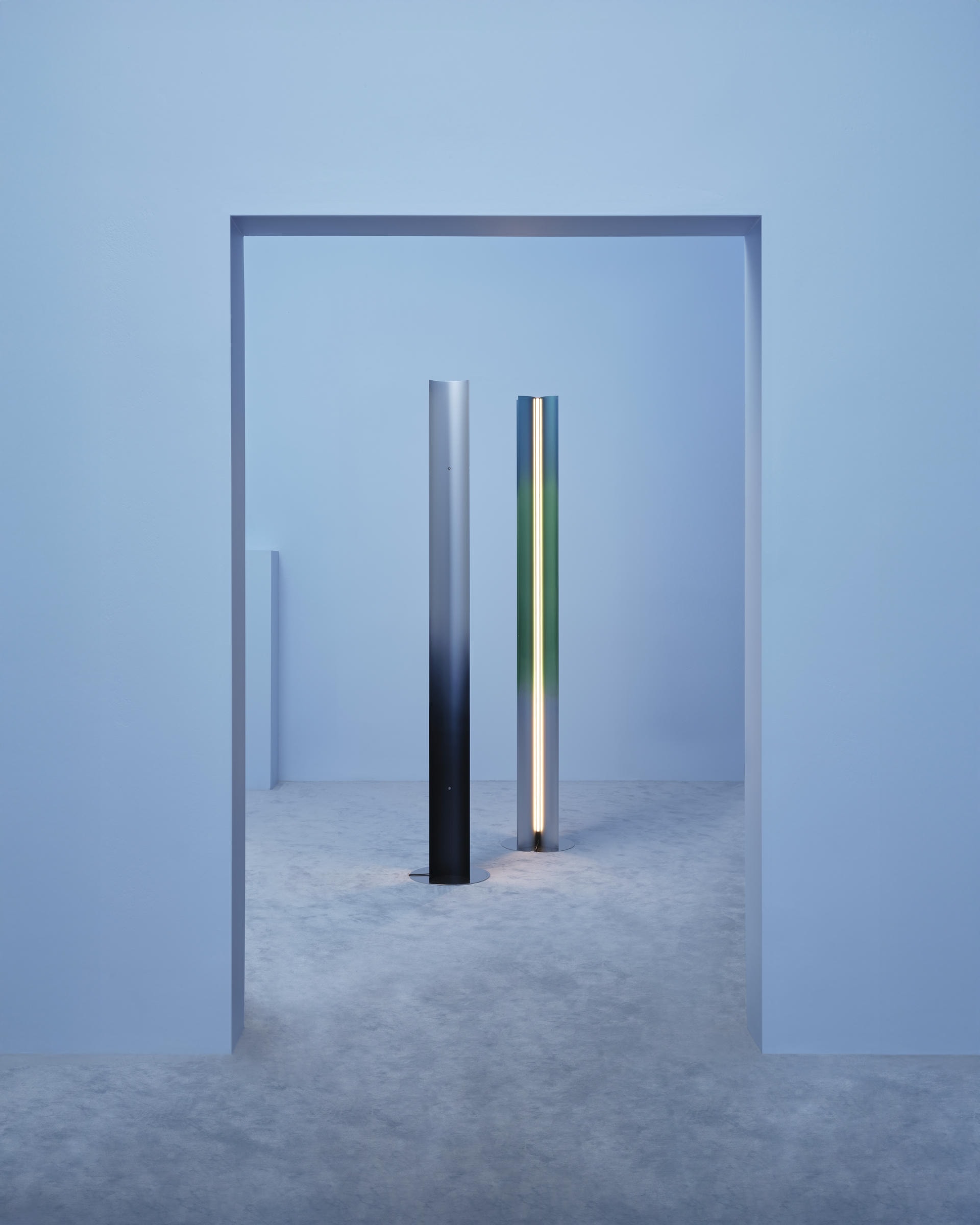

OFFSET, table lamp © Noé Cotter
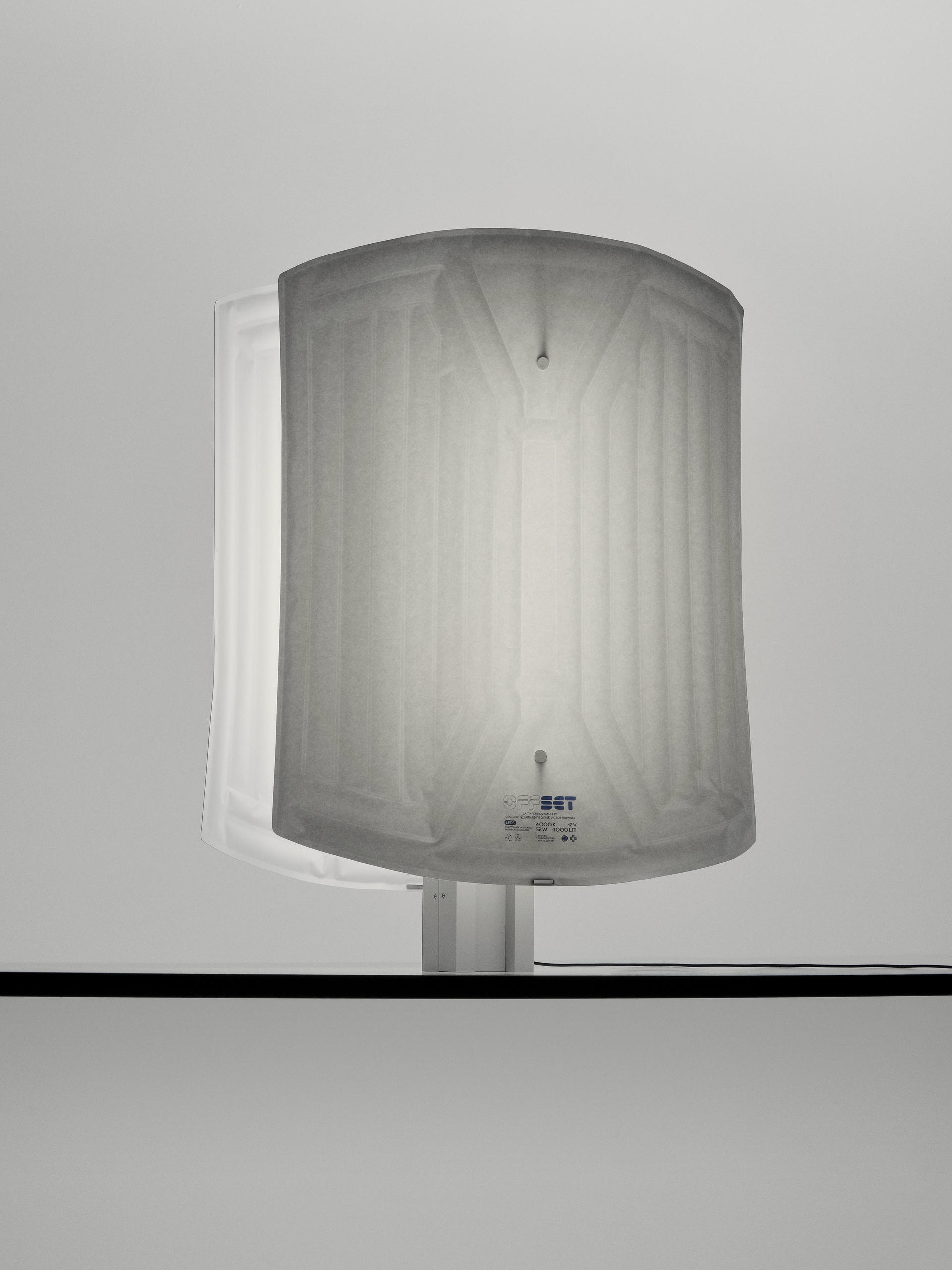
We do approach the objects we exhibit with the same attention we would give to our own work and try to create the conditions in which they can be seen at their best.
We also believe that an object can be self-explanatory. Material, light and space can already say a lot. Sometimes the best thing a scenography can do is simply give an object the conditions to speak for itself.
It’s always a question of balance. If the scenography is too discreet, the exhibition may not create enough presence or attract people in the first place. But if it becomes too expressive, it can easily overpower the work it is supposed to support.
With Shared Matter, for example, the title appeared at a large scale and diagonally across the entrance wall, to create an immediate visual presence. Once inside, however, the exhibition assets became much quieter. The objects were given more space and displayed in a subtle way.
For us, scenography can be expressive at the level of the whole experience while remaining generous towards the individual works within it.
Thank you so much Amandine and Victor, for this lovely interview!
Share article :