Dan Schneiger
Dan Schneiger is an American architect, artist, and designer whose multidisciplinary practice explores the intersection of architecture, sculpture, and collectible design. Trained as an architect at the University of Minnesota, Schneiger spent nearly two decades working on public, commercial, and residential projects before establishing his independent practice dedicated to sculptural furniture, lighting, and artworks. His work reflects an ongoing dialogue between architectural thinking and handcraft, creating pieces that balance structural precision with artistic expression.
Rooted in a deep appreciation for making by hand, Schneiger’s practice investigates the relationship between technology, materiality, and form. Rejecting the increasingly digital nature of contemporary design, he embraces traditional processes to create works that reveal the tactile qualities of wood, metal, and stone while maintaining a distinctly architectural language. Blurring the boundaries between art and design, his sculptural furniture and lighting embody a timeless sensibility shaped by craftsmanship, material honesty, and a refined understanding of space.
Interview
Milwaukee, WI, USA.
My mother was an art student in the mid-1970s, so I was surrounded by her ‘60s and ’70s art and design books as well as paint, clay, fabric, plaster, charcoal, canvas, and metals. I never played much with traditional toys, as those art materials became my playthings.
I was an architect for 20 years before transitioning to art and design in 2014.
I had been working as an architect for ten years when I bought a pristine mid-century modern home with white walls and large expanses of glass. I needed art—big art—so I became my first client. That decision changed the trajectory of my career.
My work is influenced by travel, architecture, and even classic films. When I start working on a new piece, I typically start with a sketch, or series of sketches, inspired by an image I have in mind. I often make physical models and mock-ups. Once I have a physical representation that I’m happy with, I will create a computer model that forces me to determine the details of how something is constructed.
I start work mid-morning until about 5:00 pm. After a short nap, I return to the studio in the evening to assess the day’s progress with fresh eyes and prepare for the next day.
My earliest works were fabricated from discarded construction materials I found on the job sites of my architectural projects. While I appreciate the noble materials, I have always been drawn to quiet materials such as wood and plaster. As an architect, I’ve always been more comfortable working with construction materials than traditional art supplies.
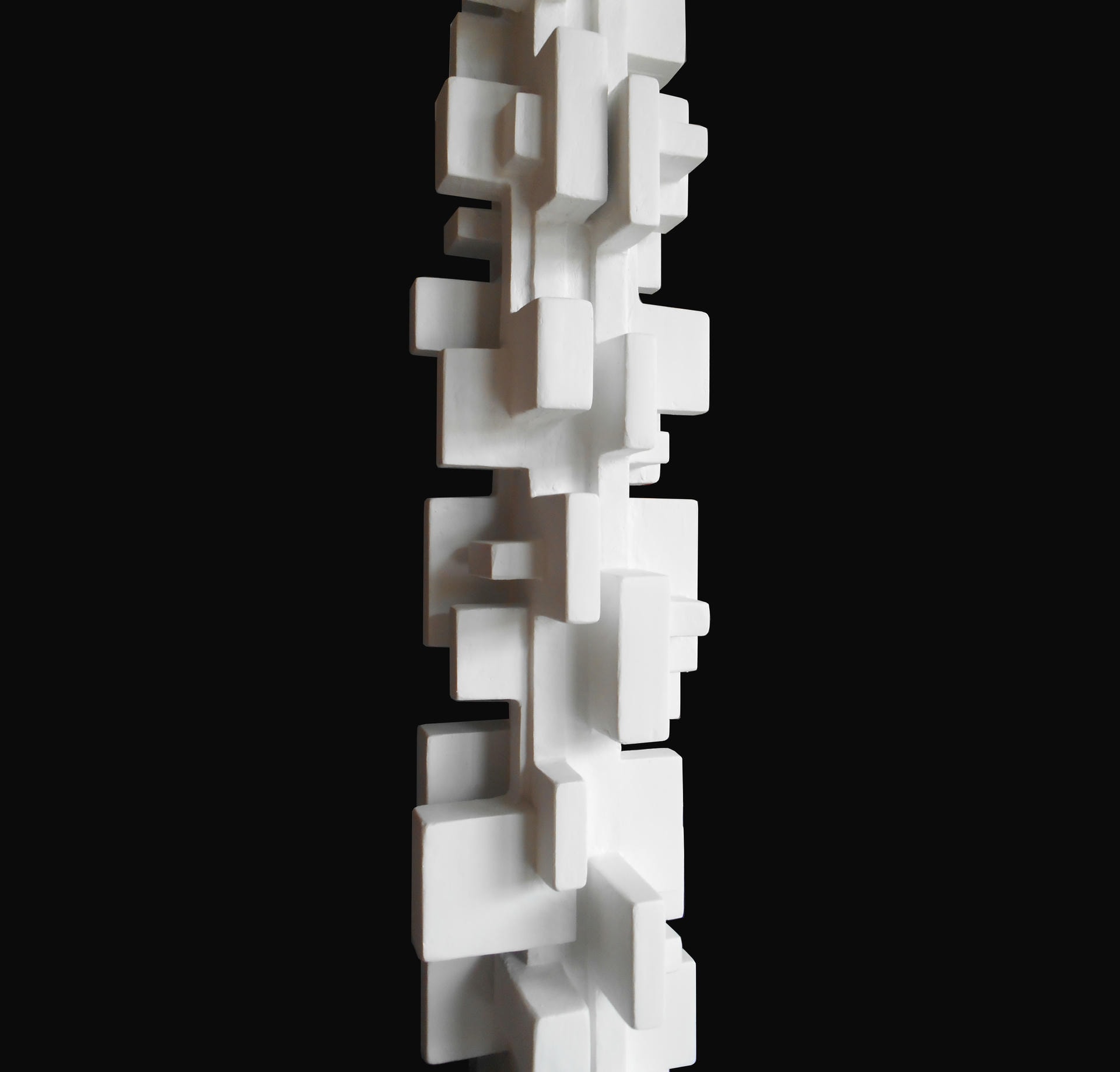
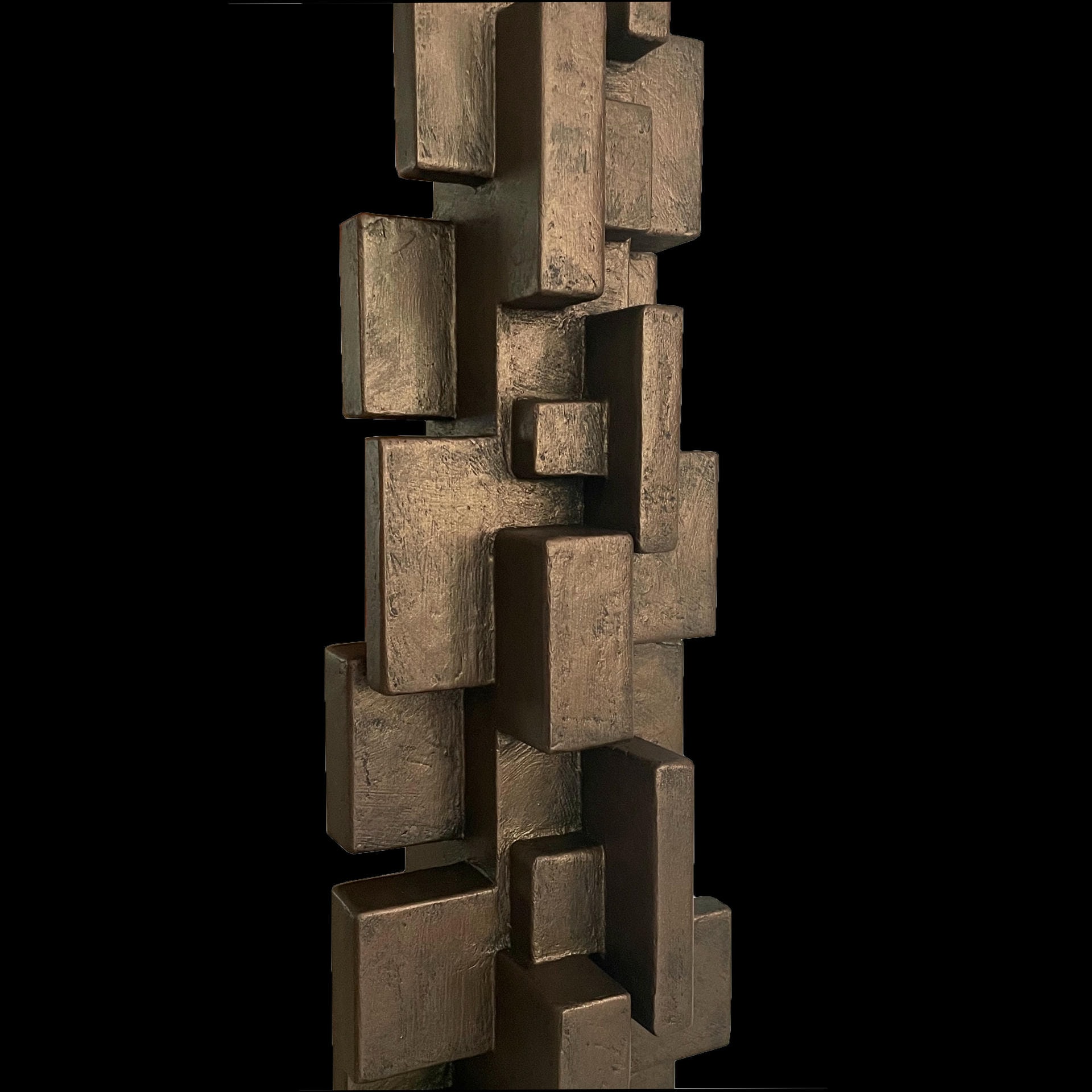
I make many wall sculptures that are monumental in scale but are not nearly as heavy as they look, much to the delight of interior designers. Because of the relatively light weight, the wall sculptures are easy to ship and install.
I would suggest that young designers always be conscious of the inherent properties of the materials they work with and exploit those properties as a means of expression.
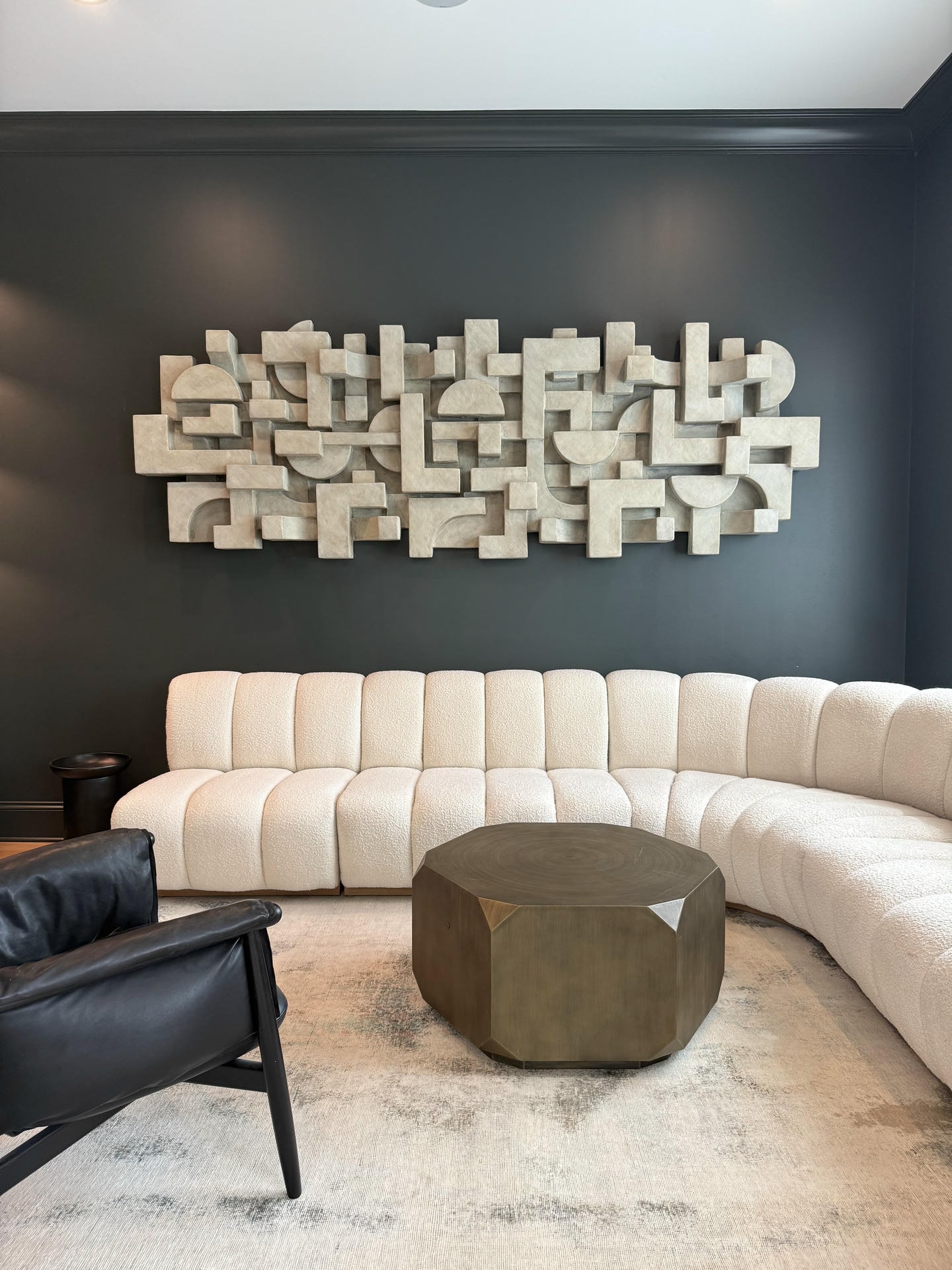
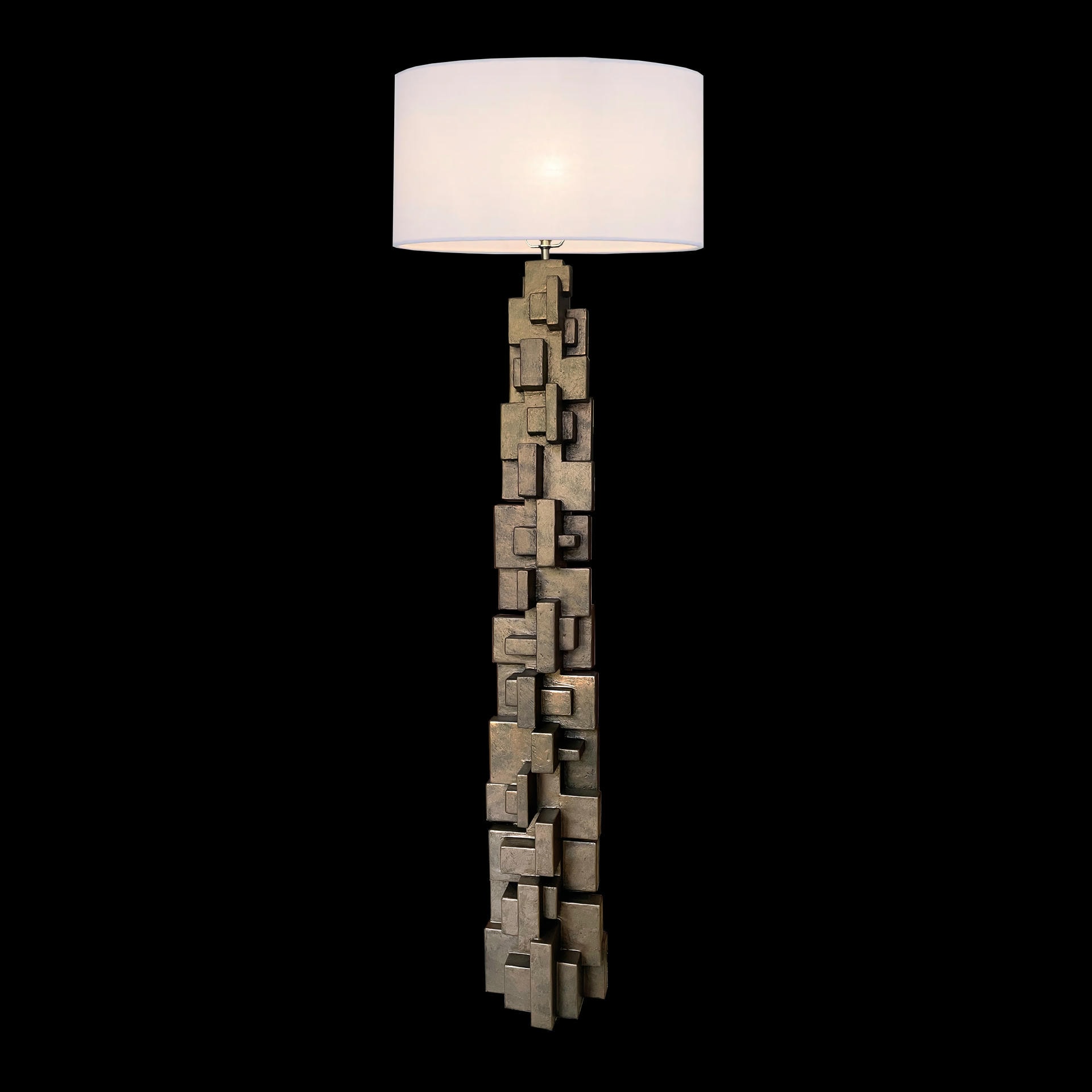
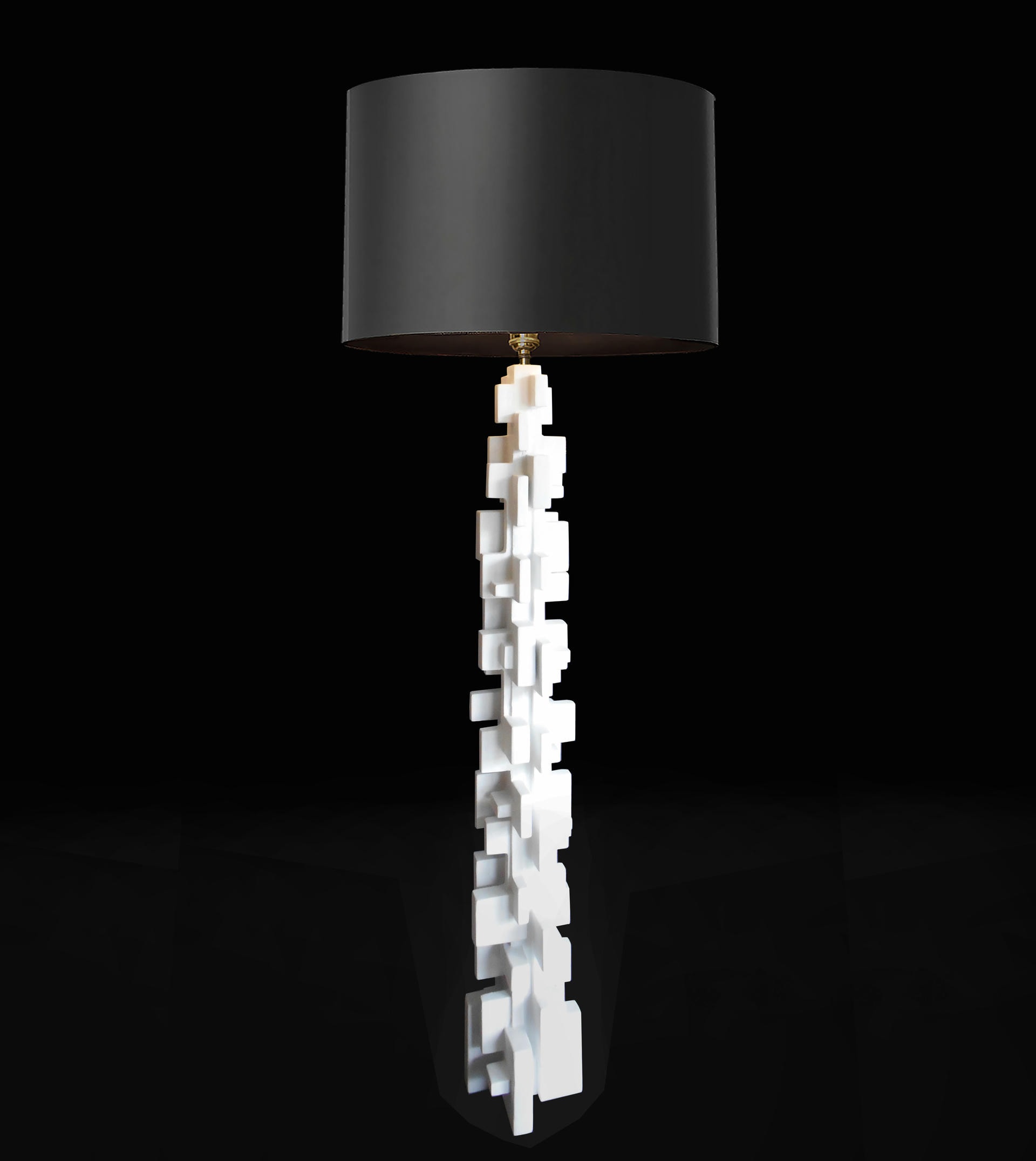
The brutalist period of the 1970s.
I tend to lump architects, designers, and artists together, and I consider myself to be all three. Some who have influenced my work are Antoni Gaudí, Paul Evans, Louis Kahn, Aldo Londi, Carlo Scarpa, and Peter Lane.
Same as above.
Same as above.
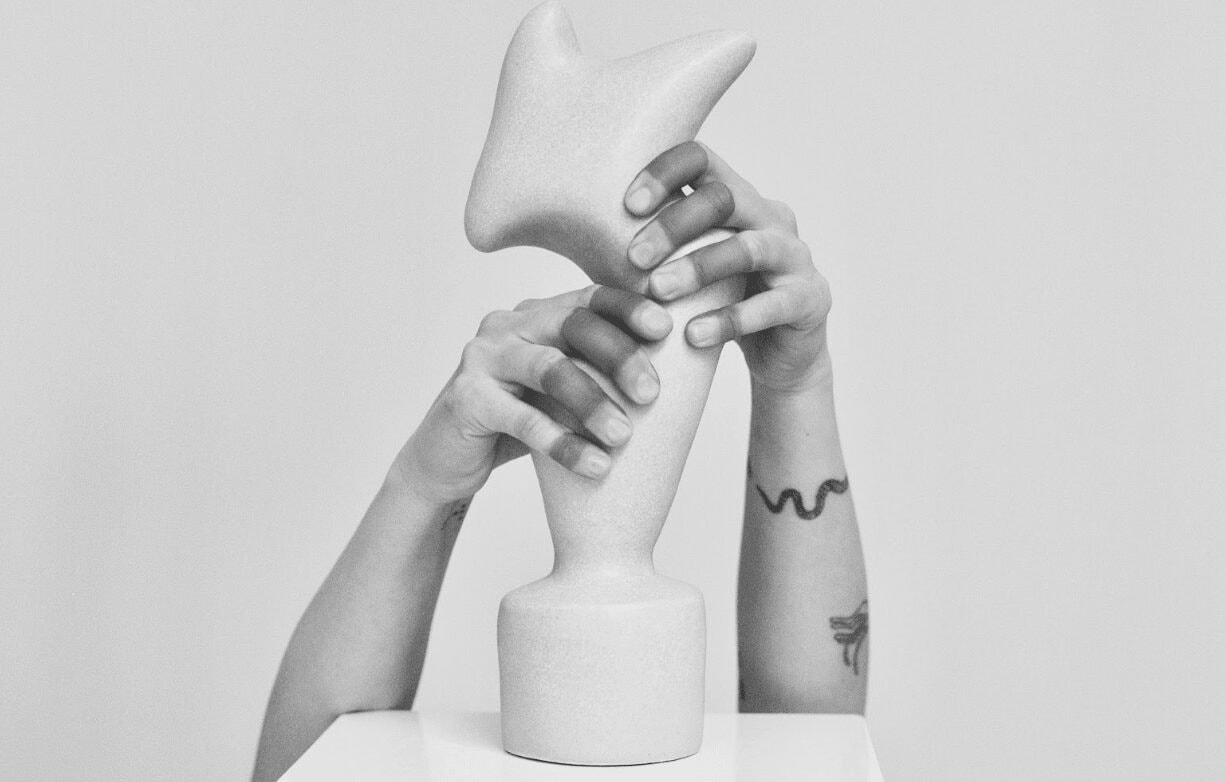
My creations are tectonic objects that explore the symbiotic relationship between art and architecture and the tension between technology and handcraft.
Having entered the architecture profession at the transition to computers, I quickly learned that the modern design process had been upended: no more hand drawing or physical models. Computers increased the separation between how we design architecture and make art. That compelled me to make things with my hands that were architectural while consciously denying the impact of computers and conformance to the contemporary design process. My work is the product of the now modern archaic design process applied to the making of contemporary art.
“I tend to lump architects, designers, and artists together, and I consider myself to be all three.”
The Questions
(The Proust Questionnaire is a set of questions answered by the French writer Marcel Proust.
Other historical figures who have answered confession albums are Oscar Wilde,
Karl Marx, Arthur Conan Doyle, Stéphane Mallarmé, Paul Cézanne…)
An uncomplicated life
Heights
I love everything about myself. Doesn’t everyone?
Ignorance
Patti Smith
Travel and buying art when I’m travelling
As I write this, I’m on vacation. Plug pulled!
Chastity
Empathy
Confidence
“I don’t know.” (according to my husband)
Being fluent in German
A few crunches wouldn’t hurt
Transitioning from my career in architecture to being a designer, sculptor, and architect
An isopod
Amsterdam
A huge cubist painting of my siblings and me done by my mother in 1976
Working exclusively on a computer, in an office, every day
Industrial designer
Impatience
Calling instead of texting
I refuse to answer this question on the grounds that it may incriminate me
Luke Skywalker
–
Barack Obama
Jake, Hamish, Lisl
Blind loyalty
Not getting to know my parents better as adults
Taking a sunbath on a houseboat in Amsterdam on a cool Fall day with my husband by my side
In the words of the inimitable Judge Judy, “‘Umm’ is not an answer.” (Did I mention that I’m impatient?)
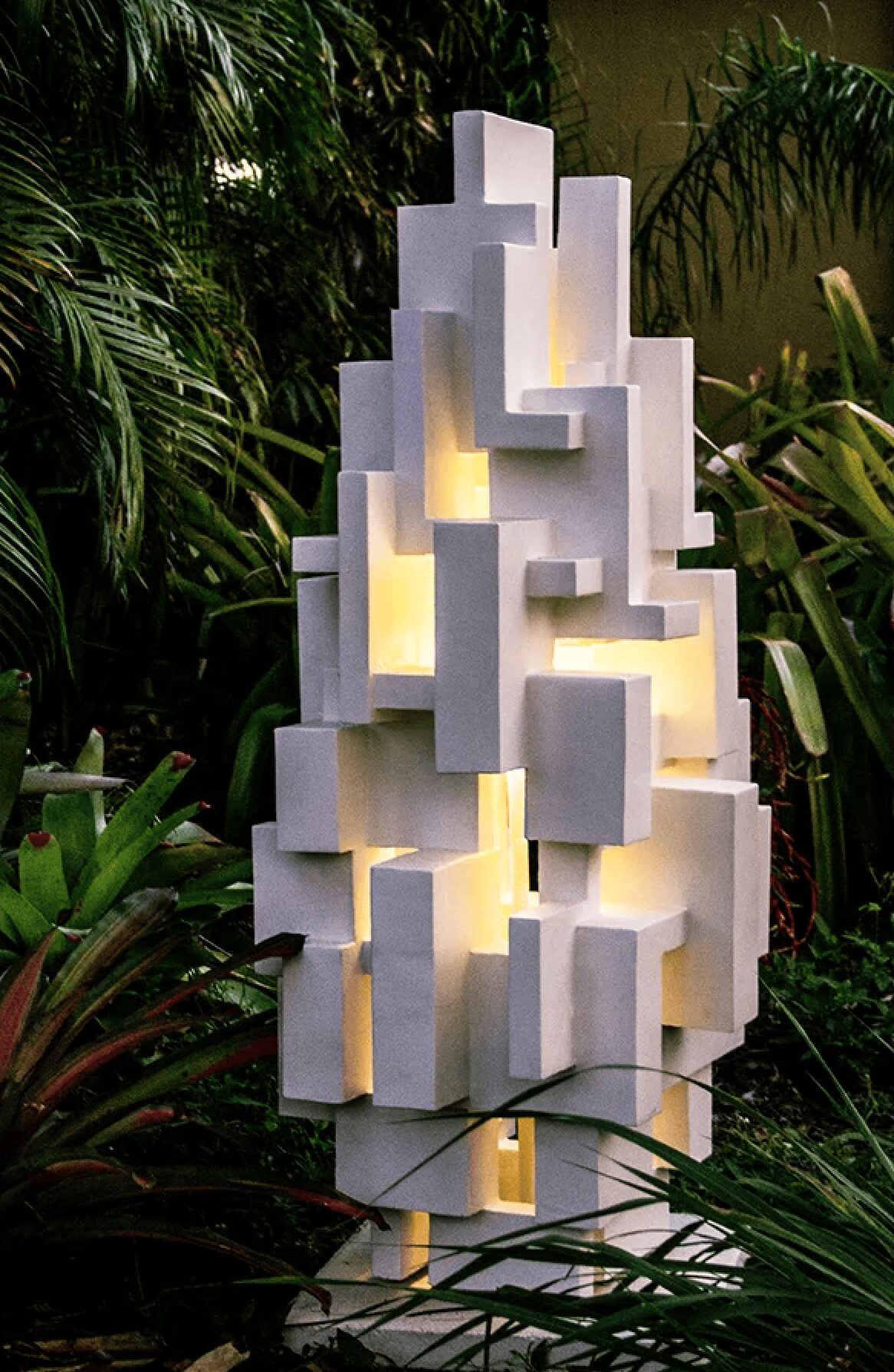
“I needed art—big art—so I became my first client. That decision changed the trajectory of my career.”
SHARE :