Anonima/Luci
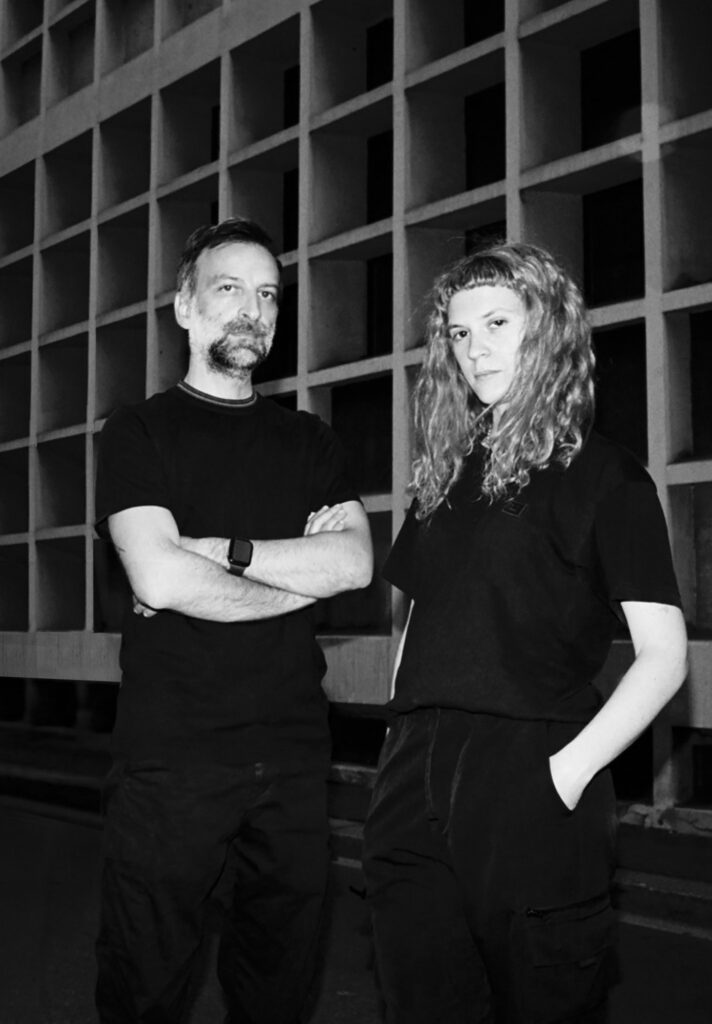
Anonima/Luci is a lighting design and light art studio founded in Milan in 2018 by Alberto Saggia and Stefania Kalogeropoulos. Alberto’s background in industrial and lighting design complements Stefania’s training in architecture and exhibition design, bringing together attention to technical detail and an understanding of space and human experience. Working across architectural lighting, product design and artistic installations, the studio explores how light shapes atmosphere, perception and movement.
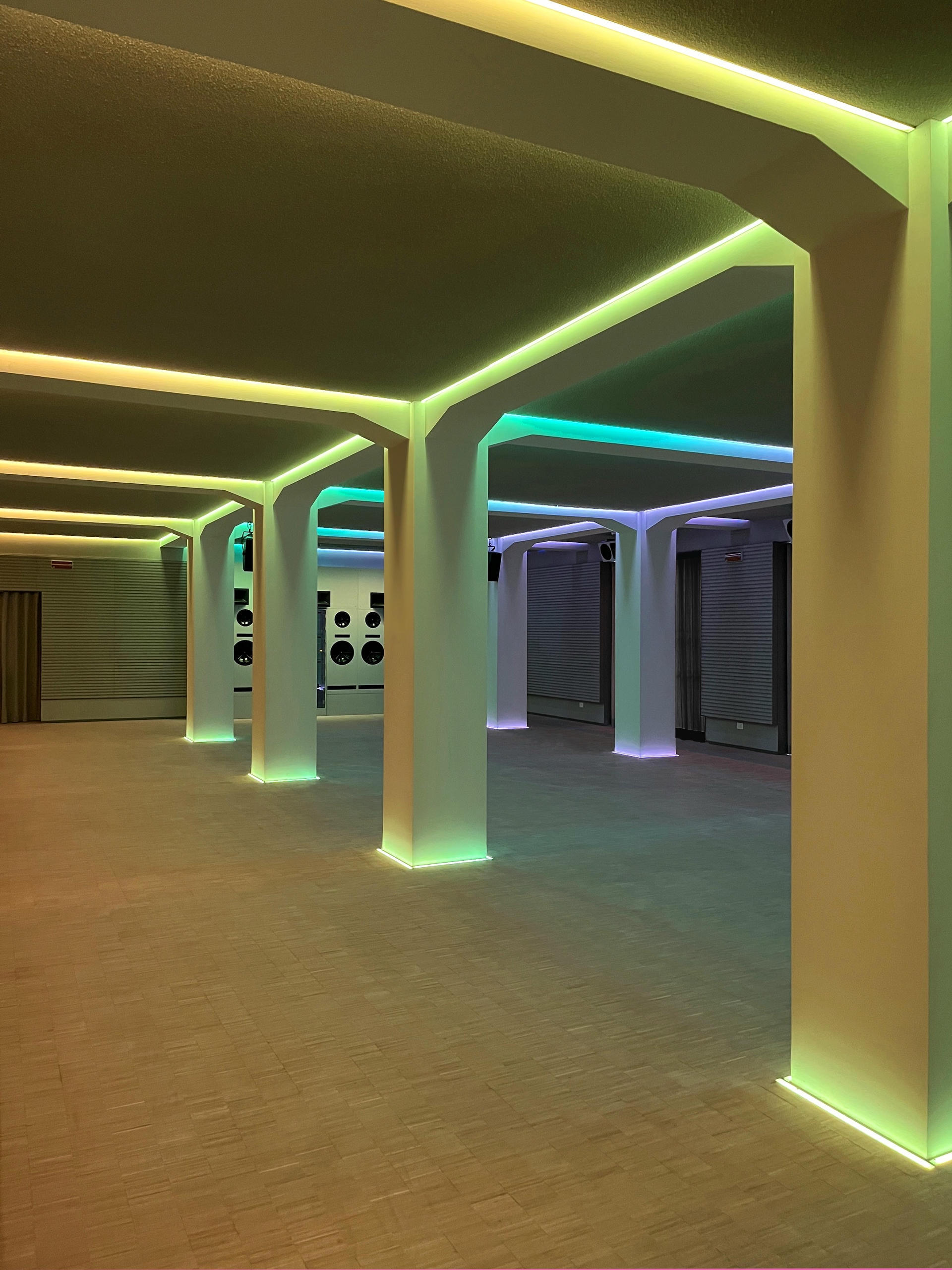
Their practice develops through research, prototyping and physical testing, with close collaboration between sound artists, engineers and technical developers. From programming light and sound to integrating optics, electronics and cabling, their work involves translating an initial concept into a functioning installation. Projects such as the lighting system for Voce at Triennale Milano reveal this balance between technical precision and spatial sensitivity, creating flexible environments in which the systems behind the experience remain discreet.
INTERVIEW

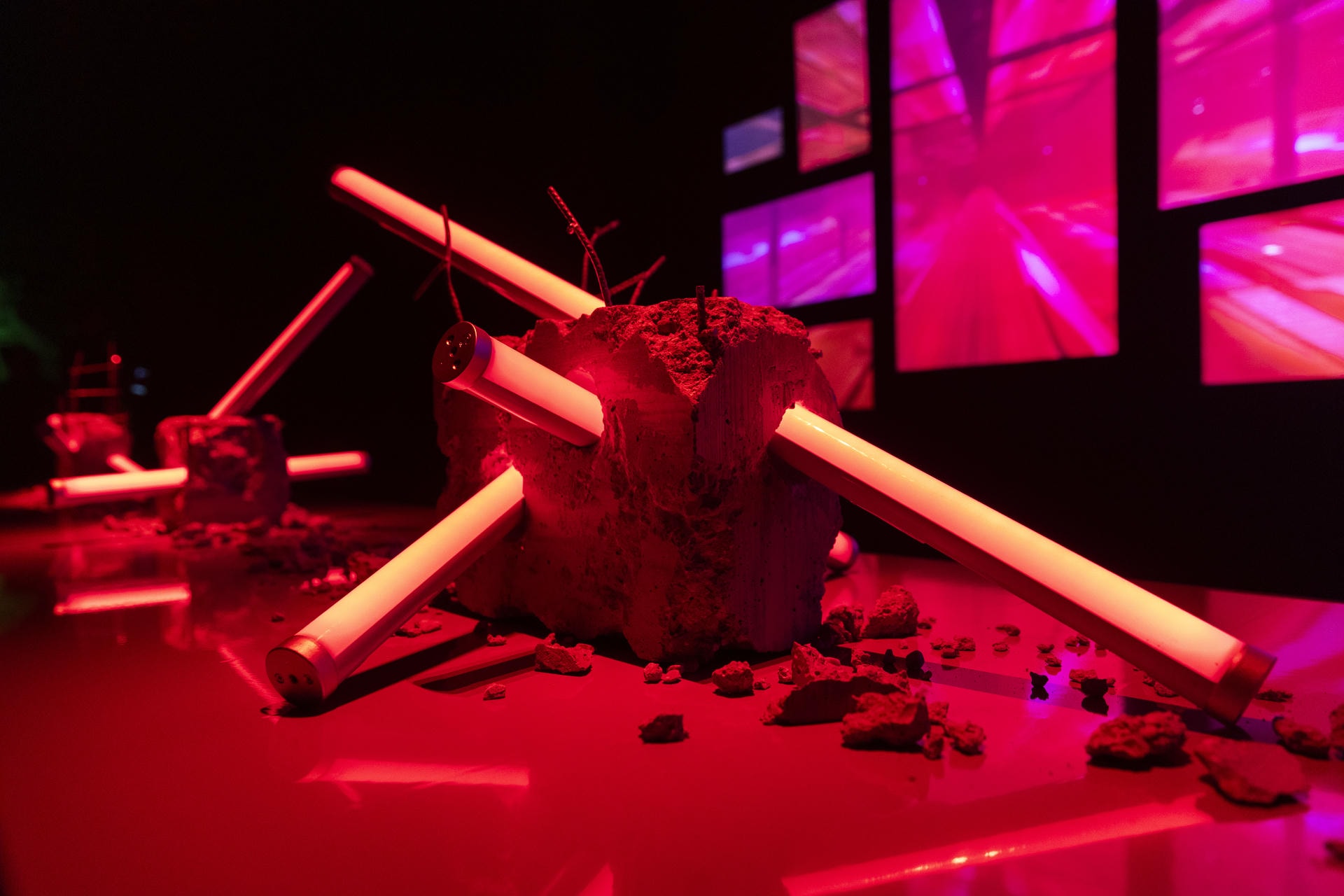
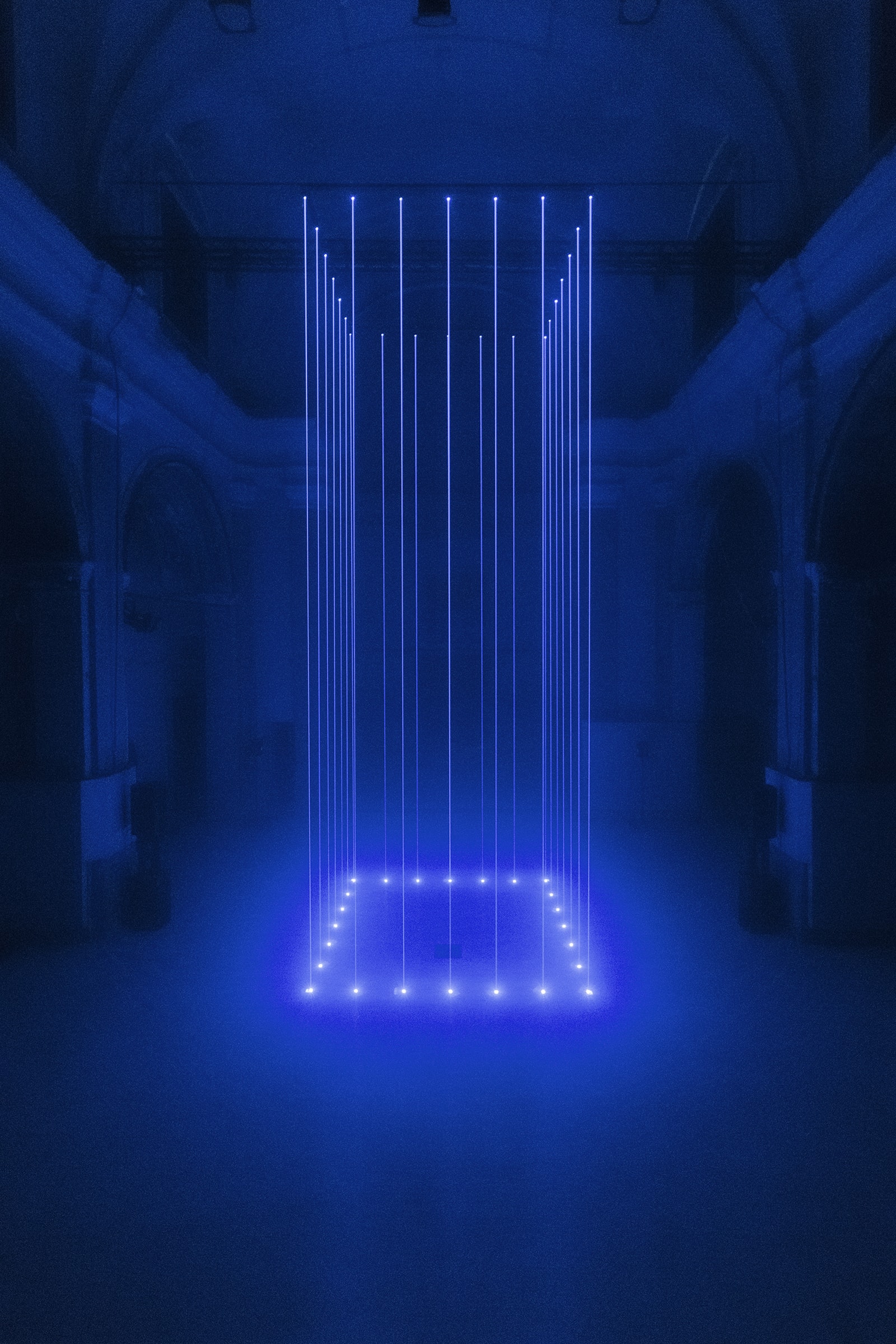
CHROMATIC RESONANCES © Anonima Luci
Visual simplicity is often the result of a rather complex process. We usually start from an idea or a very intuitive image and try to understand how it can become a real experience without losing its immediacy. From there, the process involves research, drawing, prototyping and experimentation, with aesthetic, spatial and technical aspects developing together.
For light installations, this means working extensively with the source, materials, optics, electronics and control systems, but also with the way each element interacts with the surrounding space. A significant part of the process happens through physical testing: it is often only by seeing the light in real conditions that we understand what truly works and what needs to change.
We also try to maintain a direct relationship between the initial idea and the final result, removing anything that is not necessary. In this sense, complexity does not necessarily need to be visible: ideally, it should remain behind the scenes, while what reaches the audience is a simple, precise and immediate experience.
Our collaboration began at the intersection of two different, yet complementary, backgrounds. Alberto comes from product and lighting design, while Stefania has a background in architecture and exhibition design.
We started working together through a shared curiosity: looking at light not simply as a technical element, but as a tool capable of shaping space, atmosphere and perception.
Over time, this difference in perspective has become one of the defining aspects of Anonima Luci. On one side, there is a strong focus on detail, products, technology and the physical qualities of light; on the other, a sensitivity towards space, narrative and the experience of moving through it. In our work, these two perspectives are never really separated, but constantly influence and challenge each other.
We believe that designing light means moving between architectural scale and detail, between technique and intuition, and between what light reveals and what it can deliberately leave in shadow. It is precisely this tension between different disciplines that has shaped the language of Anonima Luci.
When we start a new project, we first try to understand the space and what is meant to happen within it. We look at the architecture, materials, proportions, circulation and relationship with natural light, but most importantly at how the space will be experienced and inhabited.
We also try to understand the context and identity of the project: who will use it, what its purpose is and what kind of experience it aims to create.
From these observations, we develop an initial lighting concept, which we then explore through sketches, tests and experimentation. Only then do we move into the more technical aspects.
For us, light is not something added at the end, but a design tool capable of shaping atmosphere, hierarchy and the perception of space.
Collaborating with people from different disciplines is a fundamental part of the way we work. We believe that bringing together different skills and perspectives can take a project somewhere we could hardly reach on our own. For this reason, we try to involve collaborators from the early stages, when the idea is still open and can be influenced by their expertise and sensitivity. Their involvement naturally varies from project to project: sometimes we work together from the very beginning, while in other cases specific collaborators come in at a later stage, once the concept has been established.
With sound artists and musicians, for example, we are interested in creating a relationship between light and sound that becomes a coherent experience rather than simply a sum of different elements. With engineers and technical developers, dialogue is essential to transform an idea into a system that can actually work in the real world, especially in institutional and permanent spaces such as Voce at Triennale Milano, where strict technical and regulatory requirements need to be addressed.
In every case, we try to create a shared process where each discipline can challenge and enrich the others.
The physical space has a fundamental influence on our work. Even when a project starts from a very precise idea, the initial site visit is an essential part of our design process. We try to get to know and observe the space before we start designing, allowing ourselves to be inspired by its proportions, materials, existing light, sounds and overall atmosphere. Often, these very characteristics suggest a direction or reveal intuitions that become an integral part of the project.
For this reason, we usually arrive at the installation stage with a deep understanding of the space and firm control over the project. We have therefore never had to significantly change an idea during the installation, as the dialogue with the site begins from the very start of the process.
Naturally, the moment when the lights are switched on remains very significant, as it is often also the first time we see the installation complete and functioning in its final form. Most of our works are site-specific and are created for the first time directly in the space for which they were conceived. It is therefore a moment when, rather than redefining the project, we can finally experience it in reality and see the original idea come to life within the space.

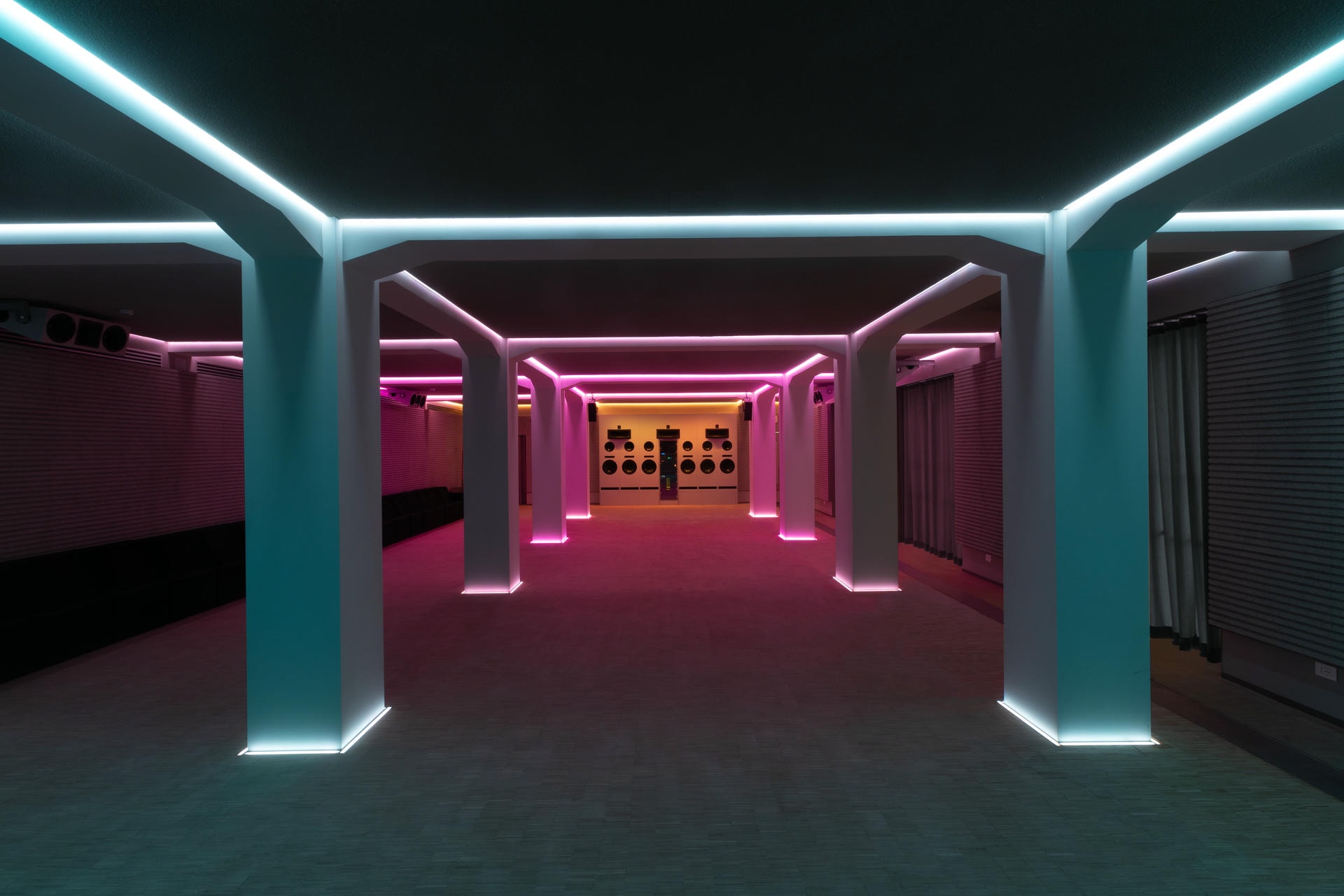
TRANSITIONS © Anonima Luci
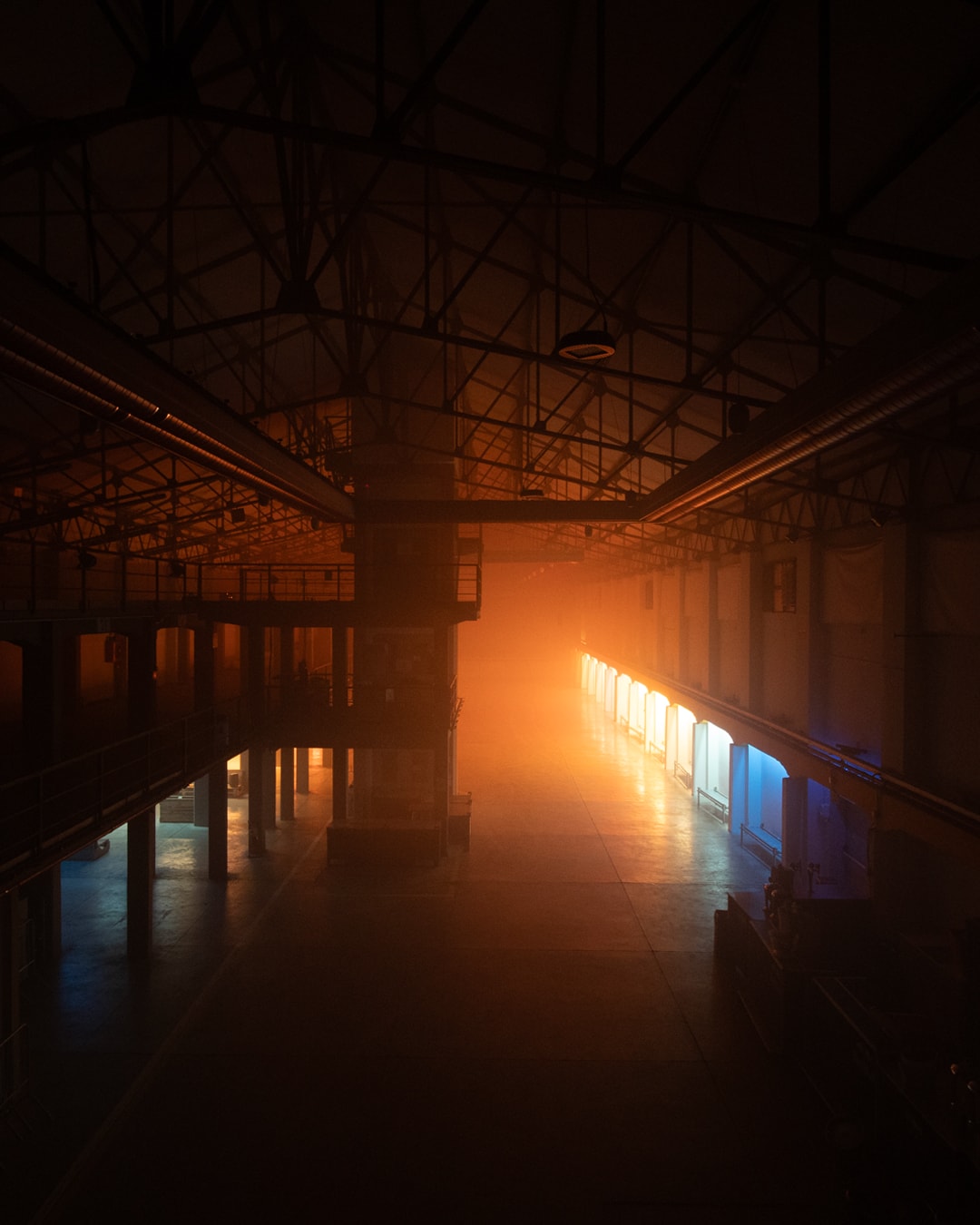
For Voce, our starting point was understanding the changing nature of the space itself. Voce is not dedicated to a single function, but hosts different experiences and programmes connected to music and listening. For this reason, we designed a highly flexible lighting system, capable of adapting to different configurations and atmospheres.
We did not want light to be simply a functional element, but something that could actively contribute to the listening experience and the perception of the space. Our relationship with sound is therefore more atmospheric than literal: light does not directly follow or translate the music, but creates the conditions for listening to become more immersive and focused.
We worked on the possibility of gradually transforming the space, moving from brighter and more functional situations to more intimate and focused environments, and eventually — thanks to a custom interface developed specifically for Voce — allowing light and sound to be synchronised, bringing two senses together within the same immersive experience. In this sense, light becomes a tool capable of accompanying different moments and giving a new identity to the same space each time.
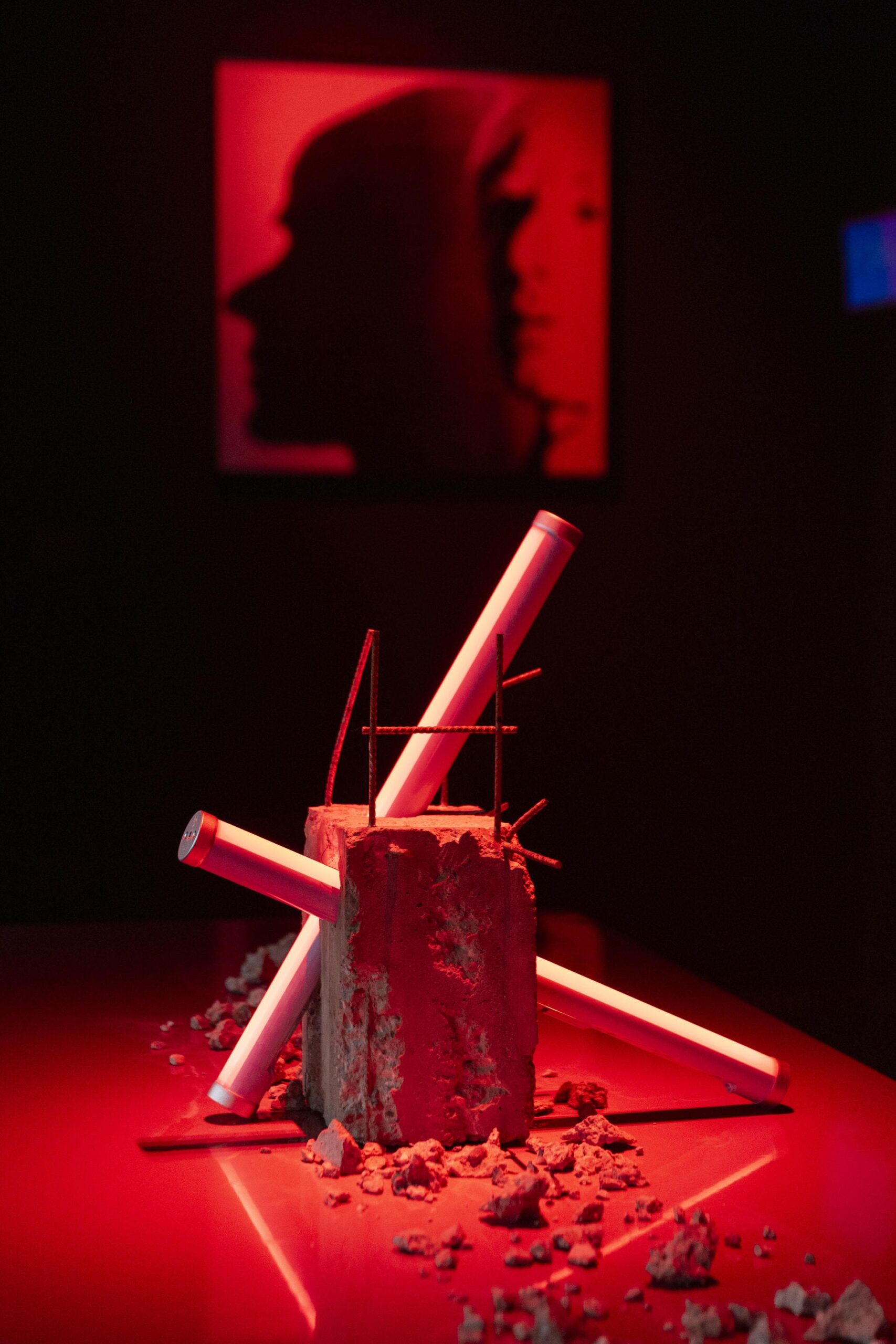
For us, there is no fixed rule about how much presence light should have within a space. It always depends on the project, its function, and the experience we want to create.
In some cases, light should almost disappear, supporting the space in a discreet way and allowing the architecture, objects or people to take centre stage. In others, it can become a central element itself, capable of defining the space and creating a specific atmosphere. The important thing is to understand what role light should play within the project and find the right balance with all the other elements.
We do not necessarily think of light as something that always needs to be visible: sometimes its most interesting role is precisely to operate without being noticed, influencing the perception of a space in an almost unconscious way.
For us, technology is a fundamental tool, but it should never be the starting point or the ultimate goal of a project. Often, behind a very simple and immediate experience there is a rather complex technical system, but we believe that this complexity does not necessarily need to be perceived by the audience.
We always start from the atmosphere, emotion or condition we want to create, and only afterwards look for the most appropriate technical tools to make it possible. Technology gives us greater control and flexibility, but we try to use it in an almost invisible way, allowing the experience itself to remain at the centre.
For us, a project works when its technical component is fully integrated and does not need to be explained: what matters is what people perceive, feel and experience within the space.
First of all, the programming phase: while one might imagine it to be a complex process, in our A/V installations it often becomes even more intricate, as it is not a standard procedure but a form of actual composition: starting from the sound wave, we work almost as if we were writing a score, with its own rhythms and beats, programming and controlling hundreds of lasers and creating A/V loops that can last several minutes, each of which requires several days of programming.
Behind an apparently simple installation, there are often days of material preparation, light and sound programming, and installation. Beyond programming, it may seem like a minor detail, but laying out and managing cables is often one of the most time-consuming parts of building an installation. With site-specific works, we may have to install, for example, 150 lasers, each requiring its own power cable to be carefully laid out, secured and hidden from view as much as possible.
For us, it is essential that the entire technical infrastructure remains almost invisible, leaving space for the installation itself and the experience we want to create. When the same operation has to be repeated hundreds of times, it becomes easy to understand how much time and attention this process requires. These are certainly some of the least visible parts of the work, but probably also the ones that take much more time than people might imagine when looking at the final result.
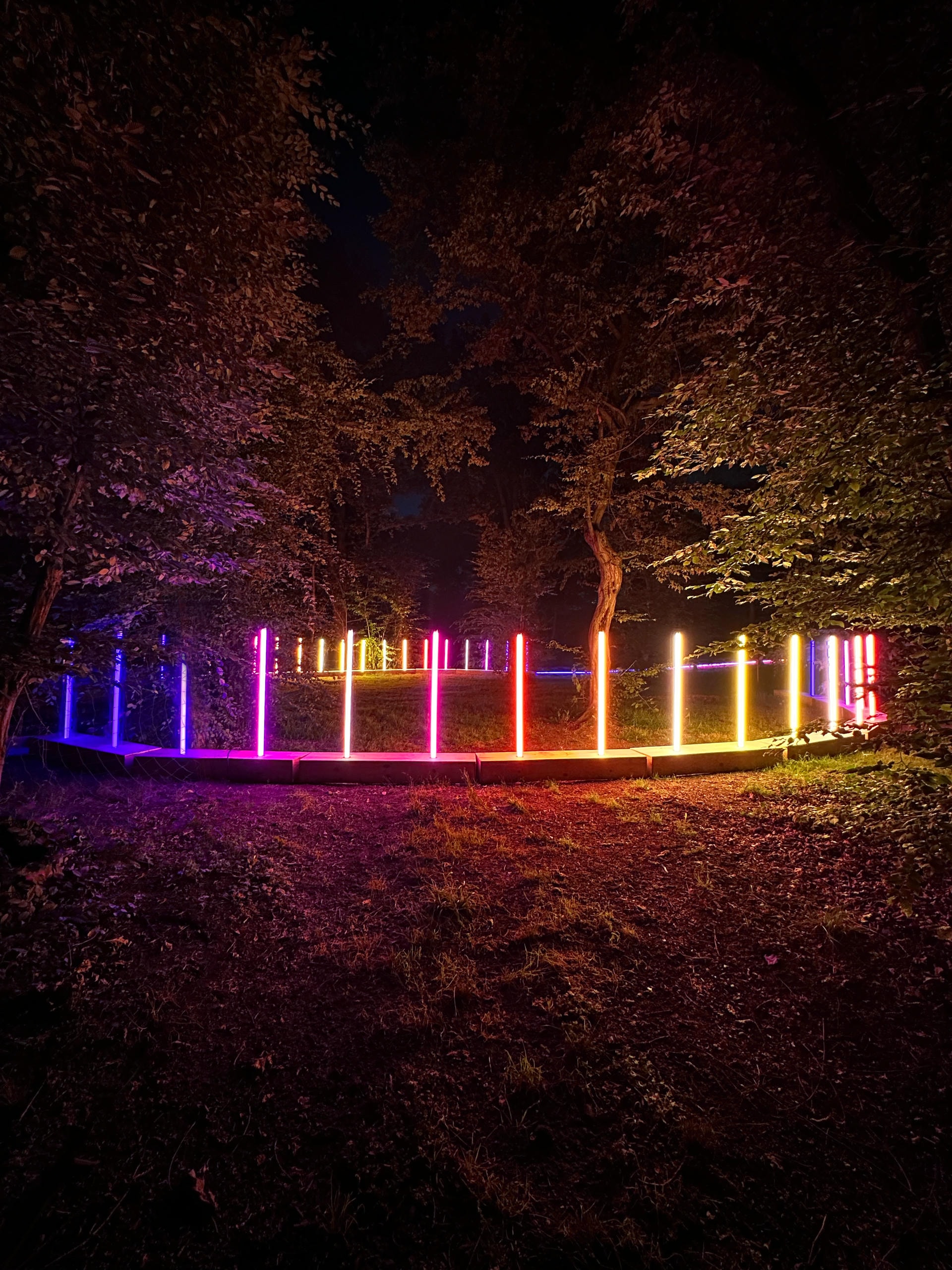
The movement of people is something we consider from the very early stages of a project, especially because many of our installations are perceived differently depending on the point of view and the way they are experienced while moving through them.
We therefore try to imagine not only what someone sees when entering a space, but also how their perception can change as they move through it.
Sometimes we design more defined paths, while in other cases we prefer to leave greater freedom, allowing each visitor to construct their own experience. In this sense, light can suggest a direction, create points of attraction or alter the perception of distance and proportion.
For us, movement is therefore not something we only discover at the end, but an element that is part of the design process itself and contributes to shaping the experience of the installation.

MEET ME HALF WAY © Anonima Luci
Thank you so much Alberto and Stefania, for this lovely interview!
Share article :