Beatriz Bolibar
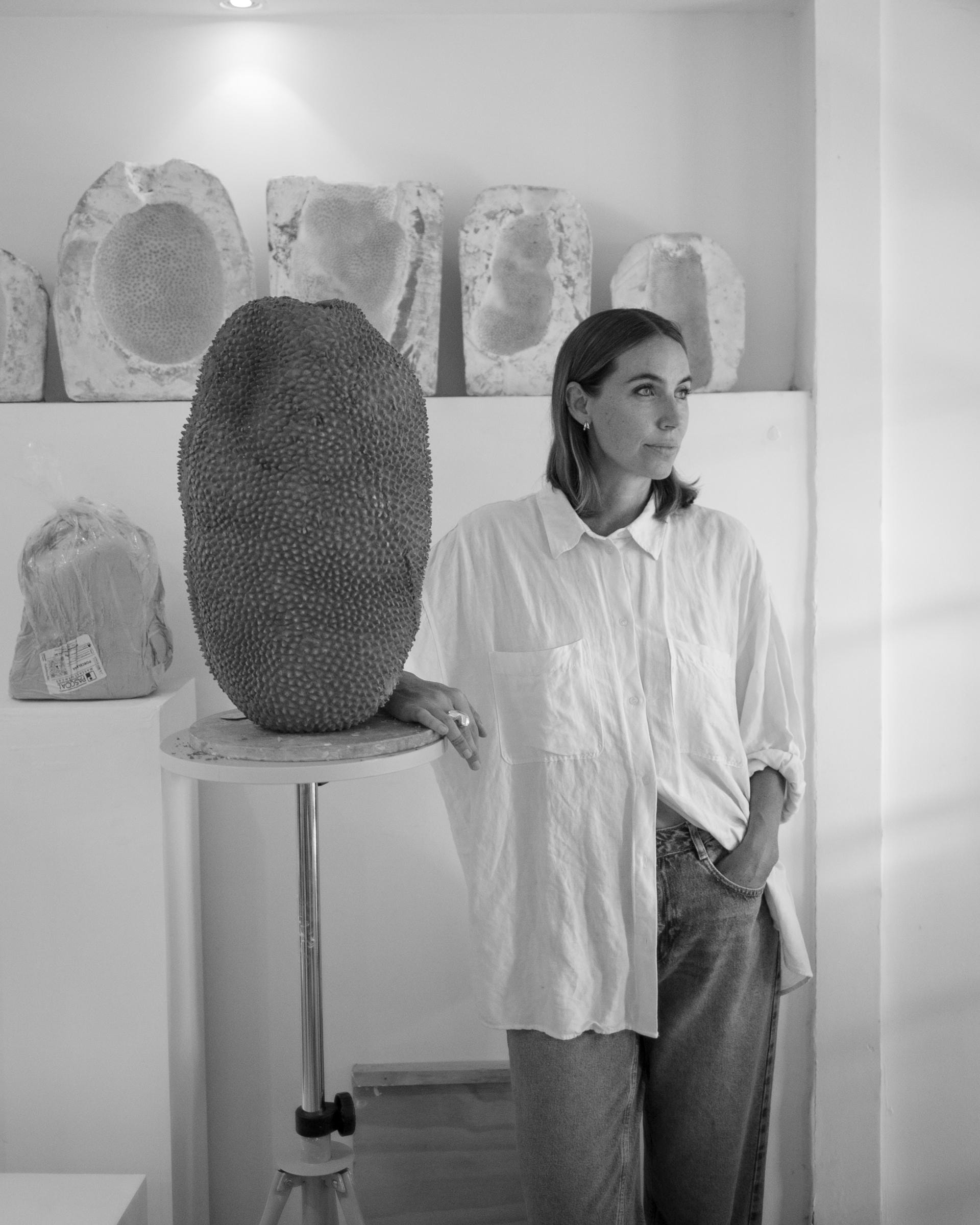
Beatriz Bolibar is a Barcelona-based interior designer and ceramic artist, and the founder of Cuit Studio. Trained in Interior Design at BAU and later completing a master’s degree in Hospitality Design at Elisava, she developed her early career working across high-end kitchens, as well as bars and restaurants in Amsterdam. While her professional path initially unfolded within hospitality, her focus gradually shifted toward the home — intimate, lived-in spaces shaped by light, material, and everyday rituals.
Working with ceramics since the beginning of her career, Bolibar developed a parallel practice that has become central to her work. What began as an intuitive and personal exploration evolved into a tactile extension of her spatial thinking, allowing her to move between scale, from architecture to object.
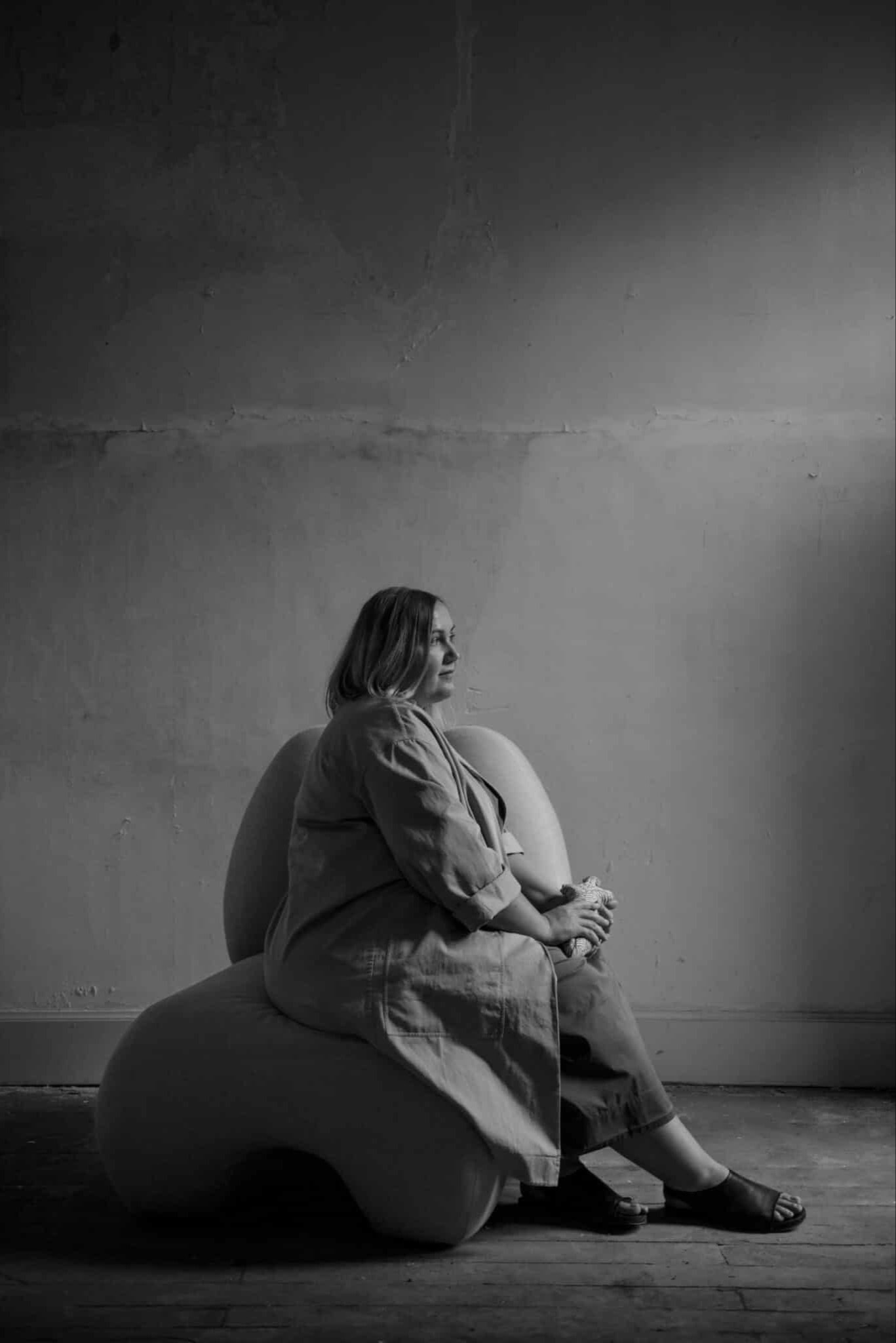
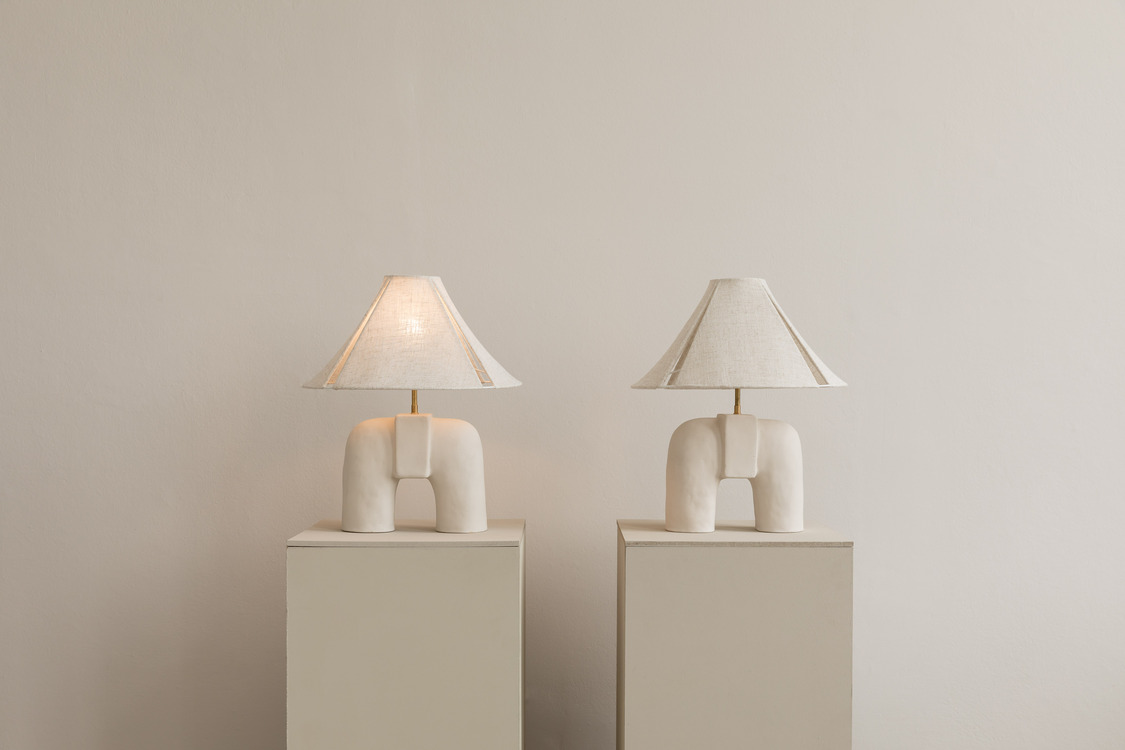
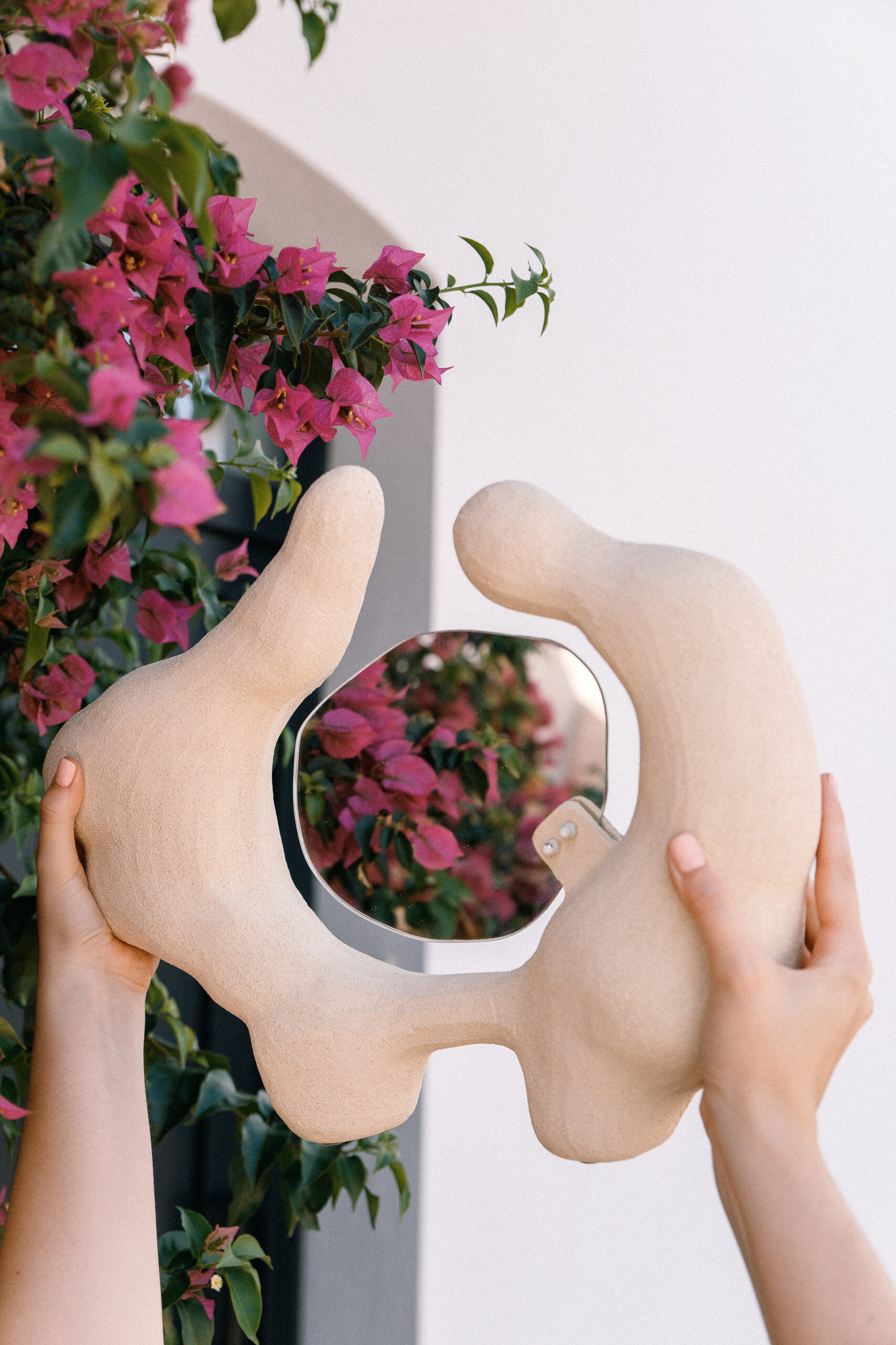
Through Cuit Studio, she brings together interior architecture and hand-built stoneware pieces — often conceived as lighting, vessels, or quiet sculptural forms that inhabit domestic environments. Her work is guided by a slow, material-driven process rooted in craftsmanship, where texture, weight, and imperfection are embraced as essential qualities.
Balancing structure with sensitivity, her practice reflects a contemporary approach to living — one that values restraint, atmosphere, and emotional resonance over spectacle. Each project and object is conceived as part of a broader narrative of the home, where design is not only seen, but lived with over time.
Interview
I was born and raised in Barcelona, Spain.
My earliest memories are very domestic and very visual. As a child, I was obsessed with spaces — everywhere I went, I had to touch and see all the rooms. I didn’t know it then, but I was fascinated by how materials, colours, and lighting could tell a different story in every space.
At the same time, I spent hours drawing, making things with my hands, and even doing my brother’s art homework for fun.
Yes. I studied interior design, and right after college, I started working in a high-end kitchen design studio in Barcelona. After a few years, I moved to Amsterdam and worked in a design studio doing hotels and restaurants. In between that, I started doing ceramics as a hobby, and it ended up being a side job.
When I was younger, I always wanted to be an architect. I’d always enjoyed playing The Sims on the computer, building houses. As I grew up, I discovered physics, and that was a hell no. That’s when I heard about interior design. And I’ve never regretted it once.
Related to ceramics, there was a moment when I felt that drawings and screens weren’t enough. I needed to reconnect with something slower, more tactile, and more intimate than big interior projects. Ceramics appeared as a way to bring all my interests together.
My process is quite slow and intentional. It never starts the same. Sometimes it comes from a feeling, sometimes from a necessity or an object that I’d like to redesign, and other times it comes from intuition. But once an idea is formed, I like to draw it first, sketch it, and see the proportions.
And from there, I start handbuilding it with clay, and retouch any flaws the first sketches have. Shape, balance, type of finish… I’m influenced by architecture, movement, and slow design — spaces and objects that don’t scream for attention but quietly hold you.
Having two professions makes it hard to have a strictly “typical” day, but there is a rhythm. I usually wake up around 7 or 8, have breakfast, and two or three times a week I do some sport before starting work. In the mornings, I either go to the construction site or stay at the office for focused work: emails with clients and artisans, drawings for interior projects, and technical decisions.
I normally take about an hour for lunch, and then, two afternoons or evenings a week, I go to the ceramic studio, where the pace becomes slower and more meditative as I design and prototype new pieces, letting the work with clay balance the more structured part of my day.
I’m drawn to materials that feel honest and slightly imperfect. In ceramics, I mostly work with stoneware and chamotte clays, because they have body, weight, and a beautiful grain that catches the light. They also age well and can live in a home for a very long time. For glazes, I’m interested in subtle, earthy tones — finishes that don’t fight with the space but become part of it.
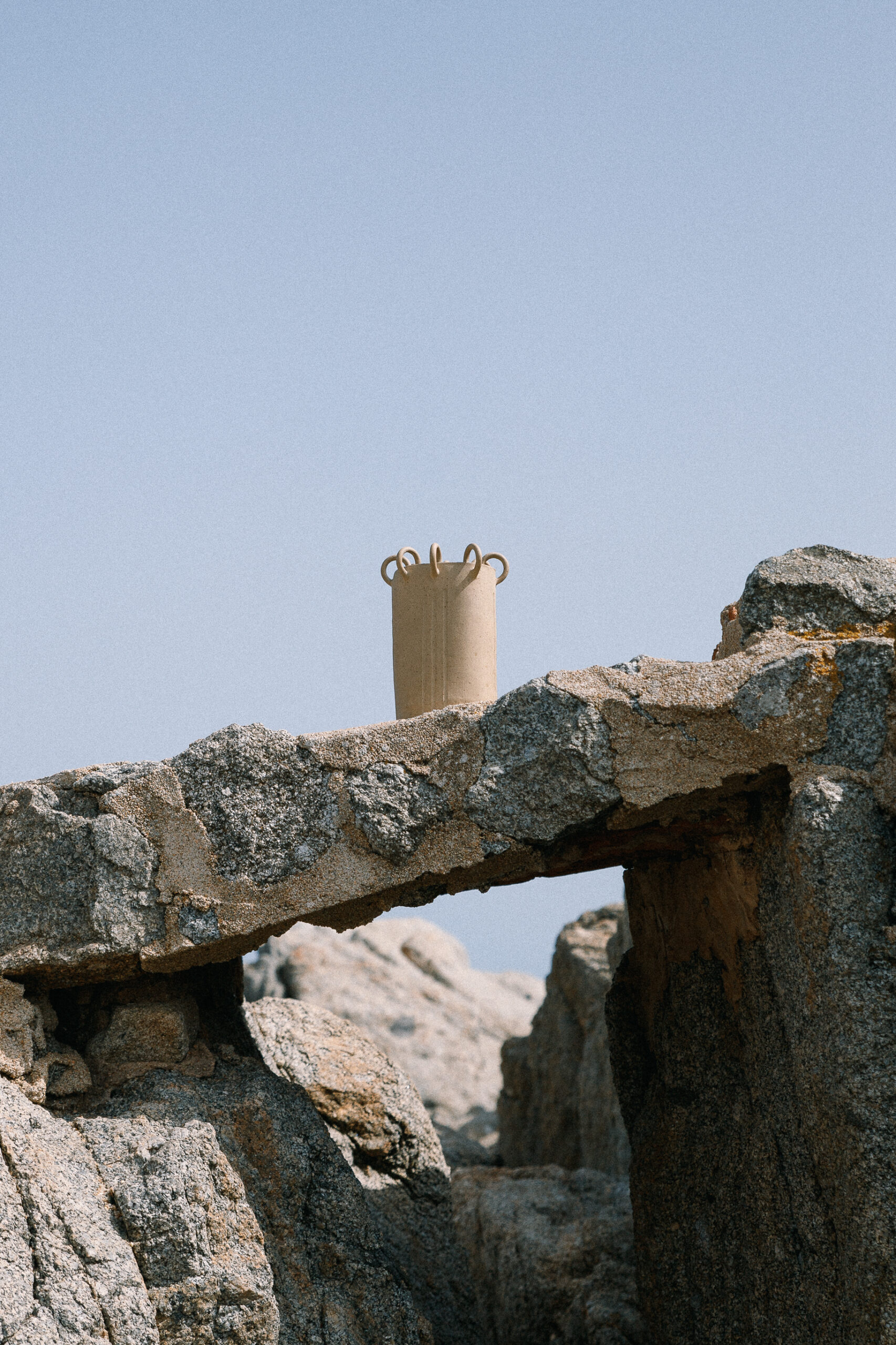
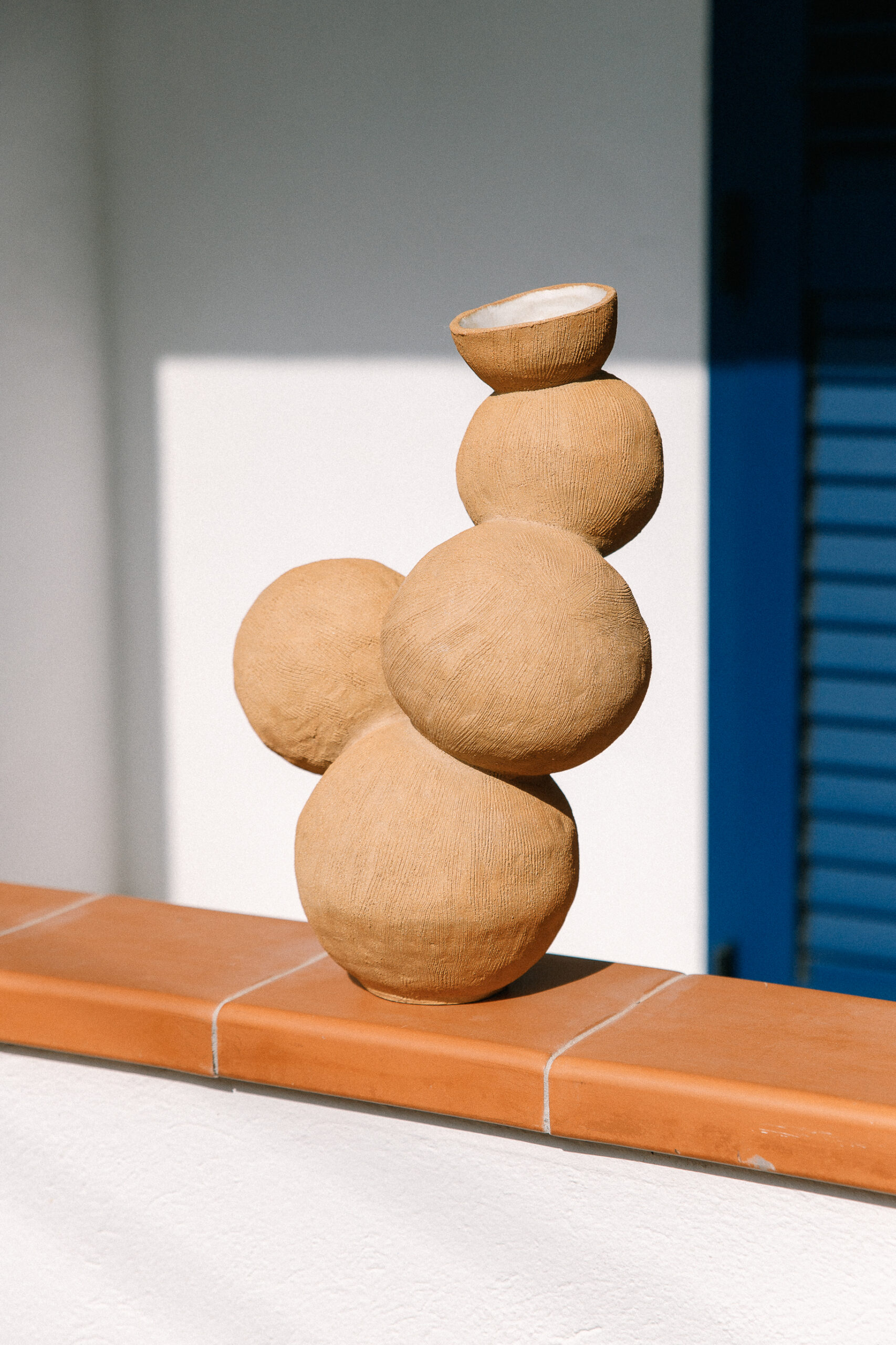
Most of my ceramic pieces are hand-built rather than thrown on the wheel. I use coil and slab techniques, which allow me to work almost architecturally with volumes, negative space, and thickness.
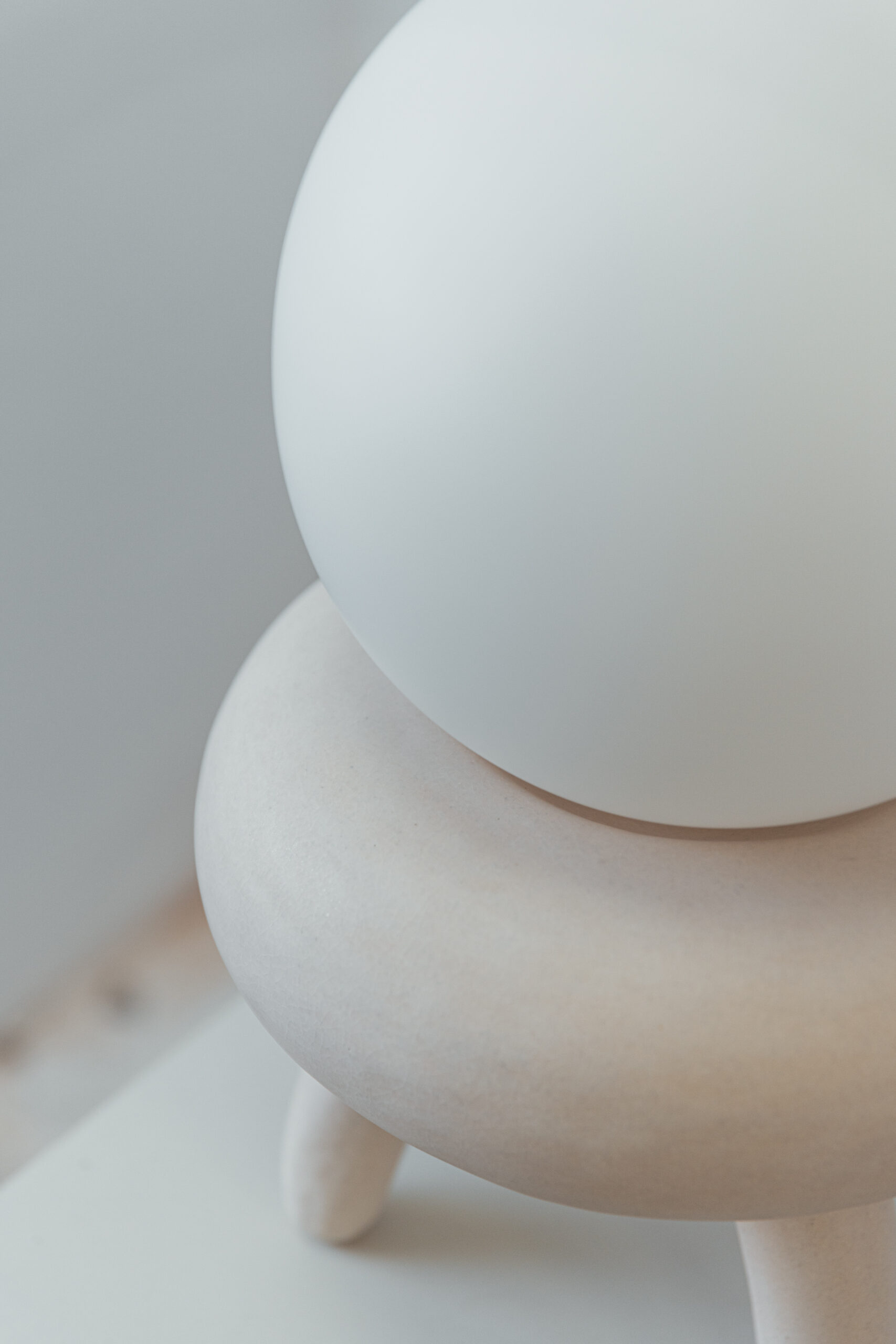
I like to keep some surfaces raw, and others glazed, so the contrast between matte and gloss creates a quiet tension. For lighting pieces and appliques, there is a lot of hidden technical work: integrating wiring, thinking about how the object interacts with the wall, how the light washes the surface, and creating shadows. The result looks simple, but the construction behind it is very controlled.
Eliurpi, Carla Cascales, Athena Calderone.
Domestic altars for everyday rituals.
Only that, for me, sculptural design is not about objects as trophies, but about companions for daily life.
Start with your hands, not with the image. Learn the material, fail with it, push it to the point where it almost breaks, and see what happens.
Be patient with yourself: sculptural design, especially in ceramics, is a long conversation with drying times, firing schedules, and gravity. Also, stay close to craft — visit workshops, speak with artisans, understand how things are made. It will give depth and honesty to your work
I feel close to what people call “slow design” and to a kind of contemporary wabi-sabi: pieces that embrace imperfection, tactility, and time.
At the same time, my practice fits within the wider movement of sculptural, collectible design — but at a domestic scale, always thinking of how the object will live in someone’s everyday rituals rather than on a pedestal.
Coderch, Jeremy Anderson, Sabine Marcelis.
Zhu Ohmu, Olivia Cognet, LRNCE.
The Questions
(The Proust Questionnaire is a set of questions answered by the French writer Marcel Proust.
Other historical figures who have answered confession albums are Oscar Wilde,
Karl Marx, Arthur Conan Doyle, Stéphane Mallarmé, Paul Cézanne…)
A long, slow dinner at home with people I love, in a space that feels truly ours.
Lose someone I love.
Overthinking.
Lack of empathy and arrogance.
My siblings.
Getting my nails done every three weeks.
Hopeful.
Perfectionism.
Emotional intelligence.
Honesty.
Yeah…
To play an instrument.
To trust my intuition faster and doubt less.
Being on the path of creating a studio and a life that feels aligned with who I am.
A Mediterranean sunset.
On a Greek island.
A blanket recently handmade by my mom.
Feeling completely disconnected from yourself and from others.
The creative process of shaping spaces and objects.
Calmness and attention to detail.
Loyalty, emotional honesty, and being able to laugh together about everything.
Joyce Caroll Oates, Margaret Atwood, Sally Rooney.
Circe (Greek mythology).
Frida Kahlo.
The artisans I work with every day.
Ona, Nil.
Chaos.
The times I didn’t listen to myself soon enough.
Sleeping.
Design with intention, live with warmth.
SHARE :