Homelessness, informal recycling, and spontaneous design shift attention from the professional designer to people who transform discarded materials out of necessity
By Maria Cecilia Loschiavo dos Santos
Philosophy and Design
I am a philosopher and received my theoretical and critical training in the Department of Philosophy at FFLCH, University of São Paulo. At a time when the study of aesthetics was focused on the Fine Arts, Literature and Music, I became interested in questions of space, architecture and, above all, design.
Philosophy emerged in the 6th century BC, marking the transition from mythical thought to rational and logical thought. Myth is connected to the supernatural, to the gods and to dogma. Philosophy is connected to nature, to human beings and to critique.
I therefore followed the path of Philosophy, with its critical and reflective tools, which have become increasingly important for understanding artefacts, the home, and the designed and built world. Philosophy offers the possibility of going beyond historical or technical analyses of design.
At the end of the 1970s, we still did not have postgraduate programmes in Design in Brazil, and I owe the Department of Philosophy for providing the theoretical and methodological foundations for my research in the field of Design. This research was also informed by the academic work of undergraduate Design institutions and their pioneering professors, particularly in Rio de Janeiro and São Paulo.
Within this context, I began to investigate the process of modernisation in architecture and its interiors, concentrating primarily on furniture design. Aesthetic, technical, ergonomic and technological aspects are fundamental to furniture, but it is also important to emphasise that the home, furniture and objects in general possess other dimensions. Products are also psychological artefacts, and Philosophy offers the possibility of reflecting on the soul of things.
During the first and lengthy stage of my research, I systematised the material heritage of modern design, with an emphasis on furniture and its relationship with modern architecture. This involved many years of work that resulted in theses, books, lectures, exhibitions and, above all, the education of young students who today continue and expand upon this work.
Design and Waste
My subsequent research began to examine the presence of design within an endless system of making more and more products, generating patterns of excessive consumption and an accelerated process of disposal, with catastrophic environmental consequences.
The flow and metabolism of waste became, and remain, the focus of my attention. I studied, above all, the relationship between waste and vulnerable, dispossessed populations who use discarded materials to confront the challenges of survival. I immersed myself in this complex and systemic subject: Design, Informal Habitat, Recyclable Material Collectors, and People Experiencing Homelessness.
Spontaneous Design
The study of these issues led me to consider what I call Spontaneous Design, shifting the focus of attention from the professional designer to people who transform waste out of necessity. This is not only about the transformation of products and materials; it is a transformation of lives!

Sumida River homeless informal habitat, Tokyo © Ken Straiton
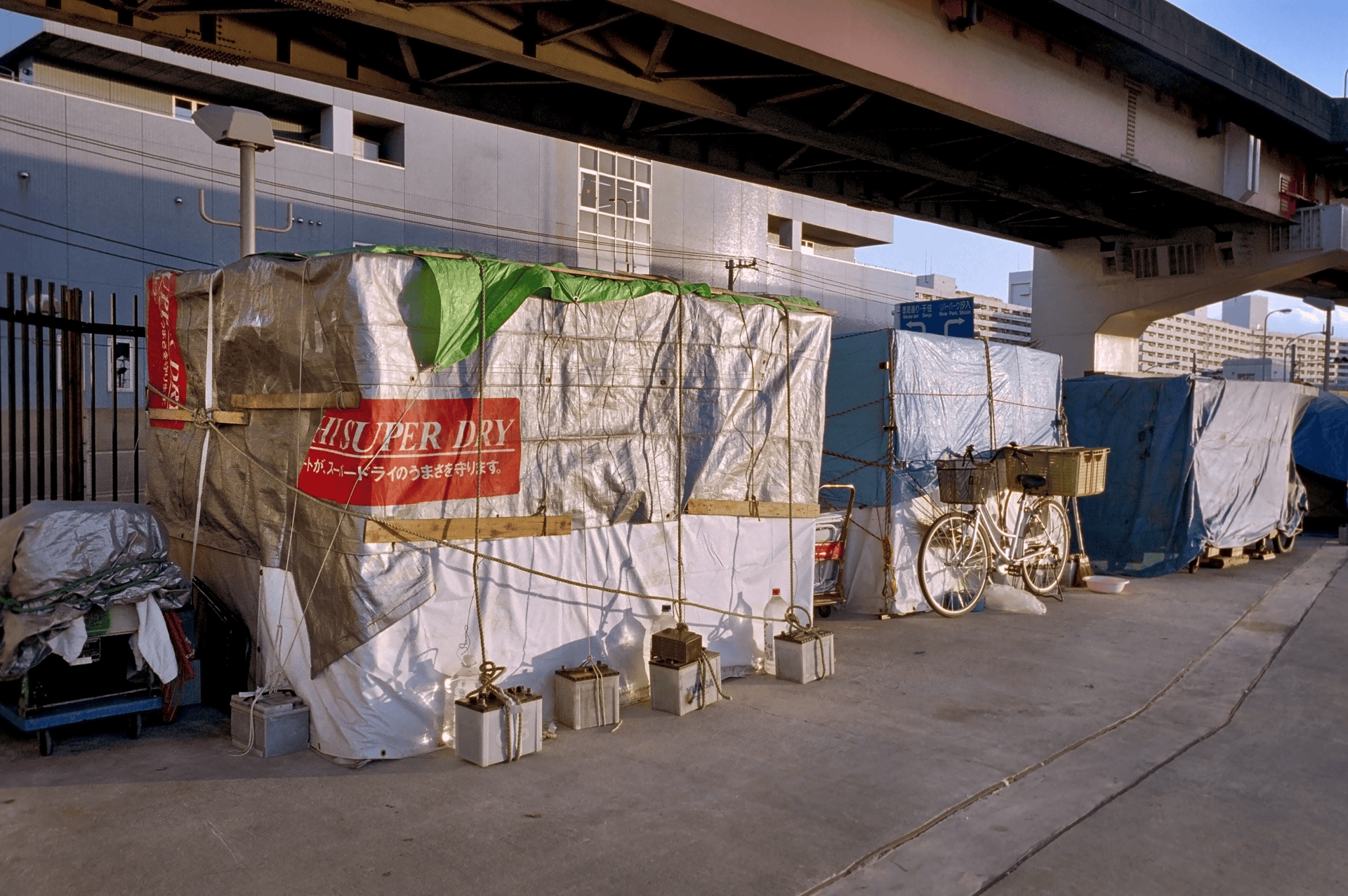
But after all, what is Spontaneous Design? It is a form of adaptation to precarious conditions, in which spontaneous practices are present. It is a form of improvisation that emerges from the territory, from the resources and materials available within it, enabling vulnerable and dispossessed populations to continue their constant struggle for survival.
Dispossessed populations reveal the existence of an endless system of transformations directly connected to survival: a chair can become a bed, a shopping cart can become a receptacle for memories, a cardboard box can become a shelter. It is a struggle without end to preserve life and dignity through the fulfilment of vital needs.
Design, Consumption and Responsibility
When considering the place of design within our culture, we frequently see a predominance of attention given to the individual work of designers who have become renowned for the products they created. Some design critics refer to these professionals as “star designers.” The result of this attitude has been an excessive valorisation of these designers, ultimately leading to an understanding of design that is restricted to luxury objects for the consumption of a few.
There is a process of fetishisation of consumption on a scale never seen before. This expansion of consumption fuels an uncontrollable frenzy of disposal, making it increasingly difficult to confront the climate changes affecting us. This fascination with technological innovation and with the pursuit of the best of the best has led to the consumption of resources and energy on a catastrophic scale.
How can we think about and practise Design beyond the production of waste?
As we have seen, the acceleration of consumption is directly connected to the increasing use of resources and energy, disposal, pollution and environmental degradation. There is a global debate, international frameworks, reports, Sustainable Development Goals and war! The imperative is clear.
The problem is complex and, unfortunately, the negative consequences predominate. Some designers have taken the path of precaution; I could cite a list of terms and concepts, from Papanek to the present day! But this alone is not enough. Waste, pollution and environmental destruction call for a collective, systemic vision, one that is not based on individual choices, nor on the digital life of our contemporary subjectivity. We need to look at ourselves through the critical tools of a science created many years before Christ!
About the Author
Maria Cecília Loschiavo dos Santos is a Brazilian philosopher and Full Professor of Design at the University of São Paulo. She holds a PhD in Philosophy from the same university, and her research spans Brazilian design, sustainability, social design, and the relationship between design and social exclusion.
Her work brings philosophical inquiry into dialogue with the material realities of everyday life, including the experiences of people experiencing homelessness and recyclable-material collectors. Alongside her teaching and research in Brazil, she has held visiting academic and research positions at institutions including the University of California, Los Angeles, and the Canadian Centre for Architecture in Montreal.
SHARE :