
Jemma Elliott-Israelson
INTERVIEW

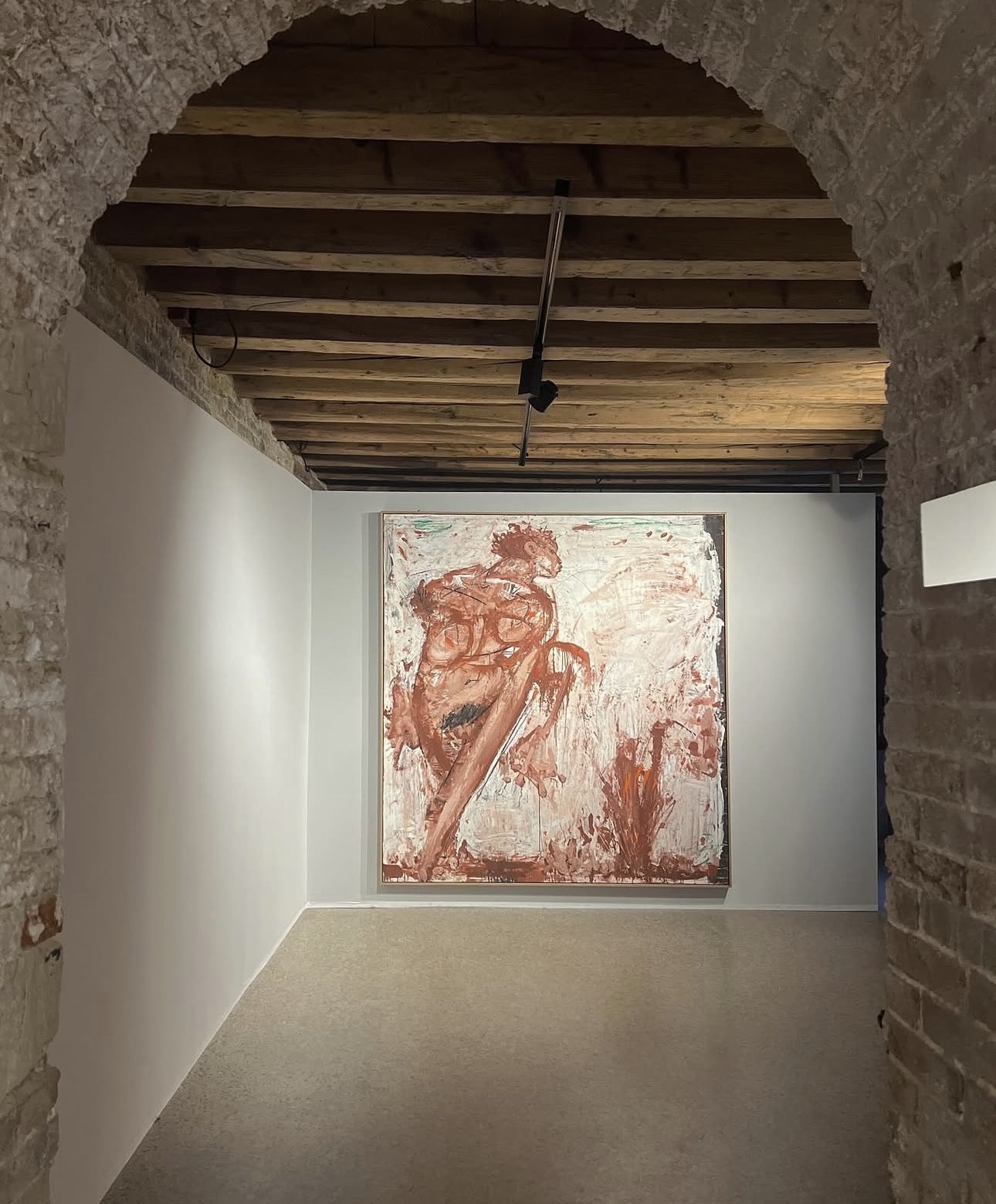
Danny Avidan, Venice Biennale, Museo Ebraico di Venezia
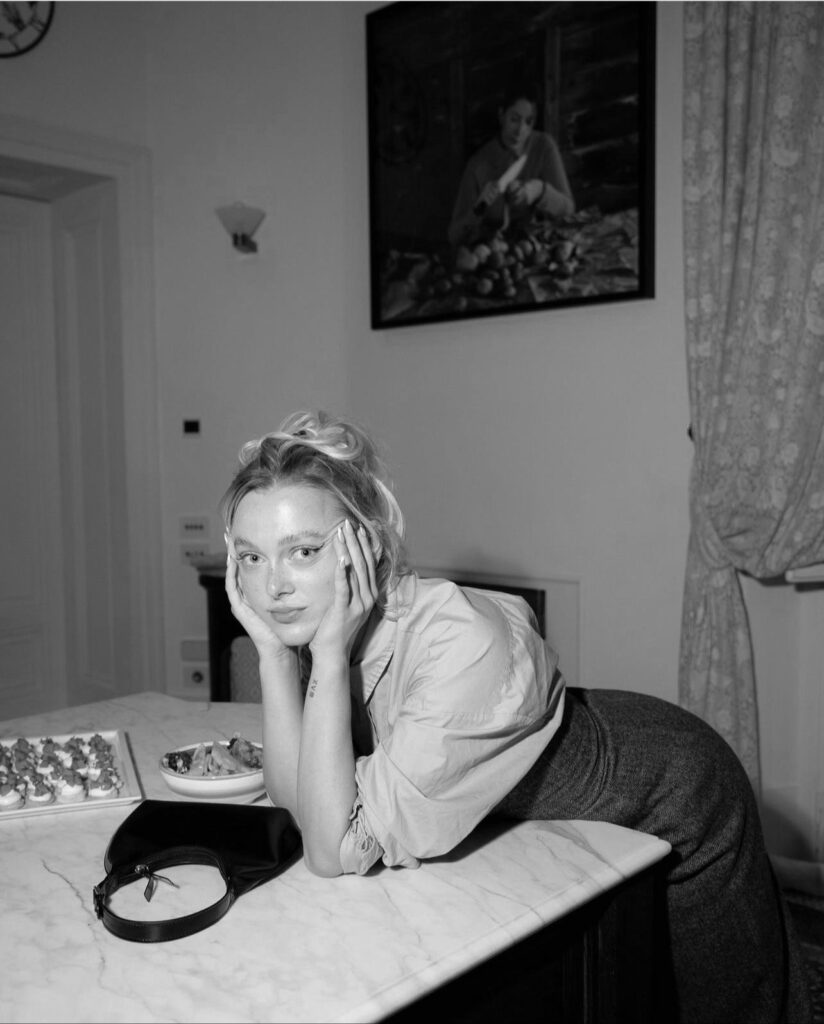
I studied to become a professional ballet dancer until the age of 17, when an injury changed my path. I went on to study Classics and then Art History at university, and I think the idea of classical forms and ancient standards of beauty really informed my aesthetic sensibility. I always had my mind set on becoming a curator, although at the time I imagined I would end up working in a museum. I interned at the Guggenheim in Venice, the Israel Museum in Jerusalem, and the Scottish National Galleries, among others.
When I eventually joined Christie’s and then began working with collectors, by osmosis I ended up interacting with artists. It felt like a natural progression. I started by figuring out how to build and shape personal art collections, then moved increasingly towards working with living artists and creating dynamic exhibitions. I worked for a wonderful collector for several years who had incredible, lifelong relationships with artists. It really opened my eyes to a part of the art world I hadn’t had when dealing with work up to the post-war period.
I think my Classics background and my training in art history provide a strong foundation for my curatorial practice, but I now feel very free to let many different influences guide me: film, dance design, architecture, objects on the street, my friends, fashion. This openness is largely informed by the gift of working with artists, who often find inspiration in small, seemingly immaterial details and then expand those observations into something much larger.
That being said, I think having an “eye”- an innate sense of beauty and aesthetics is something that can’t really be taught. But it can be honed, much like a muscle, through practice, attention, and looking.
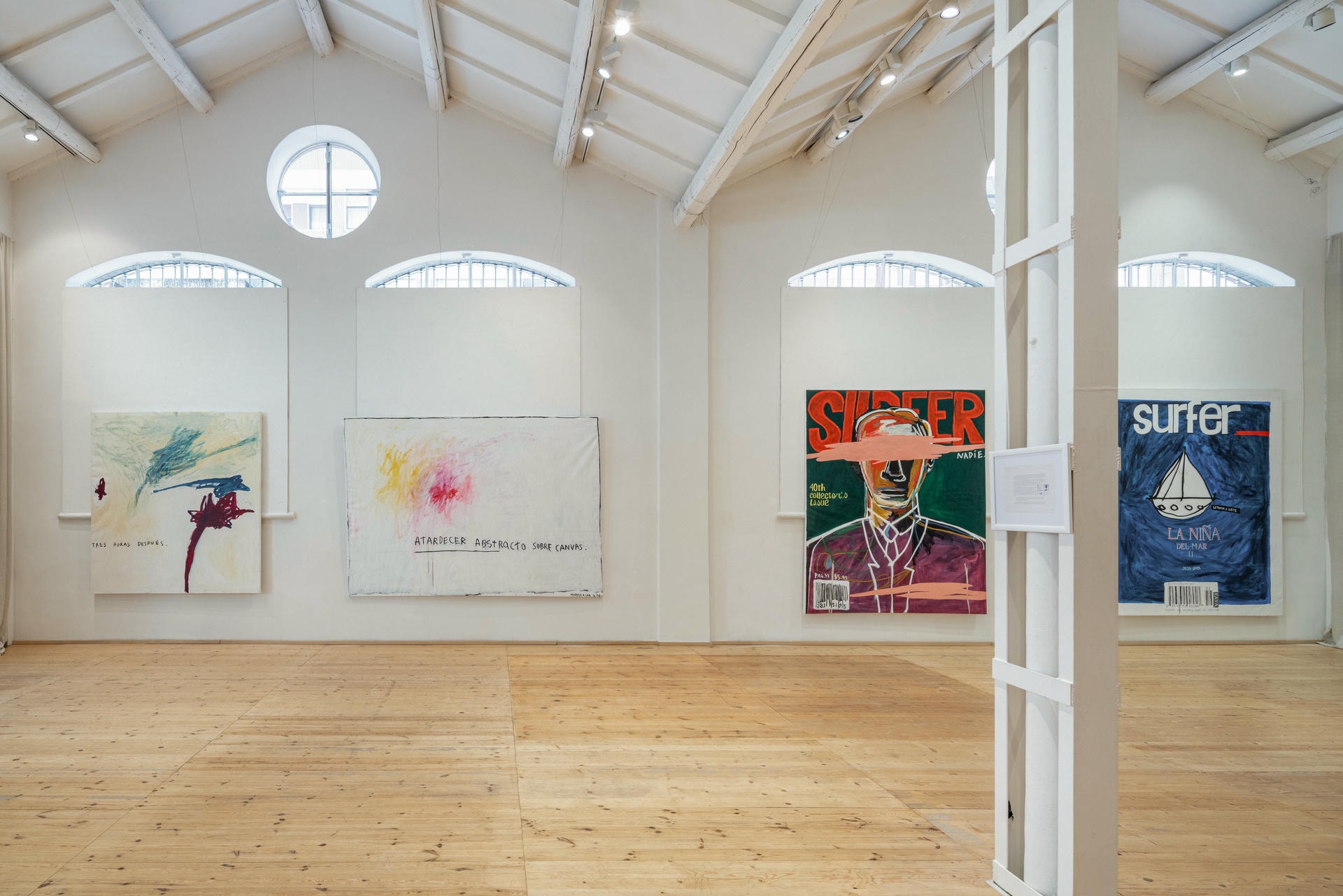
It varies enormously, but when I’m working with an artist, it tends to be an organic collaboration from the beginning. They might come with a seed of an idea or something they are already exploring, and I expand on the parts where I can find connections or unexpected links. For A complete waste of time with Alexander Mignot, he has this amazing vision for the show, which was very connected to his lifelong relationship with the ocean. My job was to help refine that vision and translate that for the audience. When the concept and work are so strong, it’s a very seamless process.
Sometimes the process is archive-driven. For example, with Shifting Vision, I worked with the Medici Archive in Florence to bring artists into direct conversation with the archive and create new work in response to it.
Now that I’m based in Italy, a place can also be what sparks a conversation: a ruin, a deconstructed church, a palazzo with history still seeping out of its walls. I try not to be too limited in where an idea can come from. For me, the most interesting projects often emerge when seemingly disparate things begin to connect.
Usually, a lot of chaos before things become organized, and inevitably I tend to end up in coveralls painting something like walls or pedestals.
There is also a natural mutation of the original conception of the show and the works within it as the artists develop their ideas. We generally expand first and then refine the list of works, as well as how they will be presented in relation to one another.
Sometimes the shift is conceptual; other times it is practical, dictated by limitations in production capacity, timing, materials, or logistics. I think that evolution is an important part of the process. The final exhibition is rarely exactly what you imagined at the beginning, and that is often what makes it more interesting.

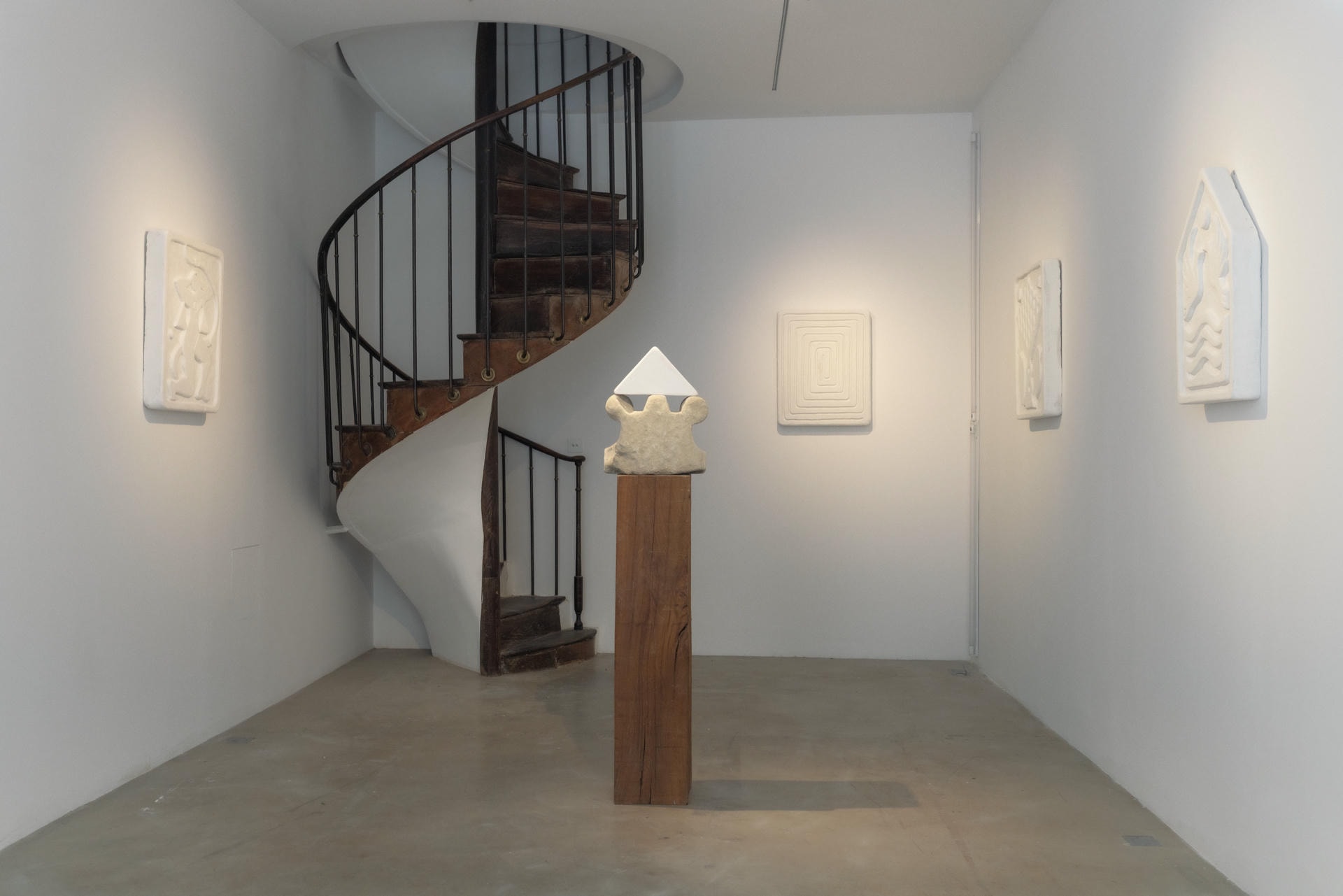
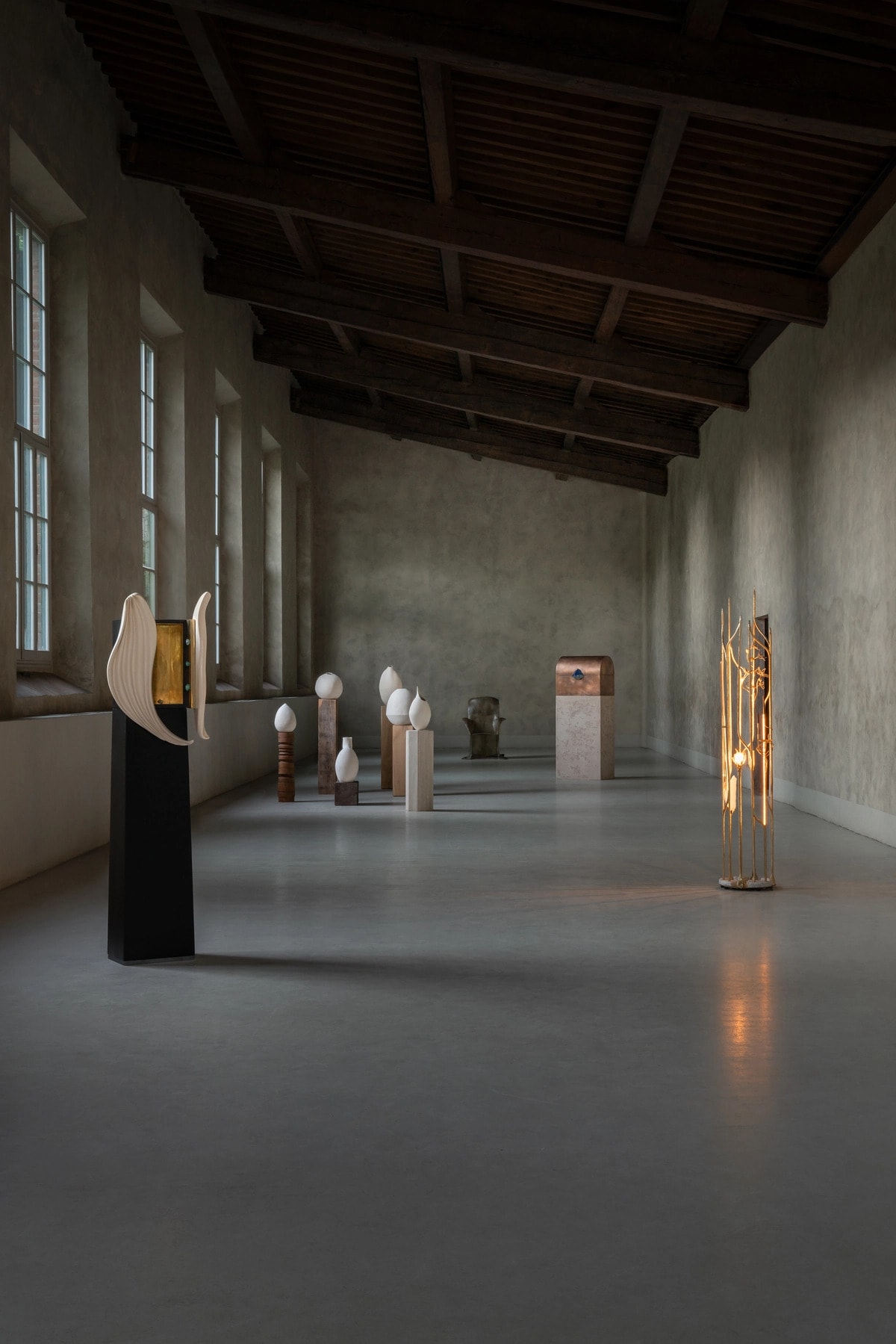
Enuma Elish, Sainte Anne Gallery, Paris, 2025
Through constant conversation and by spending time together outside of the work itself. Often the best ideas come during a long lunch, a walk through a garden, or a visit to an exhibition together.
I really value having a genuine relationship with the artists I work with, and I think that comes through in the outcome. There needs to be enough trust for both of us to challenge each other, while maintaining a critical lens. Ultimately, I want everything to feel aligned and, most importantly, true to the artist’s vision.

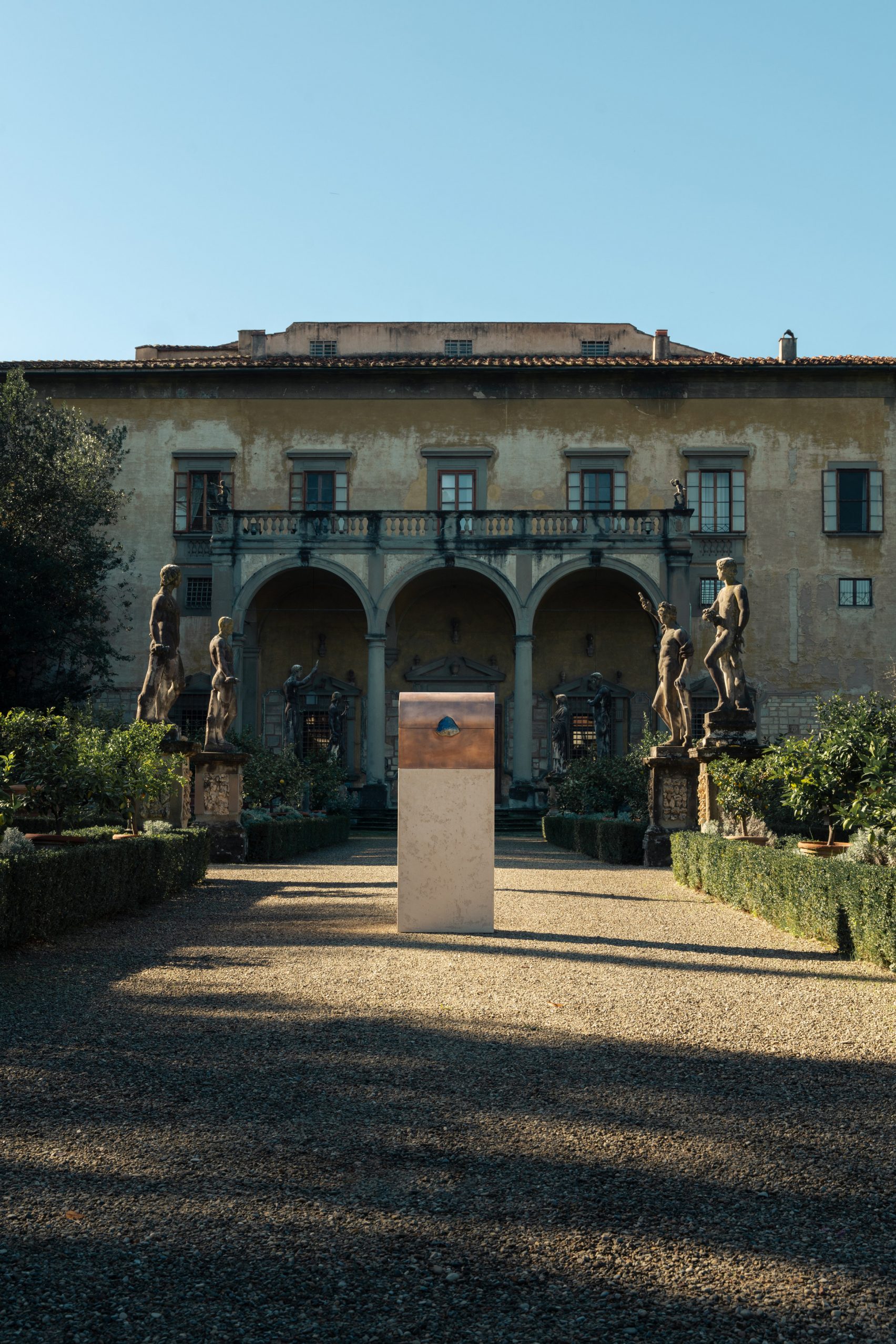
Future Relics © Studio Brinth
I think what helps is to really research and understand the context of where the objects, ideas, or ideologies you are examining come from. From there, you can begin to identify both the similarities and the fundamental differences between those histories and our approach or viewpoints today.
That allows you to create something that feels rooted in the past but genuinely responsive to the present.
I really loved, for example, the work Pierre de Valck made for Future Relics, which I co-curated with Philia. He looked at the history of lapis lazuli, examining trade routes, the history of pigments and making, and Renaissance intercultural exchanges, and then brought those histories into a present-day context. The resulting object feels both deeply storied and completely contemporary.
Elisheva Revah also did a wonderful job of translating complex histories, mythologies, and spiritual frameworks in her show Enuma Elish, which I curated in Paris last year for Sainte Anne Gallery. She combined her research on Kabbalah, Sufism, and Mesopotamian mythology into objects that have a cool modernism to them while still emitting a special, ancient power.
The relationship-building with the artists. The trust you develop with one another is perhaps the most important part of the process, and it can’t really be quantified or measured. In my opinion, though, it is integral not only to the cohesion of the exhibition but also to the curator’s ability to translate complex ideas into something that feels accessible and digestible for an audience.
A lot of that work happens quietly, through conversations, looking, revisiting ideas, and allowing the artist to feel that there is someone who genuinely understands what they are trying to do.
Almost always. For me, it tends to be quite instinctual: as soon as I get all the objects into the space, I usually know exactly where I want to place them.
I do map out different scenarios and, of course, check measurements beforehand, but it nearly always changes on installation day. The physical space has its own logic, and the relationships between the works become much clearer once you can actually see them together. I think it’s important to leave room for that intuition rather than becoming too attached to the original plan.
A Complete Waste of Time, solo show by Alexander Mignot © Luca Casonato
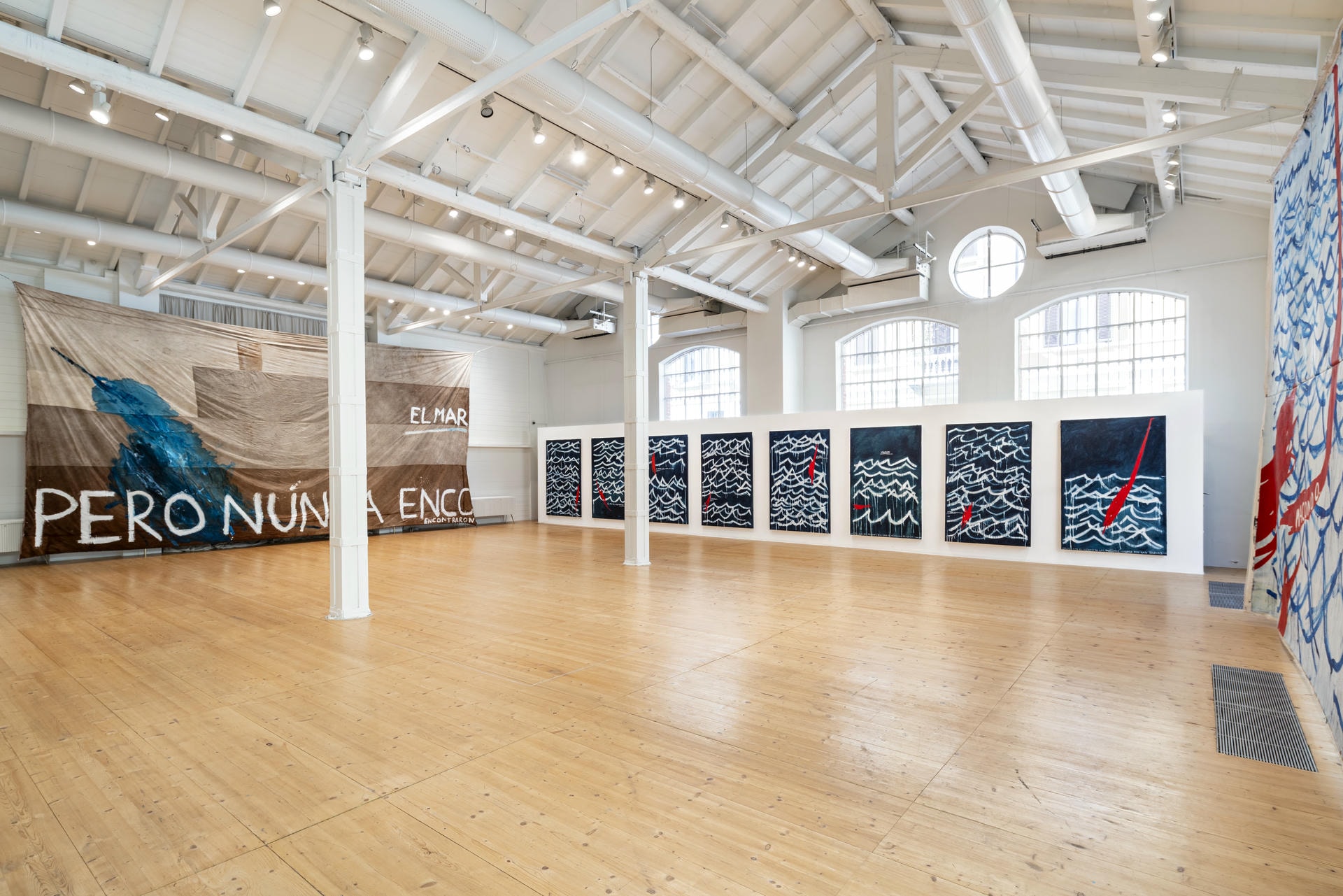

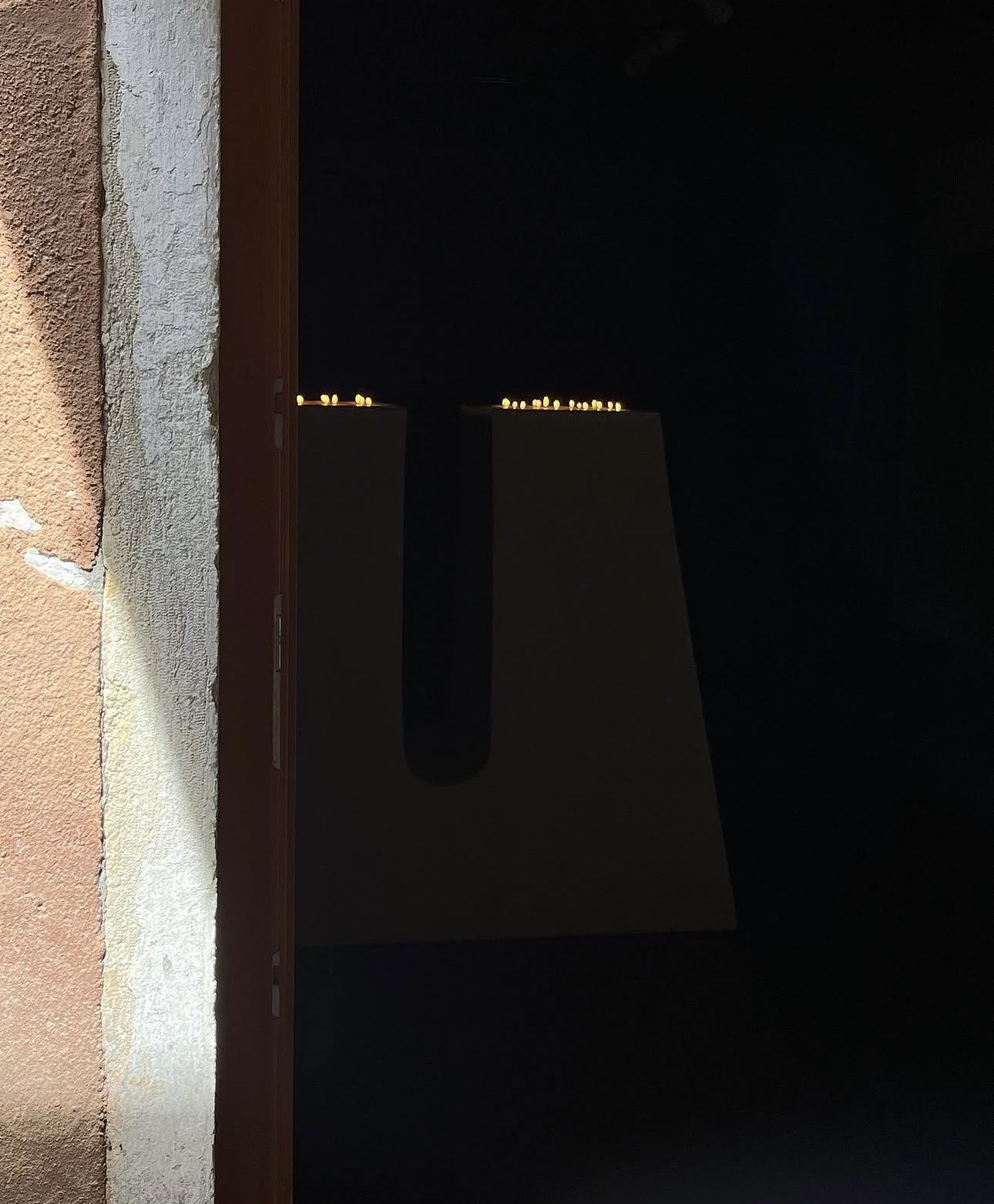
Venice Biennale, Museo Ebraico di Venezia © Lucas and Tyra Morten
Art advisory is really a form of curation, just for a different “audience.” Creating a private collection is such a special experience, and it can take years. It is also never truly complete; an art collection is a living, breathing thing that evolves alongside the person or people who collect it.
Helping collectors create a binding narrative, or a thread that weaves the works together, is incredibly important. So is working with them to develop their own eye and understand their individual preferences. I think the best advisory relationships ultimately give collectors the confidence to trust their own instincts. Now I’m increasingly working with younger collectors, and that journey is so exciting to start together from the beginning of their collection. It gives us a chance to grow and shape it together over time.
The same thinking extends to working with brands, publications, and artists. There is a similar process of world-building: understanding the language and values of a brand, finding artists whose practices genuinely resonate with those values, and creating collaborations that feel organic rather than simply transactional. In both cases, the goal is to build a meaningful visual and conceptual universe around the work. As an example, Amit Berman and I worked on a wonderful editorial feature for Lampoon Magazine where he made new works around the theme of the issue. I wrote the accompanying article and guided the process from inception to print. It was a great experience to curate for a publication rather than a typical exhibition format.
I think visual cohesion is important. That’s not to say that everything needs to match, but there should be a general tone, rhythm, palette, or sense of form that flows between the objects. As an example, for I confini dell’alterità, which was part of the 60th Venice Biennale at the Museo Ebraico di Venezia, I had to combine 10 artists across painting, sculpture, video, installation work, and performance. Presenting many artists and mediums can be complex, but ultimately it allows for new interpretations of the individual works, which are put into direct conversation and contrast with each other.
At the same time, I never want to block a viewer’s way of seeing. I can try to guide the overall theme and help convey the artist’s vision, but the viewer is invariably the most integral part of the work. Their own experiences, associations, and perspectives create a kind of “third space,” bringing a new life to each work and to the exhibition as a whole.
I hope something lingers. For the artists, I hope the exhibition has opened up a new way of thinking about their work or given them a connection that continues beyond the project itself. For the audience, I hope there is an image, an idea, or even just a feeling that stays with them after they leave. I don’t think an exhibition needs to be completely understood in order to be successful. Sometimes it is more interesting for it to leave a question behind, or to change the way you look at something you thought you already understood.
For myself, I hope I have created the conditions for something to happen between the works, the artists, the space, and the viewer that could not have existed otherwise. That sense of discovery is probably what keeps me coming back to curating.
A Complete Waste of Time, solo show by Alexander Mignot © Luca Casonato
favorite pieces from the Philia Collection
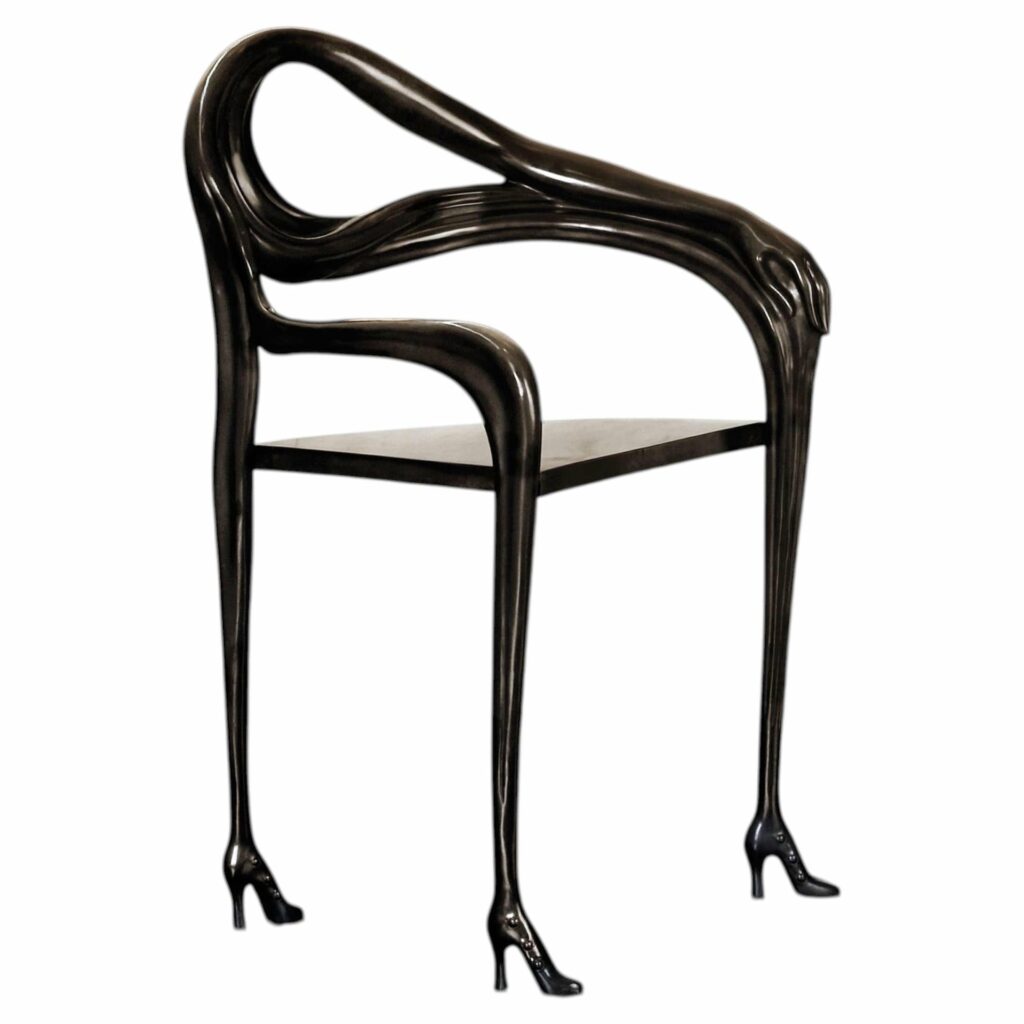
Leda Blacklabel Armchair, Limited Edition, Salvador Dalí
I love the art-historical dimension of this work; the way it takes an image from Dalí’s 1935 painting Woman with a Head of Roses and translates it into a functional object. That fusion of art history, design and surrealism is particularly compelling to me.
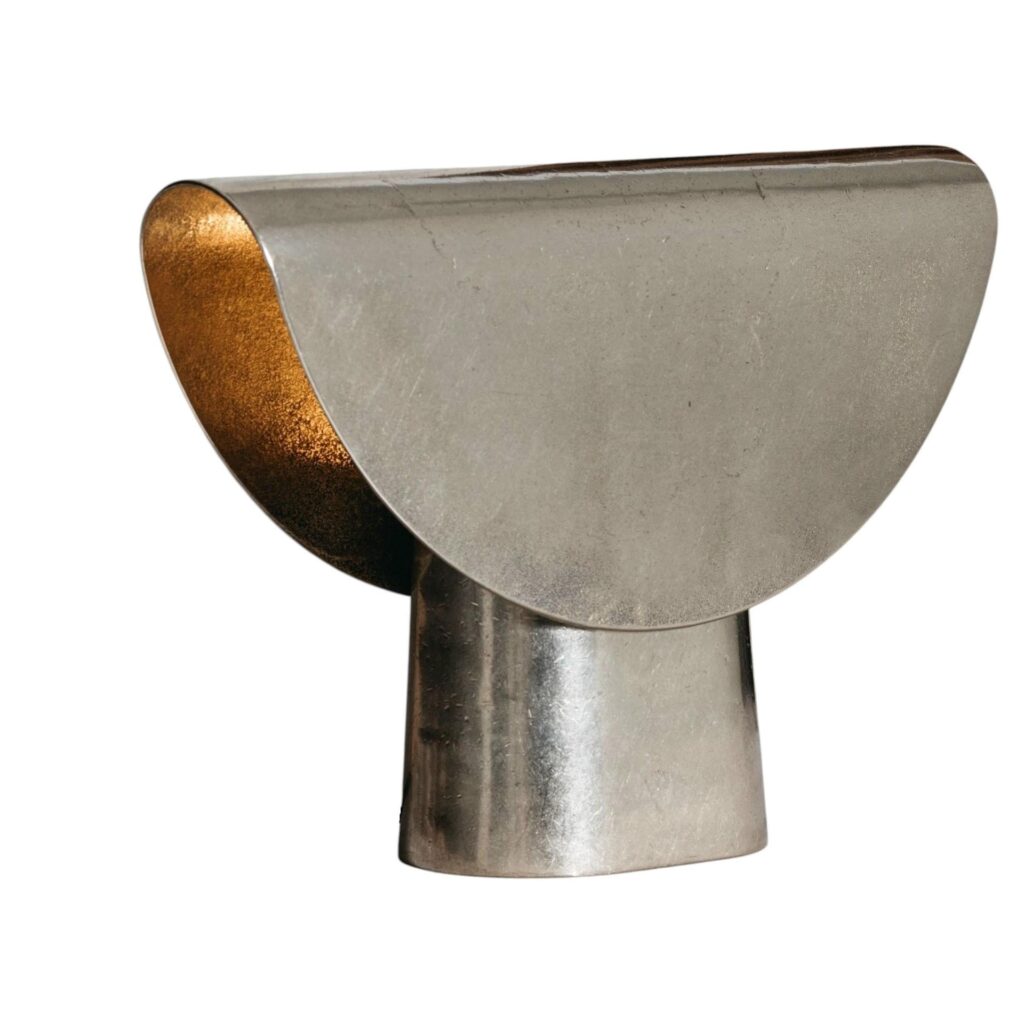
Contemporary Silver Aluminium Fold Table Lamp by Henry Wilson
My best friend Vieri Landini, one of the co-founders of Solander House, an amazing interior design studio based in Australia and Milan, introduced me to Henry Wilson’s work. I really love his approach and the way the rawness of the materials comes through in what ultimately feels like a seamless fabrication. There is something very honest about the material language.
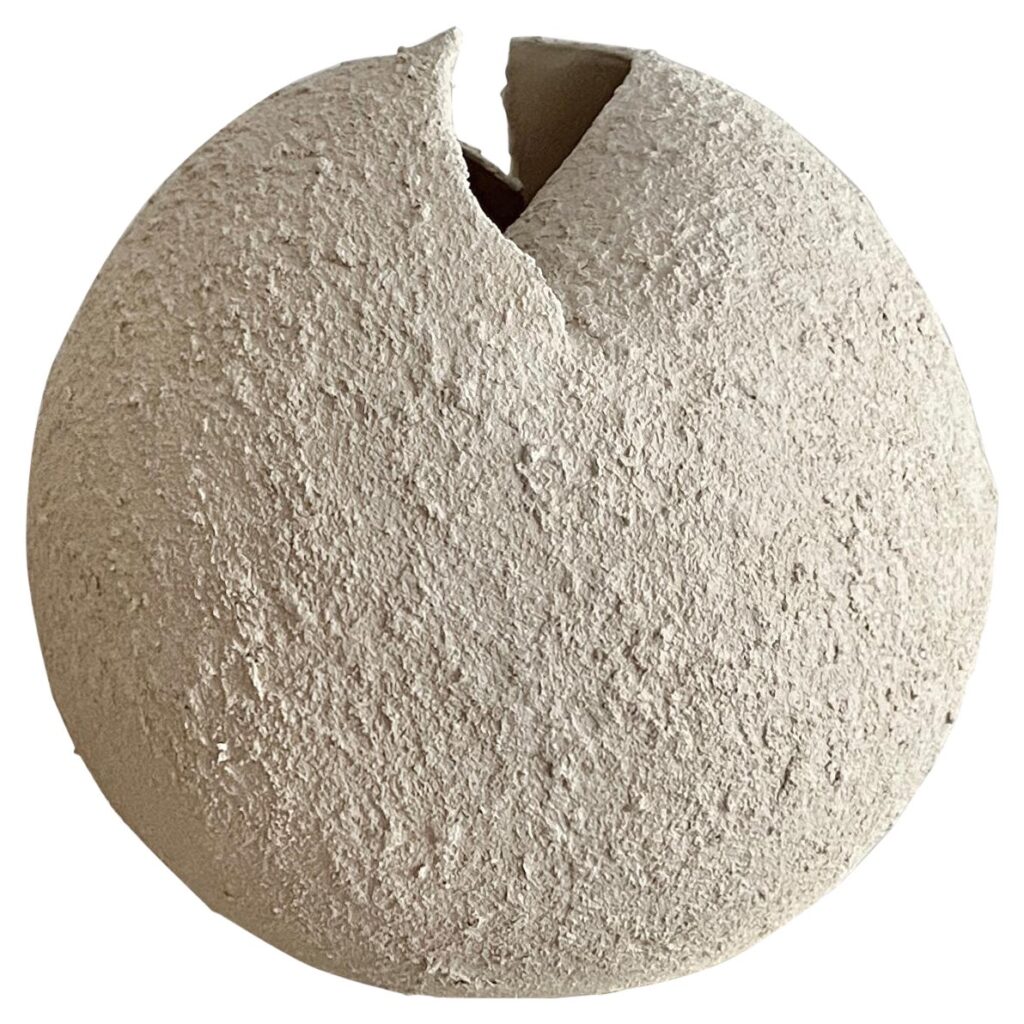
Grain Sculpture by Laura Pasquino
Laura’s process is so painstakingly researched. I love her fusion of Japanese techniques with her exploration of texture, and the works are also technical marvels. There is a wonderful tension between the precision of the making and the organic quality of the finished object.
Thank you so much Jemma, for this lovely interview!
Share article :
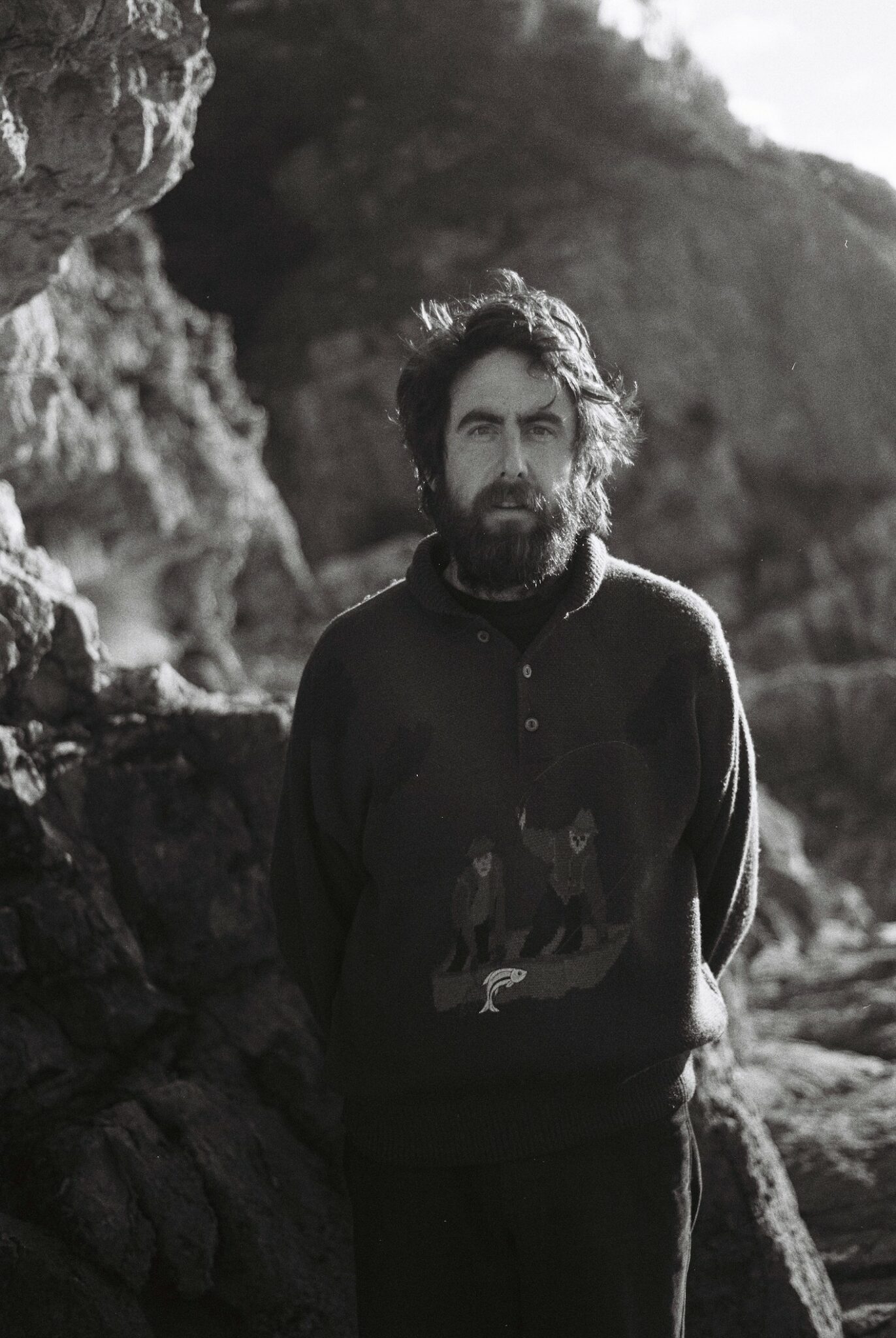
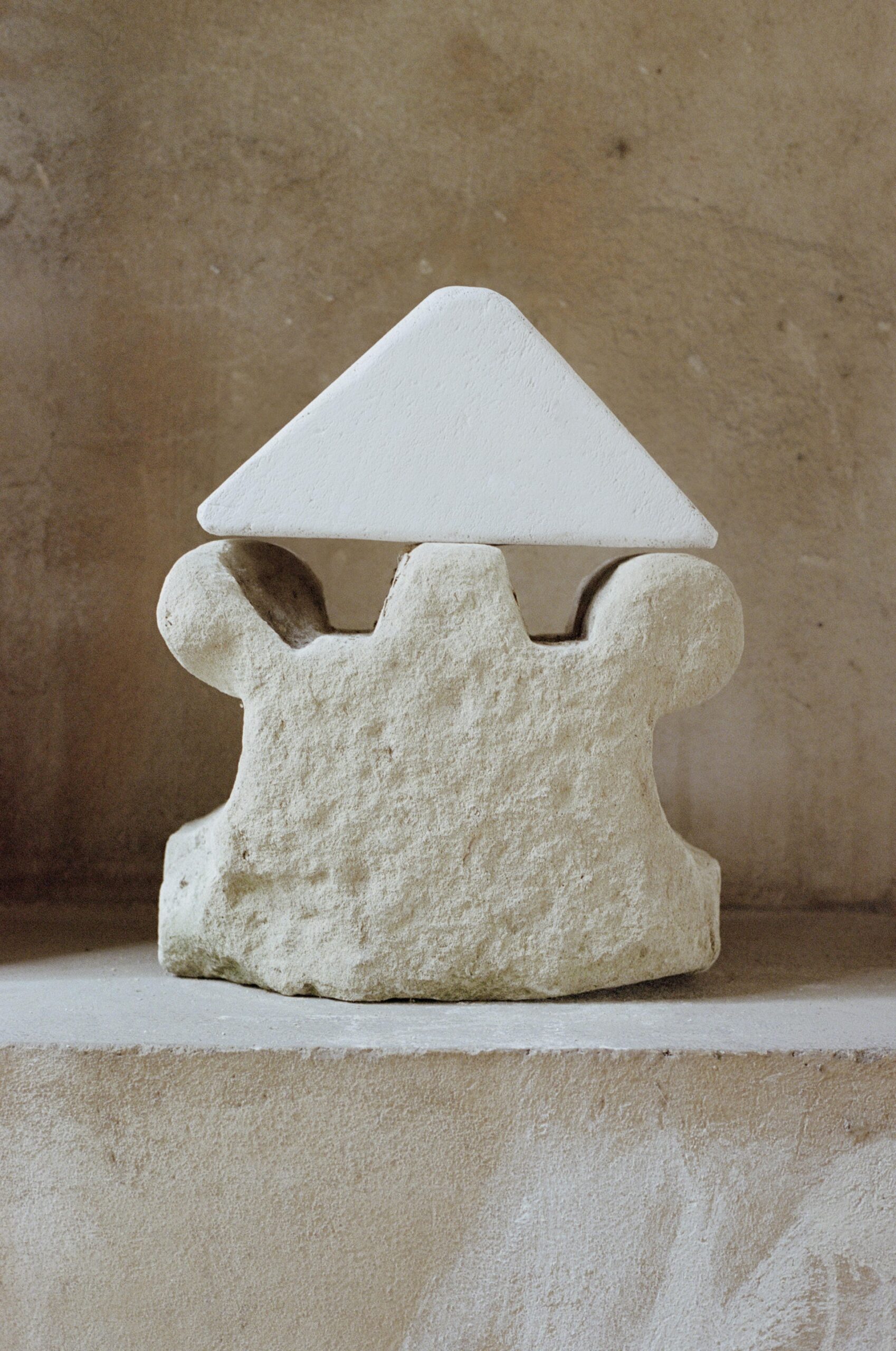
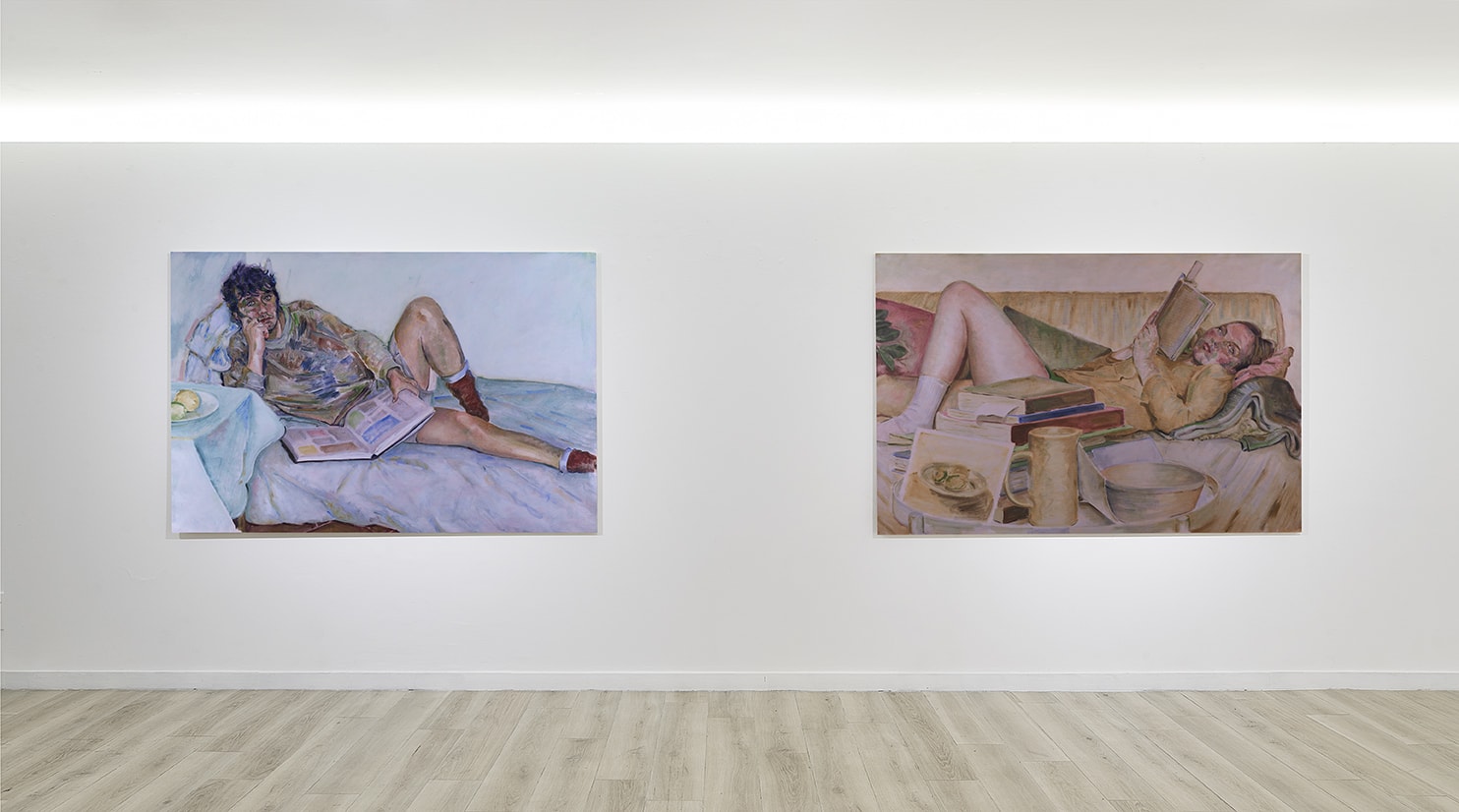
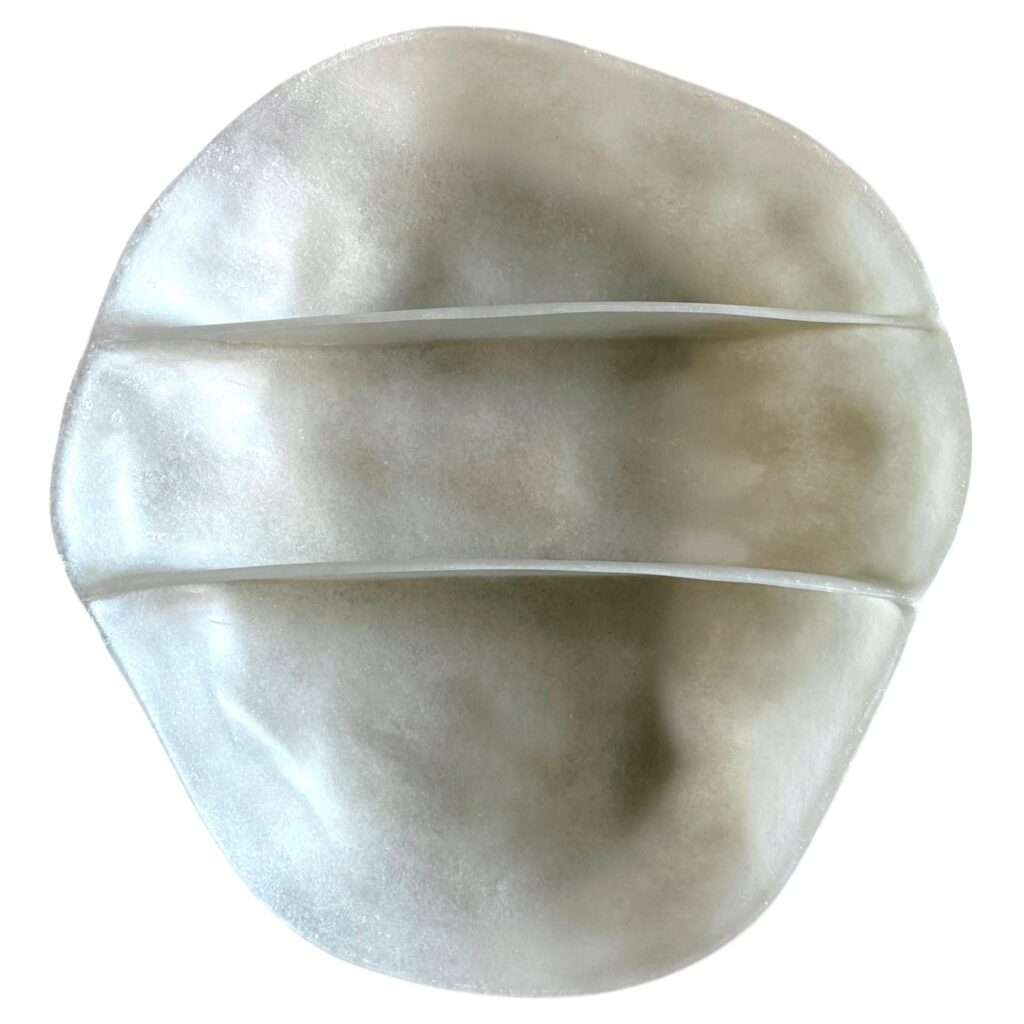
I love everything KAR does, but this piece in particular feels almost like a seashell. They have such an amazing command of their materials, and they are also wonderful to work with. There is something both organic and highly considered about the way the material takes form.