Lucas Morten
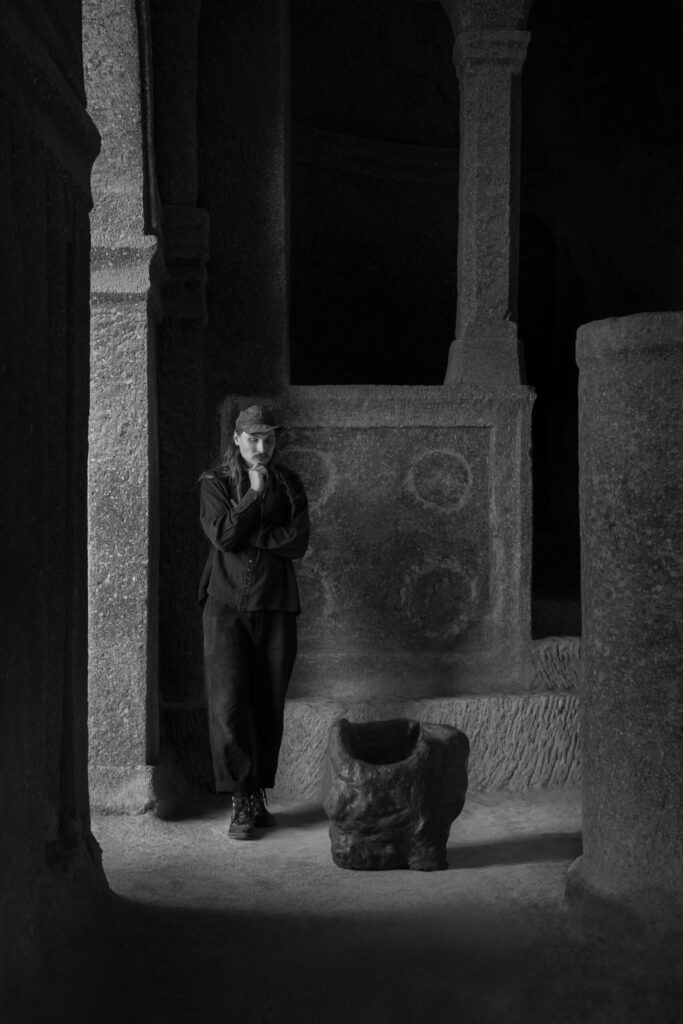
Lucas Tyra Morten is a multidisciplinary artist duo based on the west coast of Sweden, working at the intersection of art, sculpture, and collectible design. Through their atelier, they create handmade, limited-edition furniture, objects, and installations that explore the fragile relationship between permanence and impermanence. Occupying the space between functional design and artistic expression, their work challenges conventional notions of utility in favour of emotional resonance and material presence.
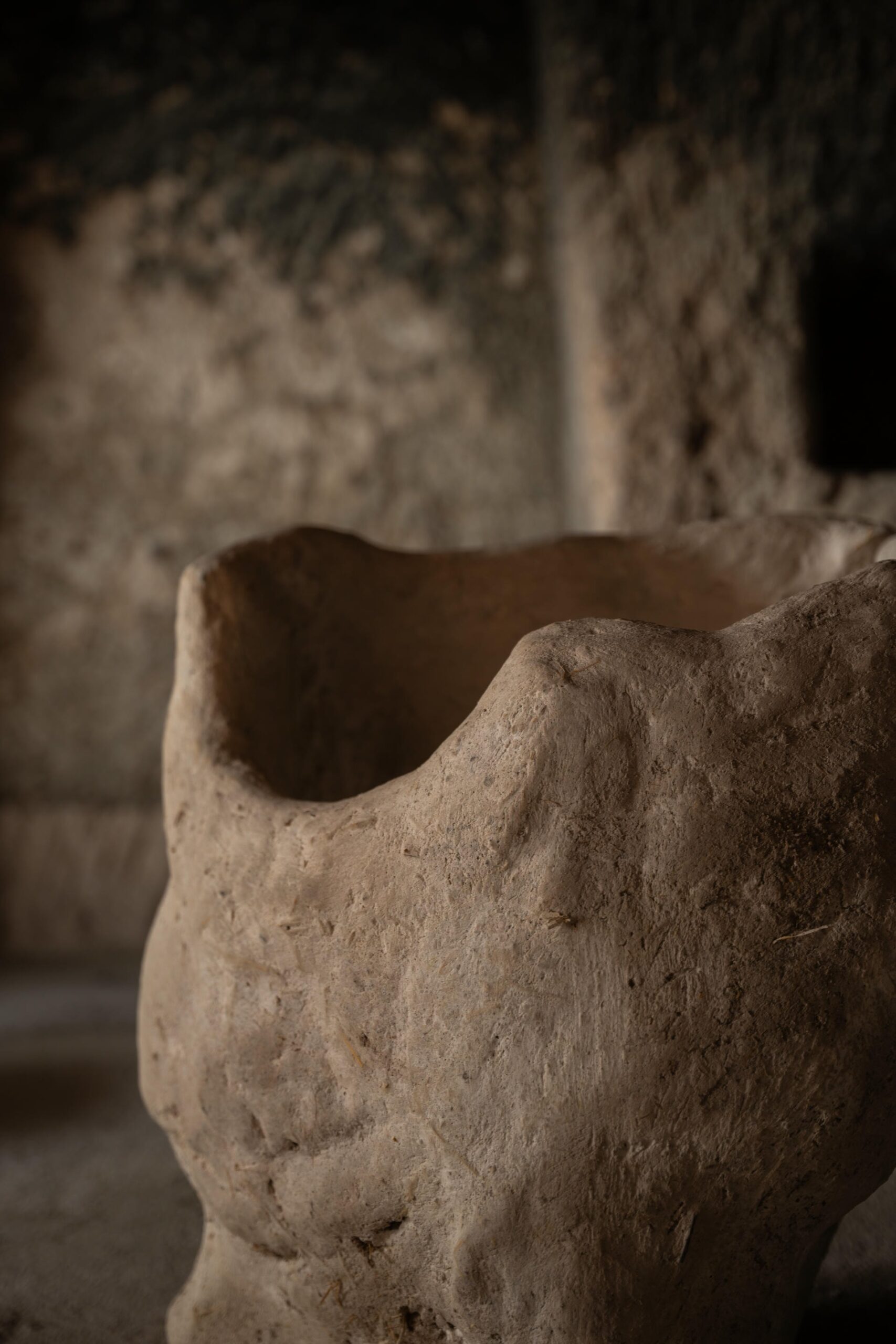
Guided by an intuitive and experimental approach, Lucas and Tyra combine organic materials with industrial processes to create sculptural forms marked by texture, imperfection, and the traces of the maker’s hand. Influenced by nature, architecture, and the existential qualities of time, their practice celebrates craftsmanship, transience, and the quiet beauty found in objects that evolve through use and experience.
Interview
Born and raised in a coastal town on the Swedish west coast called Varberg, where I am currently also based.
At the age of 4, my parents decided to get married in the capital of our neighboring country, Denmark. For the creation of their wedding bouquet, they hired an incredible Danish floral artist named Tage Andersen. Entering the studio of Tage prior to the wedding was probably the very first event in life that both evoked and sparked my interest in art.
I can still remember the sounds of birds chirping and the enormous smell of fresh flowers that, in combination with Tage’s light avant-garde historical clothes and his grey, bushy beard, welcomed me to a new place inside of me. Tage’s handmade metal objects adorned the magic jungle of pure vegetation that led through the whole studio.
More or less, yes. My whole upbringing was pretty much an introduction to the art/design field since both my parents always had a huge interest in aesthetics in many different formats, which today is expressed in their running of an interior design office and store where I moreover started to work at an early stage in life. I remember from being very young that I was very curious and interested in what my parents were doing, often sitting on a stool next to my dad when he was drawing different shops or concepts.
After graduating from high school, I took a season off skiing in the French Alps, followed by starting to work full-time with my parents in their interior design office and store. Alongside my artistry nowadays, I still work at their studio as an interior designer.
It wasn’t from one day to another that I realized I had creation within me. I believe different events throughout my life have had an impact and influenced me, bringing me to this starting point. My journey probably consisted of a combination of growing up in an aesthetically minded family and sharing the last five years with a woman who constantly encouraged my creative expression to take up more space and time. There definitely was a “first day” of sketching, but I strongly believe that painting began much earlier, in my unconscious. The event that truly started the process was when my girlfriend Tyra and I moved back to Sweden after living in New York. We needed a place to live, which also had to be furnished and styled. Despite my work as an interior designer and the knowledge of the market that comes with it, I couldn’t find anything that matched both my aesthetic and my budget. Out of that void, and out of the fear of losing Tyra back to our favorite city, I started building my very own empire that I hoped could compensate for small-city life, at least for a while. I wanted to create something in the borderland between art and furniture that Tyra and I could interact with, both mentally and physically.
All my works are based on an aesthetic expression, and I don’t compromise on form to enable function. Implementing or expressing the vision behind an object (whatever that vision may be) comes first, along with the aesthetic, and only then do function and usability follow. Since thinking, questioning, and exploring in a pure, mindful way are such a huge part of who I am, it’s hard not to implement some of this into my work. With my works, I don’t wish to give answers or teach people, but rather to raise questions and awaken new thoughts and discussions within the observer. It’s really hard to describe exactly how the process goes from the moment a thought pops into my head until I have a finished object on the table, because sometimes it can also be vice versa. I honestly don’t always know where my inspiration comes from. Sometimes it can be very clear and therefore definitely visual, but other times forms and perspectives come to me through thoughts that gradually take shape within me. I don’t want to get stuck in specific structures or patterns when it comes to sources of inspiration, which in turn encourages me to always look for new paths and perspectives.
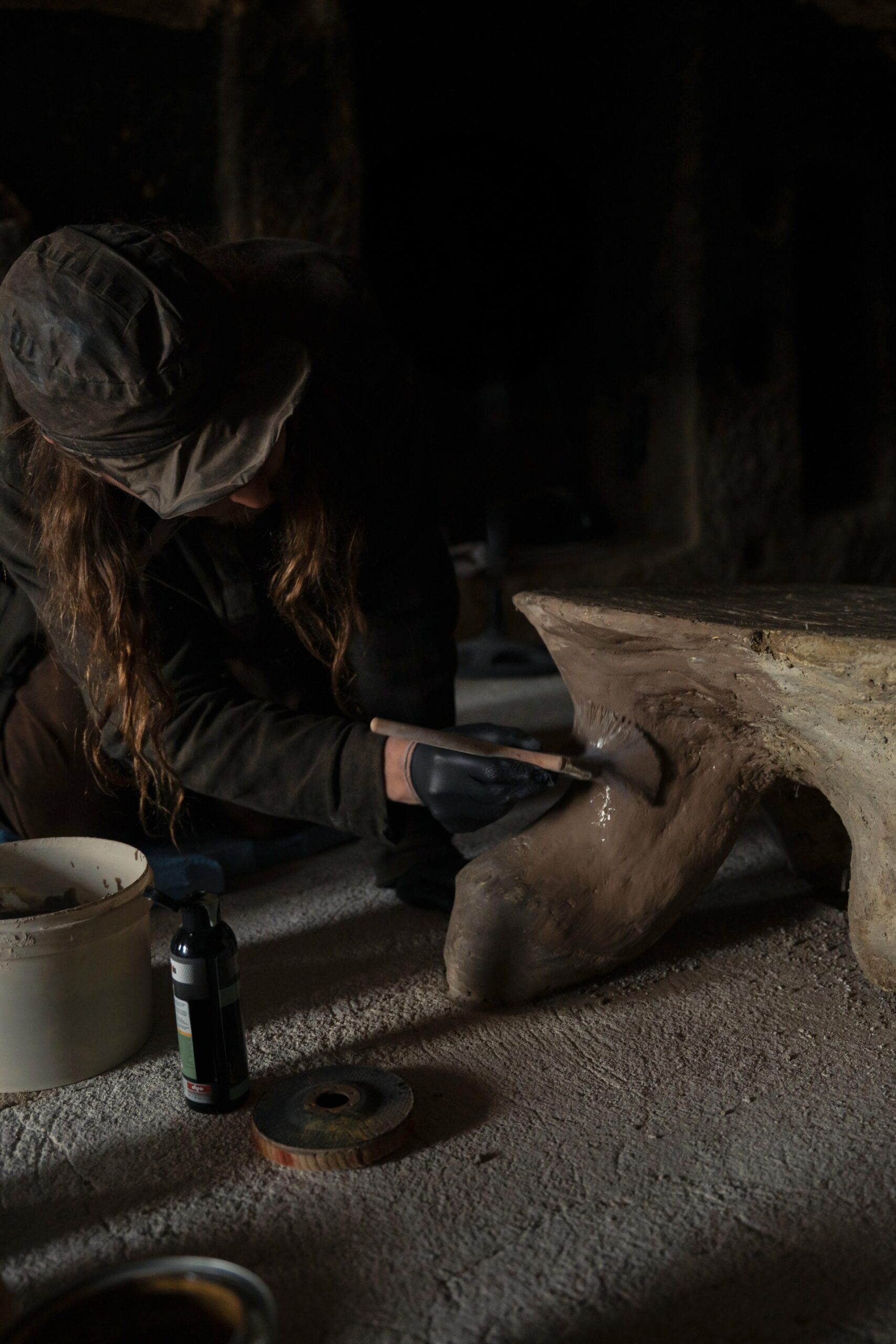
As mentioned previously, my family runs an interior design office/store where I got the chance to rope off a bit of the warehouse with the help of a huge hand-painted plastic drapery. Inside these imaginary “walls,” I’ve got concrete floors, white walls, a workbench made of black-painted plywood, and a general total mess of ongoing projects. A typical day of work consists of me running between the two workspaces, the atelier and my desktop, working on sketches, prototypes, orders, and experiments. My artistic process looks different all the time and depends on what I’m doing and what mood I’m in. Since freedom is something I cherish, setting templates or regulations for my work process could become something that suffocates me in the long run. The nights are often spent building something outdoors in the parking lot outside our warehouse. Where I live on the west coast of Sweden, it’s mostly very windy and cold, but in some strange way it has become a wonderful way to spend time outdoors and reconnect with nature. The whole workspace is also located in the countryside, which I would say is where I belong.
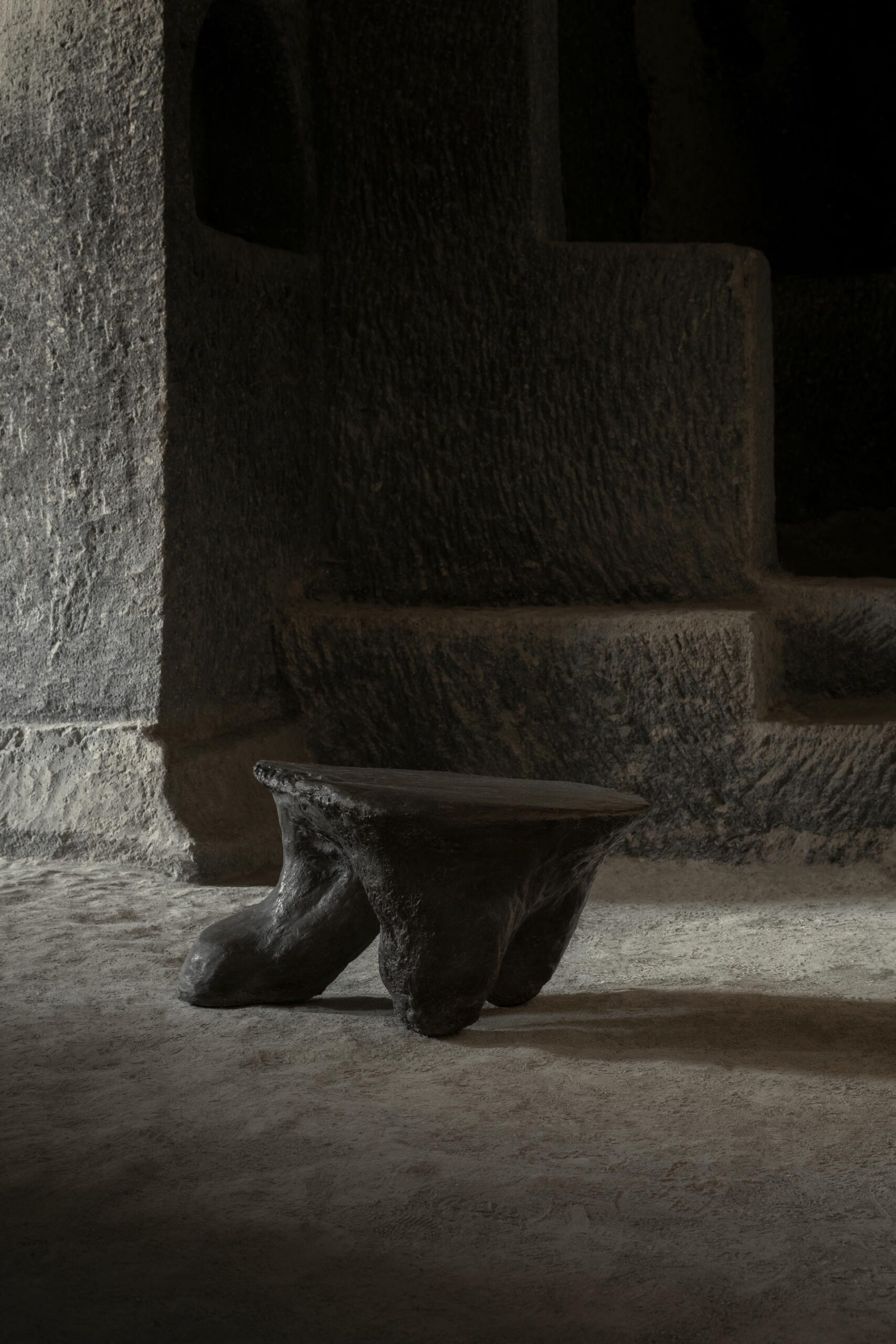
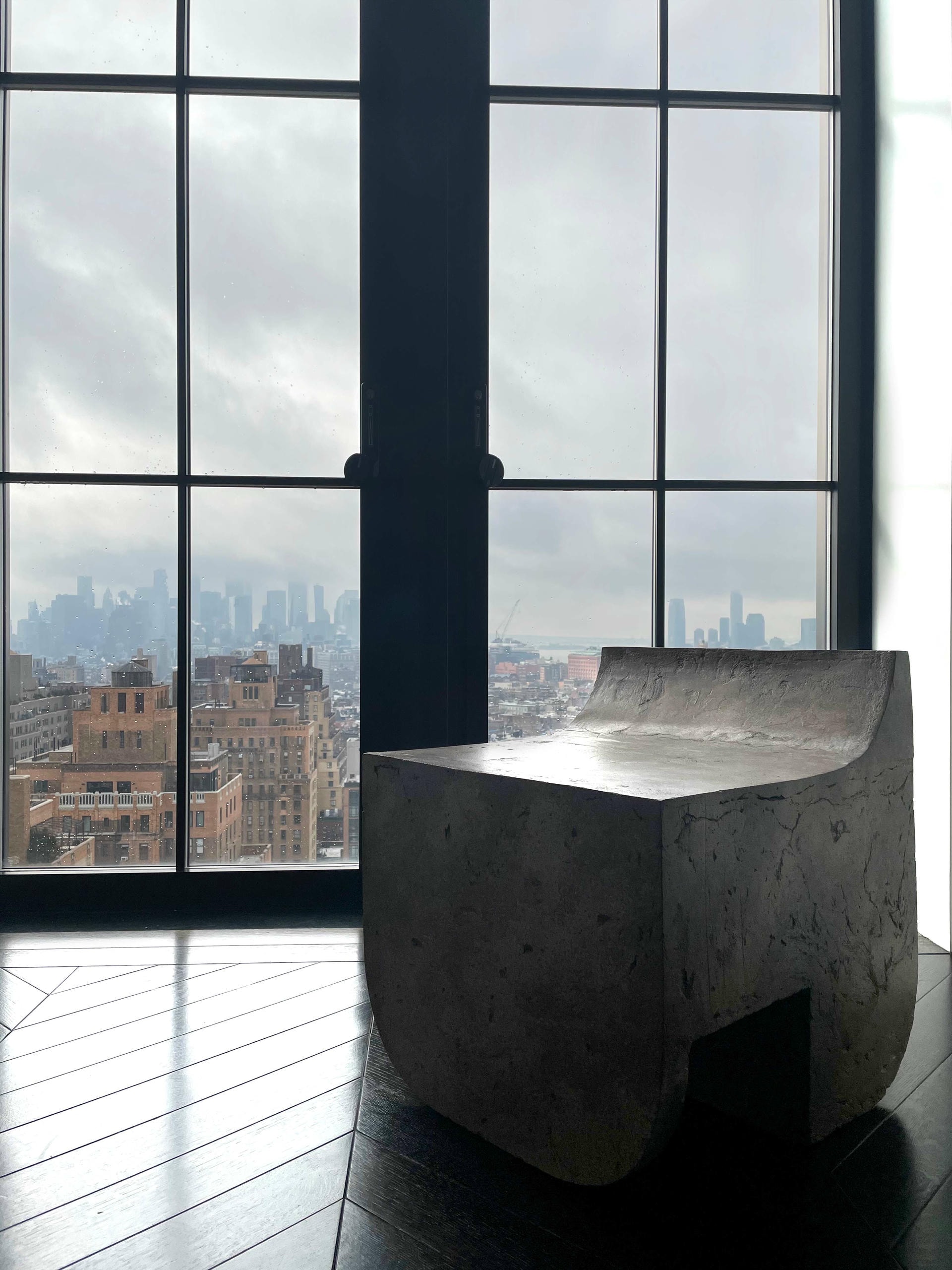
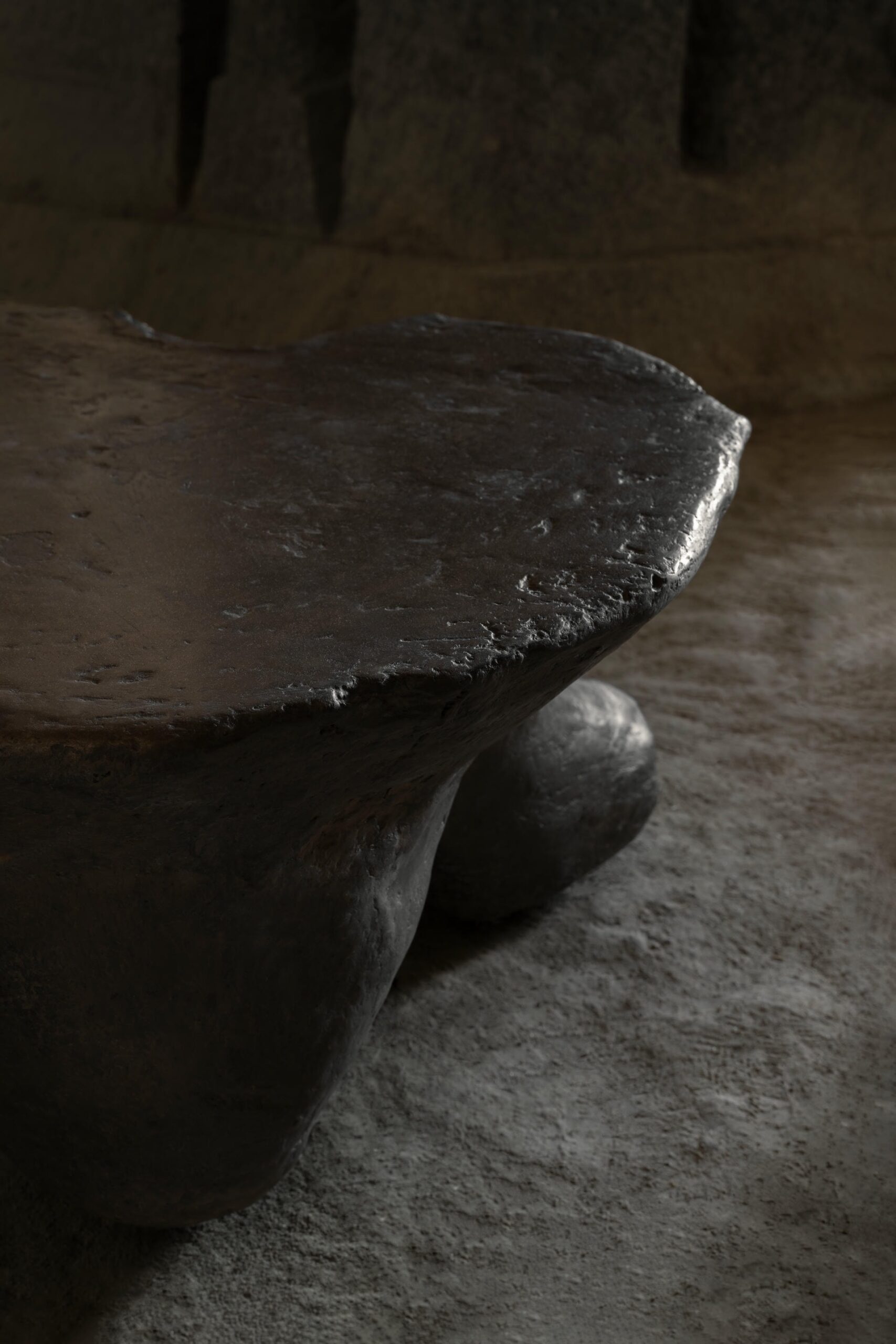
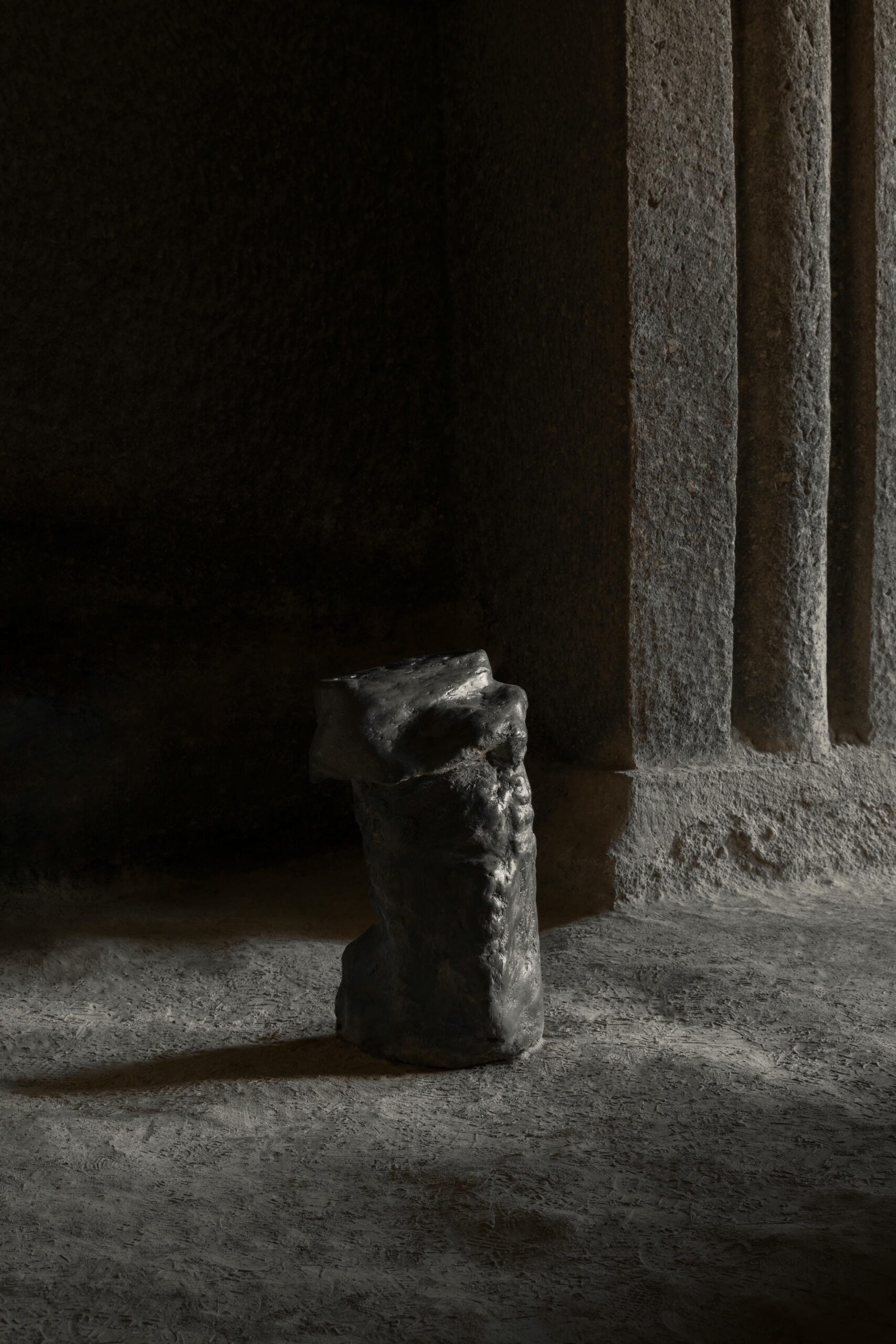
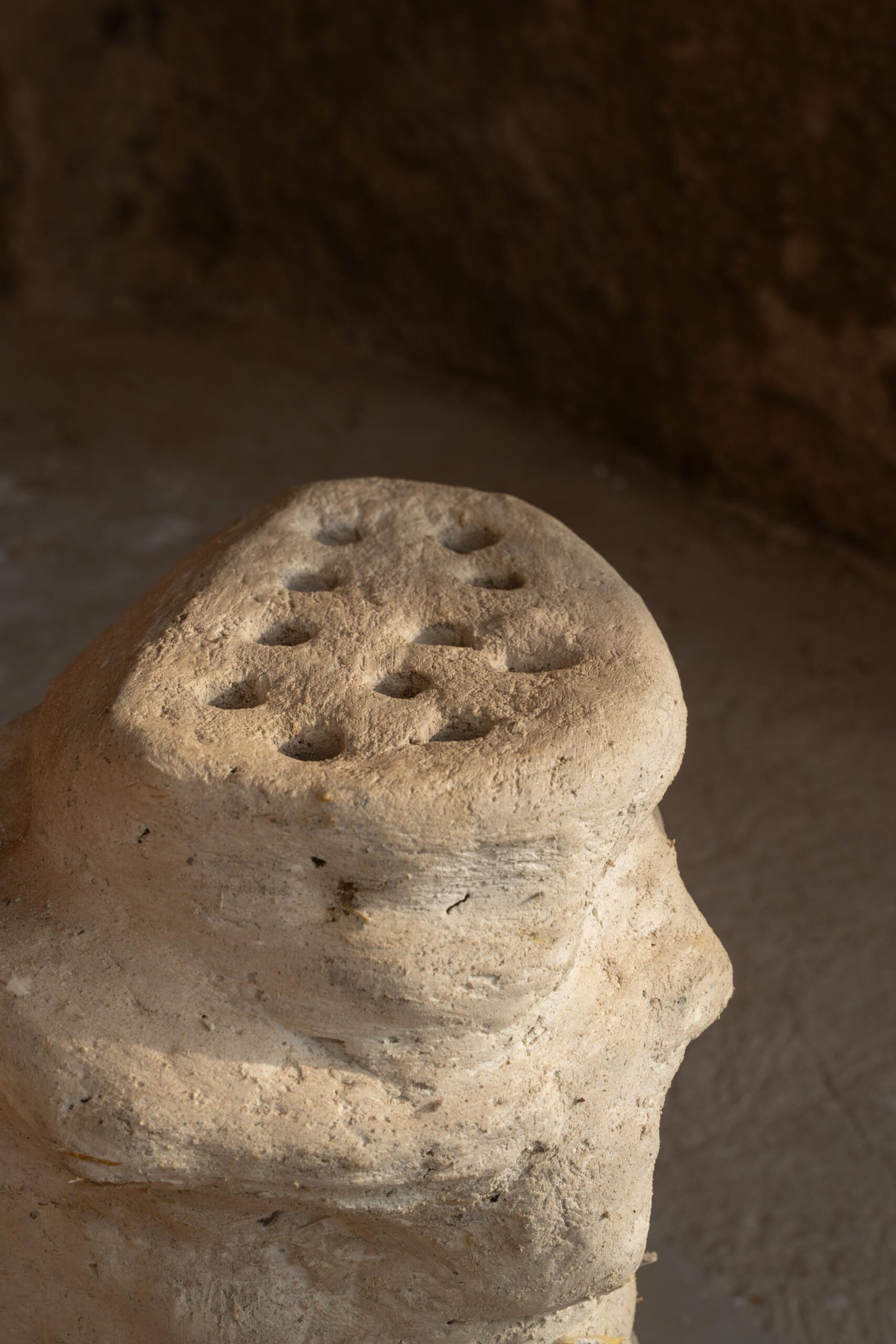
Honestly, there isn’t a simple answer to this. There are a number of different factors that have contributed to my use of strange and unpredictable materials in my work. One of them is certainly my curiosity about life in general, and another is the search for beauty. This is also combined with the very creative, permissive, and encouraging attitude towards experimentation that I experienced from my parents. I usually never start with a material without first having a thought or feeling about the form I want to create; then the material comes relatively naturally during the journey. To answer this question more directly, I enjoy the contrast of combining natural, organic materials such as wood and metal with harsher, more unconventional materials like plaster, concrete, and fiberglass. I get a lot of satisfaction from discovering new materials and experimenting with different combinations.
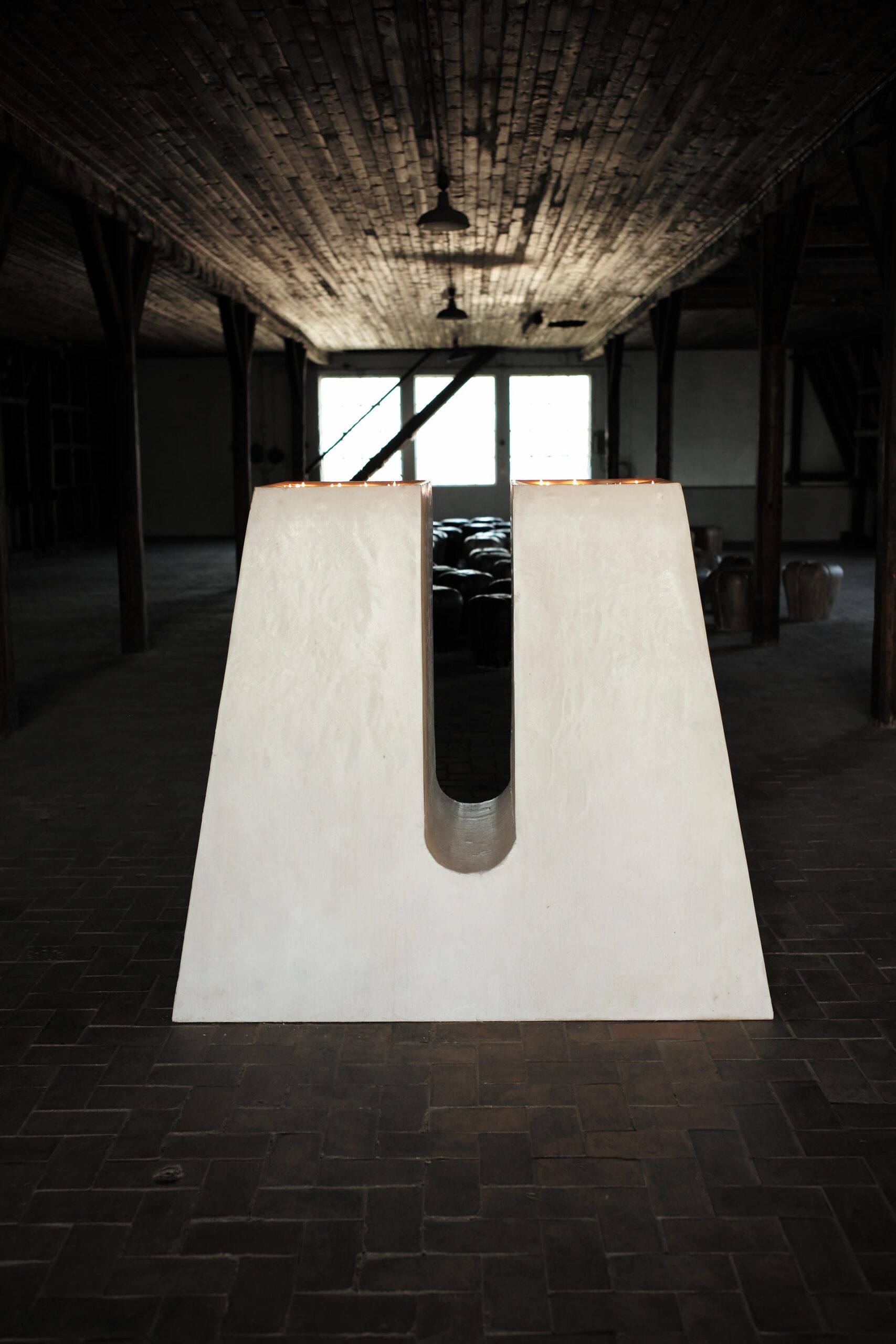
I believe that my technical particularities are, first of all, my curiosity in seeking ways of expression that I haven’t seen before. I’m not the best carpenter in the world or the most skilled sewer, but I do think my hands have something to tell. The key to my artistry is not to seek perfection through the lens of a craftsman, but from an artistic point of view.
Who decided that an object needs to be perfectly made? And what is the difference between a finish mass-produced by robots and an organic, handmade pattern created in the pursuit of something other than pure perfection? People, on the other hand, tend to appreciate old houses, objects, or villages that come with a patina or imperfections. So why is everything new expected to be “perfect”?
With that said, I think my particularity is that I’m not in this game to create another perfectly made chair or lamp that can be reproduced by someone or something. I create things with my bare hands that I hope evoke genuine feelings and ideas that one hasn’t felt or thought before—something that makes the observer question themselves and their way of living and seeing the world.
Avant Garde.
There really are no shortcuts in life, so my advice is to start trying. You just need to throw yourself into the process of thinking and actually doing to reach progress. I see so many people talking and dreaming about things they want to create, but that just never get started on. You need to spend time exploring and allow your hands to get really dirty.
This is a tricky question where a lot of characters should be mentioned, but the first ones influencing me were Joseph Frank, Oliver Gustav, Isamu Noguchi, Gerrit Rietveld, Surli Recht, Rick Owens, and Gaudi.
Christopher Delcourt, Jan Jensen, Draga Aurel, Vincenzo De Cotiis, and Apparatus.
Leonard Vandal, JR, Ivana Bašić, and Chrisitan Caroll Poel.
Elegant and beautiful works that are hard to define.
“The key to my artistry is not to seek perfection through the lens of a craftsman, but from an artistic point of view.”
The Questions
(The Proust Questionnaire is a set of questions answered by the French writer Marcel Proust.
Other historical figures who have answered confession albums are Oscar Wilde,
Karl Marx, Arthur Conan Doyle, Stéphane Mallarmé, Paul Cézanne…)
Progression
To get stuck
Self comparison
Bigotry
A regular farmer
Black clothes
Curiosity
Creativity
Humility
Self honesty
Why
Ballet
To read more
To be loved by Tyra Stina
A bird
A question I’m daily seeking on the answer to
My mind
Contempt
Artist
Intensity
Exchange
I don’t know
Tintin
Something I haven’t thought of before
My parents
Uma
Egoism
Non – Amor Fati it is
In peace
To not have one
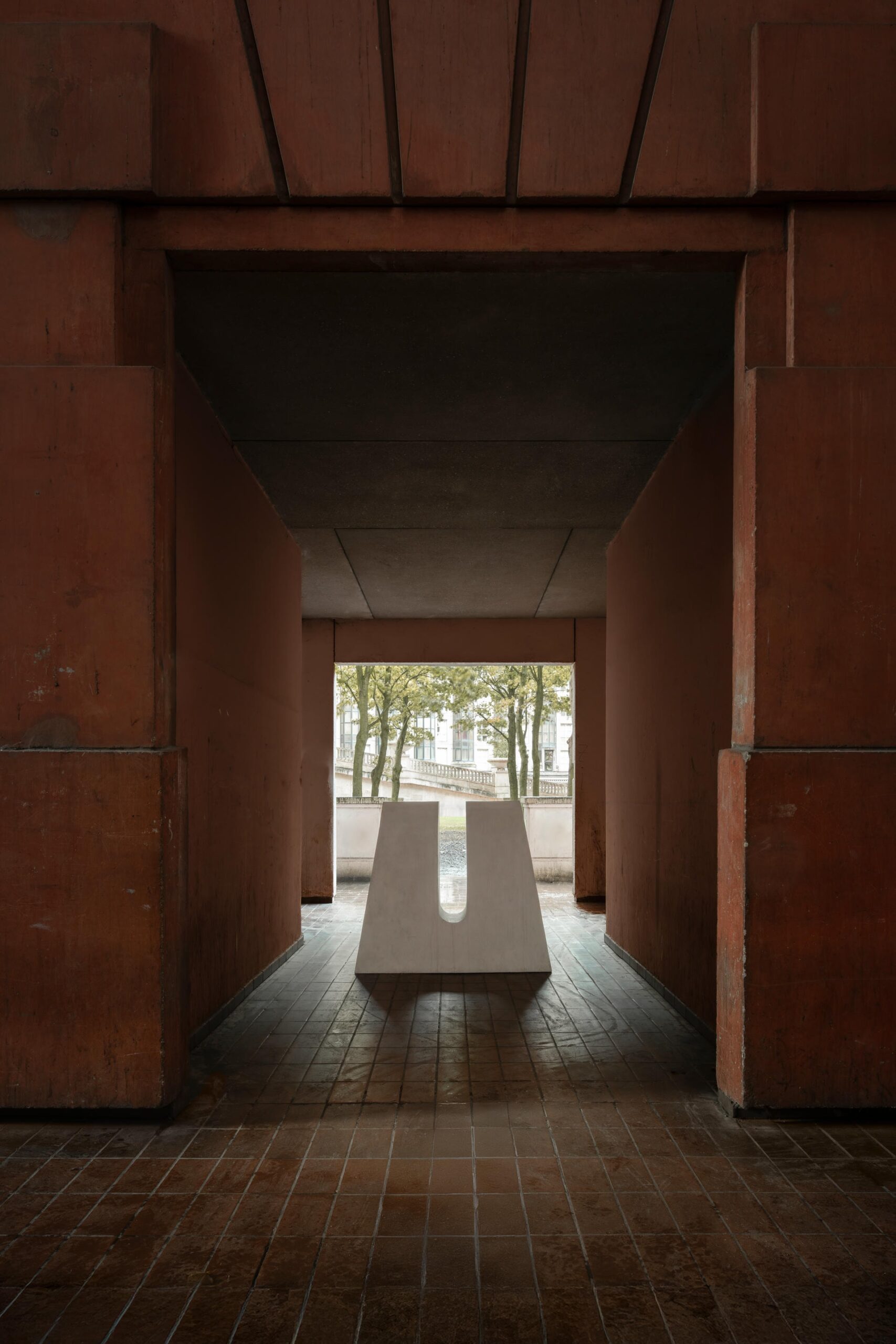
“With my works, I don’t wish to give answers, but rather to raise questions and awaken new thoughts and discussions within the observer.”
SHARE :