Lukasz Friedrich
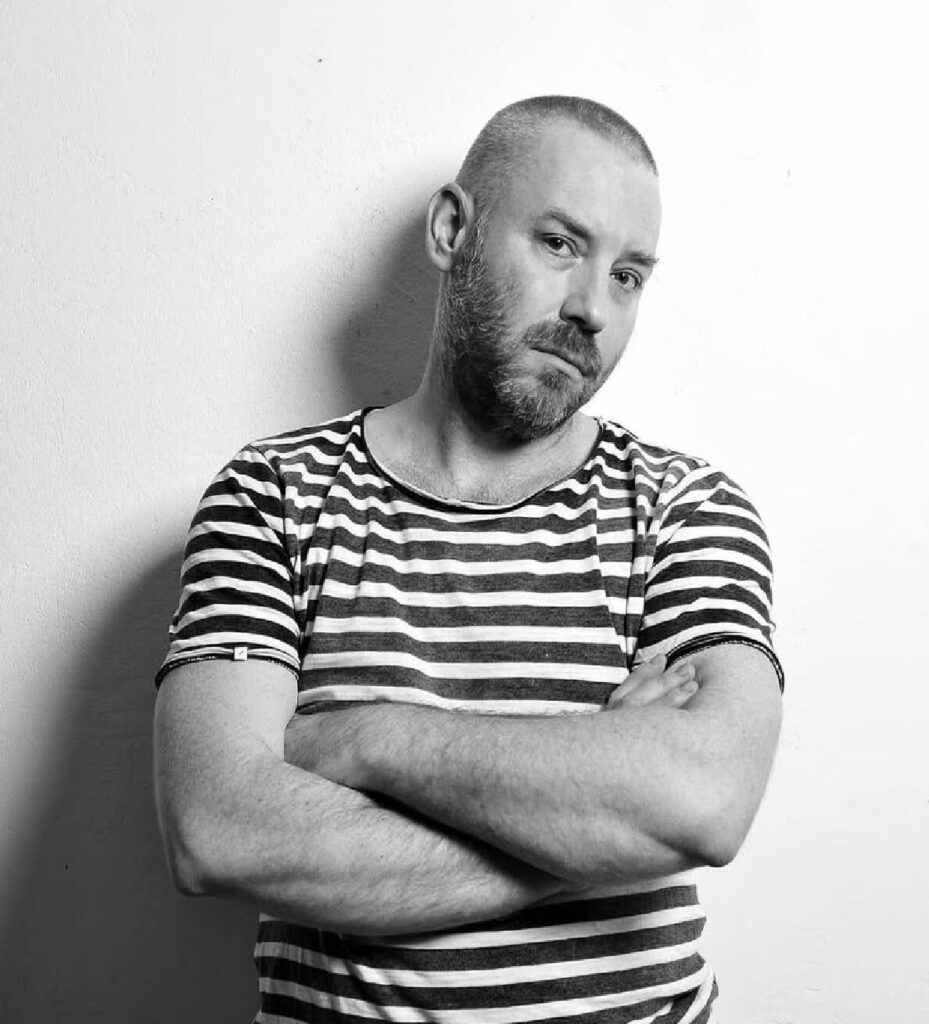
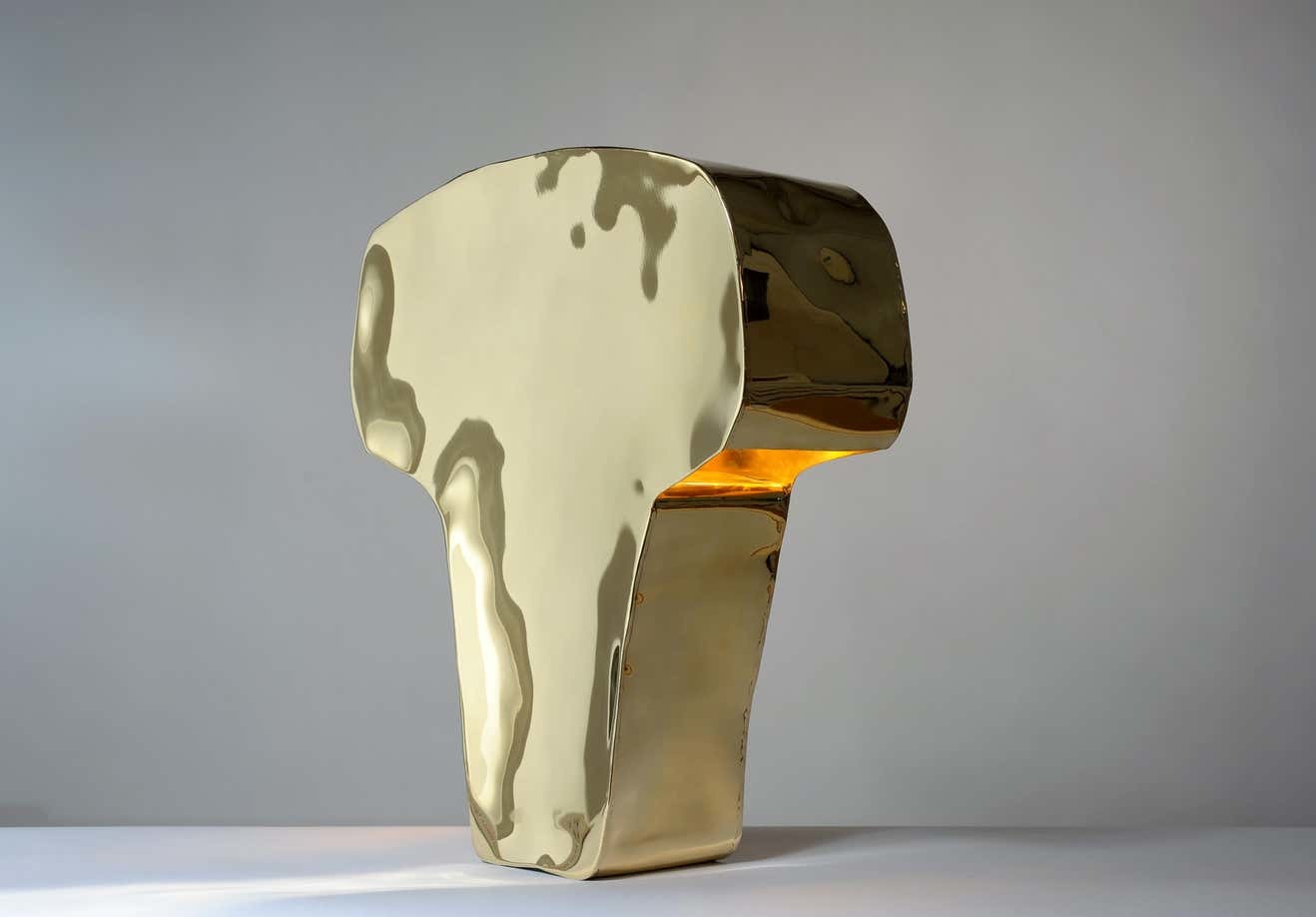
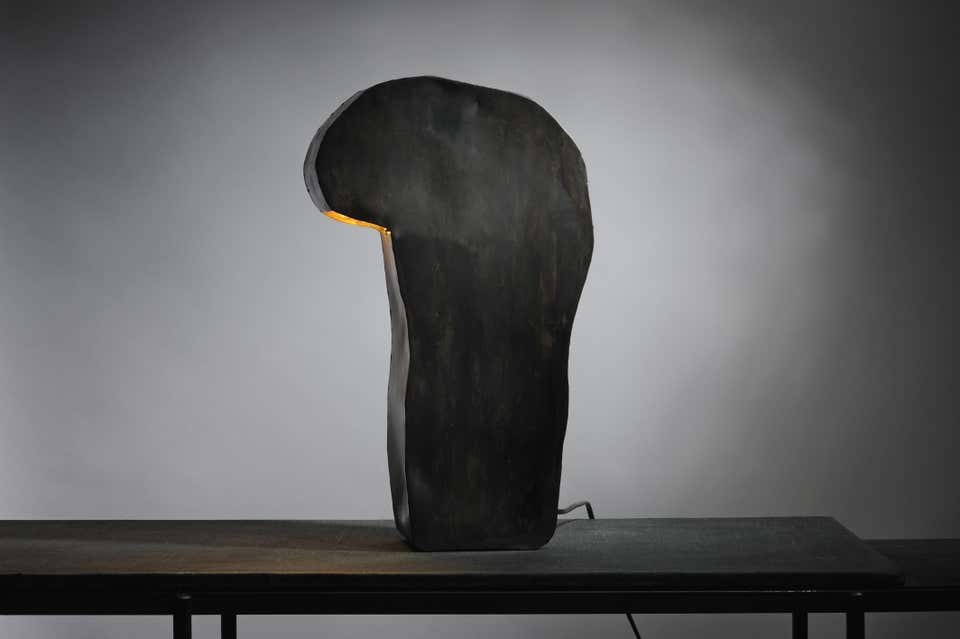
Łukasz Friedrich is a Polish designer and maker based in Warsaw whose practice bridges collectible design, craft, and material experimentation. Working primarily with brass, steel, and patinated metals, he creates sculptural furniture, lighting, and objects that celebrate the expressive qualities of hand-formed materials. Rooted in a self-taught approach, his work balances raw tactility with refined simplicity, revealing the beauty of imperfection through meticulous craftsmanship.
Guided by a fascination with traditional metalworking and contemporary design, Friedrich develops one-of-a-kind and limited-edition pieces distinguished by organic forms, textured surfaces, and subtle irregularities. Through an intuitive making process, he transforms industrial materials into timeless objects that embody material honesty, quiet elegance, and the enduring dialogue between craft and sculpture.
Interview
I was born in Warsaw, Poland, and that’s where I originate from.
I think there are three important spots among my early memories.
My uncle’s s sculptural studio with an amazing glass roof, filled with his creations. My childhood friend’s home, a modernistic villa full of amazing treasures, an old Polish armory mixed with African pieces. My father’s passion for black and white photography and all-night sessions in the darkroom. Those things, I believe, somehow shaped my taste and introduced me to the realm of beauty.
I am a late starter in the professional art field. I’ve been doing this for only four years now.
After graduating from the University of Warsaw with a degree in Cultural Anthropology, I became involved in my family’s metal fabrication business. Only after about ten years of learning the trade did I transition into craft and design. As a passion, I had always pursued photography, which I inherited from my father, and that may be the reason why my first collection consisted of flat objects…
At a certain point, I wanted to advertise our workshop and show our technical possibilities. Working on a daily basis on rather Prêt-à-porter projects and objects, I created more of a Haute couture collection to show designers what we can do for them. My creations worked, and so I switched to design.
After making tons of very bad drawings of very different ideas, I find myself alone in the workshop, with no sketchbook, standing hopelessly at my worktable. While looking around at scraps, rods, and sheets of steel, trying to remember those very bad drawings, it sometimes clicks.
Usually, it starts with a material or the use of a certain technique and ends with form and shape. As I make my own designs, I like to challenge myself as a craftsman: would I be able to make it? When it comes to recreating an object, it sometimes becomes a nightmare…
Some days I spend in my home studio, wasting time drawing even more versions of very different ideas and daydreaming about new designs.
Other days I spend in the workshop, inhaling zinc vaporizing from brass welds and the fumes of patinas, while slowly losing my hearing to the noise of grinding as I produce commissioned creations.
Those are the fun and fruitful days.
And then there are the rare days when good ideas appear and are realized right away.
Metal was the natural choice as I had worked with it before switching to design. My family from my father’s side were blacksmiths and metal fabricators for at least 120 years now. I often visited the workshop as a child, and as a teenager I would help there a lot. I think I knew pretty much and developed a connection with metalworking even before I actually started my professional life there. Probably a psychiatric case…
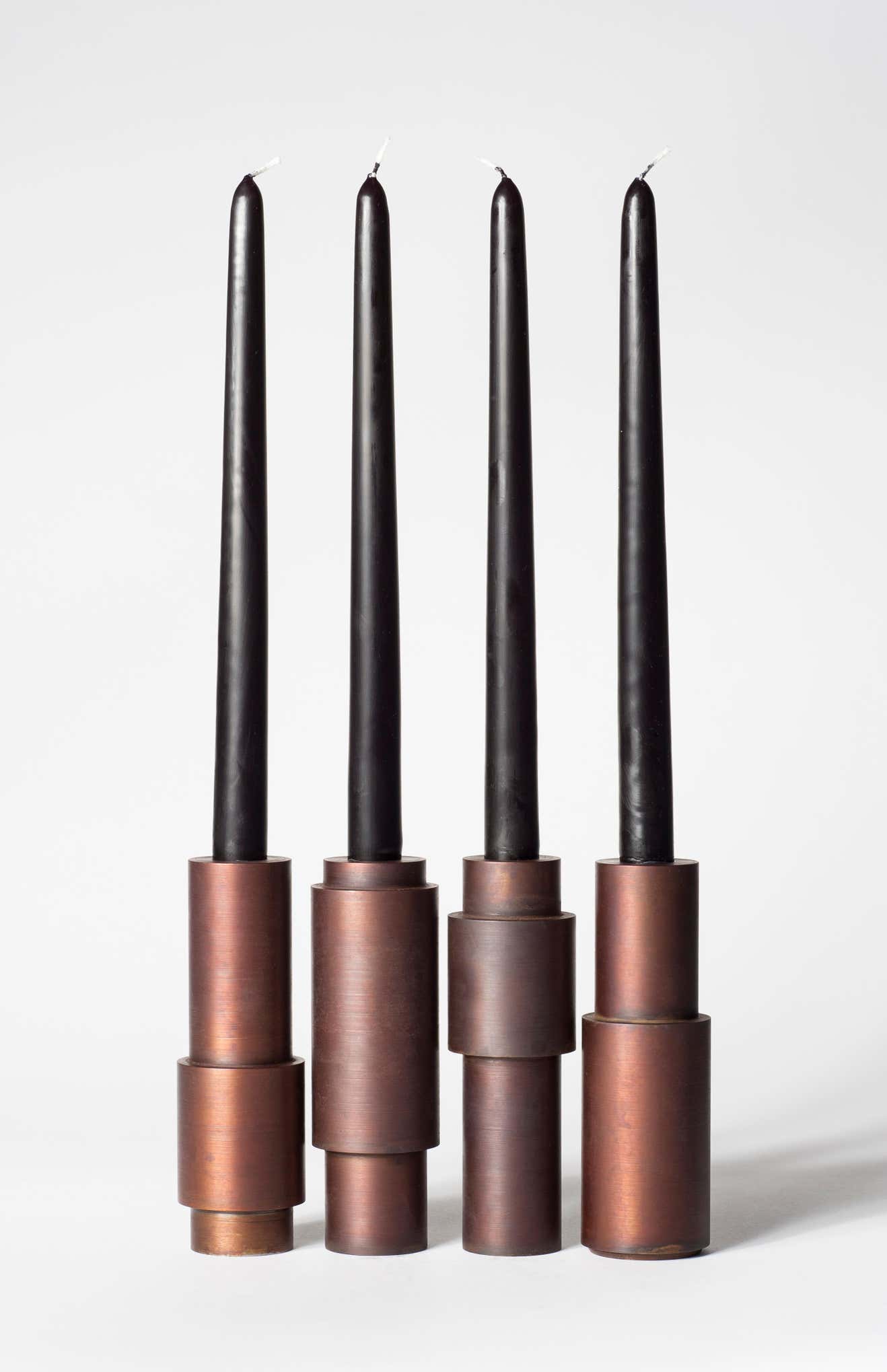
It was surprising to me that the transition from simple fabrication to creating my own designs was so natural. The tools and techniques are the same in both cases. It was also a discovery to realize how many different things one can make from a simple brass rod or a sheet of steel. Welding, as the most important technique in my practice, is where I like to improvise—joining different alloys and experimenting with the appearance of the welds.
- Take snapshots of your bad drawings before utilizing them—who knows, maybe nothing better will come to your mind.
- Don’t make too many sketches—your phone’s storage is limited.
- If all your drawings are bad, start prototyping one of them anyway.
- Prepare yourself: the pieces you hate are sometimes the ones others praise.
- While enthusiastically prototyping the most complicated piece, remember that you’ll have to make it again once it’s commissioned!
- Put your new design in the right context (a proper interior) before you smash it and throw it away. Most things look bad while sitting in a dusty workshop with oversized tables and mess all around.
- Being dishonest (taking too much influence or copying) is the hardest way.
- Learn from others only what hasn’t been done yet.
- Don’t envy other people’s techniques or the means they use—well, they just couldn’t make it any simpler!

This would be the one with no tradition attached, the one where everything is allowed and even more expected. But also not so much involved nor rebellious as far as politics are concerned.
- Every great new designer I discover broadens the territory of creative freedom for me—wow, so even such things can exist!
- Every new designer I discover occupies a piece of that territory with his or her work—shit! Stay away! This has already been done!
I appreciate artists of consistency. I think that one strong idea is enough for a lifetime of work.
L. F. Céline, William Egglestone, Walker Evans, Paolo Sorrentino, Morrissey, among other great artists.
Made in available light.
Pretty insightful experience it was. Thank you!
“I like to challenge myself as a craftsman: would I be able to make it?”
The Questions
(The Proust Questionnaire is a set of questions answered by the French writer Marcel Proust.
Other historical figures who have answered confession albums are Oscar Wilde,
Karl Marx, Arthur Conan Doyle, Stéphane Mallarmé, Paul Cézanne…)
State of being out of control.
Human evil at my doorstep.
Indecision.
Self-contempt – source of evil.
Those who went through hell and don’t brag about it.
My self-belief.
Indecision.
Tolerance instead of understanding.
Integrity.
Integrity again.

Certain curse words.
Musicality.
Indecision.
Finding my ways through life.
Myself again, please.
Just where I live.
None.
Hating yourself.
Having a drink in the safety of the day.
Down to earth silhouette.
Understanding.
L.F Celine, M. Houellebecq, A. Dublin, A. Rand.
Don Quichotte.
All those who lived, loved and died.
Free People of Ukraine.
Gwidon, Jan, Oresta, Raminta.
Mental laziness.
Finding my ways so late in life.
Knowing my beloved ones are going be fine.
Feast on your life!
“The pieces you hate are sometimes the ones others praise.”
SHARE :