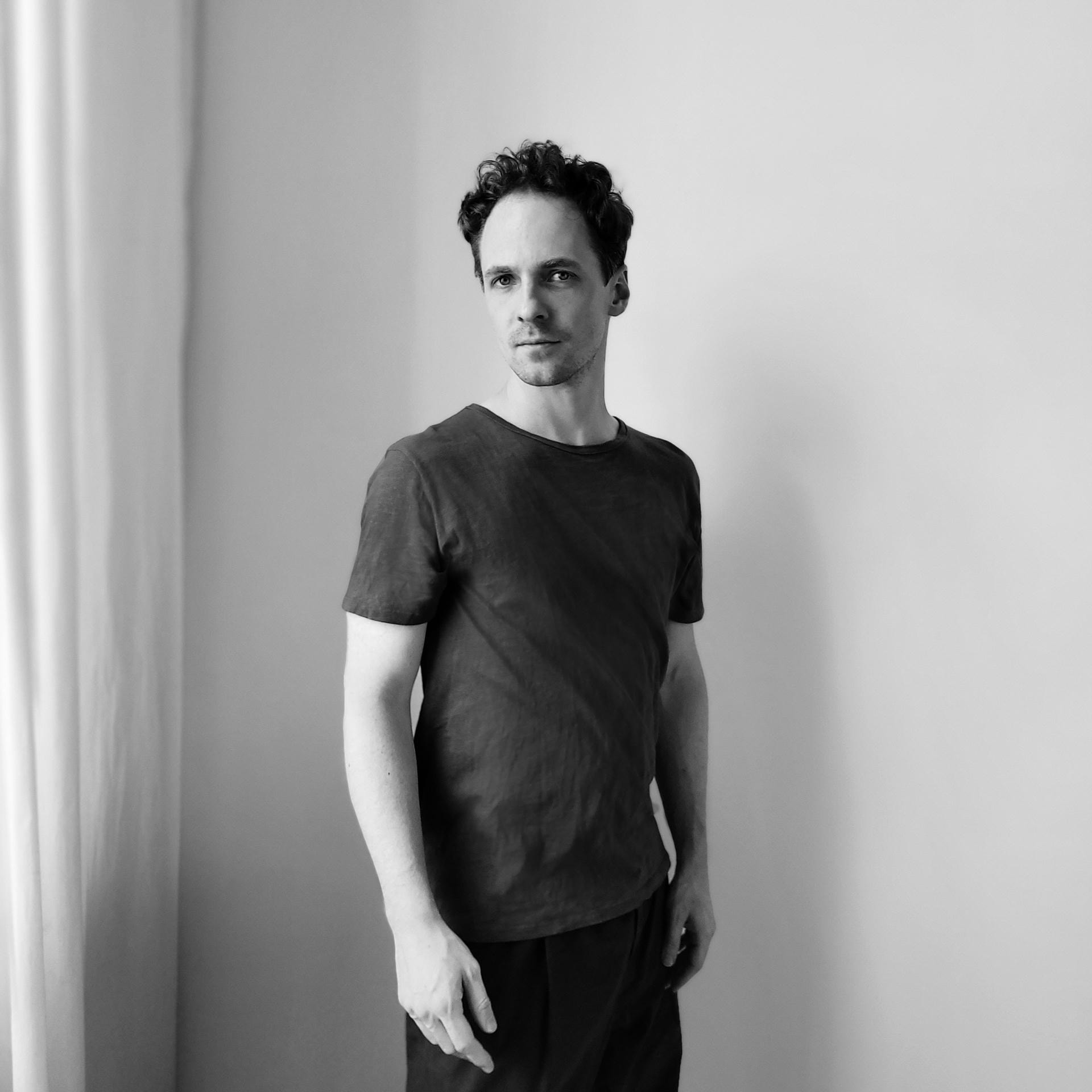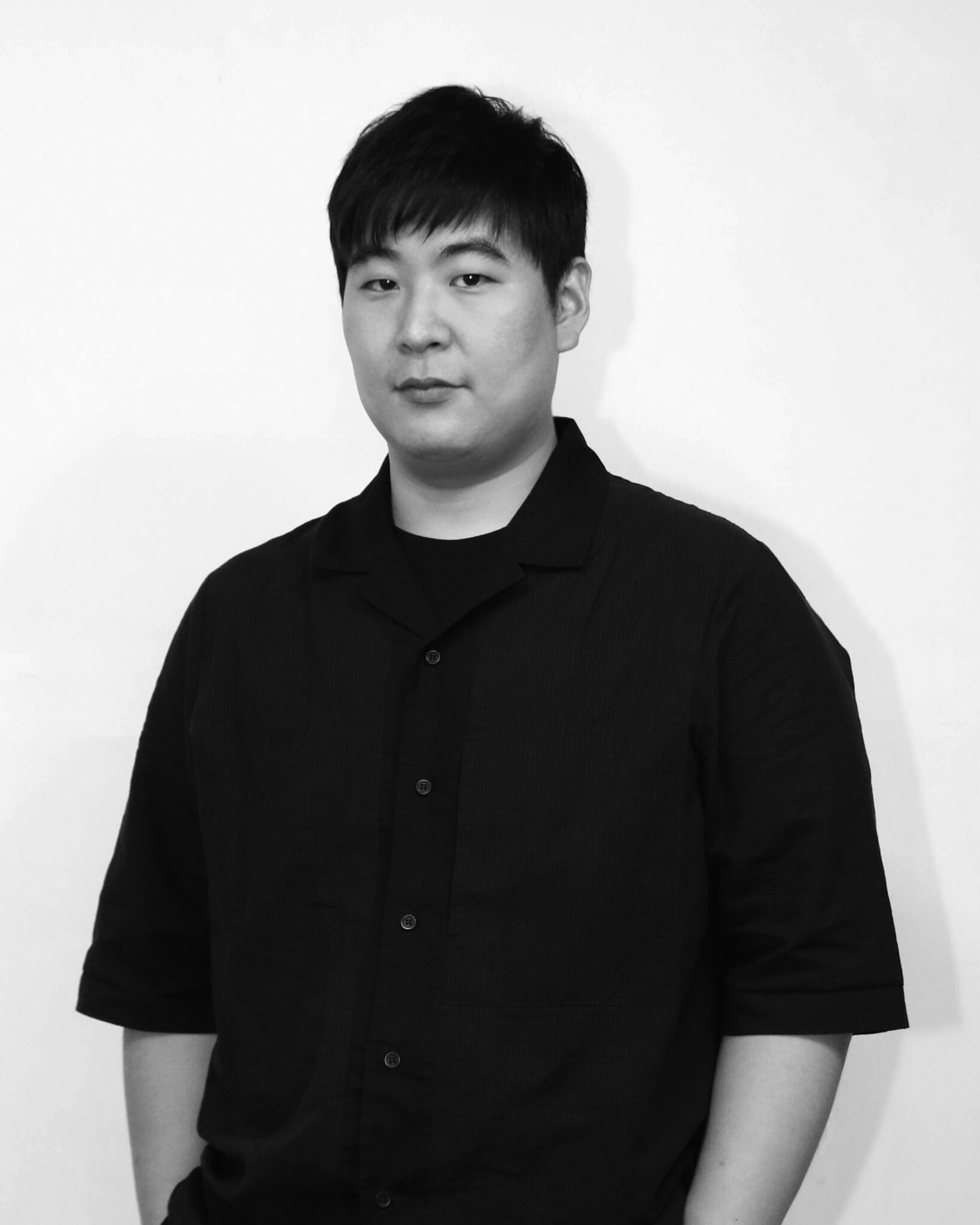
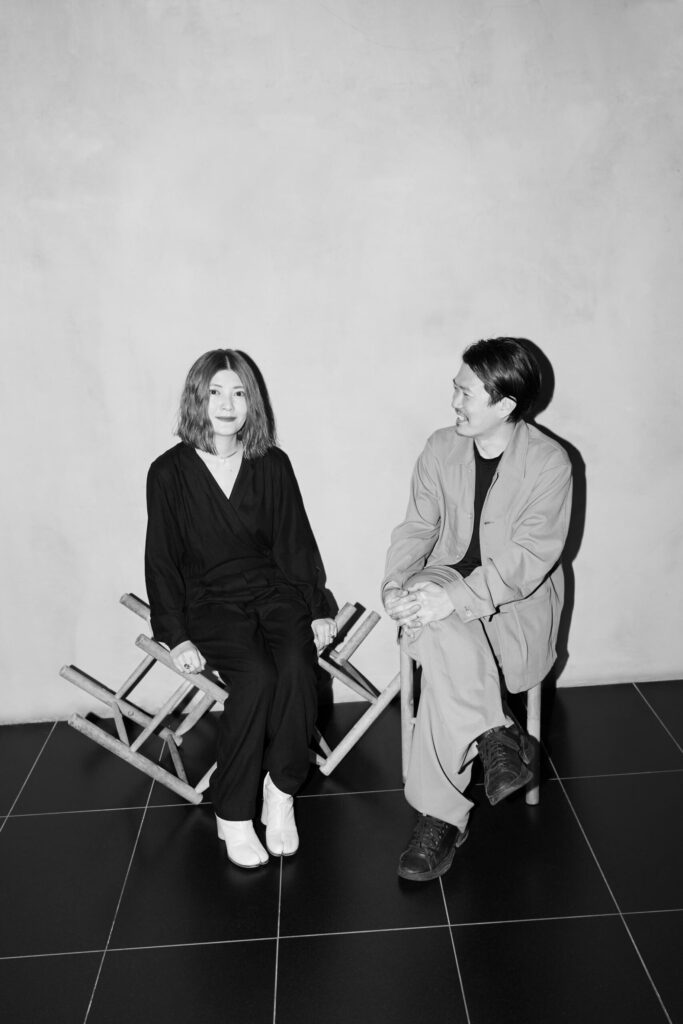
Makoto Suzuki and Ayumi Koyama – AtMa
Founded in 2013 by Makoto Suzuki and Ayumi Koyama, AtMa is a creative studio working across spatial design, objects, installations, and material research. Its projects range from retail environments and restaurants to exhibitions, window displays, and furniture. Alongside commissioned work, the studio develops independent projects exploring contemporary social questions and runs COM, a space for presenting its own work and collaborations with artists.
AtMa’s practice is rooted in close observation of materials, places, and human interactions. Moving between research and making, Suzuki and Koyama explore the histories and possibilities within existing objects and environments. Their work considers design as a means of revealing relationships between people, materials, and space, allowing each project to inform an ongoing process of inquiry.
Interview
Makoto: I was born in Singapore and grew up in Kawaguchi City, Saitama, Japan, a city long known for its metal casting industry. My grandfather was a craftsman who made wooden molds for casting, and because his workshop was attached to our home, I spent much of my childhood there before and after school. It became part of my everyday life.
Ayumi: I was born and raised in Ibaraki, Japan. Rather than growing up in the center of a city, I was surrounded by nature and a strong sense of place. Looking back, I think I became very aware of seasonal changes, the texture of materials, and the shifting qualities of light and shadow from an early age.
Makoto: Visiting the Sagrada Família around 1999. At the time, it struck me as an immense construction site surrounded by cranes, but within that site was a building that had been changing and renewing itself over time. I still remember how strongly I was drawn to the beauty of the unfinished, the sense of an ever-continuing process, and the accumulation of countless individual details.
Ayumi: I took painting lessons from an early age, and I vividly remember repeatedly drawing trees, plants, and other forms found in nature. I carefully observed the texture of bark, the growth of branches, and the layering of leaves, constantly experimenting with how to capture their presence. I was also fascinated by the works of artists from the past, realizing that the same subject could be seen and expressed in entirely different ways depending on the person. Rather than simply reproducing what was in front of me, I became interested in expressing how I perceived the world. That is my earliest memory of feeling connected to art.

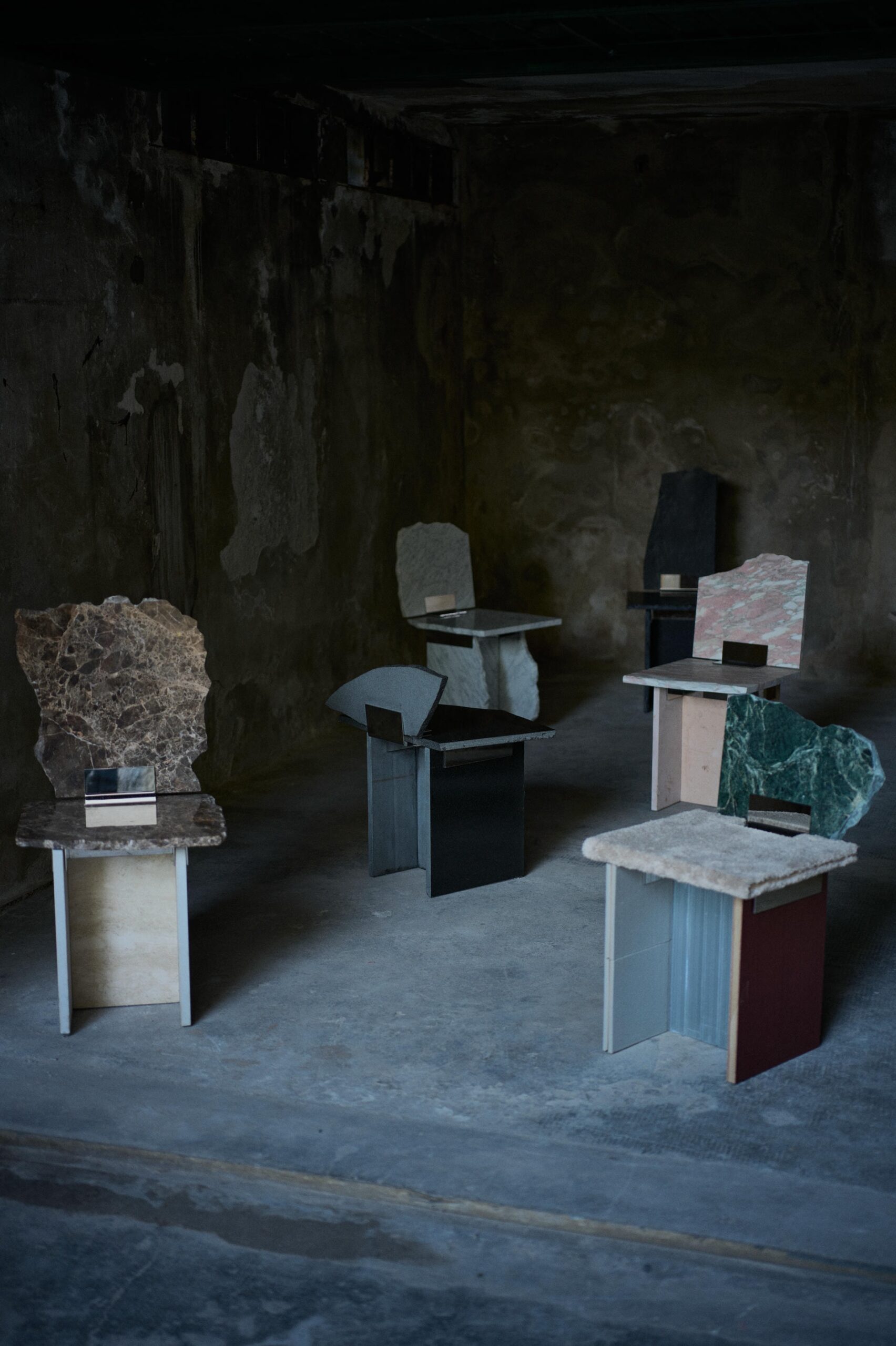
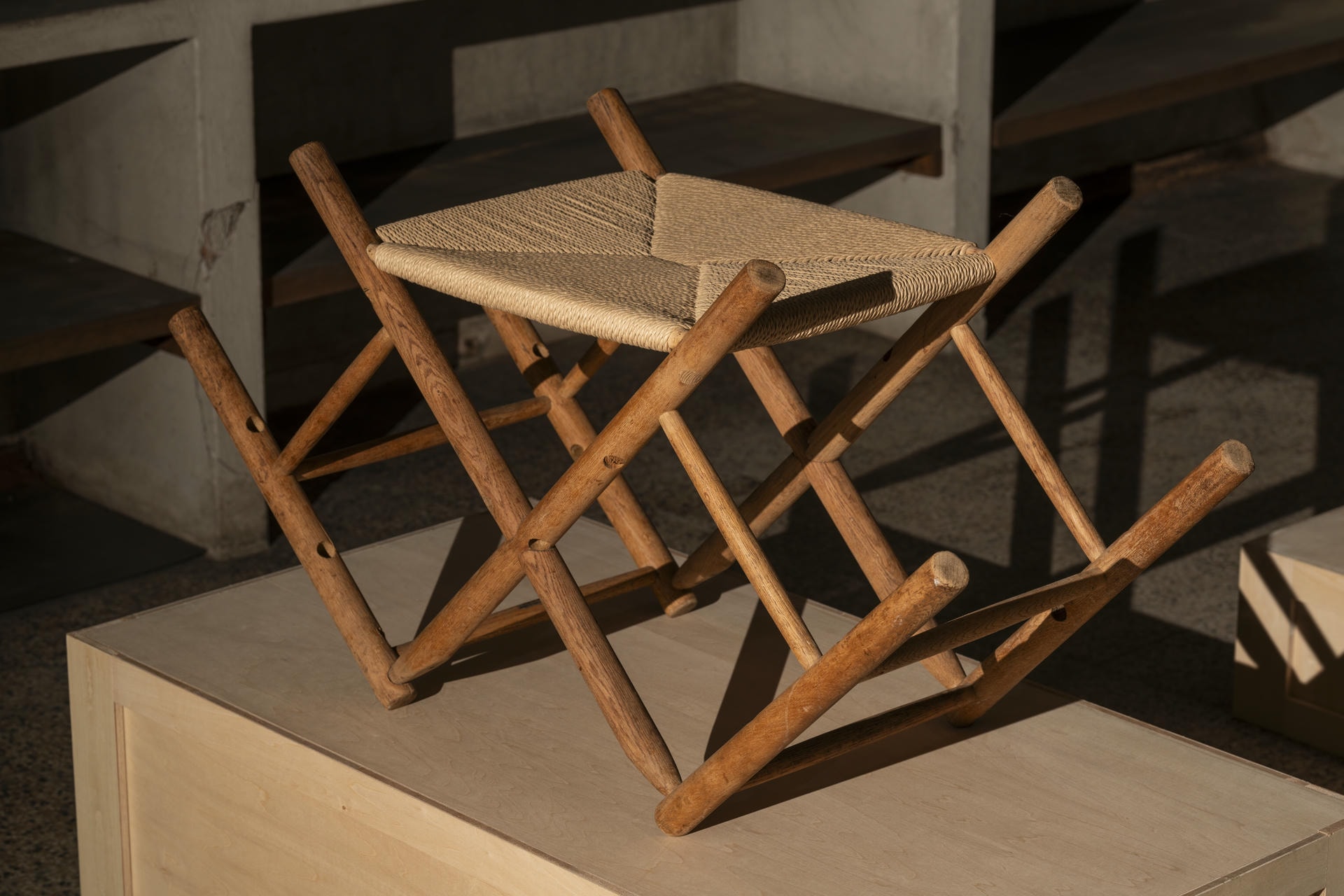
J39.5 © Shunsuke Watanabe
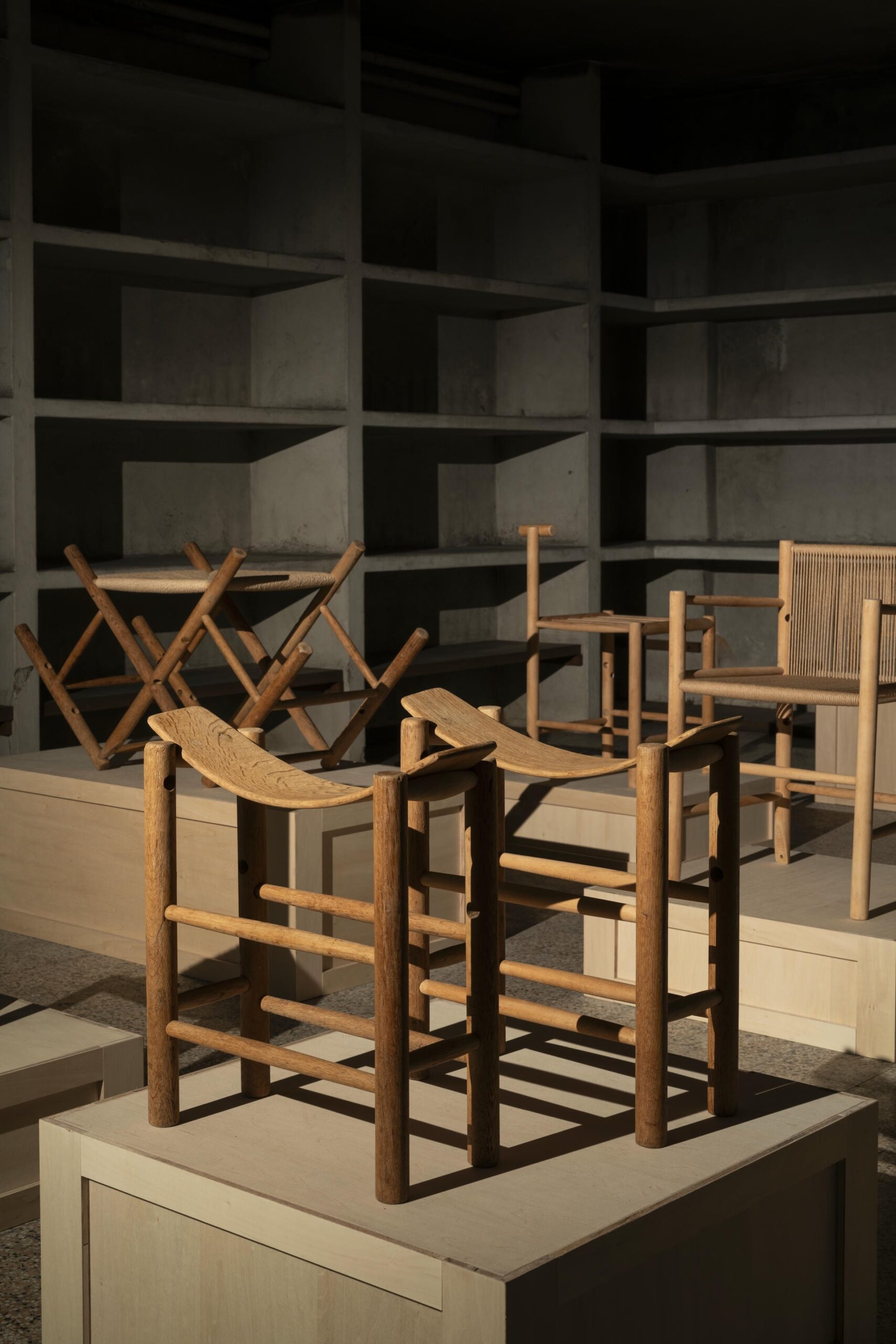

Sur+Plus © Shunsuke Watanabe
Makoto: No. I studied marine science at university in the School of Marine Science and Technology. After graduation, I worked in sales for a trading company before eventually moving into design. Today, alongside our creative practice at AtMa, we also teach as a part-time lecturer at an art university. I have never felt that my path was a detour. Every stage has shaped the way I think today.
Ayumi: Yes. I studied Japanese painting in graduate school before working as a visual merchandiser in the fashion industry, where I designed spaces and displays. Today, through AtMa, I work across interiors, exhibitions, products, and installations. For me, art and design are not separate disciplines. They are part of a continuous way of thinking about how people and objects, spaces and actions, materials and society relate to one another.
Makoto: The biggest reason I was drawn to design was that it offered a way to change how people see what already exists. Whether tangible or intangible, design has the power to leave a lasting impression on both objects and people. Rather than creating something entirely new, I became interested in revealing overlooked values and reinterpreting what has become ordinary. Architecture, products, and interiors can quietly shape the way people behave and perceive the world. I see design not simply as the creation of form, but as a way of editing relationships between people and society.
Ayumi: When I was studying painting, my focus was primarily on exploring my own inner world and perception. Over time, however, my interest shifted toward the ways materials and spaces interact with human behavior and social systems. Working as a visual merchandiser made me realize that space has the power to influence the body, emotions, and the direction of our attention. That realization naturally led me toward design.
Our process always begins by observing the relationships that already exist within materials and places. Through observation, questions gradually emerge: Why is this material discarded? Why is this building demolished? Why do we instinctively value something simply because it is new?
We explore these questions through research—visiting sites, speaking with people, and working directly with materials. As our understanding deepens, ideas begin to take shape.
For example, we often turn our attention to overlooked materials and techniques, understanding them not simply as materials but as carriers of time, memory, and place.
For us, design is the process of translating those questions and discoveries into forms and experiences that can be shared with society.
There is no fixed routine in our practice. Some days are spent visiting construction sites; others in factories examining materials, or in the studio sketching and drawing plans from morning to night.
Research is always at the center of what we do. We rarely develop projects solely from behind a desk. Instead, we make a point of visiting the places where materials are produced, used, and discarded, so that we can better understand the systems and circumstances behind them.
At AtMa, making objects is only part of our practice. We believe it is just as important to put the thinking behind the spaces and furniture we create into words. The time we spend making and the time we spend thinking are inseparable.
For us, design begins not with making, but with observing society and the material world.

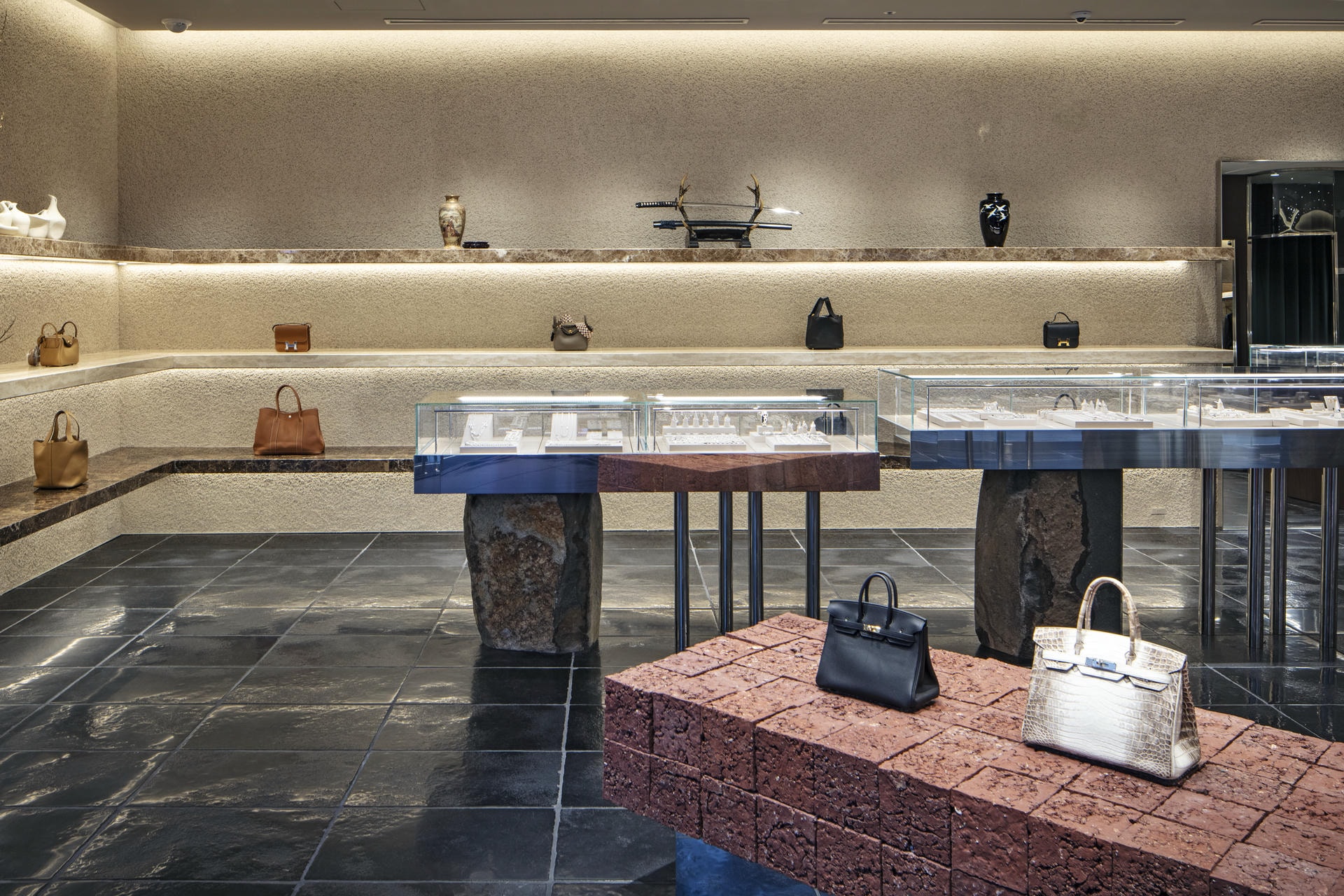
Allu Shinjuku 1F © Kenta Hasegawa
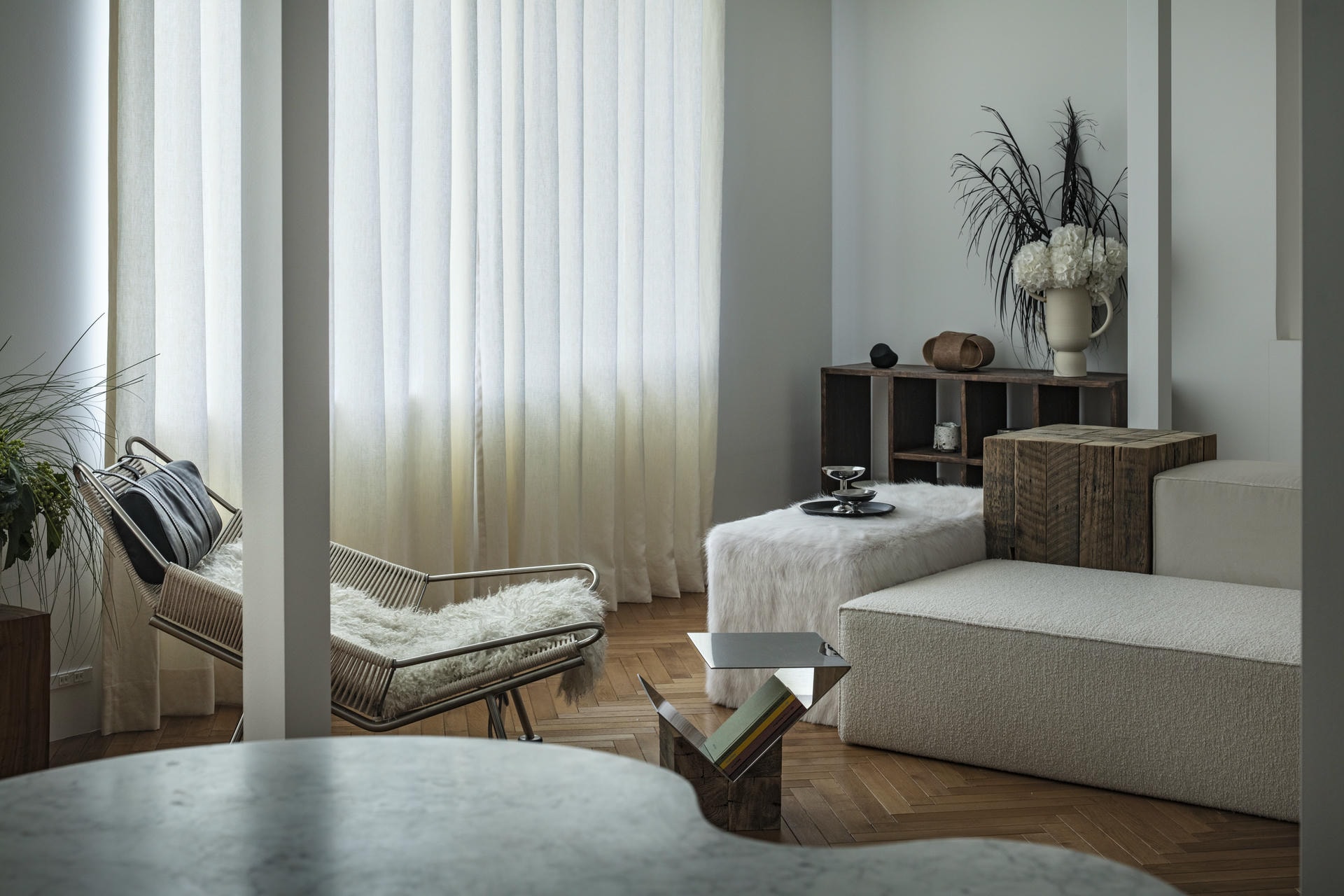
Kamakura House 2F © Kenta Hasegawa
We do not think our work belongs to any single movement.
If we had to describe it, we would say our practices lie somewhere between regenerative design, circular design, material research, and collectible design.
Our interest, however, extends beyond material circulation itself. We are interested in how things that society has overlooked or dismissed as no longer valuable can be brought back into culture and everyday life.
Our practice is less about creating something entirely new than about reinterpreting existing materials, places, structures, and memories, allowing them to emerge with new meaning.
We do not see materials simply as finishes or surfaces. To us, they carry relationships with time, memory, and the environment. Stone, timber, soil, metal, glass, textiles, and surplus materials all embody different timescales.
We rarely select these materials deliberately, we encounter them through our interior design practices. Construction sites, factories, and buildings awaiting demolition continually reveal unnoticed materials and unresolved questions. We often find materials that remain perfectly usable yet are discarded, or buildings that are demolished simply because they are considered old. In these situations, we see possibilities that have yet to be recognized.
At the same time, client work is inevitably shaped by constraints such as budget, schedule, functionality, and project timelines. These conditions do not always allow us to pursue such questions as deeply as we would like.
Our self-initiated projects therefore become a space where we can continue investigating the material and social questions that emerge through commissioned work.
We are not looking to invent new materials. What interests us is finding new ways to understand the value that already exists.
We see technique as a way of creating new relationships while preserving the distinct qualities, differences, and memories embedded within materials.
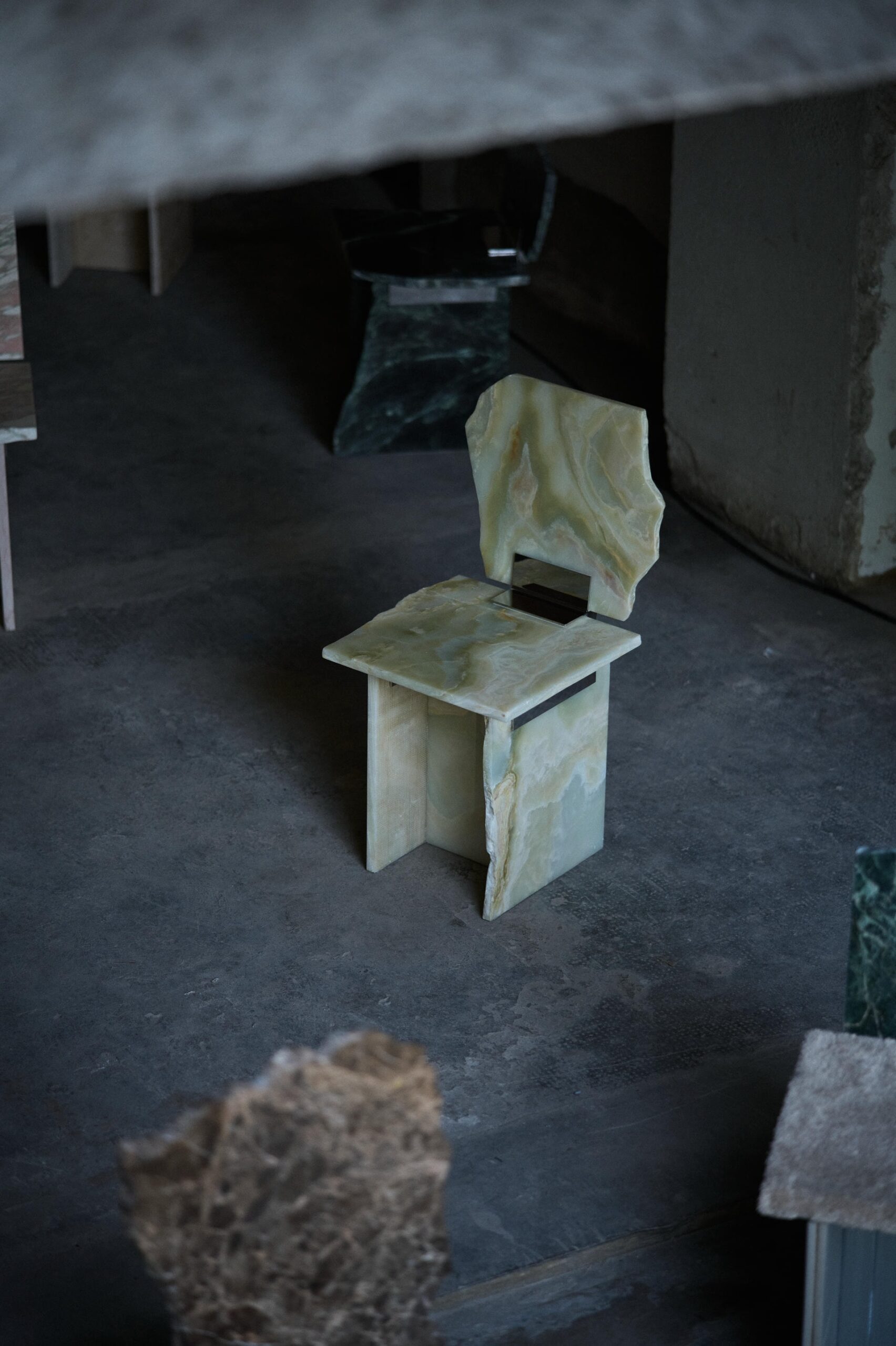
We do not standardize irregularities, scars, variations in thickness, weight, or traces of previous use — we accept them as they are. Whether connecting different materials or reconfiguring existing objects, we treat these traces not as imperfections to conceal, but as integral parts of both the structure and the expression of the work.
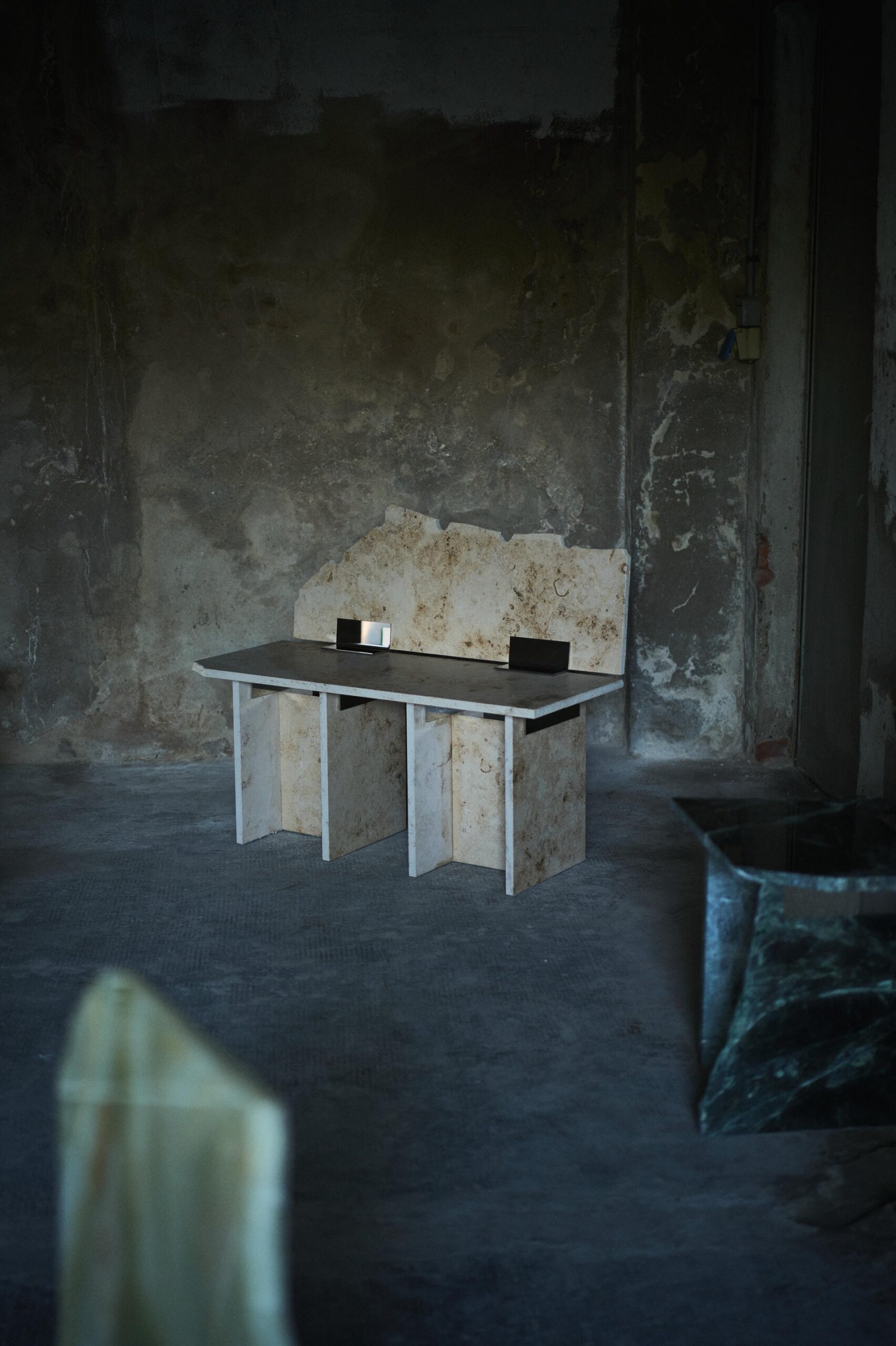
In SUR+PLUS, for example, we developed a stainless-steel joint system that accommodates variations in the thickness and shape of stone, timber, and other materials, rather than forcing them into uniform dimensions.
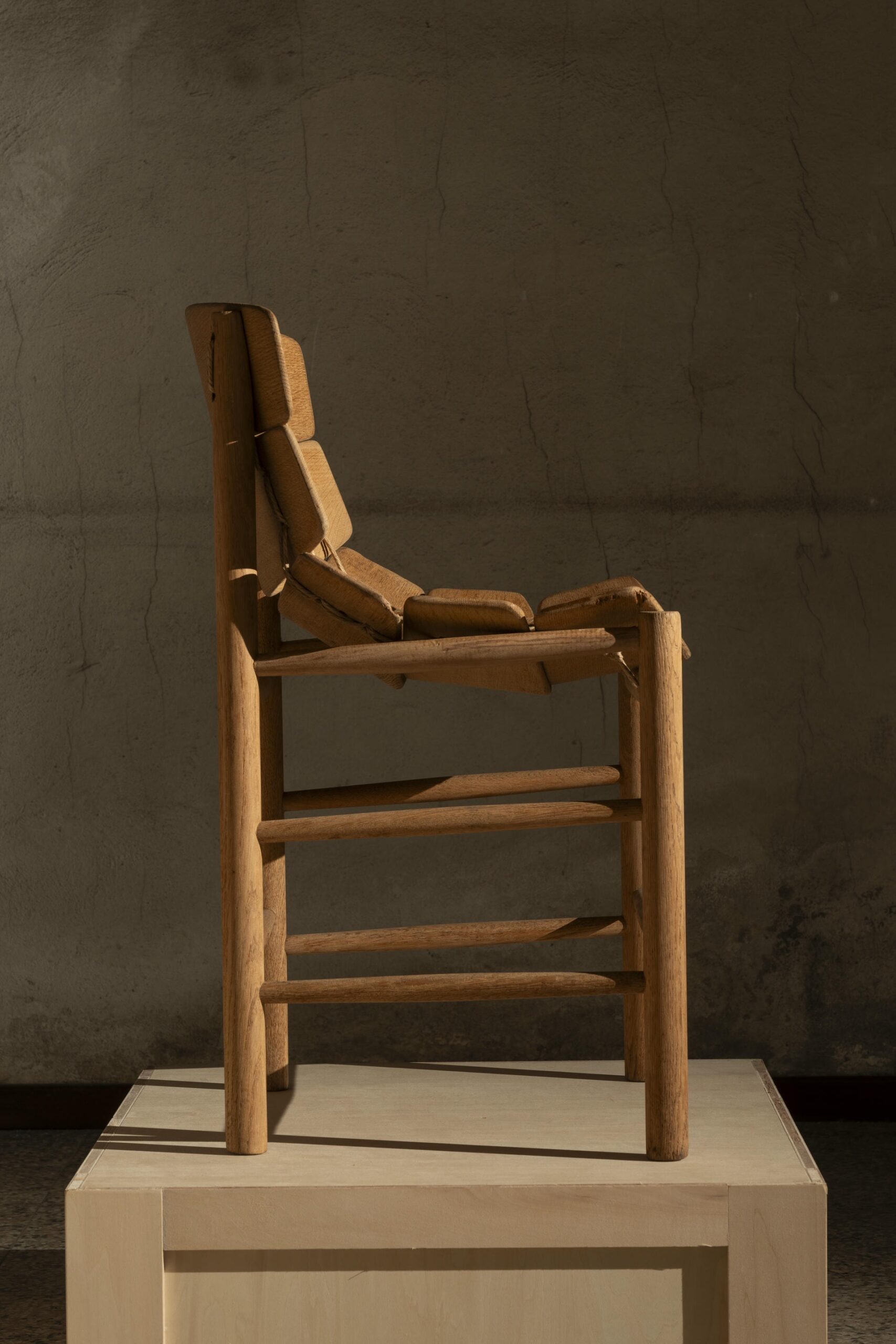
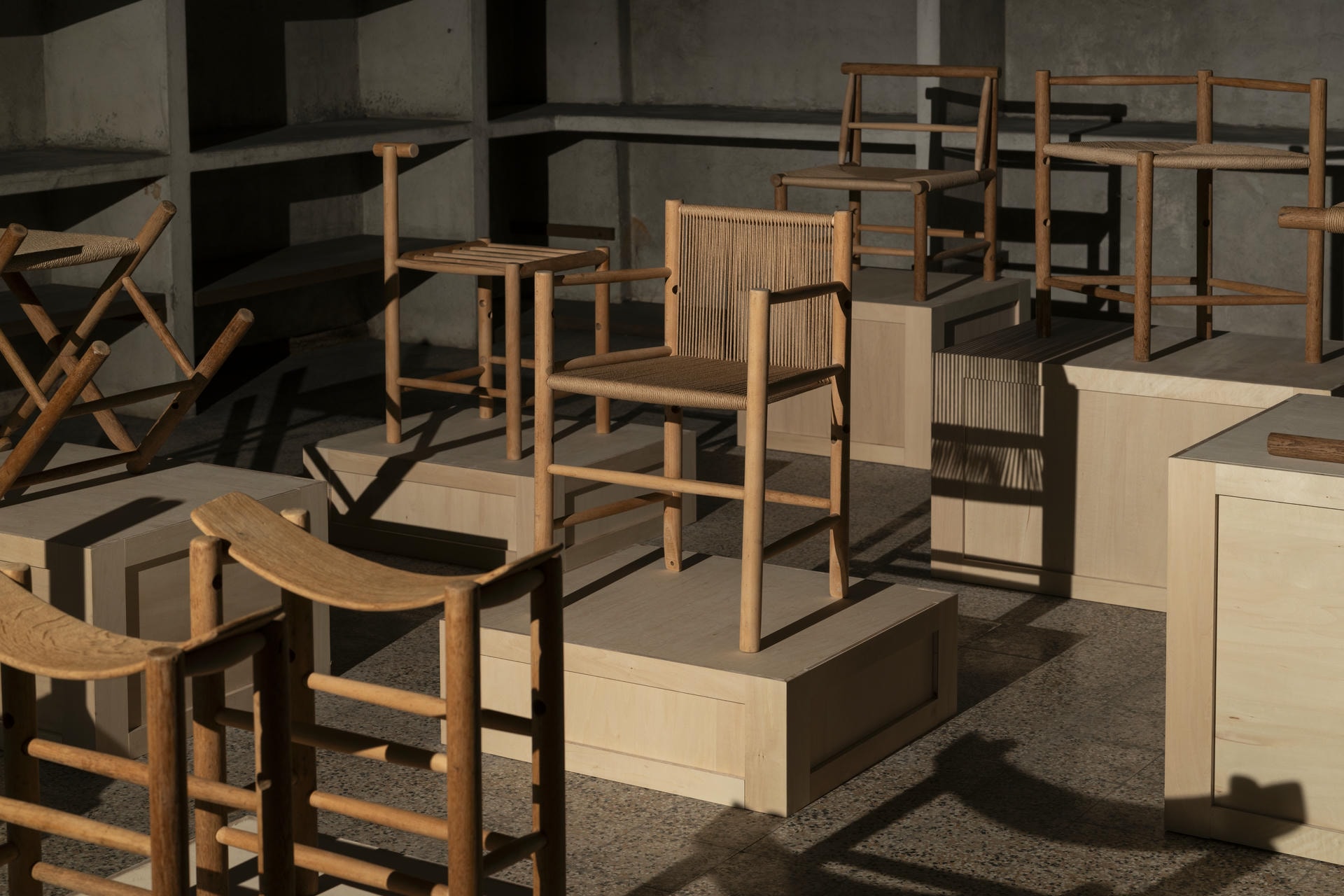
In J39.5, we did not simply repair a damaged mid-century masterpiece chair. Instead, we carefully read the remaining parts and the traces of time they carried, reconfiguring them without introducing new materials. Instead of perfectly restoring the missing parts to their original state, we embrace that imperfection and connect it to a new value.
We believe the most important thing is to observe materials, places, and human interactions carefully. Form rarely emerges in isolation. It grows out of the nature of materials, the movement of the body, social contexts, and the accumulation of time. That is why it is just as important to reconsider what already exists as it is to imagine something entirely new.
We never begin with a perfectly defined outcome. More often, we follow small moments of curiosity or discomfort encountered in everyday life, exploring them through materials, reflection, and experimentation until unexpected relationships and forms begin to emerge.
For us, form is not the goal. It is something discovered through questions, observation, and an ongoing dialogue with materials.
It is difficult to name just one. In terms of ideas, we have been deeply influenced by Enzo Mari and Piet Hein Eek. What resonates with us is the way they approach materials, structure, and society—not simply as formal concerns, but as ways of thinking. We are also drawn to figures such as Charlotte Perriand, George Nakashima, and Isamu Noguchi, whose work treats materials, everyday life, space, and the body as an inseparable whole.
Beyond design, Marcel Duchamp and the ideas of the Mono-ha movement have influenced the way we think about reinterpreting existing value. We also find continual inspiration in the work of Olafur Eliasson, whose practice moves fluidly between space, natural phenomena, and human experience.
More recently, we have found ourselves increasingly inspired by younger practitioners and by work and ideas that move across architecture, craft, art, and design.
Sur+Plus © Shunsuke Watanabe
Kamakura House 1F © Kenta Hasegawa
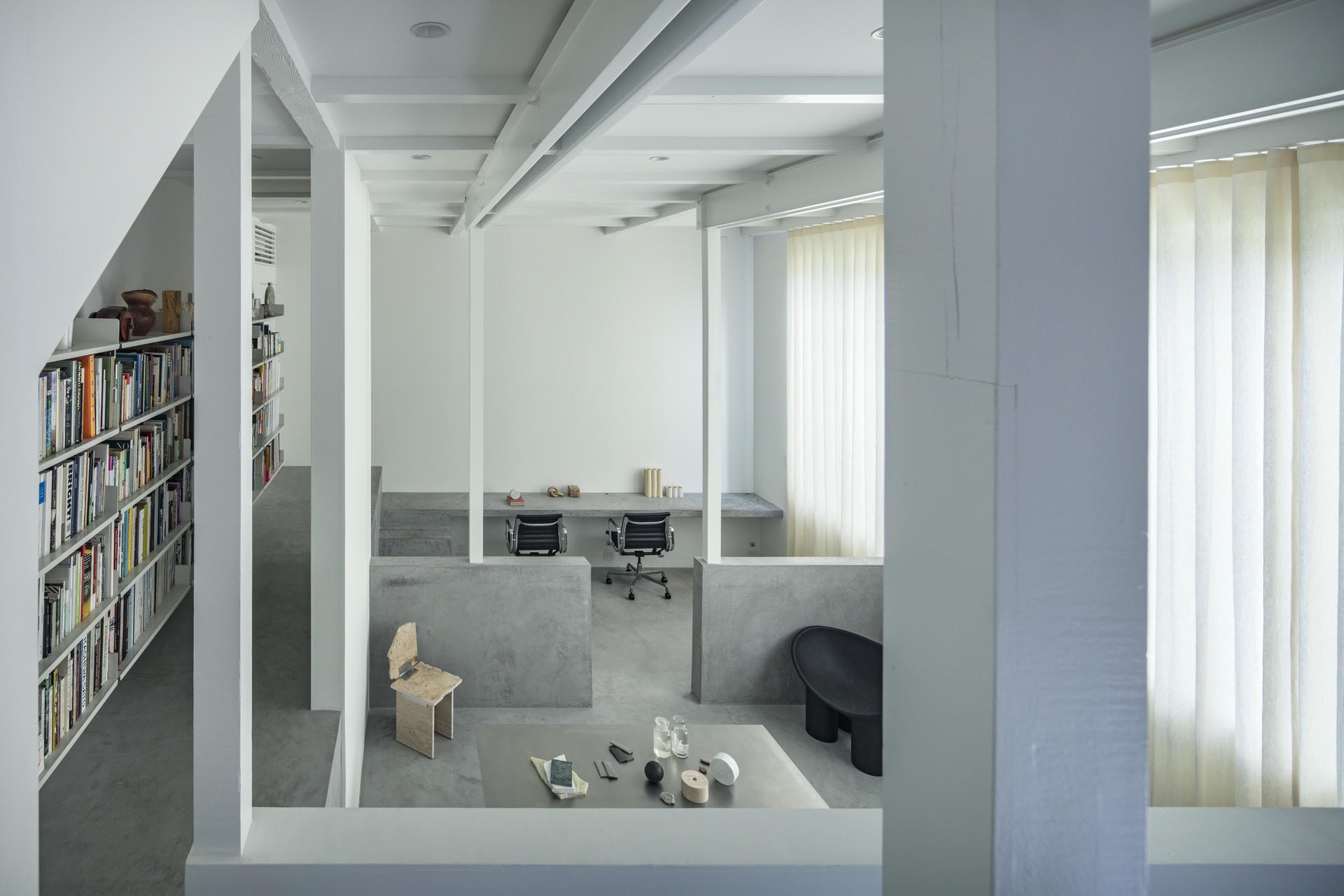
We do not see design simply as the act of creating something new. We see it as a way of gently shifting the criteria by which people assign value.
Of course, reducing environmental impact is important. But our interest extends beyond what is typically described as sustainability. Society is full of things that have never been recognized as valuable, or that have been judged to have lost their value.
We believe design has the ability to bring these things back into view, creating new relationships between materials, places, memory, time, and human activity.
If our work invites people to reconsider what value and beauty might already exist around them, we would consider that meaningful.
No single figure stands above the rest for us. We are drawn instead to designers who investigate the relationships between materials, society, and the environment.
For example, we deeply appreciate the work of Formafantasma, whose practice treats design not simply as the creation of objects, but as a form of research and critical inquiry. We admire the way they seek to preserve the histories embedded within materials and reveal their broader social and environmental contexts.
We are equally inspired by designers whose furniture and objects carry questions about the origins of materials and the systems that shape them. Practices that move fluidly between design, art, craft, and architecture continue to influence the way we think.
Olafur Eliasson has been a profound source of inspiration.
His immersive works have the ability to transform perception through natural phenomena such as light, water, mist, and reflection. Rather than simply viewing an artwork, visitors become part of the experience, discovering subtle shifts in their own senses and bodily awareness.
We are also inspired by the way he treats artworks not merely as objects, but as environments through which people can reconsider their relationship with perception, nature, and society.
Similarly, through materials and space, we hope to create experiences that encourage people to notice what they usually miss and to question what they have long taken for granted.
Rather than adding new value, we seek to reinterpret the value that already exists.
This idea runs through nearly all of our projects. We are interested in uncovering the time, memory, and relationships embedded within materials, places, old furniture, surplus resources, and things that have fallen out of use, allowing them to emerge in new forms.
“For us, design is the practice of giving form to the questions and discoveries that emerge through research, so they can be shared with society.”
The Questions
(The Proust Questionnaire is a set of questions answered by the French writer Marcel Proust.
Other historical figures who have answered confession albums are Oscar Wilde,
Karl Marx, Arthur Conan Doyle, Stéphane Mallarmé, Paul Cézanne…)
Makoto: The moment value is updated.
Ayumi: The moment a work comes to life, and time spent laughing with family.
Makoto: For my thinking to stop.
Ayumi: Losing the ability to feel.
Makoto: My impatience.
Ayumi: Overthinking / Imagining too much.
Makoto & Ayumi: Being judgmental / Making assumptions.
Makoto: Ayumi Koyama.
Ayumi: My parents.
Makoto: Time to think. My family’s smiles.
Ayumi: Time spent eating delicious food with my family.
Makoto: Exploration.
Ayumi: In transition.
Makoto & Ayumi: Efficiency.
Makoto: Sincerity.
Ayumi: Tolerance / Open-mindedness.
Makoto & Ayumi: Sincerity.
J39.5 © Shunsuke Watanabe
Sur+Plus © Shunsuke Watanabe
Makoto & Ayumi: “I see” (Naruhodo).
Makoto & Ayumi: The ability to see through to the essence of things.
Makoto: To be bolder.
Ayumi: Physical stamina.
Makoto: Keeping AtMa going.
Ayumi: Continuing to create.
Makoto & Ayumi: I want to be born as myself again.
Makoto & Ayumi: A place where nature and the city coexist.
Makoto: A compassionate heart.
Ayumi: Time with my family.
Makoto: Losing curiosity.
Ayumi: Being unable to feel anything.
Makoto: Observing.
Ayumi: Giving form to things.
Makoto: Inquisitiveness.
Ayumi: Imagination.
Makoto & Ayumi: Trust.
Makoto: None in particular.
Ayumi: Banana Yoshimoto, Emily Dickinson.
Makoto: Teenage Mutant Ninja Turtles. I like how the four of them compensate for each other’s individualities as a team.
Ayumi: Mutta from Space Brothers. I like his stubborn refusal to give up and his humanity.
Makoto & Ayumi: None in particular.
Makoto: The people who have left their names in design history.
Ayumi: Children.
Makoto & Ayumi: AtMa.
Makoto & Ayumi: Indifference.
Makoto: Not taking challenges.
Ayumi: None.
Makoto: Continuing to create until the very end.
Ayumi: Laughing too much.
Makoto: “Value is not created by adding new value, but by finding or reinterpreting the value inherent in what already exists.”
Ayumi: Looking at things from various angles.
Allu Shinjuku 3F © Kenta Hasegawa
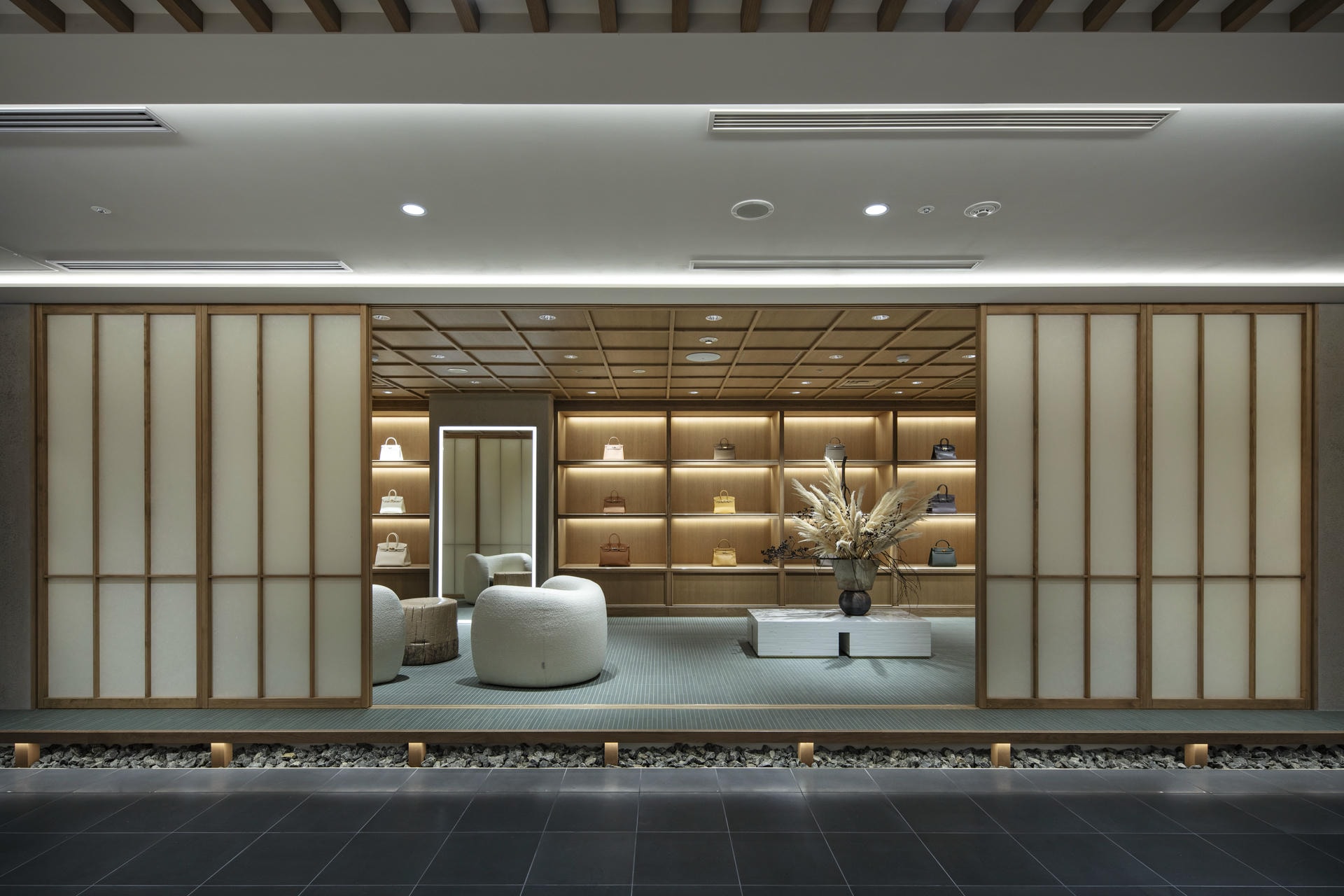
“Rather than adding new value, we begin by observing the relationships that already exist. Through reinterpreting the value embedded within them, new relationships emerge between materials, places, memory, time, and human activity.”
J39.5 © Shunsuke Watanabe J39.5 © Shunsuke Watanabe J39.5 © Shunsuke Watanabe J39.5 © Shunsuke Watanabe
SHARE :