Andrei Clontea
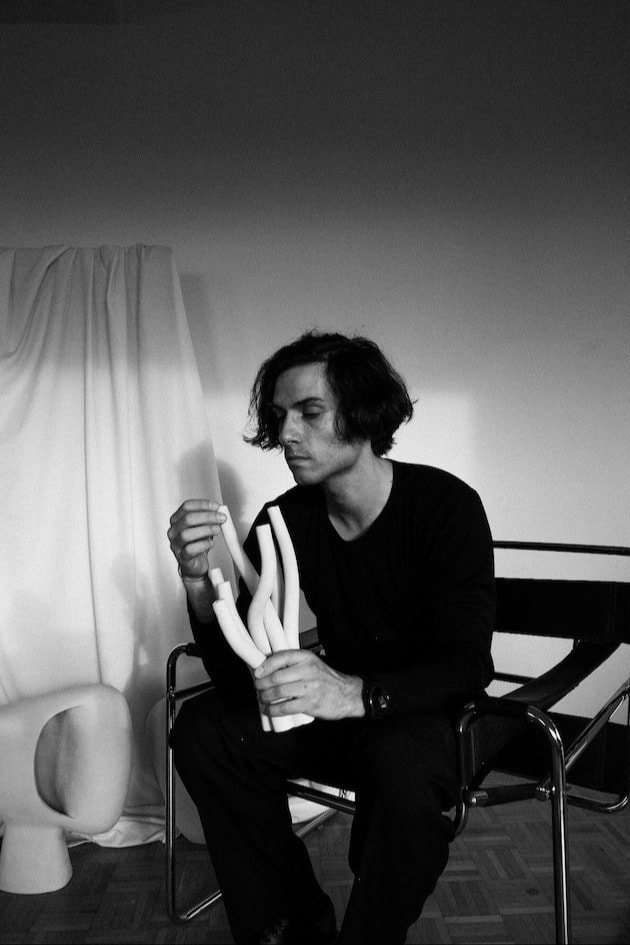
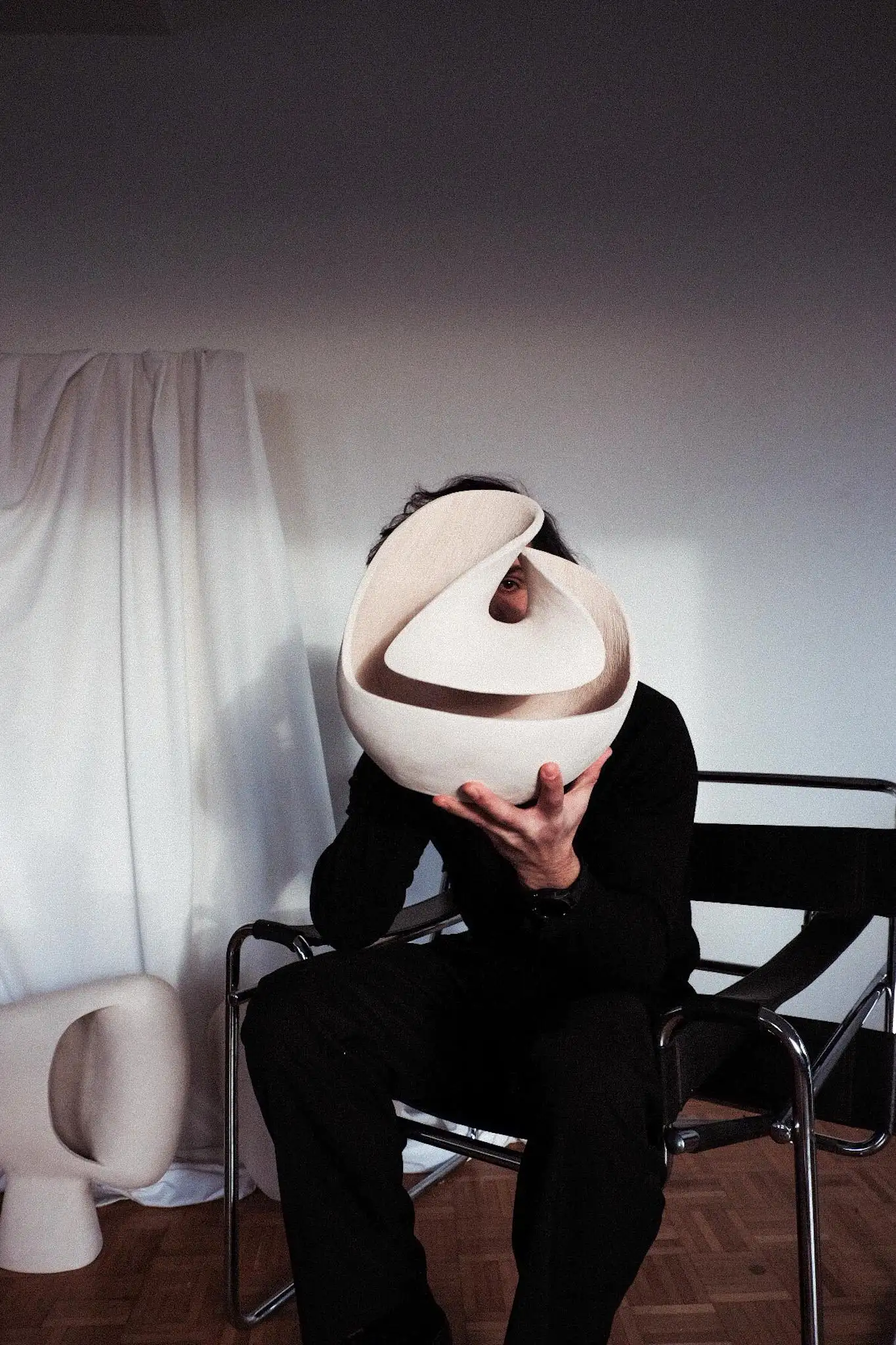
Andrei Clontea is a self-taught artist whose practice bridges ceramics, sculpture, and architecture. Based between Luxembourg and Brussels, he creates expressive ceramic works that explore the relationship between nature, the human body, and the built environment.
Drawing inspiration from organic forms, animal anatomy, and natural textures, Clontea develops sculptural pieces distinguished by their earthy materiality and refined presence. His architectural background informs his sensitivity to structure, light, and proportion, resulting in works that balance rawness with elegance and instinct with precision.
Through his ceramics, Clontea creates a dialogue between natural and architectural forms, inviting viewers to engage with the subtle connections between human experience, nature, and space.
Interview
I was born in Bucharest but spent my formative years ping-ponging between Luxembourg, Bucharest, and Augsburg, leaving me a Luxembourgish-Romanian hybrid with an identity crisis. Each place left a mark – some subtle, some more like a permanent bruise – and they still haunt my work in ways I’m only half aware of.
I’ve been drawing since I could hold a pencil – probably before I should’ve been trusted with one. One of my earliest memories of ‘art’ is when I turned my bedroom walls into a chaotic Disney mural. Before I even started school, I’d already mastered the fine art of vandalism. But hey, that was my first taste of the art world.
After finishing my architecture studies, I spent a few years trying to convince myself I enjoyed being an architect. By 2021, I realised the only thing I was building was my own frustration, so I jumped ship and got my hands dirty in ceramics in 2022. At least now, when things fall apart, I can call it art.
After several years in architecture, I realised that the rigidity of the job was stifling my creativity. I longed for something different – more hands-on and fulfilling, where I could have control over the final product. This led me to ceramics, which, in a way, is like architecture on a smaller scale, allowing me to express my creativity in a tangible form.
My creative process is basically wandering through the city like a lost tourist, soaking in architectural details and watching light and shadow fight it out on façades. I get inspired by the twisted branches of trees and the odd shapes that pop up when I’m least expecting them. I like to take a passive approach—letting ideas find me, rather than chasing them down. So, while I’m out there pretending to be productive, my designs somehow decide to show up. Eventually.
My typical day begins with the thrilling adventure of answering emails—think of it as my warm-up exercise before diving into the real fun. Once that’s done, I dive into my work, taking plenty of breaks, of course. You know, just enough time to stretch my back, contemplate the existential crises of humanity, or endlessly scroll through social media. It’s all about balancing hard work with a healthy dose of… well, absolute procrastination.
I chose to work with clay because it’s a natural material that offers a unique combination of ease and difficulty, depending on how you approach it. I feel familiar with its properties, but it constantly presents challenges when I push its limits. This dynamic keeps me engaged and allows for a deeper exploration of my creativity.
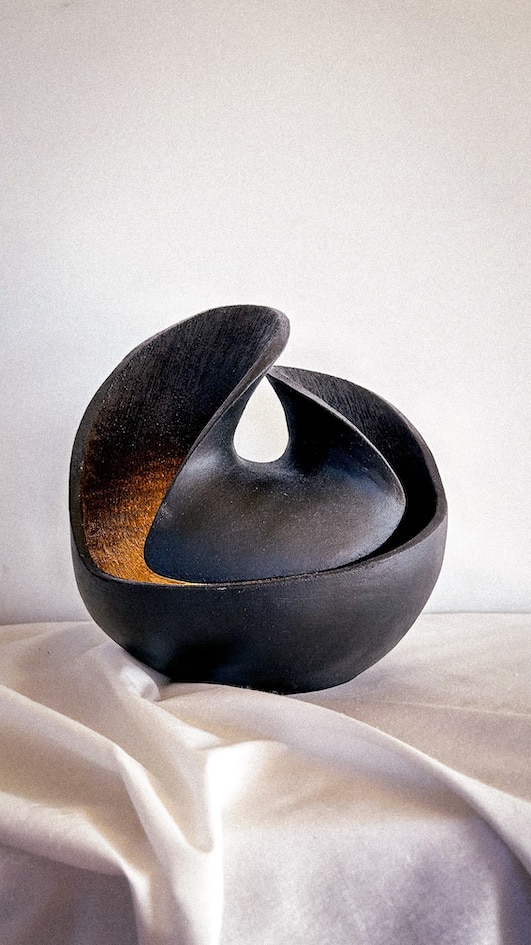
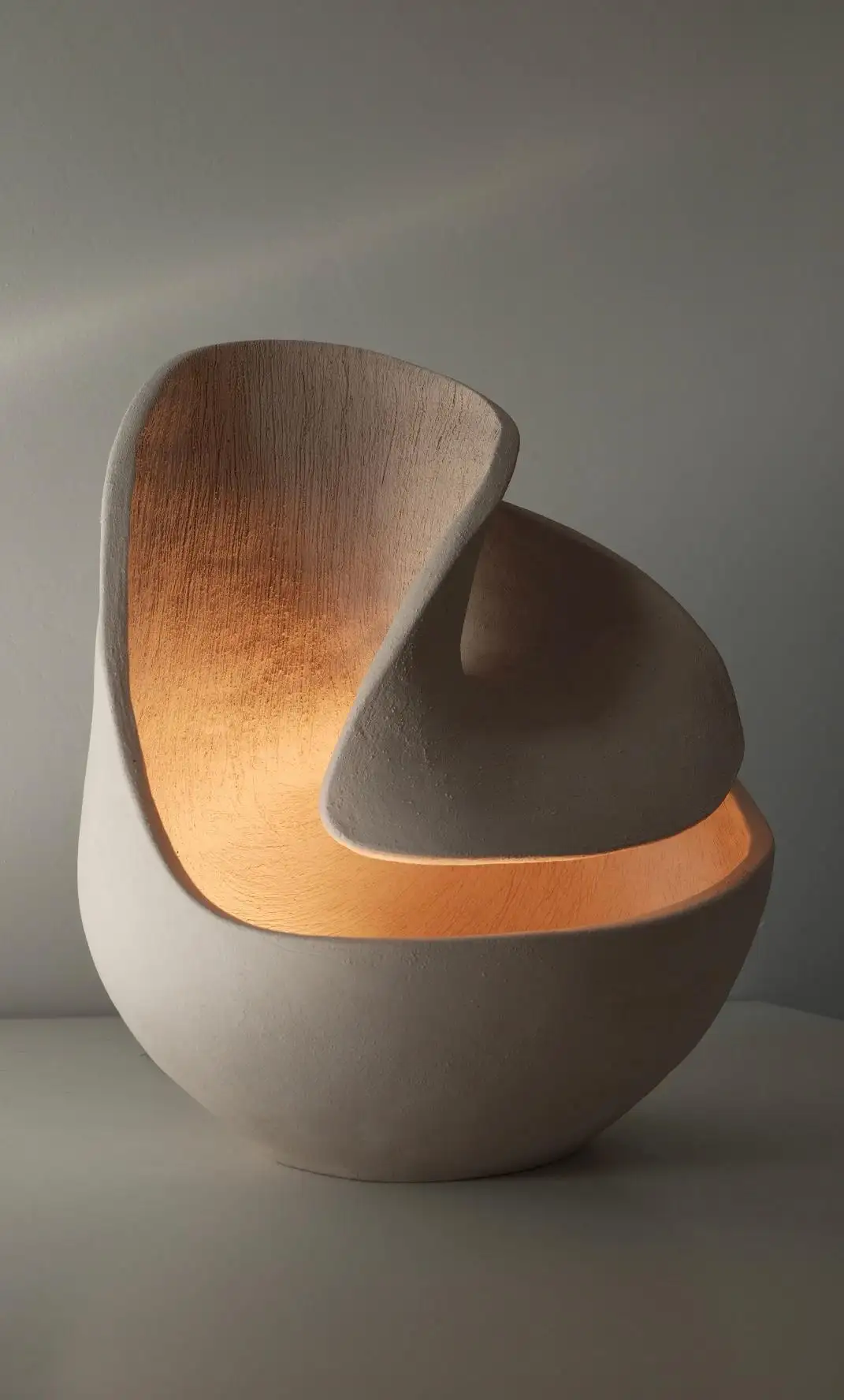
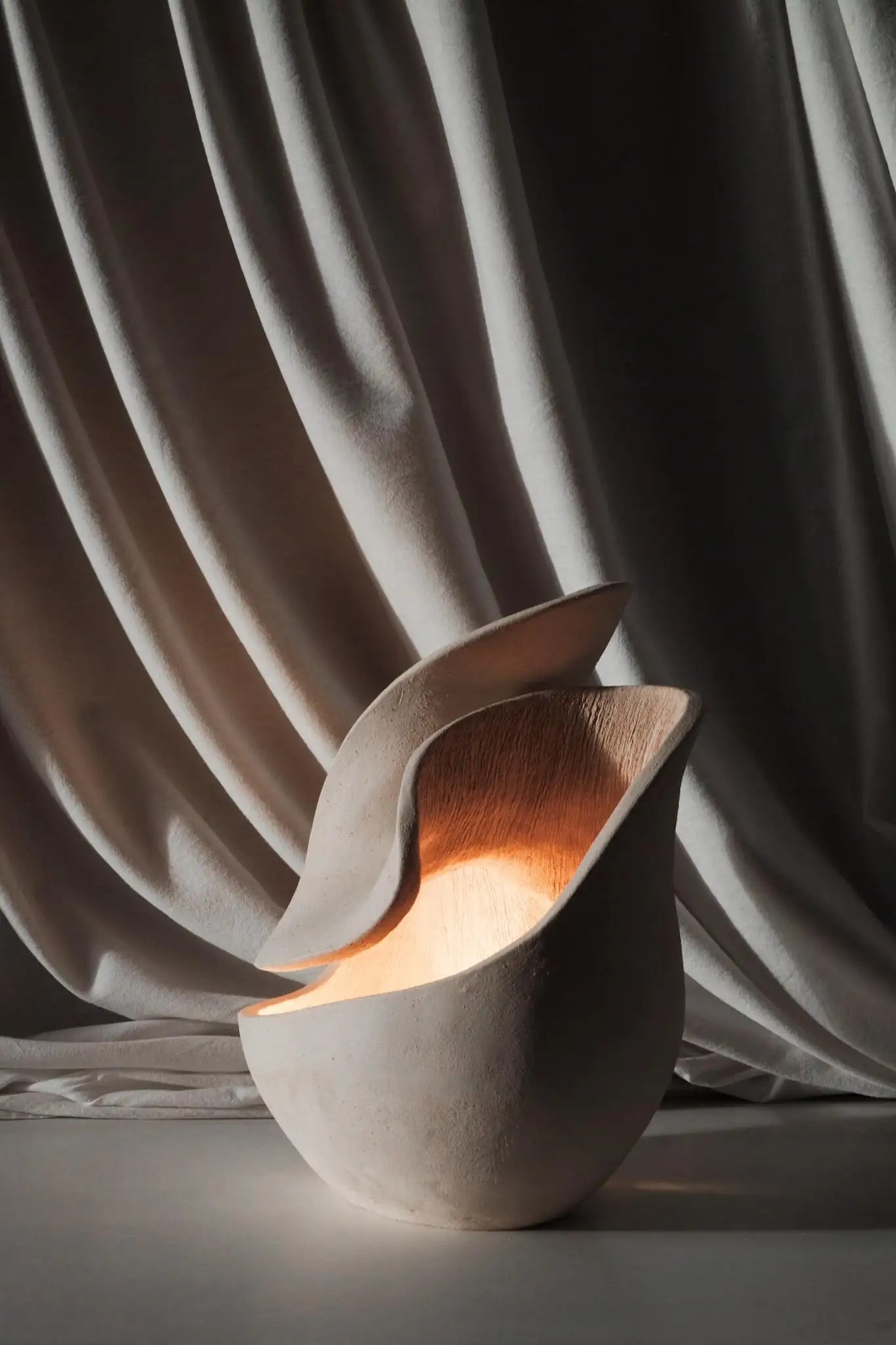
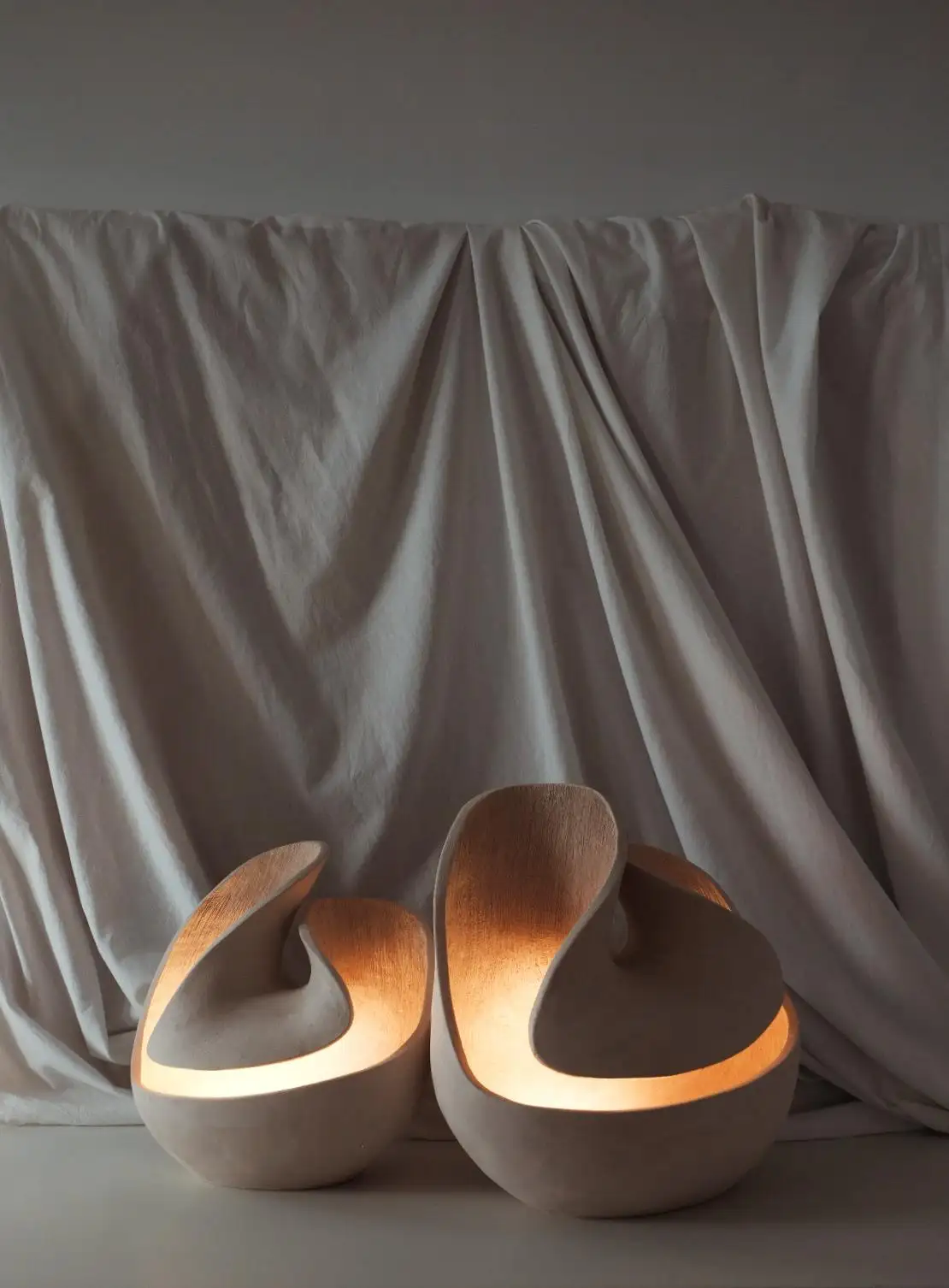
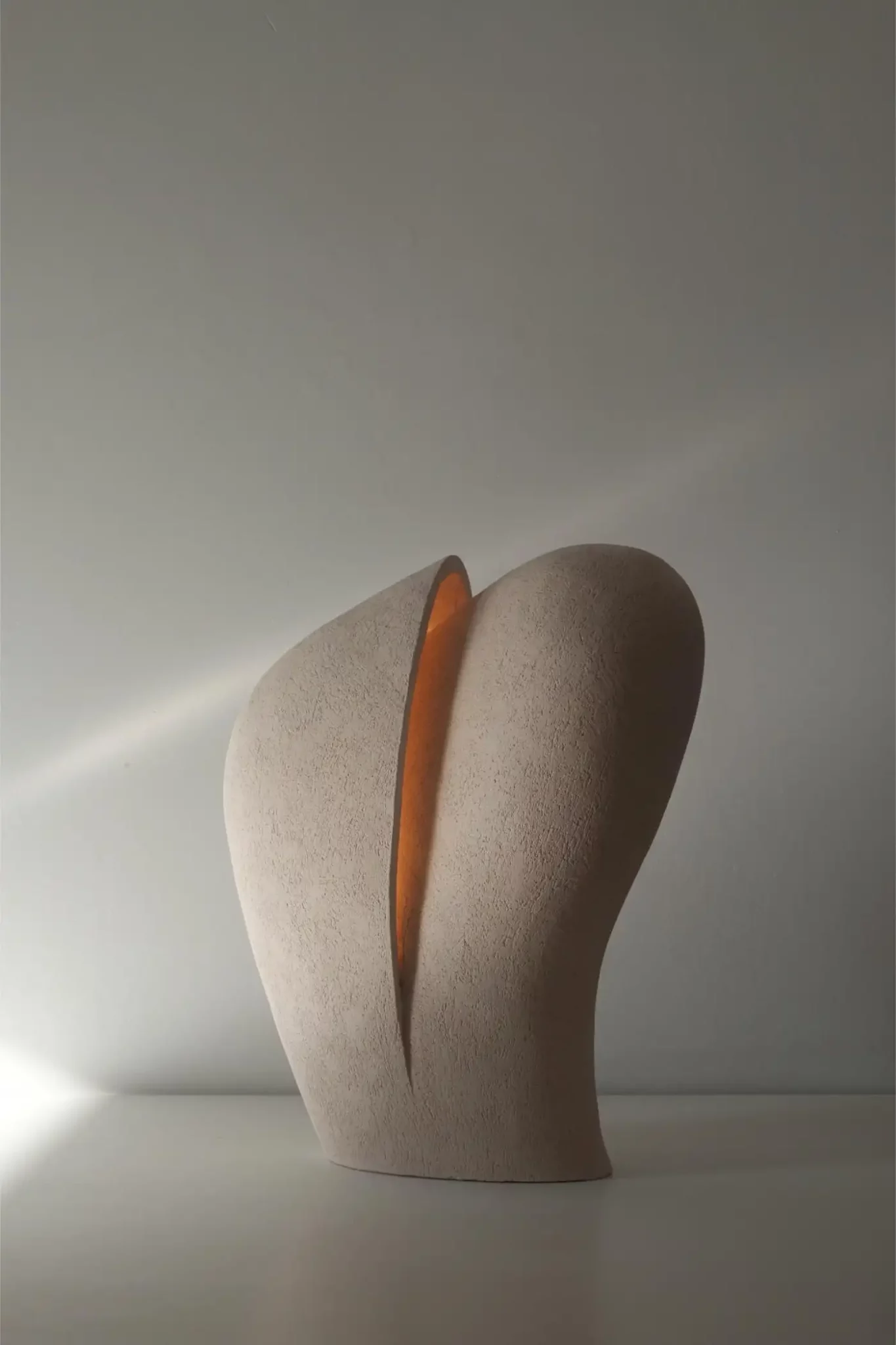
My pieces centre around light design, characterised by organic shapes that are both complex and minimalistic. This balance allows an interplay of light, shadow, and texture in each piece. I employ hand-building techniques to achieve intricate forms while maintaining a sense of simplicity. The meticulous attention to texture amplifies the interplay, enabling light to engage dynamically with the surfaces.
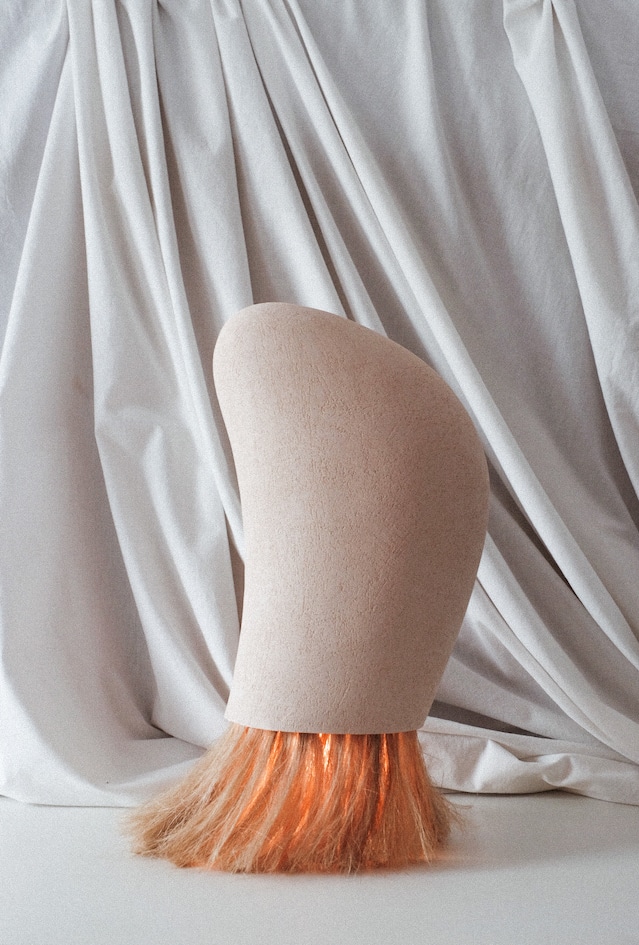
I’m not sure I’m qualified to give advice on this—or anything else, really—but if you’re curious for my wisdom, here it is: Go ahead and experiment freely with your ideas and techniques, but remember to keep your work simple and clear.
The first lamps I created had clear influences from the Space Age style, but looking at my body of work as a whole, I’d place it within Modern Art or Modernism. That said, my style continues to evolve, so who knows where it will lead in the future.
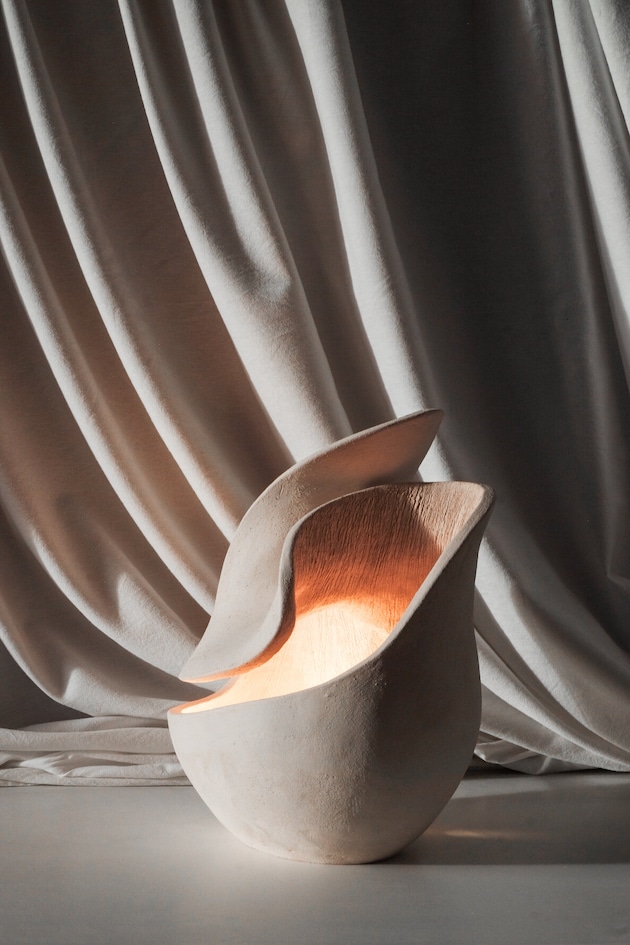
If I had to summarise my creations in one word, it would be “Mediterranean”. I think this captures the essence of my pieces, reflecting the organic forms, textures, and warmth that are central to my work.
There are so many designers and artists who have influenced me, and I’m sure I’m forgetting some, but a few that come to mind are Valentine Schlegel, Jean Arp, Henri Matisse, Alvar Aalto, Richard Serra, and many more. Each of them has left a unique mark on how I approach form, texture, and space.
The contemporary designer who immediately comes to mind is Dieter Rams. His approach to design, particularly his emphasis on simplicity and functionality, has had a profound impact on me. While there are many other designers whose work I admire, Dieter Rams stands out as a significant influence, especially in terms of his philosophy on creating timeless, thoughtful design.
A figure that comes to mind is Axel Vervoordt. His approach to design and art, blending minimalism with a deep sense of history and timelessness, resonates with my own work. I admire how he creates spaces and objects that have a sense of serenity and balance, often using natural materials and embracing imperfection. His philosophy of “Wabi-sabi” – finding beauty in the imperfect and transient – reflects my own interest in organic forms and textures. Vervoordt’s ability to create environments that feel both modern and rooted in the past is something I strive for in my own creations.
“Clay constantly presents challenges when I push its limits.”
The Questions
(The Proust Questionnaire is a set of questions answered by the French writer Marcel Proust.
Other historical figures who have answered confession albums are Oscar Wilde,
Karl Marx, Arthur Conan Doyle, Stéphane Mallarmé, Paul Cézanne…)
Being content.
Climate change and global unrest.
I overthink.
Lack of tolerance.
My mother.
I don’t think I have such a thing.
A mix of self-doubt and creativity.
Maybe perfectionism.
No idea what to answer here.
Resilience.
Aaaa…
To sing, I think.
To stop overthinking.
Quitting architecture.
Why would anyone want to come back to this world?
South of Europe.
My hands, I guess.
Hopelessness and despair.
Procrastinating.
Creativity.
Genuine support and understanding.
James Baldwin, Garcia Marquez, Sylvia Plath, Bolaño.
Scout from To Kill a Mockingbird.
Never thought of it.
I have a few but I won’t name them.
Fumiko.
When I don’t get enough sleep.
Everything I overthought and didn’t act on.
In my sleep, of course.
Overthink, hesitate, repeat… but create anyway.
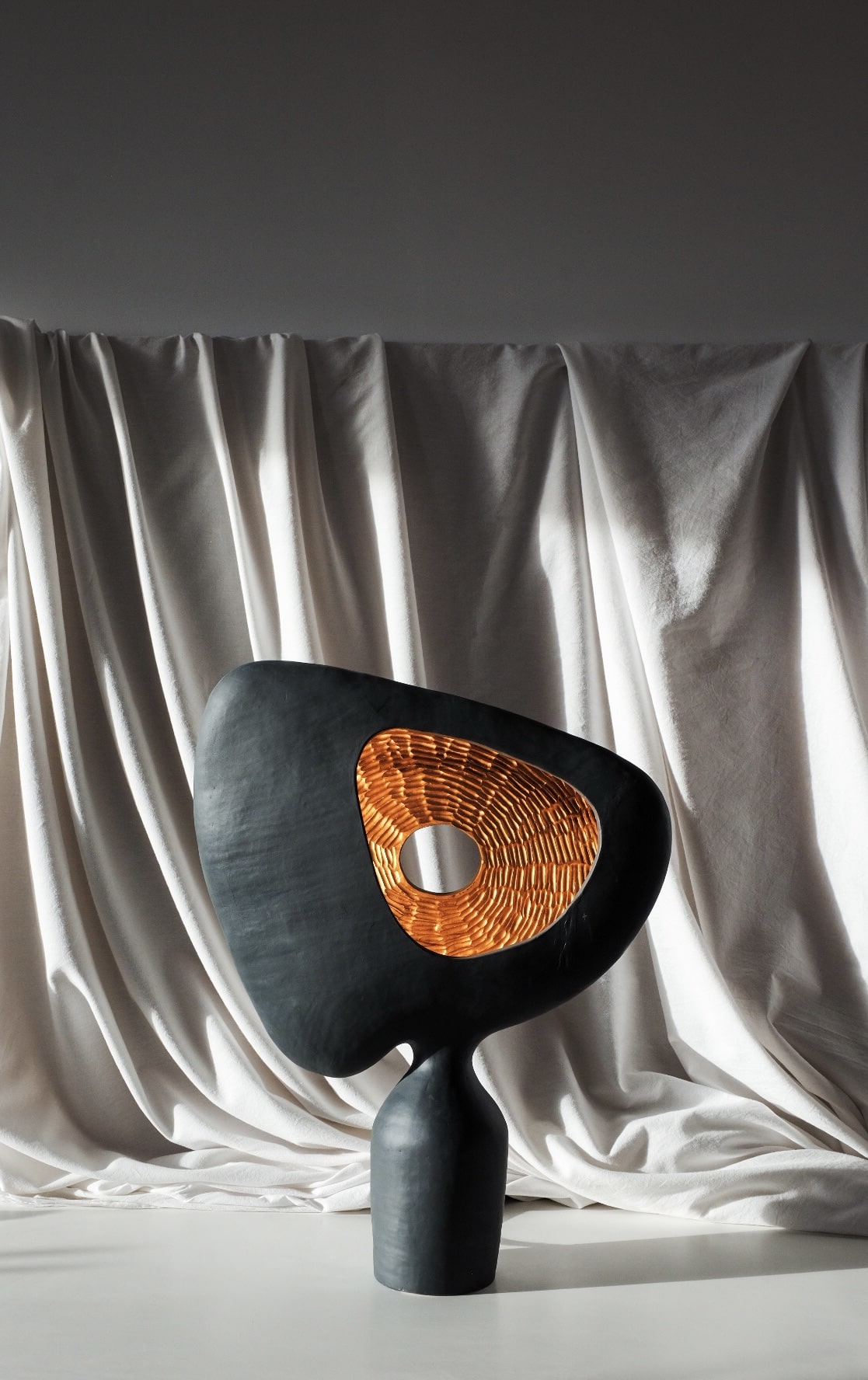
“I like to take a passive approach—letting ideas find me, rather than chasing them down.”
SHARE :