Mathilde Martin
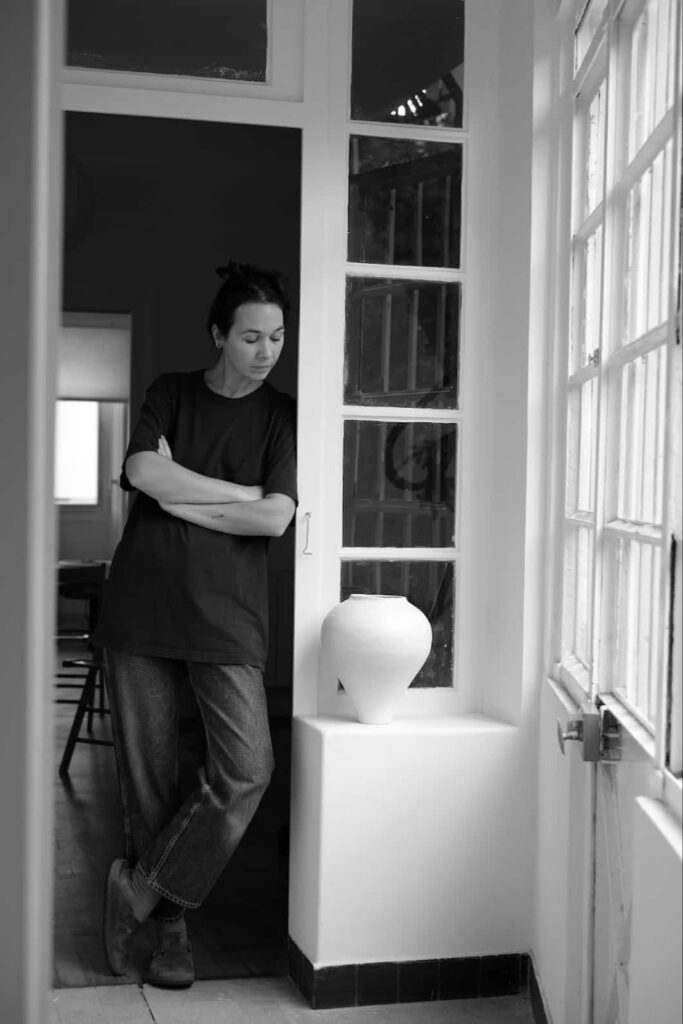
Mathilde Martin is a French ceramic artist and designer based between Paris and Brittany. Since founding her studio in 2016, she has developed a refined practice centered on hand-built stoneware, creating sculptural bowls, vessels, and objects that balance form, function, and quiet elegance.
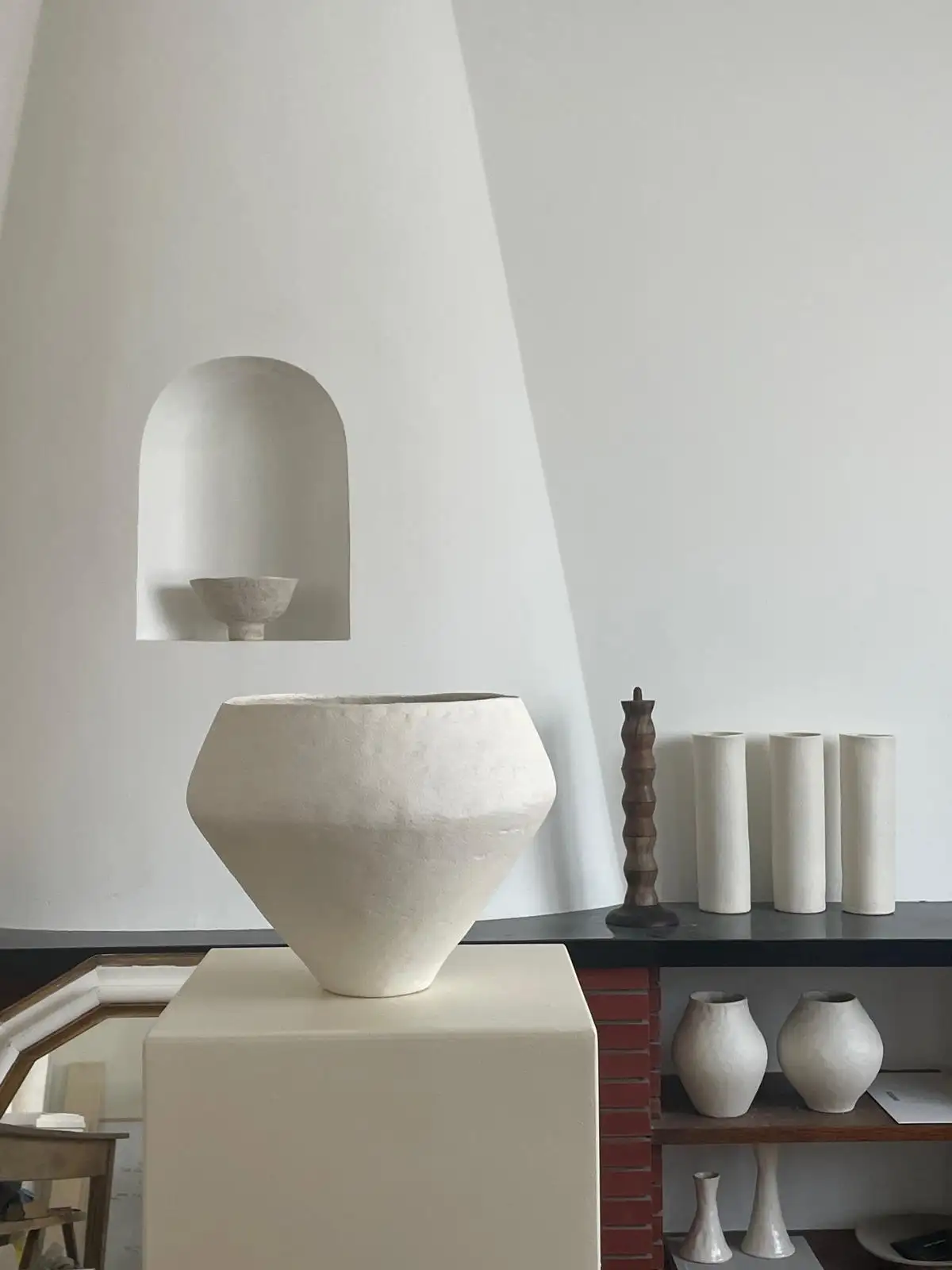
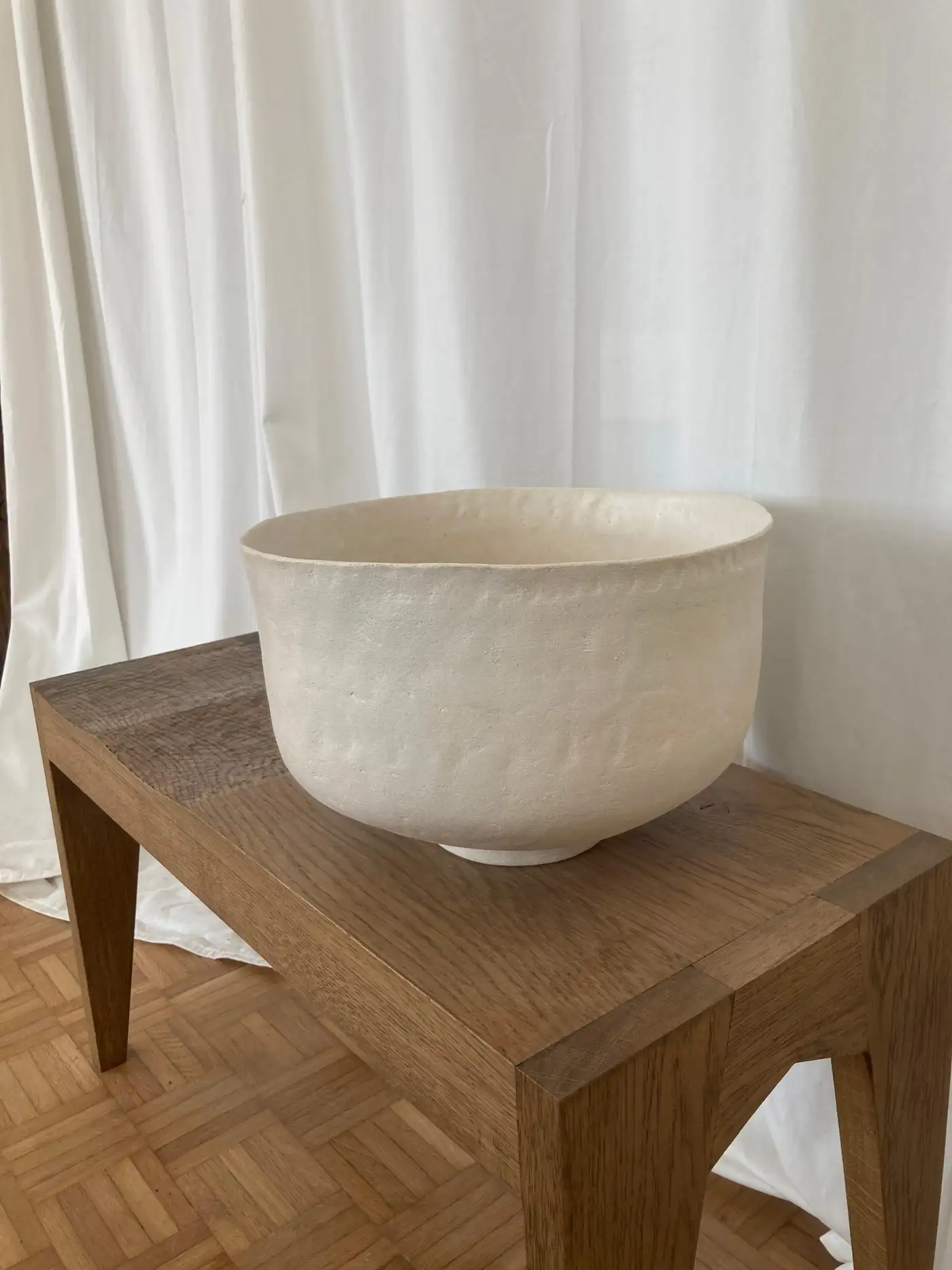
Guided by a meditative approach to making, Martin’s work celebrates the tactile beauty of clay through subtle variations, delicate imperfections, and precise proportions. Each piece is conceived as part of an interior landscape, bringing harmony, strength, and timeless material presence to the spaces it inhabits.
Interview
I was born in Paris to a French mother and an English father.
My mother was a dancer and my father a photographer, so I’ve always lived in a relatively artistic environment. When I started ceramics, I didn’t think of it as art, but more as a hobby. My earliest memories were at school, when we used to go to museums, and I didn’t really understand what art meant. It was much later that I understood that there were forms of art that could provoke emotion just by their beauty or by what they could evoke in our personal lives.
No, before that I studied History and worked in the restaurant business (as a sommelier and cook). I wouldn’t say it’s an art form, but it is a form of beauty. Food, what you do with it.
When I was about twenty-two, I started working with clay again. I’d been doing a bit of it all my life, but it just became more and more present. I started looking at things that inspired me and then, little by little, I detached myself from those things to create my own identity. I don’t know if I have a design approach, but I like the simplicity of objects. In any case, that’s what I know how to do.
I like the sobriety of the pieces. I always work from research of shapes that I draw, and then it’s mainly in 3D that the shape comes. The process is really one of researching shapes, a little drawing of what I want to do, and then it’s really on the first vase that it really starts to take shape. At that point, I do more and more studies before ending up with the final shape. My influences are very broad, and can be architecture, other ceramists, or photography. I like to look at interiors from the 70s, for example, where, in fact, there are vases that aren’t necessarily signed or designer shapes, but which are quite notable in interiors.
I’m very regulated because I have my children, so I really have a fairly classic working day. I start at 9.30 am and finish at 6 pm. There’s either creation, so really production, or all the post-production, so that means sanding, glazing, enamels. All the research into shapes is done outside these working hours, when I’m on my own, before going to bed, because that’s a part I like to do quietly.
Because I’ve been making ceramics since I was little, I wanted to do ceramics again, rather than art in the first place. I’ve tried other mediums, but they don’t suit me. I love the elasticity of stoneware and the possibilities it offers.
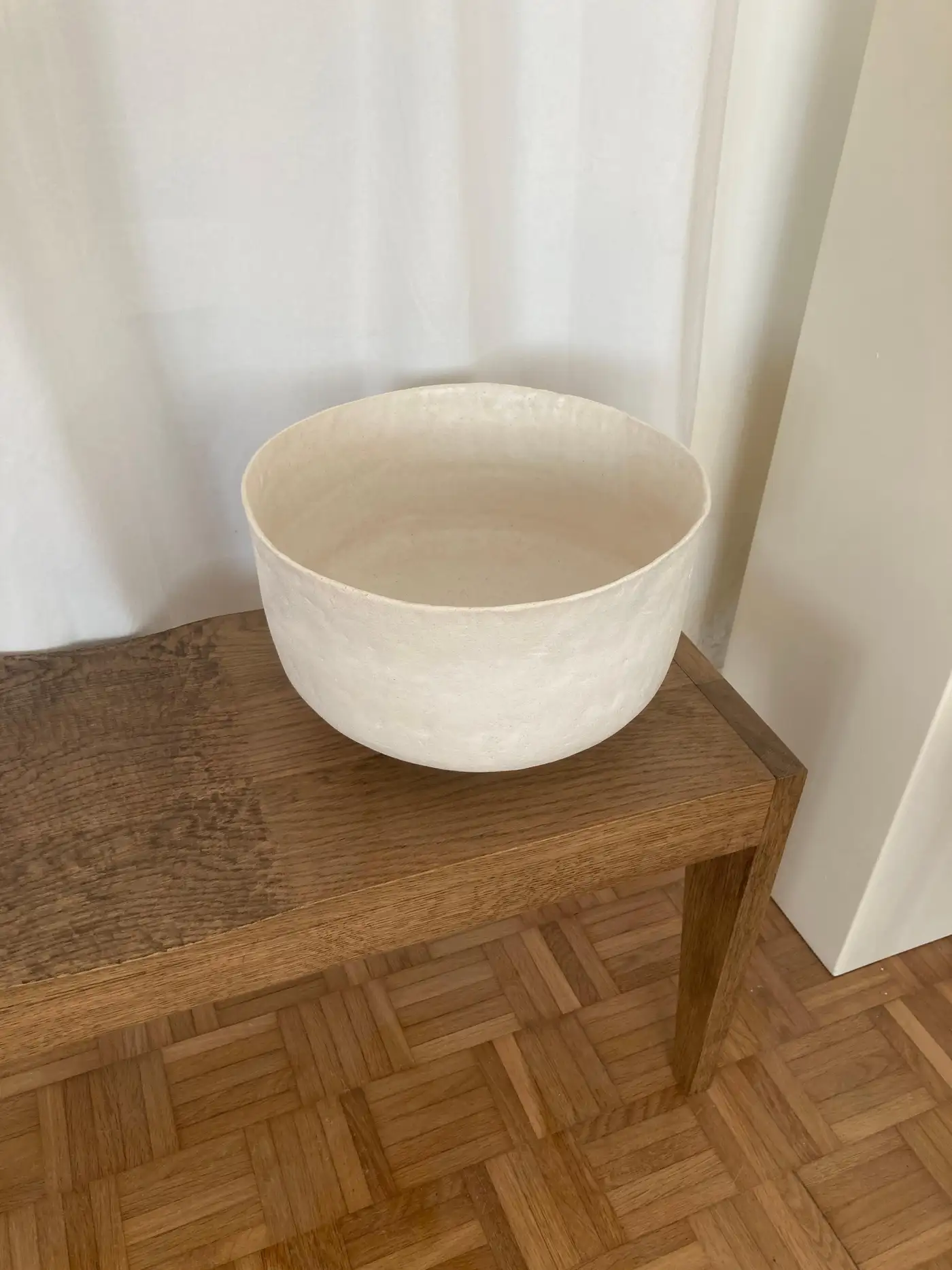
I only do pellet modeling, so I don’t use lathes or molds. Everything is done by hand.

Be inspired without copying. Find your own style, even if it’s complicated and time-consuming. Hang in there, because it’s not easy at first. You can never speed up time; years of experience need to exist. You have to persevere and believe in yourself and your abilities.
I love artists who do very simple things, so they’re quite similar to what I do. I love Brancusi, Zadkine, and the ceramist Lucie Rie.
Ronan Bouroullec.
There are paintings I love, which aren’t necessarily simple and have nothing to do with anything, but which will move me, for example, Alice Neel.
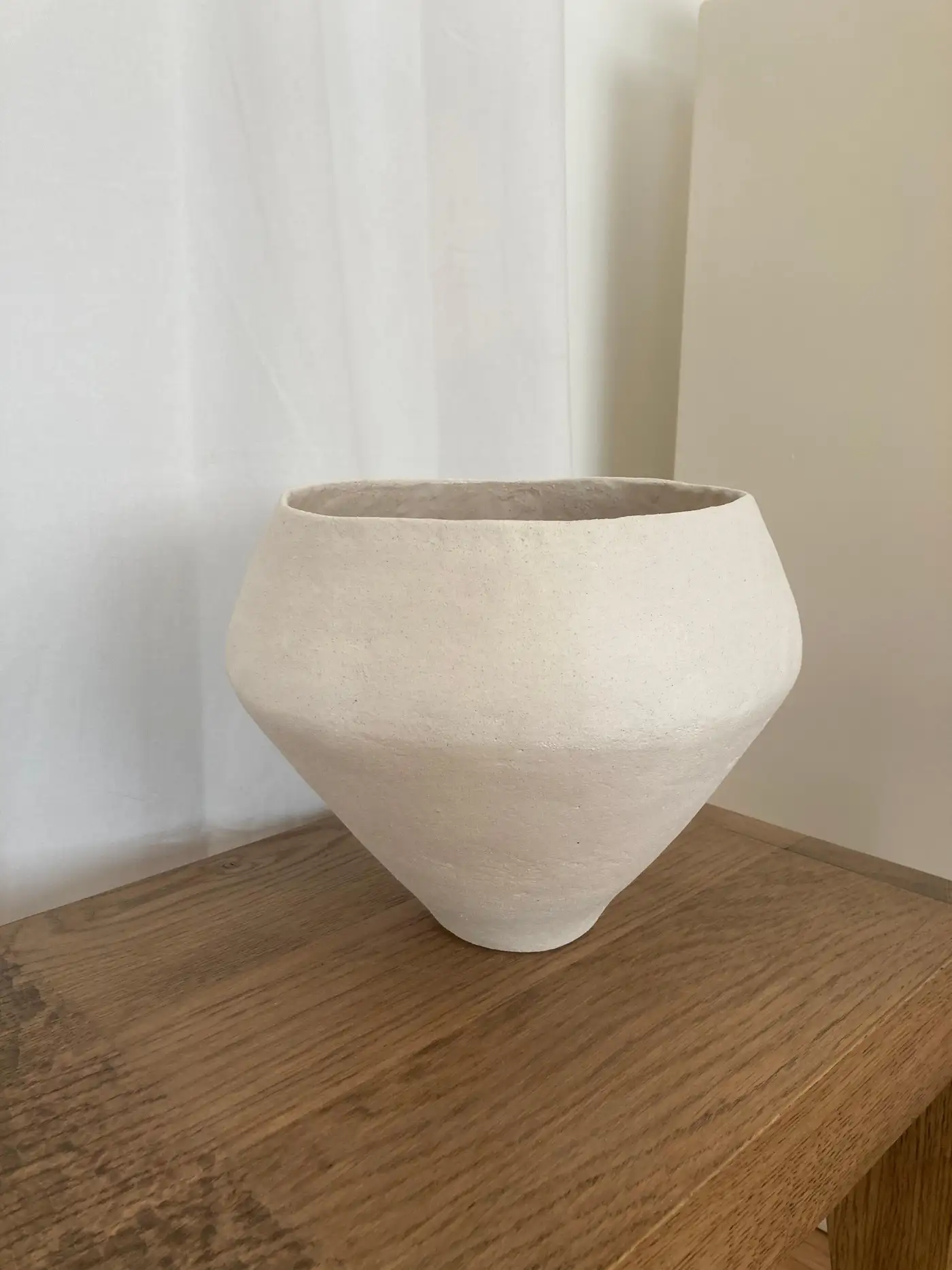
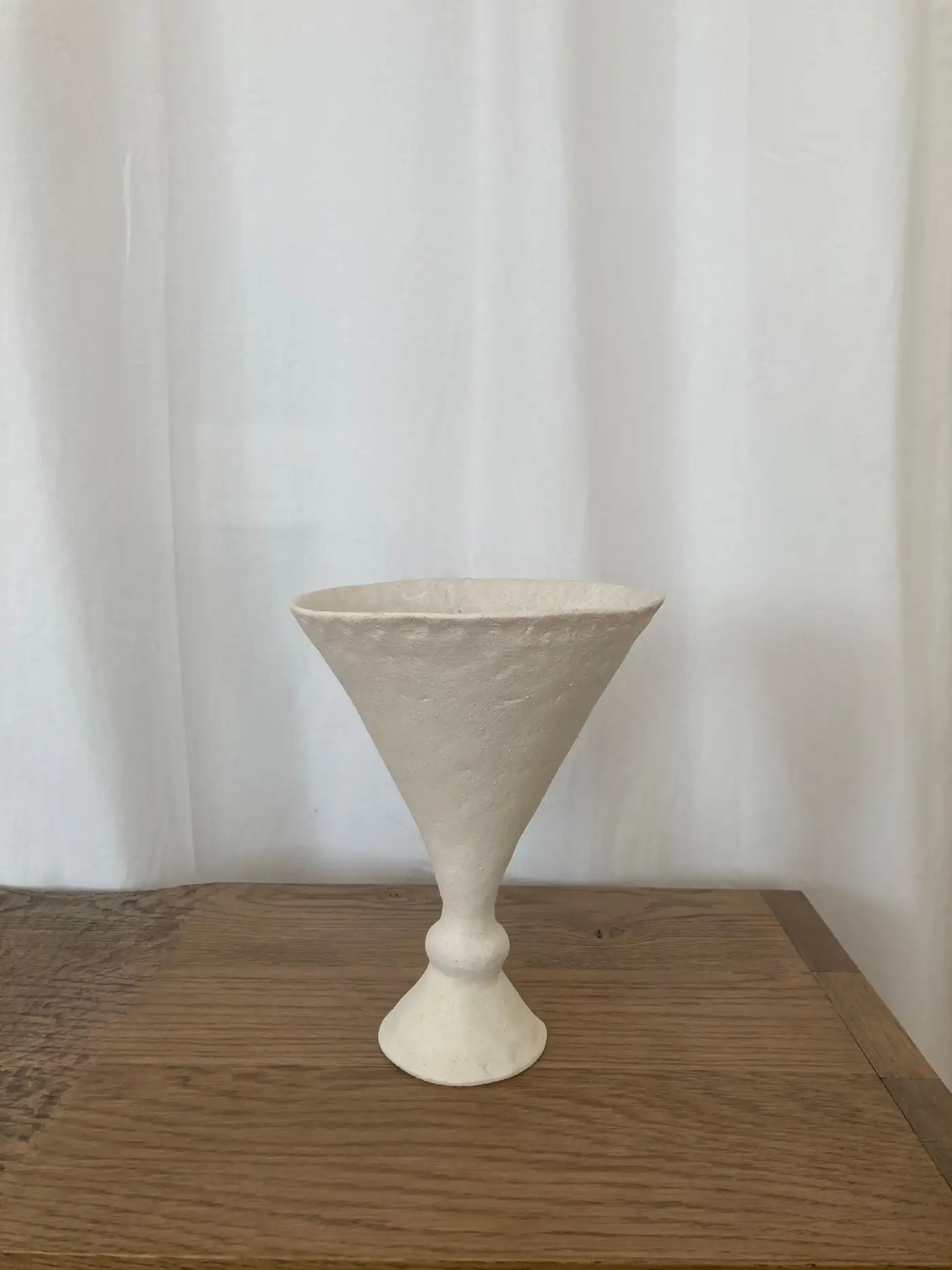
“The search for perfect imperfection”. What I like about my work is the uniqueness of my pieces. Given that it’s not a lathe, my aim is not to have something with absolute symmetry, and above all, I don’t want to reproduce pieces indefinitely that are exactly the same. What interests me is that you can see that it’s handmade, but that it’s still as perfect as possible. All the while keeping the trace of the hand.
“Be inspired without copying. Find your own style, even if it’s complicated and time-consuming. You have to persevere and believe in yourself and your abilities.”
The Questions
(The Proust Questionnaire is a set of questions answered by the French writer Marcel Proust.
Other historical figures who have answered confession albums are Oscar Wilde,
Karl Marx, Arthur Conan Doyle, Stéphane Mallarmé, Paul Cézanne…)
The sound of the sea on the sand.
Not to have the desire.
Impulsivity.
Hatred of others.
Leïla Slimani.
Daring without thinking.
Trust in the future.
Comfort.
Delicacy.
Delicacy.

I’ll be there in 5 minutes.
Knowing how to draw.
Being calmer.
Perseverance.
A bird.
By the sea.
My family photos.
Being seasick.
Being at sea with the people I love.
Do then think.
Authenticity.
Leïla Slimani and Annie Ernaux.
–
–
Those who fight for the common good.
My children’s names.
Intolerance.
No regrets.
In peace.
To trust.

“My aim is not to have something with absolute symmetry. What interests me is that you can see that it’s handmade, while still being as perfect as possible.”

SHARE :