J: I hope that in the future my work will be seen as avant-garde within (plastic) recycling.
M: I would say probably the Next Nature Movement.

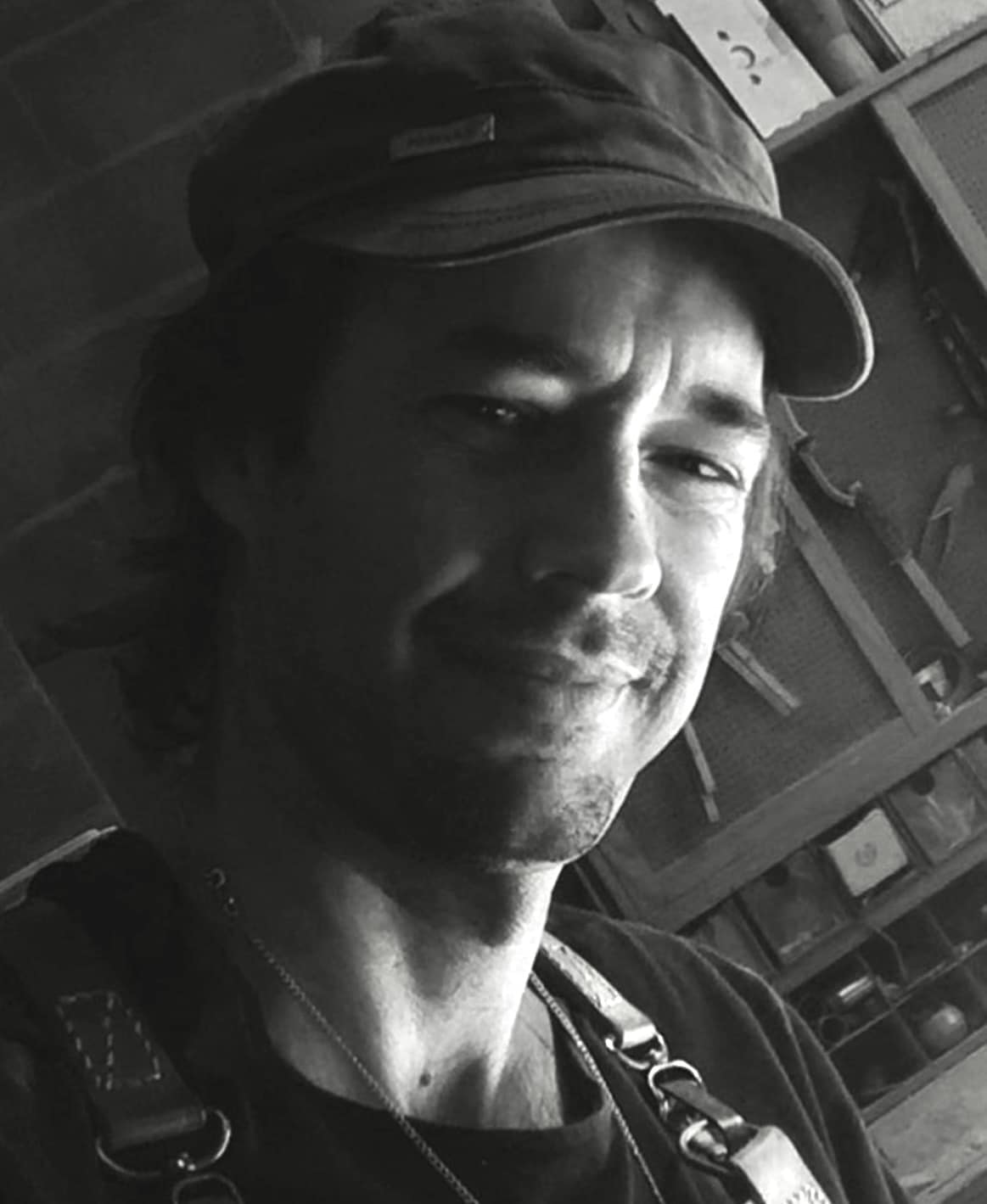
J: I was born in a small village in the south-east of the Netherlands. Before I could remember anything of my childhood, I moved to Helmond, a town in the south of the Netherlands. Here I spent most of my youth, before migrating to Rotterdam to attend the art academy. There was not much to see or to do in Helmond, so I often just hung out with my friends. Most of them didn’t really respect creativity, so I felt quite stuck there, which was – together with pursuing my creative aspirations – the main reason I moved to Rotterdam.
M: Breda, The Netherlands.
J: The first time I genuinely got interested in the world of art and design was when I started watching The Lord of the Rings behind-the-scenes episodes and saw the scale of its production and skilled artists working together. At that moment, I wanted to make beautiful things too, and even tried to get into WETA, the company that made all the props.
M: Maybe it’s not completely connected to the art world, but I remember a thought that has always stayed with me during my design practice. I remember being very young and asking what plastic was. One of my parents explained to me that plastic was not natural since it was made of petroleum, upon which I asked what petroleum was made of, to which the answer was that it was made from plants and creatures from the dinosaur era. This was a huge eye-opener for me at that age. I think growing up in a Christian society helped form the notion that there was natural and unnatural. And this thought broke that notion.
J: As a child, I had always been making random things, mainly with tape and paper. As I grew up, I always took up available creative or handicraft courses in school. I didn’t know much about contemporary art until I started a study focused on interior design and started to dig deeper into this topic. Next to that, the annual Dutch Design Week is held in Eindhoven, which is next to the town I grew up in, so I visited every year.
M: I have always enjoyed making things. I started studying furniture making, and after a year I switched to product design in Rotterdam. My life has revolved around art/design ever since.
J: From a young age, it was clear that I wanted to do something with my hands, but when I found out production design was not for me, there was a big unanswered question in my head: What job exists that allows me to work with various materials, techniques, people, and literature? That was one of the most important epiphany moments in my life.
M: Pretty much the joy of creating and being able to explore and realize vague feelings and thoughts.
J: I tend to let my mind run freely in the beginning, working very chaotically on different experiments and sketches until I slowly narrow down to a settling point. During that process, I read a lot, watch a lot of videos regarding the topic, and write about it. During the actual designing process, I relive that mindset again but then with the addition of all the gathered knowledge.
M: The process always starts with a vision/feeling for me. I get influenced by production techniques or actualities.
J: It’s hard to describe a typical day of work, but I do generally have a fixed ‘regime’ that goes as follows: I wake up, check my to-do list for the day and make my way down to make breakfast and coffee. I then go to my office, read and reply to emails, and start working on the list. This includes things such as: make this experiment, call that person, eat lunch, make a bunch of sketches, get an order ready for shipping, chill out. It’s important for me to add these trivial things such as lunch and relaxation because otherwise I tend not to take a break out of enthusiasm for my work and projects. Often I am too busy to work my list off, so it tends to stack up, resulting in late hours working.
M: Haha, hopefully we will have something as a typical day again soon.
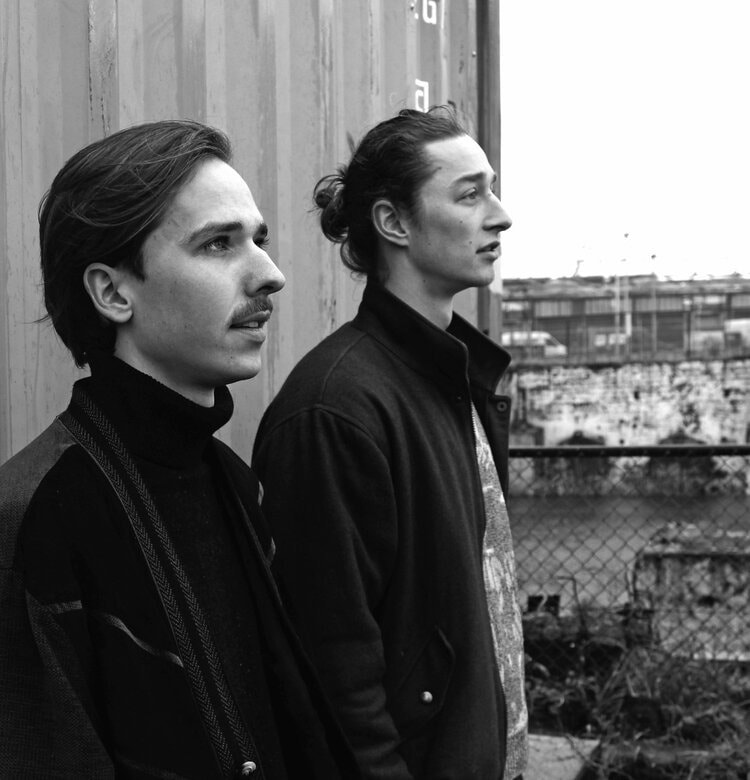
Me and Joost are always all over the place, either working on our shipping container complex, designing new products, developing materials, working in the office, keeping the company rolling and communicating with clients, sourcing new materials throughout the Netherlands, or visiting sites for projects. Our days are very varied. We are getting close to finishing construction for the office, which will bring some peace, I think, but next to that, I really like the variety.
J: Originally, my plan was to go into production design for movies, but I couldn’t live with the feeling that everything made for movies is temporary and is either stored for years or readily disposed of again, so I decided to go into product design, which gave me a more sincere feeling. Whenever I want to make something, I still feel as if it might be a waste of material in a largely saturated world, and that feeling opens up a window of opportunity every time to strive to develop a material or concept that helps solve these kinds of problems. The choice to work with plastics also came from a similar mindset, and I found myself very comfortable working with it.
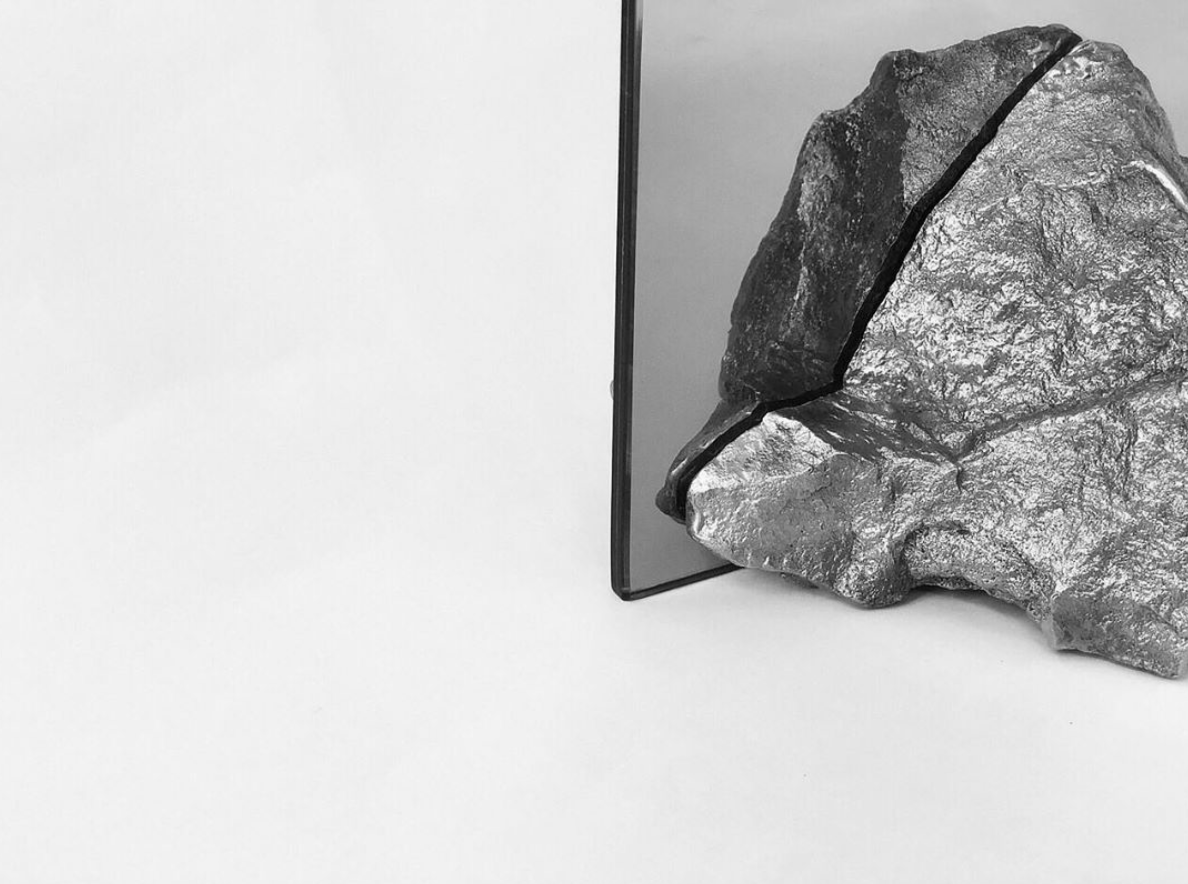
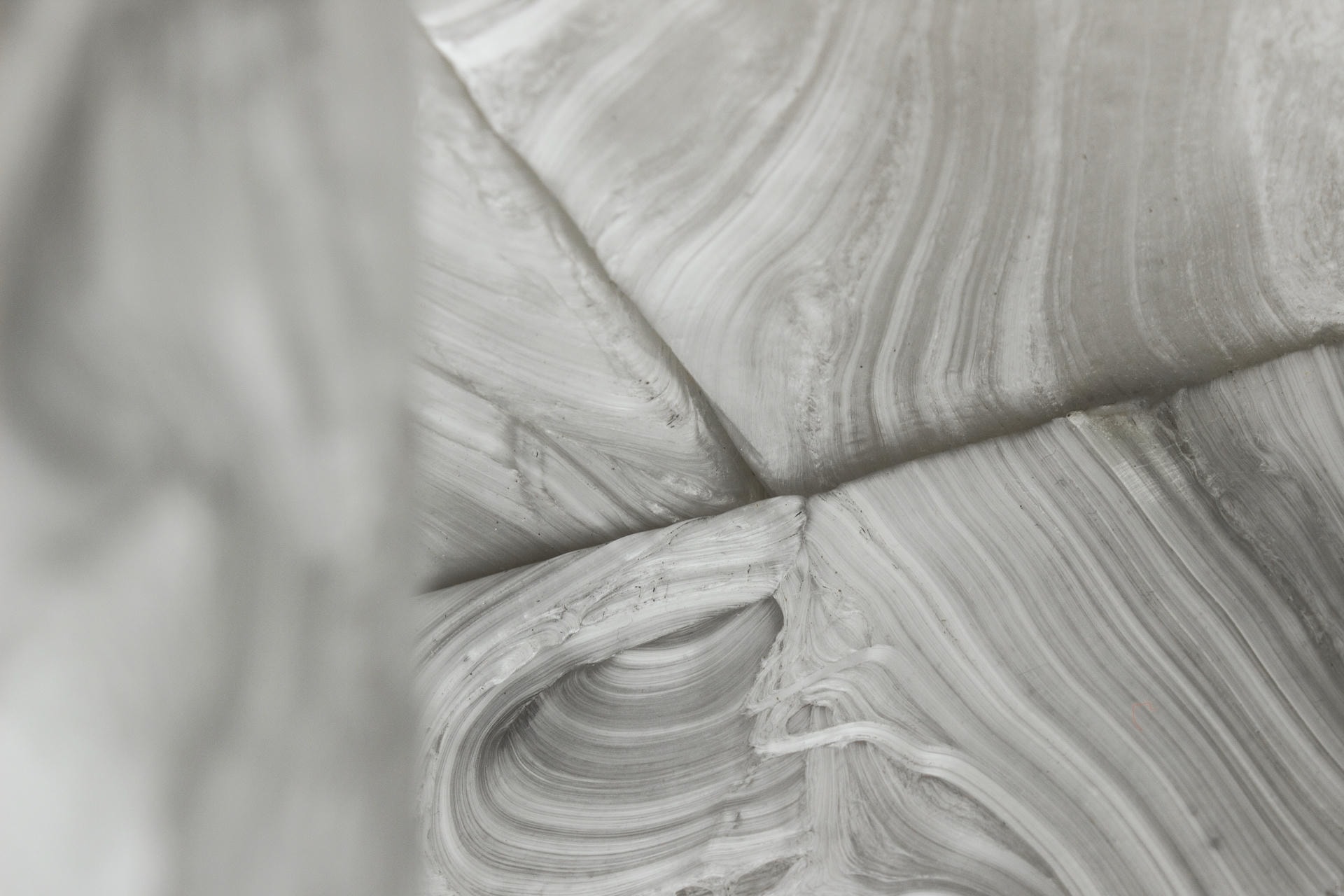
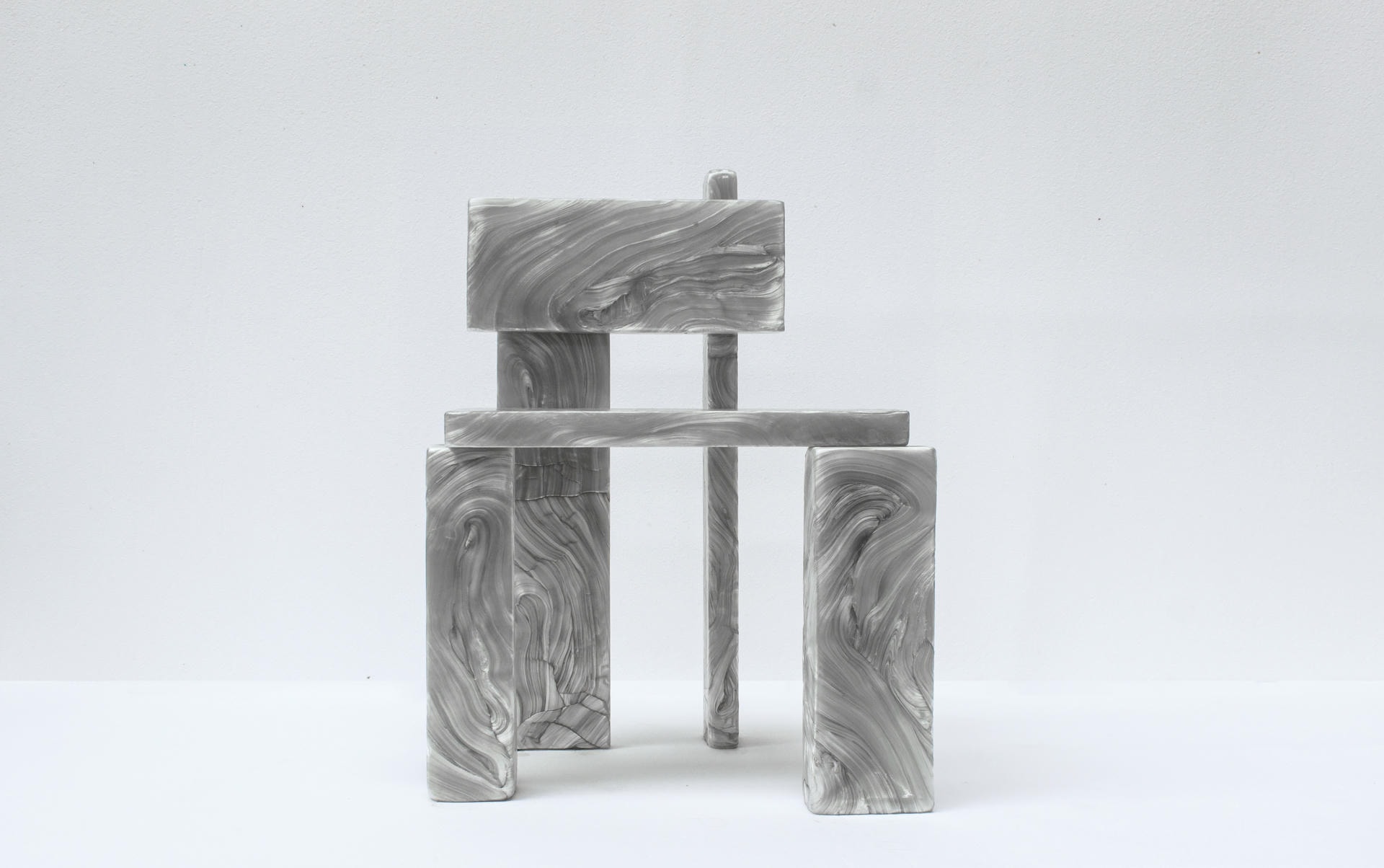
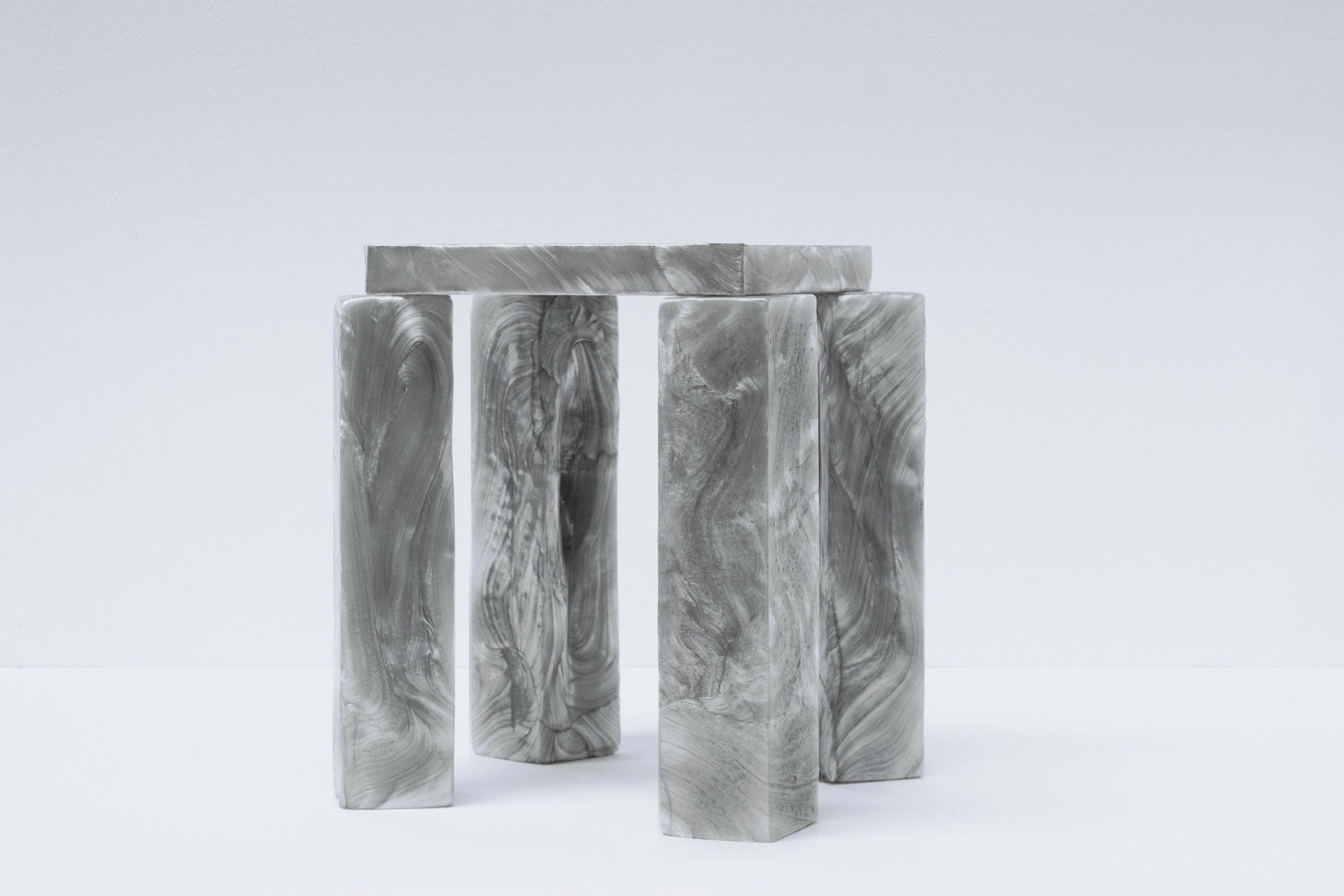
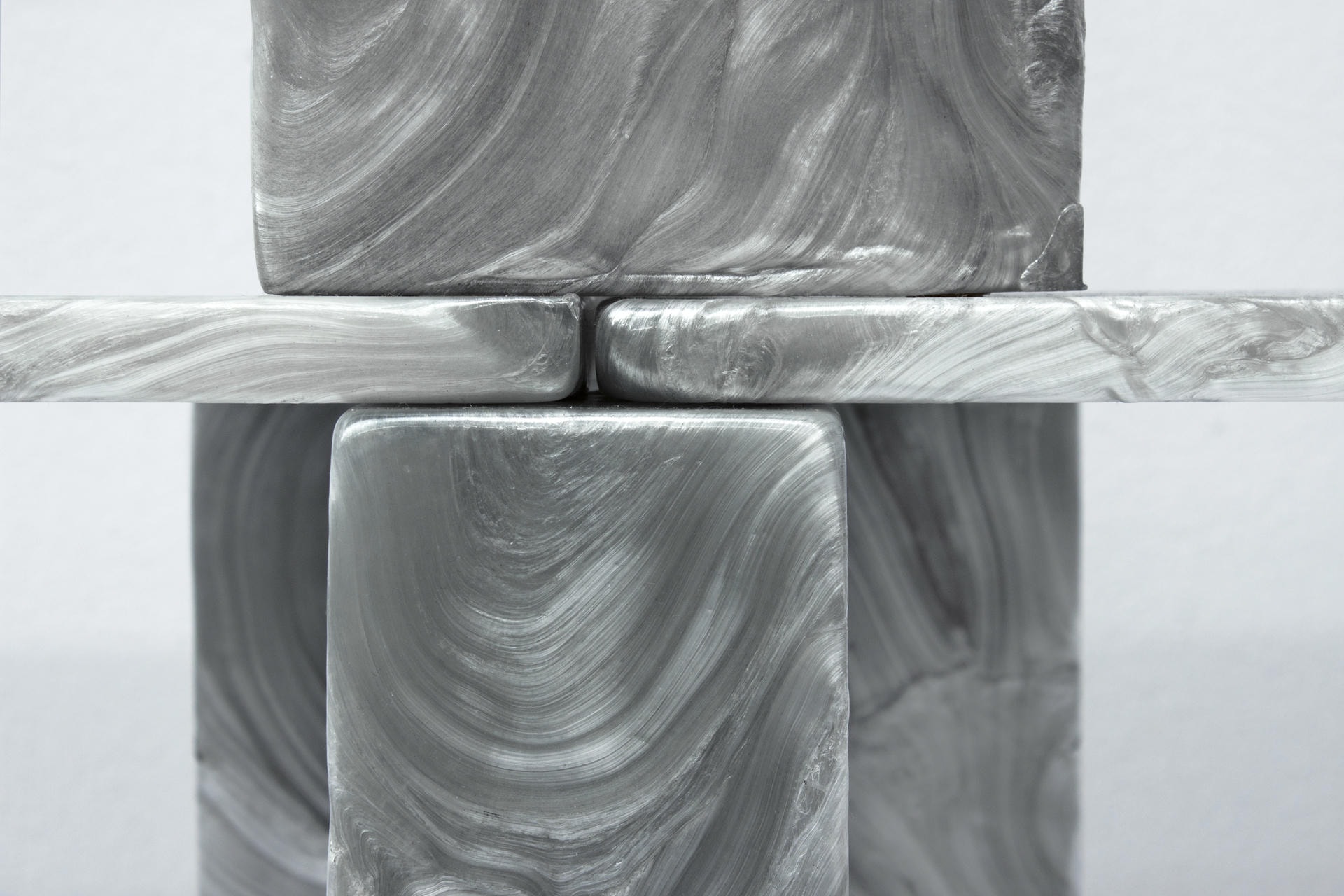
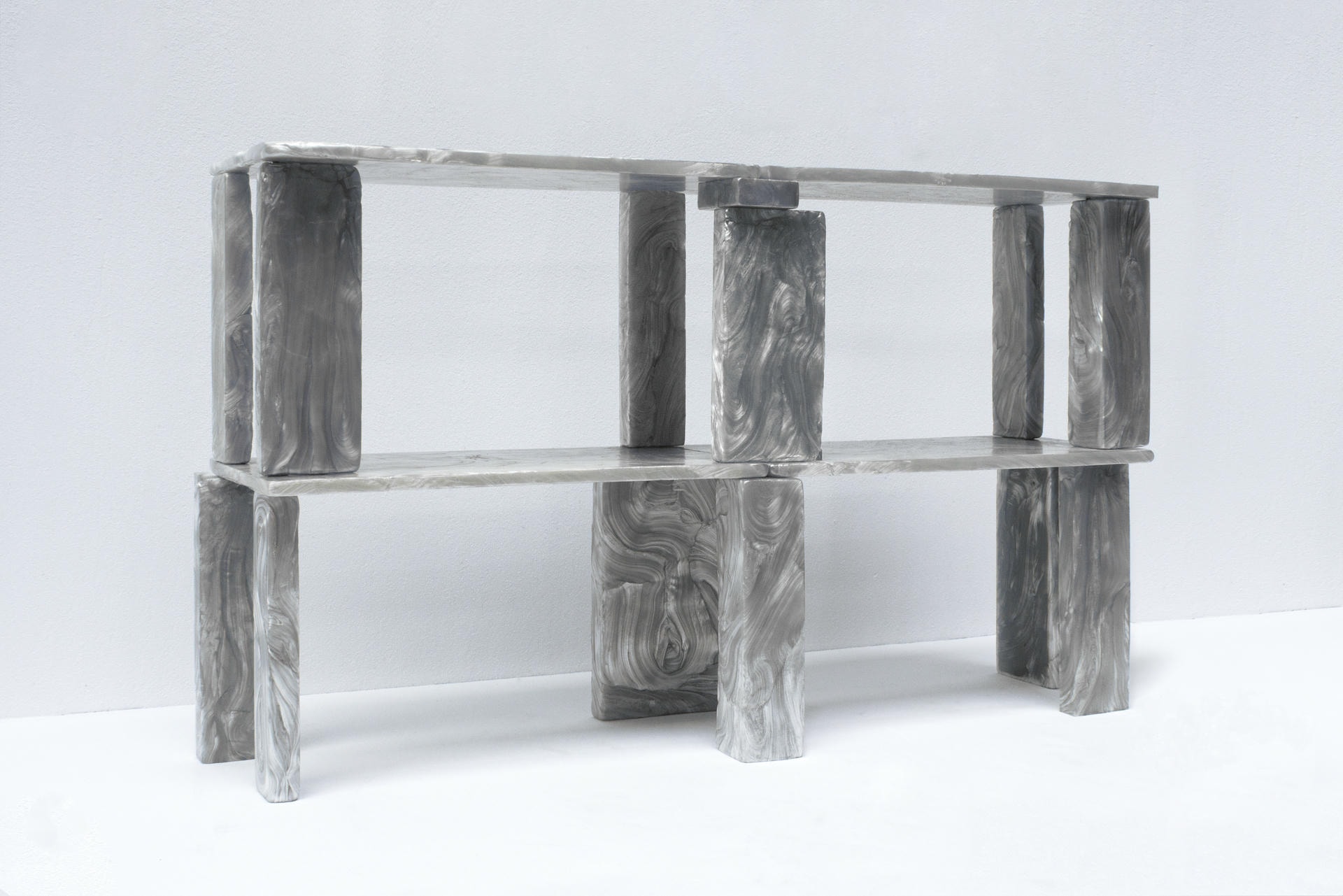
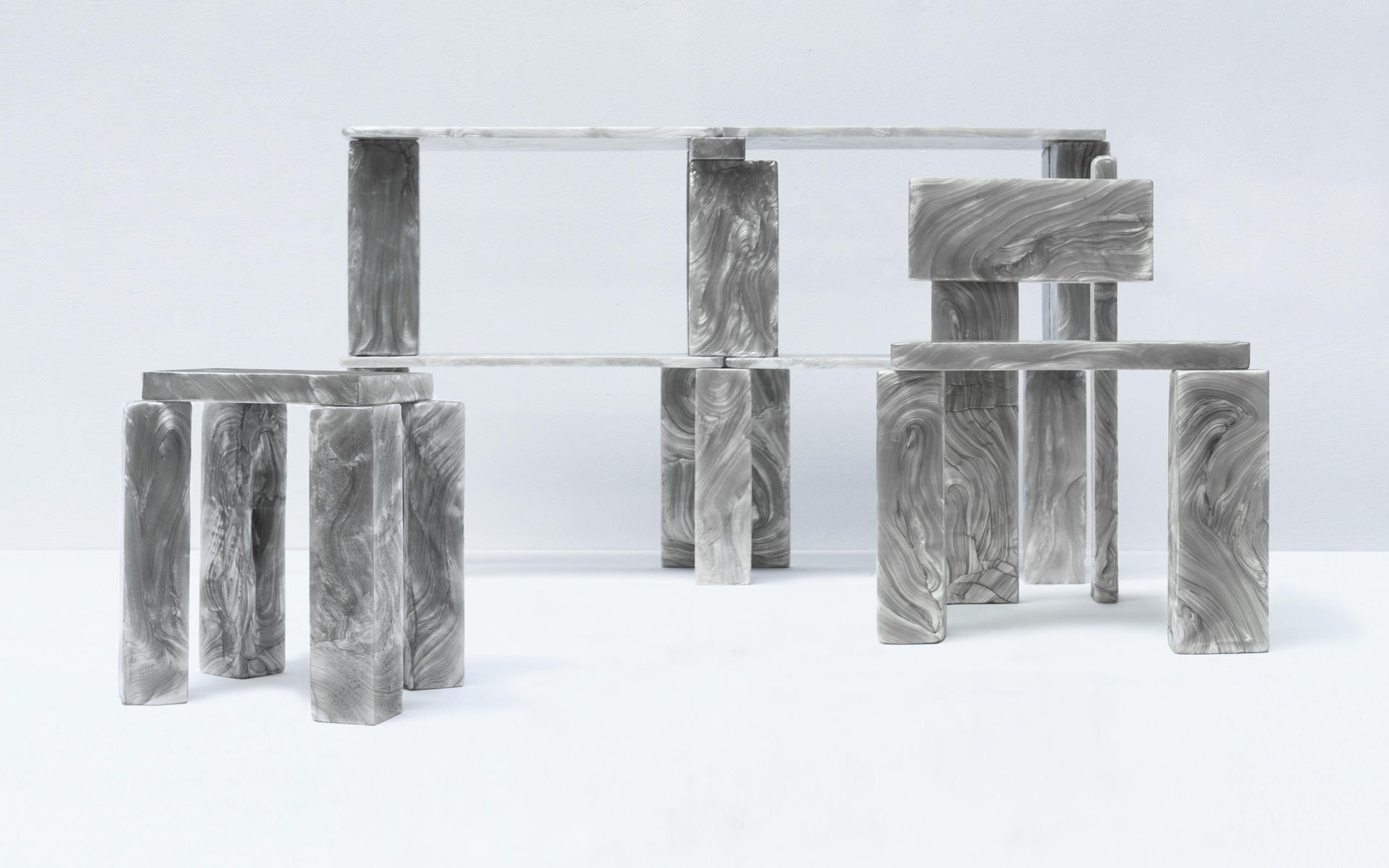
M: For the last few years we have been working a lot with recycled plastics. Mainly because we think it’s urgent. Next to that, I just enjoy transforming materials a lot. Plastic lets us do that in many different ways. I just really like how we can transform rubbish into something precious that looks like something you could find on another planet.
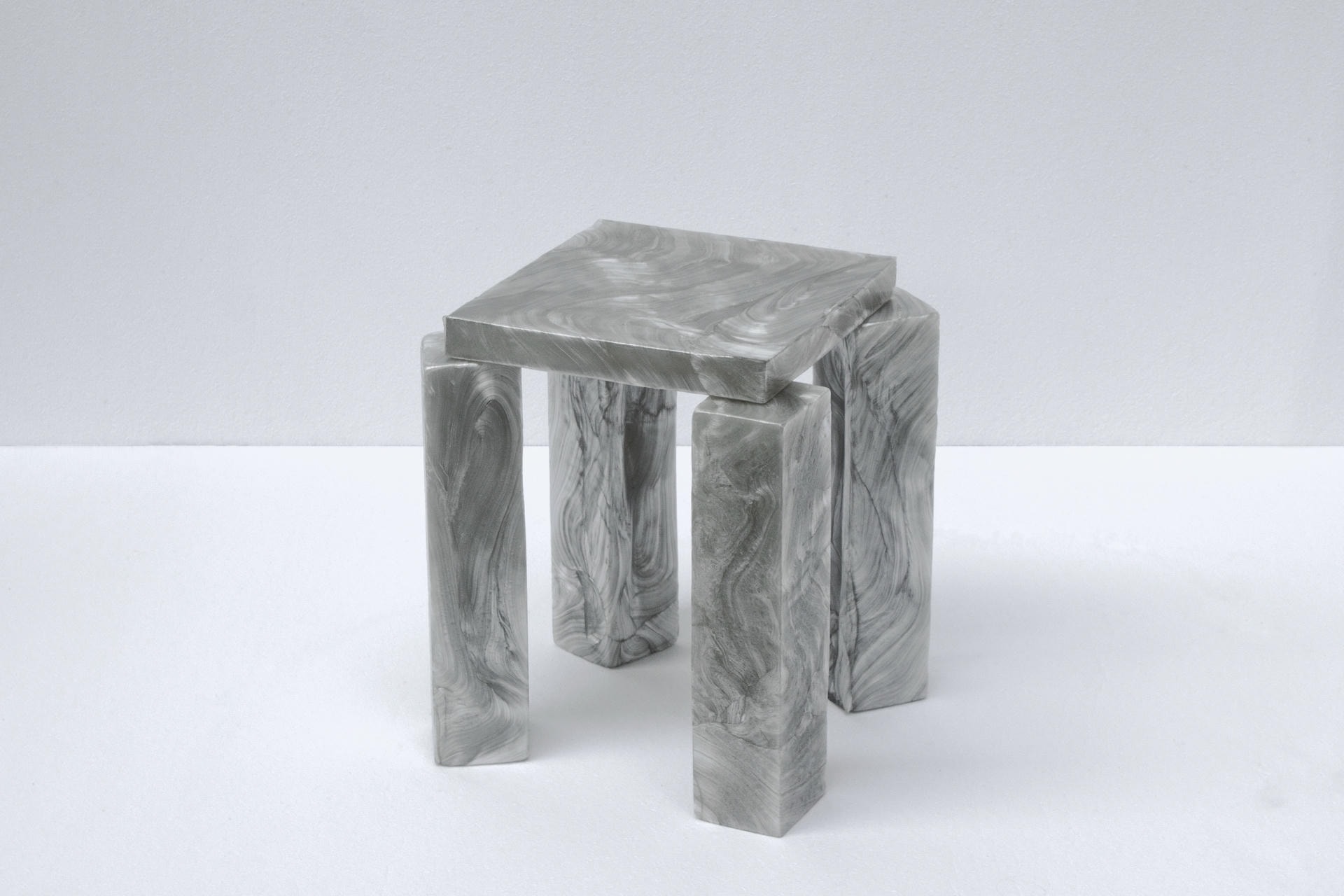
J: Plastic is such an engineered material for very specific production uses, yet I mainly work with it in a hands-on manner. So when working with recycled plastics, I don’t always know the exact melting flow, the shrinkage, the ideal temperature, the amount of contamination, and that takes a lot of experimentation and experience. It is also, for instance, sensitive to room temperature. In the summer I have to work differently than in the winter. Also, when working more freehand, I require thick gloves to block the heat and always wear a safety mask.
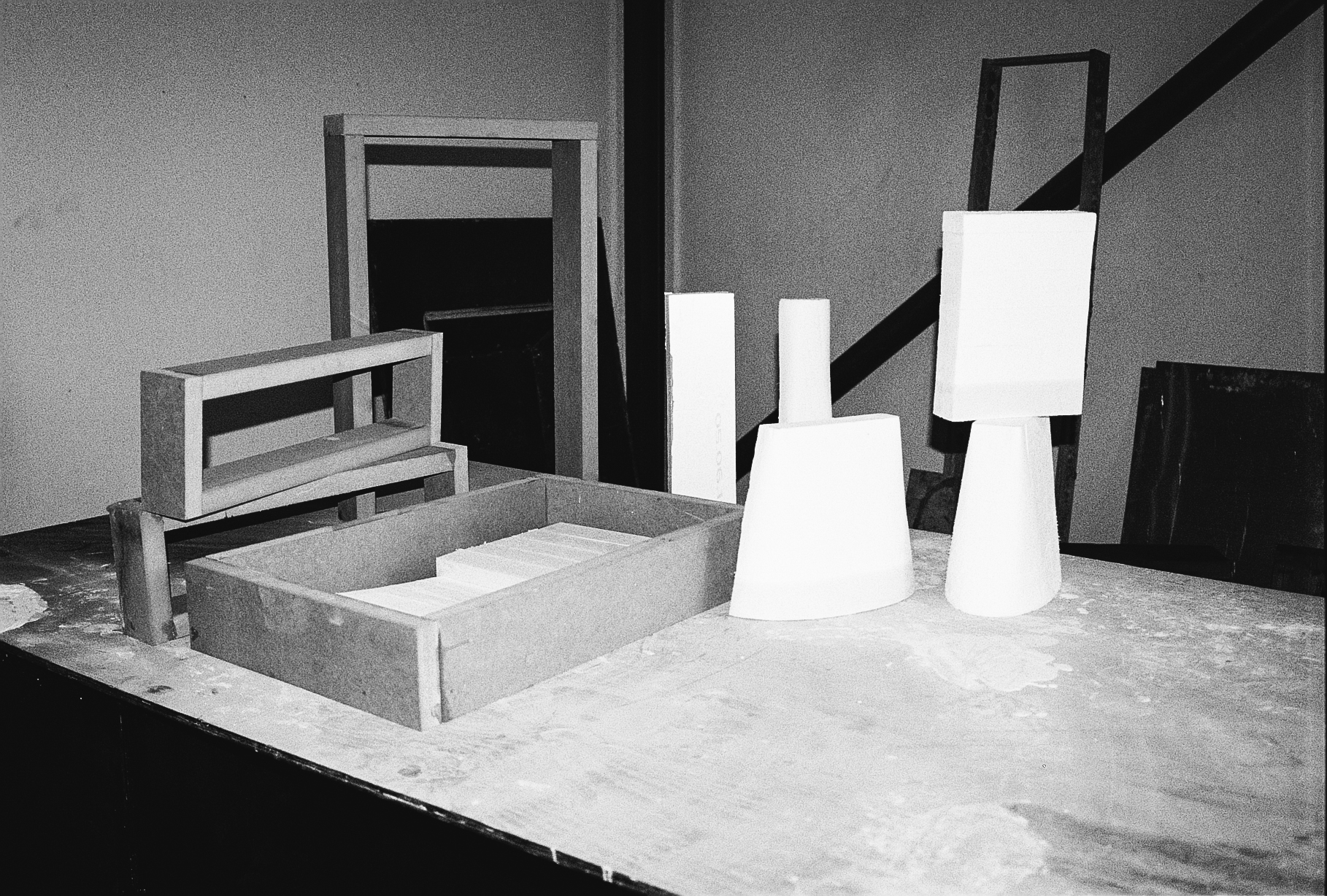
M: The most challenging thing about our way of working is that we are not only doing product designs, but we are developing material pretty much from scratch. That allows us to go crazy, but it also forces us to go through this evolution of technologies before we are able to actually adapt them in a product design.
J: I think there are three important guidelines that I like to follow. One is when you’re experimenting with a material, don’t think of what it will become in the end. Focus solely on getting to know the material, exploring its boundaries, and detecting what sparks your creativity. You’re always collaborating with the material; try to find the language you both understand. Next to that, try to imagine how someone you look up to approached his or her design work. What essential choices did they have to make? How did they interact with the material, and what were the biggest obstacles? Where did their inspiration come from and how did it progress? This way you learn how to influence and direct your own process. Lastly, if your results haven’t given you a sensation of adrenaline surging through your body, you are not there yet.
M: Follow your gut, and make a lot.
J: I like turtles!
M: Nope!
J: I hope that in the future my work will be seen as avant-garde within (plastic) recycling.
M: I would say probably the Next Nature Movement.
J: Ufan Lee, Michio Fukuoka, Studio Nendo, Agata Jaworska, Tjeerd Veenhoven.
M: During my studies, I was influenced a lot by storytelling designers, for example Studio Swine or Unknown-fields.
J: Peter Marigold, Jenny Nordberg, Steven Haulenbeek.
M: I really like Max Lamb. He is just the perfect example of what would happen if you would give 21th century tools and machines to a stylish caveman.
J: Studio SWINE, Kwangho Lee, Max Lamb, Thomas Vailly.
M: I have been inspired by sculptural designers like Mathieu Lehanneur, Rick Owens, Faye Toogood, Marcin Rusak, Bouroullec, studio Nucleo. Artists like Theodus Wolf or Illustrator Moebius.
J: Not good enough.
M: Competing with nature.
“You’re always collaborating with the material; try to find the language you both understand.”
(The Proust Questionnaire is a set of questions answered by the French writer Marcel Proust.
Other historical figures who have answered confession albums are Oscar Wilde,
Karl Marx, Arthur Conan Doyle, Stéphane Mallarmé, Paul Cézanne…)
J: Stable diversity of emotions
M: Freedom
J: Losing my hands
M: Captivity
J: Procrastination
M: Obsessive thinking
J: False promises
M: Disrespect
J: Sir David Attenborough
M: The guy from Alone in the Wilderness
J: Going to restaurants
M: Trips/Tools
J: Drowsy
M: Chill but wary
J: Honor
M: Being busy
J: Passion
M: Sincerity
J: Passion
M: Curiosity/adventurousness
J: “Chill” and “man”
M: “Alrighty”
J: Drawing
M: Playing the trumpet
J: My insomnia
M: Obsessive thinking
J: Surviving meningitis
M: Taking care of my sick father
J: Space waste
M: Tuk Tuk driver in India
J: Near a forest with mild winters
M: A big city that is very close to untouched nature
J: My Raku bowl
M: Our workshop
J: Endless rut
M: The dying of my father
J: Fantasising
M: Making
J: Kindness
M: Problem solver
J: Honesty and openness
M: Good talks, doing dumb things
J: Yuval Noah Harari, Kenya Hara
M: With shame I say I don’t read so much
J: Samwise Gamgee
M: Walter White
J: I honestly have never identified myself with a historical figure
M: No idea
J: Sir David Attenborough, Lonnie Liston Smith, Leonardo DiCaprio
M: My mom, she’s tough
J: Jackie, Noah
M: I like Era, or Billy for a girl
J: Headwind
M: I hate boring office work
J: Never to have gone deer spotting in the forest next to my home town
M: Regret is a useless emotion
J: Sober and prepared
M: Standing upright, with a bright mind
J: “What’s the worst thing that can happen?”
M: Casualties of war, for when something shitty happens that was unavoidable
“I just really like how we can transform rubbish into something precious that looks like something you could find on another planet.”
SHARE :