Claremont, California.
MAGAZINE · INTERVIEW
Vince Skelly
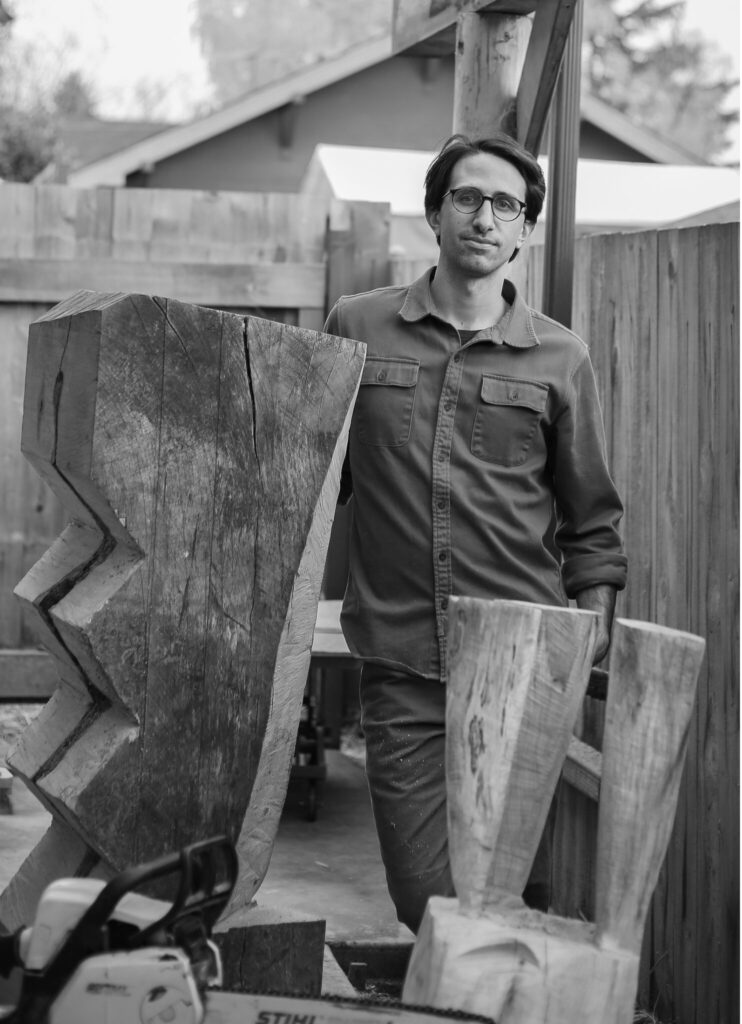
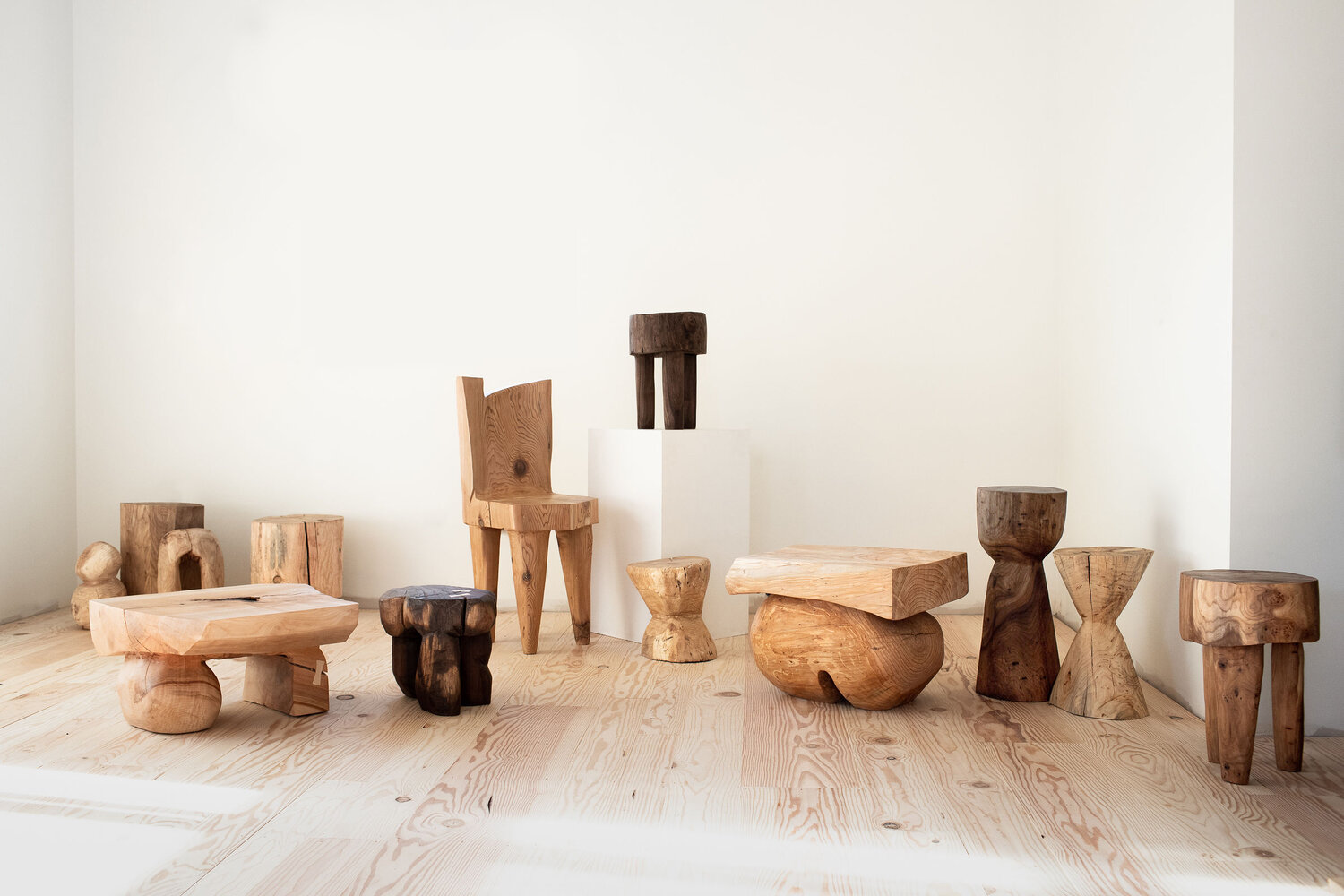
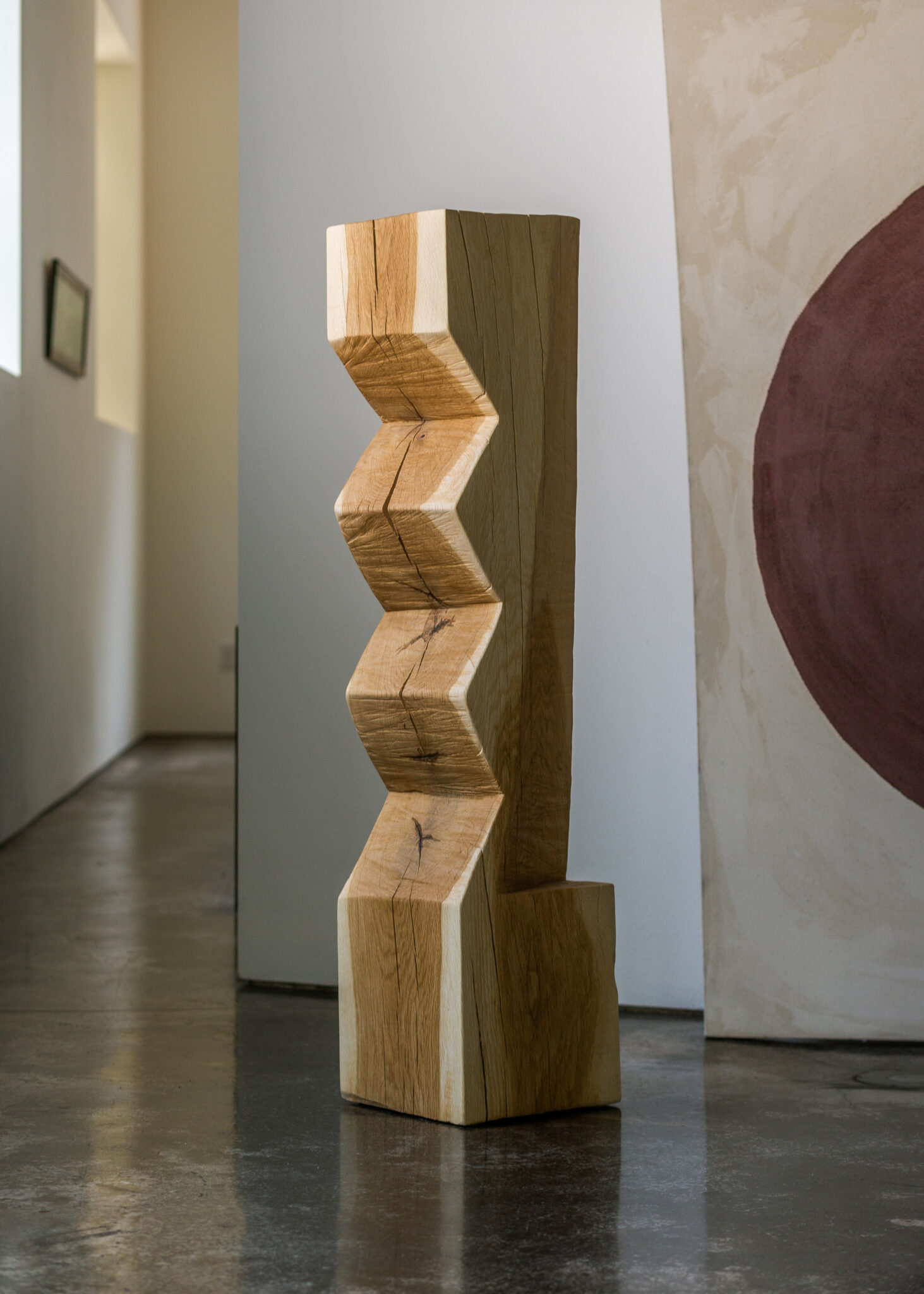
Vince Skelly is an American sculptor and designer based in California, whose practice explores the relationship between sculpture, furniture, and the natural world. Working primarily with salvaged old-growth redwood, cedar, and fir, he hand-carves each piece from a single block of wood, allowing the material’s grain, history, and imperfections to shape the final form. His work balances functionality with sculptural expression, drawing inspiration from ancient monuments, vernacular craftsmanship, and the landscapes of the American West.
Guided by an intuitive and process-driven approach, Skelly transforms fallen trees into collectible objects distinguished by their bold silhouettes, tactile surfaces, and quiet monumentality. Combining traditional woodworking with a deeply material-led practice, he creates timeless works that celebrate the enduring character of wood while exploring the dialogue between utility, memory, and sculpture. His work has been exhibited internationally and featured in publications including The New York Times, Architectural Digest, and Sight Unseen.
Let's know more about
Interview
Where were you born and where are you from?
What is your first memory connected to the art world?
Claremont is full of public art sculptures. As a kid, I saw them as play structures. It’s one of the reasons that I make art that you can interact with.
Have you always worked in the art/design field?
Yes. I studied visual communication in college, then began experimenting with sculpture in my free time.
What led you to design creation?
I couldn’t afford or find the things I wanted to display in my home, so I started making them myself.
How would you describe your creative process and its influences?
My influences come from the relationship between ancient building forms and their similarity to contemporary architecture and furniture.
I work in a reductive process, sculpting all my work from a single block of wood. I use a chainsaw and different hand tools. Often the wood will present something unexpected, like a large crack, and I’m forced to find a solution. I like when that happens because it provides spontaneity.
Could you describe a typical day of your work?
There’s no typical day really. Sometimes I wake up and go collect wood from various sources around the city. Other times I go straight to the studio and start sanding or carving a piece.
Why did you choose the specific materials you work with?
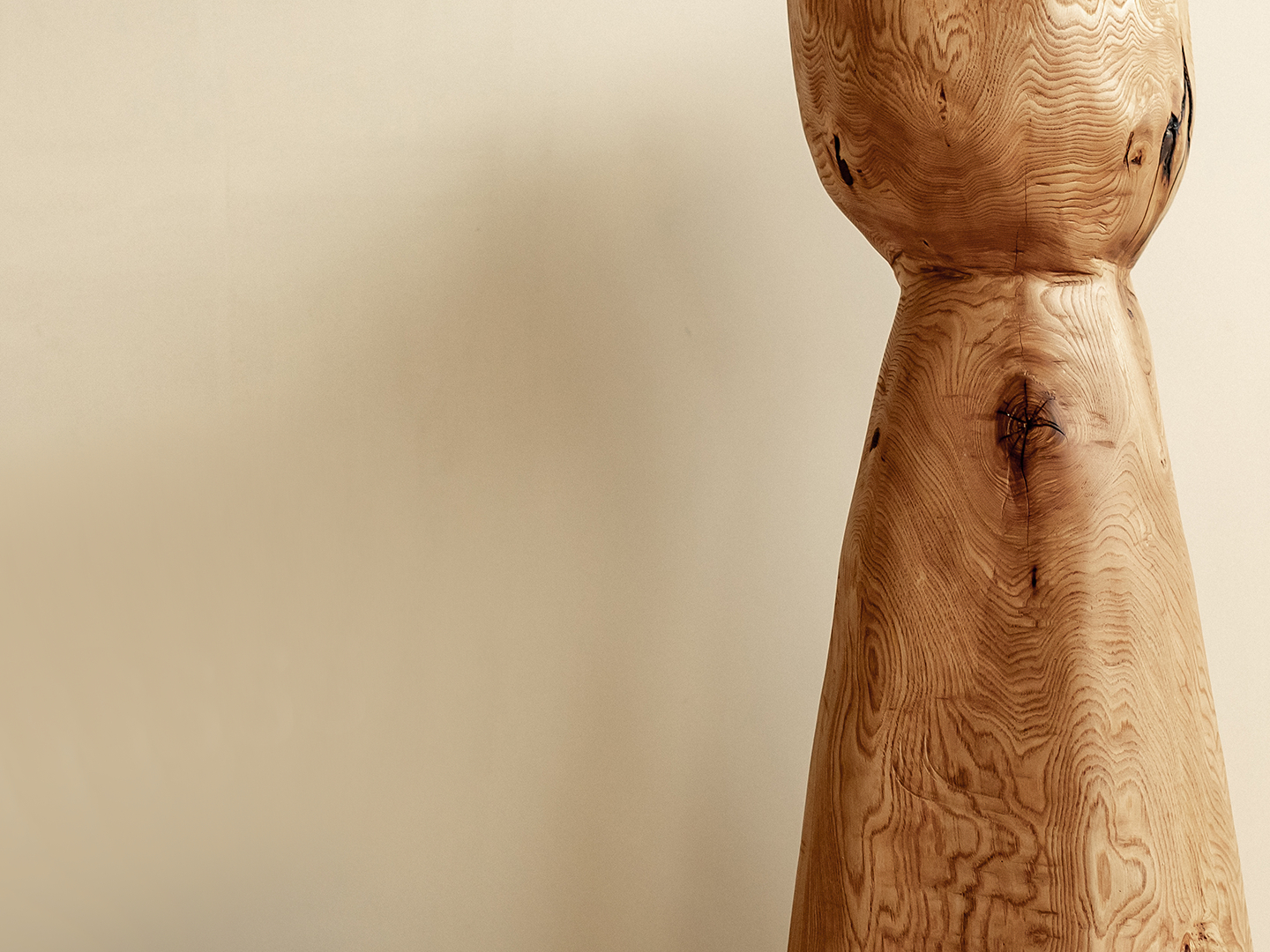
I love natural materials because of the organic connection they have with the earth. Wood is interesting because the grain plays a significant role in the sculpture. It becomes the color and texture and holds energy.
What are the technical particularities of your creations?
They usually have to have a function, like a flat top for a table, or a seat.
What advice could you give to beginning artists who would like to create sculptural design works?
Look to ancient history, art, and objects of everyday life for inspiration. So much of ancient work looks and feels organic, naturally.
If your works had to belong to a design movement, how would you define it?
The Wood Age.
What designers and artists have influenced you?
Isamu Noguchi, JB Blunk, Evelyn & Jerome Ackerman, Henry Moore, Andre Bloc, Wharton Esherick, Mark Mills, and Alma Allen.
What contemporary designers do you appreciate?
Millard Sheets, Sam Maloof, Lloyd Kahn, Axel Vervoordt.
What contemporary artists, in any kind of art, have you been inspired by?
Thaddeus Mosley, Alma Allen, Josh Kermiet, Shiela Laufer.
If you had to summarize your creations in one word or sentence, what would it be?
Wooden Sculptures of Megalithic Structures.
Is there anything you would like to add?
I believe that the mere beauty of an object is superficial, and in the end, it is the spirit of an object that attracts us.
“Look to ancient history, art, and objects of everyday life for inspiration.”
The Questionnaire
The Questions
(The Proust Questionnaire is a set of questions answered by the French writer Marcel Proust.
Other historical figures who have answered confession albums are Oscar Wilde,
Karl Marx, Arthur Conan Doyle, Stéphane Mallarmé, Paul Cézanne…)
SHARE :