Gerard Kuijpers
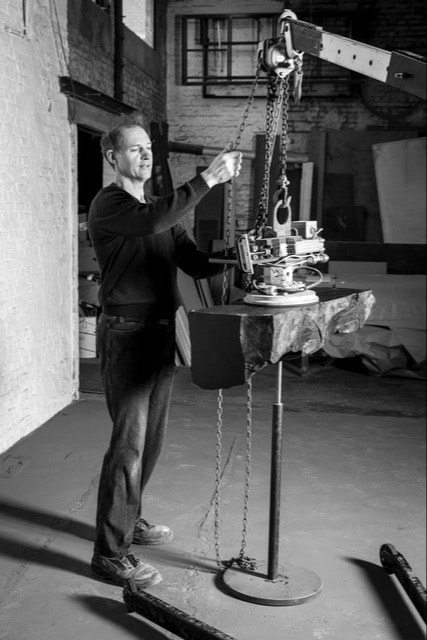
Gerard Kuijpers is a Belgian designer and self-taught artist whose work is defined by a profound exploration of material, gravity, and construction. For more than three decades, he has investigated the essential qualities of stone, steel, glass, and wood, creating sculptural furniture and functional objects that reveal the expressive potential of their interaction. Working from Mechelen, Kuijpers develops pieces distinguished by their striking balance between monumentality and lightness, transforming raw materials into works that appear both powerful and unexpectedly delicate.
Rooted in a fascination with material tension and structural ingenuity, his practice blurs the boundaries between sculpture and design. Through an intuitive process driven by experimentation, Kuijpers creates objects that challenge perceptions of weight, stability, and movement, often inviting a tactile relationship between the viewer and the work. His celebrated Dancing Stones series exemplifies this approach, combining technical precision with a poetic sense of wonder to reveal new possibilities within timeless materials.
Interview
I was born in Mechelen ( Belgium), then lived in various places in Flanders, and now I live and work in Mechelen again.
A modernist building across the apartment of my grandparents is my earliest memory.
I started at the age of 22 as an autodidact. When I was younger, I wanted to be a writer. I published a few pages of prose in 2 literary magazines.
I needed a barstool in my apartment but couldn’t buy one, so I tried to create one. Actually, the Zigzag Chair was the first object I created and made as well.
What triggers me most in starting a new piece is the desire to find a new way of making the construction, for a table or console, for example. How to make a solid and elegant junction between vertical and horizontal parts. Friction between materials is the key ingredient to making a new object. Secondly, a bizarre or monumental piece of stone can urge me to give it a certain function in a new design.
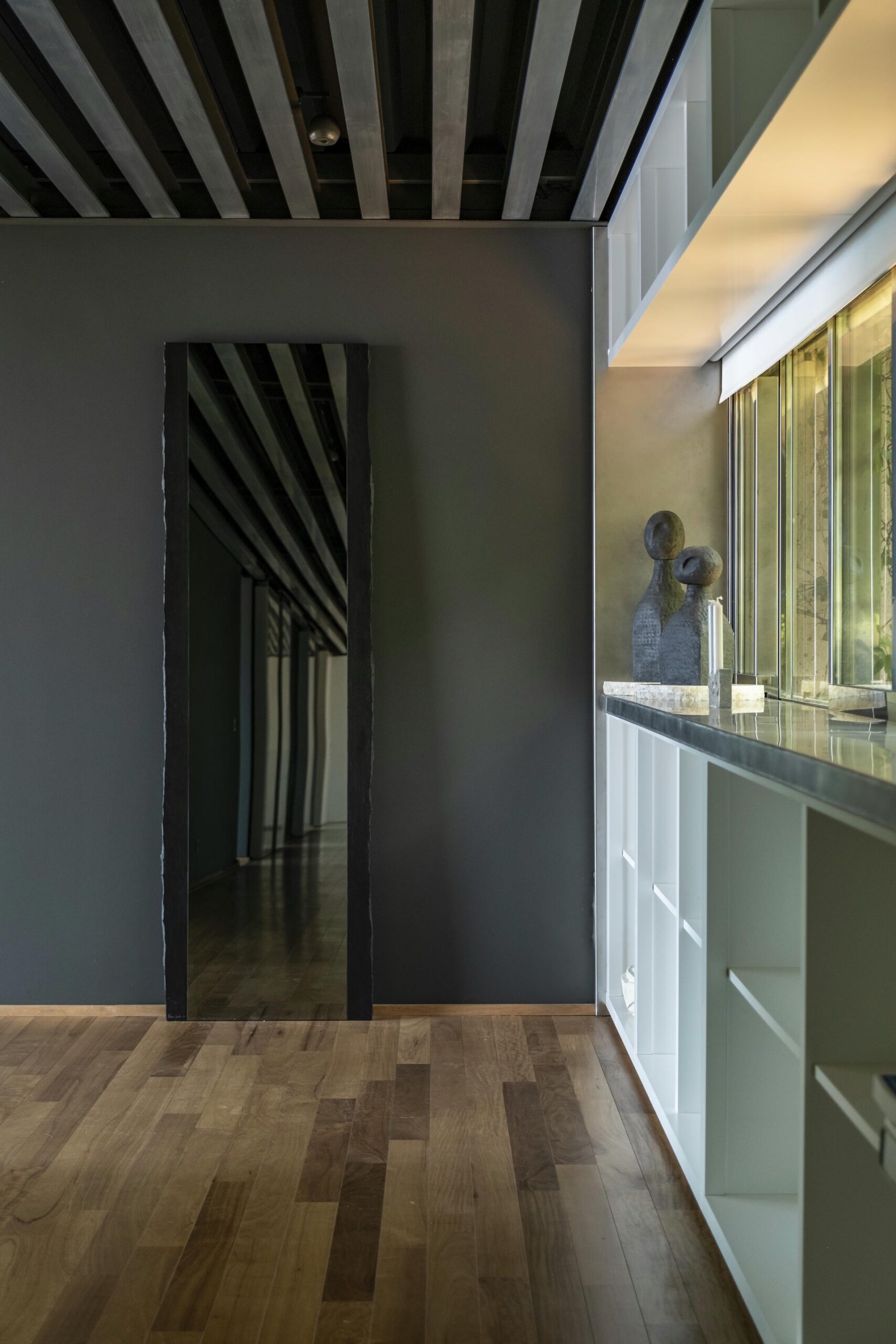
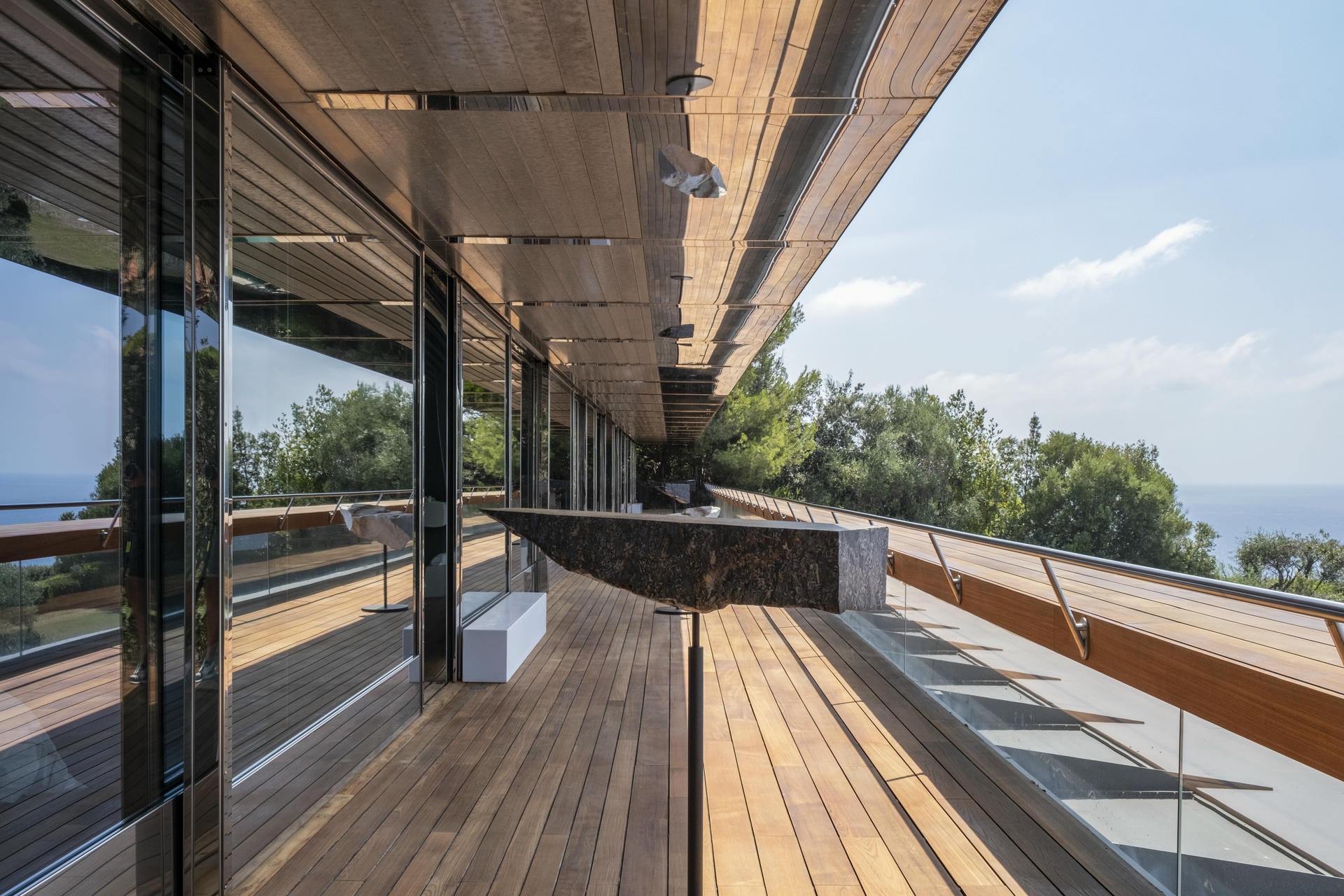
Try to find your personal approach to materials and construction. Look for the boundaries and go beyond. Try to find the virtue of failure, because it means that you have been taking risks. Find also the energy to start again from scratch when necessary.
Brutalism.
A few times, I dreamt about a very precise object. Sometimes I am tempted to improve earlier work. But mostly I want to experiment with something new. Then I start to visualize a construction while trying to feel its energy in real space. Vertical and horizontal parts work together or are, on the contrary, opposed to each other. I always try to link them without destroying their initial qualities.
Visualization has the advantage of drawing, not losing contact with the 3D-object while I want to clear out some details of the construction. See it as a cameraman zooming in on a particular part without losing the overview.
Then I check the dimensions and the strength of some steel bars or tubes that I find in my studio before I decide which one to use.
That is one way to start creating. Another way is that I walk along in my studio when suddenly a special rock or boulder gets my attention. Next, I try to make something with it in order to emphasize its beauty and uniqueness, while at the same time adding a function. A functional object has the added value that the owner can build a tactile relationship with it by touching and using it. Doing so, it comes alive.
With steel, I can make constructions that are elegant and solid at the same time. Dimensions can be reduced without diminishing stability. So, often people tell me that my work gives the impression of being light, while the real weight can be enormous. Secondly, I like to work with rough pieces of stone because they are relics from ancient times and have been created over millions of years.
It’s all about gravity! Each object is an attempt to deceive gravity in an original way.
But weight is also a value. Sometimes the weight of a massive block of stone makes a construction more stable. One time, I used the weight of a thick wooden tabletop to keep the legs in position.
It is important that one can disassemble the final object again. I use welding only minimally. Mostly, bolts and nuts are the way of fixation.
Paul Gees, a Belgian artist who uses the flexibility of wood to keep little stones in position. Richard Serra, minimalism in steel. Tadao Ando, minimalism in concrete. And all designers who work with abstract heavy blocks of stone or wood.
Paul Gees, a Belgian artist who uses the flexibility of wood to keep little stones in position. Richard Serra, minimalism in steel. Tadao Ando, minimalism in concrete. And all designers who work with abstract heavy blocks of stone or wood.
Paul Gees, a Belgian artist who uses the flexibility of wood to keep little stones in position. Richard Serra, minimalism in steel. Tadao Ando, minimalism in concrete. And all designers who work with abstract heavy blocks of stone or wood.
Rough materials are getting tactile and alive.
By creating the Dancing Stone, I added to my artworks the possibility and necessity to touch the object, while the object received the power to speak back. So the human being and the stone can start to dance.
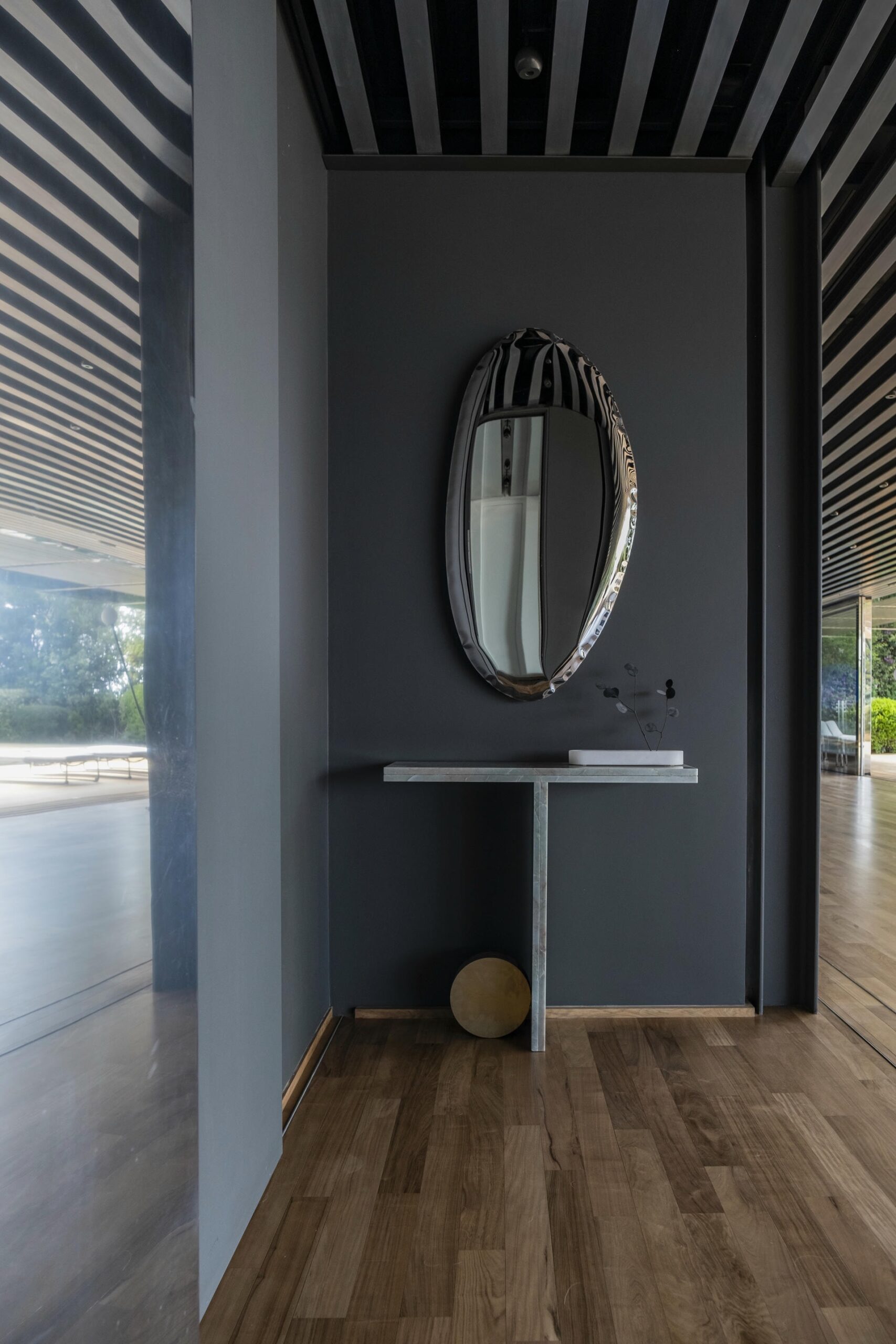
“Try to find the virtue of failure, because it means that you have been taking risks.”
The Questions
(The Proust Questionnaire is a set of questions answered by the French writer Marcel Proust.
Other historical figures who have answered confession albums are Oscar Wilde,
Karl Marx, Arthur Conan Doyle, Stéphane Mallarmé, Paul Cézanne…)
“Rough materials are getting tactile and alive.”
SHARE :