
Julie Nelson
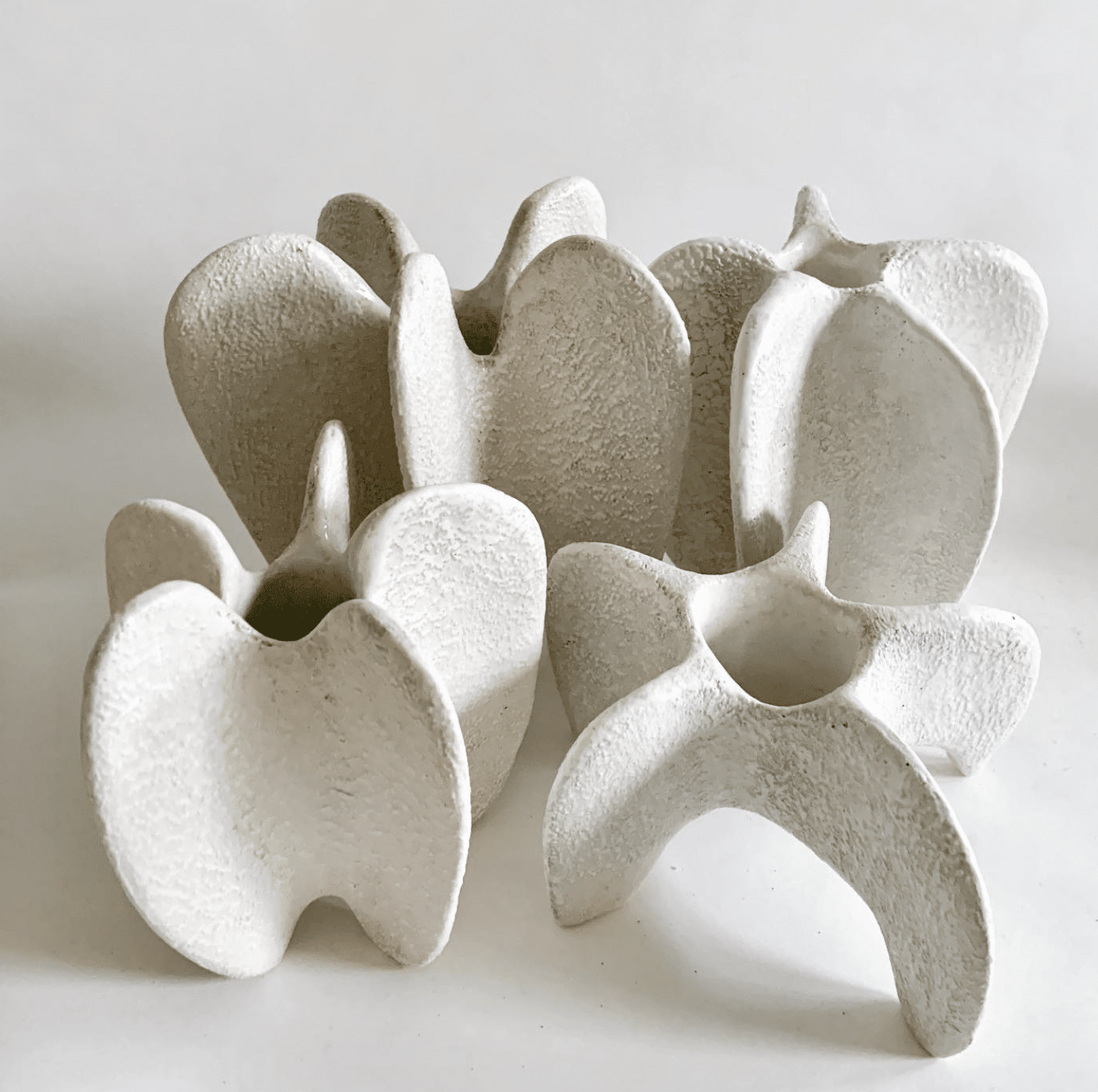
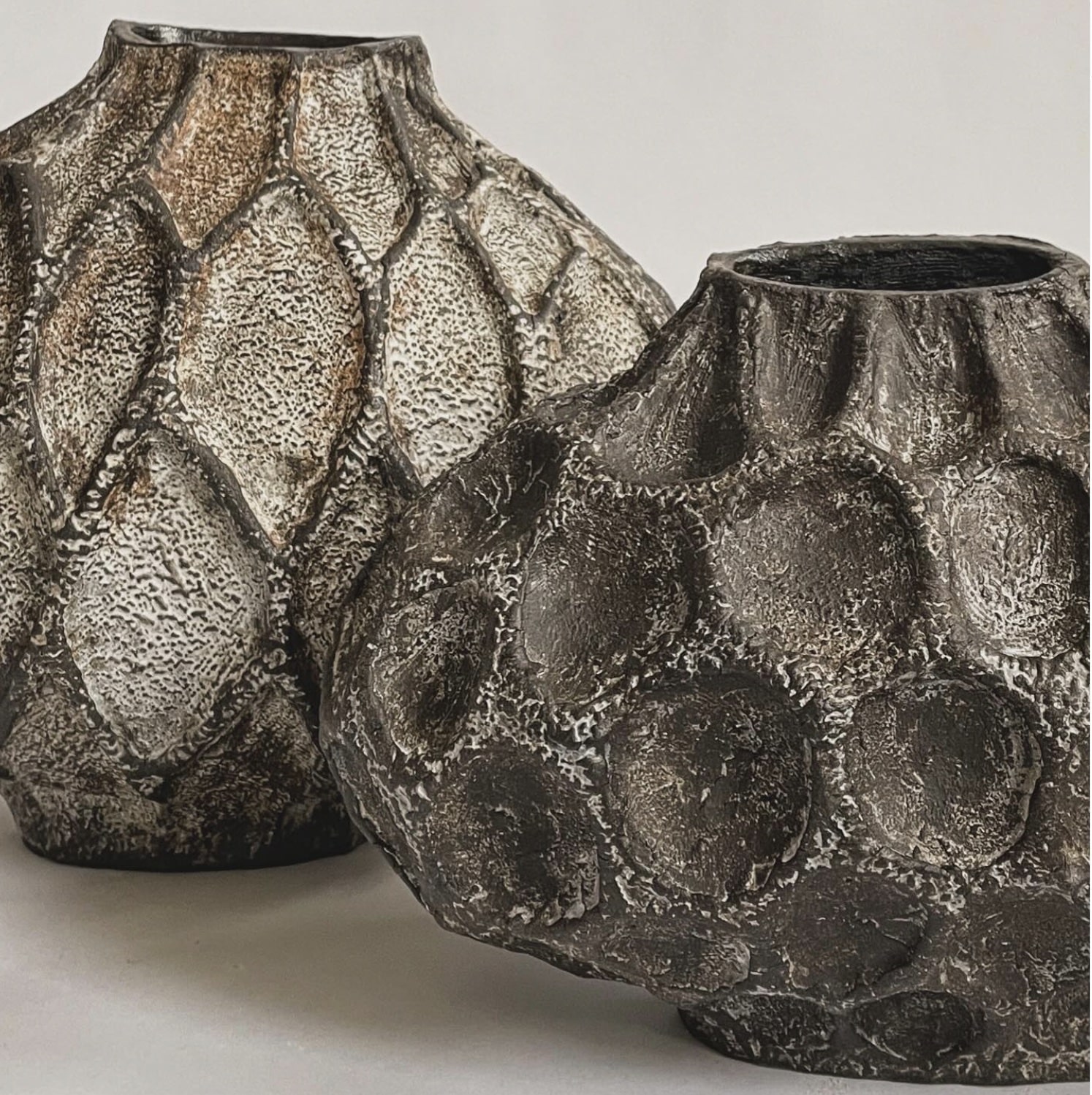
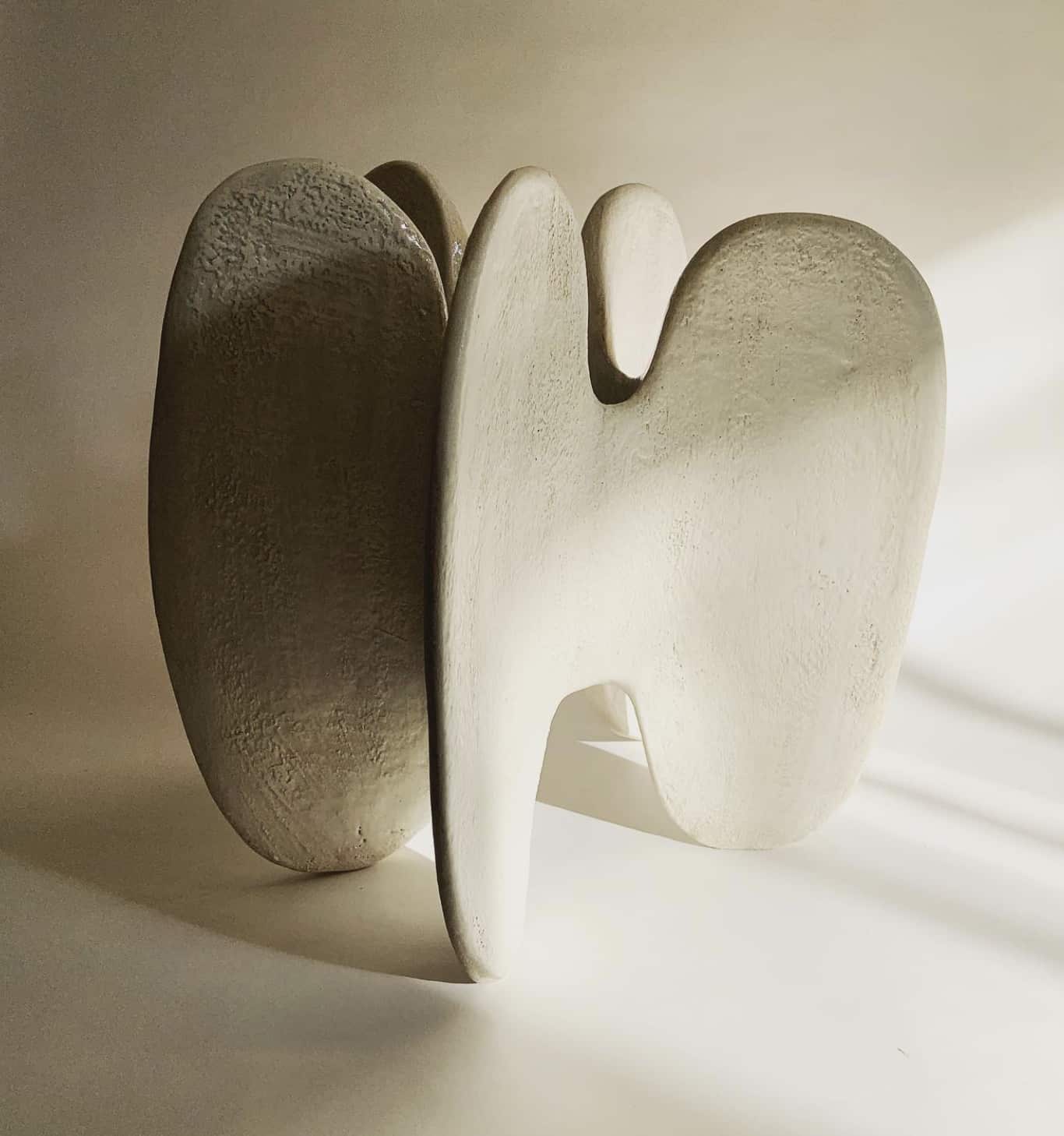
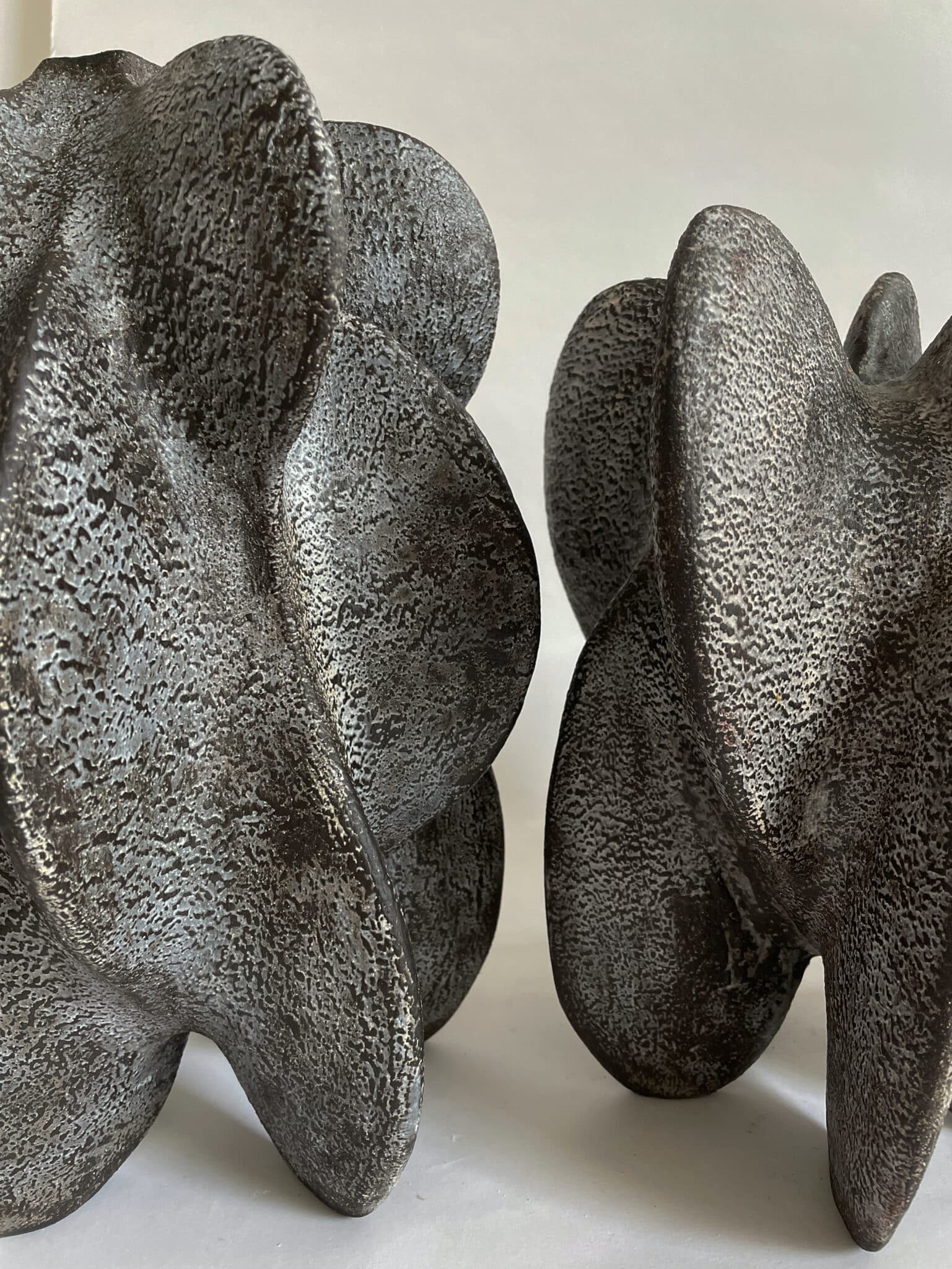
Julie Nelson is a British ceramic artist whose practice explores the natural world through the expressive materiality of clay. Drawing inspiration from biology, botany, and landscape, she creates sculptural collections that investigate the patterns, rhythms, and subtle irregularities found in nature. Working in series, Nelson presents groups of objects that contrast and complement one another, revealing the interconnected relationships that exist within natural systems.
Rooted in an exploration of elemental forms, her work reflects themes of pattern, entropy, and transformation while celebrating the quiet complexity of the environment. Alongside her sculptural collections, projects such as Flock extend her practice into participatory installations, examining ideas of migration, identity, and collective experience through the gathering of individual forms.
Interview
I’m from the UK and was born in Nottingham, in the Midlands. When I was very young, we moved to Torquay, a seaside town in the South West of England.
I grew up surrounded by books, many of which were about art. Throughout my childhood, a dramatic painting of a coastline, seen from above and in muted colours, hung on the wall. My parents bought it when young in the late 50’s. The painting looks abstract and is intriguing, made more so for being unnamed. It lived with them for all of their life. My mother also loved the Impressionists, and we had a print of Gustave Caillebotte’s sensual painting Raboteurs de Parquet in the house too.
Yes. I loved art at school, and going to art school was a no-brainer. My degree was in 3- DimensionalDesign and I specialised in ceramics. I did work commercially as a prop maker when I left college, but always as a sculptor.
As soon as the opportunity opened up I began creating my own pieces.
I am full of wonder at the natural world and need to interpret it through the making process. This is how the ideas evolve, through studying the forms around me.
I wake up at 6 am and like to spend the first hour or so thinking, gathering my thoughts about my day in the studio. I do try to capture an idea with a quick sketch, but often ideas evolve through making. Studio time passes in a flash, and I often stay very late, completely absorbed. I make notes before leaving to pick up where I left off for the next day.
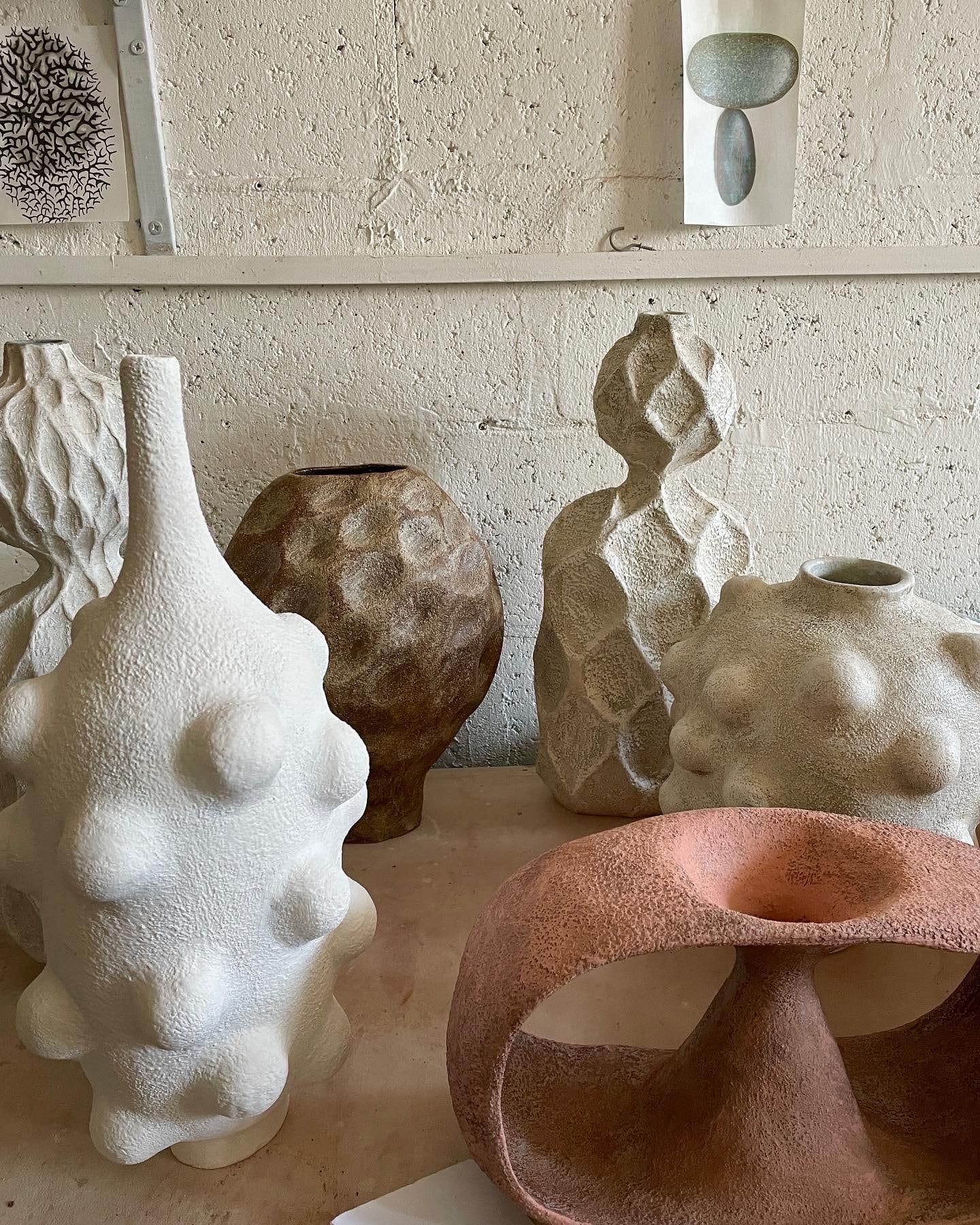
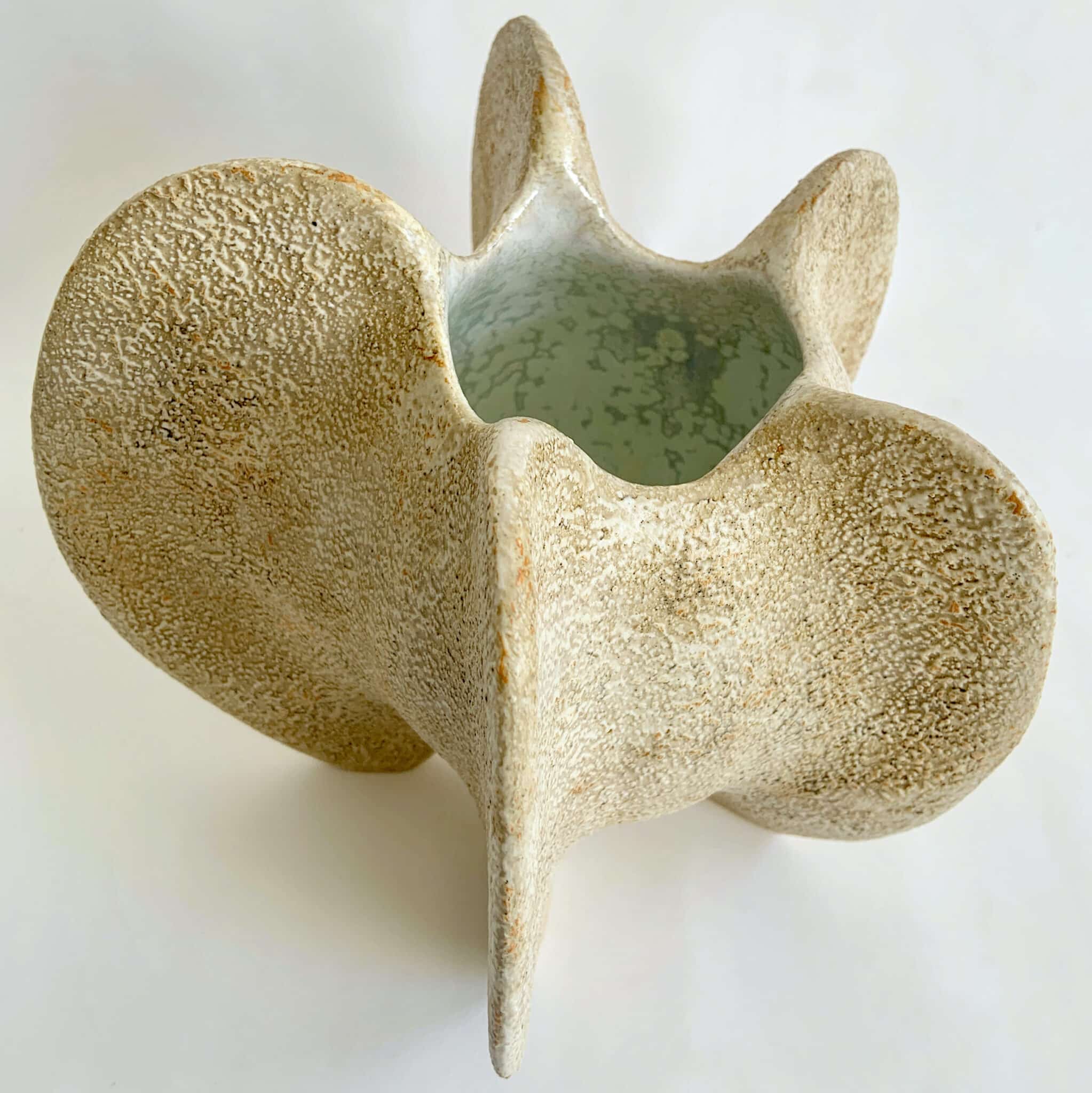
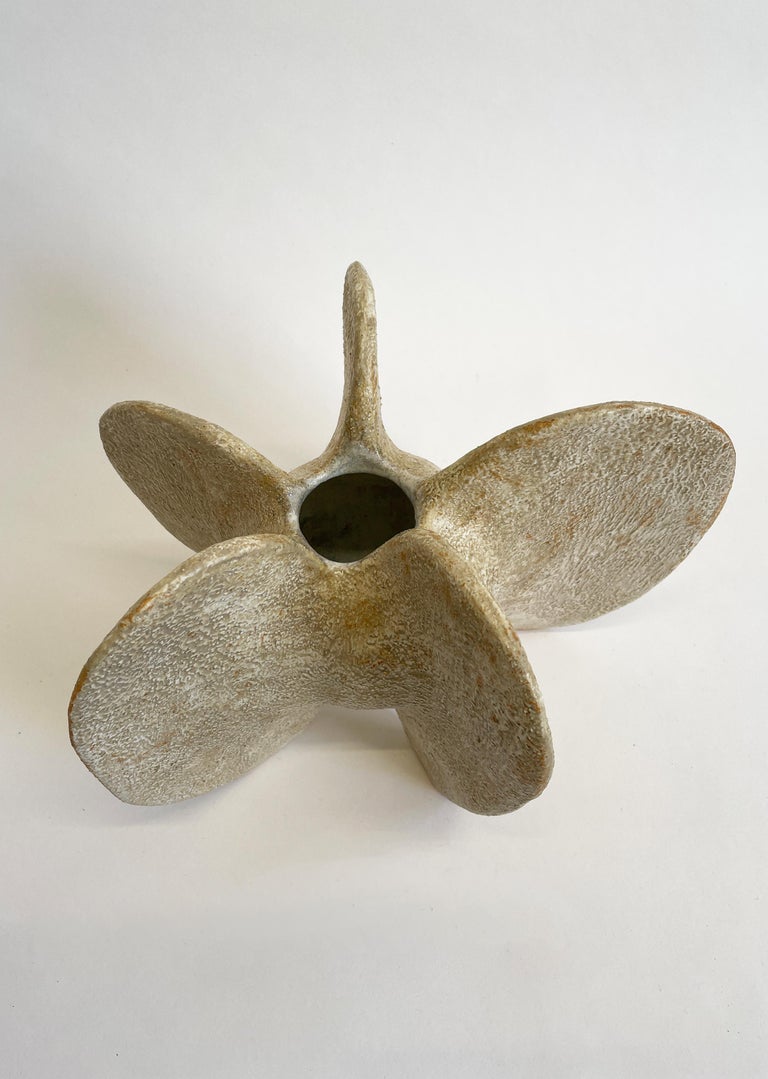
I construct my pieces like a dressmaker, cutting out shapes and assembling them in a spontaneous way. I layer slips, wash them away, and reapply them in a way that encourages an element of free form, as if the surface had been subjected to the elements.

Be ambitious and curious, and remember ‘better done than perfect’ in the beginning.
I’m not keen on labels, but Organic Modernism would do.
Valentine Schlegel, Axel Salto, Bruno Munari, James Tower, Beate Kuhn.
Akiko Hirai, Turi Heisselberg Pedersen, Domingos Tótora, Vincenzo De Coitiis.
Lubna Choudhary, Maya Lin, Gabriel Orozco, Ellen Gallagher.
‘Her slender vessels wrapped in rhythmic waves are akin to the pulse of the sea’ by Emily Steer.
A thank you for the opportunity to offer my thoughts.
“I am full of wonder at the natural world and need to interpret it through the making process.”
The Questions
(The Proust Questionnaire is a set of questions answered by the French writer Marcel Proust.
Other historical figures who have answered confession albums are Oscar Wilde,
Karl Marx, Arthur Conan Doyle, Stéphane Mallarmé, Paul Cézanne…)
Spending time with my sons
Losing them
Over sensitivity
Arrogance
My husband
Seeing the horizon of earth every day
Engaged
Prudence
Kindness
Resilience
At the end of the day…
Public speaking
I would speak many languages
Getting to here
A tree
Where I live, close to the sea
My pre-iCloud photos
Lack of opportunity
Visiting galleries
My height
Curiosity
Bruno Munari, John Berger, Rachel Carson
Ripley in Alien
Alexander Humboldt
My husband and my late parents
The names we gave our sons
Superiority
Not learning a language to fluency when young
Quietly
Stay curious
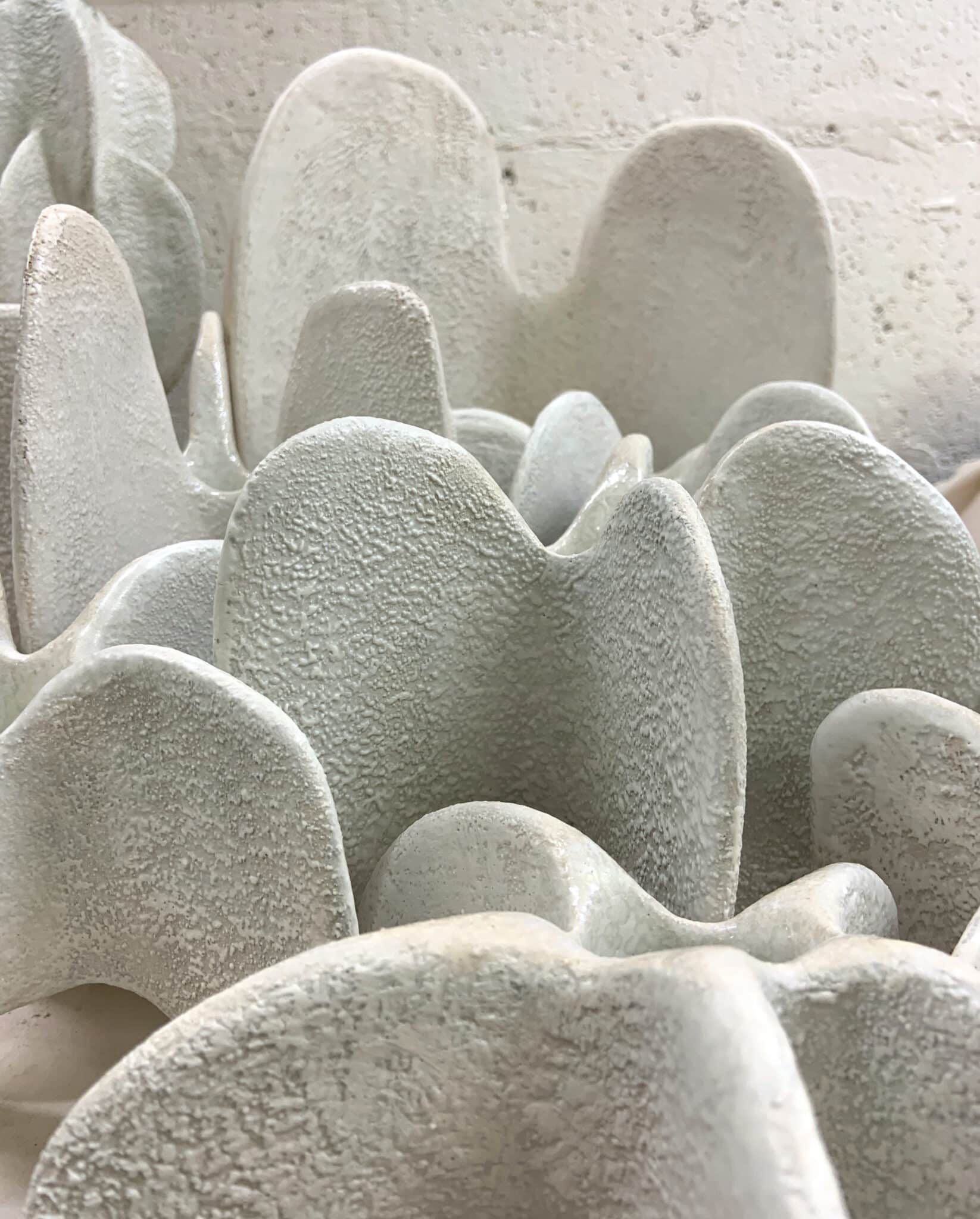
“Clay responds immediately through touch, atmosphere, and temperature.”
SHARE :